Atchoom! With the start of Spring My allergies start to ring And yet I rejoice, for not before long We shall embrace Of that I am sure, it cannot go wrong At our designated place
Atchoom! As Helios grows stronger Zoom! Is our place no longer Powered by electric spark I’ll come home to continue our arc Baby, your arms are my safe port To be with you feels like a resort
Sunscreen we shall apply And make love until we die
I wish I were tiny again, so you’d pick me up from my bed To carry me, in the middle of the night, to the car So we could leave to see the rest of the family On the land where you and mum were born; Did you know I’d wake up but never move, To enjoy the warmth and solidness of your arms? And then we drove all night long, so that when I’d wake up we’d be There already; by your superpowers you brought Me through folds of dimensions, from a world to another, half a country away. I learned from you, and still do this today.
Back then, I did not know there was blood on the road; Had you scrubbed it clean? Did it hurt to hold and bend the brambles away from me and then pluck the thorns out of your palms One By One ? Was it cold on those mornings when you’d go out and bury the little birds we’d rescued The day before, the ones you knew – but never said – we couldn’t save, Before I would wake, so that I wouldn’t see? Open and close the curtains of death before I could know They had been there at all.
Where did you learn all this? You say and know more of me in a silence, a look than mum does in a speech.
One day you’ll be gone. I know I am lucky to have you, and I cannot begin To dream of the moment when I’ll have to look at the photographs you took To remember you.
So I look everywhere and try to catch all the Tiny pieces of who you were and what you looked Like in reflections on the surface of the pool, and little holes in cushions, and broken corners of tables at grandma’s house. Your childhood nickname painted in wobbly handwriting on the side of a mug.
And I try to align them, superpose them, Create a collage of moments To remember: The story of the night you were born, when your own dad almost died and the night you decided to build a nest box for the owls in our woods, making sure it was wide enough; the rainy afternoons when you used to jump on the couch because it was fun, and the days when you carried me on your shoulders so I could reach for the sun.
I would trust you to hold a castle of cards in your hands and not have it fall. It’s not everyday you find a man with a soft affection for all things living; And you taught it to me, a secret treasure passed down from you to me Like a whispered secret. Even mum stays home When we go out to look for tritons and toads To carry them to the river, across the road. Did you learn that you loved holding little lives in your hands Long ago, when you were as young as I am? You must have known it already When you first held me.
I have come to think that we share The same need to hold, and remember, All the little things that others are blind to; I remember me more when I remember you. At your own effort and cost You taught me what kindness was; By making your own hands bleed, you made mine soft. I cannot say thank you enough.
I wish I were still tiny enough To fit in the curve of your arms Like I once did, as a little kid. I know I can try all I want, but this poetry, Will never be worth a single One Of my memories
Like a jazzman playing on a saxophone, she said. I came back in the class. Her dress moves above the scar on her knees. I notice her hands move to the pace of her voice in perfect sync. She continues to dance with her voice, her fingers run a well-executed choreography.
Hopeful of something else, she said. I came back in the class.
How many of you underlined it in your text, she asked. I came back in the class again.
I went away and came back multiple times during the hour-and-a-half lesson. I failed to listen; I was constantly brought back to my body. The ache in my neck was growing louder. And the rash on my left elbow was calling for my full attention. The dead butterflies in my stomach were moving to the rhythm of my breath. I had in my body the unbearable weight of thousands of corpses. I wanted to cough them out of me, but it was pointless – their minuscule bodies were too decomposed to be ejected. It felt as if we already merged. I was partially dead. I wanted to move on. Have a wake or a funeral or something symbolic to put their tiny existence into a tiny coffin and bury them in tiny holes in a tiny graveyard right under a tiny oak tree. I was ready to write a profound and extremely long eulogy if it was the price to pay to get rid of them. I would try to make it profound and extremely long. I would put on a modest black dress, with a turtleneck and long sleeves, that would stop under my knees. I would not please the gaze of anybody but the grieving police. They would say: ‘What a sorrowful widow’, with a nod of approval. And I would have a tear ready to roll from my right eye, it would stand on the front line like an athlete. I would shake hands with strangers and relatives, I would have a nice word for everyone. ‘Thank you for coming’ ‘It means a lot, thank you.’ ‘Oh, it’s lovely, thank you so much.’ ‘I’m so sorry for your loss too.’ ‘They were so lively, I never thought they would leave.’ I would have the tip of my nose painted red as if I had blown it all night. My face would be puffed. I would stand and walk slowly to the altar, as a bride prepared to say her vows, her hands shaking. I would mention the first encounter I had with them. The surprise, the confusion. ‘Was I sick?’ I would talk about him. His gentleness. The kindness with which he talked. How his eyes caressed the world and captured its beauty. I would probably pause before mentioning his laugh and subtle jokes, the way he styled his hair and how he picked his socks from the drawer. I would not talk about his flaws, about his parents who talked too much or how his brother was their grandparents’ favourite. I would not talk about the friends who died along the way and the loneliness in some of his days. I would not talk about his difficulty in finding the words to express or know his own feelings. I would keep them in my heart, guard them like treasures and they would not hear it from me. Instead, I would stand tall, holding my hand, fingers crossed. I would say how I loved him and how he loved me, I would say how much he loved his friends and family, how he would smile when talking about his nephew and niece, how he would smile at my silly jokes, how he would dance with her head to cinematic music. I would probably tell in silence the memories that are too private to be shared. I would stop mid-sentence without telling its end. Through that silence, people would understand the weight of your love, the pureness of the scar on your hip, the strangled laughs when I awkwardly kissed his belly to mess with him, the intimacy of his hand in my hair, the joy of making love in the sofa of his apartment, the way he mended my soul, and I helped him to grow. I would stop there with silence. I would say that I loved him. I love you in a whisper. And they would all cry. I would use a tissue to blow my nose and touch my left cheek to erase the tears. I would leave my right cheek and her lonely tear to bear witness to my sorrow. If it was the price to pay, I would listen to everyone’s heartfelt eulogy and have even kinder words to the ones who ever hurt him, I would forgive them if it was the cost asked. I would thank God for the moments shared without anger. I would renounce it if it meant they would go away. I would pray religiously and with fervour until the last decaying corpse was out of me. I would be content with nothing. No other true love, just the absence of ache. I would not ask for happiness; peace would be enough.
What did you underline, she asked. I looked at my text.
The paragraph about grief and selflessness.
Did you agree with the author?
No, I said. I think there is nothing selfless about grieving. But I loved the metaphor of the butterfly.
The walls encased, close, digging into one another With the painful persistence of something man- made to stand but which wishes it could crumble.
They are naked at places, scraps where the skin-coloured wall- paper detaches from where nails have dug into it. There is more paper underneath.
Even the floor is papered, dirtied, rolls of it bouncing out of position Like flowers rooted in the soil of a scabbing forest.
A table, in one corner. A skinning knife, blade sitting Innocent on an edge.
There must be a door somewhere.
I pick up the knife. Yes, surely there must be one. I walk to the first wall, raise the pained blade, Pressing the flat of my thumb against its side As an executioner would guide a death-sentenced to the noose And together they slide under the piece of loose dangling skin- coloured paper And pull upwards.
It tears, scarlet sap pearls from underneath and slides as a solid tear at my feet. I ignore it. I was taught about the inconsistency of pain and the irrelevance of echoes.
There is no door under that part. I raise my hand again.
Soon my feet stick to the petals on the floor and in walking around Wall to wall Tearing Skinning I pull them off and along. The glue covers my fingers, stuck the knife to my hand But the door is still hidden, Though it must be there. It must be.
I cannot think of anything except the word ‘escape’.
And then the room is covered in pieces of paper and drenched, Seeping Weeping In wallpaper- blood, Glue that sticks to my eyes as I scour every corner In search of a frame.
I lay down the skinning-knife.
I have torn every possible layer, And the last pieces hung high, And I did not bother to wonder If they would hold on much longer, Or when they would fall.
There was no door. Skinning the walls of my room had only made them bleed.
Our first kiss happened in the dark, In a twin-size bed in early October. Love hits at first sight – lightning strikes a spark. That Wednesday night, had we been sober, You wouldn’t be longing for white tulip and barley now, And I wouldn’t be lying in bed naked, Practicing my vows.
…
Rain drops from the night and tears from your cheeks. We drag our hearts through Vienna streets, Through your childhood home. The floor creaks. Two things rise and morning creeps under the sheets. And even when the moon turned green, You kissed my angered wound; you kissed it clean.
I know the secrets clasped between your blooms, Twinkling eyes and tipsy, so we kiss in bathrooms. Closed eyes and consuming, so we kiss again. We make out and follow wandering hands… And I make out every hushed and hurried love note. We make out and I can feel my heart in my throat.
Our last kiss happened under runway lights, In an airport terminal in early October.
I’m starting to think Proust was a liar, because the more I pass by the places I brought my dog before she died the further that time gets from me, and all my childhood does is slip away like the sticks we’d throw in rivers and chase downstream.
I can’t hold her anymore, that is the thing. I can hold the wooden box that holds her ashes. I can sob as I do it. I cannot hold her.
No amount of fairy cakes nor hula hoops can bring me back, I will be dragged bleeding through the briars, to end up nowhere at all. Knees scraped, and like it was then my hair will be knotty and blonde yet my dog will still be dead, the old trees will still be cut down. The grass will still grow in her racetracks, And the rain will wear the gravestones down.
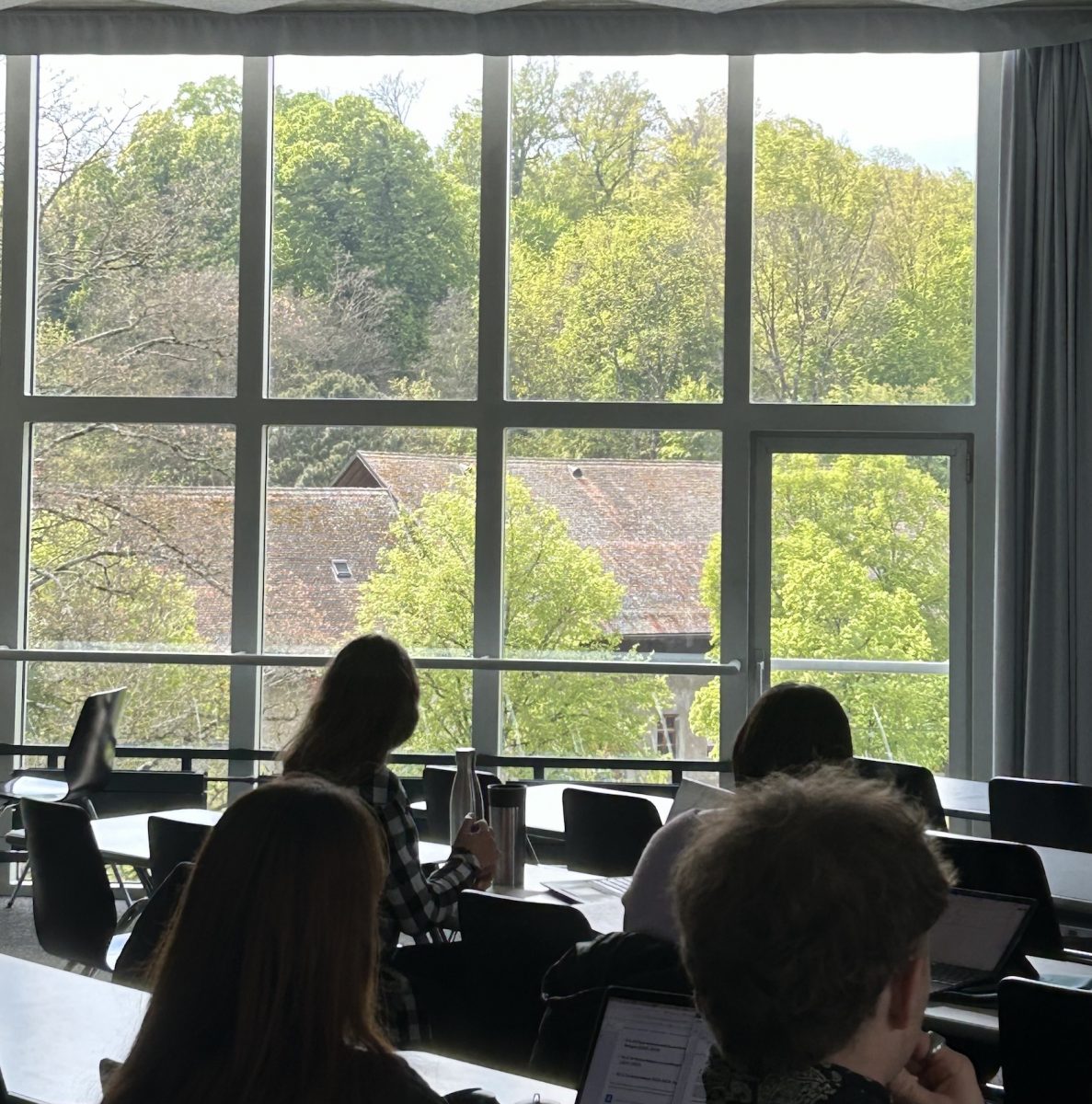
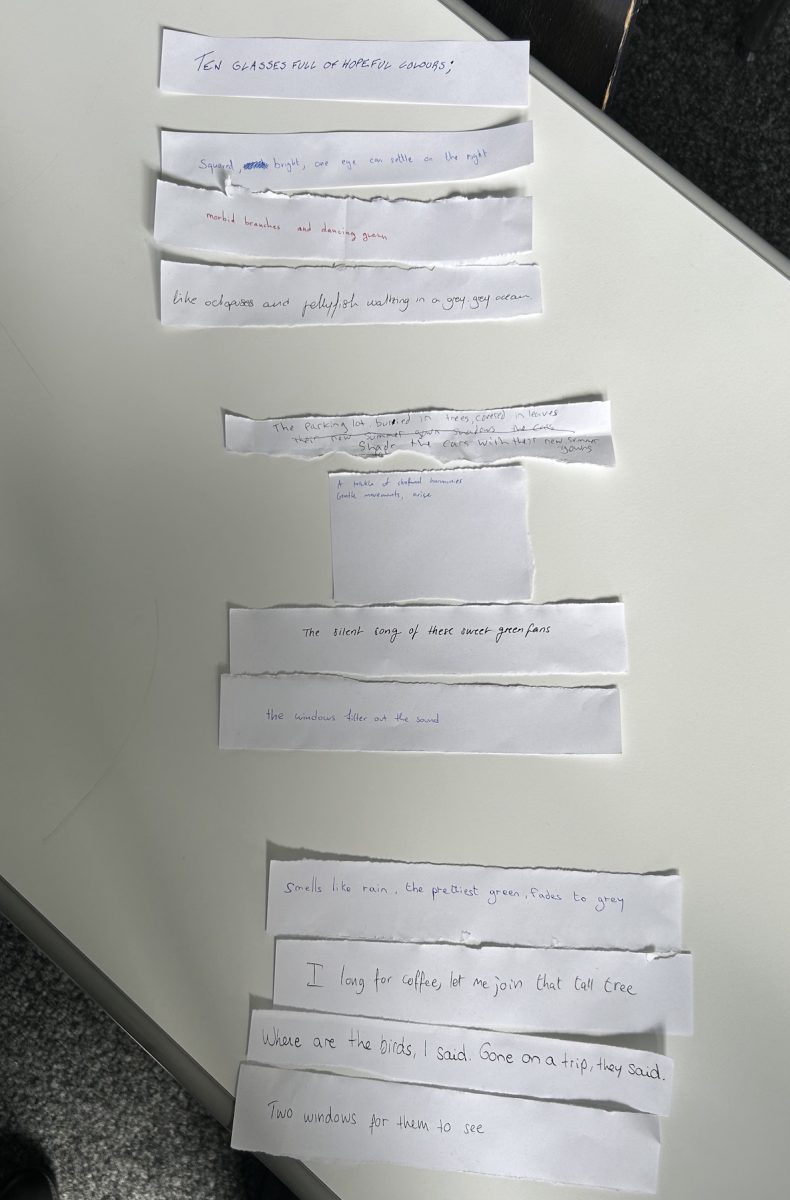
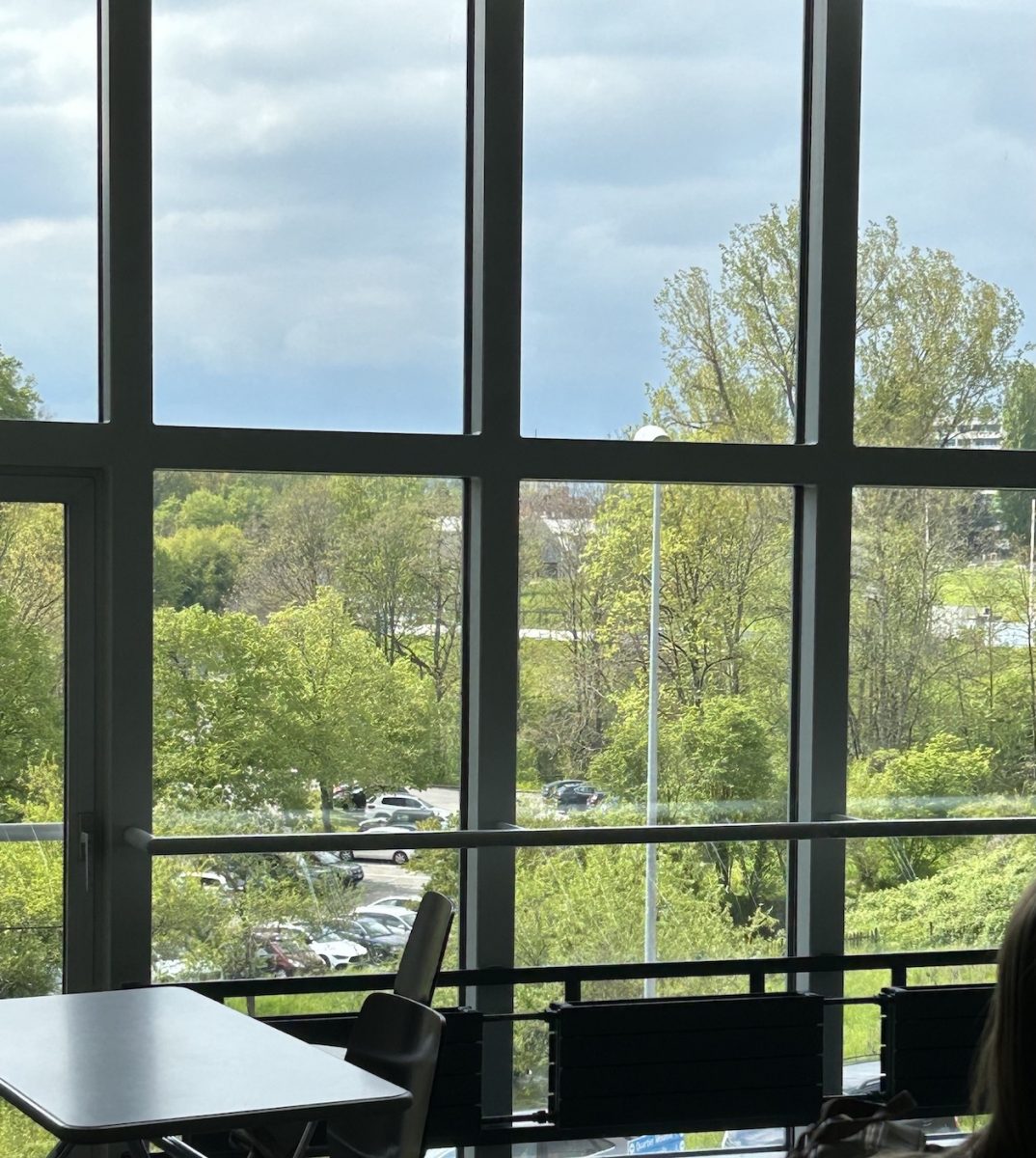
Students in Kirsten Stirling’s MA seminar “Poetry and Public Life in Scotland” were discussing the Scottish national poet Kathleen Jamie’s outreach projects of crowd-sourced poetry. Jamie asked the people of Scotland to submit one line on a particular theme (the first theme was the environment) and then she “curated” the lines into poems. In the last 20 minutes of the seminar we experimented with crowd-sourced poetry on a smaller scale. Everyone in the class wrote one line (or in some cases two…). The theme was what we could see from the window in the classroom. Then the class split into two groups to “curate” the same lines, and the result was the two poems (two versions of one poem?) below.
3174
1. Ten glasses full of hopeful colours; Squared, bright, one eye can settle on the night. Morbid branches and dancing green Like octopuses and jellyfish waltzing in a grey, grey ocean.
The parking lot, buried in trees, covered in leaves Shade the cars with their new summer gowns. A trickle of shattered harmonies Gentle movements, arise The silent song of these sweet green fans The windows filter out the sound.
Smells like rain, the prettiest green, fades to grey I long for coffee, let me join that tall tree Where are the birds, I said. Gone on a trip, they said. Two windows for them to see.
2. Ten glasses full of hopeful colours; Squared, bright, one eye can settle on the night A trickle of shattered harmonies Gentle movements, arise Two windows for them to see The silent song of these sweet green fans.
Morbid branches and dancing green Like octopuses and jellyfish waltzing in a grey, grey ocean.
The parking lot, buried in trees, covered in leaves Shade the cars with their new summer gowns. Where are the birds, I said. Gone on a trip, they said. The windows filter out the sound Smells like rain, the prettiest green, fades to grey I long for coffee, let me join that tall tree
There is a house beside the sea, Overlooking the shore. The waves come crashing on the sand, Replacing each grain, One by one.
Each day, the waves climb the hill a little higher. Soon enough, they will lick the walls of the house, And finally, its wooden boards will soak up and rot, Until the water comes pouring inside.
The foundations of the house will collapse on themselves, And the roof will come crashing down on our heads. Yet, we will not move. Yet, we look the other way.
Because the other way, away from the waves, The sun dances over the hills, Promising treasures beyond our wildest dreams.
So when the waves come, We will not see them. We will only sink with our house, Helpless and confused.
The Voice of Asphalt
The sky closes as dark-grey clouds eat the blue of Heaven. Thunder roars, and, as you look up, a raindrop lands in your eye. You blink; it’s raining.
Falling in torrents, the water soaks you, and the asphalt too. The warm fumes of the wet streets caress your nostrils, the perfume of pollution intoxicating you.
A man runs to shelter in his house. A stray dog walks under a wooden plank. The homeless just let the rain run on their skins. The asphalt doesn’t mind either.
Every droplet, the tears of a cold, drunk universe, wash the dreams away to leave you naked in the echoes of hope that inexplicably linger in the cracks in the streets. You blink; it’s still raining.
The wind roars between the tall buildings, whispering stories to the forgotten. The city speaks. You must listen.
I AM THE CITY. MY HEART IS A FURNACE. MY MOUTH A GUTTER. YOU ARE INSIDE ME. YOU RUN LIKE RATS INSIDE MY VEINS, MY VEINS OF STREET LIGHTS AND POLLUTION. I FEED YOU, YOU LEECH OFF OF ME. I EAT YOU. I SPIT YOU. YET, I STILL LOVE YOU. BECAUSE I LIVE INSIDE YOU TOO. I LIVE IN EVERY PARCEL OF YOUR BODY. YOU BREATHE ME, YOU EAT ME, YOU SPIT ME. YET YOU STILL LOVE ME. WHEN YOU BECOME RUINS, I BECOME RUIN. I NURTURE YOU UNTIL DEATH PLUCKS YOU. AND WHEN, JUST AS THE RAIN IS FALLING UPON YOU, THE FIRES OF THE ATOM WILL FALL UPON ME, THEN, WE WILL BE TOGETHER.
Those hidden between the cracks in the pavement can hear the soul of the city. But now, it is quiet. Just the rain.
The cars hum and screech. The gunshots sing. The sky does not care. The city takes the wounds without a word. Only those hidden can decipher its silence.
You hear the thunder. You feel the cold wind caress you. A few drops of water hang on your chin. You blink; the rain has stopped.
Boredom as Religion
the light on my face is like a spooky story but there’s nobody to listen or look
it’s the only light in the room it hurts my eyes it isn’t the sun yet it is
endless threads ariadne would get lost i get lost too but I feel in control
images of double-speak snakes they have the loudest voice they have the whole world they want to kill they want to fuck
I want to kill
I want to fuck
i feel miserable.
a coward can’t kill he just orders it we obey
i obey
the light on my face it lights up an invisible world a parasitic world i close my eyes time to sleep
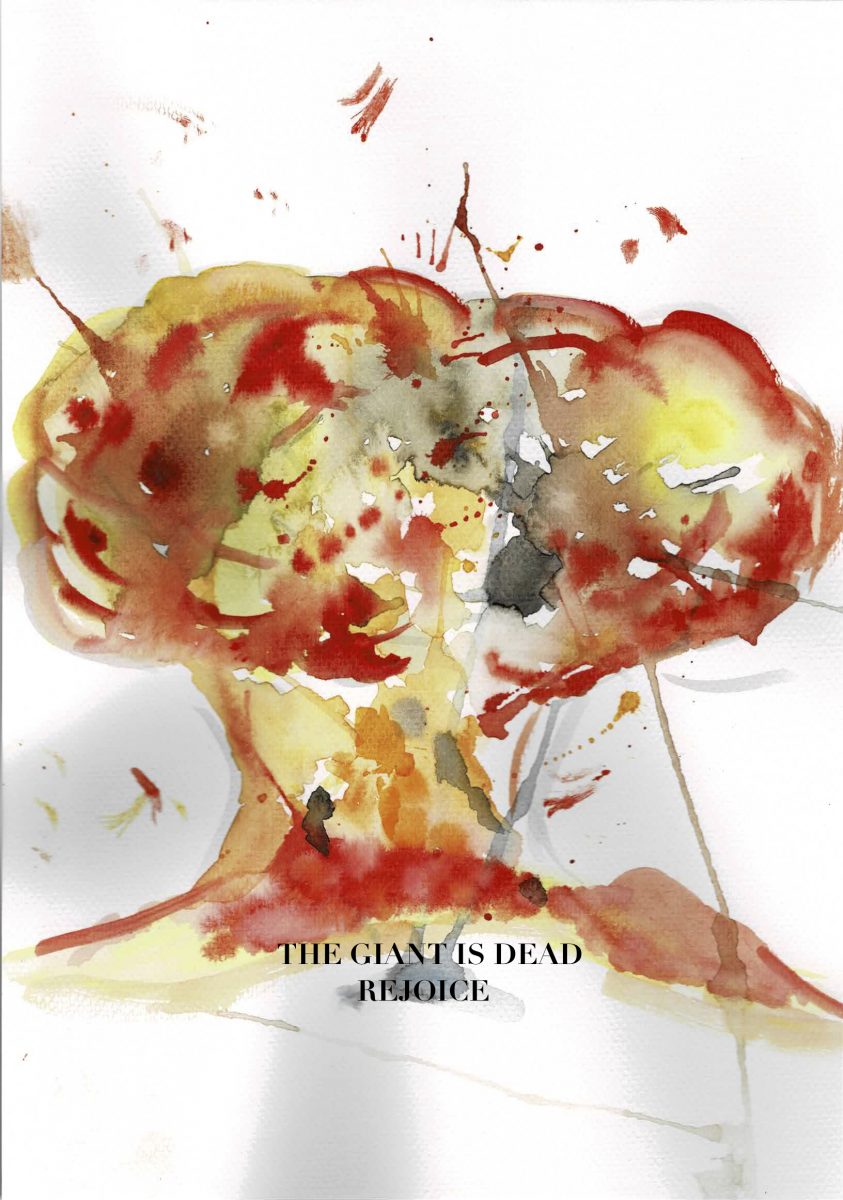
death of the voice of asphalt
life was just a mushroom cloud away. divine wind dusts the City.
there is nothing left. no memories. no life.
ashes dance in the air, rest upon the old houses.
the ones that remain. the ones that break down, still.
no need for a graveyard when the whole world is an urn.
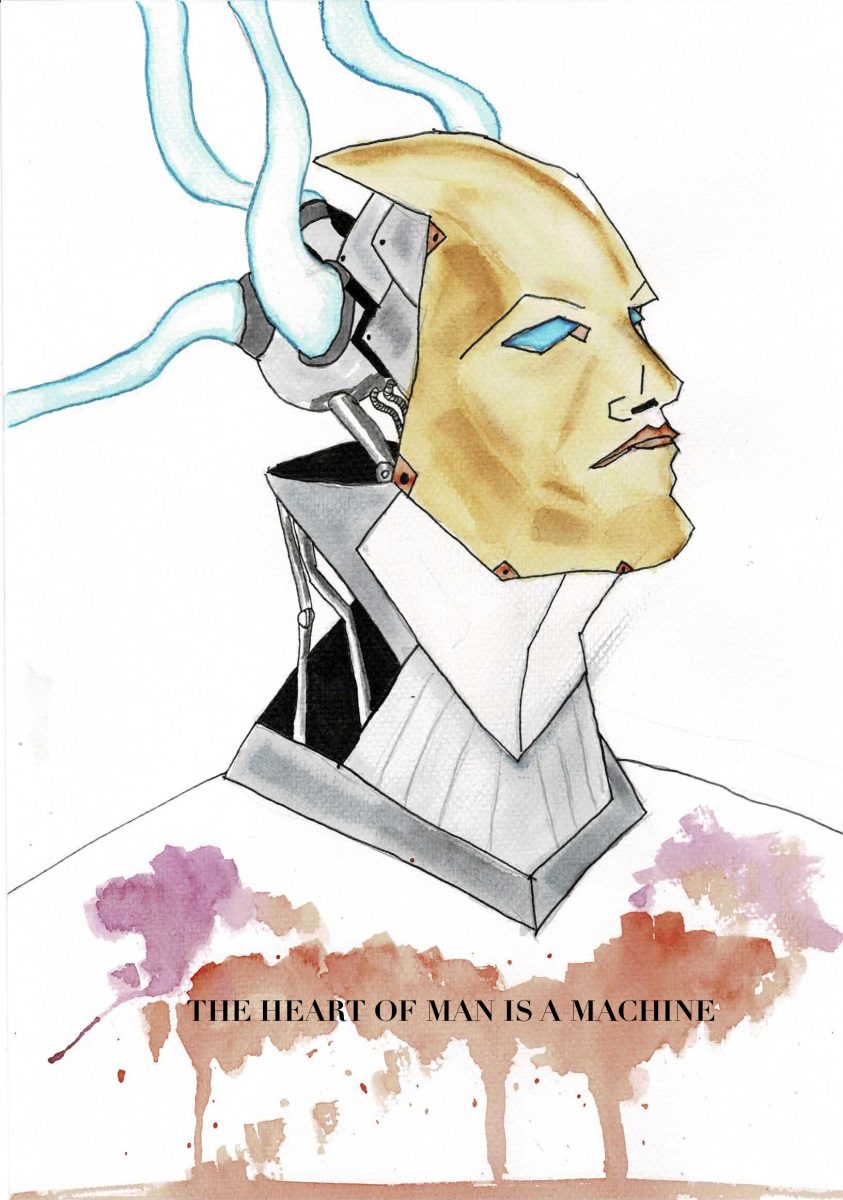
the final ascension of the human spirit :: the face of god
Rust settles in. I should be in pain. I should feel old.
I am old. Older than death. Older than god.
Eternal life is ours. We should feel like gods. We should feel.
A brain of wires, a mind of data, a heart of metal.
We wear the face of god. We war the way of nature. We have become all.
We have become nothing. A stream of data, in a server slowly losing power.
Our achievements have scarred the earth. And now, living as ghosts, we have finally found our master.
The face of god is a cum-stained plastic mask. The face of god is a chrome-steel plate. The face of god is as lively as a graveyard.
the earth weeps
The world has grown quiet Miles away the earth weeps Looking at the corpses of skyscrapers
The Voice of Asphalt is silent Her monument is an urban tombstone Brother sky is blue again The sun is smiling But there is no life to light again
So the earth weeps The ruins like fungi On her body the mark Of an abuser A lover A tenant A friend A nobody A child long gone.
The Road to Healing :: An Epilogue
When the godhead stops dreaming, you will look at the world and ask yourself: why can’t I be happy?
The road ahead is tumultuous. A broken path on a broken land, infected by disease, slowly dying, yet, still here.
Do you wonder what is the place for you? Where you belong? You are here. Already here. This is somewhere to be. Under the rain, the silence and the fumes, in the mists of your mind. A face, in a crowd. You’re still here. You’re still alive.
You will heal. You will love. You will live.
This world, this life, was never for us, but it doesn’t mean it can’t be. One day, I will be back at your side.
While the long, slow apocalypse is upon us, we can still greet it with a smile, laugh at the face of trauma, embrace one another while we all dance into Armageddon.
Do you know what Taylor? I get it. I need to know if it’s chill That she’s in my head. Because I’ve been to this well before And the water I pulled up Was not nearly clean.
And in pouring it down the other one’s throat I drowned them in could have been.
II.
I wonder if I should stop this — Writing about us. How many autopsies Can you carry out On a three month old Killed by your own neglect Before trying to resuscitate it.
As if, were it alive, You would escape the inferno of your guilt.
III.
Muggy, nearly suffocating September evenings. Two dead birds decomposing on the concrete. “This has come before, it will come again. And then, surely it will end.”
Sometimes, they only last for ten minutes. Ten minutes in the most tranquil and picturesque of darknesses. I see the light reflecting on the leaves and stems, I can hear my feet stepping on the pebbles on the pathway home, and I can smell an air as fresh as the rain. It truly seems peaceful, only never have I heard silence this loud. The whole natural and embracing atmosphere strangles my lungs, those small, hollow tree branches in my chest turn into thorns. And that one streetlamp that looks like a stage light; I can feel its subtle warmth in front of the empty seats. No one likes clowns. And I stand there, on my empty stage, in front of my empty spectators’ seats and I am cold. I am cold because those evening walks are always cold, even during heatwaves. And as much as I puzzle my brains, I always fail to understand the reason I feel like this. I am surrounded by beauty and nothing particular has happened to trigger it, yet I feel empty. My chest feels like a huge empty mass. But it’s a heavy one. How could that be? So empty yet so crushing? And the shrieking trains that rush by every now and then, interrupting the silence? Well, those are as loud as the voices inside my head.
if we spoke we lied the truth was false too i needed to see my reflection in your eyes if we saw delphie s oracle she would tell us what is not and it would become tell me i will become i will i promise
II.
It came upon me like the heart of an oncoming storm Or a vision of a fate like death That if you saw the woman in my mirror You would not know who she was. If you saw the woman that I am In the privacy of my own mind You would understand her no more than you understood The slim facets of her you glimpsed that summer.
III.
There is no heaven here, nor salvation. In the cold tomb of the Capulets. There was none neither in your arms Only dead birds, limp feathers.
The flesh beneath the scab is only ever half healed. You never let it scar. You don’t want to find another heart to fidget with, And find yourself at the end of the summer with twice as many scared arms.
An old woman will pick up a ruined doll from a playground at dusk, She will cradle the young thing’s face. Wipe away the bootprint stains And give it back some grace.
I passed through a place I have been numerous times before, yet it was not until tonight that I noticed the crickets’ chant. It must have always been right there but I forgot to acknowledge it. It reminded me of the sleepless summer nights I spent listening to the crickets sing in that whitewashed house on the sea shore. It was a peaceful place, and in the mornings, when the crickets seemingly went to sleep or took a break from their night shift, it was the sound of the water caressing the sand that comforted me. Up until ten o’clock. That is when the waves started to crash on the shore, that is when they began their fit that would last the entire day, until nightfall. And that is when the crickets started singing; or at least louder than during the day, as though to compensate for the sea’s moan. And that sea water that tasted saltier than the food my grand-father would make, as I lied down on it, would slowly rock my body to sleep. I felt so peaceful in those moments, when the sun would dry off my face the few droplets of saltwater. I cannot go back to that place anymore. That place that used to be my compass whenever I got lost. All I have left is the memory of the crickets’ terrible singing and the sea’s roar, and the feeling of the sun warming up my face.
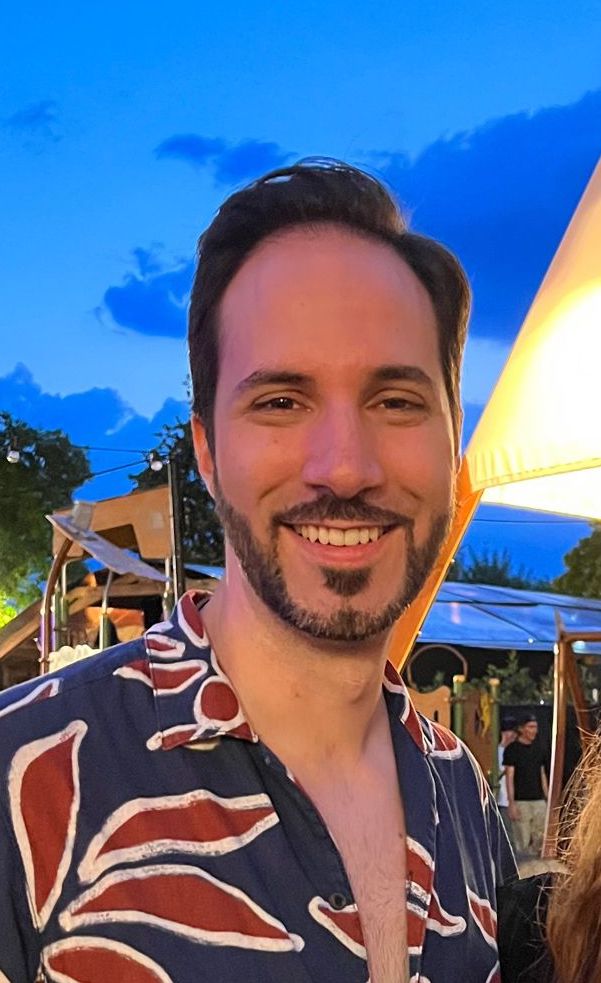
AAR: Thank you so much for meeting with us today and accepting to share a little bit about yourself with our readers! It’s an honor to interview a staff member who was in our shoes some years ago. Your area of interest seems to encompass many topics, from language to mental health and sexuality. I’m sure people will enjoy learning more about your research. How are you doing today? Only a couple days before Spring break! (The interview was conducted on March 25).
Thank you for the invitation. It’s really a pleasure to have students interview someone who is not really a permanent staff member [laughs]. But yeah, I’m doing fine; a little tired though. I’m looking forward to a little break.
Alicia: You’re brand new to the Department but first-years all know you from IELL. Could you tell us more about yourself? Who are you? Where are you from? Where have you studied and worked?
I was born in 1990 and raised in Gstaad in the Canton of Bern to Portuguese parents. I did all my mandatory schooling in Gstaad, but then after 9th grade I didn’t have good enough grades to continue my studies. My parents would say “if you don’t study, then we’ll send you back to Portugal,” which I’ve always found very ironic, because I’ve never lived in Portugal. So, I did a raccordement in Château d’Œx and then I was able to do my gymnase in Burier. I ended up at UNIL where I studied English and Film. I also spent a year at the University of Montana in the US during my BA, which was literally the best year of my life! It was really fun and that’s when I saw the usefulness of what I was studying.
Before then I didn’t really know why I was at university and why I was studying literature and film. One of the reasons I wanted to be here was because I wanted to be a movie director. But I quickly realized that the Department of Film History and Aesthetics here wasn’t going to teach me the required skills to become a movie director. And I decided to study English because I wanted to write better songs in English. Those were really the naive reasons of a young adult who didn’t know what to do with his life! And then in the US, I took a class on literary criticism where we learned about Marxism, feminism, queer theory, etc. And that’s when I realized that the things that I was learning were useful. So I shifted to linguistics during my Master’s, because I got a bit sick of literature. I just didn’t see the point of doing literature, whereas linguistics has that practical aspect that I really liked. By learning how language works in society, I could also make sense of how I was using language in my daily interactions and how people were using language with me. I actually took one of the first classes Anita taught at UNIL, on language and gender, and I wrote a paper about OCD (obsessive-compulsive disorder) for it. Then I wrote my Master’s thesis on OCD with Anita. Since there were only a handful of linguistics studies on OCD at the time, it gave me the idea of doing a PhD about that topic.
So, I got a funding opportunity in London in 2017, and I defended my thesis in 2021 while I was in quarantine because of COVID [laughs]. Anyway, Queen Mary University of London was very chaotic. It was not well organized, compared to Lausanne. But I was really lucky, because I did my PhD with 24 other PhD students. We had a big office that we shared and there was a really nice communal family atmosphere. My supervisor had 4 other PhD students who were all studying language, sexuality, and gender. We had discussions about the theories we were reading, the data that we were analyzing, and it was just an overall very stimulating environment. And on top of that, I was lucky because my funding was coordinated between King’s College and Queen Mary. At King’s College I had my co-supervisor, Olivia Knapton, who was the only linguist working on OCD at that time. And at Queen Mary I had my supervisor, Erez Levon, who is a big specialist in language, gender and sexuality. Being in London at that time was really the perfect moment for my PhD.
And then I came back to Switzerland! Since I didn’t have a job, I signed up for the HEP (Haute École Pédagogique). While I was studying there, I was also chargé de cours here in the English Department where I helped out our linguistics team with IELL and also taught a seminar on discourse analysis. I kind of stuck around and now I am replacing Jennifer Thorburn who is on sabbatical leave. But my contract is ending at the end of July and then… I don’t know what will happen to me! [laughs]
AS: So you’ve experienced the Department from both sides! How different did the Department feel when you were a student? Did you have a feeling one day you’d be back?
Definitely not! [laughs] When I was doing my Bachelor’s degree, I didn’t even know what a PhD was. But to answer your question, I’ve always preferred the English Department compared to the Film Department. The English Department welcomed our own interventions. It was never like “I’m the teacher and I’m giving you the knowledge and you sit there quietly, and you just absorb what I’m telling you.” The English Department, at least that was my experience, encouraged the sharing of impressions, and ideas. And that was, I think, one of the best ways to explore the different theories and the different books. That’s also something that I try to do in my own teaching. Now that I am part of the teaching team, my opinion hasn’t changed much of the Department.
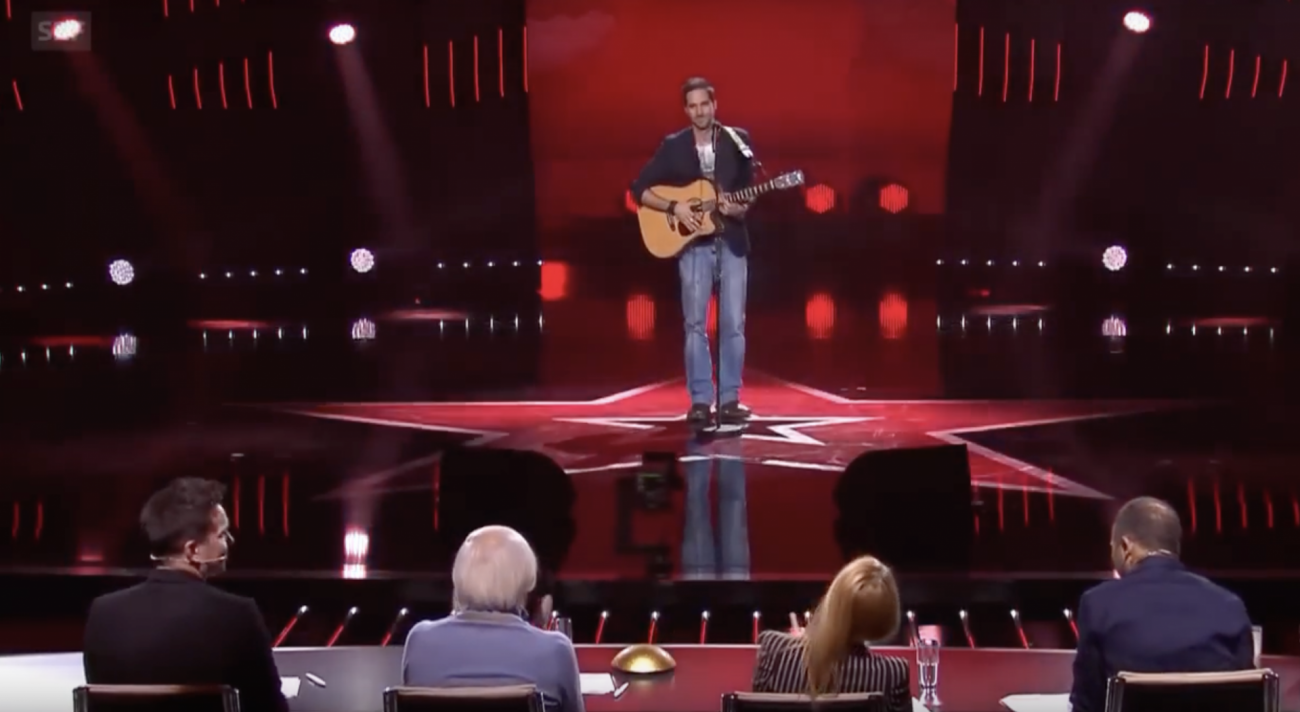
AS: We were quite impressed to see that you’ve participated in Switzerland’s Got Talent while you were still an MA student! What was more stressful, performing on national television or defending your mémoire?
That’s a good question! [laughs] In terms of emotions, I think it’s very similar, in the sense that you experience anxiety and the fear of failure. But on television, I think the stakes are a bit higher, because you can face social repercussions, right? If you fail on national television, people might recognize you on the street and laugh at you. Whereas for the mémoire, my family was present, and I was in a safe space. In terms of the stress levels, I think it was the same. Although with Switzerland’s Got Talent, one of the things that people don’t realize when they watch the clip is that I arrived at 12:00 PM and I had to wait until 8:00 PM before entering the stage. I remember waiting for 8 hours while reading Derrida for the Critical Approaches assignment! I have that memory of being stressed, trying to focus and relax with Derrida [laughs].
AS: So that would be your advice against stress, reading Derrida?
No, no, no. [laughs] Do something to distract yourself. I like to watch horror movies when I’m very anxious because it levels out my anxiety. But that’s just me, other people do yoga and meditation, play video games, or something else.
Elvis on stage at Switzerland’s Got Talent
AS: Do you still write songs and play the guitar nowadays?
Unfortunately not, because my priorities have changed. Back in the day, I wanted to be a rock star. And now my priorities are basically my job, so I don’t really have time to write songs, although I have about five different songs that I’ve started writing. But I just never got the energy to sit down and finish those songs. I think I also don’t have the motivation for it. I’m not going to gain any money from it. Why invest much energy in that when reading about linguistics is as interesting as writing songs?
AAR: So you used to write songs and you used to write poetry. Your poems can still be found on MUSE’s website…
Oh God. [laughs]
AAR: Do you remember them, and do you still write creatively?
I don’t write creatively anymore, no. I journal whenever I feel down or anxious. Writing is always useful to have an objective perspective on your problem, because if you don’t write it, the problem stays in your head. Writing really allows you to shift your perspective and to tackle the whole thing in more objective terms. It’s nice to know that my poems are still on the website! [laughs] I think one of the poems was about my guitar…
AAR: There was one about Derrida!
There was one about Derrida, yes! I experimented with the notion of understanding and not understanding. Derrida is one of the intellectual figures that I really like, as well as Foucault. I have all his books on my bookshelf [points to office bookshelves]. I refer to them as “Tonton Jackie” and “Tonton Michel,” just to remove them from their pedestal and remember they’re just human beings. Coming back to my poems, I think there was one about my guitar and another one where I tried to embed three poems in one. When reading the even lines and then the odd lines and then the whole poem, it creates three different poems. Those poems were written when I was taking a class on creative writing in the US, because I thought it would be really useful for my songwriting. But I haven’t written any poems since then. Life happens, priorities changed.
AAR: Now you devote your time to linguistics! You once told me that you consider yourself more of a social scientist than a linguist. Can you tell us more about that?
My relationship to linguistics is very complicated. I started off as a literature student, and at the beginning I thought linguistics was difficult to understand. Though I never failed linguistics, unlike medieval that I failed twice [chuckles]. I also associated linguistics with those structuralist schools of thought like Chomsky, or syntax trees, all these technical things that don’t fascinate me. Even when I started doing sociolinguistics, and discourse analysis, I always struggled to identify as a linguist. When I was writing my MA thesis and my PhD thesis, I would have lengthy discussions with my supervisors about “am I doing linguistics? Is discourse analysis linguistics?” My supervisors always told me, “if you don’t trust yourself, at least trust us because what you’re doing is linguistics.” So that’s why I’m not a linguist, I don’t walk around with all the theoretical linguistic knowledge. I know where to find the information in my notes or in the slides that I created. But it’s not the kind of thing that I keep in my mind all the time. So I prefer to refer to myself as a social scientist, who uses linguistic and sociolinguistic theories to better understand social and psychological phenomena. I’m not interested in linguistic theory per se. I don’t care about comparing grammatical structures of different languages. I’m interested in how people make sense of their lives, how people make sense of the different social, social and sexual norms that they have to navigate in their daily lives, how people describe their symptoms when they are ill, what kind of ideologies they draw on when they construct their identities. These are things that we do all the time. Having a theory that allows me to explain those different processes has turned me into a more empathetic person towards other people, but also towards myself. I understand the world differently. And this is something that literature didn’t give me in the past. I was reading Mary Shelley, Bram Stoker, John Donne, Baldwin, all those different authors. But it wasn’t enough for me. It was fun to interpret those books but… how can I be sure that my analysis is sound enough? There was something lacking, and that’s what linguistics gave me: a practical kind of knowledge that is based on empirical observation. And then, of course, with linguistics, it’s not just about language structure, but also sociology, psychology, etc. It’s highly interdisciplinary and that’s what I like about what I’m doing. I’m an interdisciplinary scholar. I’m not an expert in linguistics, I’m not an expert in sociology, I’m not an expert in psychology. I’m somewhere in between, and I’m trying to understand how the different theories work together. That’s why I have a hard time identifying myself as a linguist.
AS: Your work on OCD has also led you to organize a conference, which is a very interdisciplinary and tangible project! Students taking “The Language of OCD” can validate their credits by presenting a poster at the “OCD in Society” conference. Can you tell us what “OCD in Society” is and how it came about?
I organized that conference for the very first time in 2019 when I was in London doing my PhD. And the idea came out of the observation that most studies on OCD were done in psychology and used statistical tools. At the time there were very few qualitative studies on OCD that explored how people with OCD made sense of their illness, how they struggled to find therapy. All these meaningful practices were not really explored. So I thought, why not organize a conference where the goal is simply to bring together different scholars from different disciplines who have an interest in studying OCD from a non-quantitative perspective? The 1st edition welcomed linguists, sociologists, psychologists, anthropologists, literary scholars, and even artists. That was very important to me because in London there is this community of OCD sufferers who are artists and whose artwork I wanted to showcase. Now I’m organizing the 4th edition of the conference and unfortunately, I cannot invite artists, because we don’t have enough funding. But the topic of the conference is connected to that seminar that I’m teaching, so I just thought it would be nice if students could actually contribute to the knowledge of OCD from a qualitative perspective. Instead of writing the typical essay or doing the typical oral presentation, they can create a poster that summarizes the research project that they will do during the semester. I’m sure that whatever they will do will be new and groundbreaking, because up until today, there are only 12 or 13 linguistic studies on OCD!
AAR: Are you working on any research or is that on the back burner for now?
Unfortunately, I’m not paid to do research [sighs]. I have a couple of articles in mind that I would like to publish. One of them is part of my PhD thesis that looks at how people who identify as LGBT+ talk about their obsessive fears of not being LGBT+ and how that is connected to heteronormativity. The other paper questions how normativity is researched in queer linguistics. Basically, we often refer to normativity as a spectrum ranging from what is normative to non-normative. However, that doesn’t capture expressions that denote quantification and signal a non-normative status like “this penis is too short”, “these breasts are too huge”, “he is not trans or straight enough”. These examples seem to imply that these extremes are not normative. What is normative is somewhere in the middle. So instead of seeing normativity as a straight spectrum, I also see it as a U-shaped spectrum. I think that they are two sides of the same coin. I’m really interested in theorizing how language is used to express such normative stances. How people negotiate the extremes to decide what is normative. I would love to write an article about that.
AS: In a nutshell, you’re busy with school! Subbing for Jenn, teaching at the language center… Can you tell us about the other classes that you’re teaching and that you’ve taught? Do you have a dream class that you would like to teach someday?
I’ve already taught my dream classes! [chuckles] At UNIL I’ve taught IELL, both the lecture and the tutorials. I’ve taught “Introduction to Discourse Analysis” several times. I taught a Master seminar, “Language and Sexuality” last year, “The Language of OCD” this year, and “Language and Health” last semester. When I was doing my PhD thesis or even being a student here at UNIL, I would have never thought that I would teach a class on OCD since that’s not what linguists usually teach. But here I am.
AS: How would you describe your teaching style?
I’m always thinking about how I can teach my students specific things in the most efficient way. At the end of their degree, humanities students are very often not aware of the skills that they learned for their future jobs. I try to make students conscious of the acquired skills. Last semester, some of my students had to do an oral presentation, so I showed them what good oral presentations are and then I gave them an assessment grid where different skills were evaluated, not only the content of their presentation, but also their body language, and paralinguistic features. I think those are just important skills that students need to be conscious of when applying for a future job.
AAR: So you’d say that the HEP was influential in the way you teach now?
Oh yes, definitely. The HEP does have its issues [laughs], but there are some classes, especially one about assessment strategies, that completely revolutionized my way of thinking about assessment. Some people are against assessment grids for various reasons. But I have seen how valuable it is to explicitly state what students will be assessed on and to use that grid to give targeted feedback. I also witnessed the efficiency of learning by teaching. So that’s something that I try to use as much as possible in my seminars. I ask students to explain to each other what they understood from the reading. They then share their impressions, and I’m always there to guide the interpretation, based on my own knowledge and previous experience.
AAR: One of the reasons we wanted to interview you is precisely because you’re a temporary member of staff and are leaving in August. What do you have planned for the future?
[Laughs] I sent my CV to the HEP. I had job interviews. I’m still waiting for a response. I also sent my CV to two different gymnases. I’m hoping that the English Department will still need me, so that I can extend my contract, but up until now nothing is settled. In August I’ll only have 20% at the language center and I have to fill the rest with something else!
AAR: Let’s get down to the nitty-gritty: lightning round! Favorite color?
I hate those kind questions! [laughs] I’m just going to say blue without knowing if that’s my favorite color. I like it because I think that’s the color that I often wear, but I don’t think consciously that’s my favorite color.
AS: What’s the last book that you’ve read?
The last nonfiction book I’ve read is called The Identity Trap by Yascha Mounk. The whole book criticizes left-wing politics for their extreme take on tribal identity politics by arguing that this furthers the rise of far-right ideologies, and suggests a way of finding a common ground between different social groups by endorsing universalist values.
And the last fictional book I’ve read was a graphic novel called In, by Will McPhail, which is a very beautiful, very simple graphic novel about meaningful relationships and how important it is to have banal social interactions and not being afraid of sharing something personally with each other.
AAR: The last TV show you watched?
Yesterday, I finished the 4th season of You.
AS: Cats or dogs?
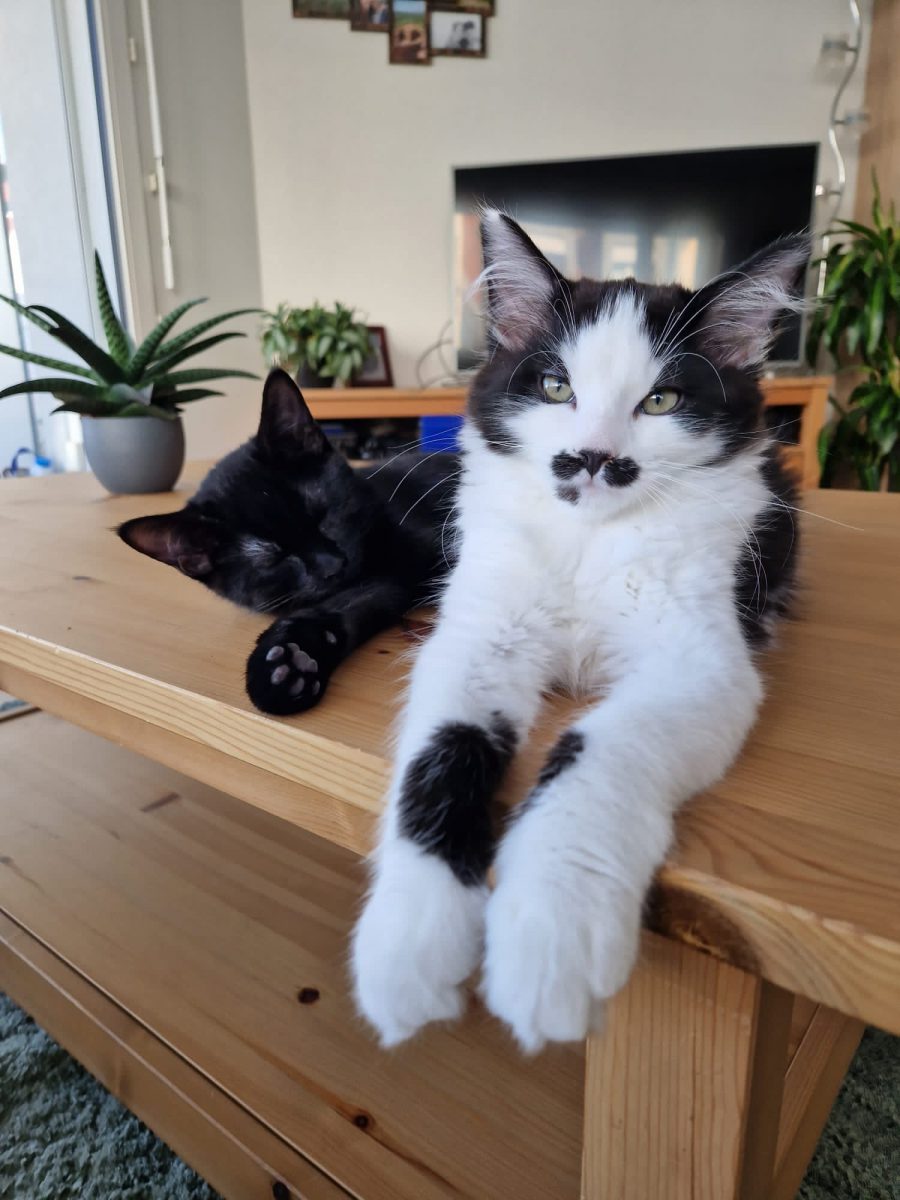
Oh God. [laughs] I didn’t grow up with animals. But I now own 2 little cats because of my girlfriend: Balou and D’Artagnan, and they’re very cute. So I’ll say that I’m a cat person in becoming. [laughs]
Balou & D’Artagnan
AAR: Controversial opinion?
Yeah… The song “Wonderwall” by Oasis is overrated.
AAR: Favorite album of all time?
Oh no! I like so many things that it’s impossible to put one at the top.
AAR: Recent album that you liked, then?
One that I listen to very often on repeat now is Blink 182’s One More Time that they recently released. But it’s not my favorite. I will recommend a music genre, instead. I’m really into synthwave, it’s a genre that uses music styles from the 80s, with contemporary themes. I love groups like The Midnight, Ollie Wride, FM-84, At 1980, Max Cruise, The Strike. The Weeknd also has some synth wavy songs. The 1975 sometimes go into that mood. Any synthwave that uses saxophone is a treat for me.
AS: Favorite place to vacation?
[Laughs] It’s really difficult. Again, I don’t think in terms of favorites because it excludes the rest of things that I like. It’s a very post-structuralist way of thinking, because if you have a favorite then you also have a non-favorite!
AAR: You’re thinking too much! [laughs]
I know, I know, but that’s my intellectual journey! I’ve read all these different theories and I’ve tried to incorporate them into my life. But if I had to recommend a place: a road trip through Portugal, not just going to the touristy places like Lisbon, Porto or Algarve. Go through the whole country, because the landscape is constantly changing and that’s really beautiful. I would also recommend a road trip across the West Coast of the US, through Montana, Utah, Arizona, Nevada, California, Oregon, and Washington state. That’s really a lovely road trip.
AS: Tell us one thing your students would never guess about you.
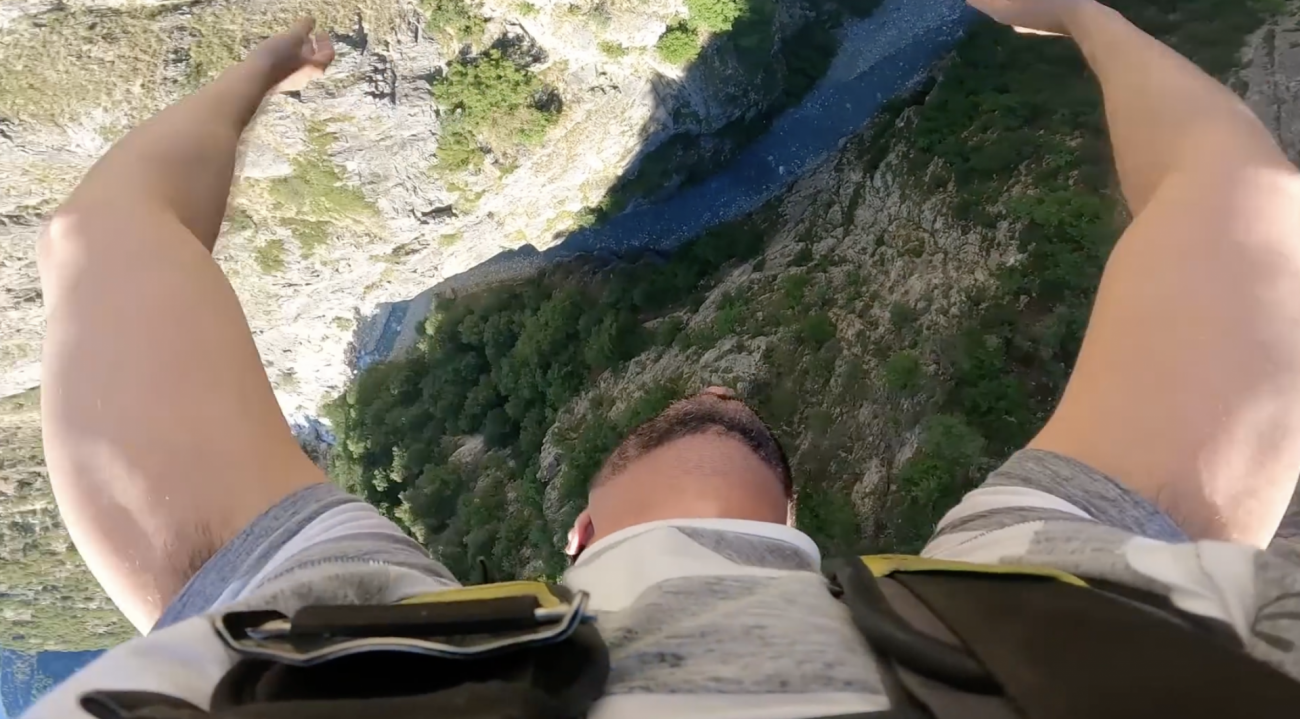
I bungee jumped two years ago. [laughs] And then, I suffered from a kidney stone and the doctors thought it was because of the bungee jumping… like I’d dislocated the kidney stone!
Elvis mid-jump!
AS: Favorite place in Anthropole?
[pauses then laughs] I don’t like the Anthropole as a building, so I don’t think that I have a favorite… No, yes, I do have a favorite place in the Anthropole, it’s the cafeteria. I like talking to our mamas downstairs, and it’s nice because they talk to me in Portuguese and they always call me like então menino, “what’s up little boy”, and that’s so endearing. It gives me those really familiar “mama” vibes that I got from my mom! [laughs]
AS: If you had to compose a theme song for the English Department, what would you name it?
Hmm, that’s a very good question. [pause] “Talk, Talk, Talk!” Because we always want students to participate in our lessons, and when I was a student that’s the thing that I liked most about the English seminars. So yeah, it’s also a wink to Rihanna’s “Work, work, work.”
AS: To the same beat?
[singing] Students gotta talk, talk, talk, talk, talk, talk, we just want them to talk, talk, talk, talk, talk, talk…
AS: Thank you so much for sitting with us! It was a real pleasure to get to know you better. Is there anything else you’d like to share with MUSE?
Yeah! So, keep doing the work that you’ve been doing for all these years, right, one generation after the other. I think it’s really important. And, a message to all students: just be mindful of the skills that you acquire, because even if you’ve spent hours analyzing language or literature, those analytical skills are important. You stand out from students of the other faculties who don’t have those linguistic analytical skills. If you can somehow highlight them in your CV, I think that would be really great!
It is funny what an individual might do to feel close to another. What lengths they will go to compensate for the lack of unrequited feelings and desires. Sometimes I will watch a television series with a character that resembles them. Or I will read a book that somehow vaguely reminds me of them and our situation. And other times I will remember the smell of their perfume, find a bottle of it in a shop and spray the tester on a bookmark and place it in that very book in order to always be able to smell them, even when they are not there. Obsessions are a funny thing. That time- and energy-consuming capacity of remembering a myriad of pieces of information on one individual; the ability to think of them countless of times throughout each day and never get bored of them; the constant desire to touch and hold them that never fades. It makes me think of the first night spent with a lover, when you both can’t fall asleep, out of fear of missing out, since every moment spent together, even while just laying down and listening to each other breathe, is so precious. Strangely enough, as much time and energy these little obsessions may take from us, it is simultaneously these very same obsessions that make us feel alive.
MUSE asked students to anonymously submit their opinions* on what crazy invention would be useful to improve your time at UNIL. Here are the answers we got from them! Some are genius, some should just be common sense… Conclusion: students are tired.
*Replies have been edited for clarity.
Answers
A napping area with beds to take a nap in between lessons
something a bit like a coffee vending machine, but it gives anti-procrastination juice instead
A printing network that works and is straightforward to use
Sleep cabins for brief power naps, available for individual student use 20-30 minutes at a time, up to five times per semester 🤪🤪
Common evaluation grid for literature essays
it would be really cool to have an audio file for every class reading we have to do. This way we could just listen to the readings on the go, instead of rushing to read everything the night before because we forgot about it 🙈
Not exactly a crazy invention, but just more toilets at Anthropole. There have been too many incidents where all of the stalls on the same floor were occupied when I needed to use them. Not sure how it would be done logistically though
a super cheap meal option at the cafeteria. like it could just be the same pasta with the same sauce everyday. but it would be cheap, like 2 francs. i’d spend less time cooking without having to spend 10 bucks every day
Coffee machines and (accessible) microwaves on every floor
Caffeine pills for when you’re in a rush for class and don’t have time to drink coffee at the cafeteria :’)