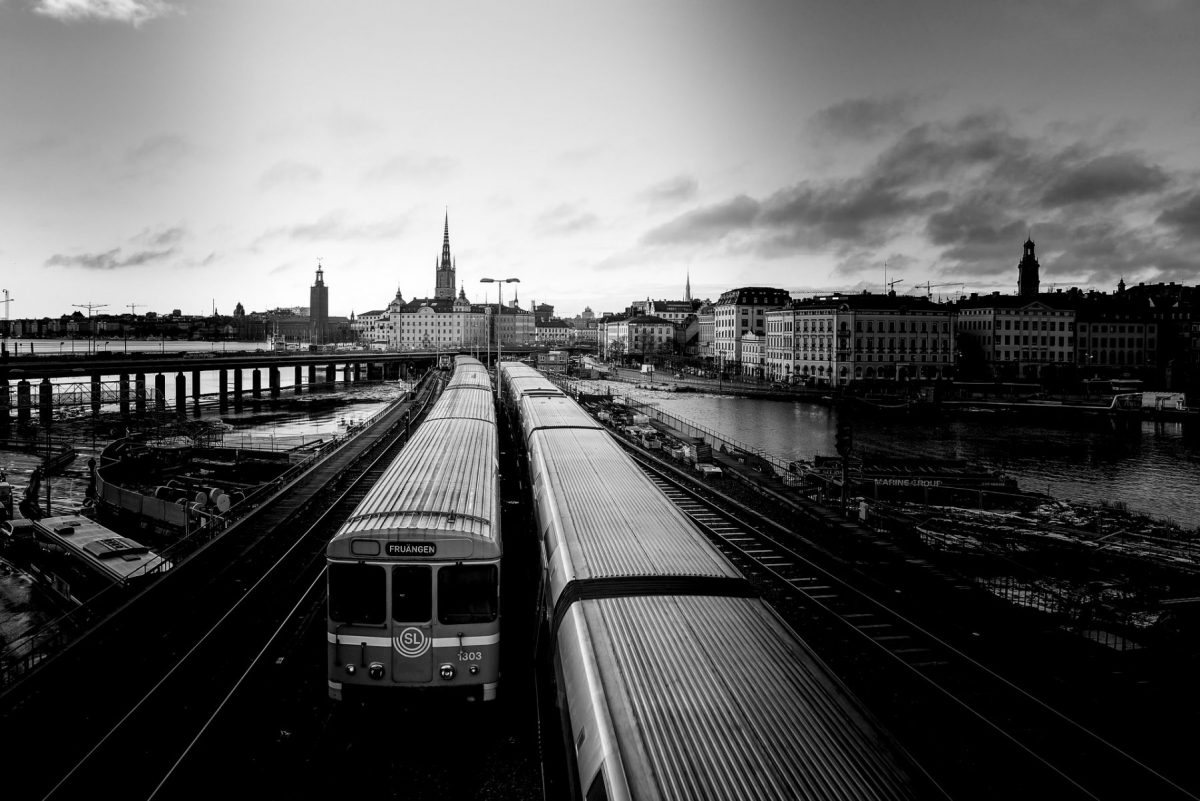
How lifeless do the small train stations here seem. With all the streetlights’ trembling glow, one would think to cross a face nearby. But there isn’t any. Not a soul.
I can hear some cars driving by at a distance as they slowly fade away in dissonance with the crickets’ orchestra from the trees and bushes nearby. Funny how cold this place feels in the middle of summer. I feel swallowed in the deadening noises from afar, which sound so peaceful, regardless of their loneliness. And every now and then a train rushes by, but never stops. It is full of lights and full of life. Everything seems to rush by me these days and I never seem able to catch up. Just like those trains. Everything seems to go by, without ever stopping for me. That is how disconnected I feel about everything going on around me. Everyone is walking by and going about their day, and their life, while I feel stuck in the mud they stomp their feet on.
I know you were the one who always asked questions, but I wonder, how many people, do you think, have bid each other farewell on this gloomy platform? Was it a tearful one? Or was it dry? And how many people have reunited here? What did it feel like? Did they feel a rush down their spine when they embraced again? How long did they have to wait?
How long will I have to wait? You are leaving within a week. In four days we’ll be sharing our last goodbye on some other dark, cold, and lonely platform. Will you feel as shattered as I will? Do you even feel anything for me anymore? Anything at all? Or has my meaningless existence descended within the shrieking silence of your disinterest? I feel as though your affections for me have rushed by me like those trains, long, long ago. How could you have left me here? Was there no room left on the train for me? Or are you lingering on another forgotten platform too?
Where can I find you?
Which train must I take to reach you?
I’ll take any train, any one that will lead me back to your arms. I miss their warmth. I miss feeling your fingertips on my back. Do you miss feeling your lips touching mine too? I miss your fragrance and I miss the soft timbre of your voice. I miss how young you made me feel.
I miss dancing with you at the lake next to the ducks, like two children in love. In messy, really messy love. Two messy children in messy love. ‘Love’ or, ‘little white lie’, whatever you may call it.
I miss listening to your heart drumming through your chest all the way to my ear; to my heart; to the very depths of my fragmented soul. Or whatever is left of it, I suppose.
I hope one day we’ll meet again. On the platform where souls intertwine, and sunflowers flourish in winter; under the moon’s crystal gaze.
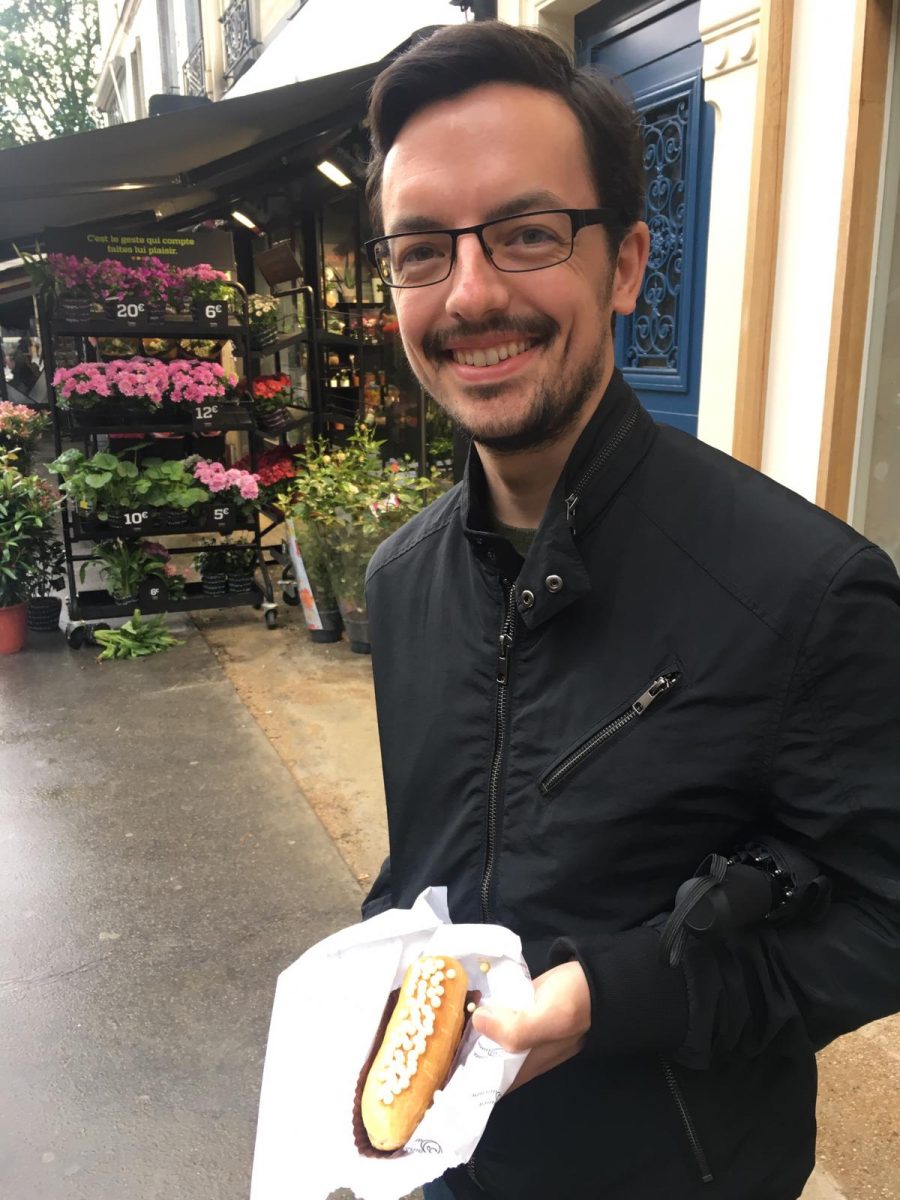
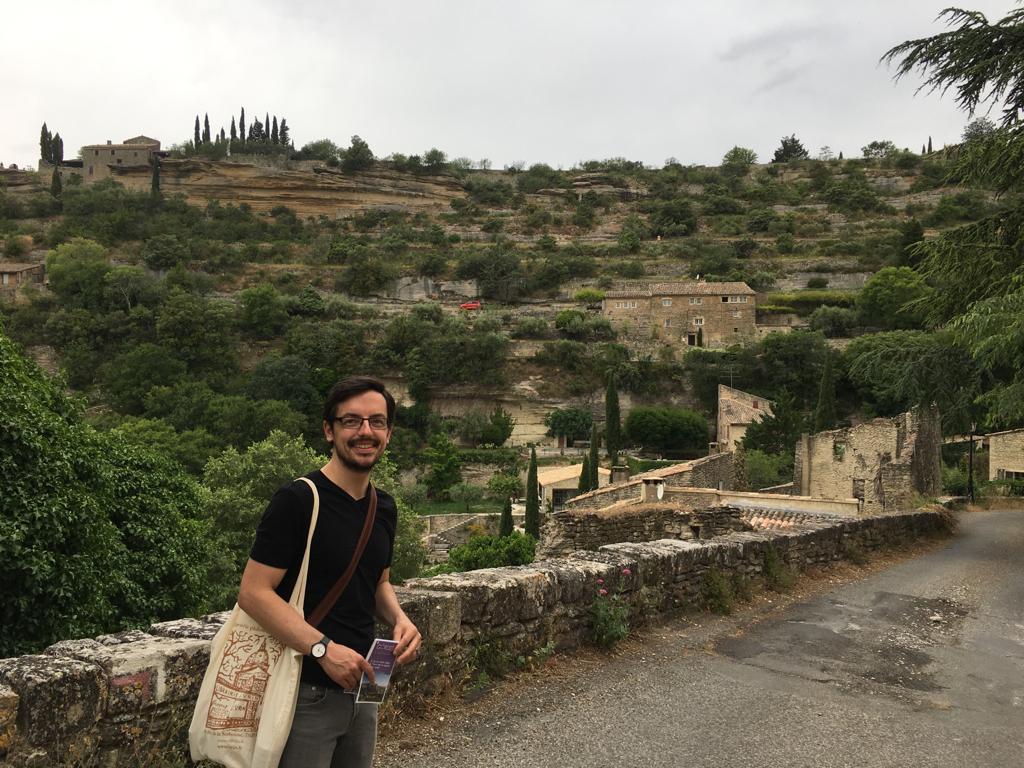
Roxane: Hello, Matt! Thank you for accepting this interview with our magazine! It’s an honor for us to interview a new staff member and especially someone who seems to be interested in so many different disciplines. It’s quite fascinating!
Matthew: Thank you, the pleasure is all mine!
R:Could you tell us a few words about yourself? Where are you from? Where did you study and how come you ended up here?
M: It was sort of a strange process getting here. I’m from Connecticut in the US, a very small state between Boston and New York, the major landmarks in the area. But I did my bachelor’s in Montreal at McGill, where we had a bilingual university environment. And then I did all my graduate work in Boston; my master’s at Boston College and my PhD at Tufts. With its 200’000 students Boston was a great space for academics and for university life. As for UNIL, I saw a job advert on Twitter of all places! I think it was after a colleague from the Netherlands posted about it. I had a great experience with the interview process and with getting to know the faculty and, since I was offered the position I decided to take it. That was about a year ago. I think I arrived in mid-February last year.
William:Was it tough for you to leave the US?
M: In some sense, yes. I do miss Boston and a lot of my friends and colleagues who are there, although with things like Zoom and social media it’s easier to stay in touch. But other than that the transition wasn’t too hard. Everyone in the department has been really wonderful and welcoming. So, the shift from teaching in Boston to teaching in Lausanne has been fairly smooth. And my wife, who is also an academic, had already been in France for a year and a half, so I was already familiar with the European academic system. In terms of bureaucratic procedures, however, like health insurance, it took me a few months to truly get into the system, but once I got that settled, it was much easier.
R:So, did you also move with your wife who lived in France?
M: Actually, I was commuting from Boston to Paris about once a month, more or less, and I would also spend a few months over the summer to max out my tourist visa. This is the first time I’m living in Europe for a longer period.
R:And how do you like Lausanne, so far?
M: Well, I didn’t know what to expect at first but I’ve really enjoyed it. Now that I’ve settled and figured out all the bureaucratic procedures, it’s been great! I’ve been exploring Lausanne and taking advantage of all the things to do around, like hiking and the wine country, which has been a highlight! I’ve really liked it so far and, again, the department is truly fantastic and I’ve enjoyed getting to know all of my colleagues! Having people here to talk to and meeting people in Geneva as well, developing all those connections has been nice and helpful. All these friends and colleagues gave me recommendations for things to do and see in Switzerland, so that has kept me quite occupied.
R:Was there anything in particular that stood out to you?
M: When I first arrived, after landing in Zürich and taking the train to Lausanne, that moment when we came out of the tunnel by the Lavaux and I saw the Alps, and the lake, it was all so comically beautiful… Especially because it was such a perfect day and I felt kind of jetlagged and confused! That has really stood out to me. Now I live close to the center and I like to run along the lake and it’s still stunningly picturesque. I love the landscape throughout Switzerland, especially after having been in a place that isn’t quite as stunning.
R:I also love the views here! I like to run in the vineyards while looking at the landscape and then I get all distracted and go “oh, wait, I have to take a picture!”
M: Totally! Do you stay at the lower levels or do you go up?
R: I live further up, so it always goes up and down, but it’s fun!
M: Yeah, I’ve personally stuck to the flat parts…
R: You appear to have a very large range of interests from visual arts, to music and politics, psychoanalysis and, of course, American literature; so, I was wondering, why American literature, specifically? Is there a particular reason?
M: That’s a really good question. I actually came to American literature late during my PhD. In fact, throughout my master’s I was working on British literature and focused on British modernism in particular. But then, for a series of reasons, something about American literature made more sense to me and I also started shifting to the contemporary sphere. I think partly my own reading led me to contemporary American literature, but also some of the questions that come up with American studies and literature that seem open to a very diverse set of texts. It just seemed to fit better with my own theoretical interests.
R:According to UNIL’s website you are currently working on a new book on several different topics. Could you tell our readers a little more about it?
M: Sure! I have just signed my official book contract with Fordham, so the manuscript will be done in June and scheduled to appear next spring. The book is about democracy and democratic anarchy. The motivation for the book was to see how the word “democracy” in the US is now used both on the Left and on the Right, but for completely different purposes. The word has become an empty signifier and can mean whatever the speaker wants it to mean. So, part of the book interrogates this language confusion while also recovering the core principles of democracy, such as equality and freedom. That’s why I make the link between democracy and anarchy, as the latter keeps open questions of equality and freedom where democracy, as it is deployed in the US political discourse, forecloses those ideals. It’s a politically motivated book, but most of the main texts are literary with a few exceptions, such as a visual art piece and a couple of references to film and some political speeches. The goal was to find through these texts a discourse on democracy that resists the status quo of mainstream politics and social organisation. At the same time the book is kind of messy in the sense that democracy is also messy. I bring in several topics and types of literature and theories, and link references from the 19th century to the present, for instance. It’s a big bag of materials and questions.
R:That sounds very interesting! Do you have any other passions or projects aside from your academic ones? We were wondering precisely because you have so many different academic interests.
M: Yes, I think a lot of academics have their scholarly interests blend and bleed into their personal interests. So, for instance, I love going to museums, but at times seeing art – or reading even – feels like work. But I also play music.
W:What instrument?
M: The guitar, but I don’t have a band or anything over here.
W:Over here?
M: I used to in the States.
W:What kind of music did you play?
M: Mostly jazz and blues. I was trained as a jazz musician, rather than a classical one. But, my PhD program kind of destroyed the practice routine that I had, so I can’t play as well as I used to. But I still try to keep up with jazz and blues music. That’s my main interest, but I also enjoy running, hiking and swimming. Although, I couldn’t swim in the lake with this temperature…
R:I do understand what you mean by your passions and scholarly interests intersecting. I could be reading a book or be in a museum and suddenly get an idea for a university paper. It’s fun, but sometimes it would be nice to be able to enjoy these passions without that mental load.
M: Absolutely! It’s really hard to read and then not have the urge to grab a pencil…
R:I happen to be very curious about what people wanted to be when they were growing up, so I was wondering, what did you want to be and who were your role models?
M: That’s an interesting question! I can’t tell you much about my early childhood, because I can’t remember early role models or desires, but I definitely went through a phase of wanting to pursue music as a profession, all the way through high school. I had this idea of making a living as a professional musician. But when I started my bachelor’s I decided to major in literature rather than music. It was a last minute change. As for role models, I’m kind of old-fashioned in terms of music, so I modelled my playing on Jimi Hendrix and other artists from the 1960s and 1970s who would combine jazz principles with blues and mainstream rock!
W:Speaking of the 1960s and considering your interest in the relationship between art and politics, what are your thoughts on the rise of nostalgia in music and film?
M: Nostalgia is a very tricky concept… My knee-jerk reaction to this 90s revival I’m currently seeing, which was an era I grew up in, is a bizarre experience. It’s alienating for me to see the 90s in a nostalgic way. It certainly was three decades ago, but to me it feels much closer, so I don’t perceive it as an object of nostalgia. Whereas the 1960s truly represent for me a distant past that I have no personal connection to, so it becomes more of a detached object of interest. But it seems like everything is destined to come back at least once in some form. And I know that nostalgia can have some negative connotations with conservative politics, such as nostalgia for an idealised past that never existed. On the other hand, there’s nostalgia for remaking things of the past, like from the 1960s, to keep alive some of the possibilities that seem to exist in that space… Nostalgia always appears to be operative and it can be pushed towards a conservative pole or a more progressive pole, or even just a neutral one. Perhaps it also draws attention to the idea that nothing really is new. We’re always recycling and reusing things from the past. Going to college in the mid-2000s, I can tell you that the music of the time was clearly inspired by the 1980s; like the big synthesizer was back and bands like Arcade Fire were becoming popular. So, that 1980s sound really came back with a vengeance. It strikes me that there seems to be this recursive structure, especially with objects like media and music. I guess this wasn’t really a sophisticated answer but more a rambling of sorts…
R:We’re here to pick your brain, so any thoughts you say are interesting to us!
M: Thank you!
W:You said that as a society we tend to recycle old ideas and that it’s normal. Does that mean the current nostalgia we see for the 1980s and 1990s is not a symptom that we have run out of ideas as a society?
M: That’s a good question. I think there are two versions of it. On the one hand there’s a more pathological and vulgar form and on the other just a normal kind of recycling. In film it always struck me how repetition is built into the medium. But when I look at Disney Plus, every day there seems to be another Star Wars series, so it seems that repetition has intensified. Now, I haven’t watched these series, so they could be great, but maybe there is a difference between recycling older forms to make something innovative and interesting with them and then a more vulgar and market-driven approach, where we just reuse old stuff because it’s gonna sell.
R:I also feel that the part about recycling just to sell is certainly a thing. I think that familiarity plays a role in it. It seems to me that people often like staying in their comfort zone and therefore seek to watch something they’re already familiar with. But the other kind you described is a phenomenon we see in art history too: there have always been movements that drew inspiration from the past while adding new features.
M: Yes, it’s like the modernist mantra by Ezra Pound; “make it new”. But, of course, he does not suggest throwing away the past. Rather, we should salvage what is useful and reconfigure things. I think it’s an interesting synthetic and dialectical process.
R:Yes, kind of like Marcel Duchamp’s ready-made art. Take what is already there and give it a new meaning.
M: Yes! That is indeed a great example.
W:But speaking of this desire to take something which already exists and make something new, do you think that people in the past, especially in the second half of the 20th century, had more hopeful ideas for the future? Because when we see renderings of how people imagined the future in the past, the future seemed pretty bright. We don’t really see those grand, retrofuturistic visions anymore.
M: That is an interesting point. It makes me think of that often misattributed quote, I think by Fredric Jameson, “It is easier to imagine the end of the world, than it is to imagine the end of capitalism”. There’s something about the post-70s world and especially post-70s America where neoliberal structures became so entrenched and successful that it becomes quite difficult to imagine an alternate form. But perhaps Afrofuturism is an exception, as it tries to imagine alternate future societies and social organisations. In that sense I find that sci-fi and fantasy remain quite alive. I think they work hard on imagining a future that is not as bleak as the one we’re constantly inundated with and that is authentically different from the status quo. I guess it’s more difficult to imagine that today than in the late 20th century, just because of the normalisation of the neoliberal logic.
W:Do you think that the current crises, such as global warming and the COVID pandemic, are signs that capitalist structures are reaching some kind of breaking point?
M: I always like to think so, but capitalism is insidious and it strikes me that every crisis appears to be a means for the economic system to reconfigure and reassert itself. Remembering the 2007-2008 financial crisis in the US, it really seemed like an opportunity to disrupt finance capitalism, but it just ended up reentrenching it. But there is hope, I think. In my teaching experience I’ve noticed that ecological concerns have become more and more important for students in the last years. But crises themselves are not enough to change the system.
W:You’ve previously mentioned anarchism. Do you think there are things that we can learn from anarchist modes of organisation?
M: Yes, I think that the decentralisation of anarchist organization is really appealing, especially in the US, where anarchism has a much longer history than Marxism. Although it kind of moved into the background in the 20th century, it came back with movements such as Occupy Wallstreet and Black Lives Matter. I think avoiding a big central organization is helpful, because they tend to be hierarchical and thus to reproduce inequalities. With mutual aid, anarchism can bring solidarity in interpersonal relations as well as in bigger political movements. It’s not an all-or-nothing situation with anarchist groups. From what I have learned in Boston, they are also quite open to questions and avoid slipping into dogmatic ways of thinking. There’s also a Marxism vs. anarchism dispute, but that’s another topic… But in general, anarchist groups seem to have a more ad hoc approach to organization and resistance, with a willingness to experiment. That kind of inventiveness and improvisation probably leads to more long-lasting change as well.
R:I agree, I believe you need to have the courage to test new things and think outside of the box in order to move forward.
M: Absolutely! I also think that anarchist protests can be quite funny as well which can be useful in some cases.
W:Right, are you familiar with Murray Bookchin’s work?
M: Yes! Although not as much as I should be. I do know about his social ecology theory. But what I can say is that it seems like a lot of what is going on today is the conjunction of fields, which is why I love American Studies so much. Both Black and Queer studies engage with anarchism and ecology. I like these approaches that use notions of social ecology to think about the interaction between human and non-human groups, and therefore address the totality of the problem.
R:I saw that you worked on William Faulkner, among other authors. What do you appreciate the most about his writing?
M: I love his writing, he’s phenomenal! But like every modernist (it seems) he was a terrible person… I would never want to interact with him. But despite that he writes magnificent fiction that supersedes personal and subjective limitations. So, his fiction produces counter-positions to those of the biographical Faulkner. I have always loved his work partly because of how he manipulates space and time. He gives you a view of a particular object or moment while also changing the point of view. Let’s take the beginning of As I Lay Dying. The dying mother is in one room, one of her sons is building her coffin outside, while two of her sons are walking up the path from the barn and you can really map out the space just by following the shifts in view. He reconfigures the realist tradition and reinvents the fictional language in a stunning way. In that sense he is like Virginia Woolf in the British tradition.
R:Yes, that fascinates me too! You would only gradually understand what he’s describing.
M: Yes, and then in some cases he breaks the realism and there’s a character who’s just speaking in a way that does not correspond to them at all and so he just shows you another mode of thinking. I am also reminded of that boy, Vardaman from As I Lay Dying, who has a one sentence chapter, “My mother is a fish”. Out of context it’s completely enigmatic, but in the context of the novel it makes perfect sense. When you follow all of the references to the mother and the fish in the novel you can piece it all together. So, it’s a completely innovative way of building the fictional psychic interiority of a small boy dealing with his mother’s death. It really is an impressive accomplishment in fiction.
R:Alright, so our last couple of questions are very random… Let’s imagine you’re hosting a celebrity dinner party (the invites can be dead or alive)! Which writers, philosophers, artists or political and historical figures would you invite? With whom would you like to talk? And who would you like to see interact with one another?
M: Well, that’s incredibly difficult, but not Faulkner! I would love to have Toni Morrison. I’ve heard her speak a couple of times but I never spoke with her. I think she would be a wonderful person to speak with. It would also be fun to bring Karl Marx, who would probably hate the whole thing! And then someone like Frantz Fanon, whose work I really love. He’s also quite critical of Marx, so that would be an interesting interaction. I’d be tempted to invite people with whom I’d really love to speak with, as well as those really critical figures who had disagreements. It might end up like a terrible dinner party, more like a boxing match… but those would come to my mind!
R:Our editors’ team would love to know who would you put on Mount Rushmore if you had a say in it.
M: Can I give you an annoying response first?
W and R: Of course!
M: I would just get rid of Mount Rushmore entirely. There’s just such a risk to any kind of monumentalisation of one particular figure. That’s really obvious when it’s on the Right. Take all the Confederate statues in the US. Then, when they’re taken down the obvious answer is to replace them with a left-wing figure. My fear is that any kind of monumentalisation ends up encouraging some kind of dogmatic indebtedness to that figure. But if I really had to choose, I’d say Toni Morrison. Also because her works resist monumentalisation. There’s always something in her fiction that completely disturbs the reader. So, she’s kind of an impossible figure to fix in a stable position.
R:Yes, I noticed that Love is one of her most disturbing books, which is pretty ironic. But that’s what’s interesting about her. She is bold enough to go the extra mile and make us uncomfortable and push us to think about what’s wrong with the system.
M: Yes, and this also makes me think of her novel Paradise which she initially wanted to call War but her editor overruled her. “Paradise” and “Love” probably sell better.
R:How confusing! This reminds me of Recitatif, where, just like Faulkner, she’s not straightforward. As readers we’re left guessing which character belonged to which race, all based on stereotypes.
M: Yes, and right now I’m teaching Sula in a third year class and there’s three characters named Dewey, all with different ethnic identities, but the matriarchal figure just refers to them as “that Dewey”. So, I think Morrison is playing with our own obsession to impose a certain identity on characters and people. She does that in a kind of comic way.
R:Well, that would be all from our part. Is there anything else you would like to share with our readers?
M: I would just like to emphasize how important it is that we, as readers, or students even, remain willing to be surprised and made to feel uncomfortable, precisely to ask us to question our own ethical and moral positions. We might call it productive self-alienation! Well…Thank you very much for these extremely interesting questions!
W and R:Thank you for answering them and taking the time!
And while my skin slowly soaks in the filth of my fragile human existence, my mind wanders off back to the night you ran your fingers across my body and through my hair, while telling me about the human race being nothing more but a mere creation of broken stars. That human life and bodies are so utterly meaningless, that they are nothing more but conjured up atoms from the remains of ancient stardust. Perhaps we aren’t even the stardust’s essence but most likely the dust blown off of it instead. Ironic how within this discourse of the pathetic status of my existence did I finally find some comfort within the unease I feel every morning when my body awakes, and I realize I am still alive. Perhaps it is natural for us to feel constant pain since we appear to be, at the end of the day, nothing more than shattered stars. We are the remains of some light gone out long, way too long ago, and somehow, it is this poetic meaninglessness of my existence that gives me the will to keep on living.
They pass you by in the streets, inhaling and exhaling the same air, for a few seconds… They are stuck in the warm moving car of a crowded subway, following an identical itinerary for a couple of minutes, until one of you steps out of the underground. They visit the same pubs, restaurants, and clubs, sometimes subtly brushing against your back, arm, or hand, as they make their way through the crowd. They shop in the same grocery store, bakery, and drug store, crossing your path as you fail to recognize them as the perpetual faces hovering around your daily life. More than strangers, they partake in the narratives of your unconscious, stealthily appearing in your dreams and quietly disappearing the moment you awake. They undertake minor roles, blending in with all the other nameless figures in the crowd. Sometimes, however, they possess a larger role in the meanderings of your brain – engendering even more frustration as you regain consciousness only to realize you are missing a key component of the story: the Face. Defeated, you start yearning for the revelation of this unknown identity. As if your dream was a vision of another reality or the key towards a magnificent future – rather than an entertaining illusion – you obsess over every little detail you can remember regarding this oddly familiar figure. Reminiscing over the startling affinity and comfort you felt with this stranger, you let your mind wander about the significance hiding behind this sentiment. As the morning gives way to the day, you slowly forget about this anonymous figure hiding in the depths of your subconscious. You go about your life, unaware that, with every step you take, you get closer to encountering the very person that has preoccupied your mind this entire morning. As the fateful meeting finally takes place, you remain unreactive, not even stopping for a second to look back at them. Unable to recognize this missed opportunity, you continue your day in ignorance.
They walk past you on campus, in the city, breathing for a moment the same air as you. They sit across from you during a couple of minutes in the unheated roaming bus, until one of you gets up to leave. They visit the same cafés, festivals, and malls, sometimes slightly brushing against your back, shoulder, or hair, as they get across the crowd. They shop in the same supermarket, hardware store, and pharmacy, passing you by as you fail to recognize them as the recurring faces of your daily routine. Much more than familiar strangers, they are the ghosts hiding behind a fog of electronic screens and apps. Concealed by a sea of notifications and suggestions, these faces are nonetheless present on your every social platform – as your aunt’s Facebook friend, your colleague’s Instagram follower, your Snapchat friend recommendation, your mom’s LinkedIn connection and more. When you open your dating app, there appear the very faces you have spent all day ignoring. This face you choose to discard a second time around, swiping left on this fateful but anonymous figure you have tried so hard to remember. Not even feeling a sentiment of déjà vu, they remain nothing but a stranger. The protagonists of your subconscious’s fiction have managed to invade every aspect of your awoken life, whilst their identity still remains a mystery to you. Everybody in the streets becomes an unknown face with the potential of slowly creeping their way into the wandering thoughts of your subconscious – transforming into an actor in the intimate creations of your imagination.
we rise and we walk. no need to wake up when we haven’t slept.
we wander in the dark that we know, without seeing, to light the one candle we need.
a flame inhabited by our own ghost.
now the ghost in the lighthouse says ‘it’s stupid o’clock again.’ he sees a wreckage going out at sea.
a corpse rotten to the bone, which unearthed itself alone; somehow, it remembers how to stand.
flesh hanging from frame, all organs exposed. six times they buried us, seven times we rose.
2. Have yourself a healthy breakfast, baby <3
they don’t expect us to eat. to eat is to live, to live is to think. they think we don’t think, and therefore we don’t eat.
but the longer the sleep, the bigger the hunger; we’ll show them we can devour as much as they did.
come now, lovelies, prepare the feast. feed the fire and warm the pot, gnash your teeth and unleash your beast, tie the roast with a delicate knot.
bring the loveliest ones to the front. vultures don’t expect a decaying corpse to rise again and hunt.
3. Shower time :)
‘here’s the wreckage again,’ says the ghost in the lighthouse. ‘it’s coming to port, afloat, adrift, it will sink. it’s torn by a rift.
what storms has it seen, what maelstroms, what tides? what warmth has it lacked to stand silent and slack in the falls? does it wish it weren’t cold?
well, it still hasn’t sunk, gotta keep a cool head. after all, it’s not drunk yet, nor is it dead.
it’s high tide, the waves flow over the corpse. come low tide, it rises and walks.’
4. The BEST skincare routine ever, you will be glowing after this
stretch your new skin dress over your broken bones
to hide the strange angles; stitch up all the wounds that were caused by their stones at the single light of your candle.
then look at it, stare at it, count the imperfections think, think again, about all the corrections. strangle the words, your lips are sealed over. you hear your reflection scream bloody murder.
the smoother the better, each flaw makes it worse; but the blessed today will choose to be cursed. they want us brighter, six windows of shame, but we want it darker; we kill the flame.
5. Time for makeup! you’re bold and beautiful and I love you
they don’t want to see it, only we’re supposed to know, our perfect must be invisible, the everyday normal. be the pearl, but god forbid you be the one to shine; they will be the first to see you’re stepping out of line.
we refuse to be the grace to their self-sufficient decadence; if they deserve our beauty, then we deserve our truth: they will see, soon; we are ugly too.
they sew the wind, it will be our pleasure to see them reap the storm. play the role, control the shape so that we fit their form, sing, ensiren, ensnare, enchant, unhinge the jaw, go for the throat, strike, drown them in their own sea and sail on their own boats.
6. Walk out there and SLAY my darling
angels now are worshipped; but at first they were feared. we got the shame, we took the blame, our name was rhymed with villain, so be it. if we are evil, if we are vile, why do they still want us down the aisle?
they drew blood first. smile; let’s bare our teeth and bite the hand that held us beneath.
we polished our anger, we made it a knife and now we will use it to walk safely at night. we cannot sing until we tear their hands from our necks. we will unlearn the art of staying dead.
7. Don’t forget self-care!
tie yourself to your pyre, to that kitchen chair break your throne, your pride, your hands, cut your hair and from your bleeding lips, draw the broken, the scarred, the whole, the monstrous hallelujah.
be the tear falling in heaven, the laughter in the storm; and when we will have triumphed, we will all walk home.
find your voice again. use it to the extreme you were born a whole being; one ready to scream.
Bonus: a playlist for my witches to fill the silence while you do all this
Waking Up (Acoustic) –– PVRIS
Blood in the Wine –– AURORA
Silk –– Wolf Alice
You Want It Darker –– Anita Lester (Leonard Cohen cover)
What about a match burns? What about a match catches?
Keepsakes in backpack pockets left there to Crack spines and crumble skulls, levigated reds cling to surrounding cottons. Open hands damaged by powdered glass; Omitted is their visible scarring. Chemicals never to Oxidize; never to fulfil. Render me purposeless.
At night When you listen to the moon breathe When your life is worth throwing into the fire And your veins are worth being sliced open to see the light of stars Honour them
Honour those who walk dead, still fighting to live Those with gold in their eyes Those who died and were absorbed by the soil Those who live inside your mind Those you killed to become who you are
Honour those whose tears never reached the ground Honour those who fell Into crying arms of a never opened heart
For everything that is and all that will be Honour them
Take it all in the tears, the absurdity the loyals, the sad ones the lost enemies the friends the brothers the Love the eternal
Feel it all in every bone and breath. It takes more than life to kill you