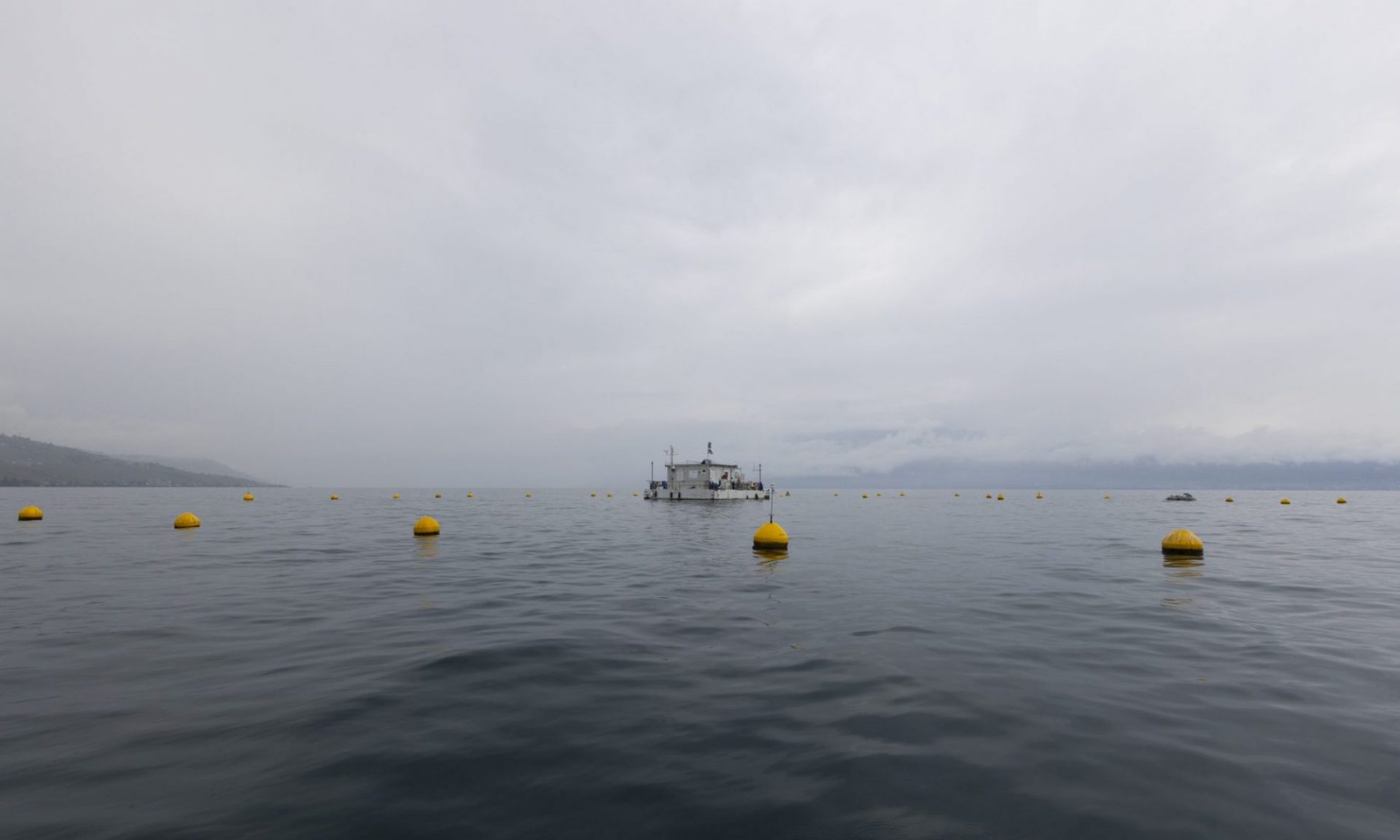
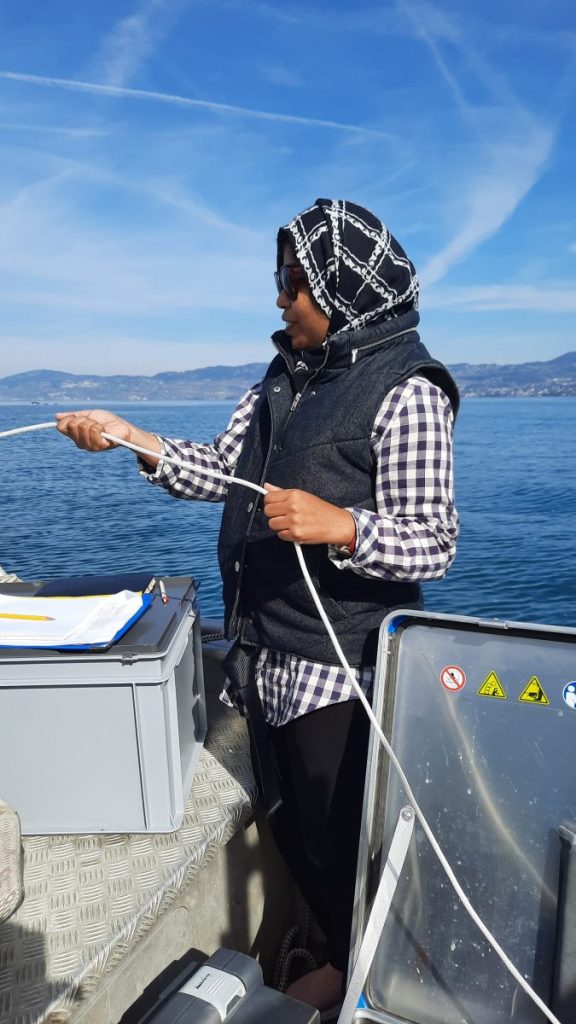
Santona sampling methane of Lake Geneva, Sept 2022
Santona studied the origin of the methane that accumulates every summer at the thermocline of Lake Geneva. Methane is typically produced in anoxic conditions, in absence of oxygen. It is then puzzling to foind methane building up in the lake water column where oxygen is plentiful. Is this methane transported from the shore, where plenty of methane is produced in the anaerobic sediments? But is this even possible for such a large lake that methane gets transported over tens of kilometers? Instead, is this evidence for oxic methane production, a low-rate but demonstrated set of microbial pathways by which methane can be procuded in the presence of oxygen?
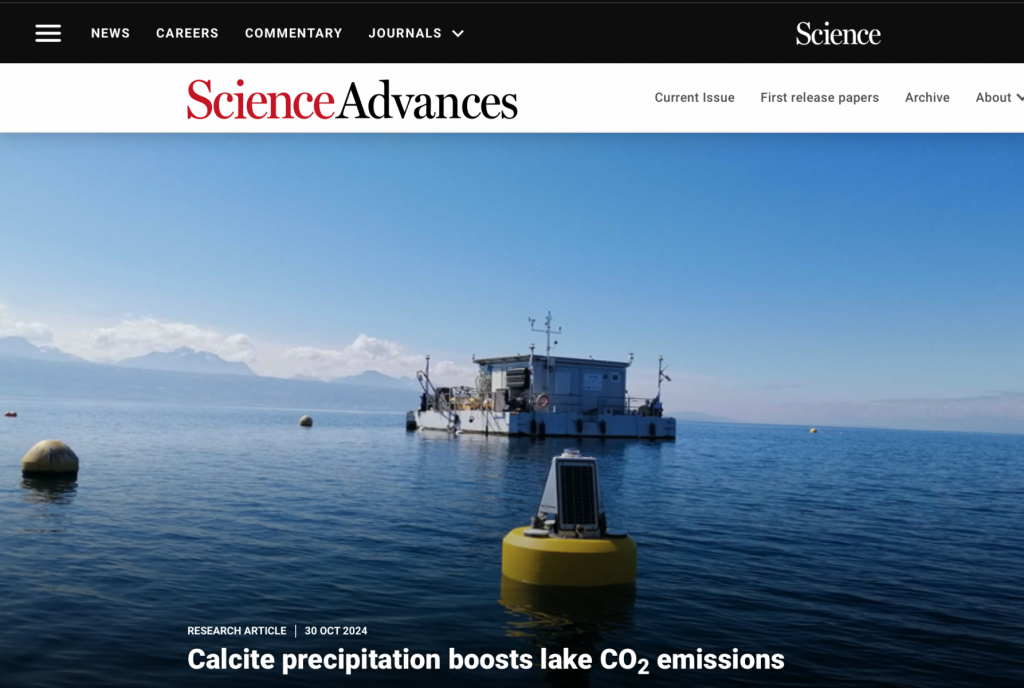
Spoiler… Khatun, S., Berg, J.S., Jézéquel, D., Moiron, M., Escoffier, N., Schubert, C., Bouffard, D. Perga, M.-E. (in Press). Long-range transport of littoral methane explains the metalimnetic methane peak in a large lake. Limnology and Oceanography.
Scientific societies : from being at the forefront of climate research to the vanguard of climate actions.
The carbon footprint of scientific conferences is the elephant in the room that needs to be seized but, even more importantly, deflated significantly. The question is far beyond whether we should address it, but instead how we will do it, asap.
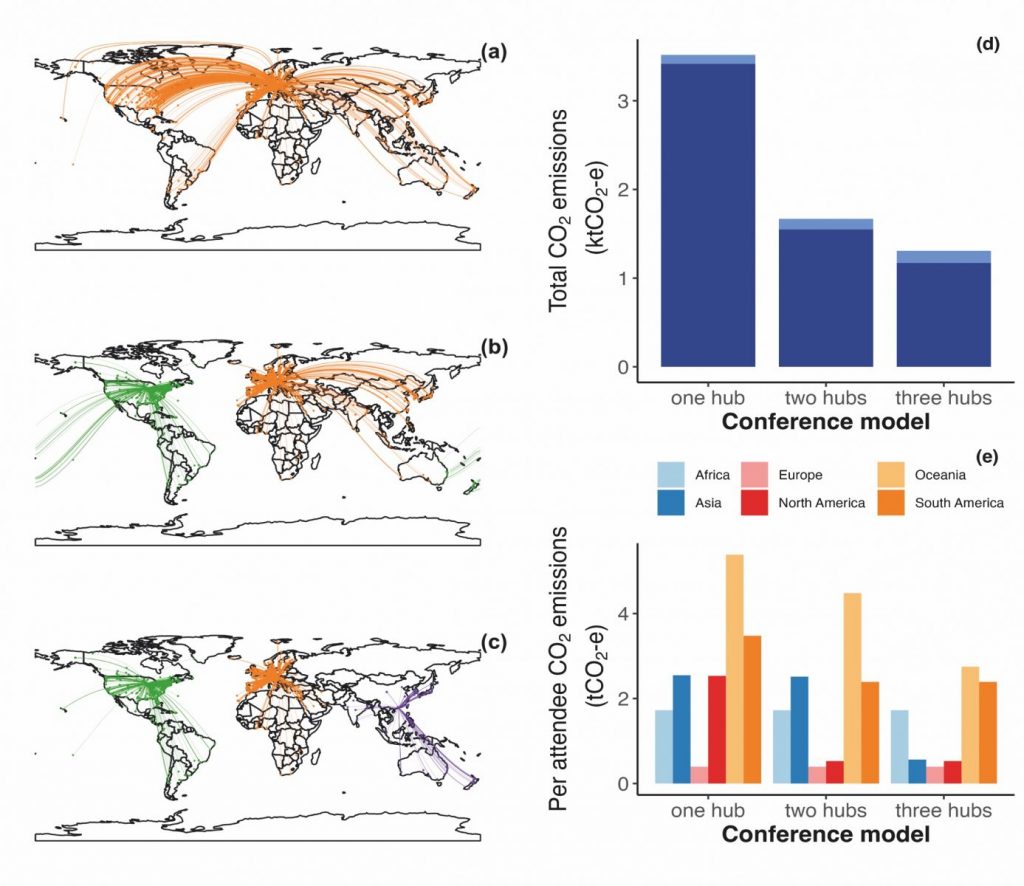
We computed the carbon footprints for the Aquatic Science Meetings, the annual conference of our scientific society, the Association for the Sciences of Limnology and Oceanography. And let’s face it: Attending those meetings results in burning, over a week, half of what we should emit for a whole year. If the location of the conference matters, we need much more than marginal fixes to make it sustainable. But good news: There are impactful ways to do so while maintaining physical attendance.
We cannot count only on changes in individual behaviors to tackle environmental issues at the scale they need to be. Scientific societies are a powerful lever of system and structural change; they have a crucial role to play. Association for the Sciences of Limnology and Oceanography, let’s take the leap and be a scientific society at the vanguard of climate actions.