


“It is essential to learn from the past and not repeat the same mistakes.”
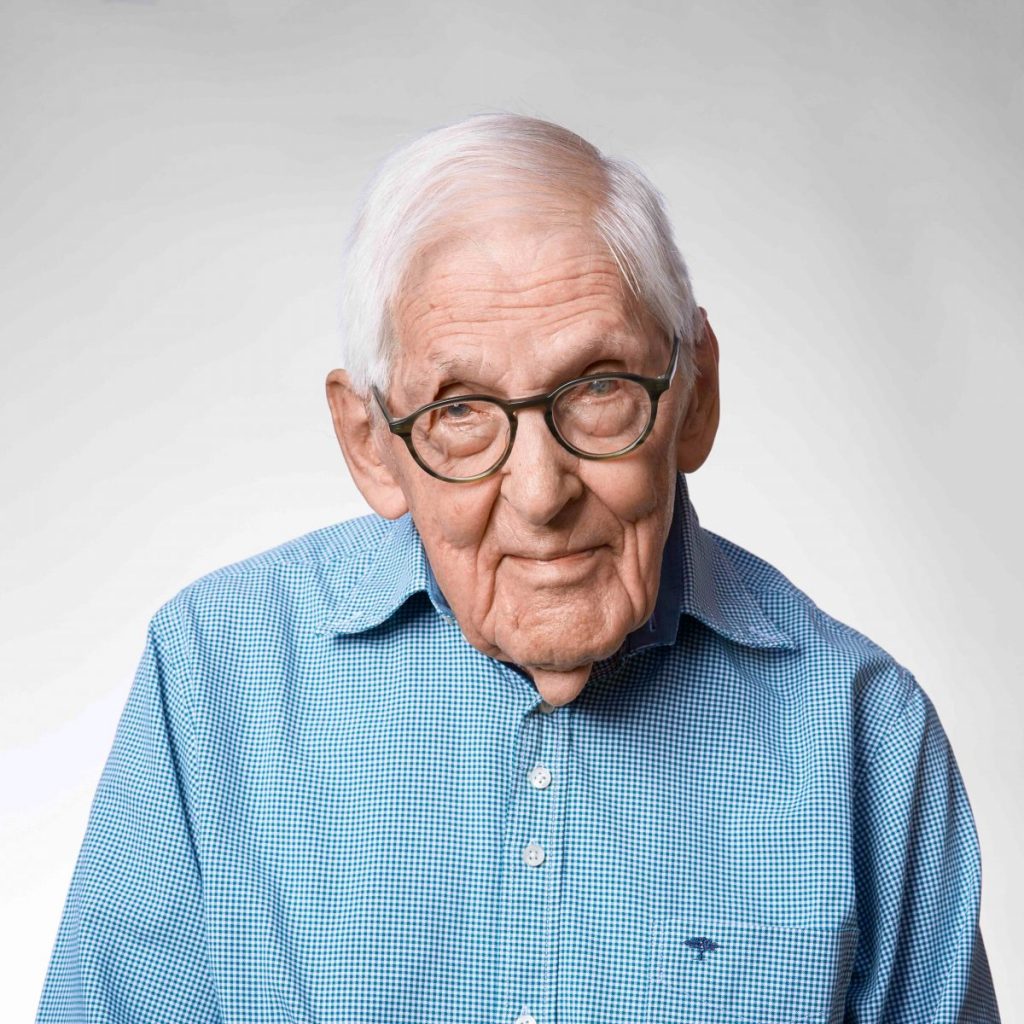
Hans Widmer is born in 1922 in the Appenzell region, as son of a teacher. There were many unemployed people in his village because textile exports were stagnating at the time. His family is envied for his father’s wages.
As a schoolboy, Hans Widmer is ambitious and gifted in languages. While studying for his A level certificate, he earns pocket money by writing essays for wealthy classmates. Like his father, he also became a teacher. After training as a secondary school teacher at the University of Zurich, he finds a permanent position at the Trade and Women’s College in Basel. He becomes head of the vocational school department and acts as a link between the school and training companies. During this time, he meets his future wife, to whom he remains happily married all his life.
Throughout his life, Hans Widmer witnesses profound social changes and historical events that remain etched in his memory. These include the general strike of 1948, which was accompanied by military unrest and tragic losses, and the events of the Second World War: he remembers the day of the armistice on 1 May 1945 in great detail. As a student, he experiences the end of the Nazi era and the collective sigh of relief after the war. He describes the decade after the war as one of the best of his life.
Reaching the age of 100 was never a personal goal for Hans Widmer. For him, life is a gift, and he has always tried to make the most of it. Despite all the challenges, he retains his optimistic outlook on life, his deep connection to nature and his passion for literature. Widmer eats a balanced diet, has always lived without excess, and has always been very active. Having grown up with a view of the Säntis, he has a great love for the mountains. Together with his wife, he has done every hike imaginable in Switzerland.
Hans Widmer believes that life is a series of lessons and emphasizes that he has always wanted to pass on his knowledge. He is still in regular contact with a small group of former high school students and meets up with them once a month to exchange ideas and have lunch together.
At his advanced age, he keeps up to date with world events and climate change and worries about the future of his two daughters. As a 100-year-old, he has already witnessed many changes, and more are to be expected. From experience, he can only advise that one should be flexible and open to the changes in the world, but also resist changes that are not good. It is essential to learn from the past and not repeat the same mistakes.