


“Appreciate the little things and be aware of everything you have.“
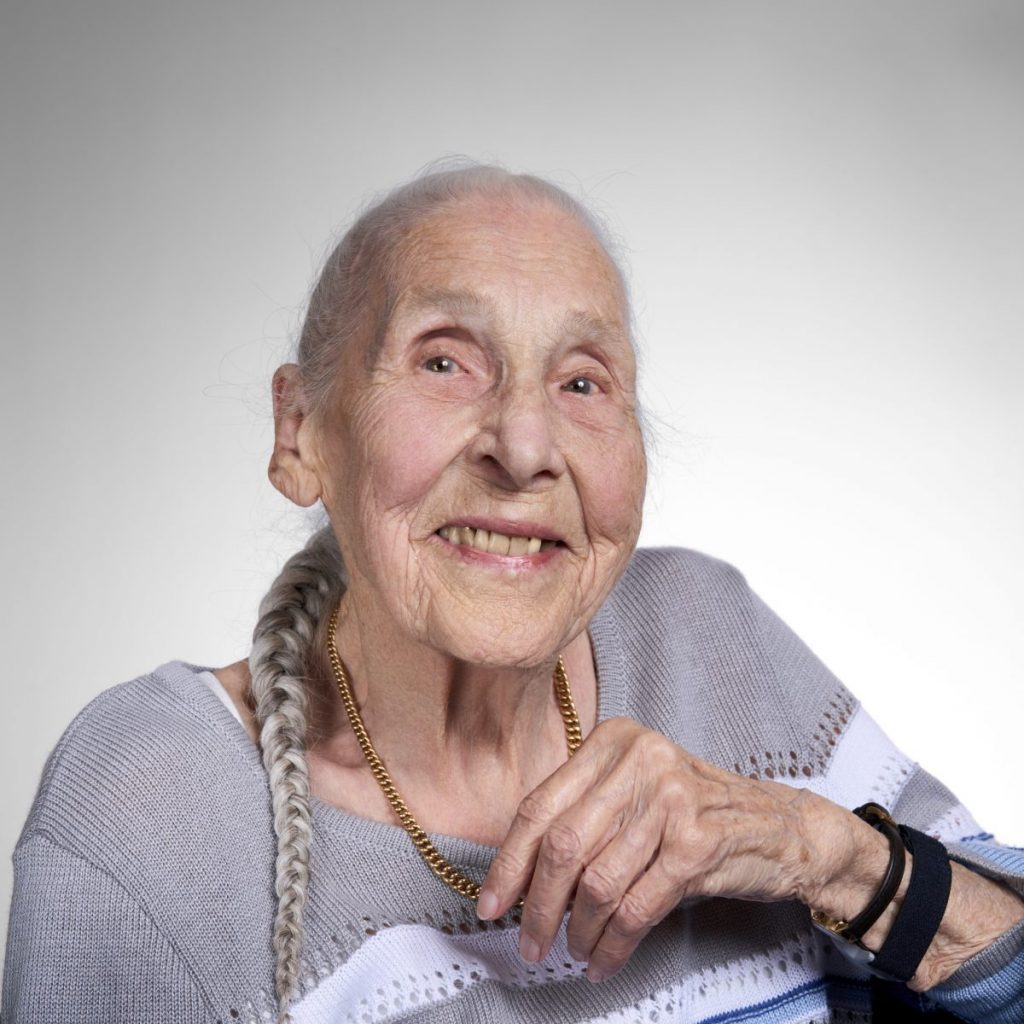
Frida Vollenweider is born in 1921 in the Catholic village of Schindellegi in the canton of Schwyz. She grows up in one of only three Protestant families in the village. For this reason, she and her cousins are educated at home. She later completes a commercial apprenticeship at the Catholic business school in Menzingen (ZG). She plans to become an architect.
After completing her training, Frida Vollenweider wants to spend a year abroad in Rome, looking after the children of a family. However, with the outbreak of the Second World War, she returns to Switzerland. She becomes the deputy commander of the air raid protection unit in Schindellegi, where she is responsible for paperwork and inspection rounds. It is here that she meets her future husband.
In 1946, after the end of the war, they marry and become parents to three children. Frida Vollenweider describes the following years as the best of her life. In addition to her role as a housewife, she takes on paperwork for her husband, who is first a district judge and later a member of the National Council. The family is always the centre of attention: it is particularly important to her that there is peace in her family and that they enjoy cosy moments together, such as Sunday outings and Christmas.
With the death of her husband in 1980, Frida Vollenweider learns to accept loss with dignity. After suffering a slipped disc at the age of 100, she has to say goodbye to her home. She settles in very well at the nursing home, and looking back, she believes that moving was the best thing she could have done.
Living to be 100 was never Frida Vollenweider’s goal. She considers her long life a gift because she is still in good health and so content. As an optimistic person, she appreciates what she has and focuses on the beautiful aspects of life. For example, she enjoys watching the clouds and colourful autumn trees from her room. Her personal relationships also mean a lot to her. She is in close contact with her three children. For example, she goes to dinner once a week with her son, who lives nearby.
During her long life, Frida Vollenweider has witnessed fundamental social and technological changes. In particular, the invention of the radio and the telephone when she was about 6 years old had a major impact on her life. Even today, she still takes a keen interest in world affairs. Although she can no longer read the newspaper in one go, she keeps interesting articles to read later.
At 101 years of age, Frida Vollenweider looks back on her life with appreciation. She knows that she has done everything to the best of her knowledge and belief and has always remained true to herself. For a fulfilling life, she advises appreciating the little things, being aware of what you have and being content with it.