


“Work hard and willingly, then enjoy.“
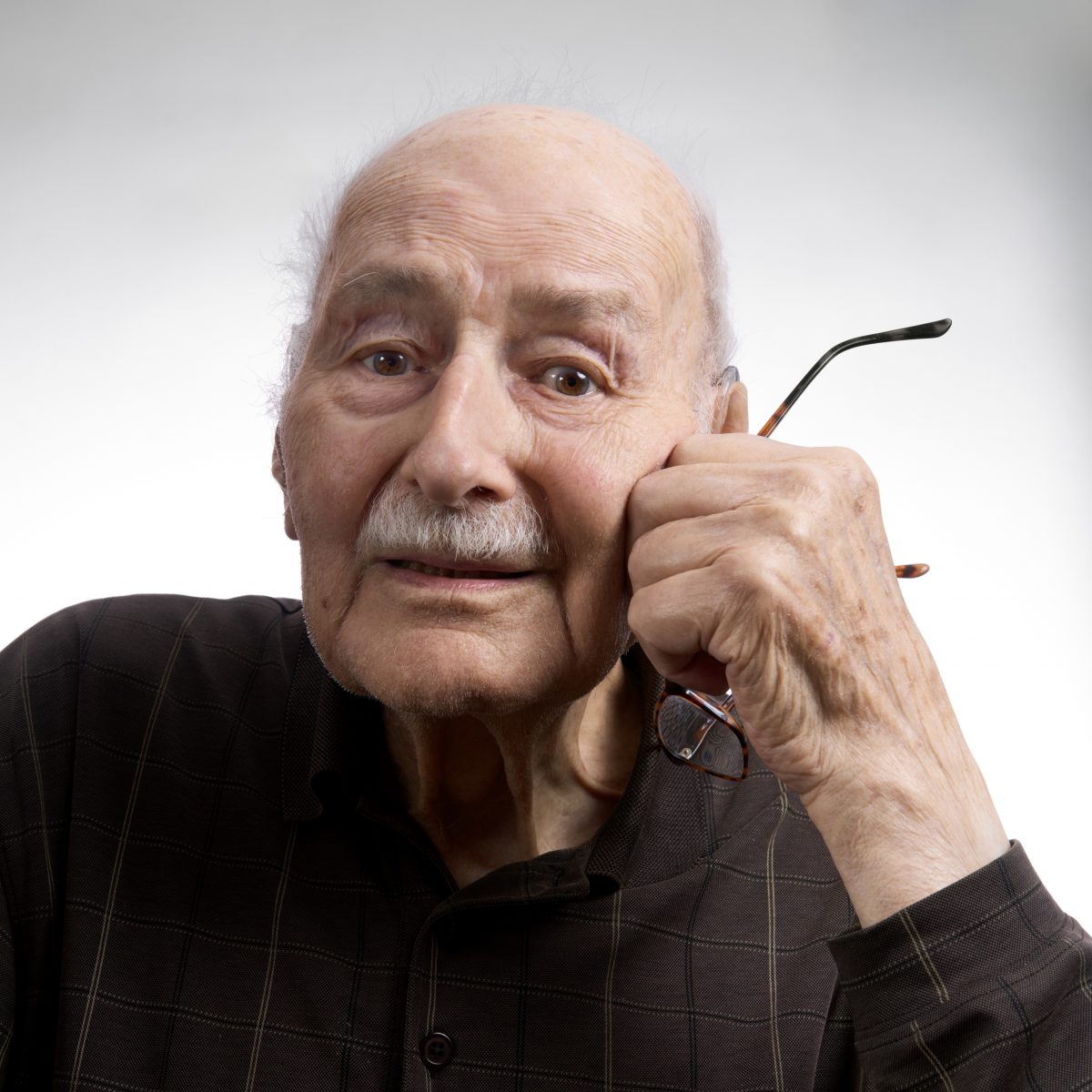
Adrian Durizzo is born in Lotzwil in 1921, as son of Italian immigrants from Como. Although his parents want to call him Egidio, he is officially registered as Adrian, his middle name, as the registrar finds his first name too complicated. After a childhood full of hardship but also happiness, he completes a four-year apprenticeship in the woollen cloth industry in Liestal. In doing so, he follows in the footsteps of his ancestors, who had been working in the textile industry for four generations. During his apprenticeship, he attends evening classes in geometry, physics and mathematics.
During the Second World War, he studies textile engineering in Cottbus (Germany) for four semesters, but in 1942, as an Italian citizen, he is drafted into military service and stationed on Lampedusa, where he works for the radar station and as an interpreter. After the Allied bombing in 1943, all those involved in the war fled the island, and Adrian only makes it to the mainland because the Italian island commander takes him on the last boat out of gratitude. He had enabled him to call his wife via the German military telephone connection.
No longer of any use to the Italians, as he does not speak English, he flees, first by train, then 500 km on foot. With the help of a shepherdess, he finds his way back to Switzerland across the green border under cover of night and fog. This is why the folk song ‘La Montanara’ (Italian for mountain girl) touches him for the rest of his life.
He soon finds work as a textile engineer and also begins trading in textile machinery. At just under 30 years of age, he sets up his own business, rents a garage, buys two old textile looms and begins weaving terry towelling. Together with his younger brother René, he gradually expands the business. A factory is established in Sissach with around 30 workers. In 1958, he marries Gertrud Steinbeck, becomes the father of two daughters and later the grandfather of two grandchildren.
Adrian Durizzo’s life was characterised by a can-do attitude, innovative spirit and hard work. In his private life, he remained a sociable and pleasure-loving person who enjoyed the simple things in life. After losing almost all his friends and acquaintances in old age, he is left with wonderful neighbours who meet regularly until the coronavirus pandemic.
Thanks to his enthusiasm for technology, he learns how to use a computer in old age so that he can create birthday cards, Skype with his grandchildren in England and stay in touch with old acquaintances via email. He buys a small electric car and converts it so that his walker fits in it. Independence remains very important to him.
What troubles him in his old age are his hearing loss and weak hands, as he has enjoyed doing crafts throughout his life. Nevertheless, he is very grateful for the opportunity to have fulfilled himself professionally and to have been spared illness and misfortune.