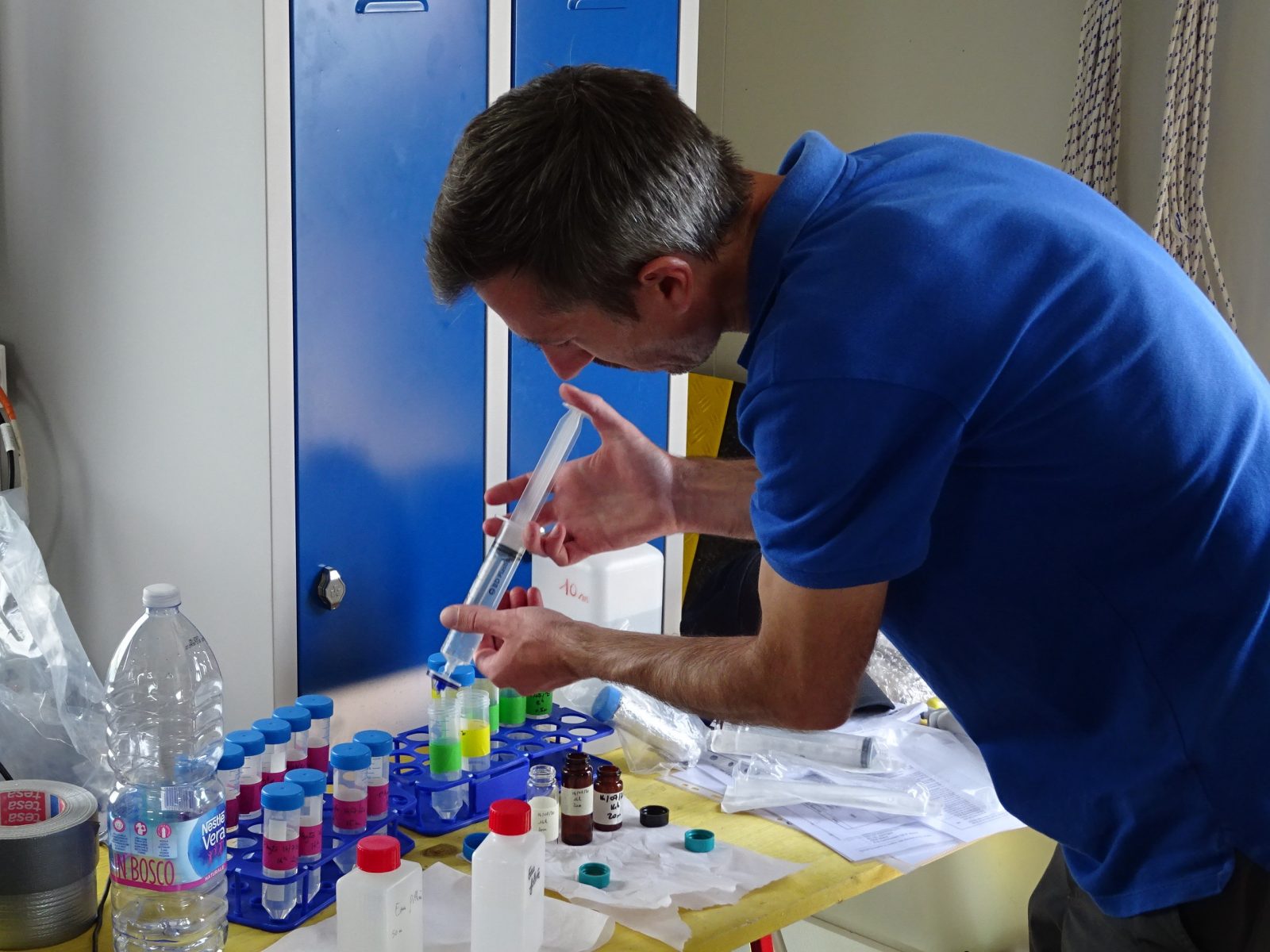
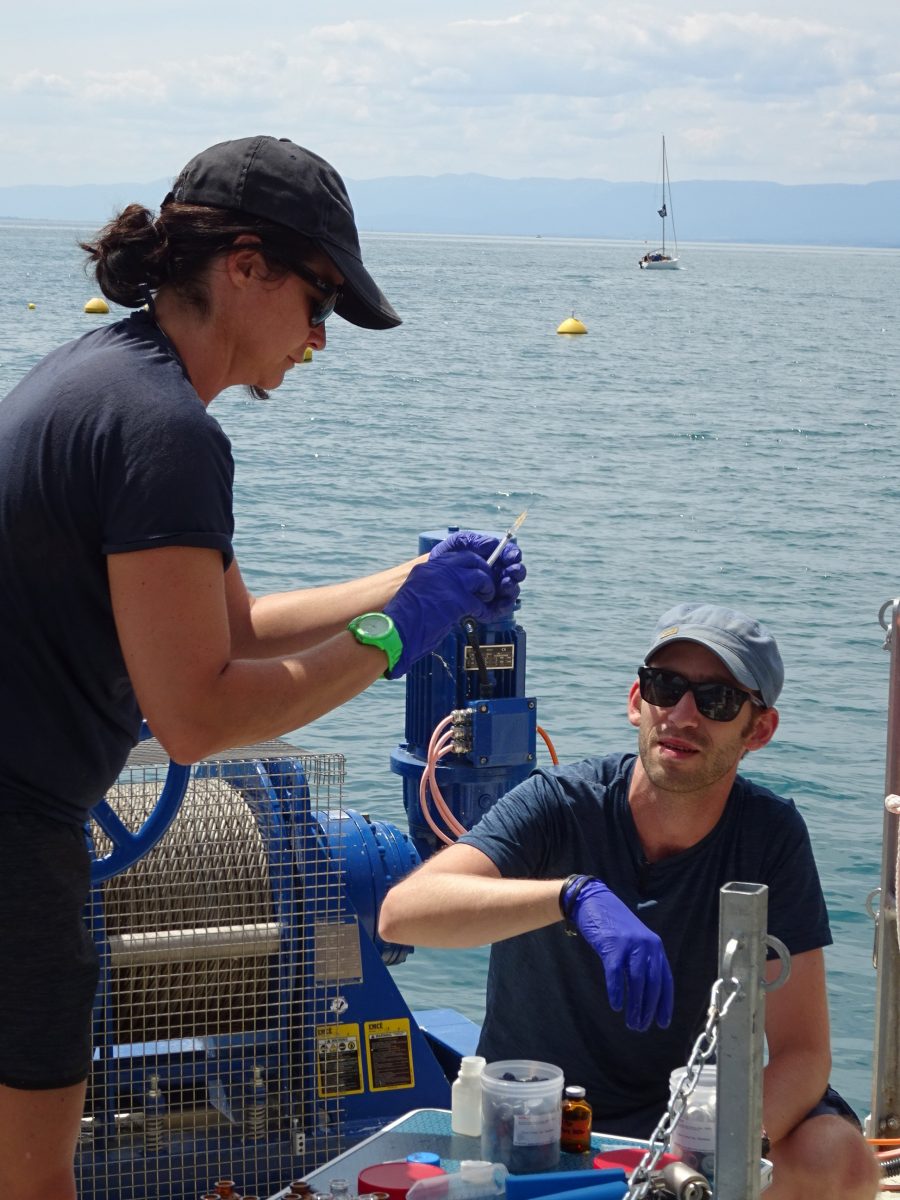
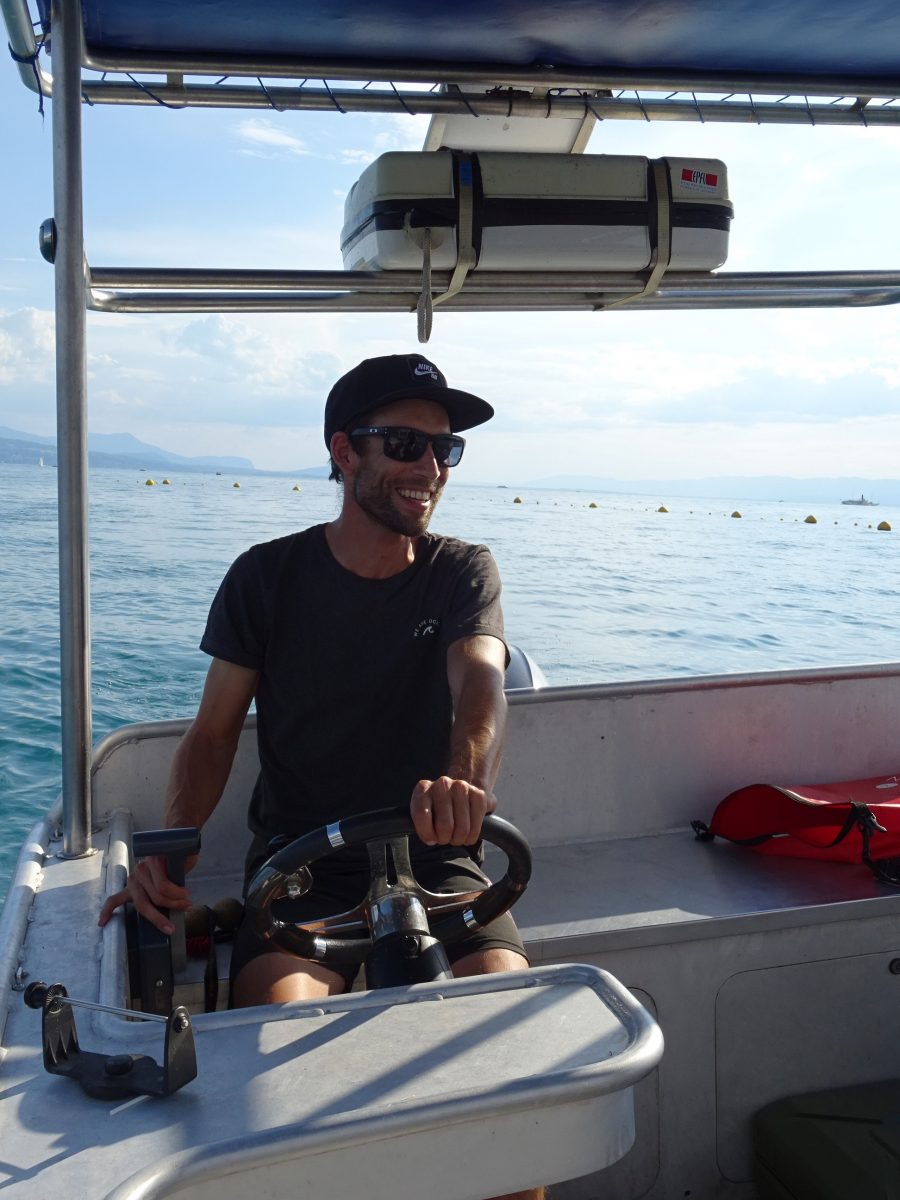
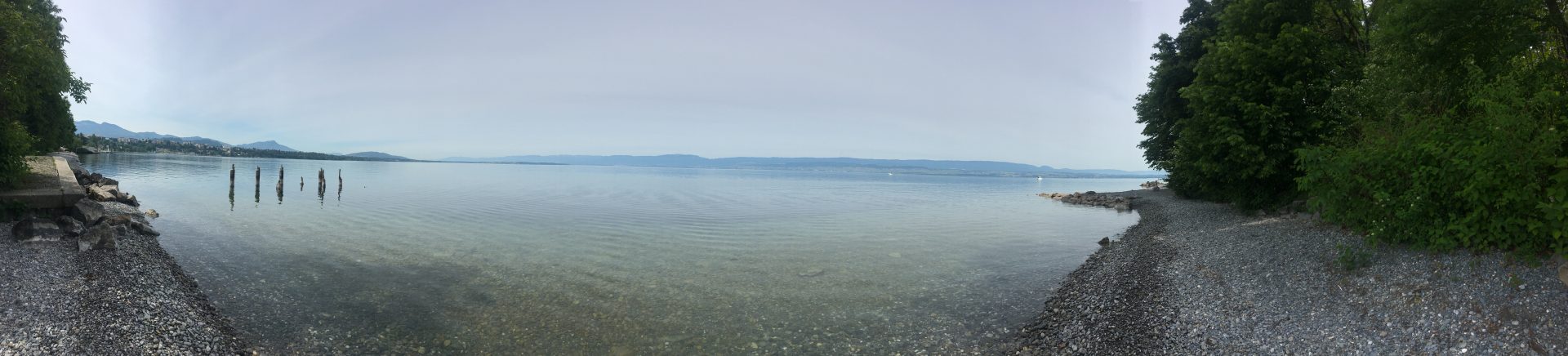
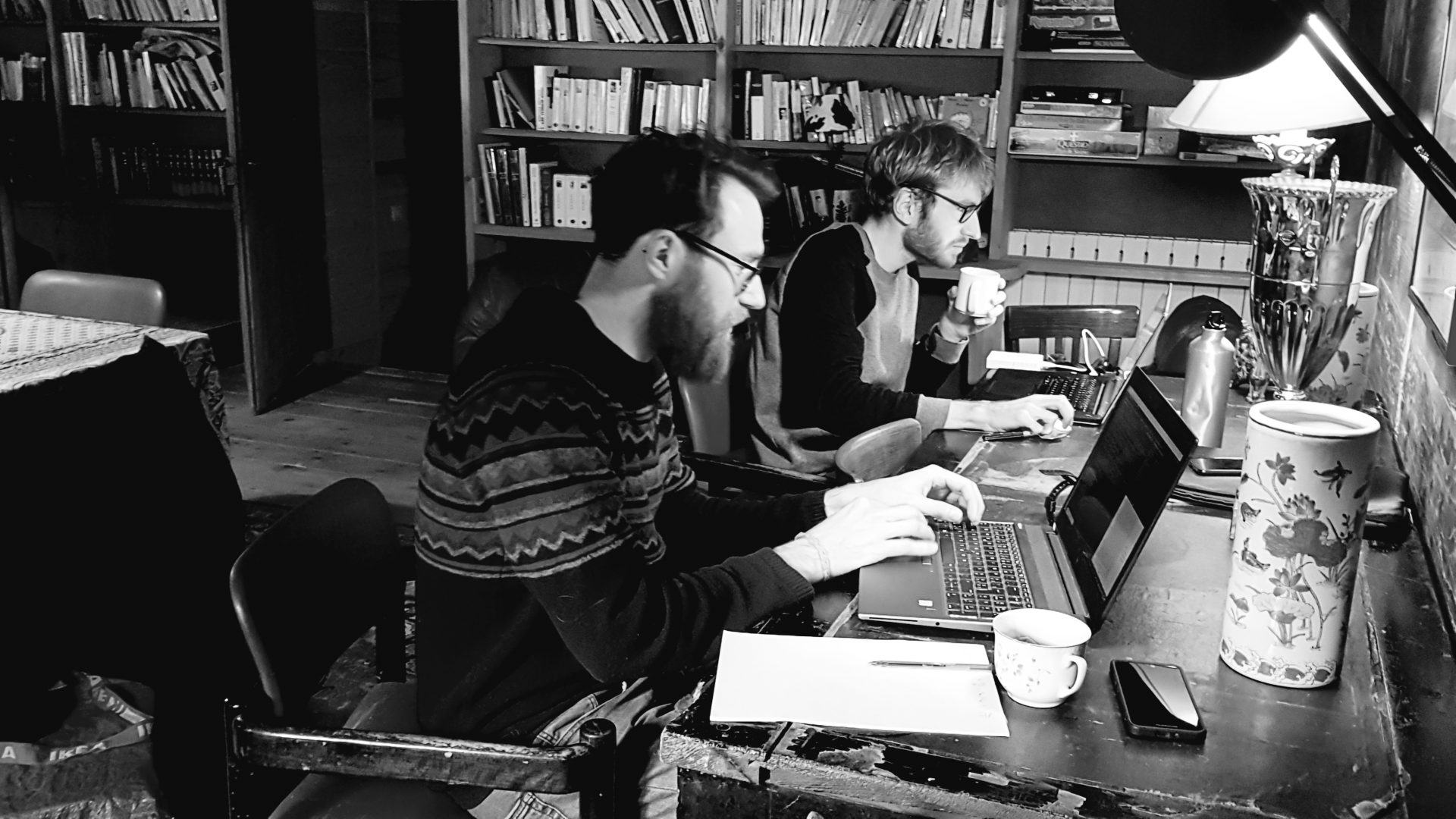
Quantifying diel changes in carbon processes in Lake Geneva : How much do we miss by discarding night-time. 24H sampling and experiment (every 4h) on Lexplore by Thibault, Pascal, Nicolas and Marie.

LAKES: Past, present and future of alpine lakes
Institute of Earth Surface Dynamics
Quantifying diel changes in carbon processes in Lake Geneva : How much do we miss by discarding night-time. 24H sampling and experiment (every 4h) on Lexplore by Thibault, Pascal, Nicolas and Marie.
Pump-storage is the most efficient way to store energy, and this will be of outmost importance for transition towards renewable, yet intermittent, energy sources. Mountains are prime targets of hydropower infrastructure, but what are the consequences of the exploitation of mountain lakes as pump-storage infrastructures? A paper by the new awarded Dr Guenand, in collaboration with Segula Technologies, EDF, EAWAG and UNIL.
Guénand, Y., M.-E. Perga, V. Chanudet and D. Bouffard (2020). “Hydropower operations modulate sensitivity to meteorological forcing in a high altitude reservoir.” Aquatic Sciences 82(3): 60.
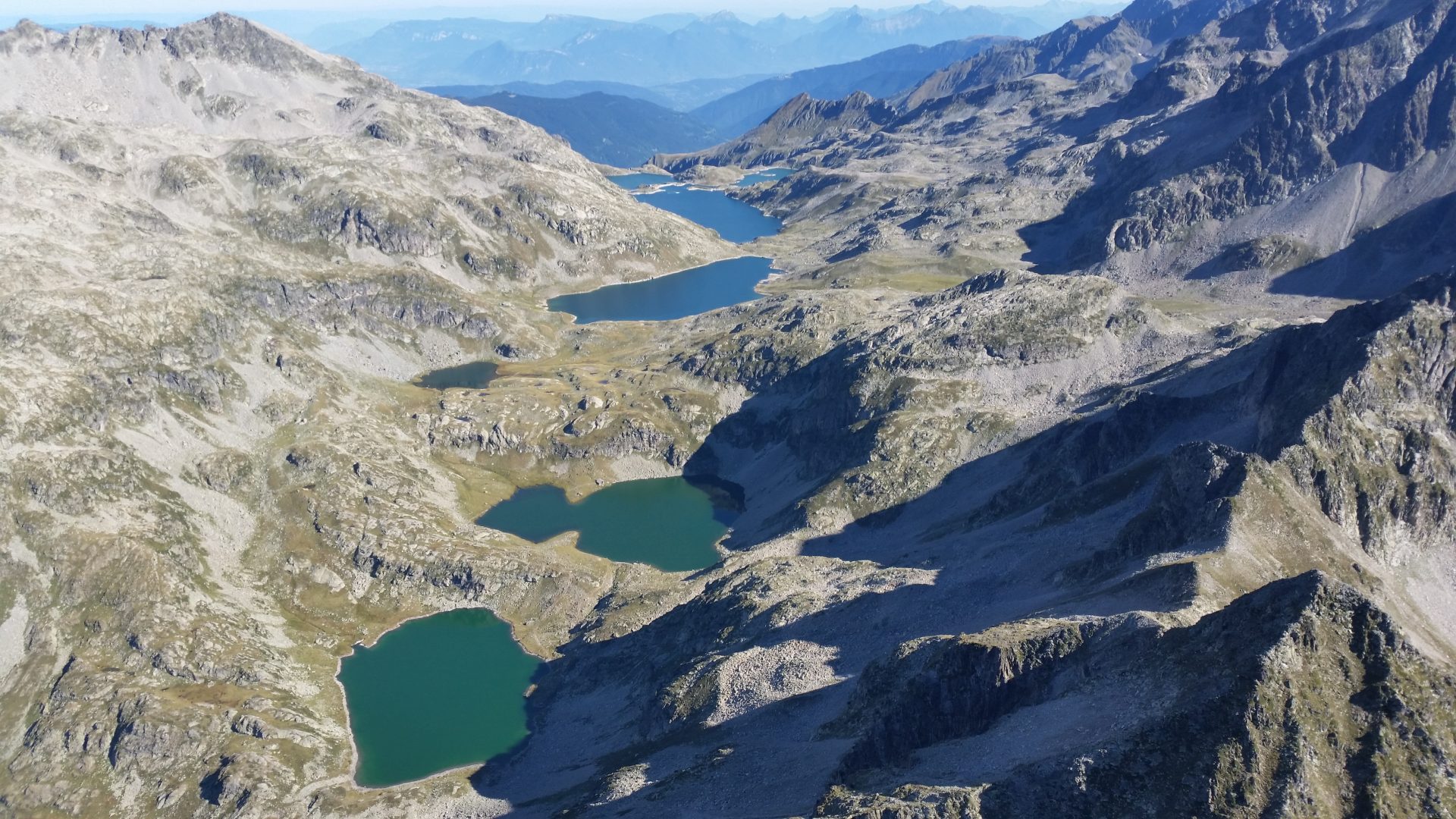
The 7 Laux district, a complex of altitude lakes exploited by Electricté de France.
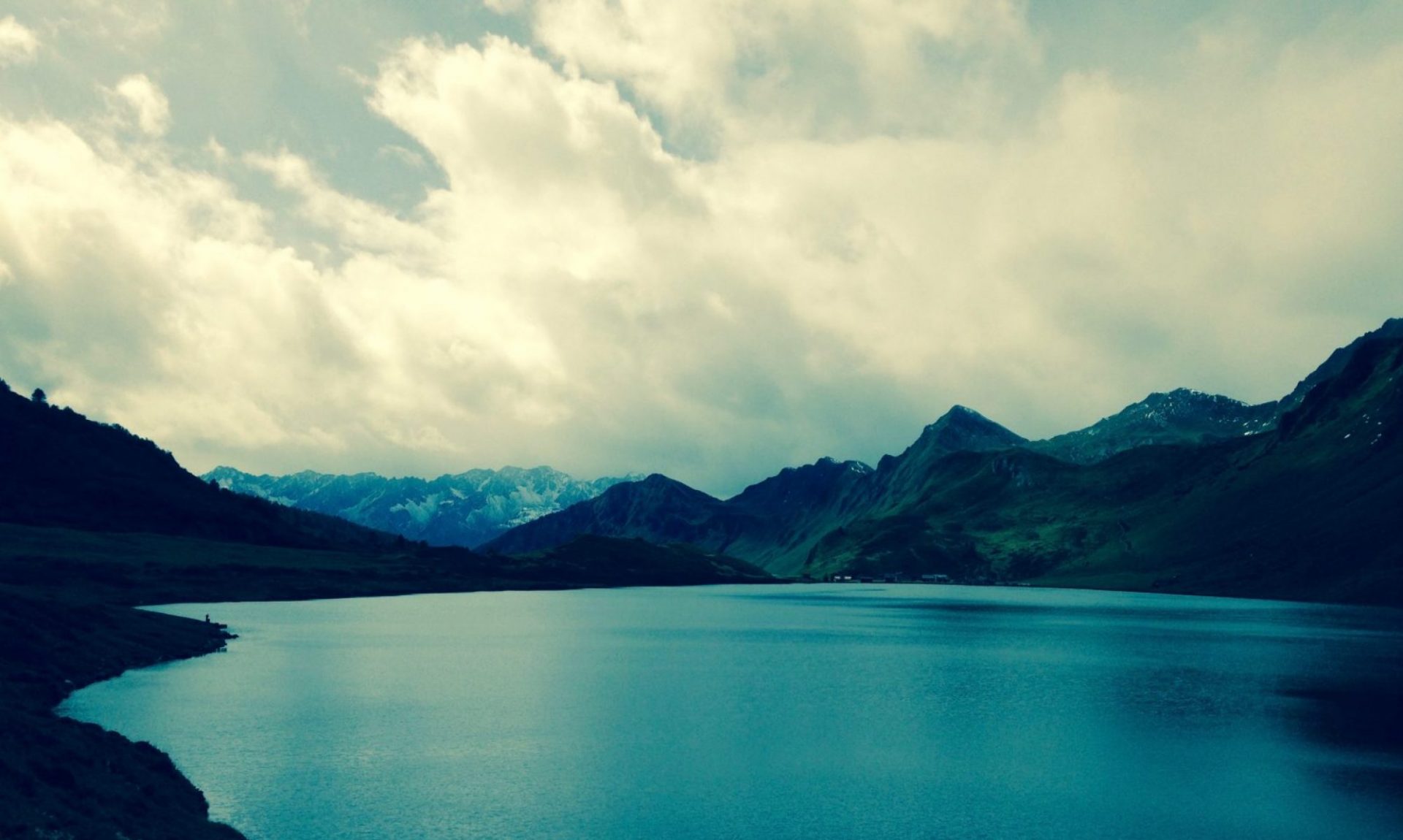
A collective review, led by JP Jenny, of current and emerging threats to the large lakes of the world, including iconic examples of lake management failures and successes. What shall be priorities and approaches for future conservation efforts.

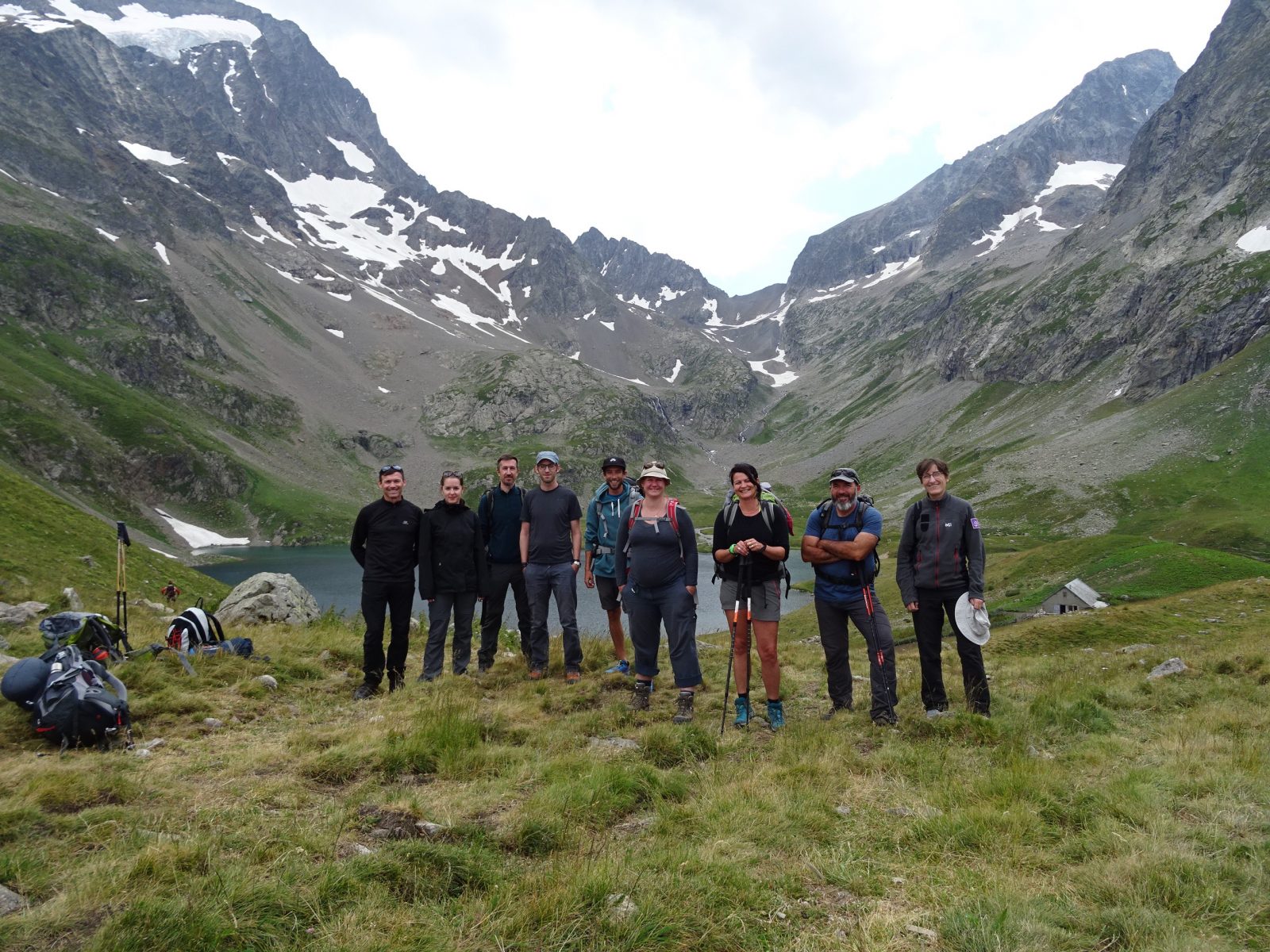
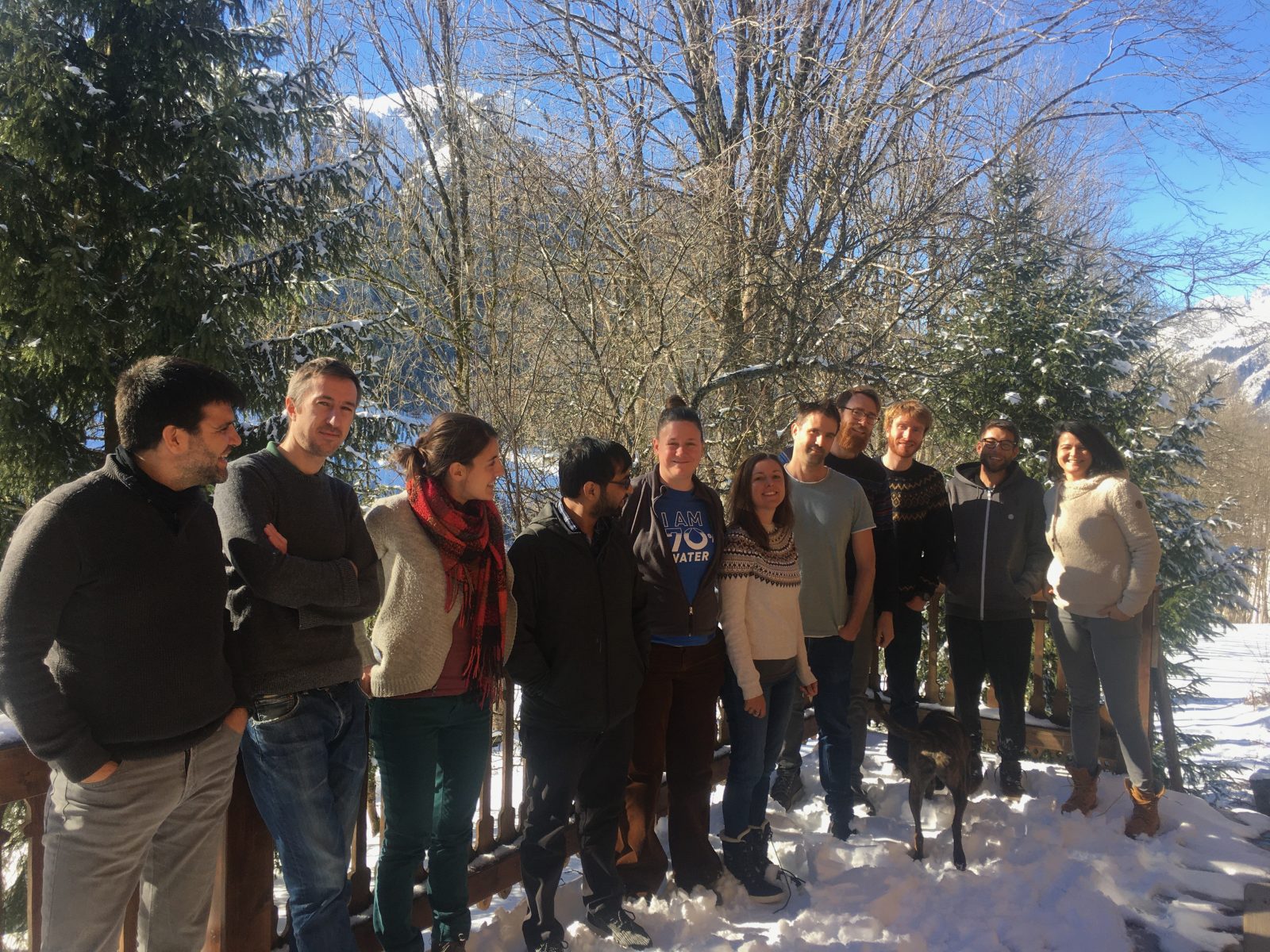
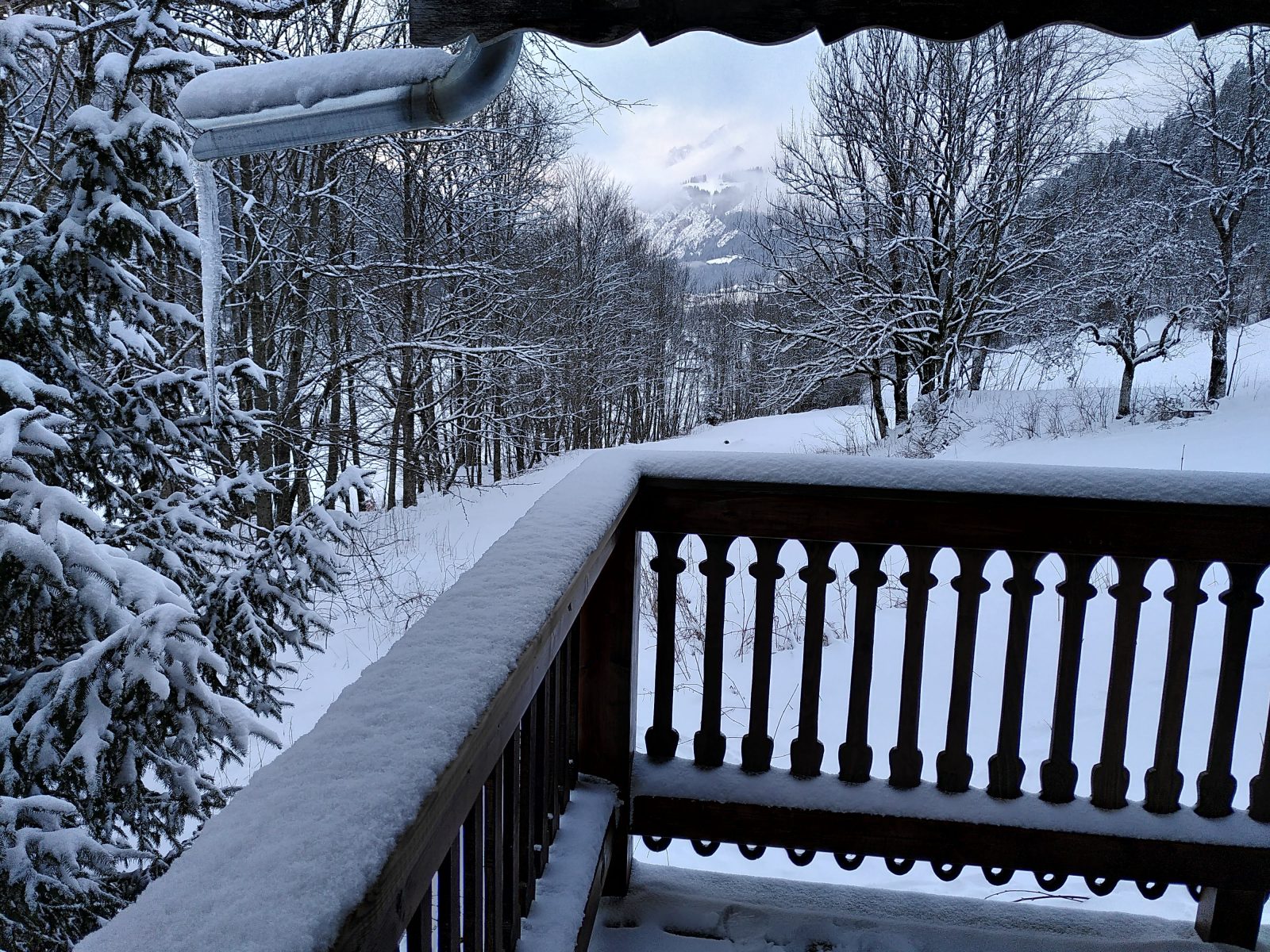
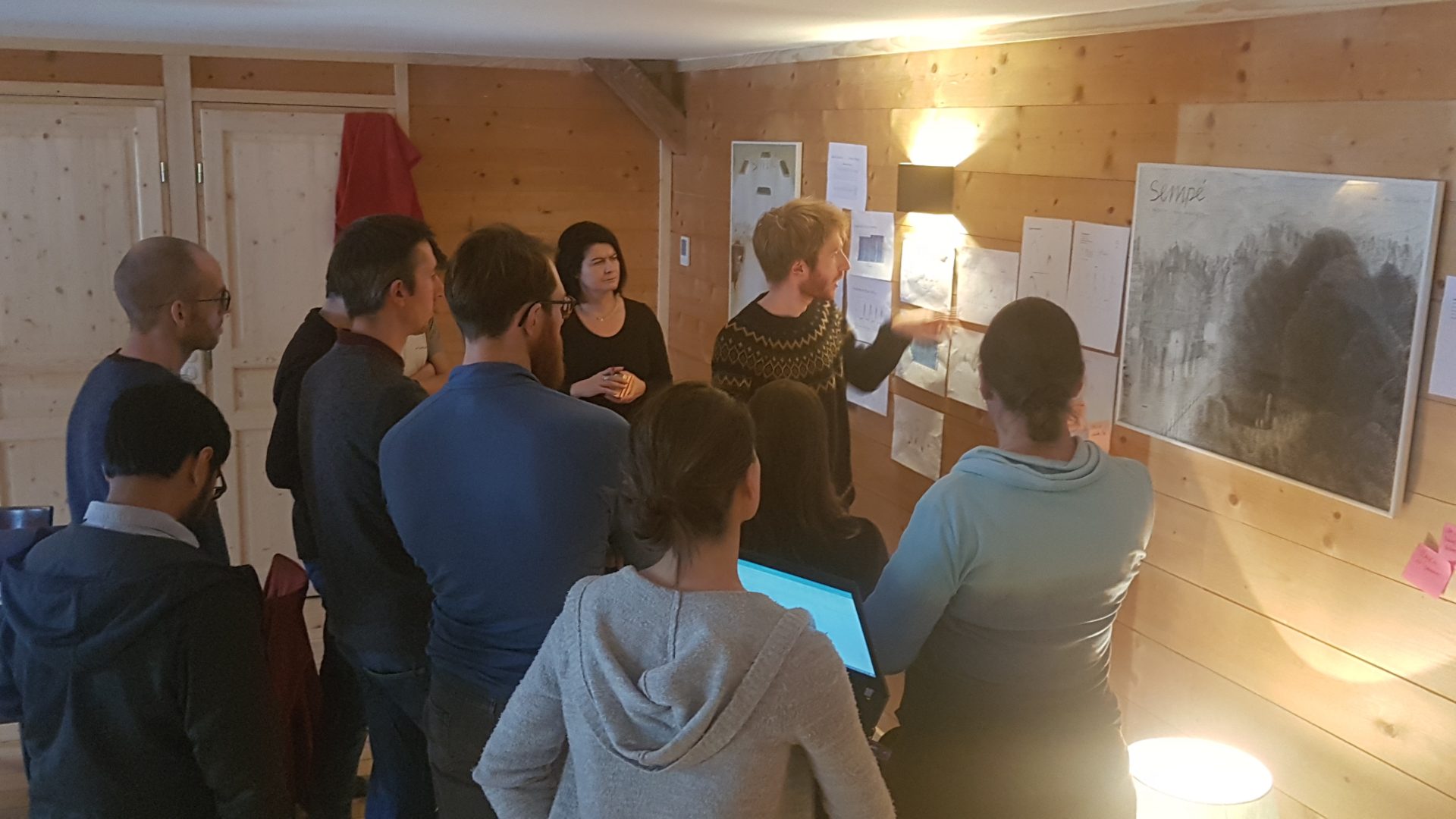
We found out the perfect recipe for the most exciting way of doing science: we locked in a dozen of scientists from UNIL, EAWAG, EPFL, ASTERS and Uni Barcelona in a nice mountain hut for three days: ideas that get tested right on, different backgrounds, hands on computing, early morning and late night coding, strong and collaborative science, lovely landscape and warm atmosphere.

Zooplankton diel vertical migration is a widespread phenomena, occurring in lakes and oceans. It is regarded as the largest synchronized movement on the Earth. Herein, we observed regular diel changes in zooplankton abundance under the ice of Lake Onego (Russia) and showed that those cannot be explained by their pure ecological behavior. Instead, the rhythm of those changes seem to be regulated by the diel appearance of under-ice convection.
https://esajournals.onlinelibrary.wiley.com/doi/10.1002/ecy.2934
two lessons for this work: