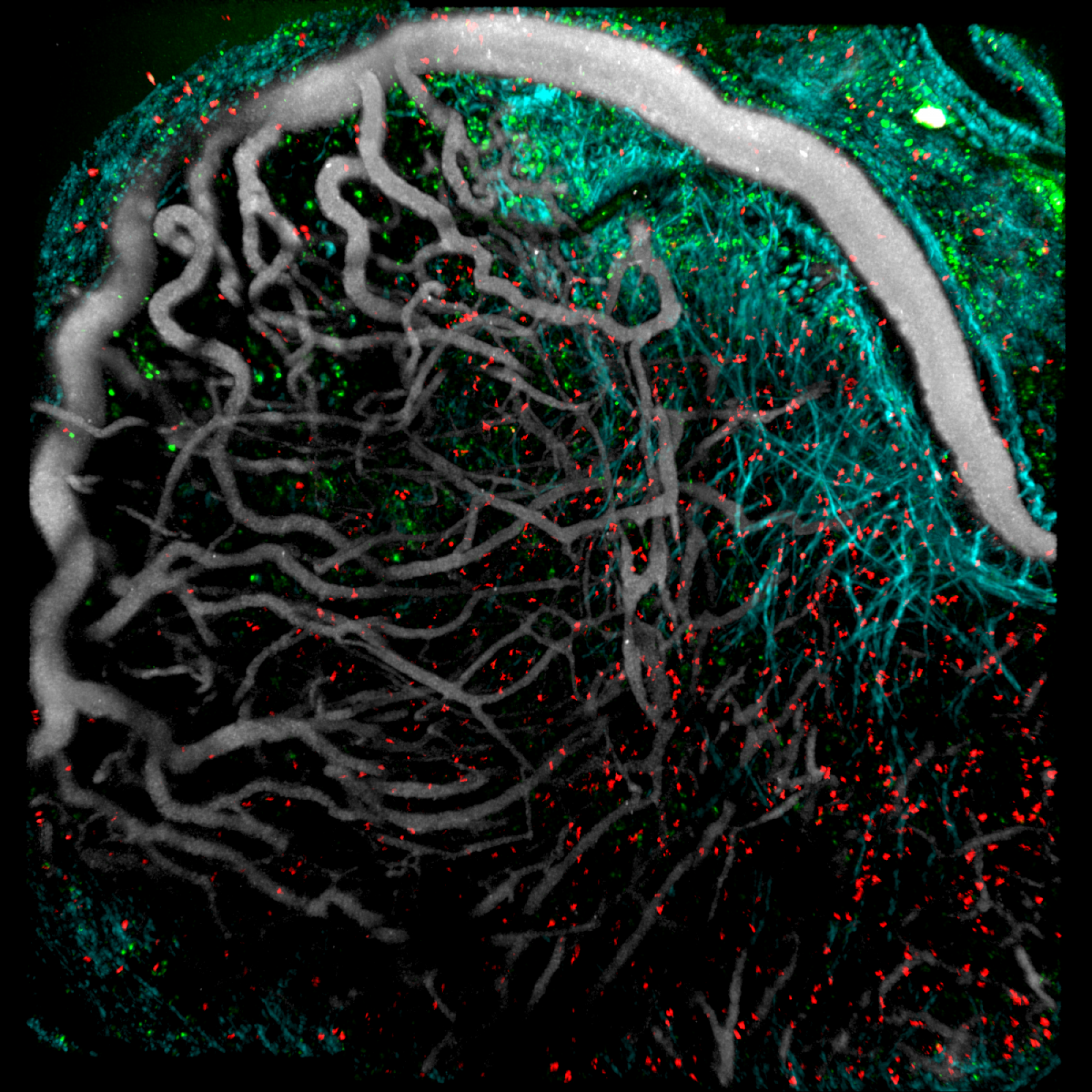
RS2000 CLE C – new X-Ray tube

Dear IVIF users,

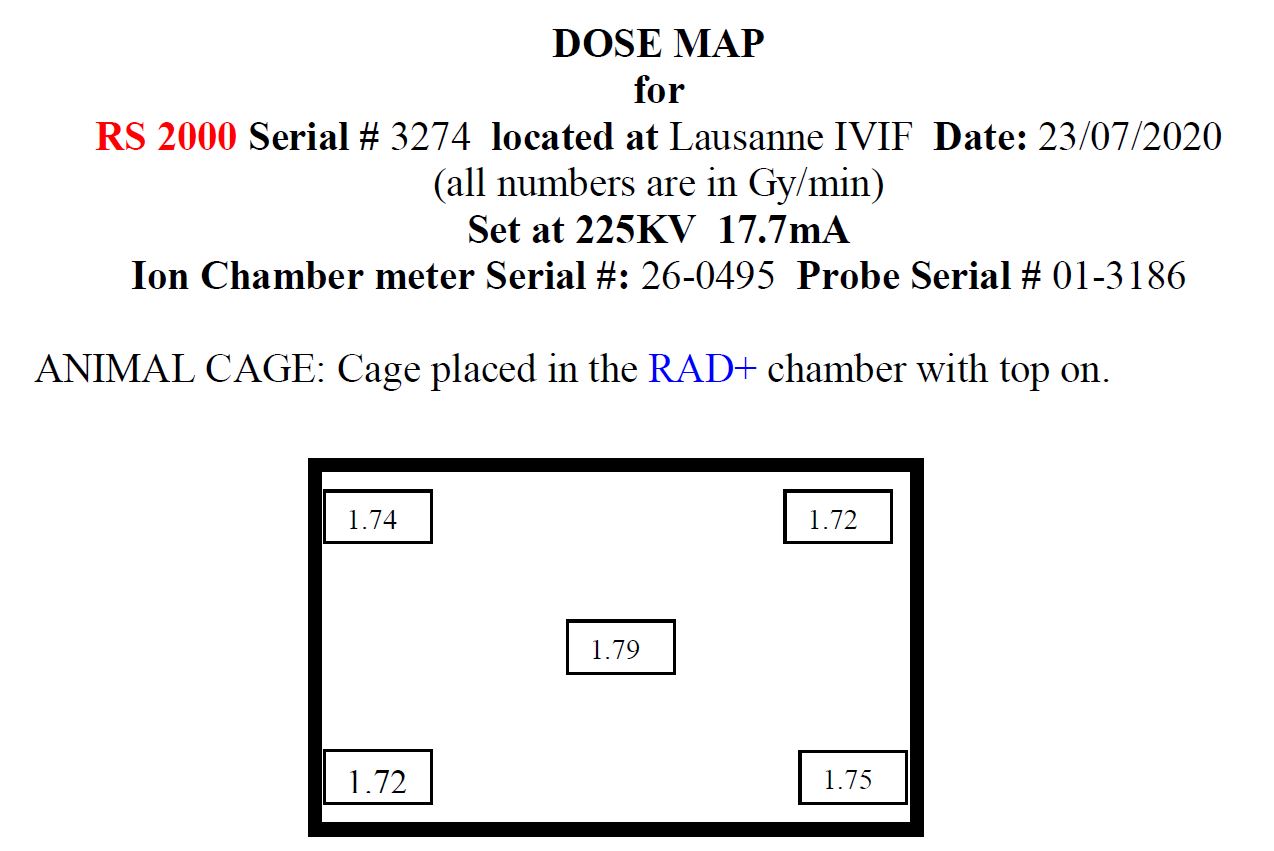
The replacement of the X-ray tube and the high tension cable on the RS2000 were successfully done yesterday. It is now working properly, but please pay attention to the new dose map below.

Again looking at dose map you can easily see that the RS2000 can replace the cesium irradiator for mice and cell irradiation. 

  • MICE: we have an homogenous irradiation of about 1.74 Gy / min using the rectangular RAD+ chamber
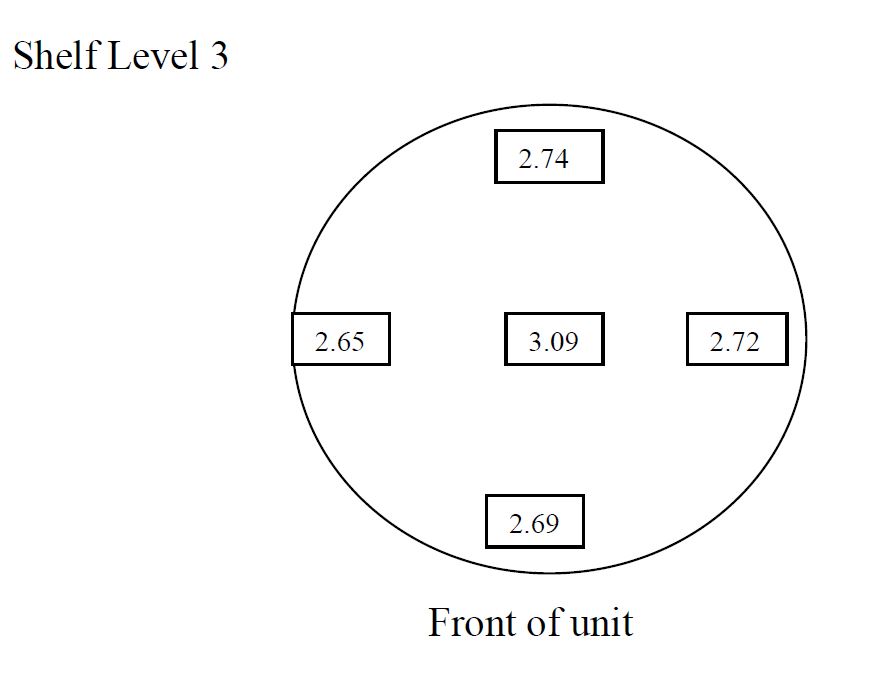
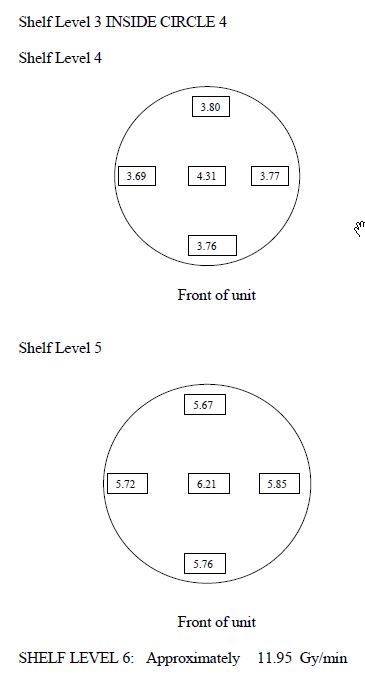
  • CELLS : Depending your dose and size of your plate you can easily use the shelf at different positions (see dose map below): For example a cell irradiation of 10 Gy can last about 10 min on the LISA1 Cesium irradiator (about 1 Gy/min at low level) while with the RS2000 a petri dish placed at the center of the shelf level 4 can receive 10 Gy in about 2 min.
Do not hesitate to ask for help,

best regards

COVID-19 lockdown exit phase 1

Dear IVIF Users,

The IVIF on-site activity has been authorized by the Dean under certains restrictions and specific sanitary rules:

  1. Researchers willing to use the facility must notify their own PI and must receive an official authorization from the FBM.
  2. Do not use the facility if you are sick or if you have been in contact with a COVID-19 infected person in the last 14 days.
  3. Make your reservation on IRIS before arriving. Only the person that booked the instrument is allowed to use it.
  4. Remote work will remain the norm until further notice. As such, please let us know ahead of time (by Friday at noon for the following week and only after having received the authorization from the FBM) if you need us to be physically there to help you. Be aware that most instruments can be remotely controlled. If you have issues please contact us.
  5. Only one person at the time in each room, as such if you need assistance we will first try remotely and only if required we will come. In that case, for offices outside of the animal facility you will need to exit the room first after cleaning up the working zone.
  6. Our activity depends on the animal facility operation, so please make sure you are following the rules suggested by the animal care takers (contact francis.derouet@unil.ch for info). Please pay extra attention to save masks as much as possible (2/day/person).
  7. For analysis workstations located outside the animal facility, only one person at the time is allowed. Make sure you respect the following rules:

thank you for your understanding, stay safe,

Alexandre

Xenogen IVIS lumina II move

Dear Users,

Please note the new date for the move May 26-27, as we had to postpone due to the lockdown.

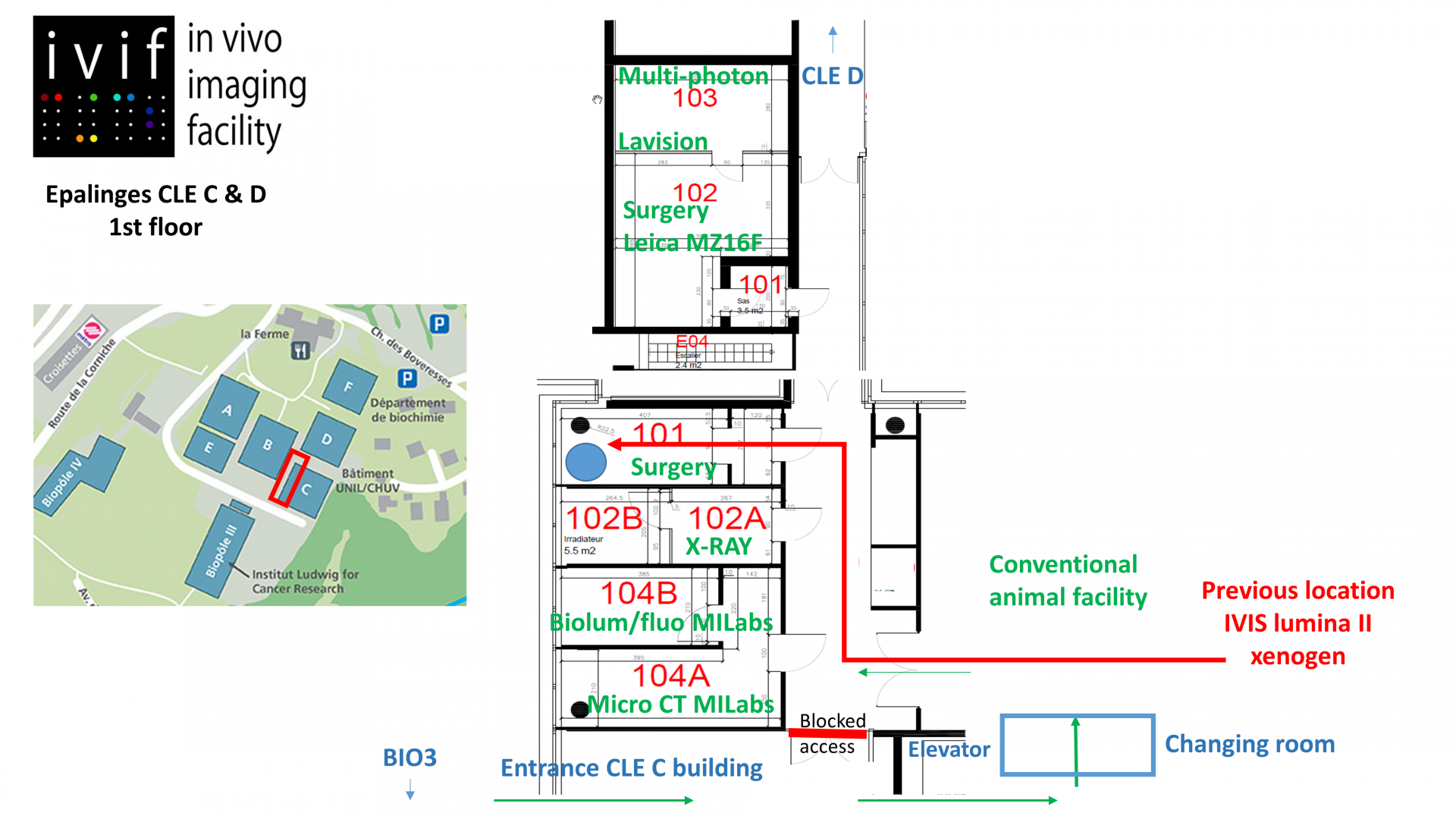
The IVIS lumina II will be moving from the conventional animal facility to the IVIF facility in room 101 next door (see the map). The room is still included in the same sanitary status of the conv-animal facility C  meaning that you can still do longitudinal studies as usual. This will free up some room for the housing and centralized imaging activities to one area. The move will be followed by a maintenance, especially chaging LED connections that are from time to time on & off and will last two-days from April 16 – 17  May 26-27. Days have been booked already on the IRIS system.

RS2000 warm up fault

Dear users,

This morning the warm up on the RS2000 was not possible, we have tried our best to fix it by phone but we will need a technical intervention unfortunately… I will keep you up to date on a precise date, please contact me at alexandre.benechet@chuv.ch if you need any help for replacement.

Combo microCT/OI (Xray + Biolum/fluo)- Advanced training

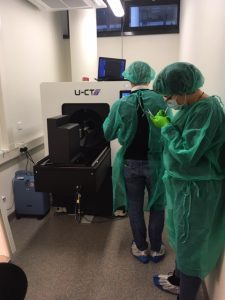
Thanks to all the users participating to the advanced training on the combo optical imaging (Biolum/fluo) and microCT installed at the conventional animal facility CLE C. It was very instructive as it was very diverse, going from Fat pad in vivo imaging to lung nodules, bladder, Caecum and bones. We got a press release after that The University of Lausanne installs a high-end MILabs’ Duet Optical Imager in its core In-Vivo Imaging Laboratory