Author: Géoblog

  • Spatially Explicit Hydrological Modelling for Water Accounting under Climate Change in the Volta River Basin in West Africa

    Spatially Explicit Hydrological Modelling for Water Accounting under Climate Change in the Volta River Basin in West Africa

    Moctar DEMBELE, September 11,  2020 – Institute of Earth Surface Dynamics (IDYST)

    Competition for scarce water resources in the Volta River Basin (VRB) of West Africa will increase in the near future due to the combined effects of rapid population growth and climate change. Residents are dependent on subsistence, mainly rainfed agriculture that is sensitive to climate variabilities. Recurrent floods and droughts damage properties and take lives. Information on water resources and their future trends is fundamental for water actors, as the basis for proper management and implementation of adequate measures to bolster resilience to water scarcity and foster water security.

    This PhD thesis proposes a clear demonstration of combining the Water Accounting Plus (WA+) framework with hydrological modelling and climate change scenarios to report on the current and future states of water resources in the VRB. WA+ is a standardized framework that provides a comprehensive view of the water resources in terms of water availability and consumption uses with respect to different land uses.

    The adopted methodological framework addresses key challenges posed by large-scale hydrological modelling in data scarce environments such as the VRB. These challenges include the issue of missing data in of streamflow records, the reliability of satellite and reanalysis data for forcing or calibrating hydrological models as an alternative to in-situ measurements, and the accuracy of the spatial and temporal representation of hydrological processes with spatially explicit models. A novel multivariate model calibration strategy is proposed to improve the representation of hydrological flux and state variables simulated with the fully distributed mesoscale Hydrologic Model (mHM). The proposed calibration strategy relies on the use of multiple satellite and reanalysis datasets from various sources. Then, a large ensemble of climate models are used to assess the impacts of climate change on water resources under various scenarios. The outputs of the mHM model are used to feed the WA+ framework to comprehensively report on the current and future conditions of water resources in the VRB.

    The results show a clear increase in the projected exploitable water fraction while a decrease is expected in the available water fraction in the near future (2021-2050). Consequently, there is a clear need for adaptation measures to increase the water storage capacity in the VRB to facilitate a good exploitation of the projected increase in the net inflow, which would be beneficial for agriculture production and hydropower generation.

  • An automated data integration framework for stochastic downscaling of coarse-resolution digital elevation models

    An automated data integration framework for stochastic downscaling of coarse-resolution digital elevation models

    Thèse soutenue par Luiz Gustavo RASERA le 12 juin 2020, Institut des dynamiques de la surface terrestre (IDYST)

    Spaceborne remote sensing has enabled near-global mapping of the Earth’s topography. However, satellite-derived digital elevation models (DEMs) are unsuited for modeling fine-scale Earth surface processes due to their limited spatial resolution.

    To this day, fine-resolution DEMs remain sparsely distributed across the planet owing to the technical challenges and substantial costs for producing densely sampled data sets. Over the last decade, multispectral satellite imagery (MSI) has become widely available, providing abundant fine-resolution data for monitoring the Earth’s surface. Although rendering no elevation information, MSI has the potential to provide indirect fine-scale information about topography. Statistical downscaling enables prediction of attributes at scales finer than that of the input data. Multiple-point statistics (MPS) simulation is a powerful alternative for stochastic downscaling due to its ability to replicate complex spatial patterns and assess the uncertainty of the predictions.

    Conceptually, MPS simulation methods could be employed for downscaling of coarse-resolution DEMs by extracting spatial information from available fine-resolution DEMs and MSI of better-measured data sets. The application of MPS simulation for downscaling of DEMs is compelling, but there are many issues to be addressed. Trends in elevation pose a challenge for stochastic downscaling of mountainous terrain. MPS simulation algorithms are also notably difficult to parameterize, often requiring manual parameter calibration. As a result, the integration of disparate data sources, such as DEMs and MSI, into the downscaling becomes a daunting task.

    Addressing these challenges requires the development of an automated data integration approach. In this thesis, a MPS-driven data integration framework for stochastic downscaling of coarse-resolution DEMs is developed. The approach is composed of algorithms designed for three primary tasks: the statistical downscaling of data sets with trends, the automation of the downscaling process, and the integration of secondary data into the downscaling.

    The first contribution of this thesis is a novel MPS-driven downscaling algorithm with inbuilt capabilities for handling data sets with trends. Terrain elevation is modeled as a spatial signal expressed as the sum of a deterministic trend and a stochastic residual component. The approach enables accurate downscaling of coarse-resolution DEMs of either flat or steep terrain.

    The second contribution addresses the parametrization of the MPS-driven downscaling algorithm. An automation routine is used to infer optimal algorithm parameters by framing the parameter calibration task as an optimization problem. The framework provides an efficient alternative for automatic generation of statistically accurate fine-resolution DEMs.

    The third contribution builds upon the two aforementioned developments by integrating finer-resolution MSI-sourced data as secondary information into the downscaling process. Elevation and MSI data with varying spatial resolutions are integrated based on a probabilistic framework. The approach enables to enhance the structural accuracy of the fine-resolution simulated DEMs and to reduce the inherent uncertainty associated with the downscaling.

    Developments in this thesis provide an efficient, low-cost alternative for downscaling of coarse-resolution DEMs based on the integration of available finer-resolution terrain and imagery data. Future research should focus on evaluating potential applications of the downscaled DEMs for the study of Earth surface processes, the planning and design of infrastructures, and the risk assessment of natural hazards.

  • Ice fall in the Mont Blanc massif

    Ice fall in the Mont Blanc massif

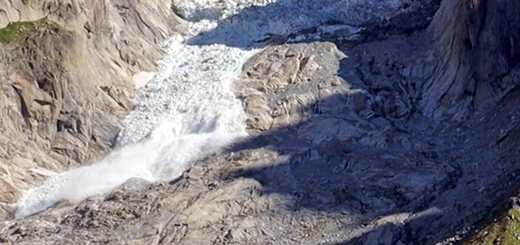
    A massive ice fall was observed during a sampling campaign at the Mer de Glace in the Mont Blanc massif. In between 30’000 and 60’000 m2 of ice collapsed from the Charpoua glacier, which is a small temperate glacier in the south-east face of the Aiguille Verte.

    A glacier is a perennial system on a human scale, a stock of solid water (snow, firn, ice). It is continually renewed by the combined accumulation (snowfall, snow brought by the wind or avalanches) upstream and ablation (melting) downstream. It flows continuously under the effect of its weight, the upper parts, where the accumulation prevails, towards the lower parts, where the ablation dominates. The altitude at which accumulation equals ablation, where the mass balance between gain and loss is zero, corresponds to the equilibrium line. In the Mont Blanc massif, this line was at an elevation of 2800 m.a.s.l. in between 1995 and 2011. Since that it raised to 3200 m.a.s.l.

    For a small and steep glacier like the Charpoua glacier, this change in temperature has strong consequences. The Charpoua glacier is a temperate glacier. It means its base is at 0°C and more, so not frozen to the bedrock. When the temperature are rising, ice at the base melts, the resulting water acts like a lubricant, the basal friction drops and the glacier starts to collapse. According to Ludovic Ravanel (CNRS researcher in Edytem Institute) the recent summer temperature anomalies are not the main drivers. It is more likely caused by the local geography in complex balance between its steep topography, its subglacial hydrology and the strong input of avalanche coming from its right side (South face of the Drus).

    There is no known study for this specific glacier. But few publications were made in the Mont Blanc massif, especially on the Mer de Glace, the main glacier flowing downstream of the Charpoua glacier. Since 1993, the Mer de Glace experienced a horizontal retreat of about 700m and lost around 70m of thickness at its terminus (Montenvers train station).

    During the 5 min event recorded on Sunday 9th, in between 30000 and 60000 m3 of ice collapse, which represents more than 4% of its total volume. Few blocks start falling, then the big part followed. Later in the afternoon when the subglacier river outflow became important, strong debris flows washed the polish from sediments and ice blocks. These debris flows are strongly erosive and it is easy to understand how the canyon shaped into the moraine downstream was made. Other catastrophic events happened this year in the massif due to the rise of the temperature. In august several hundreds of cubic meter of rock collapsed under the ridge of the Cosmic due to the melting of the permafrost.

    This catastrophic evolution of high mountain brings many questions. What is the future of the alpinism regarding the instability of these slopes ? How safe and sustainable hydroelectricity produced into large mountain dams is ? How can we manage the production of so many sediments in our rivers? One thing is sure, the climate change is already happening and our mountains are paying the heavy tribut.

    Benjamin Lehmann
    Doctorant FNS
    Institut des dynamiques de la surface terrestre

  • The recent El Capitan rockfalls have been analyzed by the Risk Analysis Group in collaboration with Yosemite National Park

    The recent El Capitan rockfalls have been analyzed by the Risk Analysis Group in collaboration with Yosemite National Park

    Michel Jaboyedoff, Institute of Earth Sciences (ISTE)

    Assessment of rockfall susceptibility is a difficult task because numerous processes contribute to make the rock mass unstable.

    The Risk Analysis Group of the Institute of Earth Sciences of the University of Lausanne has been working for several years to improve the forecasting of such events. Since 2010, several PhD students and researchers of the group have worked on rockfalls in Yosemite National Park.

    This research, funded by the Swiss National Science Foundation, is performed collaboratively with Dr. Greg M. Stock, Yosemite Park’s geologist of the United States National Park Service (USNPS) and Dr. Brian D. Collins of the Landslide Hazards Program of the U.S. Geological Survey (USGS).

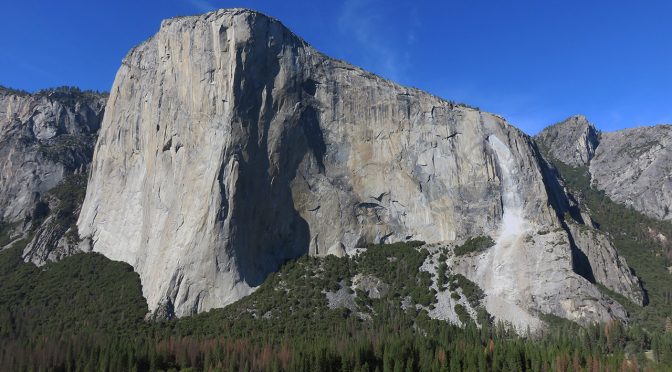
    The recent rockfall events (Figure 1) that occurred on the southeast face of El Capitan rock formation caused one fatality and several injuries (refer to the New York Times, the New York Times, the Mercury News and the National Park Service). These rockfall events have been analyzed in detail (Figure 2) by the Risk Analysis Group and in particular by Antoine Guerin, a fifth-year PhD student. Antoine has provided the first estimations of the collapsed volumes (450 m3 and 10’250 m3) by comparing the terrestrial laser scans acquired over several years with new post-event photogrammetric models built with photos taken by Dr. Stock on 27 and 28 September.

    Figure 1: Before-after comparison of the 28 September 2017 rockfall event. The top photo shows the scar (bottom center) of the 27 September 2017 rockfall event, as well as the one of 11 June 2014 (details in Figure 2). (Photo credit: U.S. National Park Service)
    Figure 2: Location of the scars of the 27-28 September 2017 rockfall events with their associated estimated volumes. Data sources: 2006 & 2010 airborne LiDAR by the National Center for Airborne Laser Mapping (NCALM); 2015 terrestrial LiDAR & 2017 Structure-from-Motion (SfM) models by the Risk Analysis Group; SfM pictures taken by Dr. Stock (credit: U.S. National Park Service).

    In Yosemite Valley, Drs. Collins and Stock have shown that thermal forcing and solar radiation play a major role in the destabilization and rupture of large granitic rock slabs (See Collins and Stock, 2016, in Nature Geoscience and this video of exfoliating rock from YouTuber dotysan).

    By comparing infrared thermal images and high resolution 3D models, the Risk Analysis Group has shown that the El Capitan rockmass, amongst others, goes through significant deformations because of daily thermal cycles. Such deformation occurs every day and leads to a progressive weakening of the rock that may result with ruptures and collapses similar to the events that occurred last week in the southeast face of El Capitan.

    The rapid progression of remote sensing techniques over the past decade has improved not only characterization of rockfalls (in terms of number and volume), but also improved understanding of the mechanisms causing these events. However most of these types of analyses are performed only after an event, and forecasting the precise location of a future rockfall remains a difficult task requiring further investigation. Achieving this would require a detailed knowledge of dimensions of all the fractures cutting the rock mass in order to define rock compartments more susceptible to collapse. The trajectories of the resulting falling blocks would then need to be simulated to produce rockfall hazard maps that could be used for land planning in mountainous areas. This issue of rockfall susceptibility is precisely the topic of a scientific paper to be published this year in the journal Landslides (Matasci et al., 2017).

    Scientific papers

    • Collins, B. D., & Stock, G. M. (2016). Rockfall triggering by cyclic thermal stressing of exfoliation fractures. Nature Geoscience, 9(5), 395-400.
    • Matasci, B., Stock, G. M., Jaboyedoff, M., Carrea, D., Collins, B. D., Guerin, A., Matasci, G., Ravanel, L. (2017). Assessing rockfall susceptibility in steep and overhanging slopes using three-dimensional analysis of failure mechanisms. Landslides.
  • General Conclusions – Next Steps

    General Conclusions – Next Steps

    Prof. Nouria Hernandez, Rector elect, University of Lausanne.

  • A prestigious prize for Gérard Stampli

    A prestigious prize for Gérard Stampli

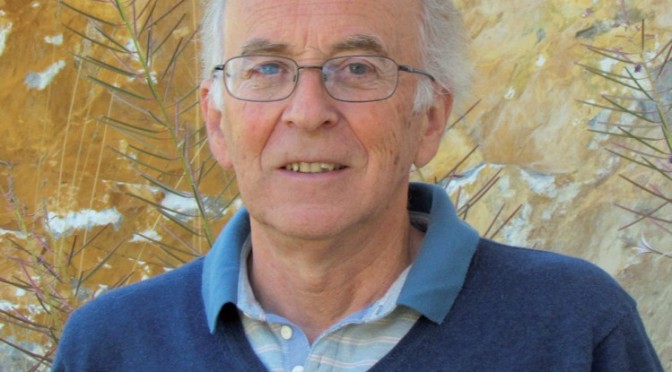
    Gérard Stampfli, geologist and honorary professor at the FGSE, received the prestigious Leopold von Buch Medal (German Geological Society) at the end of 2014 for his lifetime achievement. A look back at an exceptional career.

    Presenting Gérard Stampfli, I had the pleasure to collaborate with him during the last 20 years. Trying to understand plate tectonic reconstructions, I had to learn that this is just not “moving basement pieces around the globe”, but to find the geographic coordinates for a past time period, where an assemblage of data and observations would fit best the given geological framework.

    Born in Pont-l’Evêque (Calvados, France) on 23. February 1949, Gérard Stampfli obtained in 1973 his master in Earth-Sciences at the Department of Geology and Paleontology, University of Geneva/Switzerland, and concluded his studies in the NE Alborz range (Iran) with his PhD thesis in 1978: Etude géologique générale de l’Elbourz oriental au sud de Gonbad-e-Qabus (Iran NE).

    His scientific career, then, led him from 1978 to 1987 to Shell International, where he acquired his wide knowledge and experience as seismic interpreter and basin analyst in the Shell main office, The Hague, and subsequently in Borneo and New Zealand, and continued subsequently in the Shell research centre Rijswijk in charge of the 3D seismic interpretation development, before he became team leader for the Gulf of Suez team in Cairo.

    Since 1987, Gérard was nominated Professor at the University of Lausanne, Institute of Geology and Paleontology, in charge of general geology, geodynamics, 3D seismostratigraphy and sequential stratigraphy, basin analysis and dynamics, and post grade courses and field trips on Tethyan geology.

    During all these years, Gérard participated and organised many national and international scientific conferences and lectures, acted often as key-note speaker, and was responsible in International Geological projects like IGCP 369 (Peritethys Rift Basins, 1994?1999), the TRANSMED Project IGC 2004, Florence, and ELD, Europrobe project on the dynamics of Europe, 2006.

    Gérard, consequently, spent most of his lifetime as a geologist, and mostly together with his PhD-students, to gather in the field evidences for the existence of Tethyan oceans, and specifically for the definition of Palaeotethys and Neotethys. Beginning in Geneva with his PhD in Iran, he already dug out in 1978 convincing evidence of what had to become the first step in defining Palaeotethys.

    At present, its existence is not to be demonstrated anymore, and about a dozen of reviewed publications on this subject with numerous field data can no more be discarded nor ignored. The fauna and stratigraphy, the evolution in space and time, the suture with the seamounts, the ophiolites, all presenting evidences for the northern margin of Palaeotethys, the observations covering the areas from China to Thailand, the Himalaya, Afghanistan, Iran, to Turkey, Greece and Italy. Nice evidences of the Palaeotethys’ southern margin were found in the Moroccan Anti-Atlas and Meseta, and will certainly be proven even in Spain.

    A new door opened since 1996, when including the evolution of the Gondwana margin in the frame of the Intra-Alpine terrain. The input of new data for the pre-Mesozoic basement during my regular visits at Lausanne resulted in the present-day models on the geodynamic evolution of the Gondwana margin in the frame of its worldwide plate-tectonic situation. I remember well, how all these new data were digested in the working group, and that even my bad understanding as a hard-rock geologist would not hinder Gérard, to repeat patiently, why certain models would not work, and why there were only specific reasons, how to see the plate-tectonic evolution through time. I also learnt, that the so-called “Steinmann trilogy”, the beloved model for the evolution of oceanic crust, had to be replaced by thinking in a multivariate evolution model through time, remaining probably like a 3D-web in Gerard’s mind, I suppose. How to communicate such multivariate knowledge, when we have still difficulties to see such models in two dimensions and on a geographic map ?

    It is consequently a great pleasure for me to present Gerard Stampfli as the 2014 recipient of the Leopold von Buch medal. With my congratulations!

    Jürgen F. von Raumer
    Fribourg/Switzerland