How did the Earth’s continental crust form and transform over geological time?
This question about the beginnings of our planet’s fundamental dynamics remains hotly debated. Jack Gillespie, who has just taken up his post as Ambizione fellow1 at the Faculty of Geosciences and Environment (FGSE), is keen to unravel this mystery.
How do you infer a history of over 4.5 billion years?
Jack Gillespie: I am an isotope geochemist. Using the isotopic composition of rocks, I try to understand what they have experienced – the geological processes they have gone through over the course of their long history. Thanks to these “tracers”, I’m working to resolve a question that keeps nagging at me: was the early Earth similar to the one we live on? Or was the early tectonic environment profoundly different from today’s Earth?
“We know so little about the origin of the planet we live on.”
Jack Gillespie
Why are you interested in early Earth history?
J. G.: The scale of our ignorance is immense. We know so little about such a vast period! That’s what I find so compelling. And the further we go back in time, the greater the challenge, as our archives are increasingly small and fragmented. The most ancient rocks we have are 4 billion years old. For the first 500 million years, we simply don’t have any intact rock.
Now, how can you meet the challenge of jumping into the distant past?
J. G.: Today, we can “do more with less”. We’ve improved both our conceptual understanding and our technical abilities. So we can examine a very small volume of material and extract more information out of it. Just a few decades ago, geologists had to reduce and dissolve down large chunks of rock to derive geochemical insights.
My project synthesizes and brings together a bunch of powerful advances to develop new tools that can meet this challenge.
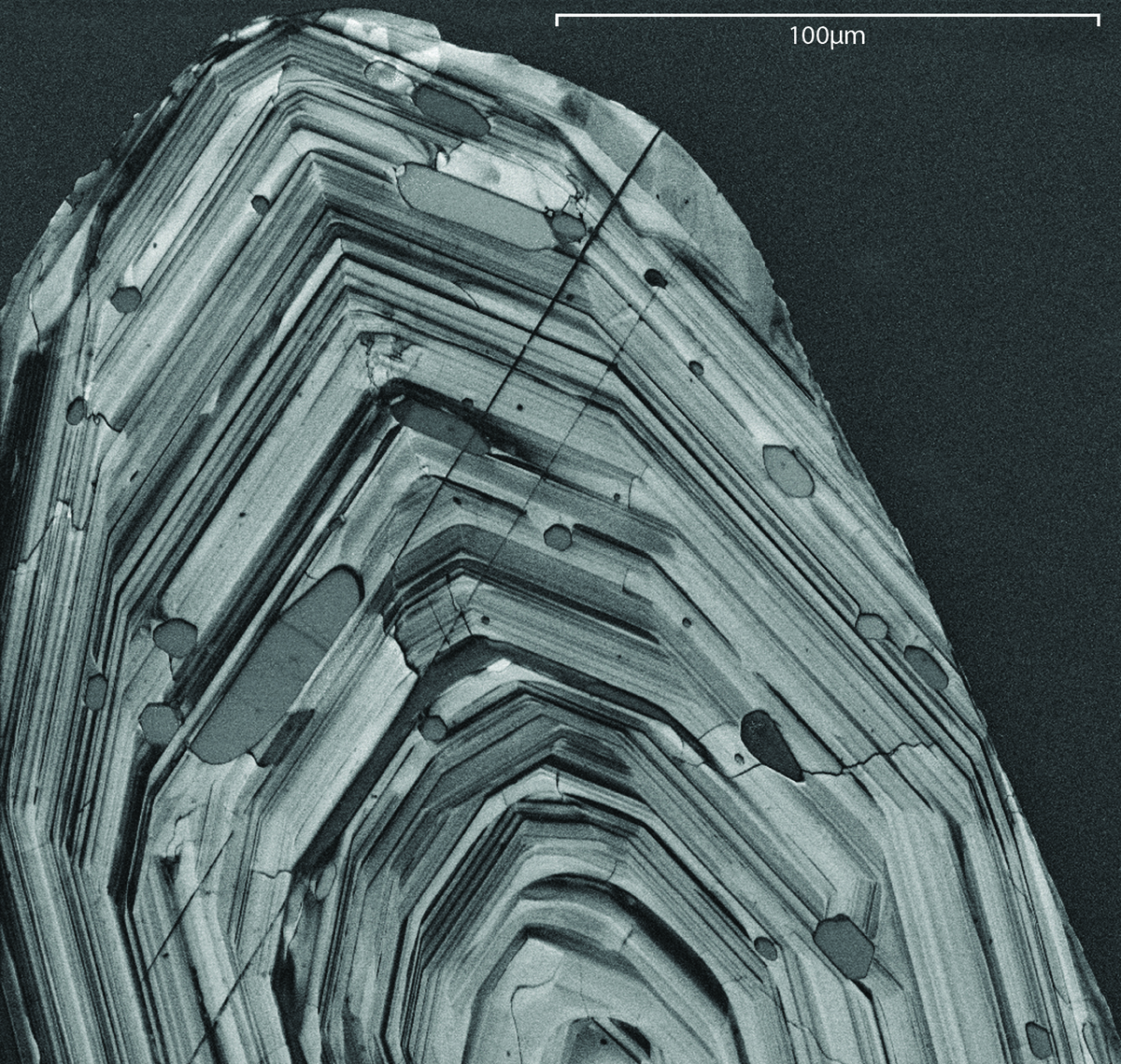
“The conditions that prevailed during the formation of a rock leave different signatures in the minerals. We’re deciphering them to try and reconstruct these conditions.”
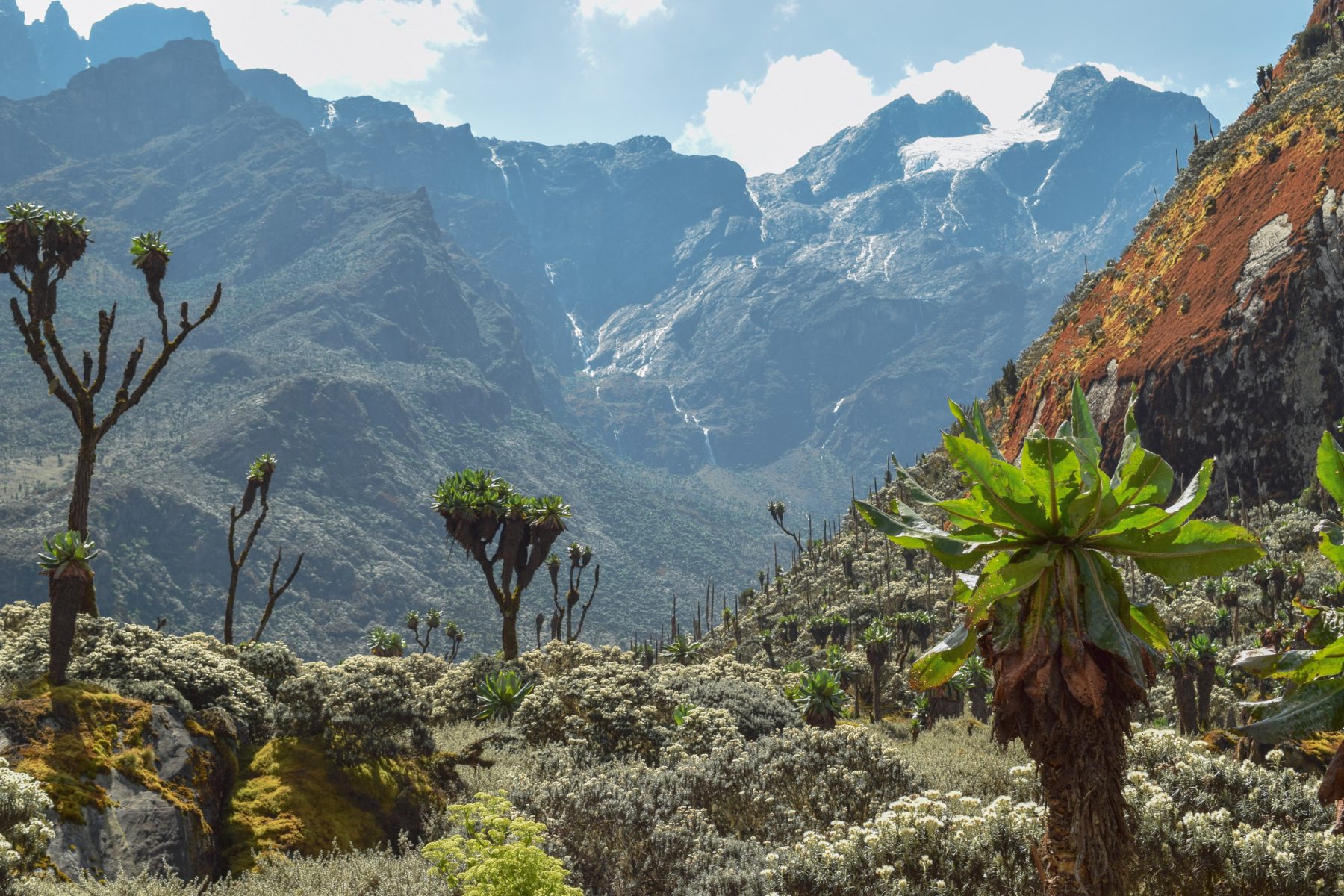
Was it a hellish period, as the name “Hadean” suggests, in reference to the god of the underworld, Hades? This is a somewhat outdated idea, and we’ve known for some time that this wasn’t precisely the case. But the nature of the primary landscapes and the forces that governed them during the Hadean and the Archean remain uncertain. Some emphasise a violent and eventful history for the early Earth, such as is illustrated on the left, with burning skies and meteorites crashing everywhere.
Others would argue the more peaceful vision on the right, with its placid volcanoes and bodies of water is more faithful to reality. This scenario is compelling, with the hot pools at the edge of the land identified as a good place for the first hatching of life.
J. G.: Several groups at the Institute of Earth Sciences (ISTE) are raising questions about early Earth, and our approaches will enrich each other. Johanna Marin Carbonne is working on the link between the atmosphere, the oceans and primitive continents, and the processes that led to life and oxygenation of the atmosphere. Othmar Müntener is interested in the creation of the earth’s crust.
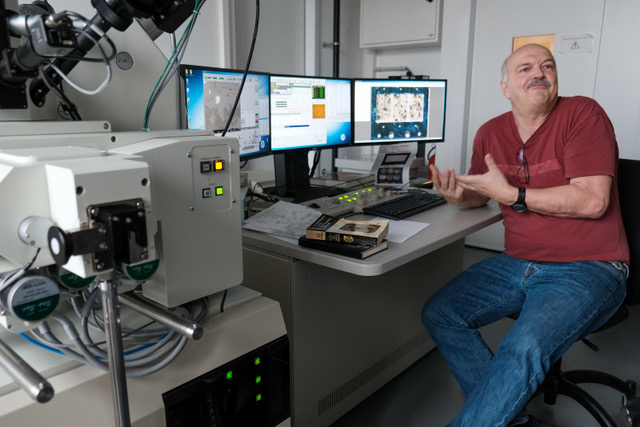
The SwissSIMS ion probe is ideal for what I want to do: measuring tiny features and extracting information from it.
Ambizione est une bourse carrière du Fonds National Suisse, à destination des jeunes chercheuses et chercheurs (dans les quatre ans suivant l’obtention du doctorat) qui ambitionnent réaliser et diriger un projet de manière autonome. Les subsides sont octroyés pour une période de quatre ans. ↩︎
Prof. Anindita Samsu embarked on a global program for women and non-binary people in STEMM (science, technology, engineering, math and medicine).
This 12-month leadership program aims to foster inclusiveness, innovation and ecological and social sustainability. Prof. Samsu renewed her commitment to act for the climate and embody her own style of leadership.
Anindita Samsu was motivated from the very first time she heard about the Homeward Bound initiative. The program’s mission is to build a global network of women and non-binary leaderscapable of addressing the world’s pressing challenges. Homeward Bound’s ambition is to increase their influence, in the belief that gender balance in leadership will serve everyone. The program also values new ways of leading: more collaborative, more inclusive and more focused on the concept of a “global home”.
It took Anindita five years to sign up for the program, which she entered in 2022 after a competitive selection process. Back from this unique experience, she explains to us how she changed and strengthened her vision as a researcher, team leader and teacher.
The participants of Homeward Bound followed sessions on leadership, visibility, and strategy, well-being and Antartic science. The program consist in 24 workshops during one year. For Anindita, one of the most interesting components the LSI (Life Styles Inventory). “Conceived as a diagnostic tool for understanding our thinking styles and how our colleagues view us, it revealed insights on our effectiveness as leaders and the barriers that we place on ourselves.” (photo: A. Samsu).
What have you learned about your leadership style?
This experience helped me validate my approach. I realised that even though my way of leading is rather unconventional, it does not make it less valid or effective in academia. I am convinced that each person with their unique background, skillset and life experience can contribute to the success of an institution like UNIL.
I would consider my leadership style as consultative, adaptive, and gentle. This does not mean that I go along with what everyone wants, but I like to sit back and listen, taking stock of what is being said (directly and indirectly), before contributing my opinion or making a decision. With my research group, I can lead from the front, middle, or behind – depending on my familiarity with the topic or where I feel I can contribute most meaningfully. I am certainly not confrontational, but I try to persuade others with reasoning or enthusiasm, and I can stand my ground when challenged. I just feel that I can work most constructively with someone when we have mutual respect and trust.
“I think it’s important to promote and welcome diversity in leadership styles”.
Anindita Samsu
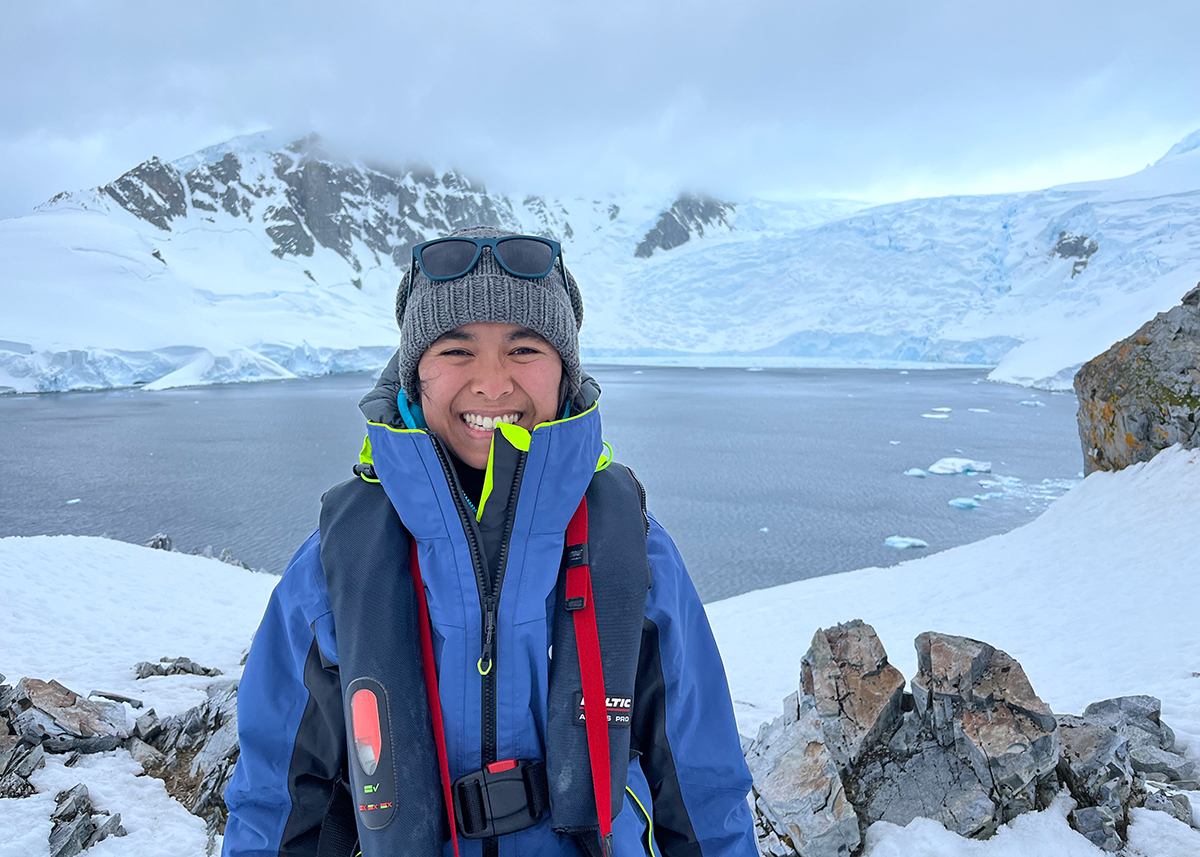
Anindita Samsu was part of the 7th cohort of Homeward Bound. The program provides an immersive environment for participants to reflect on sustainable solutions for the future. It ended with a 19-day voyage to the southernmost continent, with the awe-inspiring backdrop of a region profoundly impacted by climate change, a destination that was the subject of intense debate among participants (photo: A. Samsu).
Will this experience change your professional life?
As a young professor, I face new challenges and I am constantly learning. The voyage has endowed me with a clearer vision and strategy to implement in my research: which projects to conduct, how to choose a team and interact with it.
I trust that as long as I have in view the most important outcomes, I will make the right decision. I feel more confident in the way I work and the way I want to take my team along for the ride. It’s important for me to make sure that my group and I are working towards shared and overlapping goals, and that we support and elevate each other. I am quite excited to move forwards and carry this conviction through.
“I am confident that being supportive is an effective way to interact with my team and collaborators.”
Anindita Samsu
One of Prof. Samsu’s most enduring memories is a serene moment on the ship’s deck. She was standing outside by herself, looking at the islands and icebergs while the sea was calm. She felt secure and at peace, even though she was on this little vessel in the middle of the ocean surrounded by harsh wilderness, far from the nearest civilisation and hospital. This awe-inspiring moment reaffirmed the choices she wants to make as a leader and a human being to contribute to a safe and sustainable future for everyone (photo: A. Samsu).
Has this experience changed your commitment and your vision?
The program provides a dynamic and supportive environment to reflect on, discuss, and collaborate on how we can contribute as STEMM leaders towards a sustainable future – all against the backdrop of Antarctica, where the impacts of climate change are strongly felt despite its remote location.
The final event is a voyage to Antarctica, where the impacts of climate change are strongly felt despite its remote location. The trip provided a exceptional setting for discussion and collaboration. Given the carbon footprint of an expedition to Antarctica, however, we have constantly reflect about our impact on climate and wildlife, and how to make this program more sustainable in the future.
At the end of the day, we all took so much from this experience. We changed the way we viewed a lot of things, regarding our activities at work but also our personal lives. We have a new commitment to helping promote, facilitate and lead initiatives that benefit society and the environment. I also hope that by sharing what we learned, we will move others to act.
Floreana Miesen is a field technician, involved in a variety of field projects at the Institute of Earth Surface Dynamics (IDYST). Natalie Emch is Equity, Diversity and Inclusion (EDI) officer at the Faculty of Geoscience and the Environment. Through their involvement in this working group, both would like to ensure fieldwork would be a positive learning and professional experience for all. Three other people are actively working in the group: Prof. Georgina King, Dr Ian Delaney and Léa Rodari.
Fieldwork constitutes a crucial element in teaching and research within Geography and the Earth and Environmental Sciences. It has a pivotal role in shaping a student’s career trajectory and for accomplishing research objectives. Recognizing its significance has raised the following concern: how can we make fieldwork as inclusive and accessible as possible? In a collaborative effort to address this issue, Floreana Miesen and Natalie Emch are actively engaged in a working group tasked with crafting a toolkit to help make fieldwork more accessible. The aim is to come up with solutions that respond to the various needs, by involving the entire student and research community in the reflection process.
Can you say more about this working group “A good practice guide for fieldwork”?
N.E : The working group endeavors to collect input and advice from members of the FGSE across different perspectives and institutes. Our aim is to produce a Handbook of Good practice – a useful resource for both teaching staff and students. It will be a support document for preparing and organising any type of field camp, whether for teaching or research purposes. Unlike a set of rigid rules or directives, the Handbook aims to inspire and guide. It will cover aspects such as communication, sanitary installations, accessibility to material to give some examples. We would like the community to know there is a support structure at the faculty to address these challenges related to fieldwork.
What will be the content of this handbook?
F.M. : The document is structured around simple questions for teaching staff and participants. They encompass safety and well-being issues. For examples: “Have the participants been informed about the daily schedule, the mobile phone network coverage, local customs…?” – “Have participants been informed of the equipment to bring and how to obtain it?” – “As a participant, am I uneasy about an issue I wish to raise with the organisers? Is there any constraints I could to share with the organisers, such as family care responsibilities?”
The important point is to foster timely communication and open dialog between organisers and participants. This initiative seeks to raise awareness about the fact that students may not dare to express significant concerns, such as safety and personal needs. It’s central to avoid assuming that everyone has a sleeping bag, has been to the mountain tops or is free of family duty.
“The aim of the document is to remove barriers that can hinder or prevent participation and learning, and to create safe and pleasant conditions for everyone.”
Floreana Miesen
Work in progress – your input is welcome!
You are a student, a teacher, a researcher at the FGSE and wish to share your experience on the field? Or do you simply want to know more? Feel free to contact the working group ce-fgse@unil.ch.
We are still collecting input from different perspectives and across the three FSGE institutes. For instance, we welcome suggestions about:
What type of support is needed to organise a successful field camp? (Training in conflict management, in how to deal with anxiety…?)
As a participant, what information do you need to prepare a field camp with confidence?
Why this project for a good practice guide?
N.E. : UNIL is committed to improve the well-being of its members and the inclusion of people, regardless of their gender, ethnic or migratory background, disability… This work is hence a contribution to UNIL’s ambition to fight inequality. Issues of safety and personal integrity in the field are part of UNIL’s action plan for equality, diversity and inclusion, and our working group is part of this commitment.
“When people feel safe, respected, valued, supported, they are able to actively contribute.”
Natalie Emch
Natalie Emch, why is this project important to you?
N. E. : When I arrived in 2022, a workshop had just taken place at FGSE with Ann Rowan (University of Bergen, Norway) (March 2022), which addressed the question of inclusivity in fieldwork. Feedback from the students highlighted that fieldwork was highly valued, as it enabled them to acquire scientific and practical know-how that was distinct from that of the classroom.
However, some students highlighted their anxieties, their specific needs and lack of clarity around responsibility and field conditions which can interfere with their learning. We observe that due to hierarchical structures and the fact that students are evaluated they can feel shy to speak up.
This led to the decision to create a working group to address this issue and develop a handbook for good practices. As the EDI officer of FGSE, I have embraced this project and I hope this work will attract more diversity in the field.
For Floreana, field work is an opportunity to see and feel the study landscape. (Photo: Nikola Schulte-Kellinghaus)
Floreana Miesen, why is this project important to you?
F. M.: I enjoy everything related to fieldwork. During my studies in Geography in Germany, I had the opportunity to participate in a lot of field courses and field research. I felt it really was one of the best ways to learn. Fieldwork was my motivation to apply for this position at IDYST. I still appreciate the variety of projects and approaches in the field. However, I have noticed that students sometimes face challenges. For example, they can feel overwhelmed by the gap between their experience of hiking with friends and the demands of working in mountainous terrain.
I am convinced that to focus on the learning objectives, students should not be preoccupied with managing challenges related to personal needs exacerbated by a field course. By addressing issues – like physical fitness requirements, personal constraints or financial limitations – this handbook proposes strategies to lower entry barriers.
“I would like to convey my enthusiasm for field work, and ensure that more people can enjoy fully this experience.”
A multi-pronged FGSE approach of welfare and security
The FGSE is committed to protecting its students and employees and to improving study and research conditions from all points of view, through various bodies (Health and Safety Committee, Equality Commission, Ethics Commission, internal support for employees), and through more informal steps such as the production of this Handbook.
The Fieldwork Directive requires each person involved in fieldwork to carry out an adequate risk assessment beforehand, in an autonomous and personal way. It is more focused – although not only – on physical safety in field camps, while the Handbook of Good Practice focuses on the emotional safety and personal integrity of people participating in camps or excursions, so as to make them more accessible.
The future Handbook also develops, deepens and thus very usefully complements the concepts that appear briefly in the second directive, devoted to the elements to be taken into account in general when planning off-campus activities.
Dr Farid Saleh is a paleontologist specializing in the formation of fossil deposits. In August 2023, he begins his Ambizione project at ISTE on the preservation of Cambrian fossils dating back over 500 million years.
As Diversity Officer at the Palaeontological Association, he is actively involved in initiatives to promote diversity. His international experience – in Lebanon, France, Morocco and China – has enabled him to reflect on changing practices in the field of paleontology. He tells us how he hopes to foster collaboration and inclusion in his own work.
You’re in charge of diversity at the Palaeontological Association. How did you come to take on this role?
In 2018, the Palaeontological Association carried out a study on diversity among its members1. The results revealed that several communities were under-represented, particularly people from ethnic minorities and disadvantaged backgrounds. As a result, the association decided to appoint a Diversity Officer to develop an equality and diversity strategy and action plan.
I got the job, which I’m holding for three years, until the end of 2023. My experience as a Lebanese researcher who has worked in France, China and now Switzerland gives me a good understanding of the visions of the Global South and historically privileged European countries.
What were your first actions as diversity officer at the Palaeontological Association?
For example, we raised the issue of the living conditions of some members, which were not taken into consideration. The association’s membership fees, although very low, represent a large sum for someone whose salary has been reduced by the economic crisis, as is the case in Lebanon, or for students from certain regions. We have therefore reduced the price for people from low-income countries.
We have also introduced a new system for awarding ” Undergrad Research Bursaries”, to avoid bias in evaluation and increase the diversity of applicants. The principle is that of a random lottery, but with priority given to under-represented communities. Let me explain: the committee checks that the candidate projects are feasible and that the costs are justified. If these criteria are met, the projects are entered into the draw. Candidates also have the option of entering their nationality, ethnicity, sexual orientation and so on. This data, if provided, remains confidential. But it is used in the drawing of lots to favour under-represented communities.
The Paleontological Association has also been working on a Code of Conduct2, which applies to all its members in the course of their professional activities. This code aims to “create an inclusive and diverse environment within palaeontology and to protect members from harassment and discrimination”. Members are expected to “promote a culture of scientific and research integrity, respect, fairness, and inclusivity and avoid conflicts of interest.”
Finally, an international mentorship system now enables juniors to be guided in their career path and job search by a more experienced person. The support of scientists from different institutes around the world will help reduce inequalities in access to quality supervision and expertise.
As a scientific discipline, paleontology has inherited a colonial history that has long excluded local communities in certain countries from the building of their collections. What has changed in the way the profession has taken account of inclusion issues?
The situation has improved considerably over the last ten years. In the past, paleontologists considered it normal to collect material in a distant country, bring it back and publish the data, without taking into account the people and the region of origin of the samples.
The desire to integrate local communities and the importance of documenting the origin of fossils in research have emerged. These are really radical changes, because when I started my thesis in 2017, nobody was talking about these ethical issues. I myself was not very aware of these topics.
Some countries, such as Brazil and China, now have laws banning the export of fossils (some even date back to the 80s). In Morocco, where I work a lot, the political will to protect our heritage is increasingly present.Countries with large fossil collections, such as Switzerland, France and the UK, are also putting in place regulations and principles to clarify field interactions linked to acquiring and working with fossils. Some countries are still lagging behind on these issues, particularly when it comes to the restitution of geological heritage, but the situation is improving and awareness is international.
Of course, the restitution of fossils is costly, and it takes time to set up the infrastructures needed for their proper preservation on site. Morocco, for example, is in the process of building new museums to accommodate the large number of Moroccan fossils, in addition to the existing ones. To increase local expertise too, scientists are starting to work with local communities, involving them in research and training students.
Publishers also play a role in changing practices. Some require proof of the origin of fossils, asking for export permits, the name of the person who collected them, etc. This is also a guarantee for them, as scientific papers have sometimes been retracted, for example because the authors were unable to demonstrate the legal provenance of their fossils, or because the fossils were illegally registered outside their country of origin.
As part of your work as Diversity Officer, have you also worked on issues of gender or LGBT+?
The diversity study carried out at Palaeontological Association showed that the LGBT+ community was not under-represented among its members, which is very good news. So we haven’t carried out any projects in this area for the time being. Nevertheless, we strive to create a supportive and secure environment in all our meetings, events, and sponsored activities. Any form of discrimination or harassment against members of the LGBTQ+ community is strictly unacceptable and is completely prohibited per our Code of conduct3.
On the other hand, women are still in the minority. The association is now encouraging better representation of female researchers. My personal experience has also made me think about these issues. When I wrote my first scientific article, there were four co-authors – all men, none women. And yet, in my laboratory in Lyon at the time, I could easily have knocked on the door of the office next door to seek the advice of several female paleontologists. However, I considered our work to be of sufficient quality.
But once the article was published, I had the opportunity to present it at a seminar, and a female expert I knew well gave constructive and useful criticism that could have improved our work! I’ve now got into the habit of presenting my results at conferences before publishing them. This approach allows me to refine them further and take a step back. Although some people argue that we should be wary of the risk of spoliation by revealing unpublished results, I consider these risks to be minimal compared to the benefits I derive from the valuable advice I receive.
Interacting with a large number of people allows me to discover databases and offers me new and different perspectives. I want to avoid building walls around myself, and I’m convinced that a diversity of viewpoints enriches our understanding.
During your own fieldwork, which partners do you work with? In which countries?
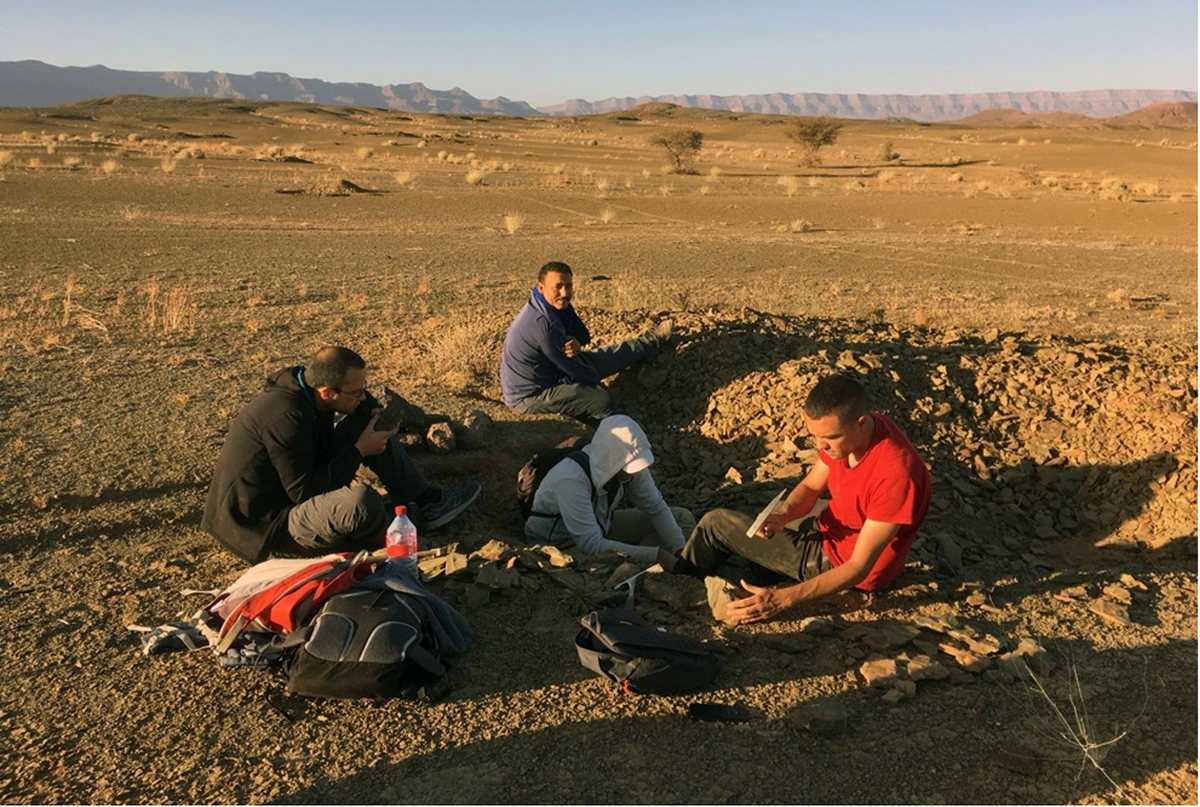
During my thesis, I worked on the Moroccan site of Fezouata, well known for its exceptionally preserved and diverse fossil assemblages. In Morocco, it’s often local people who collect the fossils. We work closely with Mohamed Ben Moula, a professional fossil collector. It was he who discovered the Fezouata formation, arguably Morocco’s most important fossil site, in the late 90s. The Paleontological Association recognized the value of his work and expertise by awarding him the Mary Anning Prize4 in 2017. Ce prix récompense les amateur·rices en paléontologie, mais dont la contribution a eu un impact important dans le domaine. This award recognizes amateurs in paleontology, but whose contribution has had a significant impact on the field.
I then worked for two years with China, for a postdoc. And I never touched a Chinese fossil! It was a special situation, because it was during the COVID pandemic and I was working remotely. But you should know that in China, it’s almost impossible to export fossils. This is due to very protective laws and a very strong local infrastructure and expertise. So I was able to carry out my project from my place of confinement.
In addition to collaborating with international amateurs and paleontologists, it’s also important for me to train local people, so that they in turn can make the most of their geological heritage. When we were in the field last May in Morocco, for example, we helped a motivated student to collect data and put together a solid thesis project in Switzerland.
What advice would you give young researchers to promote inclusiveness?
A fundamental principle to which I attach great importance is that of fostering collaboration and making it visible. It’s a principle I’d like to pass on to young researchers. One way of putting it into practice is to include in the list of authors of an article all the people who made that article possible.
For me, this principle is of the utmost importance. According to some scientists and journals, a person only deserves to be a co-author if he or she has contributed to the “scientific” aspect. But is writing a paragraph or changing the discussion more deserving than discovering fossils? In my opinion, a scientific article is the fruit of the accumulation of various skills: from the person who found the fossil, prepared it and allowed it to be exported, to the person who analysed it or wrote up the results.
As you can see, my papers often comprise a long list of contributors! For example, the colleagues who helped us obtain export permits are included in my thesis publications. Without them, the thesis wouldn’t have happened, and I’m grateful for their help. And although it’s not yet widely accepted, I’m not the only paleontologist to include amateurs in scientific articles. This shows that, in the field, their role is increasingly seen as essential. I think their inclusion also reveals the importance of the human aspect in paleontological research, over and above the scientific aspect: don’t forget that samples have a history, that they come from somewhere. What’s more, there is sometimes a lack of local academic paleontologists with whom to collaborate. This is partly due to our colonial past. Thinking about broadening the scientific community and valuing each other’s work is essential to advancing expertise in middle- and low-income countries.
Farid Saleh, Institute of Earth Sciences
Dr Farid Saleh is a taphonomist: he studies the degradation (physical, chemical, biological) of organisms in nature. On fossil deposits, this means trying to resolve these questions: to what extent do the fossils found reflect the original ecosystems? To what extent are they biased by preservation? If animals A and B are found in a fossil site, does that really mean they were the only ones present? Or did other animals live at that time, but their traces have not come down to us?
He is particularly interested in the first complex ecosystems – dating back over 520 million years. After studying in Lebanon and writing his thesis in Lyon, Farid Saleh now works at ISTE. To carry out his project, he has set up numerous international collaborations, with France, Morocco, China, Australia, Canada and the United States.
The Palaeontological Association’s Code of Conduct expresses its commitment to creating a diverse and inclusive environment. « The Palaeontological Association will not discriminate on the basis of race, colour, ethnic origins, immigration status, religion, age, marital status, parental status, sex, sexual orientation, gender identity or expression, socioeconomic background, educational background, or disability. » ↩︎
Mary Anning (1799-1847), after whom the Palaeontological Association’s amateur prize is named, was a pioneering, self-taught paleontologist and fossil collector. Anning’s discoveries – such as early ichthyosaurs, plesiosaurs and pterosaurs – helped change our view of Earth history. To this day, her discoveries form an important part of the UK’s major collections. ↩︎
As a paleontologist, prof. Allison Daley is passionate about the major events in the history of life and the early evolution of animal species. Her approach is to focus on specimens of exceptional preservation quality, enabling her to unravel the mysteries of animals long since extinct.
Working in the laboratory at ISTE, but also on fossil sites in Morocco, she tells us about the changes taking place in her field and her actions to promote more inclusive teamwork.
What’s field work like in your field?
In my field of paleontology, there are two main types of fieldwork.
The first is exploration, with the aim of finding new fossil localities. This can be a challenging quest, even if you have good geological maps and try to target outcrops where you are likely to find new fossils. Access is also sometimes complicated, and a helicopter may be required.
The second involves collecting samples from sites that are known to be rich and interesting. We spend weeks or months sampling specimens, and documenting their stratigraphic and sedimentological context.
Where is your main fieldwork based?
My work is based mainly in Morocco. I work a lot on the Early Ordovician Fezouata site, which contains fossils in an exceptional state of preservation. We can find animal soft parts, sometimes even their internal organs. And this site dates back to a period that fascinates me: just after the Cambrian explosion, but before a second great evolutionary radiation that followed during the Ordovician. Analysis of these fossils opens up fascinating perspectives on the early history of the Earth and the origins of biodiversity.
What local partners do you work with?
My team and I go there on average once a year. But most samples are collected by a local professional collector, Ou Said Ben Moula, and his family, with whom we work a lot. He’s the one who found this exceptional outcrop and introduced it to paleontologists. He has no training in geology, but he knows the terrain like the back of his hand and has acquired incredible knowledge.
Mr Ben Moula attaches great importance to scientific research and knows how to recognize rare fossils of great value to paleontology. He therefore offers these specimens to museums and research institutes in the field (in Lausanne, Harvard, the Czech Republic…). He also runs a fossil shop, where he sells more standard fossils with less scientific value from all over Morocco.
In certain regions of Morocco, the economy is based on the sale of fossils. Entire villages are dedicated to the research and preparation of specimens – such as the trilobites sold in “fossil fairs” – and to the sale of rocks containing shelly fossils, often used in construction as decorative building stone.
In Morocco, ISTE researcher Dr. Pierre Gueriau (middle) and former ISTE PhD students Dr. Lorenzo Lustri (left) and Dr. Francesc Pérez Peris (right) examine Fezouata Shale fossils together with Moroccan fossil collector Lahcen Ben Moula (at back) (Photo credit: A. Daley).
What happens to fossils from Morocco?
Today, the sale of fossils is a highly controversial business. The practice is sometimes perceived as “plundering” a region’s natural heritage. For my part, I understand the aspiration to preserve fossils locally within a Moroccan institution, and I hope that in time this will be possible thanks to the development of infrastructure in Morocco. However, as things stand at present, exporting is still the best way of studying these specimens and preserving them for the long term.
Paleontology is undergoing major changes. There is a growing awareness of a colonialist past. It’s true that Western countries have collected and appropriated many specimens, often without any compensation for the regions from which they came. Fortunately, attitudes and mentalities are changing, and there is hope that the situation will improve.
Interesting initiatives are beginning to emerge. For example, each sample of the Fezouata collection currently housed at the University Claude Bernard Lyon 1 was imported from Morocco and assigned a specimen number belonging to the Marrakech Collections of the Cadi Ayyad University of Morocco, with a view to eventually return them to a future museum in Marrakech. For the moment, Lyon is simply housing these specimens, pending the establishment of a local infrastructure when the samples are returned.
This initiative has inspired me personally, and I’m currently building collaborations with professors and museums in Rabat and Agadir. I hope that when the right equipment is available locally, we’ll be able to transfer the collections to these Moroccan institutions. In this way, we will contribute to the preservation of the country’s paleontological heritage and promote scientific research at a local level.
“I think practices are evolving in the right direction, and I’d like to be part of the change.”
Allison Daley
What local collaborations exist with researchers?
The scientific expertise and interest of local people in paleontology has increased. Khadija El Hariri is an active researcher and champion of the Fezouata locality, with whom we have co-authored several articles on the analysis of the preservation of soft parts from the Fezouata site. Vice-President of the International Paleontological Association and a researcher at Cadi-Ayyad University, Khadija El Hariri is extremely committed to the preservation of fossil sites. Together with Khadija and other researchers from Morocco, France, Belgium, Spain and Switzerland, we worked towards having the Fezouata locality designated as one of the First 100 IUGS Geological Heritage Sites. Led by a collection of Moroccan universities and local organizations, there is also an initiative to create a UNESCO geopark in the Draa Valley region, so that the paleontological and archeological sites can be recognized and protected as a landscape of international importance, and contribute to education and sustainable development.
Requests for geoparks always come from the country concerned, because if the project goes ahead, it will bring a huge amount of change. For example, the direct sale of fossils will be prohibited, even though many families make a living from this trade. In return, however, the project will enhance the region’s natural heritage and promote tourism. This could create a number of wonderful opportunities, such as the creation of a local museum in Zagora, or awareness-raising activities in schools. It could also strengthen people’s connection to their region.
Moroccan fossil collector Mohammed Ou Said Ben Moula stands near the Fezouata Shale locality, with the sign announcing it as one of the First 100 IUGS Geological Heritage Sites (Credit photo : A. Daley)
What do you see as your role as a researcher in a Swiss institution?
I’ve been invited to sit on the scientific committee for this UNESCO application. I comment on the documents, explaining the scientific importance of the site. But I’m not involved in the political decision, which is up to the region.
My role as a foreign researcher is also liked to training early career researchers, for example in the scientific methodologies of phylogeny and taxonomy. This is not always easy. Some Moroccan students, although brilliant and motivated, do not qualify for a PhD in Switzerland, or not directly, if they come from a university that’s too technical, for example, or because we can’t get funding. Our university certainly needs to think about how it can welcome and train promising foreign candidates.
For my part, I support early career researchers from Morocco in their applications to federal grants, and I hope that soon I will be able to welcome doctoral students and postdocs from Morocco here in Lausanne.
Do you need special authorization to collect and bring back samples?
Yes, we have to announce our arrival locally and regionally. This is important for safety and transparency. During our last exploration, it was professors from Agadir who helped us with these formalities and notified the village council.
The export of collected samples is also regulated by permits. It’s a fairly cumbersome, time-consuming procedure. But it ensures the traceability of the fossils. The Fezouata fossil collection we purchased for UNIL was exported after permits were obtained from the Ministry of Energy, Mines and the Environment of the federal government of Morocco.
Any advice for young researchers? What do I need to do before going out in the field?
It’s not always easy to find out what you need to do before going out into the field. Who should I contact? Who provides authorizations? Good information is essential. For this, of course, a local contact is ideal. He or she will be in a better position to know the procedures, which are not always available on the Internet.
What do you pay attention to when preparing the site? What’s changed today in the way excavations are organized?
When I started conducting fieldwork as a young researcher, the question of inclusion didn’t arise at all. I sometimes reported situations in which I felt uncomfortable, or even dangerous. I was then confronted with insulting reactions aimed at ridiculing me.
These are now discussions that I consider essential and that I lead within my group. I don’t want people to find themselves in situations like mine. We attach great importance to mutual respect, so that concerns and difficulties are expressed and taken into account. We have these exchanges before going out into the field, but also in our day-to-day work. We therefore go beyond the FGSE’s recommendations, which include a pre-departure risk assessment [Directive sur la sécurité et les mesures de protection pour le travail de terrain]!
It’s encouraging to see that these ideas are gaining in visibility, not only at palaeontology conferences, but also in scientific journals in the field. This testifies to a positive evolution in the scientific community. Discussions also address issues specific to women, such as pregnancy, to ensure participation in fieldwork without discrimination.
Allison Daley in Morocco examining specimens from the Fezouata Shale (Photo credit : P. Gueriau).
What are your plans for the future?
An ambitious project that combines paleontological studies with tourism studies… There are some exciting collaborations in the pipeline, notably with a partner involved in the Geopark.
How is the price we pay for our food distributed? Scientists at UNIL have launched a new research project aimed at shedding light on the margins achieved from agricultural production to household consumption, for a whole range of agri-food products. The project is funded by the canton of Vaud, and will put fruit and vegetables under scrutiny, as well as Vaud’s production of milk and cheese, meat, bread and wine.
Transparency of costs and margins between production and retail is a sensitive issue, and one that often crops up in the Swiss media. But answering the question of margins is a complex and painstaking task, requiring trusting discussions with the entire chain: from farm to processing to distribution. This is the ambition and daily work of Floriane Gilliand and Armelle Rochat at the Faculty of Geosciences and Environment.
Fair food prices are increasingly important to consumers. For their part, players in the agricultural sector are also calling for fairer negotiations and a better distribution of prices throughout the value chain. This is the background of this ambitious research project Transparence économique de filières agricoles vaudoises. Supervised by Dominique Barjolle (IGD), this project focuses on the canton of Vaud, and is financed by the Direction générale de l’agriculture, de la viticulture et des affaires vétérinaires (DGAV).
By promoting transparency and sparking discussion between the various players, this project aims to lay the foundations for a fairer distribution of prices, strengthen trust between stakeholders and respond to growing expectations for economic justice in the agri-food sector.
Floriane Gilliand and Armelle Rochat, the agronomists hired for this project, have the crucial task of convincing as many stakeholders as possible to participate and embrace transparency. The aim is to build a relationship of trust, in order to overcome the reluctance associated with the in-depth analysis of accounting data. Although this may seem a delicate task at first glance, it appears that many of their contacts are already aware of the benefits that increased transparency can bring.
Floriane Gilliand is passionate about this economic issue, and devoted her Master’s thesis to it. “When you buy a cheese, you have no idea where the pennies you pay are going”. Armelle Rochat, who has also worked as a market gardener, is well aware of the difficulty of deciphering the costs of certain processed products. A basic product like bread, for example, passes through a variety of hands: wheat sown and harvested is ground into flour, then processed in the bakery. But this complexity and the passionate interaction with all the trades in the chain are a source of motivation for the two agronomists in charge of this fieldwork. They are also convinced that transparency will be a marketing advantage for stakeholders who play the game. “It will help bring credibility to the price we pay for food.”
Data Analysis
Once the data has been collected, it will be processed in complete confidentiality using software developed by UNIL doctoral student Inès Burrus at start-up Equal Profit. Specializing in the analysis of the fair benefits of exotic products, this tool will be adapted for application to products from the canton of Vaud.
The results of field surveys, combined with anonymized databases, will be analysed according to the Transparent Profit and Equal Profit methodology. On the basis of these concrete results, workshops bringing together the parties concerned will encourage constructive dialogue between each of them.
A new peri-urban park was born in the Jorat woods in 2021, becoming the second of its kind in Switzerland.
Pascal Vittoz (IDYST) is involved in the initial monitoring of this forest, which is entering a new phase following the complete cessation of logging. How will this forest landscape, a favorite walking spot for Lausanne residents, evolve over the next 50 years? The first milestones have been set, and now we’ll have to let the forest give us the answers, at its own pace.
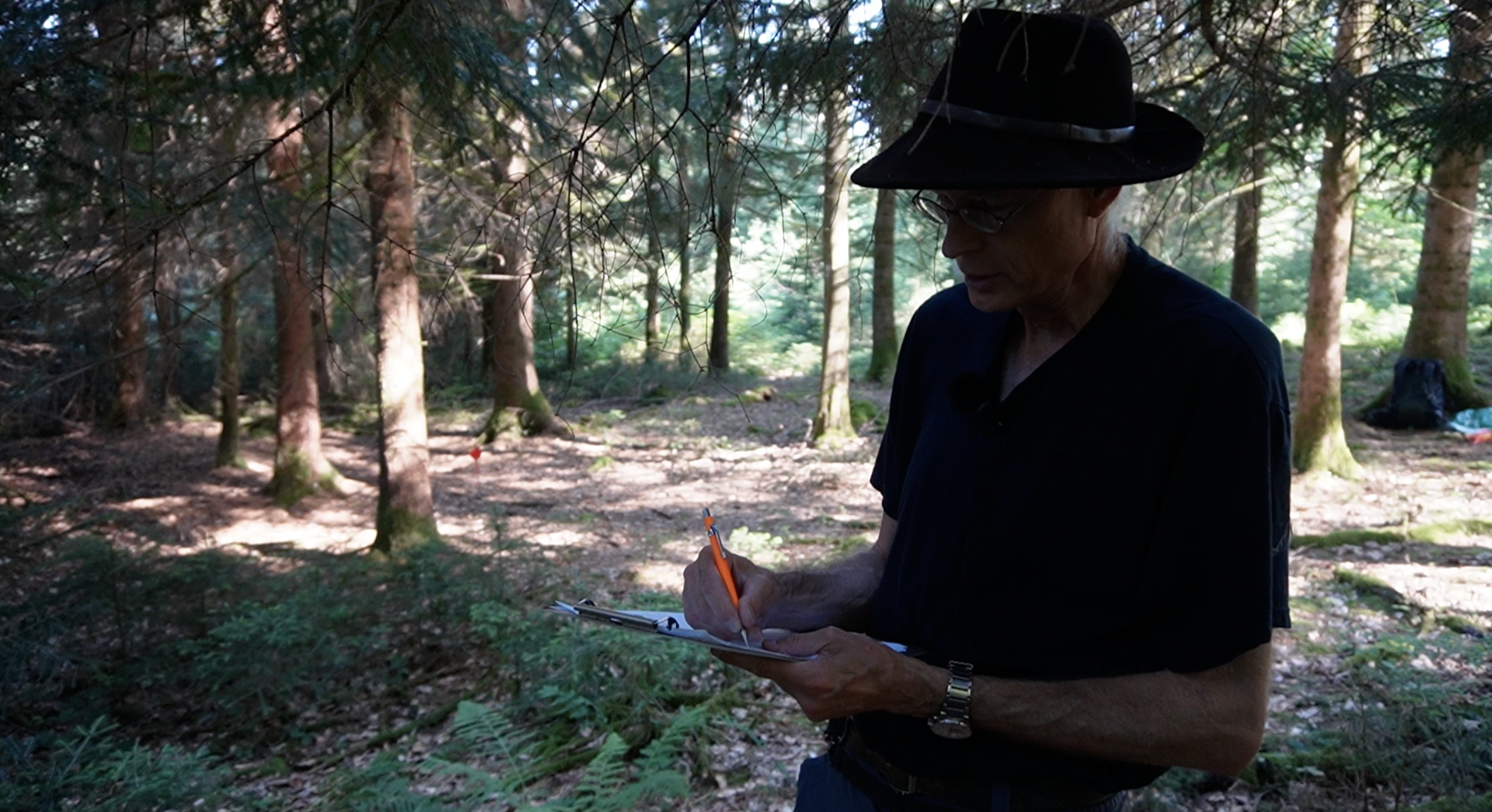
Armed with a map and a compass, Pascal Vittoz ventured through the thicket in search of the plot he was to survey today. A traverse through the brush reveals an area dominated by spruces. These conifers, planted in the 19th or early 20th century because of their rapid growth, are still predominant today. Without human intervention for economic reasons, this area would be covered with fir and beech today.
How will the forest, its wildlife and its inhabitants evolve in the future? That’s what this study is all about. Pascal Vittoz is in charge of monitoring the flora, in particular the undergrowth, in order to study the consequences of the creation of the forest reserve on floristic diversity. These surveys will be carried out every 10 years, in collaboration with a commissioned botanist, Loïc Liberati, former student at FGSE (Faculty of Geosciences and Environment) and Patrice Descombes, former student at FBM (Faculty of Biology and Medicine), and current curator at the Lausanne Botanical Garden. They share the 132 monitoring points randomly distributed throughout the forest plots, according to a plan drawn up by the Swiss Federal Institute for Forest, Snow and Landscape Research (WSL), with the aim of observing the future of the forest.
The Jorat Natural Park is divided into parcels to facilitate and organize flora monitoring. In the north, the park’s “core zone” is no longer managed by foresters. (Photo: A. Dreiss).
The new Jorat Natural Park aims to encourage the presence of dead wood. With it, certain birds that burrow into old trunks, beetles whose larvae feed on wood and fungi that decompose dead trees will flourish. One part of the forest – the central zone of the park – will remain untouched for the next 50 years: no cutting, no logging, no off-trail passage. It will simply be left to its natural evolution, with the exception of a few necessary cuts to ensure trail safety. In the transition zone further south, towards the Chalet à Gobet, logging will continue as before, but certain measures will be put in place to promote biodiversity and welcome the public.
In each plot, the botanists examine two concentric surfaces around the point selected at random by WSL. They describe the structure of the forest and list the flora in the herbaceous, shrub (less than 3 meters high) and arborescent (more than 3 meters high) strata. This gives us an idea of regeneration: if a tree type is present in all strata, it has a good chance of remaining in the future forest.
The botanists draw up a complete inventory of the flora in two concentric zones, starting from a central point marked on the photo by a blue stake. The first disc, measuring 10 m², corresponds to the standard used for biodiversity monitoring in Switzerland. The second, measuring 200 m², gives a more complete picture of the undergrowth flora, providing a better description of forest structure, such as tree size and proportion of dead wood.
Pascal Vittoz measures the tree stratum using a convex grid mirror.
A beetle trap suspended in the middle of the plot bears witness to the various monitoring activities carried out by other groups of scientists. To explore the future of the forest, regular surveys are carried out to study its uses (pedestrians, bicycles, horses) and fauna (beetles, batrachians, deer…).
After logging ceases, we can expect the trees to age, leading to a denser, darker forest, with less light reaching the ground and therefore fewer plant species in the undergrowth. However, the vagaries of storms and climate change make predictions difficult. Spruces, for example, could suffer from the heat and be partly decimated by attacks from the bark beetle. In a conventional forest, foresters cut down affected trees to contain their proliferation. But what will happen when there are no longer any health checks on the trees? Will the bark beetle spread further? Will their presence favor species other than spruce?
« This reserve is set up for 50 years, which is more than half a human lifetime, or about ten times a standard research project. » Pascal Vittoz
So we’ll have to wait to see the benefits of this park materialize. Typical research projects are planned to last 3 to 4 years. In this case, that’s not long enough to study forest flora, which evolves very slowly. This study, which spans the entire lifespan of a tree, will not deliver its results for several decades.
What do botanists find in the Jorat woods?
Wood horsetail (photo : P. Vittoz)
The forest is dominated by spruce and beech, with undergrowth often lacking in plant diversity. However, some wetter areas, such as ash groves, offer surprises and less common species. Horsetail, a common species in the Alps but much more widespread on the Plateau. Horsetails are among the oldest plant species, having appeared nearly 400 million years ago. Some species were important trees in the Carboniferous period, while today’s largest representatives grow to around 1 m.
Marco Keiluweit is a specialist expert in soil biogeochemistry who joined the Institute of Earth Surface Dynamics in July 2022. He is particularly interested in the role of soils in climate change and the global carbon cycle. His current research focuses on fundamental processes that regulate soil organic matter dynamics, which determine soil carbon sequestration and soil health. Here, he and his first assistant Emily Lacroix talk about the team’s ambitious agenda. It encompasses both the grand scale of natural environments and the microscopic intricacies at play within them. By connecting these dots, their work will pave the way for advancing our understanding of the complex interplay between soils, climate change, and sustainable agriculture.
Exploring a complex universe
Marco Keiluweit: Conducting research in soils is a challenge: they are highly complex and dynamic systems. Plants, microbes, minerals, and organic matter interact and are in a constant state of flux. My aim is to gain a better understanding of the dynamics governing soils. Isolating and describing the physical, biological, and chemical processes involved is a long-term quest.
Soils are much more than just a pile of dirt; they are teeming with life, with plants, microbes, and minerals interacting in a complex choreography. The physical, biological and chemical processes animating this dance are so intimately interwoven that it becomes difficult to isolate and study them individually.
The carbon cycle in soils is the key focus of our research. We are seeking to better understand the mechanisms that store carbon in soil or releasecarbon from soil. This capacity determines whether soils will accelerate or help mitigate climate change in the future. In fact, soils store around three times more carbonthan the atmosphere and biosphere combined. Understanding how soil carbon cycling is affected by climate change is therefore of the utmost importance.
Beyond the environmental aspect, the study of soils is also of crucial economic interest. Agricultural fertility and productivity are closely linked to soil carbon cycling. Understanding how this precious element influences the quality of arable land paves the way for more sustainable and efficient farming practices.
From macro to microscope approaches
Marco Keiluweit: Delving into the intricate mechanisms of the carbon cycle and deciphering the impact of environmental perturbations such as climate change on these processes requires a multi-level approach. At a macroscopic level, our ultimate goal should be to tailor land management strategies to the unique characteristics of each soil type, achieving the delicate balance of optimizing plant productivity while curbing CO2 emissions.
By unravelling the intricate relationship between soil management and carbon storage in the soil, scientists hope to unlock the key to maximizing yield while minimizing the carbon footprint of agriculture.
We are also studying natural ecosystems, for example in the Alps. In alpine soils, 90% of carbon is stored in soils. We are interested in assessing how this vast soil carbon pool responds to changing snow cover. We are currently monitoring how the soil carbon cycle in these systems responds to changing snow melt dynamics in alpine regions.
Soil microelectrodes that continuously measure the chemical parameters influencing carbon cycling in soils, for example nutrient levels, oxygen content, moisture, etc. Placing several of these sensors in a field allows scientists to assess the spatial, seasonal and temporal variations in soil carbon dynamics in the field.
Marco Keiluweit:On a smaller scale, our research focuses on the rhizosphere. This is the soil zone where plant roots meet the soil. Roots release carbon compounds into the soil (sugars, organic acids), which microbes absorb, fix in the form of organic carbon, then metabolize and release in the form of CO2. A detailed understanding of these plant-microbe-soil interactions and their variations will enable us to determine under which conditions the soil will tend to store or release carbon.
A prototype for studying the root system under controlled conditions. The plant is grown in vitro in a medium contained between a glass plate and a molded polymer. It is also possible to test different factors such as nutrient and humidity levels or the presence of micro-organisms on gas transport and consumption.
Emily Lacroix:My particular interest is in anoxic microsites: pockets in which there is no oxygen. This is particularly true in the vicinity of roots. These pockets have an influence on the global carbon cycle, as microorganisms there convert organic carbon into CO2 less rapidly. My main questions are: where and how do such microsites form in the rhizosphere? Is their frequency linked to soil moisture or texture? Can we measure their influence on the soil’s capacity to fix or release CO2?
To observe the formation of anoxic pockets (microsites) in situ, Emily Lacroix inserted soil into a reactor. The same soil is mixed with quartz crystals (not very reactive) of different sizes to simulate variations in texture without changing the nature of the soil (see different colours of samples in the image on the left). A “false root” – corresponding to a microdialysis probe (photo right) – releases carbon into the soil, just like a real plant root. Its advantage is that it allows precise control of the amount and type of carbon released into the soil. The soil’s moisture content can also be modified to identify its potential influence on the formation of anoxic pockets.
At the end of the experiment, Emily Lacroix measures the oxygen level and its distribution in the sample: a chemical foil reacts to the presence of indicator oxygen (pink square on the left image). This paper is then exposed to a camera equipped with a UV lamp (central image). On the screen, oxygen-rich areas appear orange-red and anoxic areas yellow-green (right image). In this way, it is possible to quickly identify the distribution and number of anoxic zones in the vicinity of a root.
Marco Keiluweit: Finally, on a microscopic scale, we analyse soil samples using a cutting-edge, high-resolution infrared microscope. Its high level of resolution enables us to describe the interactions of organic matter, minerals or microbes in our samples.
Characterizing the associations of microbes and minerals in soil samples is one of the feats made possible by the infrared microscope. The resolution of this microscope makes it possible to distinguish different types of soil organic matter (dead or alive) and minerals in soil samples. This is the only infrared microscopes of this kind in Switzerland and has a rapidly growing user base FGSE as well as at other institutions in the fields of geosciences, microbiology and engineering.
The Road Ahead: Linking fine scale mechanisms to macroscopic observations
Marco Keiluweit: Our aim is to better predict how soils respond to climate change going forward. And we can only improve our predictions of this response by linking macroscopic observations of change to microscopic mechanisms. We have seen a rapid advance in our understanding of soil carbon dynamics in recent years, which makes me hopeful that we will be better equipped to address the mounting pressures on our soils arising from climate change and intensification of land use in the future
Emily Lacroix: I hope that my first experiments under controlled conditions will be conclusive, so that I can measure the formation of anoxic pockets (microsites) close to real roots under real conditions. With successful results, I aim to conduct measurements that will enhance our understanding of how these crucial processes influence soil carbon dynamics.
Christian Kull, Institute of Geography and Durability
Christian Kullis interested in environmental management in rural landscapes. He has worked in Tanzania, Kenya, India, Vietnam… But it was in Madagascar that he completed his master’s and doctorate. He fell in love with the landscapes of the country’s high plateaus, a mix of forests, terraces and small farms. He tells us how he conducts his ethnographic fieldwork.
Christian Kull is a geographer. His work aims to shed light on the global environmental issues of our time. Environmental management is a central issue affecting human well-being, economic prosperity and sustainability. Rooted in the scientific disciplines of Political Ecology, Development Studies and Environmental Humanities, Christian Kull explores the historical, ideological and political-economic genesis of environmental problems and the conflicts that accompany them. To understand the dynamics of governance and foreign intervention, he has worked in deprived regions of the world.
Christian Kull was president of the CER-GSE when it was launched in 2020, and helped to set it up. In this interview, he talks about his long-term work on wildfires and invasive plants.
What partners do you work with?
I have a particular interest in local stakeholders. I try to understand how people manage the environment around them, why they plant this or that, cut down trees, burn vegetation… And how these practices interact with national and international policy.
So I work mainly with peasants, but also with people in the rural world – those with administrative positions, the pastor (churches play an important role here), the local school teacher – and on a more global level, with government and NGO officials, people in bilateral aid and at the university.
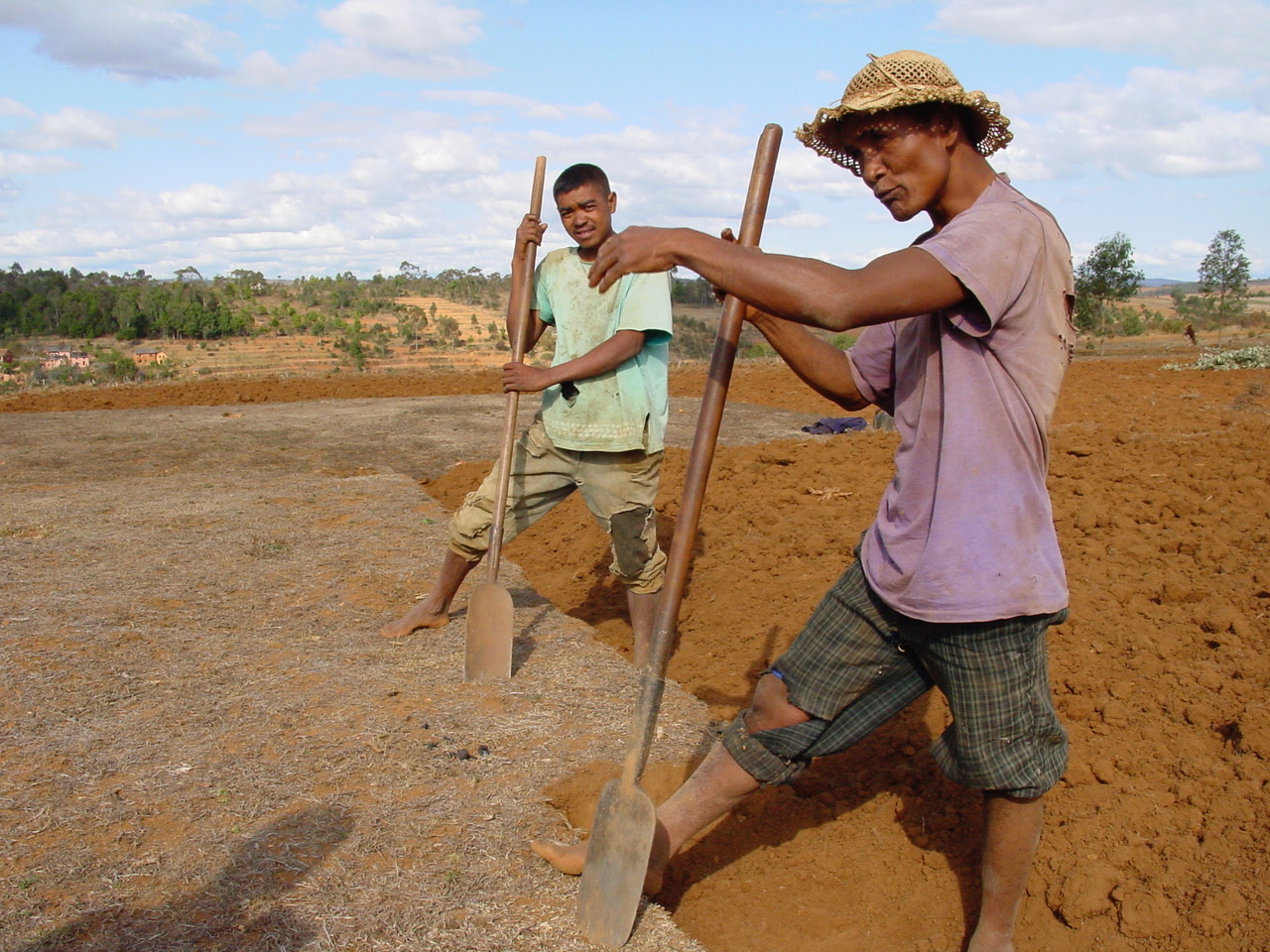
Malagasy farmers explaining land use (Photo: Ch. Kull, 2006).
How did you first come into contact with the people you want to interview?
Now, I almost always undertake a project in partnership with the local university, in particular with their school of agronomy, forestry and environment, but also with the geography department. For my Master’s, it was totally different: I bought a plane ticket without knowing whether the professor to whom I had sent a handwritten letter had received it. As soon as I arrived, I knocked on the doors of people at the University of Antananarivo whom I knew only through their articles.
They introduced me to a student, Arsène Rabarison, whom I then hired as a field assistant, as I didn’t speak Malagasy yet. Arsène also helped me in my learning: discovering rural life, knowing how to behave, learning about networks and how to find accommodation, etc.
The peasants are welcoming, and in the hamlets you’ll always find someone to offer food and a place to sleep. The next day, they sometimes send a child to show you the way for a few hours.
“In 1994, I set off with the 1969 Atlas of Madagascar. Some of the plates caught my interest: very precise field maps, 1 km by 1 km, where land use was mapped. My idea for the Master’s degree was to go and see 25 years later what had changed, and to explain these changes by talking to the people on the spot. I arrived in a village I’d chosen without knowing anyone there. But I could show them this map. Some of the elders even remembered the ‘French professor’ who had made it!”
Do you need permission to discuss your research questions?
I deal mainly at the local level, with the local town hall. But I also have a letter from the university. For local officials, it’s already a passport if someone in the capital has validated the project.
When I worked at Monash University in Melbourne, Australia, I had to follow a more bureaucratic ethical procedure, guided by the challenges of medical research, and aimed at avoiding past abuses towards Aborigines – who suffered from exploitative research. In Madagascar, I always managed to argue for oral consent adapted to local traditions (including formulas for thanking God…). I think the farmers appreciated this effort! For them, signing a piece of paper is rather worrying, and they don’t always read well, so oral consent is preferred.
The ethical form advocated by my thesis university in the USA and by Australian universities was based on the premise that we alone are in a position of domination and power in relation to the locals in these exchanges. Although I have also observed that the figure of the researcher sometimes still commands too much “postcolonial” respect, I am critical of this perspective. I have chosen an oral consent procedure for pragmatic reasons, but also out of conviction. I consider that the people I interview also have a form of power, so I don’t need their signature to formalize our interaction. And I observe it too: if they don’t want to answer, they skirt around the questions with ease, they lie… I trust them! The key point before an interview is to say what I’m doing, that I’m not going to use their name and that they can choose not to answer.
(Photo : Ch. Kull, 1998)
How do you deal with sensitive issues that can get people into trouble?
I’ve worked on fires, which are often illegal. But I never ask directly who started a fire. Instead, I’d say: “Did you see the day before yesterday, there was a fire up there. Why?”. And I’m never told, “I lit the fire for that reason”; but, for example, “I suspect that whoever lit it did so for that reason”.
In my research, I move forward by piecing together observations, by triangulation, building up an argument little by little as if I were conducting an investigation. The Malagasy way of speaking is also rather indirect, so you have to know how to decode!
How do you protect data on illegal practices, such as fire? Do you need to ensure source anonymity?
The issues I’m working on with my partners and team are not highly sensitive, and again, the evidence is indirect since no one says “I started that fire” or “I cleared that forest illegally”.
However, from the outset, the information gathered is separated from the real name of the source. And no file contains both elements, thus preventing cross-checking. If necessary, a correspondence file exists, but separate and password-protected (the name of the file shouldn’t be obvious about the nature of its contents either!).
During my PhD, in my notebook, there were no real names. “Goatee” referred to someone with a small beard. I named a peasant “Ruedi”, who reminded me of my uncle of the same name…
“The context of the interview is important: are we going to people’s homes? Is it relevant? Socially possible? Do we have their trust to do so? What do we have to give in return? Farm families often offer food. During my thesis, I decided to take a photo of the family – back in the days of 35mm film camera, when you had to go up to the city to develop the photos. It wasn’t a means of exchange, but a way of thanking them… That said, after 20 families, word got around, and when I arrived for an appointment, they’d put on their Sunday clothes. It made them really happy.” (Above: examples of family photographs to thank participants. Photo: Ch. Kull, 1998)
What advice do you have for young researchers before they head out into the field?
I brainstorm with them on interview guides, but the field is really a learning experience. I trust them. You have to dare to try things out, see what works and adjust if necessary.
At Bachelor’s level, students are introduced to qualitative research and learn how to construct a survey. So they have a good grounding, and good manuals too. But it’s all theory … until you’re facing someone you want to interview!
How do you get people to agree to talk about their practices? It’s a social process, where a smile and the way you present yourself are just as important as your knowledge of cultural codes (what’s acceptable, what’s not). Sometimes it’s explaining what you’re doing that’s decisive, sometimes it’s convincing the mayor beforehand. But fortunately, in Madagascar as elsewhere, people like to talk about their lives, as long as someone is interested.
In the Master’s program, we also try to expose students to an “exotic” context. It has to be justified in terms of budget and climate impact, but these are essential learning moments.
Are there any mistakes to be avoided when designing an interview?
A subject close to my heart is that of invasive species. At the beginning, some students ask questions that already contain the answer: “What do you think of these invasive species?” If we ask the question like that, the foresters or farmers will try to please us, and say that these species “invade” them… If we ask them, “What do you think of eucalyptus, their strong and weak points?”, we’ll get other answers. Only then can we go further: “Have you heard that they are invasive? What does that mean to you?” It’s not the same conversation.
“Here I am with farmer and shop-owner Augustin “Radatatoa”, in 2018, in Laimavo, Madagascar. He’s carrying photos taken in 1994 during my master’s work, which I mailed to him.” (Photo: Ch. Kull)
How has your relationship with local people developed over time?
For my PhD, I decided to spend four and a half months immersed in the culture and taking intensive Malagasy language courses. Every afternoon, I got on my bike and went to practice basic exchanges with farmers (“Do you grow rice?”). Then I lived in a village for 10 months. Staying in the field for so long allows you to learn a lot about the context in which specific issues are situated. For me, this is invaluable, and it’s the only time in a career when you have the freedom to do this. Little by little, you come to understand the networks, the stories of friendship, family, clan, religion, all those things that are so opaque at first. That’s what our students don’t always have the time to do now.
The ethnographic approach takes time. It’s quite different from the more formalized research interactions that are now being taught more and more.
“I work the old-fashioned way, notebook in hand. At the end of the day, I add notes, reconstruct, sort. I note down my observations, my conversations, but also all my encounters. Otherwise, two years later, I get everything mixed up, and it’s essential to remember people.”
To go further
Christian Kull, Institute of Geography and Durability
Christian Kull is an expert in research on wildfires, a phenomenon that has a major impact on carbon dynamics, biodiversity and ecosystem services. As part of a SNIS project (Swiss Network for International Studies), he is currently exploring the most balanced fire management strategies to meet the needs of local communities and the challenges of climate change. With partners from Swansea University (UK), Antananarivo University (Madagascar), Eduardo Mondlane University (Mozambique), the South African National Parks and the UN Food and Agriculture Organization Madagascar, he is targeting biodiversity hotspots in Madagascar and southern Africa.
He has also contributed to our understanding of invasive species and plants, deforestation and reforestation, protected areas and agricultural conversion.
Guillaume Jouvet, Institute of Earth Surface Dynamics
This summer has again broken temperature and glacier melt records. Along this, the release of the remains of unfortunate mountaineers, wreckage of airplanes, and other objects trapped in the ice for several decades has been reported multiple times in newspapers. Together with severe drought and wildfire, these re-emergences were essentially attributed to climate change by media without any further explanations on the underlying glacial drivers.
Prof. Guillaume Jouvet, analyses herehow much climate change explains the release of all these bodies and wreckage on Alpine Glaciers.
While enhanced melt over summer naturally facilitates the re-emergence of any englacial objects, can we really attribute it entirely to global warming?To answer this question, one needs to understand how glacier form, move, and melt.
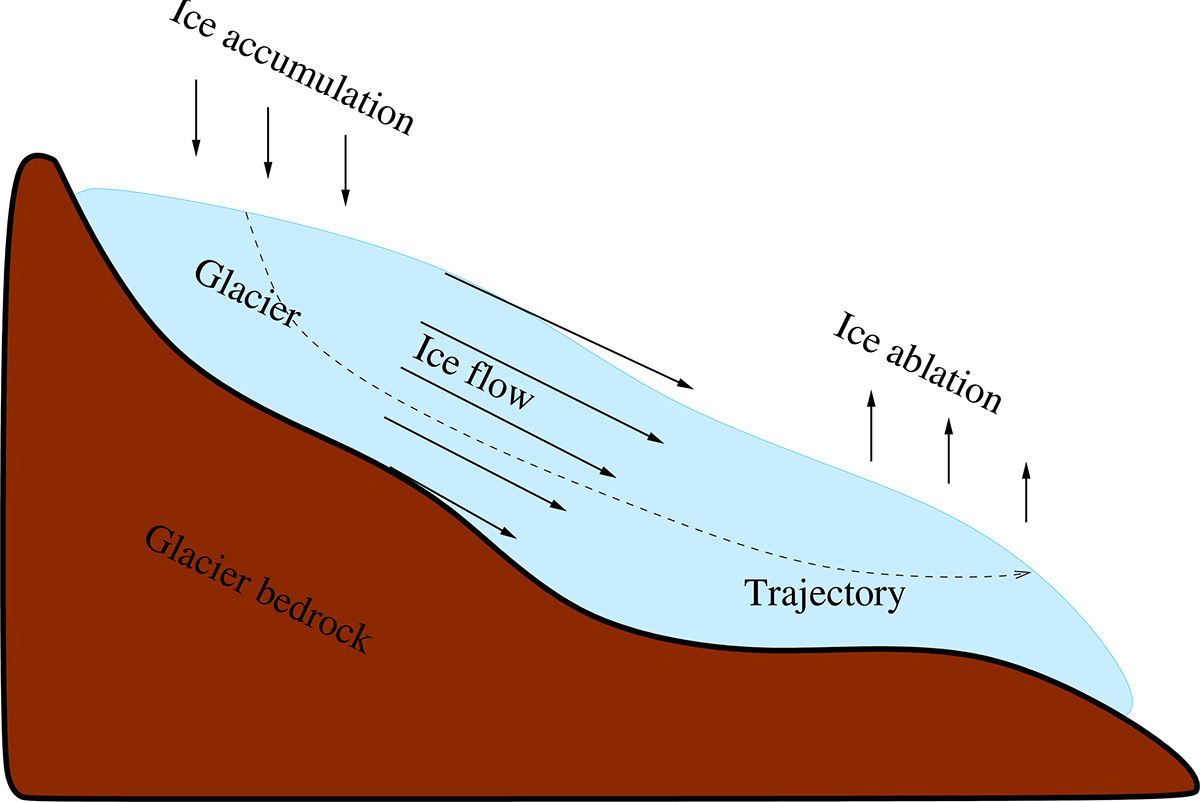
Glaciers are formed because ice accumulates in high elevation mountains due to the compression of snow precipitation, and are sustained by low temperatures. Under the effect of gravity, the ice moves as a viscous fluid, slowly downstream in a zone where melt exceeds the snowfall: there, the glacier loses mass. Therefore, any objects left on a glacier at high elevation will be naturally “swallowed” by the glacier, and moved downstream by the ice flow until being released on the surface due to predominant melt in low elevation. Therefore, the release of bodies, planes, and any other objects at the glacier surface as seen this summer is the result of a natural phenomenon, which occurs in any case irrespective of climate variability. This phenomenon has caused the gigantic glacier flowing along the Rhone Valley after the last glacial maximum (about 24’000 years ago) to move and release numerous erratic boulders. They scattered the landscape while the climate was much colder than today.
Any objects left on a glacier at high elevation will be naturally “swallowed” by the glacier, and moved downstream by the ice flow until being released on the surface.
Guillaume Jouvet
The trajectory of objects transported within glacier ice is the result of accumulation, motion, and ablation processes.
Of course, climate conditions influence the burial and the re-emergence speeds, and therefore the trajectory of any particles moving within the ice. The undergoing atmospheric warming, which is particularly pronounced since the late 1980s (see the real temperature series in red below), enhances surface melt, contributing to thin glaciers, and then probably to accelerate their re-emergence. But on the other hand, the thinning of glaciers reduces the glacier motion, and therefore contributing to making the journey in ice longer. Therefore, the impact of the warming of the last decades on the recent release of glacial relics is far from obvious. To measure the impact of the post 1990s warming, I have carried a modelling experience based on the story of the Piper aircraft, which crashed in summer 1968 over the great Aletsch Glacier. The wreckage of the Piper was found at the glacier surface this summer by glacier hikers. Following the crash in 1968 on the “Jungfraufirn”, the plane has been buried and transported by the ice, before re-emerging about 5 km downstream the crash location close to “Konkordiaplatz”’. The trajectory of the airplane within the ice can be reconstructed with the aid of numerical modelling of ice flow, accumulation and melt. Using this technique, I previously reconstructed the path taken by unfortunate mountaineers in Aletsch Glacier (Jouvet et col., 2020).
I have therefore reconstructed the trajectory of the Piper airplane starting from the known crash location in 1968 to the site where the wreckage was found in July 2022. The great advantage of numerical modelling is that it permits to explore other climate scenarios (see images of simulation results on the Aletsch glacier). Thus, I performed a second simulation by removing the climate warming anomalies seen from the 1990s (Figure below, bottom panel). This is done assuming the climate observed between 1960 and 1990 (which is fairly stable) is repeated after 1990. As a result, if the climate had not warmed from the 1990s, the Piper would have re-emerged about 250 m downstream and 7 years later compared to the position and time the wreckage was found (Figure below, top panel). While this sounds significative, it is actually only 5% and 13% of the total length and time duration of the trajectory. Therefore, I conclude that the warming observed since the late 1980s only caused a minor alteration of the trajectory.
The Piper airplane would have emerged about 250 m further without post 1990s warming (blue dots), than the actual trajectory with post 1990s warming (red dots). The trajectory resulting from modelling based on the temperature series (in °C) of the bottom panel (red line: real temperatures; blue line: series for which I removed the climate warming anomalies seen from the 1990s).
The democratization of mountaineering and aviation in the 20th century has contributed to augment the number of accidents, and therefore to increase the number of remains within glaciers. It is therefore expected to see more frequent release events. On the other hand, enhanced glacier melt in the last decades has contributed to accelerating a release that would have anyway occurred at some point. However, this had a rather minor impact in the case of the Piper, and probably for a number of other cases. This factor is however expected to have more and more impact in the future with the likely major shrinkage of Alpine Glacier in the 21st century predicted by the latest models (Zekollari et col., 2019).
Enhanced glacier melt in the last three decades has contributed to accelerating a release that would have anyway occurred at some point.
Guillaume Jouvet
Global warming is causing considerable shrinkage of glaciers worldwide, and there are many direct indicators that clearly witness its major impact on the ongoing and future transformation of our landscape. However, its general influence on the release of glacial relics this summer is more complex. Quantifying the impact of global warming accurately is a crucial work that scientists must accomplish to provide the most precise picture of the situation to the public.
Read more
Notre appel des glaciers: a call to action against the collapse of natural systems (G. Jouvet, November 2022).
Glacial Mystery: a mini video report on the unfortunate climbers who fell in 1926 and found the Aletsch Glacier (G. Jouvet, January 2015).
G. Jouvet and M. Funk. Modelling the trajectory of the corpses of mountaineers who disappeared in 1926 on Aletschgletscher, Switzerland. Journal of Glaciology, 60(220):255–261, 2014. doi: 10.3189/2014JoG13J156
G. Jouvet, S. Röllin, H. Sahli, J. Corcho, L. Gnägi, L. Compagno, D. Sidler, M. Schwikowski, A. Bauder, and M. Funk. Mapping the age of ice of Gauligletscher combining surface radionuclide contamination and ice flow modeling. The Cryosphere, 14(11):4233–4251, 2020. doi: 10.5194/tc-14-4233-2020
H. Zekollari, M. Huss, and D. Farinotti. Modelling the future evolution of glaciers in the European Alps under the euro-cordex rcm ensemble. The Cryosphere, 13(4):1125–1146, 2019.
Guillaume Jouvet acknowledges Pascal Stoebener, Igor Canepa and Adrienne Bellwald for providing the information on the airplane necessary to lead the modelling work.
Researchers from the UNIL went to Greenland to study the changes in erosion of the ice sheet, and the discharge of glacial sediments into ecosystems. Poorly understood, increased melt and evolving glacier dynamics caused by climate change may result in consequential changes to landscapes. This study aims to understand erosion and sediment transport from the Greenland Ice sheet and to predict the evolution of these systems.
Dr Ian Delaney, Ambizione fellow at the Institute of Earth Surface Dynamics, and Marjolein Gevers, PhD student, both at the Faculty of Geoscience and Environment are back from the field. As climate warms and affects earth surface dynamics, they are tracking the changes in glacier erosion and sediment discharge from the Greenland Ice Sheet.
Over the last 50 years, melt is accelerating and the ice sheet is changing. What are the consequences on the landscape? Can we see any evidence of these changes? How can we monitor these phenomena and predict their evolution?
By collecting sediment cores in fjords and gauging rivers in Greenland, Ian Delaney and his collaborators aim to track the recent changes in the ice sheet erosion and sediment discharge. The sediments in the ocean floor are the memory of the last centuries. Their layers contain records of the influx of sediment from the ice sheet into the sea. Findings from these precious data will also feed models to evaluate the evolution in sediment discharge as climate warms.
Seven meters of ice released into the oceans
The sliding and melting of glaciers drive sediment transport into ecosystems. Sliding glaciers scrape and erode the bedrock, while subglacial rivers carry these sediments away.
In mountainous regions such as Switzerland, changes of sediment flow from glaciers can impact their delivery into river systems. Hydropower is also affected by sediment transport. High sediment supply leads to the filling of hydroelectric reservoirs and can lead to increased wear of hydroelectric infrastructure by hydro-abrasion.
In Greenland, the changes of sediment flux are on a much larger scale. Seven meters of ice sheet is rising above sea level and could be released into the world’s oceans in the next millennium. Mass loss from the ice sheet over the next century will likely be greater than those over the last 12,000 years.
The dramatic changes to the ice sheet not only affect the global sea level, but also change their erosive capacity and the discharge of sediment, which impacts many earth systems. For instance, these changes affect the supply in nutrients to the environment, but also in diverse chemical elements that can favour or hinder biological growth.
In a previous expedition in Greenland funded be the Swiss Polar Institute (SPI), Ian Delaney examined river systems. Here too, the scale is different from the Alps: the discharge from the Watson River in Greenland can be up to 1400 m3/s (in comparison, the Rhône is at 500 m3/s!). The team installed turbidity sensors to measure the suspended sediment in the river and seismometers to measure vibration from sediment transported in the rivers. This technic permits to estimate the fluxes of water and sediment leaving glaciers and flowing down rivers over a melt season. (Photo: Marjolein Gevers – Watson river in Kangerlussuaq)
Greenland: a challenging field work
In Greenland, Ian Delaney’s team is not alone, the current changes at the Ice Sheet attract scientists from all over the world. In addition to working with local boat operators, field duties are shared with several Swiss and international collaborators. Irina Overeem and Ethan Pierce from the University of Colorado, Paul Liu from North Carolina State University, Brandee Carlson and Julia Wellner from the University of Houston, Andreas Vieli from the University of Zurich, each working in different and complementary fields such as coastal and fluvial geomorphology, sedimentology, ice sheet history, glaciology and geomorphodynamics.
For Marjolein Gevers, communicating with all team members is essential to ensure that everyone has the same goal and is correctly assessing the situation and potential danger in the same way. “It is important to keep talking about how you feel with the situation on the field and when you feel uncomfortable.” Crossing a river, or simply making sure you don’t fall out of the boat, are daily challenges in which require focus and awareness, especially when you’re tired.
But the bigger challenge for UNIL researchers now is to put together the “patchy” observations sampled in the field to build the big picture. Ian Delaney aims to bring together observations from the sediment cores to calibrate a numerical model on glacier dynamics. The idea is to identify processes and try to evaluate how these processes will evolve in a warming climate. This will help them to evaluate potential changes to glacier erosion in the next century, according to future climate scenarios.
About 8% of sediment influx to the world’s oceans comes from the Greenland Ice Sheet. The discharge of sediment in Arctic affects the input of nutrients in the world’s oceans. Given the quantities of sediment, any change will have impacts.
Ian Delaney
Here, a coring device penetrates the ocean from the ship to collect sediment from the ocean floor. The samples brought back from the field will provide information on the temporal variations in sediment deposition – that cause different thicknesses in sediment layers – and hence on the evolution of the discharge over the decades. (Photo: Marjolein Gevers – from the Adolf Jensen in South Greenland, July 2022)
A pressing matter: what happens when glacier retreat?
By tracking changes and evolution of sediment discharge from Greenland ice sheet, the team hopes to understand how the system responds to increasing glacier melt and changing glacier dynamics. “Greenland is a unique place: changes occurring there are massive and have a global impact, but are still poorly understood,” comments Ian Delaney. “Through our research, we hope to establish models that will help us understand and predict these phenomena, so we can anticipate them.”
When glacier melt, what is left over, what are the side effects?
Ian Delaney
High up on her rock, Floreana Miesen is installing a time lapse camera in front of Leverett Glacier. This is one way to monitor the change in the proglacial area. On the right, I. Delaney and F. Miesen are setting a turbidity and level sensor in the forefield of the same glacier. (Photos: Marjolein Gevers, May 2022)
Lukas Baumgartner shares with us a typical day. Alongside him, we wander from one laboratory to another. On today’s schedule: measurement launches punctuated by intense team discussions.
In front of three screens, concentrated on the complex settings of the Electron probe microanalyzer, Lukas Baumgartner from ISTE is about to make tonalite (granitoid) stones speak, extracted from an Italian site that he has been studying since his PhD.
Moving bodies that tell the story of Earth
Lukas Baumgartner wants to know everything about the chemical composition of these tonalites and the surrounding rocks – metamorphic sediments. But to understand his approach, we must first go back in time. A long time back.
The Earth was formed after the Big Bang, by accretion, gradually forming a core, which attracts the heaviest elements, a viscous mantle and a crust that hardened by cooling. In Lausanne, we walk on a crust of about 30 km thick that “floats” on the mantle. The flow of rocks between the crust and the mantle brings them to collide, to move apart, to plunge… These geological movements have consequences on the composition of the rocks, but also more global consequences. The formation of the Alps, for example, is one of them. The variations of CO2 in the atmosphere also result from these phenomena, which is not without importance in these times of global warming!
“I study a part of these mechanisms, a very small part!”
To understand these flows of plutonic rocks under our feet, their thermal consequences and the life span of “thermal anomalies” linked to magma, different methods are available to geologists. Drilling is one of them, but the temperatures and pressures are so high at depth that one hardly goes beyond 10 km. The other solution is what Lukas Baumgartner is using here: studying the rocks accessible at the surface and tracing their history through their chemical composition. At the same time, he exposes minerals to high pressures and temperatures, and compares the consequences of these experiments with what we observe in nature. Finally, thanks to physical laws – such as the diffusion of heat in rocks, or the diffusion of elements in minerals such as garnet – we can estimate the chronology of geological phenomena, such as short igneous and metamorphic events.
In practice, the Electron probe microanalyzer sends electrons onto the thin section sample (picture below) and measures the emitted X-rays, characteristic for each element. This results in quantitative chemical analyses with high spatial resolution. For these delicate machines, qualified technical support is crucial. In this case, researcher Martin Robyr is always there in case of problems.
Here we are, the measurements are launched on the microprobe. While waiting for the results, Lukas moves on to a parallel project. This time, it is about foraminifera and climate history.
Climate change: an issue as old as the Earth
While scientists speculate about the intensity of future climate change, the temperatures that the Earth has experienced in the past are also being debated. Our window of observation of the Earth’s temperatures, our archives, are notably the foraminifera. The isotopic composition of these fossilized microscopic marine animals is indeed used to trace the temperature that prevailed during their lifetime. But today, some researchers question whether these isotopic measurements could also be altered by the conditions undergone after the death of foraminifera. In a joint project with Prof. Anders Meibom and his colleagues, Lukas Baumgartner has decided to analyse the reliability of isotopic results. This could change our entire view of the Earth’s history.
Obviously, once again, to perform a life-size experiment and observe the transformations of foraminifera over several million years is not feasible. As an alternative, why not subject the foraminifera to very high temperatures and pressures, but for a shorter time? An experiment that takes place in a researcher’s time, not that of fossil foraminifera. Then, the researchers will examine the effects on their composition; then, extrapolate over several thousand years what they observed in a few hours. This works because the diffusion law – which describes the change in isotopic composition as a function of time – is proportional to temperature and pressure.
The key to the enigma in the crystal
Foraminifera are notably made up of an accumulation of calcite crystals on a nanometric scale. To elucidate the age of foraminifera, one can therefore also look into a calcite crystal (photo below) of the same composition. This is what Lukas Baumgartner and his colleagues are discussing over coffee. The team wonders what diffusion measurements to make on the crystal: at what angle? How to cut the crystal? And how accurately? Each of these details counts. And the decision is based on the literature and the technical means available…
How to handle such high temperatures and pressures? The hydrothermal lab can reach 2000 bars – the pressure undergone by rocks 7 km below the surface – and 800 °C! To resist the highest pressures, tubes – called bombs – of stellite are used, which resist explosion up to temperatures of 850 °C under pressure. One of these tubes, broken, is prominently displayed next to the installation: it reminds the experimenters that manipulations at these levels of pressure and temperature are eminently dangerous and that the name of these tubes is no coincidence! These tubes are supposed to be almost unbreakable, but this one exploded violently when it cooled down too quickly in contact with water…
In the furnaces, the samples to be studied can also take placed in mini-tubes of gold or platinum: these metals react very little and resist temperatures up to 1560 °C.
In this laboratory, it is also possible to study the composition of minerals and the reaction of water heated to very high temperatures, in order to reconstruct the pressure and temperature conditions experienced by metamorphic rocks. The composition of fluids is for example essential to understand the fluid-rock interactions in geothermal systems. The diffusion rate of the elements is also determined here: it allows to evaluate the critical temperatures and pressures (called critical constants), which give an idea of the stability time of the minerals according to the conditions they go through.
The tour ends here, and if you want to know more, follow the team’s results!
In collaboration with an international team, an Institute of Earth Sciences researcher reveals the complexity of temperature evolution over the past 12,000 years.
Samuel Jaccard, Institute of Earth Sciences
To predict the future, we rely on climate models. But reducing the uncertainty of these models is a delicate matter. To do this, we need reliable data over long periods of time. This is why understanding the Earth’s climate history from the distant past is invaluable: it helps us project into the future. Changes in the Earth’s average surface temperature over the past 12,000 years (during the current interglacial period, the Holocene) have been the subject of much debate. Climate model simulations suggest a continuous warming since the beginning of the Holocene. Yet the most well-documented reconstructions suggest that the global average temperature was at a maximum about 6,000 years ago, and then the Earth cooled until the onset of the current climate crisis (at the time of the Industrial Revolution). This major discrepancy between models and past climate observations is called the “Holocene Temperature Conundrum”.
In this new study, scientists used the largest available database of past temperature reconstructions extending back 12,000 years to carefully investigate the geographic pattern of temperature change during the Holocene. The team finds that, contrary to previously thought, there is no globally synchronous warm period during the Holocene. Instead, the warmest temperatures are found at different times not only in different regions but also between the ocean and on land. This questions the relevance of comparing global mean reconstruction with model simulations at the crux of the Holocene conundrum.
According to the lead author Olivier Cartapanis, “the results challenge the paradigm of a Holocene Thermal Maximum occurring at the same time worldwide”. And, while the warmest temperature was reached between 4000 and 8000 years ago in western Europe and northern America, the surface ocean temperature cooled since about 10,000 years ago at mid-high latitudes and remained stable in the tropics. The regional variability in the timing of maximum temperature suggests that high latitude insolation and ice extent played major roles in driving climate changes throughout the Holocene.
For Samuel Jaccard, professor at Institute of Earth Sciences, these results highlight “a more nuanced climate variability with strong regional disparities over time”. He believes that “taking these regional specificities into consideration should be a priority for the development of climate models, in order to best guide the measures to be taken rapidly to mitigate the consequences of climate change”.
Thus these new elements present a clear target for climate models. Their ability to account for climate variations in space and time will increase the reliability of future climate change projections.
Bibliography
Cartapanis O., Jonkers L., Moffa-Sanchez P., Jaccard S. L., De Vernal A. Complex spatio-temporal structure of the Holocene Thermal Maximum. Nature Communications. doi.org/10.1038/s41467-022-33362-1
During the Last Glacial Maximum, about 20,000 years ago, it was cold. But how cold? Estimates of surface air temperature vary between 1.8 and 8°C colder than today. This remains imprecise. Christoph Schmidt and Georgina King are working on a new SNSF project to develop a method for estimating past temperatures that can be applied globally – at any latitude and any altitude.
A “global” method – from the moon to the foot of Mont Blanc
This method is based on almost ubiquitous material: quartz and feldspar. The idea was first introduced in the 1960s for terrestrial applications, and then in the 1970s for lunar samples from the Apollo 12 mission. It has only recently been revived and developed, in particular by a un groupe de la FGSE : Frédéric Herman and Rabiul Biswas (now a professor in India) put a lot of effort and time into it. “They have developed it to a point where we can now build on it and try to apply it on a larger scale” points out Ch. Schmidt. “There are still a range of open questions and problem we have to face, but we have ideas on how to overcome them.” This method could be applied in all regions of the world where these minerals are present, and why not, on other planets!
The trace of paleo-temperatures trapped in minerals
How can we reconstruct past temperatures? Quartz and feldspar trap electrons generated by environmental radiation. The team is exploiting the fact that the charge trapped in these minerals – generated by irradiation – depends on the ambient temperature. In the luminescence machine (visible on the video), the sample is exposed to heat or light, which triggers the release of the luminescence signal. A highly sensitive device, called a photomultiplier, is then able to record individual photons released from the mineral – a level of light well beyond the detection limit of the human eye.
We try to measure the relative level of signals in response to two competing processes: radiation and temperature. By doing so, we try to find the thermal history that most likely can explain the signal pattern that we observe experimentally from our sample.
Christoph Schmidt
One of the main challenges is to accurately characterise the behaviour of the quartz and feldspar samples. In order to extrapolate laboratory observations to a larger time scale, it is important to be as accurate as possible: small inaccuracies will seriously affect an extrapolation into the distant past.
We aim to reconstruct absolute temperature in different ranges of time, from 30 to 40,000 years to shorter time scale. But this method will have other possible applications: for example to estimate the temperature of a rock during a volcanic eruption or any type of thermal hazards.
Christoph Schmidt
20,000 years ago, from the equator to the far north
Reconstructing the absolute temperature time series from the Last Glacial Maximum to the present day is one thing. The team also aims to cover as wide a latitudinal gradient as possible. “We start in the North in Norway, it is the northern most piece of bedrock that was not covered by a glacier during the last ice age (as we want to reconstruct air temperature). At the southernmost point, very close to the equator, the Ruwenzori Mountains in Uganda are the only non-volcanic mountain massive in central Africa. So there is not much of a choice! Non-volcanic origin is important, because volcanic samples show very special luminescence properties that we try to avoid.”
Two massifs, one in the tropics and the other in a temperate region will allow estimating how temperatures dropped from 1000 to 4000 m during the Last Glacial Maximum (26,500 to 19,000 years ago). This adiabatic lapse rate is crucial to model the atmospheric climate. The adiabatic lapse rate is the variation of air temperature with altitude, related to atmospheric pressure alone.
Reconstructing past temperatures to better understand the future?
Knowledge of past surface air temperatures as a function of latitude and altitude is important for understanding the Earth’s climate oscillations and atmospheric circulation. In the context of global warming, it is a key element in predicting future scenarios. In particular, these temperature data serve as crucial input parameters for evaluating climate models and determining climate sensitivity. “This information can be fed into climate models that will tell us about our future on this planet, that is what the temperature will be in the next 50 or 100 years.”
There weren’t people with thermometers 20,000 years ago, so we try to extract this information from the rocks, to give that to the climate scientists.
Georgina King
Article
Biswas, R.H., Herman, F., King, G.E., Lehmann, B., Singhvi, A.K., 2020. Surface paleothermometry using low-temperature thermoluminescence of feldspar. Climate of the Past 16, 2075-2093. doi.org/10.5194/cp-16-2075-2020
“From white to green…” an article published in Science on June 3, 2022, shows that the productivity of vegetation above the tree line has increased in almost 80% of the Alps in the last 40 years. Like the Arctic, the mountains are becoming greener, and impressively so. Grégoire Mariethoz and Antoine Guisan tell us about the work they carried out to arrive at this striking result, based on millions of satellite data.
Do these findings change our vision of the Alps?
Antoine Guisan : We didn’t imagine that the Alps’ greening would be so strong. This work is very factual, based on satellite data. The results are here and they are spectacular.
Grégoire Mariethoz : We knew that the forest was gaining ground, but for the meadows, it wasn’t at all obvious to me that the greening was so important. We focused on the non-forest and non-glaciated areas: the increase in vegetation productivity is very clear. Snow cover is decreasing slightly, especially at lower elevations. At higher elevations, snow cover remains because of increased precipitation.
Why are these results new?
GM : 40 years of very high resolution satellite images (on 30 m x 30 m pixels), such a long and precise time series is unprecedented. The analysis of this series was only possible thanks to the current computing power. Many studies have done this type of work in the past, but at the kilometre scale. In the Alps, this doesn’t make sense: in 1 km2, snow and vegetation, top and bottom of the mountain are mixed up.
How is it possible to measure plant productivity by satellite? What is measured in a satellite snapshot is the amount of red absorbed (compared to infrared). This red is not reflected because it is absorbed by plants and transformed into energy for photosynthesis. It is therefore an index of productivity and indirectly of biomass.
« It works very well. As soon as the plant wilts, we see that it absorbs less red. While in the growth phase, productivity is maximum. »
Grégoire Mariethoz
You come from different disciplines, how did you come to work together?
AG : D’après nAccording to our reviewers, his article was long awaited. However, the project was not associated with any funding, it emerged floating between teams. After the paper on Arctic greening, we realized that not much was known about the other cold regions. But analysing Landsat satellite images means facing a huge mosaic of small images, a puzzle that is difficult to assemble! And between two passes of the satellite, huge data gaps, not to mention if it is cloudy. All of a sudden, the perspectives opened up by collaborating with Grégoire. Without him, Google Earth Engine – which allows the reconstruction of the puzzle – would have remained an unusable nebula.
GM : And I wouldn’t have been focused on vegetation without Antoine’s input. At first, I simply proposed a bachelor’s thesis on the subject. Eventually, this project went on for a very long time, the teams changed, but our perseverance paid off.
«The mosaic of satellite images is a headache that many biologists have not attempted.» AG
This statement reflects how this project started. Antoine Guisan and Grégoire Mariethoz came together in an SNSF interdisciplinary project and launched this idea, which had nothing to do with the original topic. By putting groups together, the project was the catalyst, and brought to life something else.
« If we plan, we’re going to do what we plan. You have to leave room for surprise. »
Grégoire Mariethoz
What was the main challenge?
GM : One challenge is to harmonize the satellites with each other, to have a consistent series. Over 40 years, four different satellites have sent data. We had to make adjustments, or rather check that the NASA adjustments were really correct. This was requested by a Science reviewer, which allowed us to verify that NASA had done its job properly!
The starting code, on the other hand, was written by Mathieu Gravey in 10 minutes at my office, but this is because he knows the tool very well! The longest part was to convert the time in seconds since the birth of JC…
«Serendipity is a good way to describe how this work was born» AG
Plus le vert est foncé, plus la productivité végétale a augmenté ces dernières décennies. Sur cette The darker the green, the more plant productivity has increased in recent decades. In this image, we can already see how much greening is happening over large areas. “In the long term, we do not know if this greening will continue. For now, the glaciers are melting, so they provide water regularly throughout the summer to the vegetation. It is possible that in 20 years it will be different” GM. (Photo: GM, the image here includes areas of forest that were excluded from the analysis)
The changes are massive, what will be their impact?
AG : As vegetation grows, it absorbs more carbon, which is positive. But even if the change is impressive, the biomass in the high mountains will never be huge. And above all, this small positive effect does not counterbalance all the negative effects of global warming! Landslides, melting of permafrost, loss of water in the long term, loss of a number of alpine species…
GM : Another implication is economic. Winter tourism will be impacted, of course. But so will summer tourism. If the vegetation changes in the high mountains, what happens to the typical Swiss landscape?
Can your method be replicated in other parts of the world?
GM : Satellite coverage varies greatly around the world. Several decades ago, images were not systematically recorded, especially in certain regions. It is very good in North America, less good in Africa. Europe is not the best place: there is a 10-year gap over half of the Alps! It is only over the last 10 years that good coverage is achieved everywhere, at all resolutions. On the Himalayas, it would be interesting to do the same kind of work. It is a much larger region than the Alps, and it has the same issues.
Original publication
Sabine Rumpf, Mathieu Gravey, Olivier Brönnimann, Miska Luoto, Carmen Cianfrani, Grégoire Mariethoz and Antoine Guisan. From white to green: Snow cover loss and increased vegetation productivity in the European Alps, Science (2022) doi: 10.1126/science.abn6697