 | e-mail: Matthias.Stuber@chuv.ch Google Scholar Orcid: 0000-0001-9843-2028 ResearcherID: B-2949-2010 Center for BioMedical Imaging (CIBM) Department of Radiology Centre Hospitalier Universitaire Vaudois (CHUV) Rue de Bugnon 46, BH08.80 1011 Lausanne, Switzerland |
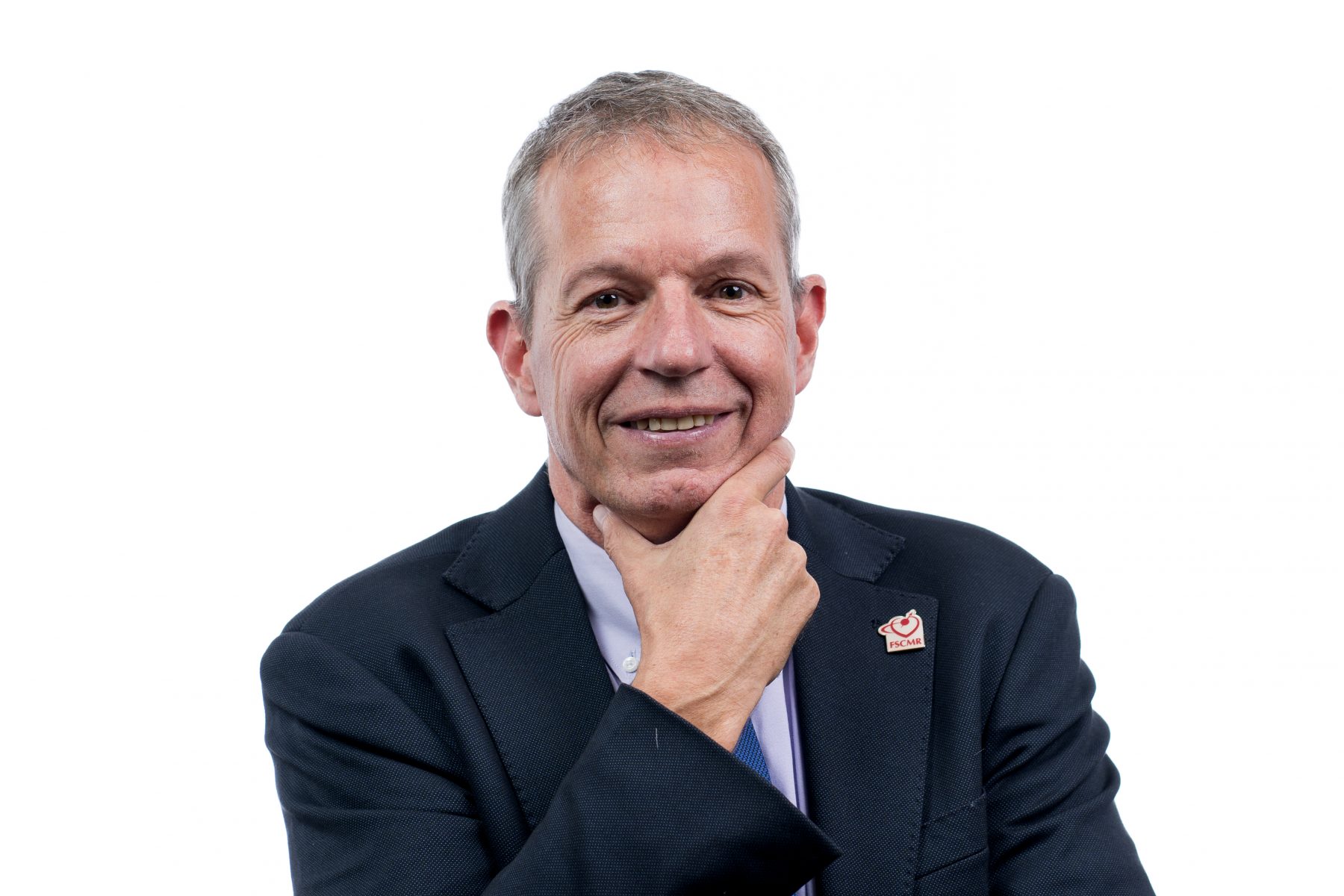
Matthias Stuber, PhD, is Head of the CIBM MRI CHUV-UNIL Section and Full Professor at the University of Lausanne, Switzerland. He is also a Visiting Professor at Johns Hopkins University, Baltimore, MD, USA, and an Invited Chair at LIRYC, Bordeaux, France. He studied Electrical Engineering at ETH Zurich, where he obtained his PhD in 1997 with a focus on cardiovascular magnetic resonance imaging (MRI).
From 1997 to 2002, he worked at Beth Israel Deaconess Medical Center in Boston, MA, USA, both as a clinical scientist in industry and as a faculty member at Harvard Medical School. From 2002 to 2009, he directed an NIH-funded research program at Johns Hopkins University School of Medicine, where he advanced to Full Professor and was awarded tenure.
In 2009, Prof. Stuber returned to his native Switzerland. He has authored more than 270 peer-reviewed scientific publications, holds 14 patents, and has secured more than 40 competitive research grants. His research has led to major advances in cardiovascular MRI, including innovations in coronary MR angiography, motion-compensated imaging, free-running whole-heart MRI, and quantitative cardiovascular imaging.
Prof. Stuber served as an elected member of the Board of Trustees of the International Society for Magnetic Resonance in Medicine (ISMRM) from 2013 to 2016 and is Past President of both the Society for Magnetic Resonance Angiography (SMRA) and the Society for Cardiovascular Magnetic Resonance (SCMR). He was named Fellow of the ISMRM in 2010, Fellow of SCMR (FSCMR) in 2018, and Master of SCMR (MSCMR) in 2020. Since 2021, he has served as a member of the Research Council of the Swiss National Science Foundation (SNSF).
Prof. Stuber has received numerous national and international distinctions for his scientific contributions. In 2021, he was awarded the SCMR Gold Medal, the highest honor bestowed by the Society for Cardiovascular Magnetic Resonance. In 2026, he received the ISMRM Gold Medal Award, the highest distinction of the International Society for Magnetic Resonance in Medicine, in recognition of his outstanding scientific contributions, sustained innovation in MRI technology, deep engagement with the ISMRM, and exceptional record of mentorship and collaboration