Categories
Artificial Intelligence Cities Complexity Digital twins Geography Local digital twin MAPS Urban Vizualization

Digital twins for Amazon sustainability

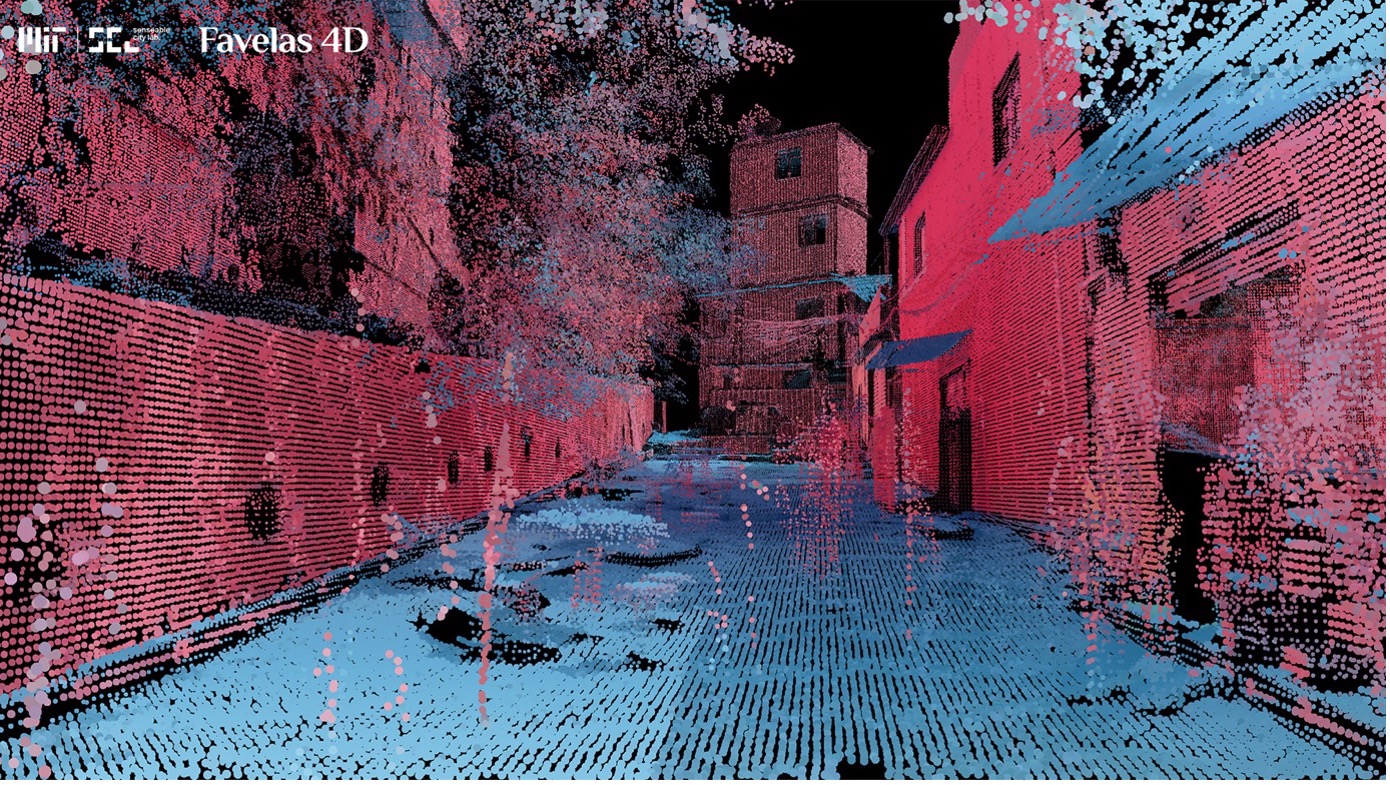
Carlo Ratti, director of MIT’s Senseable City Lab, and Robert Muggah, co-founder of the Igarapé Institute, recently argued in a Mongabay op-ed how digital twins could support policies to protect and conserve the Amazon while improving people’s well-being by encouraging them to expand green bio-economic activities.

They pointed out that digital maps can help understand the forest ecosystem in more detail than ever before. Using LIDAR and AI technologies, it may soon be possible not only to map and digitalize each individual tree from crown to root, but also to understand and scan how different species are connected to the surrounding topography and how each part of the ecosystem relates to the land around it – i.e. a complex approach-.

Digital twins can therefore help to clarify the relationships between rainforest ecosystems and the cities embedded within them. This includes complex and informal neighborhoods that remain unmapped. Based on this new amount of data and knowledge about the Amazon rainforest, it could be possible to help protect the ecosystem from environmental crime and unsustainable development by promoting and encouraging green alternatives.

Follow this link to read the full article:

https://news.mongabay.com/2023/11/can-digital-twins-help-save-the-amazon-commentary/

If you are interested in the activities of MIT’s Senseable City Lab, follow this link:

https://senseable.mit.edu/

And for the Igarapé Institute:

https://shorturl.at/FMO26


Image source: MIT Senseable City Lab.
Categories
Artificial Intelligence Networks physics Programming SCIENCE

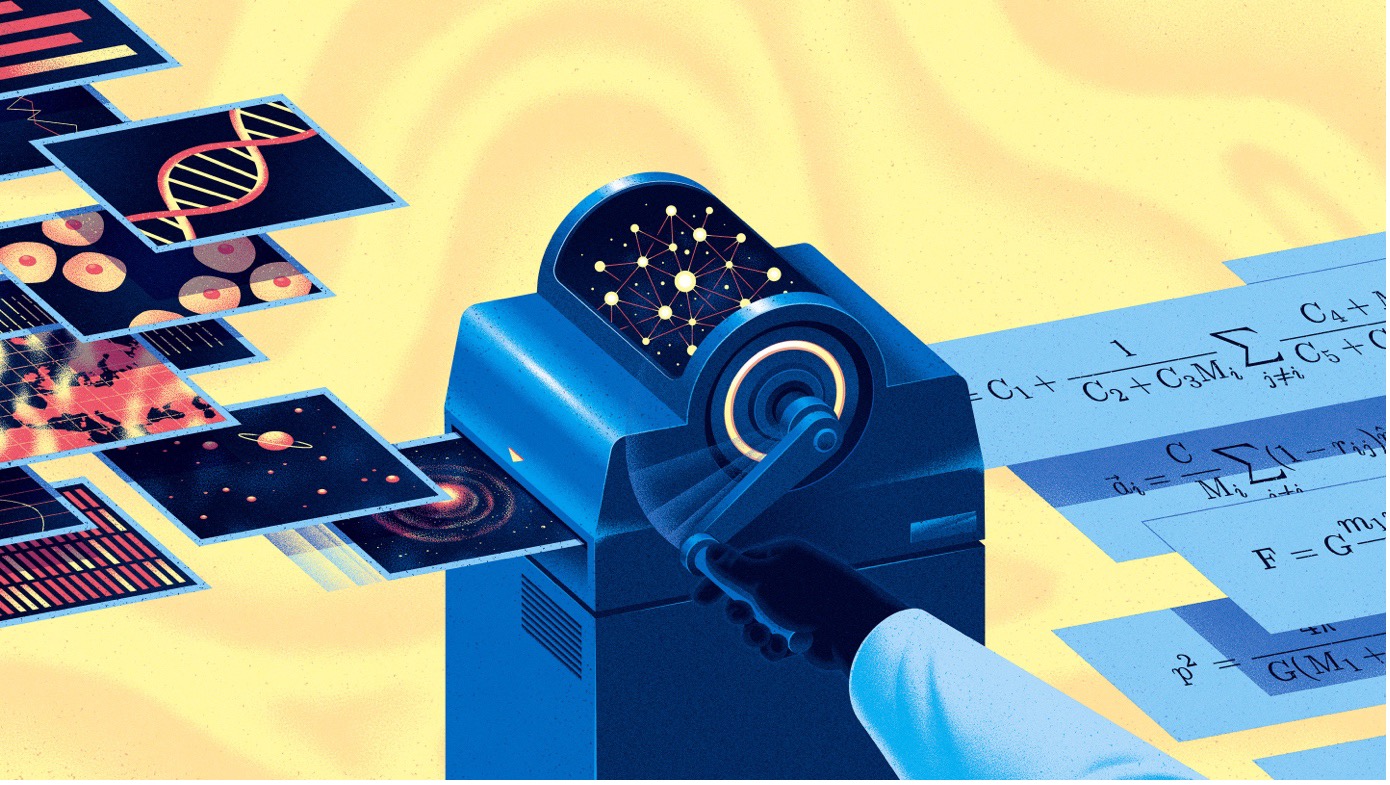
Empirical methods and the ability to find law of physics in raw data 

Charlie Wood of Quantamagazine published in 2022 an article that highlighted the 2017 research work of Roger Guimerà and Marta Sales-Pardo, who discovered a cause of cell division – the process that drives the growth of life – using an unpublished and novel tool, a digital assistant they called a “machine scientist”. The method quickly gained acceptance, and Sales-Pardo & Guimerà are among a handful of researchers developing the latest generation of tools, known as symbolic regression. A description of the key elements of the tool can be found in Guimera et al. (2020).

In general, symbolic regression is a type of machine learning that can identify mathematical relationships between variables in data sets using Bayesian probability theory. It has been used to discover new equations that describe physical phenomena, such as the movement of fluids or the behavior of materials under stress. Researchers supporting the expansion of these methods say we’re on the cusp of “GoPro physics”, where a camera can point at an event and an algorithm can identify the underlying physical equation.

According to Wood’s article, machine scientists are being used in fields such as biology, chemistry and materials science to make new discoveries and accelerate scientific progress. For example, a team led by scientists at London-based artificial intelligence company DeepMind has developed a machine learning model that suggests the properties of a molecule by predicting the distribution of electrons within it. 

If you are interested in the state of the art related to these approaches Liu et al. (2023) recently published the article “Data, measurement and empirical methods in the science of science”, which includes the Guimerà and Sales-Pardo experience. The publication is available in:

https://www.nature.com/articles/s41562-023-01562-4

If you are interested in Guimerà et al. (2022) “machine scientist” you can follow this link:

https://www.science.org/doi/full/10.1126/sciadv.aav6971

Image source: https://www.quantamagazine.org/

Categories
Artificial Intelligence Cities Complexity Urban

Urban AI: The Think Tank

Urban AI’s Thing Tank is a platform that promotes the use of artificial intelligence technologies to make cities smarter, based on six principles for urbanized technologies (i.e. technologies that promote urbanity and “cityness”): situated, open, decentralized, frictionless, meaningful and ecological. The think tank is based in Paris and was founded in 2021 by Hubert Beroche, who explored 12 cities and met more than 130 AI researchers to understand how AI is transforming and will transform cities. 

The core aspects of the think tank have been presented in the URBAN AI report, co-authored by 20 contributors who answer the same question: how will Urban AI transform our cities? According to Beroche, the aim was to create and develop the concept of “Urban AI” by discussing the different aspects of this technology and reflecting on its implications. The report can be downloaded from the following link:

https://urbanai.fr/our-works/urban-ai-report/

To date, the think tank has experienced significant growth, supporting more than 150 members. It has also produced several reports (e.g. The Future of Urban AI: Global Dialogues on Urban Artificial Intelligence, Geopolitics of Smart Cities: Expression of Soft Power and New Order, What goes into urban AI?). To learn more about Urban AI’s Thing Tank, please visit their website at:

https://urbanai.fr