What can you do after a PhD? How do you find your first job outside academia? And how can you discover careers you may not even know exist?
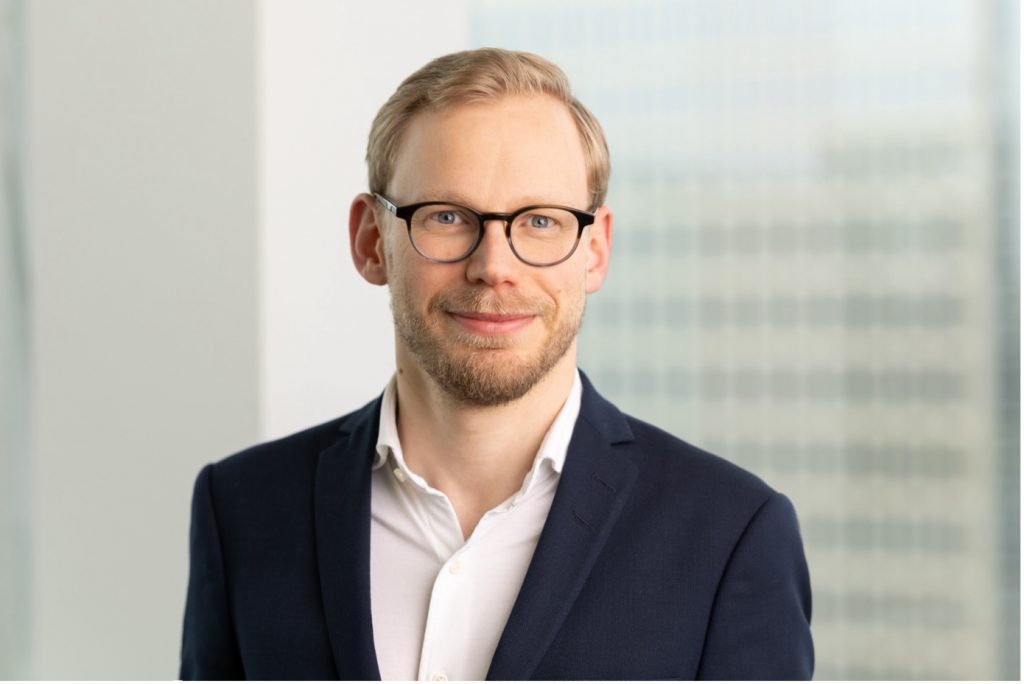
Jean Enno Charton has faced these questions himself. Around thirteen years ago, while completing his PhD at the University of Lausanne, he attended one of the very first editions of the Life Science Career Day to explore opportunities beyond academia. This year, he returned as a guest speaker to share his experience with young researchers and reflect on the challenges of building a career after a doctorate.
Can you briefly introduce yourself?
I did my PhD at UNIL from 2009 to 2013. Before that, I studied biochemistry in Germany, in Tübingen. From my position at UNIL, I moved back to Germany and joined the Merck Group, where I am currently Head of Sustainable Business Transformation. This is already my fifth job in the company since then.
What were you looking for after your PhD?
After completing my PhD, I was trying to find my way professionally and understand what opportunities existed outside academia. I remember attending one of the very first editions of the Life Science Career Day, looking for inspiration and guidance.
At the time, I realized that an academic career was not necessarily the path I wanted to pursue, but I was still searching for ways to create value, contribute to society, and build a meaningful career.
How was your first job search? Did your PhD help you find a job?
Finding my first job was not easy. It took me about ten months to find a job.
My PhD was seen as a qualification that showed I could commit to a project, drive things forward and work independently. Employers were also looking for someone with critical thinking skills who could organize themselves and move projects forward.
My laboratory skills could not necessarily be transferred to the different roles I have had since, but the commitment, soft skills and challenges I experienced during my PhD were highly valued by the job market.
Which skills from academia still help you today?
One thing I really got better in during my PhD were communication skills. I learned to explain my science projects in a simple way and to communicate with people outside my area of expertise. This is something I still use every day.
I also learned to do many things in parallel. In the lab, I was always running four or five experiments at the same time, and this still helps me today when I am working on several projects simultaneously.
Is the job market really that difficult?
Thirteen years ago, I was also told that the market was difficult and opportunities were limited. Of course, economic conditions can influence hiring, but I think the challenge is also that many PhD graduates do not know what the private sector wants or what opportunities are available.
Even in challenging times, I think there are opportunities for everybody, but you need to find ways and niches. You might start in a small consultancy, do an internship, complete a postdoc in a company, or start working for the state and then move into industry.
The challenge is finding your way. We are trained very much towards an academic path, while more than 90% of us do not stay in academia. This is why it is so important to talk to people and find out what options are available.
How did the Life Science Career Day help you?
Events like this show you the myriads of opportunities that are out there. Before attending these kinds of events, I didn’t know what kind of jobs existed on the market, both public and private sector.
In the biotech and pharmaceutical industry can discover very different opportunities, such as regulatory affairs, pharmacovigilance or science communication. These are things I had never heard about before. You also get the opportunity to talk to people and meet professionals who can motivate you to keep looking.
This is something that the Life Science Career Day made possible for me.
Why do you share your career story?
I am very happy to be back and very thankful to have been invited. If sharing my story can help young scientists remain motivated and continue investing in themselves, then I am very happy to do so.