Original text published on https://wp.unil.ch/hecoutreach/ai-as-a-tool-for-human-skill-development/
The article shows how artificial intelligence is becoming an innovative tool for developing fundamental human skills such as empathy, communication, and leadership. Through virtual reality and behavioral analysis, AI makes it possible to assess and train these skills on a large scale, in realistic and stressful situations. Paradoxically, technology thus helps to strengthen what makes us deeply human.
Can artificial intelligence help us become better leaders, communicators, and collaborators? While AI is often seen as a threat to human jobs, Marianne Schmid Mast, Professor and Dean at HEC Lausanne, explores a different perspective: using AI to assess and enhance our most essential interpersonal skills.
Find out how cutting-edge research is turning AI into an unexpected tool for human development in the article published in Edge Magazine by The Institute of Leadership in in the Winter 2024 edition and reported below.
Your new AI coach
Marianne Schmid Mast considers how artificial intelligence can be a powerful ally in assessing and developing key interpersonal skills.
In the age of artificial intelligence (AI), inherently human competencies such as empathy, collaboration, leadership and communication remain irreplaceable, and such interpersonal skills only grow in importance in a volatile, uncertain, complex and ambiguous (VUCA) world. Interpersonal skills refer to the ability to demonstrate behaviours that foster effective communication and build positive relationships with others. The OECD Learning Framework 2030 emphasises interpersonal – or ‘soft skills’ – as crucial for tackling future workplace challenges. In the AI era, soft skills are becoming the new hard skills. If interpersonal competencies are what takes the difference in the workplace, companies will focus more on those skills in the recruitment process, and will have to turn to validated assessment tools to measure these competencies during the recruitment process. To remain competitive, companies will also have to invest more in developing these competencies within their existing workforce.
How to assess interpersonal skills.
The best way to measure interpersonal competencies is by placing people in difficult social situations that require them to demonstrate and apply the skills in question. For instance, a job applicant might be asked to fire a colleague, while a panel of observers watch and judge to what extent the applicant was not only efficient, but also showed empathy towards the colleague. Or a job applicant might be asked to prepare a pep talk to motivate underperforming collaborators as a way of assessing their communication skills. These so-called work samples are efficient in predicting candidates’ future job performance. Unfortunately, they are also costly to conduct, as they require actors to play the roles of the colleague and members of the judging panel.

How can AI help?
Technology and AI can help to do this, and at scale. Virtual reality can be used to simulate human colleagues, allowing applicants to be placed in various scenarios, such as firing a virtual employee who reacts aggressively and needs to be managed, or giving a pep talk or a public presentation in front of an audience. This interaction could be recorded and then analysed by a trained algorithm. The algorithm can then extract verbal and non-verbal behaviours of the job applicants from the video and link them to job performance data. If enough data is available, AI can learn to detect the relevant behaviour in the video and make a performance prediction of new applicants. This allows for the rapid detection of interpersonal skills across a large number of applicants. However, the challenge lies in the fact that the simulation setting cannot be changed and, to train the algorithm, a huge amount of data needs to be available. Additionally, the quality of the performance measure is important – and, for leadership positions, it is not always entirely objective, as it is often based on employee and colleague satisfaction.
Training interpersonal skills
Interpersonal skills can be learned and developed through training. Companies invest significant amounts of money in staff training, particularly in leadership and communication competencies. Typical interpersonal skills training involves trainees observing a role model who demonstrates the desired outcome to perfection. For instance, trainees can watch a video of a speech by Barack Obama in a public speaking training session. They can then practise themselves and receive feedback to perfect their skills. New technologies can help: trainees can be immersed in virtual reality and give speeches in front of virtual audiences, eliciting the same levels of stress as they might encounter in a room full of real people. Again, this process is scalable; many people can train with the same virtual audience by simply wearing a VR headset. Training can be further enhanced by introducing additional stressors. For instance, imagine a person training to give a public speech while standing on a plank over a precipice. The fear of heights adds stress that needs to be mastered during training, which then makes giving a AI public speech in front of a real audience, without the fear of falling, a piece of cake. Collecting the feedback via automatic detection of verbal and nonverbal behaviour in a public speaking scenario, and providing feedback to the trainee, is also possible. For instance, when an eye tracker detects that the speaker is not looking at the audience, the simulation can be programmed to let the virtual audience fall asleep, a clear signal to the presenter that something is not going well. While new technologies and AI can replace some aspects of human work, they also present opportunities to improve and refine inherently human skills, such as interpersonal communication and leadership. By leveraging AI for training and development, we can enhance the abilities that set humans apart from machines.
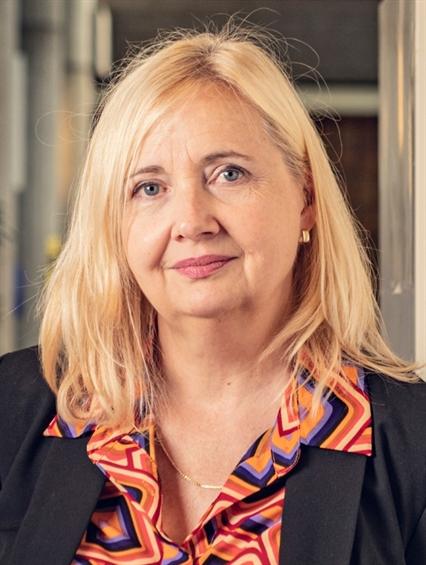
In that sense, technology can help us to become more human! Marianne Schmid Mast is full professor of organisational behaviour at the University of Lausanne and Dean of the HEC Lausanne Business School. She is a former member of the Swiss National Research Council and acted as president of the Swiss Psychological Society. In 2018, 2019 and 2020, she was named one of the 50 most influential living psychologists.
Marianne Schmid Mast is Professor of Organizational Behavior and Dean of HEC Lausanne. Her research, which notably uses virtual reality, focuses on interpersonal communication, leadership, and hierarchical dynamics.
Faculty of Business and Economics