Category: Portraits of projects

Portraits of a project or a researcher, when obtaining new funding or for new activities at the FGSE:, discover the aspirations and motivations of our researchers in this section.

Find all project laureates on GeOréka.

  • Realize a project to create a start-up?

    Realize a project to create a start-up?

    Meeting with two alumni of the FGSE (IDYST)

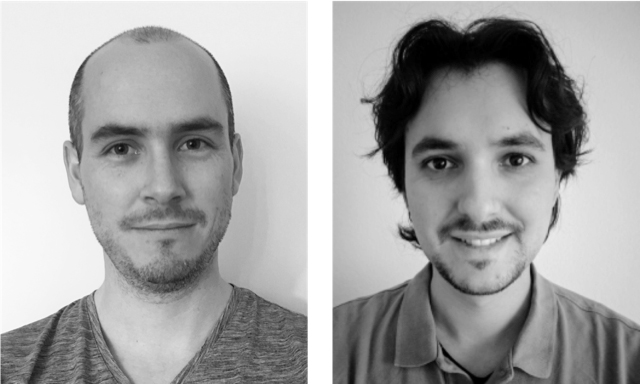
    Federico Amato and Fabian Guignard, former young Their project was supported by the UCreate3 accelerator program of the UNIL Entrepreneurship and Innovation HUB in autumn 2020. They share this experience with us. 

    How did your collaboration and the idea for your project come about?

    We met during our work at the IDYST research group: Geosciences and Knowledge Discovery in Data (GeoKDD) (Federico as a post-doc and Fabian as a PhD student). Our research covered multiple aspects of data analysis: spatial statistics and modeling techniques, machine learning, artificial intelligence, environmental risks and energy potentials modeling.

    We quickly realized that these approaches and our expertise had potential for interest outside the academic world. Indeed, private or public sector companies must adapt to climate and environmental issues. To do this, they often have to process complex data. However, these organizations do not always have sufficient financial or human resources to process these data.

    Our profile allows us to interact as competent interlocutors on both sustainability and environmental issues environment, as well as on data analysis requiring complex IT models and tools. By leveraging this dual background, we can take concrete actions in favor of the climate, helping companies to be more resilient to climate change or to optimize their activities in more sustainable models.

    What does Grinsight propose, what are the projects developed?

    Grinsight (a mix between green and insight) aims to offer support to companies, public services or NGOs that wish to assess the environmental impact of their activities or to reorient their operations or business model towards more sustainable solutions.

    The support focuses on three areas: 

    1. helping the organization to define the problem it wants to solve and identify the data useful to find solutions; possibly helping to collect these data,
    2. define a strategic development plan based on the analysis of the data collected; identify the impacts of climate change on the organization and/or the possibilities to reduce its carbon impact,
    3. develop a risk-management plan to prevent potential risks related to the organization’s future activities.

    The field of application is very broad and fits into various sectors of activity. Our service can range from the creation of socio-environmental models for public administrations and NGOs, to the use of satellite and meteorological data to evaluate the impact of global warming on the frequency of hail events in our region.

    However, the current objective is not to canvass all directions. Grinsight remains for the moment a secondary activity. Our main activity is in the areas of innovation, research and development in data science. One of Grinsight’s goals is to facilitate the transfer of this academic knowledge to concrete applications within society.

    What were the steps to set up the project and to participate in the UNIL Entrepreneurship and Innovation HUB?

    When the idea of setting up a start-up matured towards the end of our FGSE course, we looked for levers that would allow us to make it happen. Among several solutions (PACTT, HUB UNIL…) we opted for the UCreate 3 program (HUB UNIL) because it was the one that was the closest to a first step. We wrote our project idea on a few pages and submitted our application in September 2020. Our project was selected among 12 projects (out of more than 60 proposed) for the first round. We then participated in an interview that allowed us to be among the 7 projects finally supported.

    UCreate3 provided us with various types of support:

    • a sum of CHF 10’000.- which allowed us to develop the visual identity of Grinsight (logo, website etc.)
    • courses and personalized coaching follow-up that forced us to free up time to think about our project and to precisely define the business model (which we do not necessarily do spontaneously when we are busy with our daily work). The coach’s contribution throughout the project was very beneficial.
    • support of conducting a desirabilitystudy.  This consist of contacting potential clients to present the company and its services to them, to see if our proposal arouses any interest. This step was very useful: it taught us to dare to pick up the phone and to formalize our services. We were able to establish a first contact that finally materialized into two mandates the following year.

    During the development of the project, we had to explain our objectives to people who were not in the field. This required us to learn how to communicate to a business-oriented audience, which requires a different language than the academic world. We therefore had to popularize our discourse and focus on our services.

    What advice would you give to UNIL PhD students /post-doc fellows who are thinking of starting their own business?

    The UNIL Entrepreneurship and Innovation HUB, as well as PACTT, are accessible and offer concrete help. Innosuisse also offers a range of tools for all those who want to explore the possibility of transforming their research into an application that could lead to the creation of a company. Whatever the option chosen, if an idea seems interesting, one must go through with it. Even if in the end the company does not succeed or lasts only for a while, you learn a lot during the different steps: better communicating, formalizing ideas for a non-scientific audience, going outside your framework to contact companies etc… Moreover, this experience is enriching. It allowed us to discover facets of ourselves that we will be able to value on a CV.

    What is Machine Learning?

    “Machine learning” is a family of algorithms, belonging to the field of artificial intelligence that can learn automatically from experience, without the learning rule being explicitly programmed to do so. The basic algorithm does not change, but improves its results as the amount of data presented to the computer becomes larger and larger. 

    You can find all the calls for projects to support the transition and company creation on Georeka website  for FGSE researcher: InnosuisseBridge.

  • Waste management in South Asia: what impact of the COVID-19 pandemic?

    Waste management in South Asia: what impact of the COVID-19 pandemic?

    René Véron, Institute of Geography & Durability

    How did waste management change during the current pandemic ? René Véron and Swetha Rao Dhananka work together since more than ten years in South Asia. Now they initiate an SNSF-SPIRIT project in Nepal and Sri Lanka to evaluate COVID impact on urban resilience, sustainability, decent work conditions and gender equality.

    What is your goal in this project?

    Swetha Rao Dhananka: We submitted the first version in spring 2020, it was the first wave of COVID and at that time nobody anticipated that it was going to prolong, going to take so many different forms. We want to understand what happened during the COVID pandemic in terms of waste management and what will happen after it, to apprehend the longer-term impacts on governmental and municipal waste policies. 

    René Véron: Changes can take place at the household level, because waste services are less available – people start segregating waste more, look for some ways of stocking waste in their home.

    The changes can also happen at the level of waste collection. We want to look at how the situation of waste workers – both formal and informal, both men and women – have changed during the pandemic and what the ramifications are after the pandemic.

    And finally, we are interested in the policy level. From a previous project, we know quite a bit about the waste discourses at the policy level, about laws around it, guidelines on how to deal with waste. Now we want to figure out whether this crisis has an impact on laws, on policies, even on how policy makers talk about the waste problem.

    “We think that crisis moments change something: they change practices, and they might also change policies in the longer run. Our project is trying to look at these changes.”

    René Véron
    Why are you interested in waste management as a research topic?

    René Véron: First, it is an environmental issue. It is important in the Global South particularly, because improper waste management is polluting soil, water, even air. It clocks drainage canals and can even lead to methane emissions from unsanitary dumps.

    It is also a social issue. Lots of livelihoods are linked to scavenging, waste picking, often under risky and unhealthy conditions.

    “Most studies in waste management are done by engineers and are of very technical nature. Technologies exist but they are difficult to put into place, because there is no political will, or because it replaces or dislocates labour – particularly in the informal sector. All these issues must be taken into consideration.” 

    René Véron

    The third point is more methodological and practical. Talking about waste, which appears to be such a technological, technical issue, allows us to easily start a conversation with policy-makers and NGO representatives. It appears to be a neutral topic that one is quite ready to talk about. It acts as a good entry point for discussion and to access particular stakeholders.

    Most people see the relevance of waste management, but most people see it as a purely technical issue. I have been approached by people who come with technical solutions, for plastic waste for instance. I always have to hold them back: “yes, on paper, in your lab, with your trial this can work very well. However, in a different cultural, social, and political context, particular solutions might not work at all.” Before recommending particular technical solutions, one needs to engage with stakeholders, asking how they see the problem, how they see solutions, whether they have already tried particular technical solutions, what they have learnt from success, but also from failure. Our job as social scientists is to engage in those questions.

    “Waste tell us so much about the society and about the polity. It is quite obvious that the amount and types of waste are reflective of our consumer society. Perhaps less obvious is that the way we treat waste, how we manage it, tells us a lot about social inequalities. Who, what type of population is exposed to waste? And what population are protected from contact with waste?”

    René Véron
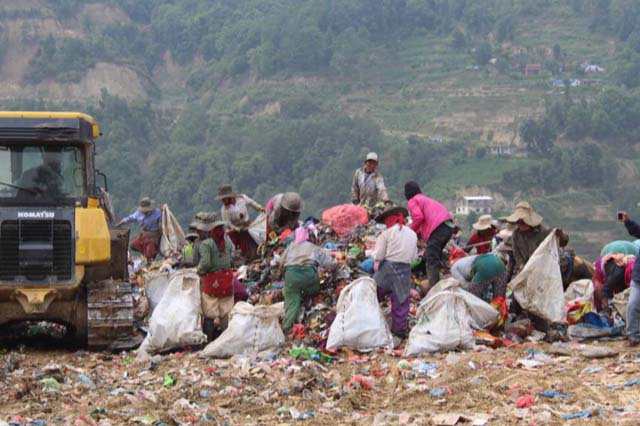
    Informal recyclers risking their lives to find the last waste treasures (Credit: Yash Man Karmacharya)
    How did you start working together with René Véron?

    Swetha Rao Dhananka:  I was a bit isolated on my thesis topic – housing for the urban poor in India – when I worked as an assistant and PhD student at the UNIL Institute of Political Studies in the Faculty of SSP. I learned that Prof René Véron was engaged at FGSE, so one fine day I knocked on his door! 

    Since 2019 we co-lead the cluster of collaboration Knowledge2Action in South Asia – a project financed by swissuniversities. The idea of this cluster is to bridge scientific output to action relevant engagements. Among other activities, we have conceived “small grants” in order to produce creative means of science communication and community action: it can be a comic, a film or a form of community engagement. It is an avenue where research results can be transformed into something usable and pertinent for the concerned communities. 

    We have been working together in one or another way for the last 10 years. Now we have the chance to be formally in the same project. It will be a great experience.

    The SPIRIT instrument puts an emphasis on gender awareness. Is this an important aspect of your project?

    René Véron: Waste doesn’t really seem related to gender, but it is. Already in the household, in South Asia, waste practices are the responsibility of women, to a very large extent. So in a crisis like COVID, where waste services are less accessible, women are the ones who invest more time in segregating waste and bringing waste away. This can have an impact on gender relations within the household. We hope, thanks to this project, that we will have some answers to these guesses.

    At the policy level, waste measures are very gender blind. We want to figure out how we can convince policy-makers to include the gender dimension. Just a small example. If we promote waste segregation at the source, which is the basis of all good solid waste management, we have to be careful not to put an additional work burden on women.

    In Nepal, most informal recyclers are women. These women were particularly affected during the lockdown. Many of them lost their livelihood. (Credit: Extract from film by Yash Man Karmacharya)
    How do you identify, contact and interview key people in such a project?

    ReRené Véron: Our team is in a unique position, because we already have worked in that field in the two locations (the Kathmandu Valley in Nepal and Greater Colombo in Sri Lanka). We know how people managed the waste before the crisis. Our local research partners are in constant touch with the stakeholders involved in waste management: politicians, bureaucrats, private enterprises, cooperatives of the informal sector, unions. With this SPIRIT project, we “merely” have to recontact people we already know.

    “Negotiating access in the local situation of lockdown or limited mobility is going to be a challenge. But we believe that with very good and experienced local partners that we have, we will probably find some creative ways. Adaptability is the greatest imperative for researchers at this time.”

    Swetha Rao Dhananka
    How will you collaborate with the teams in Nepal and Sri Lanka? How do you work together?

    René Véron: Such a project is very difficult – and maybe even unethical – to carry out when you are sitting in the global North or send people to do some field work there. It is increasingly acknowledged that one has to seek research partnership in the South. We have been doing so for quite some time. For this project we are lucky to have already an existing team in Nepal and Sri Lanka.

    What is important is to meet up regularly. That is not always possible in person – particularly during the COVID time. However, project meetings in person are key, because during those times we can discuss joint methodologies, think about conceptualisations that are important for the research, make sure that everybody has the same understanding of the topic. We can also co-create new topics, new concepts together.

    “During in-person meetings, we see the other as more than a researcher or a colleague, but also as a human being. Coffee breaks, dinners together are very important. In the current project, we had a night out in Kathmandu, where everybody started dancing and singing. This brought us together as a team, in a way that has a positive impact on the research!” (Credit: Senashia Ekanayake).
    What can Switzerland learn from South Asia?

    Swetha Rao Dhananka: Informality is often looked upon as something bad. But the informal sector can be seen as an inclusive and sanctuary place for poor people coming into cities. They get livelihood opportunities. Southern cities are drivers for what is called frugal innovation, adaptation to new places with the resources that are available. With the increasingly urbanising world, increasingly mobile world, this is relevant all over the world.

    In Europe we also increasingly face issues, like undocumented migrants. There may be some answers to seek about how to give them decent livelihood opportunities.

    René Véron: One often hears that waste management is particularly a problem for the country of the Global South, that they do not have proper technology, proper systems in place, and that here in Switzerland things are well organised, no need to research on waste or to have examples from elsewhere. I would contradict this view.

    The amount of waste we produce is huge. In comparison with Nepal, we can learn a lot from how they reuse, recycle particular products. Just one example, very small things are recycled: zippers are taken out of the general garbage and put back to use in their full form. Not melted as metal, decomposed in elements, but as a full zipper. Of course, that involves the exploitation of labour, the conditions are not hygienic, and that would not be possible in our context, with our salary costs. However, this system gives us pause for thought.

    You have extensive experience in international collaboration with countries in the global South. What advice would you give to young researchers who would like to embark on such projects?

    Swetha Rao Dhananka: I am very fortunate because I have a South Asian background. I am very admirative of young researchers who are willing to immerse themselves in a new culture. As a piece of advice, I would say a lot of patience, a good portion of humour. We are so used to working online now… However, a good face-to-face exchange, a good laugh, knowing the person more holistically, beyond the role of researcher, has a big impact on the quality of the relationship one can develop. One issue that we have to be sensitive to is the lived social hierarchy, in universities in South Asia, which might be a bit different from here. Especially younger researchers are faced with different types of pressures. Understanding the underlying tensions are very important to have a smooth collaboration.

    René Véron: One very important thing is to stay very modest, definitely not trying to make recommendations very quickly. However, I think we bring another perspective. Not a better one, but a different one. For young researchers, it is good to connect to other young researchers of the region, to exchange and share things. There are lots of commonalities, generational similarities, everybody is on social media: there are many things people can connect with. In a globalised world, the category global North and global South do actually no longer make much sense.

  • What happens to biodiversity when glaciers disappear?

    What happens to biodiversity when glaciers disappear?

    Gianalberto Losapio, Institute of Earth Surface Dynamics (IDYST)

    Biodiversity Change is the label of a new research group at the University of Lausanne that is attempting to answer this question.

    Global environmental change, in particular rising temperatures, is causing alpine glaciers to retreat and disappear. The consequences of glacier retreat on ecosystems are still poorly known and difficult to predict.

    With his Ambizione project IceNet – Forecasting the impact of glacier retreat on network dynamics and ecosystem functions, Gianalberto Losapio aims to provide an empirical contribution to the understanding of these phenomena.

    What are your objectives with IceNet?

    Gianalberto Losapio : Since the end of the Little Ice Age (1500-1850), alpine glaciers are retreating and shrinking, sometimes to the point of getting extinct. The disappearance of glaciers is followed by a total upheaval, with the colonization of pioneer plants, insects, and microorganisms. How is the network of interactions between these organisms intertwined? And what role do ecological networks play in the response of species to environmental change? This remains to be discovered.

    The IceNet project will unveil ecological networks in front of disappearing glaciers, which are formed among colonising microorganisms, plants, predatory insects, herbivores, and pollinators. I want to shed light on a biodiversity that is still little known – and that we are in danger of losing forever. But also to understand how an ecosystem evolves “from scratch”.

    How to approach an ecosystem scientifically?

    GL : First, we will reconstruct the ecological interactions between the various communities. The next phase will focus on describing how these networks evolve, are held together, and what influence they have on ecosystem functioning. We will develop models to understand how organisms respond to the changing environment. I do hope the results of our research will help to better predict and anticipate the consequences of glacier extinction on alpine biodiversity.

    Ranunculus glacialis, the glacier buttercup is an iconic alpine plant inhabiting glacier forelands – the areas in front of retreating glaciers. It has a not-so-certain future. On the right, a bee (Apis mellifera) is visiting a cushion plant (Arenaria tetraquetra) at 3,200 m elevation in the Spanish Sierra Nevada. This mountain region that has already lost its glaciers (Pictures: G. Losapio).

    What is the impact of your project on ecology and society?

    GL : The project is developed in a multidisciplinary research context, combining methods typical of Earth sciences (like geochronology, geomorphology and soil biogeochemestry) with computational innovations in ecology and recent developments in molecular biology (environmental DNA sequencing and metabarcoding). Finally, we will pay particular attention to environmental education and cultural aspects. I find it essential to place the results of scientific research within the broader social, political and economic context associated with the climate and ecological crisis. Please visit  our dissemination page to stay tuned !

    Why tackle the issue of biodiversity in the face of disappearing glaciers?

    GL : Having grown up at the Alpine foothills and being a climber and mountaineer, I like and respect nature, and particularly mountains. My personal motivation is to support and protect biodiversity. This project simply combines two of my favorites: biodiversity and high mountain environments. I wish to actively contribute to the mitigation of the current climate and ecological crisis by doing my small part in this social “fight”.

    Mutualistic interactions are crucial for sustaining biodiversity and to understand the risk of extinction cascades. Here a bumblebee is visiting creeping avens (Geum reptans) in front of a retreating glacier. On the right, the glacier foreland of Amola (Italy) G. Losapio studied during his master thesis. The big moraines indicate the height (and volume) the glacier reached only a bunch of decades ago (Pictures : G. Losapio).

    Why have you chosen IDYST to carry out your project?

    GL : IDYST is a hotspot for alpine research! Indeed, it hosts different research groups with whom I can close collaborate. We have a great match and complementarity of research focus and expertise. Furthermore, I really like the broader scientific and educational goals of FGSE, which align with my own values, and I am really honored to contribute to its societal endeavor.

    Dr Losapio’s biography in a nutshell

    My career path started at University of Milan with a BSc and Msc in natural sciences with a specialization in botany. During that time, I conceived my own thesis project looking at the effects of glacier retreat on plant and pollinator communities! Then, I moved to Zurich for a PhD in Ecology (my supervisor Christian Schöb was himself an Ambizione grantee!), studying still ecological networks in high-altitude ecosystems. Then, my first postdoc was on environmental change and biocommunication at ETH, before going to Stanford for a second post in conservation biology.

    Biodiversity Change, group page

  • How climate change affects extreme rainfall ? A new Eccellenza professor at FGSE addresses this issue

    How climate change affects extreme rainfall ? A new Eccellenza professor at FGSE addresses this issue

    Nadav Peleg, Institut des dynamiques de la surface terrestre

    How climate change impacts hydrology? And how can we better prepare for the future challenges of hydrological hazards and risks? The desire to find answers to these burning questions motivates the research of Nadav Peleg, recently appointed FNS Eccelenza Professor at the FGSE.

    By training, Prof. Peleg is a hydrometeorologist. So far, his research has focused on analysing the interactions between climate and hydrological systems and exploring the impacts of climate change. For example, he and his colleagues recently studied how climate change affects the area, intensity, and frequency of extreme rainfall and flood occurrence (Peleg et col. 2020).

    What is your main research question for the next few years at the FGSE?

    Nadav Peleg : Recent years have seen an increase in urbanization, and we expect the majority of the world’s population to live in cities by the end of the century. By becoming larger and denser, cities will become warmer and drier. As a result, extreme rainfall will intensify, leading to an increase in the frequency of urban flooding.

    We plan to investigate how cities modify extreme rainfall events and the physical reasons behind the modifications. We plan to use this knowledge to investigate different scenarios of urban growth and climate change. We will project the expected changes in flood regimes based on the city form.

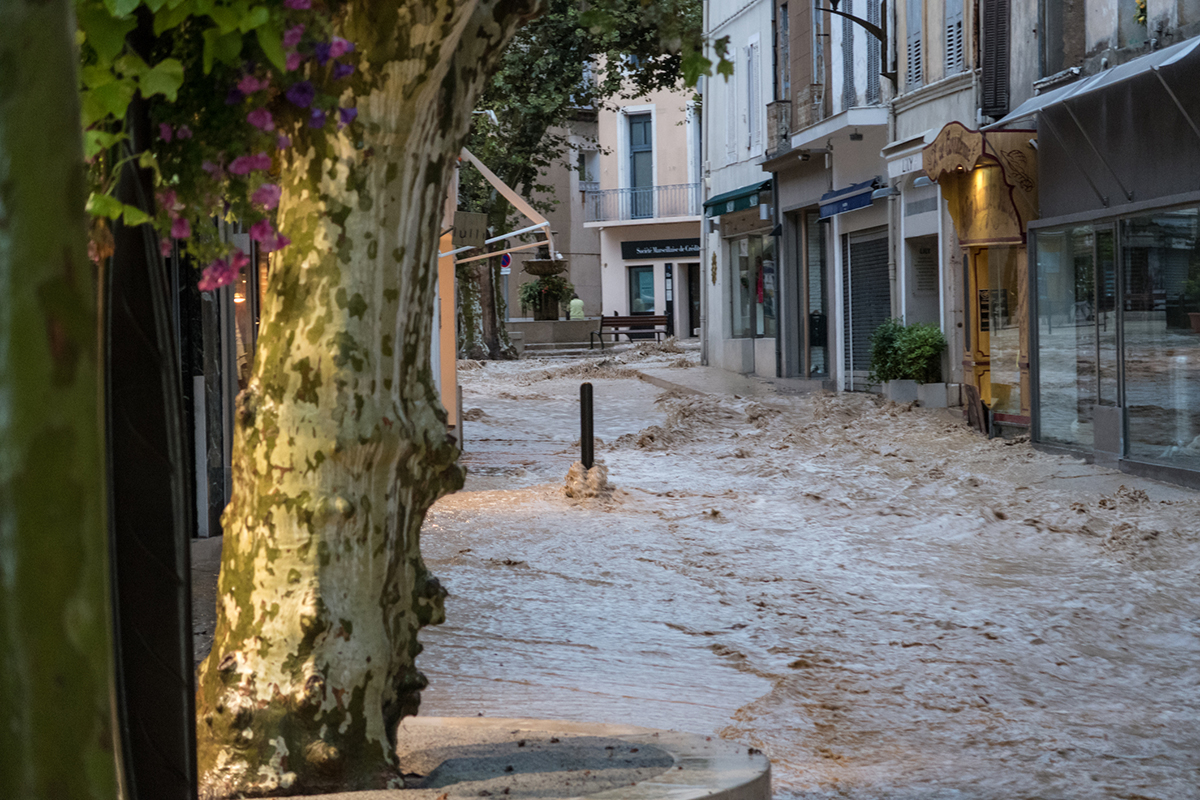
    A flood at Cassis close to Marseille, in the morning of September 13. 2015 (© Dreamstime.com)

    Why is this question important to you?

    NP : I believe that we can prepare better for dealing with urban flooding if we ask this question. To reduce the damages from future urban floods, we should start designing drainage systems and taking other mitigation steps today. This project will bring us closer to this goal.

    Why have you chosen the FGSE for your Eccellenza project?

    NP: The FGSE appealed to me because I anticipated many internal collaborations with my colleagues in the three institutes. In particular on topics related to climate change and climate extremes, natural system modelling, and urban research. I think this project will be a good fit with the faculty’s ongoing research.

    Hydrometeorology and Surface Processes, Research group of prof. Peleg

    You have set up an international network: how will you work together?

    NP : There will be several cities involved in this project, such as Milano, Beijing, and Sydney. We will have collaborators in each city who will assist with data collection, fieldwork, and setting up the hydro-climatic models. Working with our collaborators requires us to travel a bit to the different cities, which is challenging with some of the countries’ current restrictions on travel, but still manageable.

    It is well known that the air temperature and humidity influence the structure of precipitation. In rural areas, it has been recently shown that the structure of precipitation can be modified due to temperature increase in two ways (A and B). A: the storm intensifies and grows because temperature increases and humidity source is external to the storm. B: the internal redistribution of the humidity within the storm leads to an intensification at the high rainfall zone and to weakening at the low rainfall zone. Yet, the urban heat island produces unstable atmospheric conditions that make it difficult to predict the fate of a hypothetical storm in the vicinity. The precipitation changes over the urban area are still not clear. (© Nadav Peleg)
  • Moulting: the behaviour that tells the long history of arthropods

    Moulting: the behaviour that tells the long history of arthropods

    A new Sinergia collaborative project was launched, with Allison Daley, specialist at ISTE of fossils and animal evolution in Cambrien, Marc Robinson-Rechavi and Robert Waterhouse (from the Department of Ecology and Evolution at UNIL) and Ariel Chipman (from the Hebrew University of Jerusalem): “An interdisciplinary study of arthropod moulting”.

    How did this project arise? How will a team that brings together specialists in palaeontology, evolutionary genomics, bioinformatics, evolution and development work?

    Prof. Allison Daley tells us, and explains what this project means to her.

    Let’s find out more about this project.

    Arthropods, a global success story

    How can we explain the evolutionary success of arthropods? No other animal group on Earth has so many species (6.8 million!) or such a diversity of forms. They are present in virtually all terrestrial environments and in all the ecosystem functions, and this since their origin 500 million years ago!

    This fossil immortalises a moulting trilobite Acidaspis coronata. Collected in the UK, it was studied by Professor Allison Daley. At the top of the image you can see the two lateral parts of the cephalon (the free cheeks on the left and right) separating from the head. ©Harriet Drage. Spécimen OUMNH C.17494

    To understand the evolution of life on Earth, a good starting point is to elucidate what makes this animal group successful. Could the segmented body of arthropods, which gives them ‘modularity’, be the reason for their immense diversification? Their body is protected by a segmented exoskeleton that must be replaced periodically in order to grow.

    The project addresses this aspect of arthropod life: moulting. In addition to being a key stage for each arthropod, moulting is one of the only behaviours whose history can be traced back to its origin. It is therefore a fascinating gateway to the evolution of animals. A rare opportunity to follow a complex behaviour over time.

    Studying moults in extinct species: mission impossible?

    Allison Daley dreams of travelling back in a time machine to look at arthropods of the past – although some of the sea scorpions over 2 metres tall must have been pretty terrifying. But how do you go about it when you’re studying the fossil record?

    A modern cicada of the Magicicada genus, in full moult: a striking spectacle. Photo : Dan Keck (licensed under CC0 1.0)

    An arthropod moults several times during its life, but it only dies once. If everything is preserved, we would find several moults of increasing size as the animal grows, and a single carcass at the end. In fossil sites where soft tissue is preserved, it’s a no-brainer: if soft internal organs are present, it’s a carcass; if not, you can be sure it’s a moult.

    Unfortunately, 99% of fossil sites do not preserve soft tissues. One must then look for evidence that the exoskeleton opened up and the animal came out. But sometimes teams describe fossils that they think are moults according to a list of criteria, considering the context of deposition, while other teams dispute this. This gives rise to much debate!

    What do extinct arthropods tell us about the world today?

    To understand the diversity before us, we need to look into the past. For example, over 300 million years ago, trilobites had an amazing moult: the same species could moult in several different ways, depending on the situation! Today, arthropods have only one mode of moulting. If it fails, the individual dies. There is no backup. Moulting behaviour has become more specific, less flexible. Why did this specialisation arise? What advantages and pressures have driven evolution in this direction? Can we go so far as to say that certain groups – like the trilobites – became extinct because of their moulting behaviour? 

    Allison Daley and her colleagues hope to answer some of these questions. This project will shed some light on the impressive diversification of modern arthropods, but also on the susceptibility of certain groups to extinction.

    Land invasion: different paths to the same goal

    Terrestrialisation is a major evolutionary event, the moment when plant and animal life (macroscopic life) conquered dry land. All the major arthropod groups (crustaceans, insects, chelicerates and myriapods) have adapted to terrestrial life at some point. Did this conquest of land occur several times? Was it four times (i.e. once in each lineage)? Or did some lineages switch back and forth between terrestrial and aquatic forms? These are all questions that remain open.

    One thing is certain: in order to move from water to the open air, arthropods had to change the way they moulted. But how such a complex behaviour can change so drastically (and probably several times in the history of arthropods!) also remains enigmatic. The interdisciplinary team set up for this project brings together specialists in fossils, but also in genes and their expression, and bioinformatics. This should lead to major advances in the understanding of these upheavals.

    Further reading
    • ANOM Lab, the website of Allison Daley’s research group

    Publications on the topic by Allison Daley:

  • Pollens to reconstruct climate: a new Spark project

    Pollens to reconstruct climate: a new Spark project

    Could palaeoclimatology – the study of past climates based on sedimentary records – provide crucial tools to test our predictive models of climate change? The new SPARK project “More uncertainties for more certainty: using uncertainties to connect fossil pollen records in space and time and better reconstruct past climate dynamics” addresses this challenge.

    Manuel Chevalier and Fabio Oriani

    Manuel Chevalier, who conceived the project, explains his motivations and goals. At Institute of Earth Surface Dynamics (IDYST), Fabio Oriani will be in charge of developing the project.

    What is the main objective of your Spark project?

    MC: Our goal is to reconstruct past climate variability. To do this, we will develop an unconventional method of analysing fossil pollen. The first analyses of this type date back to the early 1970s. And while the analysis methods have largely evolved since then, the conceptual approach to climate reconstruction has not changed: each record (even each pollen sample!) is considered independently of the others. The so-called “point-based” reconstructions produced are generally associated with the location where the sediments were collected. Yet, fossil pollen samples do not provide a single, accurate record, like a thermometer or rain gauge in your garden. Fossil pollen samples are a record of plant biodiversity and dynamics over a certain time period and region – specifically the entire region from which the pollen grains observed in the sediments may have originated – and cannot be handled independently. 

    The central objective of our Spark project is therefore to develop a statistical analysis model that takes these spatial characteristics (the “pollen catchment” of each record) into account and uses them appropriately. In this way, we will produce spatialised climate reconstructions from point-based fossil pollen records.

    The Spark scheme supports original, high-impact projects. In what way does your project have these qualities?

    MC: Integrating spatial and temporal information from pollen records into climate reconstruction is the central innovation of this project. This approach definitely goes against the trend of the last half-century.

    Classical analysis methods tend to minimise these spatiotemporal effects. On the contrary, here, we use them and try to extract as much information as possible. In addition to producing a model closer to reality, this approach will allow us to “connect” the reconstructions to each other. When their catchment overlap, we will create the first continuous and spatialised climate reconstructions, and thus, the first gap-free, large-scale reconstructions.

    Once the model is developed, the mid-term objective is to create a new generation of more robust palaeoclimate reconstructions around the world. This will help us improve our understanding of past climate dynamics and thus better anticipate the climate changes that await us in the coming decades.

    What will be the main challenge and what are your key strengths to face it?

    MC: This project is complex for many reasons. The main challenge will probably be to define a model that properly considers the spatial characteristics of the pollen records. We will have to find a good balance between a too high complexity – that would make our method not very generalisable (and possibly too greedy in computation time) – and a too low complexity – that would not enable the conceptual leap from point-based reconstruction to spatialised reconstruction.

    Fabio and I will attack the problem with different but complementary skills, which should allow us to find the right formula. Fabio has a good knowledge of spatial modelling methods, which will allow us to develop an advanced statistical approach. On my side, my experience with point-based climate reconstructions and pollen data will allow us to structure the a priori information to inform the models and ensure that the results are consistent from a palaeoenvironmental point of view.

    Existing pollen records around the world (left) and the climate reconstructions derived from them (right) are very heterogeneously distributed among different regions. Our project will produce reconstructions in these underrepresented regions, with an initial focus on Africa and South America (green).

    How did the project emerge?

    MC: The first time I had this idea – or at least one version of it – was a few years ago. I was looking at a map of all the fossil pollen records in Europe in order to make reconstructions. The most obvious observation was that some areas had a rather high density of points and others were fairly sparse. The implication was that we had to find a way to “create information” where there was none in order to produce homogeneous reconstructions in my study area.

    One solution is to collect sediment samples in under-sampled regions, and thus produce these missing data… But when working on a European scale, as is the case for this project, the logistics are costly in time, money and in personnel!

    An alternative approach is to maximise the potential of what is already available and work on modelling. The advantage of developing new methodologies is that they can produce results much more quickly and, perhaps more importantly, they can be used in other regions than Europe and have a much broader impact.

    How will you make sure that your reconstructions in the regions without data are correct?

    MC: We will have several options to check our climate predictions. In particular, the first step of this project will be entirely dedicated to the analysis of modern pollen records. The advantage of such modern samples is that the associated climate is known. As such, we will be able to compare our reconstructions with the true climate. The same logic will apply in the regions without data. By using our spatial model with modern data, we will be able to assess the accuracy of our reconstructions in such regions. This approach will also allow us to test which modelling options can produce the best possible reconstructions. Eventually, these results will give us a degree of confidence in our reconstructions of past climates.

    Why is IDYST the right place for your project?

    MC: Although the study of pollen fossils and the associated climatic reconstitution is not a research axis developed at IDYST, the heart of this project will actually be very technical. Therefore, it is important that we are in a structure where we can find an adapted support. I naturally approached Prof. Mariéthoz to propose him to host us in the GAIA team. His expertise in the development of stochastic methods to characterise the spatial and temporal variability of natural systems is an asset for the project. Fabio and I have been working at IDYST for several years now and we know how the institute works. No doubt that it is an excellent place to do this project. From a technical point of view, the department also provides us with the computational resources needed to calibrate complex statistical models and implement big data strategies.

    Why is this project important to you?

    MC: For several reasons. First of all, it is the first time I carry out a project with my own funds and it is a great pride for me to conduct my own research. This project will allow me to develop and test a unique model of spatialised reconstructions under different conditions in order to assess the conditions in which it performs best.

    More generally, this project represents for me the first stone of a broader research objective that I want to develop over the next few years. One of my research axes is to reconstruct the history of climate in regions where it is generally missing. In particular, the tropical regions of Africa and South America are largely understudied, despite their importance in regulating the global climate. Robustly describing the palaeoclimate will have a significant impact on our understanding of tropical climate dynamics, and by extension global climate. 

    Our reconstructions will also be a test of current predictive models, which attempt to estimate climate change in the coming years and decades. We will be able to compare our palaeo-climate simulations with these predictive models on a large scale. Identifying where and when the fossil record and predictive models agree, and where they don’t, will highlight the strengths and weaknesses of these models and, ultimately, allow us to refine our ability to better predict future climate change.

    On this subject

  • Discover an ambitious geophysical project of CO2 storage

    Discover an ambitious geophysical project of CO2 storage

    Santiago Solazzi, Institute of Earth Sciences

    With his new European project DISCO2STORE  “Discontinuities in CO2 Storage Reservoirs”, Dr. Santiago Solazzi  is leading the UNIL participation in a far-reaching network. This 4-year project starting in February 2021 aims at using geophysical techniques to make CO2 storage in geological reservoirs safer and viable as a long-term alternative. Prof. Klaus Holliger and Dr. Nicolás Barbosa from Institute of Earth Sciences are also actively involved in this project.

    What is a Marie Curie RISE project?

    Research and Innovation Staff Exchange (RISE) is one of the European Marie Curie Actions designed to generate international collaborations between academia and enterprises, to stimulate knowledge and ideas sharing from research to market (and vice versa) by the exchange of staff. The idea behind these exchanges: to promote creativity and entrepreneurship, helping to turn ideas into innovative products or services. This transfer of knowledge is necessary to address the world’s challenges, amongst which, climate change is arguably one of the most prominent.

    What is the main goal of DISCO2STORE?

    As we are all aware, every year, billions of tons of CO2 are produced as a consequence of human activity. This enormous amount of CO2 is mainly released into the atmosphere, thus increasing the natural greenhouse effect and, consequently, contributing to global warming. Underground storage of CO2 is an immediate option to reduce the amount of this greenhouse gas released into the atmosphere.

    In simple words, CO2 storage and sequestration operations propose to inject CO2 back into the earth, into geological reservoirs that contain salty water (thousands of meters below the ground). Naturally, if we wish to develop and apply this technology in more and more places around the world, we need to be able to assure the permanence of CO2 in the underground. This task can only be done through a deep understanding of the geological reservoir and the development of methodologies to accurately monitor CO2 movements and volume estimations. In these operations, the injected CO2 is trapped in the formation through various processes, but generally we need a caprock, that is, a relative impermeable rock that forms a barrier above the reservoir rock so that fluids cannot flow back to the surface. We know that the main risks of leaks are associated with discontinuities in the reservoir or caprock, like the presence of faults and fractures. We aim to develop new techniques to identify mechanical discontinuities in the subsurface, characterize them, and assess their impact in CO2 storage. As we aim to study discontinuities in CO2 storage reservoirs, the project is called DISCO2STORE, which gives the project a festive spirit if you ask me.

    How did this RISE project emerge?

    This project started by a set of conversations between researchers about discontinuities in reservoirs. The major questions that the DISCO2STORE project aims to tackle require an intersectoral approach, and the use of different laboratories, computational facilities, and knowhow from diverse groups. Marie Curie RISE Action offers this possibility of building paths to create new networks and innovative research training for young scientists.

    What are the main actors involved and what will they bring to the project?

    Public and private Research and Development institutions are the main actors involved in the project. As I see it, Academia is mainly focused on creating new knowledge, that is, a better understanding of the world. Private companies are mainly concerned with solving challenging problems and creating new applications, using leading edge technology. We need both of them to advance and solve nowadays increasingly complex challenges.

    DISCO2STORE participants around the world, mainly located in Europe and South America.

    As an example, our group at the Institute of Earth Sciences is trying to better understand how to detect fractures and fluid content in rocks using seismic waves. That is, we send waves throughout the rock and then interpret the information contained in reflections and refractions (like a medical eco-Doppler, but in other scales and frequencies). This method has the advantage of being non-invasive: we are not drilling to obtain the information. Detecting fractured regions of the geologic reservoir where CO2 is going to be stored is important, as fractures affect permeability. 

    We will try to verify some interesting theories that may permit detecting rather small fractures, which are below the resolution of the seismic waves. This is like saying that one could obtain information from a picture of features that are smaller than the image’s pixel. That is rather awesome! This work will be the mission of our group at UNIL, CNEA and Y-TEC (Argentina) and SINTEF (Norway), private and public Research and Development institutions. This is just an example of one of the works that will take place in this RISE project, of course. We are quite a large number of institutions and researchers working together in these problems, from different angles.

    What will be the main challenge of this project and what are your assets to overcome it?

    Our challenge is to better understand how to use geophysical and geological information to make CO2 storage safer and viable as a long-term alternative. This can be done by developing strategies to better characterize the formations prior to the injection operations or by providing means to better monitor the evolution of the fluids. 

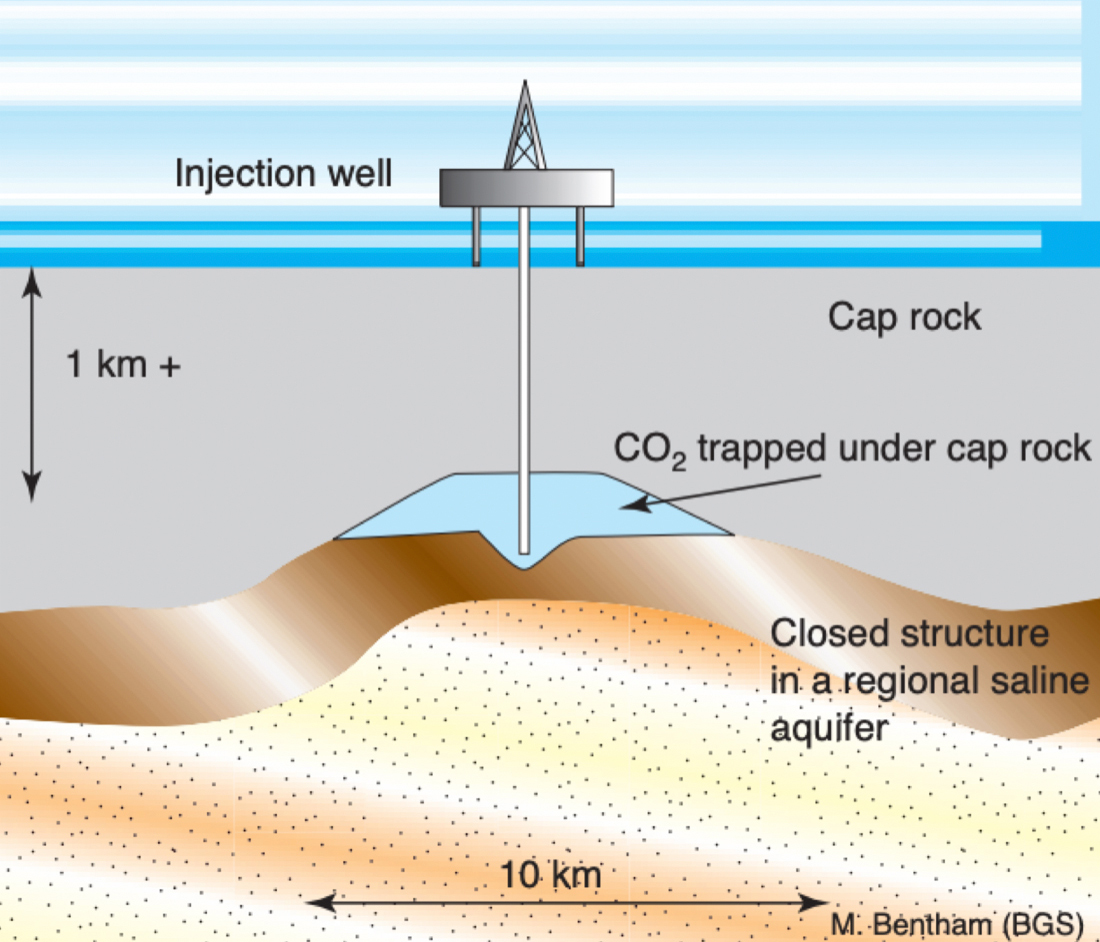
    Diagrams showing CO2 storage in a deep salty aquifer, with its caprock preventing fluids flowing back to the surface from the reservoir rock. Figure taken from Bentham & Kirby (CO2 storage in saline aquifers. Oil & gas science and technology60(3), 559-567. 2005 10.2516/ogst:2005038).

    However, on the personal level, I think the main challenge is to be able to go outside the comfort zone, and to succeed in bringing the numerical models to the laboratory, from academia to industry, and use this inter fertilization of ideas for developing a new understanding of the processes. Building these bridges has been a long-standing motivation for me, and the knowledge and experience acquired during my PhD and postdoc are certainly important assets. However, I would argue that my most important asset is our research group, that is, the people I am working with in this project. Science is a collective construction, and Marie Curie RISE projects are based on this premise.

    Why is this project important to you?

    It is a great opportunity to try to answer some of the questions I’ve always had about seismic detection of fractures and fluids. We are ambitious with the goals, and this is rather challenging but also deeply motivating. As an example, we are planning on printing 3D samples that mimic fractured rocks here at UNIL and taking them to Norway to measure the mechanical properties. In this process, scientists from Argentina would join to perform measurements and to learn how to use the measuring device, with the idea to replicate the apparatus in their facilities. I will be leading a significant part of the research, mainly the seismic characterization part, and managing a project like this is a deeply formative task. Least but not last, we wish to forge new and long-lasting links between UNIL and other institutions.

  • Borehole-based fracture unclogging experiment: bridging the gap between laboratory- and field-scale evidence

    Borehole-based fracture unclogging experiment: bridging the gap between laboratory- and field-scale evidence

    Nicolas Barbosa has started in November 2020 an SNF SPARK project entitled “Borehole-based fracture unclogging experiment: bridging the gap between laboratory- and field-scale evidence”. This project emerged as a result of two research experiences. First, a PhD with Prof. Klaus Holliger, during which Nicolas Barbosa studied how seismic waves are affected by the presence of fractures and fracture networks. Then a first postdoc with Prof. Matteo Lupi at the University of Geneva, where he explored whether and how low-amplitude seismic waves can alter the properties of a fractured medium.

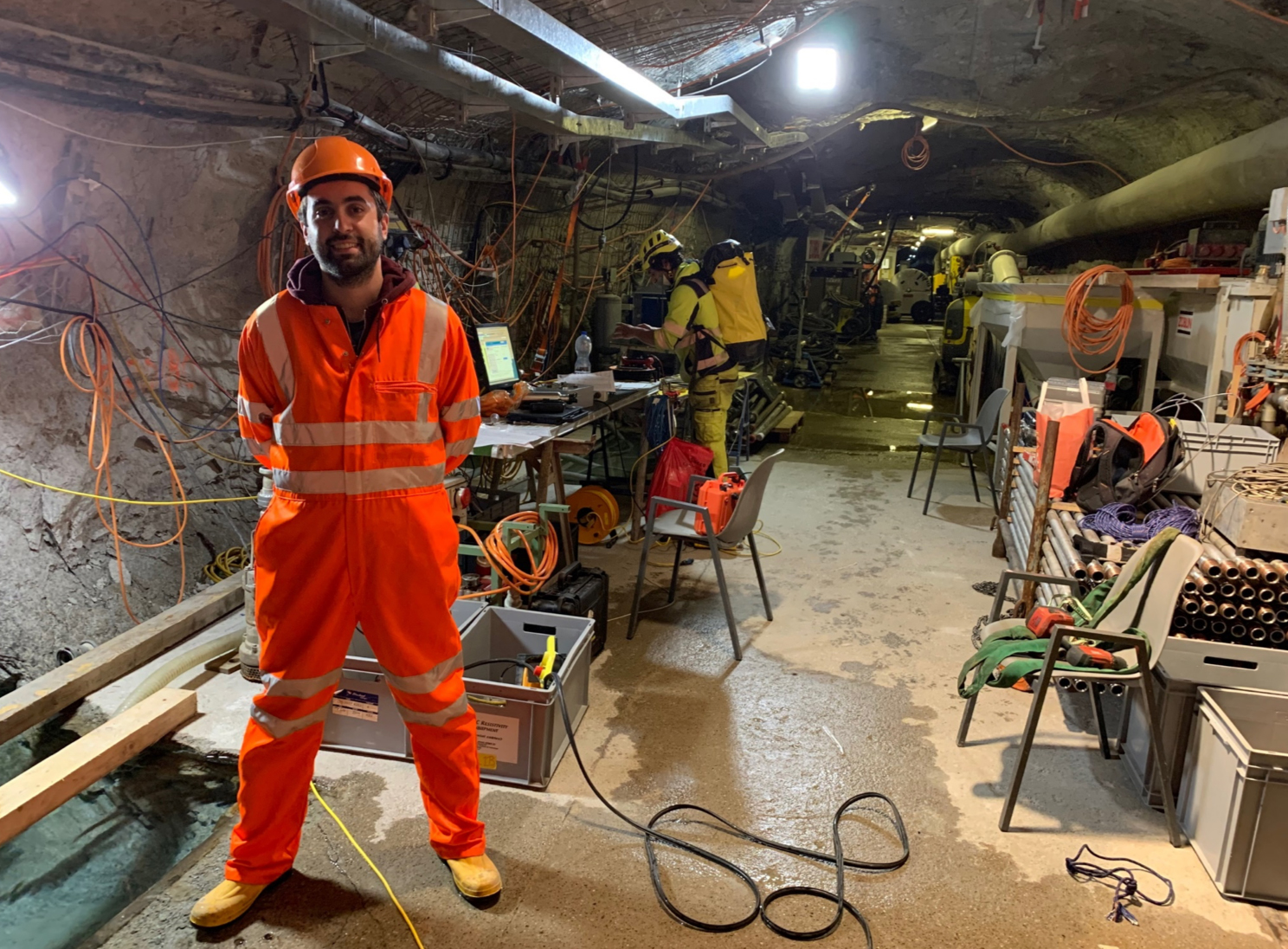
    Inside the underground laboratory that hosts the experiments, the Bedretto Underground Laboratory for Geosciences (BULG)[AD1] . Dr. Barbosa’s research objective fits well into the scope of other ongoing BULG projects, which will not only facilitate the experimental procedures, but will also lead to valuable cross-fertilizations.

    What is the main goal of your Spark project?

    Understanding an important and ubiquitous, yet largely enigmatic, phenomenon: “fracture unclogging”. It manifests itself in major hydrogeological changes, such as unexpected variations in groundwater levels or spring flows. In addition, it seems that “fracture unclogging” may act as a trigger for volcanic or seismic activity. What could cause this phenomenon? Today, the most viable hypothesis is that propagation of seismic waves induces relatively weak changes in pore pressure, which could lead to the mobilization of colloids and fines that obstruct strategic parts of fluid pathways. My goal is to test this hypothesis – so far only supported by small-scale laboratory experiments – through well-controlled field experiments. I also plan to develop a realistic computational model, to simulate these observations and, thus, to improve our understanding of the governing physical processes.

    Le Laboratoire souterrain de géosciences de Bedretto (BULG) se trouve à 1,5 km sous la surface, au milieu d’un tunnel de 5,2 km de long qui relie le Tessin au tunnel de la Furka. Le BULG accueille des projets liés à l’utilisation innovante et durable de l’énergie géothermique. Un accent particulier est mis sur la réduction des risques sismiques associés à la stimulation hydraulique de ces réservoirs. Le BULG est exploité par l’ETH Zürich et offre un environnement unique pour explorer les effets de déblocage des fractures à l’échelle mésoscopique dans des conditions expérimentales exceptionnellement bien contrôlées. (Crédit: Marian Hertrich, manager de BULG).

    Why is this project important to you?

    Arguably, the most defining moment for a young scientist is when he/she can develop and manage the first project independently. Thanks to the SPARK program, I have this opportunity a few years earlier than is commonly the case in our academic system. That said, I am fully aware of the fact that, ultimately, the success of my project hinges on a wide range of collaborations with other scientists and research groups. Indeed, the associated “creative combustion” is, together with the scientific independence and the passion to address an unresolved problem, a key motivational driver for me. 

    Spark’s vocation is to support original, unconventional and high-impact projects. In what way does your project have these attributes?

    Unravelling the physics governing “fracture unclogging” is not only a formidable scientific challenge. It can also lead to a number of potentially important practical applications. Amongst the latter, are the “soft” (that is, aseismic) stimulation of hydrocarbon and geothermal reservoirs to increase their energy production, as well as an improved risk assessment for various natural hazards, such as volcanic eruptions or earthquakes. So far, the only attempts to reproduce this process were performed on centimetre-scale rock samples under highly idealized laboratory conditions. At present, it is unknown how the evidence from these microscale experiment can be transferred over multiple orders-of-magnitude to the field scale, i.e. on a scale at least 100 000 larger, with all the complexities and unknowns that this implies. My idea is to perform mesoscale experiments (between cm and km) under the well-controlled conditions of the Bedretto Underground Laboratory. Specifically, I plan to use a fluid pressure oscillation approach analogous to that in the preceding laboratory experiments and various geophysical techniques for non-invasive monitoring.  

    Why did you choose the FGSE and ISTE to carry out your project?

    I really enjoyed my time as a PhD student at ISTE. During my postdoc, I continued to collaborate with Prof. Holliger’s research group. In addition to a shared scientific focus, it has the required technical resources and has previously worked in the BULG and, thus,   pertinent knowledge of the facility and people involved. This significantly facilitated the development and planning of my project. Since the beginning, I have received the full support from ISTE and the FGSE to host my project. The project has recently received additional financial support from the FGSE via the Matterhorn Grants program, for which I am also very grateful. This will permit the drilling of additional short boreholes in which geophysical instruments will be installed for continuously monitoring the hydraulic experiment. 

  • Phosphorus: a tracer of igneous processes in the shallow earth’s crust?

    Phosphorus: a tracer of igneous processes in the shallow earth’s crust?

    Thanks to a novel SNF Project funding, Professeur Othmar Müntener (ISTE) will address major unknowns in the role of phosphorusin the shallow crust.

    Phosphorus is one of the essential and limiting ingredients for living organisms. Understanding how phosphorus is stored in the continental crust and, in particular, how phosphorus is distributed in silicates is fundamental to estimating how quickly it would be available to organisms. This project proposes to use field and laboratory studies to understand the history of the continental crust. 

    Why is this project important to you? 

    The new SNF project is embedded in one of my major research interests: How does continental crust form and evolve? The new project circles around phosphorus (P) in minerals that are important rock clocks: garnet and feldspar. Phosphorus is one of the slowest diffusing elements in these minerals and has therefore the potential to track complicated geological histories. 

    We are hoping to better quantify cooling histories of granitic rocks in the upper crust by investigating in detail the phosphorus and other trace element distribution in feldspar. Maybe we will also be able to track the growth history, together with other tracers (proxies) such as Barium, Titanium, and Strontium. Overall, we will learn more about rates of geological processes related to the growth and modification of the continental crust.

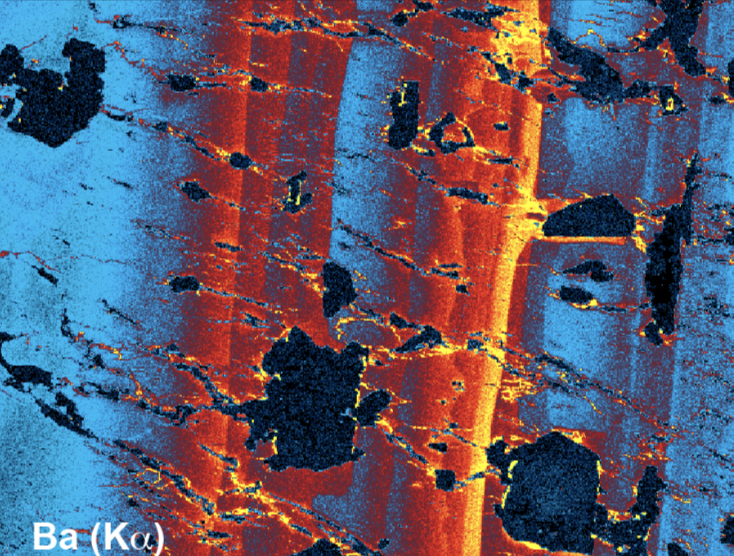
    Studying the traces of chemical elements will ultimately enable us to understand the history of the Earth crust. For example, Barium traces growth zones in k-feldspar from plutonic rocks of the Sierra Nevada (US), in an image from the FEG-EPMA – field emission electron probe micro-analysis – of UNIL (sample kindly provided by T. Sisson)
    What has led you to address these issues?

    Since my arrival à l’ISTE, one aspect has been the absolute dating of minerals by in-situ Laser ablation ICP-MS (induced coupled plasma – mass spectrometry), a powerful analytical technology that enables highly sensitive elemental and isotopic analyses, directly on solid mineral samples that contain Uranuim, Thorium and Lead. But these age determinations come along with errors, so that individual processes in  igneous rocks are in the same age range, given the error margin.

    Over the last years, together with a group of talented PhD students and postdocs, and the excellent scientific staff, we worked on the distribution of trace elements – whose concentration is very low – in minerals. These elements have the potential to preserve diffusion profiles, from which timescales of geological processes can be calculated, independent of the absolute age. By studying natural diffusion profiles combined with experimental data, we hope to shed new light on the timescales of magmatic processes in plutonic and volcanic rocks.

    What main challenges need to be overcome?

    There are two principal challenges. Finding the right samples, where nature has left some traces that can be studied and may provide answers to our questions. And finding the key parameters that may control the governing physical and chemical processes.  Bridging the scales between laboratory and natural data is then one of the major issues. This is what we hope to achieve in this project.

    What are your expectations from your research?

    To develop tools or solutions to establish at what time scales magmatic rocks assemble. Ultimately, advance our understanding of the inner workings of magmatic systems and how they contribute to the formation and evolution of the Earth crust.

  • New Professor Eccellenza discusses role of driftwood in river dynamics

    New Professor Eccellenza discusses role of driftwood in river dynamics

    The FGSE is pleased to welcome since April 2020 Virginia Ruiz-Villanueva, recipient of an Eccellenza scholarship. She will be interested in the dynamics of rivers and the particularly little-known role of the woods carried there.

    Virginia Ruiz Villanueva, Institute of Earth Surface Dynamics (IDYST)

    What is the main motivation of your Eccellenza project?

    In order to preserve and restore healthy and dynamic rivers, while mitigating potential flood risks, I want to better understand the feedbacks between flow-sediment-wood. As a geomorphologist, I am indeed interested in the physical processes that shape the Earth’s surface and interplay with us, humans. And as a river geomorphologist, I focus on the processes that control the shape and function of rivers.

    The importance for rivers of downed trees, trunks, branches and rootwads laying on the river – the so-called instream large wood – is still overlooked. Classically, the physical conceptualisation of rivers focuses mostly on the interactions between water and sediment. However, by interacting with the flow and sediments, the instream wood sustains the physical and ecological integrity of the river, in other words: its health. On the other hand, large quantities of wood transported during floods can constitute a danger. The accumulation of wood in infrastructure such as bridges, among others, might be a major risk. The health of a river thus depends on the flow, sedimentation and wood regimes. I am particularly concerned to assess the latter, which is rarely recognised.

    Here, you can see a wood accumulation in a stream, in Vallon de Nant (Vaud). This is a nice example of how instream wood influences river processes and forms. Wood enhances river physical complexity and improves habitat diversity, and thus also biodiversity in the broadest sense. The wood accumulates and forms a step which creates a backwater, dissipates flow energy, lowers velocity, boosts sediment deposition upstream and scouring downstream with the formation of a pool.

    What questions you will tackle for next years at the FGSE?

    My SNSF Eccellenza Project “Towards a new understanding of fluvial ecosystems: integrating wood regime across multiple scales” focuses on integrating the instream wood regime across multiple disciplines and spatial and temporal scale.

    With my team, we will advance wood supply modelling by developing probabilistic models and describe for the first time the wood cascade. To infer where the stored instream wood in rivers comes from, we will combine dendrochemistry and fingerprinting techniques. The ambition is to establish the first Swiss instream wood dynamics observatory and monitor wood motion in several alpine rivers. Among others, this will allow to quantify how much and for how long wood is stored in alpine rivers, and the links between the neighbour forest and the characteristics of the stored instream wood. We will ultimately develop guidelines on the use of natural instream wood for river restoration.

    Why have you chosen the FGSE to carry out your project?

    For understanding Earth surface processes using a multidisciplinary approach, FGSE and IDYST were the perfect fit for me and my team. With an outstanding team of earth and environmental scientists working on similar topics, but none on wood in rivers, and state-of-the-art facilities, IDYST offers us a great working environment. The project will benefit from the strong collaborative interactions among all groups, especially regarding the analysis of geomorphic processes, the use of remote sensing and Drones, the development of isotope and elemental geochemistry, and the ecology. We hope to strengthen the existing linkages between the groups, becoming an integral part of the Institute’s activities. Despite the difficulties of launching the project during a pandemic (I started in April 2020), FGSE´s welcome has been excellent, and we are already perfectly integrating within the institute.

    A word about your new team?

    Thanks to the SNSF Eccellenza Professorial Fellowship, I am building the River Ecosystems Research Group (RivES) at IDYST. The team will consist of three PhD students, one research assistant and one Post-doc. I believe the best way to frame and implement our project is building an interdisciplinary team, to draw on knowledge from different disciplines. Thus, the team members have a very varied background, such as forest and environmental engineering, geomorphology, geology, biology or ecology.

    Informations

  • Early-Postdoc-Mobility Grant in Savannas of Madagascar

    Early-Postdoc-Mobility Grant in Savannas of Madagascar

    Leanne Phelps left Lausanne for Madagascar where she launched her project « Reconstructing the Holocene savannas of Madagascar: implications for long-term disturbance dynamics and modern human land use » thanks to an Early-Postdoc-Mobility grant.

    © Leanne Phelps

    Leanne explains how her desire to understand human land use and sustainable management issues emerged. After having simultaneously carried out the end of her PhD and set up her project, she aims to decipher the role that human land use plays in changing Malagasy savannas. Her first field trips reinforce her hope of reconciling academic research with the search for practical solutions for field actors.

    How did this project of mobility come about? 

    The idea for my Early Postdoc.Mobility was born at an international conference. There was one scientist in particular whose work I knew could expand my research experience in a very beneficial way… so I sat down with her, and within an hour or so we came up with an exciting preliminary idea for a postdoc project! In the following months I did a lot of reading, reaching out to relevant experts whose work I admired, and honing the project proposal.

    What was decisive in the preparation of the application?

    The application process for the Early Postdoc.Mobility requires a lot of time and attention. For me, this included copious preliminary investigations and reaching out to a number of experts. All this in a very short period of time, and at the same time as the completion and submission of my PhD thesis. Combined, I found these tasks difficult to accomplish! I was lucky enough to find supportive hosts who are as keen to work with me as I am with them. Their support was essential to put together a successful proposal. This was an invaluable resource for me during the write-up period.

    Your project has an important applied part for land management. Can academic research contribute to tackling environmental issues?

    It’s very important to me that the research I carry out addresses practical and relevant land management issues. Just a few years ago I was quite sceptical about whether formalized research could really address these issues in an effective manner. However, it became increasingly clear during my PhD that research is ideally suited to address practical issues. So long as it’s designed with them in mind. This is what I wished to do for this first postdoc: to place practical questions at the core of the research aims and plan, and to seek collaborators who have this vision.

    How are the first field trips shaping up?

    My postdoc project (formally) started about a month ago (Nov 2019) in Madagascar. I just conducted my first field trip in tandem with a group of conservationists and really jump-started my understanding of changes in Malagasy vegetation and the role of human land use. This kind of tandem seems to have two primary benefits (so far): my research is more likely to stay rooted in practical management issues pertaining to both local communities and conservation efforts; and we are able to contribute to local capacity building along the way. Of course, this is only the beginning. The most important part will be to ensure that, in addition to the scientific community, our findings will be effectively communicated and discussed with relevant stakeholders: the local communities, the conservation associations, the governmental authorities… This will require a variety of efforts, but I am confident, given the project’s wide net of collaborators and connections.

    Advice for future researchers in Mobility?

    Develop a project that really addresses a question you’re invested and interested in, and seek out core collaborators that have the potential to dramatically expand your skill set and network (…and start planning as early as possible!). In the year leading up to the deadline for the Early Postdoc.Mobility I knew that I was interested to apply — especially because of the freedom that it could offer me in addressing my own research topic. But I was unsure whether I should submit a proposal for the upcoming deadline or wait for the next round. Once I had the chance to develop my project in detail, it became clear that I wanted to submit a proposal as soon as possible so that I’d have the chance to apply again if my application was unsuccessful. So, I submitted 3 months before my private defence and submitted the thesis just after submitting this application. I am currently very glad that I went out on a limb and did that.

    How do you see the next step after Early-Postdoc-Mobility?

    I suspect that the next steps will include an application to the FNS Postdoc Mobility scheme (!) so that I can continue to work on new and relevant aspects of my current project, which I am now very invested in.

    Informations

  • In search of biomolecules from the first animals

    In search of biomolecules from the first animals

    © Lukas Laibl, UNIL

    Pierre Gueriau has started his one-year SPARK project last December. His objective is to identify remains of ancient biomolecules in enigmatic fossil animals. If successful, the project will permit to classify these singular organisms and better understand the evolution of life on our planet. Dr. Gueriau shares his enthusiasm and experience in writing this new type of somewhat unusual project.

    Spark focuses on unconventional projects. How is it different from a conventional research project?

    The idea I have in mind for this project was born out of the very recent advent of new methodologies that offer unexpected perspectives in this field. The project is audacious, especially from a methodological point of view. Such analysis, which is in full expansion but also still in development, is very constraining in terms of sample preparation. The heterogeneous and complex « fossil animal » material does not fit at all into the textbook cases…

    The potential impact of the results is another important criterion for Spark. What is the main impact of your project?

    If successful, this project could represent the first stone of a new paradigm in Paleontology. An innovative alternative to DNA that is not preserved beyond a million years, especially in the early stages of animal life. We are still a long way from this, and in the short term this project will, for sure, provide unprecedented scientific data on the chemistry of emblematic early animal fossils that populated our planet.

    Was anonymizing the research plan difficult? What difference does this make in writing compared to a traditional research call?

    Anonymization had initially worried me a lot, mainly because there is no mention of the identity of the project’s reviewers: internal commission or external experts? The « world is sometimes small » in disciplines involving the use of fresh methods. But in the end, because of its audacious side, which must be put into context (clearly beyond the work of the applicants alone), and because of its five-page limit, this type of project is easily written in the 3rd person. On the other hand, when in some projects there is a tendency to incorporate as much of one’s own work as possible in order to highlight one’s contribution, in the case of Spark there is another document specifically aimed at justifying the applicants’ ability to carry out the project. In addition, and this should be kept in mind when writing, Spark wishes to promote the idea more than the applicants’ CV.

    Why is this project important to you?

    Quite frankly, this project means a lot to me. It is the first funding of this magnitude (with a salary) that I have obtained on my own behalf. And from a scientific point of view, it is the first project that (finally 5 years after my PhD!) unifies the different aspects of my thesis, which became serendipitously very bipartite after only a few months… This important step, taken during the writing of this a priori « small » project (since only for one year), allows me today to draw the outlines of my research project in the long term.

    Informations

  • Mobility project: the origins of chocolate

    Mobility project: the origins of chocolate

    Au cœur de la production du cacao, David Amuzu cherche à évaluer la durabilité et ses enjeux au Ghana grâce à son Doc.Mobility « Land Use Transition and Socio-Ecological Outcomes in Asunafo Cocoa Growing Region of Ghana ». David Amuzu, doctorant à l’Institut de géograhie et durabilité, a engagé son projet de mobilité à l’automne 2019. Il nous explique ses motivations et ses espoirs.

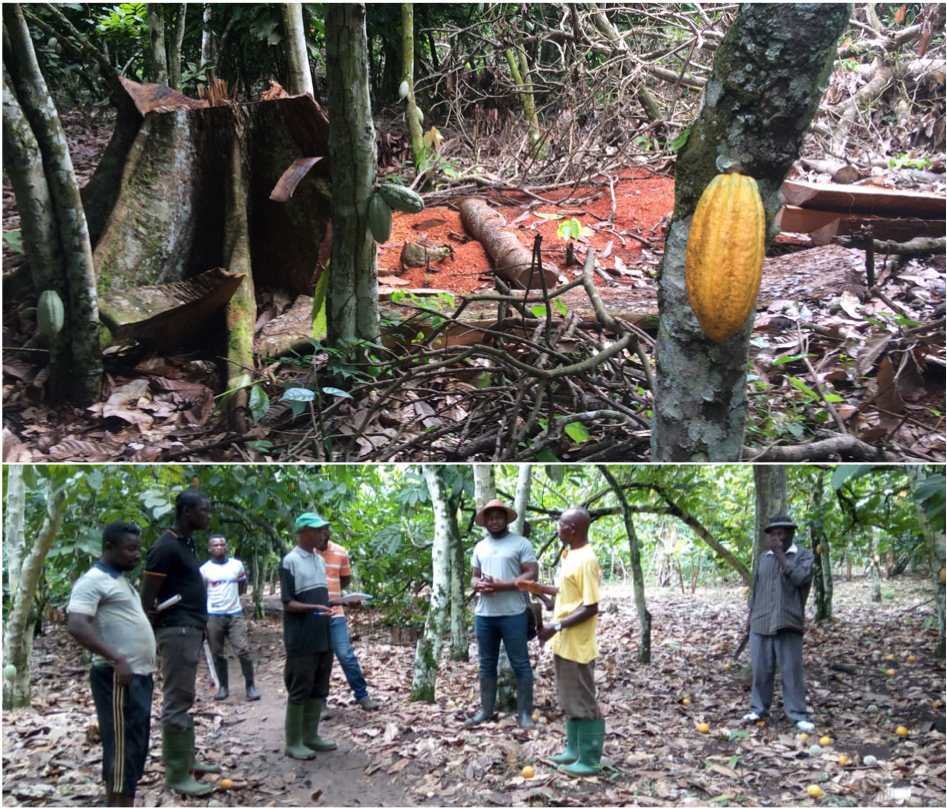
    Sur la photo, David (au centre, les mains croisées) assiste à un entretien dans le cadre d’un programme de certification du cacao, où l’auditeur externe évalue la durabilité des pratiques de production. Il est très habituel pour David de dialoguer avec les agriculteurs sur le terrain pour comprendre leurs pratiques agricoles et la transformation de l’utilisation des terres : Quelles espèces d’arbres sont utilisées ? Pourquoi certains arbres sont-ils préférés à d’autres ? Pourquoi certains sont-ils maintenus ou éliminés dans les exploitations ?

    Propos recueillis par Amélie Dreiss

    Je connais bien cette région cacaoyère du sud Ghana où j’ai choisi de mener mon projet. Le Ghana est le second plus grand producteur de cacao du monde. Mais malgré leur énorme contribution à l’économie mondiale, les exploitants restent pauvres ; leurs activités agricoles constituent en outre une menace permanente pour la forêt.

    Ma région d’étude a connu une transformation dans son mode de production. Ces transformations agraires vont-elles conduire à un système de production plus durable ? Comment les innovations agronomiques et les pratiques de conservation que j’observe se répandent-elles ? J’espère pouvoir mieux comprendre ces questions suite à mon séjour.

    J’ai pris conscience du potentiel de mon travail lors d’un premier séjour de 5 mois. J’ai donc cherché des financements plus longs pour aller au bout de mon projet. En consultation avec mon directeur de thèse, le professeur Christian Kull, j’ai réalisé que la bourse Doc.Mobility était une bonne option. Elle offrait en effet le soutien financier le mieux adapté pour continuer mon projet et le mener à bien. Elle permet également de s’appuyer sur les installations, les connaissances et l’expertise analytique d’autres chercheurs qui entreprennent des recherches similaires en-dehors de la Suisse.

    Je suis très heureux de bénéficier de cette bourse qui me donne l’espoir de terminer un doctorat potentiellement de grande qualité. Cette bourse me permet aussi de créer un nouveau réseau universitaire au Royaume-Uni, d’acquérir de l’expérience en matière d’enseignement et de recherche. L’établissement-hôte, l’Université de Lancaster, m’offre une large gamme de possibilités de formations complémentaires. Compte tenu de cette diversité, je suis même face à un dilemme dans le choix des compétences et connaissances qui conviennent le mieux à mon projet de recherche et au développement de ma carrière. Aspirant à devenir un jeune chercheur polyvalent, j’essaie de profiter pleinement de ces possibilités variées pour développer ma carrière académique.

    J’encourage vivement les futurs doctorants à se lancer dans une mobilité. Participer à ce programme Doc.Mobility avec un projet bien défini est toujours un plus !

    Informations

  • Mobility Grant: Subglacial systems and ice flow dynamics

    Mobility Grant: Subglacial systems and ice flow dynamics

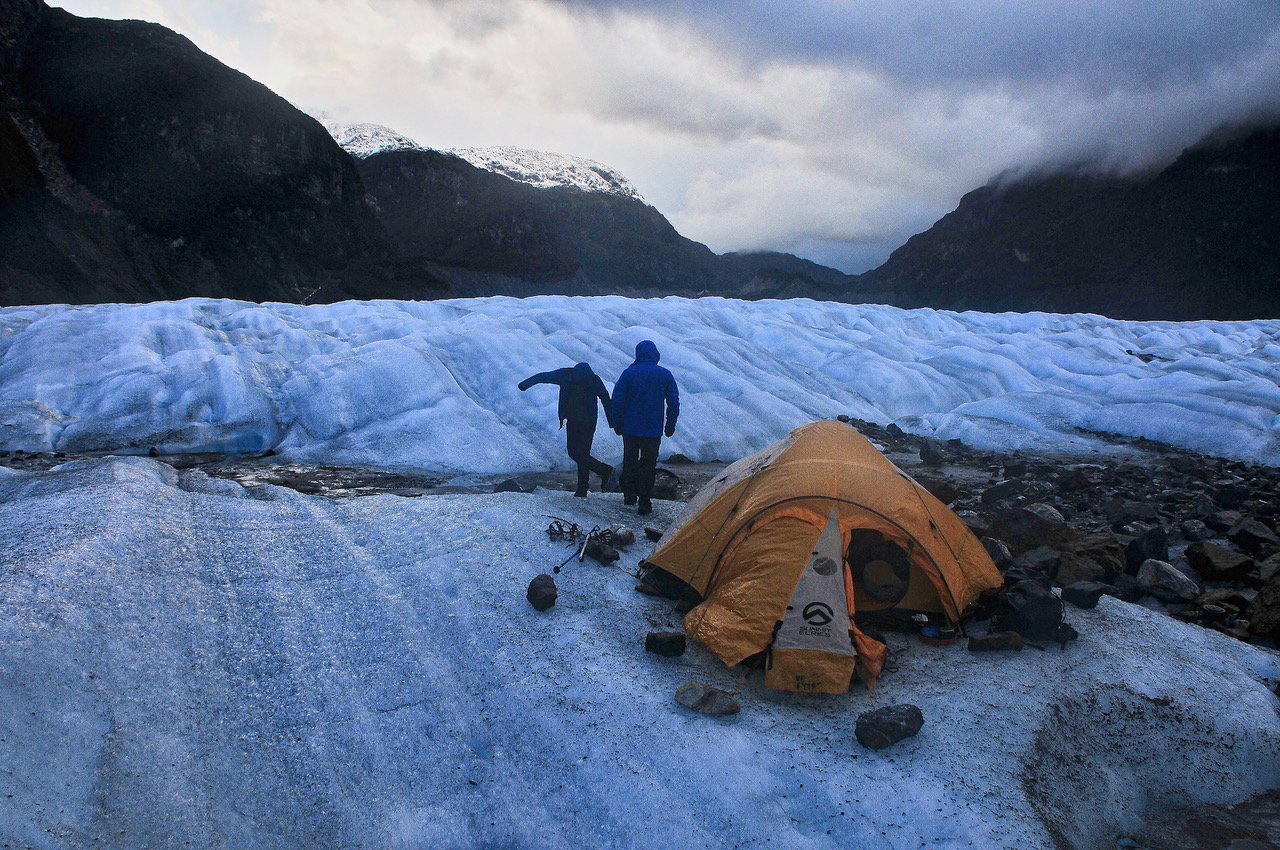
    Inigo Irarrazaval has obtained a Doc-Mobility grant for his project « Subglacial systems and ice flow dynamics induced by glacial lakes in Exploradores glacier, Patagonia » which he started last October. He shares here his experience.

    © Francisco Croxatto

    Can you say a word about the genesis of your Doc.Mobility project ?

    From relatively small alpine glaciers, I switched to the Patagonian Ice Fields. The idea came from the desire to use my early doctoral knowledge to expand my expertise to a different setting. And to complete my thesis with skills that were difficult to develop at UNIL. Before I started my doctorate in mobility, I obtained a one-month grant (Mobility2018 CLS-HSG, Centro Latinoamericano-Suizo of the University of St. Gallen) to conduct a pilot study. The success of this pilot study allowed me to clearly define what objectives I could achieve in one year with Doc.Mobility. The Aysén University team I had met immediately showed interest and supported my project.

    What difficulties have you overcome ?

    Unlike the Alps, there are still few studies in Patagonia. One of the challenges was to collect and compile the few available observational data. Fieldwork in a remote area where weather forecasts are not accurate poses an additional challenge! Especially for piloting the drone, where windless and dry weather conditions are needed….

    What do you think this experience will bring you ?

    New skills in glaciology of course (such as photogrammetry, mass balance). Being fully in charge of a project, from proposal to implementation, is also a great experience.

    Advice for future PhD students in mobility ?

    Plan well ahead and have a plan B and C ready. And try to meet face-to-face with the supervisor abroad before establishing a collaboration.

    So how do you see the next step after Doc. Mobility ?

    So many questions about glaciers remain unanswered! Research in Patagonia is expanding and I would like to continue my research there as a post-doctoral fellow, based in Chile, Switzerland or elsewhere.

    Informations