Media coverage of scientific advances on climate issues does not activate the mechanisms known in psychology to trigger action in individuals and groups. This is the conclusion of a study conducted by social scientists and geoscientists from the University of Lausanne (UNIL – Switzerland).
The planet is warming because of human activities and the consequences will be devastating for all living beings, including humans. At present, everyone is potentially exposed this information in the media. But how do scientific journals and the media relay research related to these issues? Is the scientific focus of climate warming research reflected in what the media decided to present?
In a study published in Global Environmental Change, scientists from UNIL specialized in geosciences and psychology have examined these questions. An analysis of the collection of about 50,000 scientific publications on climate change for the year 2020 was carried out to identify what of this impressive body of research made its way into the mainstream media. The analysis showed that that most of the research selected by the media was biased to the natural sciences. It overly focused on large-scale climate projections that will occur in the future, and a narrow range of threats such as polar bears, drought and melting glaciers. The paper shows that this type of narrative does not activate the mechanisms known from research on psychology that might engage pro-environmental behaviors in readers. On the contrary, the way the media’s selective choice of certain elements of climate change research could backfire, provoking denial and avoidance.
Presenting the problem, but also the solutions
The study speaks of a possible distancing reaction on the part of the public, resulting from this globalizing approach. “The individuals exposed to these facts, not feeling directly concerned by them, will tend towards a peripheral, superficial and distracted treatment of the information. Only a central, deep and attentive consideration will allow the public to transform what they know into mechanisms of action and commitment”, explains Fabrizio Butera, professor at the Institute of Psychology of the UNIL, and co-author of the study. Marie-Elodie Perga, professor at the UNIL Institute of Land Surface Dynamics and co-author of the paper adds, “If the goal of mediating research is to have a societal impact, then it seems that we are pushing all the buttons that don’t work.”
If the goal of mediating research is to have a societal impact, then it seems that we are pushing all the buttons that don’t work!
Marie-Elodie Perga, professor at the UNIL Institute of Land Surface Dynamics
Large-scale threats can create fear. But, as Fabrizio Butera reminds us, “research on human behavior shows that fear can lead to behavioral change in individuals and groups, but only if the problem presented is accompanied by solutions.” Faced with purely descriptive articles that emphasise only highly selected elements of climate change, the public will tend to ignore the problem, seek out less anxiety-provoking information and surround themselves with networks that present a more serene reality.
Research, scientific journals and media
What can be done, then, to communicate in an effective, encouraging way, encouraging society to engage more widely in climate protection action? “The treatment of environmental issues in a transversal and solution-oriented way would be useful. It would show that climate change has direct consequences on our lifestyles, our immediate environment or our finances, for example,” says Marie-Elodie Perga.
This approach requires a change in the behaviour of communication managers in research institutions, in publishers, as well as in the media. “For the time being, the most renowned scientific publications favor end-of-century studies,” she explains. ”Journalists then give very wide coverage to the publications of these journals, which are the most highly rated.” Instead, in France, for example, a group of journalists has drawn up a charter advocating the adaptation of media coverage of these issues, and calling for more cross-disciplinarity,” says Marie-Elodie Perga. Isolated, a human being will not have an impact, but collective actions are very effective. There are solutions, but they need to be brought to light, beyond local initiatives.
This research was facilitated through the Center for Climate Impact and Action (CLIMACT), affiliated with UNIL and EPFL. CLIMACT’s mission is to promote systemic solutions to climate change. It collaborates with the political, media and cultural worlds to strengthen the dialogue between science and society.
Par leur simple présence, certaines espèces, plantes ou animales peuvent fortement modifier le paysage, créer de nouveaux habitats pour la faune et augmenter la biodiversité. A l’Université de Lausanne (UNIL), des scientifiques ont mis au point une « boîte à outil » décrivant les mécanismes et conséquences liés à l’introduction de ces « ingénieurs des écosystèmes ». Cette feuille de route est destinée aux agences environnementales et aux responsables de programme de conservation, notamment. Elle vise à permettre l’intégration de ces espèces dans les projets de conservation de la biodiversité, quel que soit l’écosystème.
Gianalberto Losapio, Institute of Earth Surface Dynamics (IDYST)
De manière générale, dans les écosystèmes, toutes les espèces interagissent les unes avec les autres et avec leur environnement, participant ainsi au fonctionnement du milieu. Certaines espèces exercent cependant une influence bien plus importante que d’autres sur leurs semblables et sur l’environnement. On les appelle les ingénieurs des écosystèmes.
L’un des exemples le plus connu est celui du castor. En construisant des barrages, les castors modifient le débit des cours d’eau et transforment les écosystèmes terrestres en zone humide, entraînant toute une cascade de processus et l’arrivée de nouveaux animaux. Or si les cas particuliers sont bien documentés, les mécanismes à l’œuvre dans leur globalité ne sont pas encore bien compris.
En collaboration avec une équipe de Stanford, des scientifiques de l’UNIL ont mis au point une «boîte à outil» pour prédire et mesurer l’influence des espèces sur les écosystèmes, selon différentes conditions. Cette feuille de route pourrait être utilisée par différents acteurs tels que les gestionnaires de zones protégées, les agences environnementales ou les responsables de programme de conservation et de restauration. Le but étant d’inclure les ingénieurs des écosystèmes dans les processus de préservation de la biodiversité, et de maintien des écosystèmes. Leur «review» a été publiée dans le journal Functional Ecology.
De l’observation à l’élaboration d’une marche à suivre
Pour établir ce cadre, les scientifiques ont procédé en plusieurs étapes. D’abord, il a fallu collecter les connaissances et la littérature concernant les ingénieurs des écosystèmes. Sur cette base, les chercheuses et chercheurs ont développé un cadre permettant de modéliser les effets des espèces, puis de les quantifier. Enfin, ils ont mis au point une marche à suivre pour permettre d’inclure autant que possible ces régulateurs naturels sur le terrain.
« Ce guide vise à aider spécialistes et les collectivités à se poser les bonnes questions lors de la mise en place de programmes de conservation. Par exemple : quel est le but à atteindre ? Quelles sont les caractéristiques du terrain, ainsi que le contexte spatial ? », explique Gianalberto Losapio, chercheur à la Faculté des géosciences et de l’environnement de l’UNIL et auteur principal de l’étude. « Si vous souhaitez réintroduire une espèce spécifique de poisson dans un milieu, par exemple, vous ne pouvez pas simplement apporter les animaux dans le lieu choisi, il faut réfléchir de façon plus globale », illustre-t-il. Le « guide » fournit également des outils pour évaluer l’impact des actions menées, de sorte à adapter l’activité, si besoin. « Certains projets de restauration finissent par être abandonnées car les arbres qui ont été plantés meurent, ou les espèces introduites ne peuvent pas survivre », ajoute le chercheur. « Nous pensons qu’une approche globale aura plus de chances de réussir ».
Référence bibliographique
G. Losapio, L. Genes, C. J. Knight, T. N. McFadden, L. Pavan, Monitoring and modelling the effects of ecosystem engineers on ecosystem functioning, Functional Ecology, 2 avril 2023 doi.org/10.1111/1365-2435.14315
By analyzing thousands of data from 3.8- to 1.8-billion-year-old rock samples, a team from the University of Lausanne (Switzerland) has demonstrated that the phenomenon of iron oxidation occurred on Earth much earlier than previously thought. This discovery raises many questions. What caused this oxidation? Bacteria? Oxygen?
When did oxygen first appear on Earth? According to the scientific consensus, it would have massively accumulated in the atmosphere nearly 2.4 billion years ago, oxidizing its environment. Before this event, traditional hypotheses consider that there was practically no oxidation phenomenon.
Scientists at the University of Lausanne (UNIL) were therefore surprised to observe traces of iron oxidation in rocks dating from 3.8 to 1.8 billion years ago, well before what is commonly known as “the great oxidation”. The results were published in Earth and Planetary Science Letters.
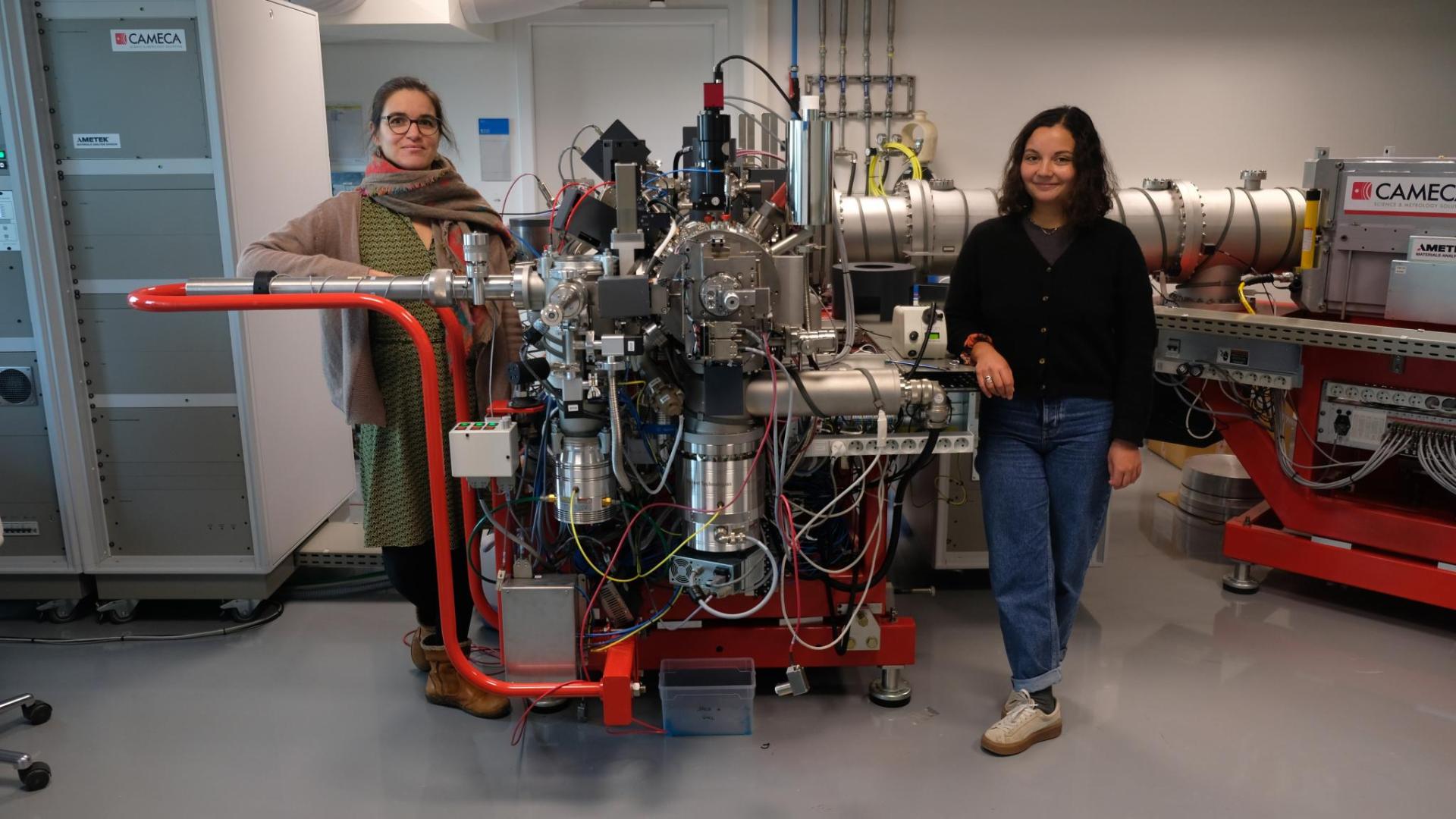
Behind this discovery is an innovative analytical method used by the scientists. Thanks to this novel approach, they were able to analyze mineral grains down to 5 microns in size and study a much wider range of rocks than conventional methods allow. “I had different types of very old rocks in my drawers that I had collected over the years, from Australia, South Africa and Gabon,” explains Johanna Marin Carbonne, co-author of the study and professor at the Faculty of Geosciences and Environment of UNIL. “As a first step, we analyzed them with this promising method, which had never been done at this scale.” Researcher Juliette Dupeyron, then a Master’s student and now a Doctoral student at the Institute of Earth Sciences, set about compiling these data and identifying trends. She came up with these unexpected results.
Two hypotheses to choose from
What do these new data mean? That these ancient rocks were confronted with an oxidant long before the massive appearance of oxygen. Three hypotheses are currently emerging. The iron could have been oxidized by UV light, by microorganisms such as bacteria, or by oxygen, produced by bacteria. “The UV light scenario probably took place, but in small proportions and would not be sufficient to explain our observations,” comments Juliette Dupeyron, first author of the study. As for the other two hypotheses, it is not possible to distinguish them at this stage. “What is certain is that these results raise questions about the timing of Earth’s surface oxygenation.”
However, a lot remains to be unraveled. “We would like to see further scientific studies to investigate this discovery,” says the researcher. “There is still a lot of work to be done to shed light on these observations. Johanna Marin-Carbonne adds: “Only 10% of the rocks of this age are currently available to scientists. Thus, it is difficult to reconstruct with certainty all the phenomena that took place at that time.”
The techniques behind this discovery
Traditionally, scientists have used plasma source mass spectrometry (MC-ICP-MS) to analyze ancient rocks, a method that requires separating the mineral of interest, in this case pyrite, from the rest of the rock and then going through various chemical processes to recover the desired chemical element, iron. The disadvantage is that the analysis of pyrite-poor rocks is tedious and previous studies were limited to a single rock type.
The secondary ion mass spectrometry (SIMS) and laser ablation mass spectrometry (LA-MC-ICP-MS) techniques used in this study open new doors because they allow the analysis of mineral grains of the order of microns and can thus be applied to a much wider range of rocks. Finally, they offer the possibility of studying the surface of the sample directly, without the need to separate the mineral of interest from the rest of the rock, thus preserving the rock’s structure.
What do rocks tell us about the past?
Rocks bear the mark of their past interactions with their environment. By analyzing very old rocks, it is possible to trace their evolution and to deduce the environmental phenomena of their time of formation. In this study, scientists are interested in the presence of pyrite grains in rocks, which is a mineral containing sulfur and iron. The chemical composition of the mineral – more specifically its isotope composition – contains very important information to understand the past.
She collected seawater samples and suspended marine particles to measure their chromium content. Her objective is to ultimately determine whether this element could become a tracer of the activity of the marine biological pumps, which have an important role in the ocean carbon cycle.
These pumps help moving the atmospheric CO2 that dissolved in the surface waters towards the deep waters, thus helping to regulate the planet’s climate by trapping it into the Oceans for hundreds of years. A more precise quantification of the capacity of the biological pumps to transfer the CO2 towards the deep waters would allow to better predict their potential role in regulating the climate change.
The oceans cover more than 70% of the Earth’s surface. They have a significant influence on the climate, particularly through the absorption of atmospheric carbon dioxide (CO2), one of the main greenhouse gases. Photosynthetic microorganisms (phytoplankton) in surface waters use the dissolved CO2 to generate organic carbon, similarly to terrestrial plants. Phytoplankton are then ingested by other organisms, and some of this organic carbon “sinks” to the deeper waters as e.g. feces or dead bodies. The biological processes participating in the ocean carbon sequestration from the atmosphere are referred to as the biological carbon pump (BCP). This pump is essential for the climate balance. Since the beginning of the industrial era, it has already absorbed about a third of CO2 emissions related to e.g. the combustion of fossil fuels.
Several scientific teams have been trying to assess to what extent the activity of this BCP is, or could be, impacted by climate change and viceversa. Modelling of the carbon export is hampered by many uncertainties (e.g. change in the water masses circulation or variation in the nutrient inputs to the ocean). The direct use of carbon as a tracer of the BCP is limited by its ubiquitous presence in high concentrations in the oceans and by its use in various physical and biological processes (photosynthesis, respiration, dissolution etc…) that do not allow clear distinction and quantification of the processes specifically tied to the BCP.
Chromium has recently become of interest for its potential correlation with the transport of carbon to the deep waters of the modern oceans. However, no direct measurements of chromium in marine particles are currently available to confirm this suggestion (see note). Isabelle Baconnais is conducting research to fill this gap.
Below, the researcher describes her expedition off the coasts of Vancouver to collect samples of seawater and suspended marine particles (pictures from Maxime Curchod).
Autumn in Vancouver
In October 2022, we boarded the Canadian Coast Guard’s hovercrafts SIYAY and MOYTEL for six exciting days in the Strait of Georgia and Saanich Inlet in Canada’s Eastern Pacific. The Strait of Georgia is a dynamic waterway that separates the city of Vancouver from the picturesque Vancouver Island. Saanich Inlet is a partially anoxic fjord, with little to no dissolved oxygen in deep waters, within Vancouver Island.
The sampling site offered an excellent opportunity to collaborate with scientists from the University of British Columbia (UBC). The laboratory of Professor Roger François supplied the pumps used for the collection of the suspended marine particles. His team (i.e. Maureen Soon) also facilitated contact with the coast guards for the organization of the sampling trips. The equipment and experience provided on site greatly contributed to the success of this sampling expedition.
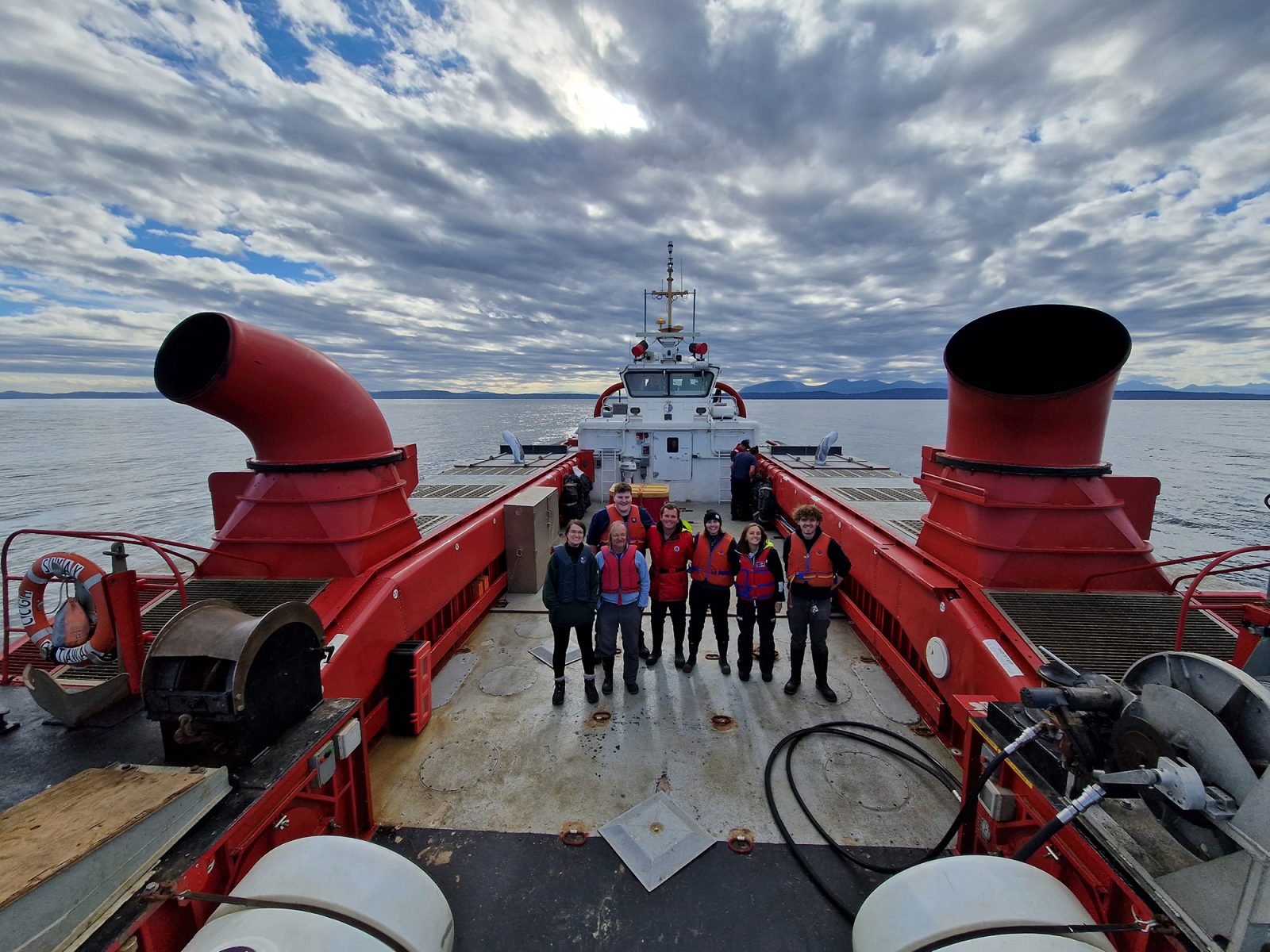
The team of Lausanne and Canadian scientists on the deck of the SIYAY. From left to right: Isabelle Baconnais, Ed ward Mason (UBC student, back), Roger François (UBC professor, front), Maxime Curchod (FGSEstudent), Lisa Kester, Nicole McHugh and Morgan Griffith (UBC students). Two members of the incredible Coast Guard team in the background.
Every morning, we arrive at the coast guard’s base to find the massive hovercraft waiting for us on the asphalt. Once the coast guards and scientists finish loading their respective equipment, the hovercraft inflates, and we are in our way in the blink of an eye. Its speed is such that it is forbidden to leave the cabin during transit, lest we be thrown overboard. In return, we quickly arrive on site and begin sampling in the crisp autumn morning of the Canadian West coast. We were particularly lucky regarding the weather since it was unusually sunny and warm for most of the expedition.
The Vancouver Coast Guard hovercraft: these boats can get into the water very quickly and sail at high speed. They are equipped with the winches and cables needed to immerse the heavy pumps used to sample the marine particles. The sampling trips were carried out over three times two days.
Using the Canadian coast guard’s hovercraft implies that rescue missions take precedence on the sampling. In case of an emergency call, all sampling device then needs to be quickly brought back onboard and secured as fast as possible. Fortunately, this only occurred once during the entire expedition, and in this instance, we were quickly able to get back to sampling.
Sampling at sea
Daily, we proceed to sampling under the curious gaze of the jumping salmons, the killer whales or the sea lions: we immerse the ~30 kg–large volume pumps at specific depths, through which hundreds of liters of water pass and allow the recovery of the suspended marine particles on filters. We also collect seawater in 20L bottles specifically designed for sampling for elements susceptible to contamination, called Go-Flo bottles. We distribute the water into bottles that will be used for different analyses (salinity and oxygen of the water, cadmium concentration, dissolved chromium concentration and isotopic analysis, particulate organic carbon concentration).
Morgan, Rowena Diggle (student at UBC) and Isabelle collecting seawater samples from the Go-Flo bottles. The flacons must be clearly identified per depth and station, and properly manipulated according to the measures they will be used for. The Go-Flo bottles are hung on a non-metallic line and immersed in water, each at a pre-defined depth. A system of rotary balls allows them to close when given the signal, in order to trap the seawater they contain. These bottles are made without metal elements so as not to contaminate the samples. In general, all equipment coming into contact with the sampled water (winches, containers etc…) must be treated to avoid metal contamination of the samples.
The unusually warm weather of the early autumn 2022 resulted in elevated biological activity. The filters recovered from surface waters testified to this, with their beige to greenish color and their sushi smell. The most notable sampling took place in the deep waters of Saanich Inlet, where the lack of oxygen could be surmised from the strong rotten egg smell emitted by the waters sampled. This smell is characteristic of the bacterial production of hydrogen sulphide H2S in anoxic environments.
Two killer whales, native to the region, join us on our sampling, taking advantage of the abundance of food offered by a mild weather, late in the season.The difference in colour reflects the varying composition of the suspended particles at Saanich Inlet: from the surface waters, rich in biological products (left) to the deep anoxic waters below 140 m (right). The filters sampled at 90 m and 125 m are enriched in iron and manganese oxides, giving them their reddish color.
Why is chromium of interest?
Chromium is a trace element found in seawater in concentrations of the order of 0. 0000001 g per litre of seawater. Its concentration and isotopic ratios vary according to its distribution between chromium 6 (Cr(VI)) and chromium 3 (Cr(III)). Cr(VI) preferentially remains dissolved in seawater while Cr(III), isotopically lighter and formed from the natural reduction of Cr(VI), tends to adsorb onto marine particles.
The measurement of dissolved chromium concentrations and isotopic ratios has shown that chromium is lost in surface waters and remineralizes deeper in the oceans, which appear to be related to surface biological activity and the marine particle cycling. Direct measurements of chromium in marine particles are currently lacking to confirm these observations.
This study, and more broadly the SCriPT project (see ref. at the bottom of the article), aims to establish a method for measuring chromium concentration and isotopic ratios in marine particles in order to potentially use chromium as a tracer of the marine carbon flux to the deep waters, in other words, the oceanic BCP activity.
First objective achieved
Despite the several technical difficulties encountered during this trip (especially due to the fussy large volume pumps), the sampling was overall successful in both the quantity and the quality of the water and particles collected. It is now time to focus on measuring chromium and its isotopic ratios. Protocols do exist for measuring chromium dissolved in the waters, but they are yet to be established for measuring the chromium attached to the suspended particles. These samples represent the first steps towards a deeper understanding of the cycle of chromium in the oceans.
Chromium, which is not known to be used in biological processes, could become an excellent tracer of the particles that drive carbon from surface to deep waters, and therefore an indicator of the changes in the BCP brought upon by climate change.
Daniel Domeisen, Institute of Earth Surface Dynamics
Heat waves are a major threat to human health and ecosystems and will further intensify in the future in virtually all inhabited regions. For now, predictive models do use the full potential for heatwave prediction.
A study published in Nature Reviews Earth & Environment and led by a UNIL researcher documents current capabilities for heatwaveprediction, makes recommendations and warns that global emergency plans must be developed.
A few days, sometimes even a few weeks. This is the maximum capacity for forecasting heatwaves in current prediction models. Beyond this period, it is currently possible to give estimates for heatwave probability and trends, but models do not currently use the full potential of prediction for heatwaves. These shortcomings do not allow forecasters to properly anticipate these phenomena, whose socio-economic impacts are severe for both humans and ecosystems.
In a study published in Nature Reviews Earth & Environment, an international team of researchers reviews the state of heatwave prediction and makes recommendations for improving these systems.
In the coming years, heat waves will become even more frequent, persistent and intense, directly impacting forests, agriculture, infrastructure, energy demand, ecosystems, permafrost and human health. The increased occurrence of humid heatwaves, especially in southern Asia, is a real threat to people’s lives. Being able to predict these events is therefore crucial.
“We need to develop better prediction models to support the implementation of effective action plans in all regions, even those that are not usually affected and therefore unprepared,” comments Daniela Domeisen, professor at the Institute of Earth Surface Dynamics (IDYST), and first author of the review. “The measures currently in place will not be sufficient to deal with the unprecedented changes that are coming,” she predicts. “All governments need to prepare now.”
On the research side, scientists recommend working to better understand the relevant drivers of heat waves and their representation in models. These necessary improvements include the dynamics of the atmosphere, as well as atmospheric and soil moisture. In addition, a better representation of large-scale atmospheric waves in weather and climate models is needed. These waves determine the location of storm tracks, as well as the distribution of humidity and temperature in the extratropics. Increasing the resolution in blocking simulation models is another avenue to pursue.
Better predictions will allow for the implementation of an action plan on different time scales. In the short term, this involves the establishment of cooling centers, warnings to the general population, and protective measures for vulnerable groups. On a monthly or yearly time scale, it includes the development of heat-health action plans and collaboration between decision makers, meteorological and health services. On timescales of years to decades, in-depth work on climate mitigation, urban planning and infrastructure is needed.
Finally, the research team stresses that even if improved emergency measures will save lives, the top priority remains the drastic reduction of greenhouse gases, to ensure a sustainable future.
Heatwaves are a considerable threat also in Switzerland, with a high heat-related mortality during summer heatwaves. In order to deal with heatwaves, the new project “HEATaware”, funded by the joint Unil / EPFL CROSS fund, under the leadership of Daniela Domeisen at Unil and Michael Lehning at EPFL will evaluate the potential of weather and climate models to predict heatwaves in alpine and low lying areas of Switzerland, and the potential to issue warnings on a range of timescales to reduce human mortality due to heatwaves, in collaboration with MeteoSwiss and the University of Bern.
More information on the review article
Daniela I.V. Domeisen, Elfatih A.B. Eltahir, Erich M. Fischer, Reto Knutti, Sarah Perkins-Kirkpatrick, Christoph Schär, Sonia I. Seneviratne, Antje Weisheimer, and Heini Wernli, “Prediction and projection of heatwaves”, Nature Reviews Earth & Environment
Researchers from the UNIL went to Greenland to study the changes in erosion of the ice sheet, and the discharge of glacial sediments into ecosystems. Poorly understood, increased melt and evolving glacier dynamics caused by climate change may result in consequential changes to landscapes. This study aims to understand erosion and sediment transport from the Greenland Ice sheet and to predict the evolution of these systems.
Dr Ian Delaney, Ambizione fellow at the Institute of Earth Surface Dynamics, and Marjolein Gevers, PhD student, both at the Faculty of Geoscience and Environment are back from the field. As climate warms and affects earth surface dynamics, they are tracking the changes in glacier erosion and sediment discharge from the Greenland Ice Sheet.
Over the last 50 years, melt is accelerating and the ice sheet is changing. What are the consequences on the landscape? Can we see any evidence of these changes? How can we monitor these phenomena and predict their evolution?
By collecting sediment cores in fjords and gauging rivers in Greenland, Ian Delaney and his collaborators aim to track the recent changes in the ice sheet erosion and sediment discharge. The sediments in the ocean floor are the memory of the last centuries. Their layers contain records of the influx of sediment from the ice sheet into the sea. Findings from these precious data will also feed models to evaluate the evolution in sediment discharge as climate warms.
Seven meters of ice released into the oceans
The sliding and melting of glaciers drive sediment transport into ecosystems. Sliding glaciers scrape and erode the bedrock, while subglacial rivers carry these sediments away.
In mountainous regions such as Switzerland, changes of sediment flow from glaciers can impact their delivery into river systems. Hydropower is also affected by sediment transport. High sediment supply leads to the filling of hydroelectric reservoirs and can lead to increased wear of hydroelectric infrastructure by hydro-abrasion.
In Greenland, the changes of sediment flux are on a much larger scale. Seven meters of ice sheet is rising above sea level and could be released into the world’s oceans in the next millennium. Mass loss from the ice sheet over the next century will likely be greater than those over the last 12,000 years.
The dramatic changes to the ice sheet not only affect the global sea level, but also change their erosive capacity and the discharge of sediment, which impacts many earth systems. For instance, these changes affect the supply in nutrients to the environment, but also in diverse chemical elements that can favour or hinder biological growth.
In a previous expedition in Greenland funded be the Swiss Polar Institute (SPI), Ian Delaney examined river systems. Here too, the scale is different from the Alps: the discharge from the Watson River in Greenland can be up to 1400 m3/s (in comparison, the Rhône is at 500 m3/s!). The team installed turbidity sensors to measure the suspended sediment in the river and seismometers to measure vibration from sediment transported in the rivers. This technic permits to estimate the fluxes of water and sediment leaving glaciers and flowing down rivers over a melt season. (Photo: Marjolein Gevers – Watson river in Kangerlussuaq)
Greenland: a challenging field work
In Greenland, Ian Delaney’s team is not alone, the current changes at the Ice Sheet attract scientists from all over the world. In addition to working with local boat operators, field duties are shared with several Swiss and international collaborators. Irina Overeem and Ethan Pierce from the University of Colorado, Paul Liu from North Carolina State University, Brandee Carlson and Julia Wellner from the University of Houston, Andreas Vieli from the University of Zurich, each working in different and complementary fields such as coastal and fluvial geomorphology, sedimentology, ice sheet history, glaciology and geomorphodynamics.
For Marjolein Gevers, communicating with all team members is essential to ensure that everyone has the same goal and is correctly assessing the situation and potential danger in the same way. “It is important to keep talking about how you feel with the situation on the field and when you feel uncomfortable.” Crossing a river, or simply making sure you don’t fall out of the boat, are daily challenges in which require focus and awareness, especially when you’re tired.
But the bigger challenge for UNIL researchers now is to put together the “patchy” observations sampled in the field to build the big picture. Ian Delaney aims to bring together observations from the sediment cores to calibrate a numerical model on glacier dynamics. The idea is to identify processes and try to evaluate how these processes will evolve in a warming climate. This will help them to evaluate potential changes to glacier erosion in the next century, according to future climate scenarios.
About 8% of sediment influx to the world’s oceans comes from the Greenland Ice Sheet. The discharge of sediment in Arctic affects the input of nutrients in the world’s oceans. Given the quantities of sediment, any change will have impacts.
Ian Delaney
Here, a coring device penetrates the ocean from the ship to collect sediment from the ocean floor. The samples brought back from the field will provide information on the temporal variations in sediment deposition – that cause different thicknesses in sediment layers – and hence on the evolution of the discharge over the decades. (Photo: Marjolein Gevers – from the Adolf Jensen in South Greenland, July 2022)
A pressing matter: what happens when glacier retreat?
By tracking changes and evolution of sediment discharge from Greenland ice sheet, the team hopes to understand how the system responds to increasing glacier melt and changing glacier dynamics. “Greenland is a unique place: changes occurring there are massive and have a global impact, but are still poorly understood,” comments Ian Delaney. “Through our research, we hope to establish models that will help us understand and predict these phenomena, so we can anticipate them.”
When glacier melt, what is left over, what are the side effects?
Ian Delaney
High up on her rock, Floreana Miesen is installing a time lapse camera in front of Leverett Glacier. This is one way to monitor the change in the proglacial area. On the right, I. Delaney and F. Miesen are setting a turbidity and level sensor in the forefield of the same glacier. (Photos: Marjolein Gevers, May 2022)
The continental crust makes up 41% of the Earth’s surface. Because of its thickness, its deepest areas remain unknown, although they play a fundamental role in the global cycles occurring between the Earth’s surface and the mantle.The DIVE project ims to unveil the secrets of these transition processes. How? Thanks to two boreholes of about 1 km deep in the region of thegeological zone known as Ivrea-Verbano (Piedmont, Italy). After five years of preparation, UNIL scientists are finally on the ground.
György Hetényi et Othmar Müntener (professeurs à l’Institut des sciences de la Terre) nous font partager leur enthousiasme pour ce projet.
Reaching for the mantle: a project that is more than sixty years old
The project to reach and cross the transition from the Earth’s crust to the upper mantle dates back more than 60 years. At the time, only indirect measurements gave a glimpse of the physico-chemical properties of the rocks that compose it. But attempts to gain access to the deep crust itself, by drilling at the bottom of the ocean or in the USSR, proved unsuccessful. The technical constraints and costs generated in relation to the expected results then slowed down initiatives to renew such attempts.
What makes planet Earth unique? Together with water and life, it is plate tectonics.
DIVE project
In 2008, Luigi Burlini, a geologist at the ETHZ, discussed an original idea with Othmar Müntener. It is a question of using the Alps as a “shortcut” to the mantle. In the region of Ivrea-Verbano, the Earth’s mantle is at hand: it is about 3 km deep, following the alpine folding. It was the observation of high-density rocks and the rapid movement of seismic waves that revealed this singular situation covering an area about 70 km long (known as the Ivrea Geophysical Body).
Cross-section through the Ivrea Geophysical Body, according to knowledge in 2017. This diagram shows the wavevelocities estimated in two ways: in black the velocities derived from seismic refraction and density anomalies of the Berckhemer model in 1968; in orange the iso-velocities of the P waves interpolated from the tomography of local earthquakes by Diehl et al. (2009) . This analysis reveals that the shaded area is indeed the mantle that the DIVE project aims to achieve.
This original idea was taken up again to be concretized in 2017 during a workshop bringing together more than 45 researchers in Baveno on the shores of Lake Majeur in Italy, by setting up the DIVE project (Drilling the Ivrea-Verbano zonE). Supported by the International Continental Scientific Drilling Program (ICDP), DIVE is undertaking several scientific drillings in the Ivrea-Verbano area. His goal? Identify the physico-chemical properties of the crust-mantle transition, and better understand the processes that govern the formation and evolution of the lower continental crust.
What does the bottom of the continental crust look like? And how deep can we find life within the crust?
DIVE project
DIVE is conducted by an international and multidisciplinary research group, covering the fields of geophysics, geochemistry, geodynamics, and petrology and rheology. Microbiologists are also involved: they are trying to find out how deep life can be found in the Earth’s crust.
Other members of the FGSE (ISTE) are also involved in this project: Klaus Holliger (professor), Alexia Secrétan, Kim Lemke, Zheng Luo (PhD students), Ludovic Baron (geophysical research engineer). Aurore Toussaint, Julien Reynes and Benjamin Klein, as well as researchers from the Universities of Bern, Mainz, Trieste, Pavia, Leoben, Grenoble, Georgia, and GFZ Berlin are also part of the scientific team taking turns on the site.
This type of project cannot be done alone or in pairs, because to have all the necessary skills, as well as the associated technology, you really need this interdisciplinary collaboration.
György Hetényi
György Hetényi will focus on the transition gradient between the mantle and the lower crust: what is its thickness and what are its physical and chemical properties?
Othmar Müntener will be involved in petrological research and more specifically in the identification of the nature of the rocks that form at the interface between the mantle and the Earth’s crust.
From 2017 to 2022, numerous preliminary studies combining different geophysical methods were carried out, in particular to determine the location of boreholes. The proximity of the mantle to a depth of about 1 km below sea level at the surface was thus confirmed and modeled in 3 dimensions by Matteo Scarponi during his PhD at ISTE, The relief shape represents the mantle surface that “rises” towards the surface of the Earth’s crust according to the results of Matteo Scarponi, Printed at a scale of 1:1 million. Researchers from GFZ Potsdam and Montanuniversität Leoben are currently refining this image via higher resolution active seismic studies.
The big day: the first drilling and extraction of the first rocks
After more than five years of preparation, drilling finally began on October 6, 2022 in Ornavasso in the Osso l a. At first, the pace is slow. The team ensures the verticality of the drill and does not damage the first layers of soft soil. Subsequently, the speed should be increased to about 1 meter per hour – or 15 to 20 meters s per day ideally. So far, thefirst steps have been encouraging. The extracted carrots are exploitable at more than 95%, a very high yield!
The cores are directly photographed and scanned to identify the rocks that compose them and evaluate the progress of the drilling. They will then be sawn in half in the long direction. One half will be used for chemical and physical analysis and the other half will be archived in Germany. Above is some of the first cores taken, photographed and listed (photo credit: Luca Ziberna, DIVE project).
The borehole will have another advantage. Fine logging instruments can be placed there. They will measure the electrical, thermal and seismic properties of the terrain at a depth rarely reached, and will make a video recording along the hole. This device, associated with a continuum of several hundred meters of cores through the deep crust, constitute a unique dataset to date.
The organization of this work is complex and interactions are continuous with the field. A team of 6 to 7 people remains permanently on site to monitor the drilling, analyze the extracted cores, list them on a digital interface or collect fragments for microbiologists. Questions or unforeseen events arise regularly, whether at technical level (purchase or adaptation of equipment) or scientific level (identification of minerals and structures). You have to be very responsive because drilling must be able to continue quickly.
The drilling activities arouse the curiosity of the inhabitants and visitors of the site. Here is part of the leaflet that describes the project and its objectives, for the inhabitants and visitors of the region of Ivre a-Verbano. Public visits will also be carried out on site.
Everyone at the drilling site was super happy…. When you see the rocks coming out, it is the direct result of these 5 years of investment. It’s really satisfying.
Othmar Müntener
A gratifying first step … who prepares the second
The results of the research carried out in the coming years on the material obtained will determine the organization and timing of the second phase of the project, namely a 3-4 km borehole in search of the Moho (the transition between the crust and the mantle).
From a scientific point of view, we are quite sure thatwe will have surprises either during the drilling or the analyses that will follow.
The European Research Council has awarded funding to an ambitious ERC Synergy research-action project on the management by North and South societies of economic, political and social transitions toward and within a post-growth era. This 6-year, 10 million euro project, entitled “Post-Growth Deal” (REAL), led by three scientists – two from ICTA-UAB in Barcelona and one from UNIL in Lausanne. It aims to bring together radically new paradigms in ecological economics and new concrete practical developments on the ground.
The team consists of two scientists in Catalonia, Spain, and one in Lausanne, Switzerland: Prof. Giorgos Kallis at the Institute of Environmental Science and Technology of the Autonomous University of Barcelona (ICTA-UAB), Prof. Jason Hickel at ICTA-UAB and the Department of anthropology of the same University, and Prof. Julia Steinberger at the Institute of Geography and Sustainability of the University of Lausanne (IGD-UNIL).
This collaboration brings together a wide range of expertise, that no single researcher or team presently possesses in this emerging field:
modelling of provisioning systems (Julia Steinberger),
political economy and North-South relations (Jason Ηickel),
politics of socio-environmental transformations (Giorgos Kallis).
The three awarded scientists propose a new transdisciplinary “5 pillars of post-growth” science. They draw on resource/energy modelling, political-economic and socio-political analysis to identify practical steps to bring the Post-Growth Deals to life. They will work with four representative communities to co-produce knowledge and action on the ground.
The goal here is a convergence between the global North and South of the globe, and within countries, to a level of resource use is sufficient for high human development and compatible with planetary boundaries.
Jason Hickel, ICTA-UAB
With this funding, the researchers will join their respective expertise to explore “how can dramatic reductions in energy and resource use be achieved, while at the same time ending poverty and ensuring decent lives for all”. Their aspiration? Proposing new models of politics, policies and provisioning systems in a post-growth direction, and engaging with development issues in the global South.
The “Post-Growth Deal” refers to the need for a new political and institutional compact between government and citizens, equivalent to the New Deal or welfare state, but geared around wellbeing security in an era of prolonged economic stagnation and unfolding climate breakdown. Achieving such a “Deal” requires new research, new data, and new models that the REAL project intends to develop.
It’s the first time that a project of such scale and scope is granted on the topic of post-growth. This is a recognition and validation of the efforts many isolated researchers have made for years – against general opposition, and with little institutional or financial support. It is an opportunity that carries significant responsibility.
Giorgos Kallis, ICTA-UAB
Julia Steinberger’s specific contribution to this project is particularly related to the first step: build the modelling of supply systems. The other aspects are based on joint developments with the two other Barcelona researchers.
This project is nothing short of revolutionary. It gives us what we think is the best chance to explore the transformative ideas necessary to protect humanity from the intertwined crises of the coming decades: to reorient our economies away from risky growth dependence, and toward human flourishing.
Julia Steinberger, Institute of Geography and Sustainability
What is your plan for the concretisation of “Post-Growth Deal”?
Julia Steinberger:Meeting our goal requires an ambitious transdisciplinary research program to explore what we call the 5 pillars of post-growth.
We will first determine the planetary space of possibilities, modelling the use of resources needed to live decently, and identifying how resources can be shared equitably between North and South.
Then we will develop post-growth policy packages capable of realizing these possibilities, both for the EU and for developing countries.
Next, we will investigate what kinds of alternative supply systems are needed to achieve good social outcomes with low levels of resource use. We will also explore the types of political movements that would be likely to realize post-growth visions.
Finally, we will explore the practical implementation through participatory planning.
Lukas Baumgartner shares with us a typical day. Alongside him, we wander from one laboratory to another. On today’s schedule: measurement launches punctuated by intense team discussions.
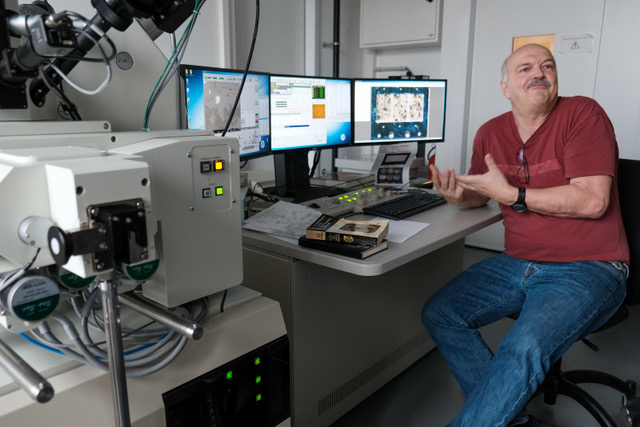
In front of three screens, concentrated on the complex settings of the Electron probe microanalyzer, Lukas Baumgartner from ISTE is about to make tonalite (granitoid) stones speak, extracted from an Italian site that he has been studying since his PhD.
Moving bodies that tell the story of Earth
Lukas Baumgartner wants to know everything about the chemical composition of these tonalites and the surrounding rocks – metamorphic sediments. But to understand his approach, we must first go back in time. A long time back.
The Earth was formed after the Big Bang, by accretion, gradually forming a core, which attracts the heaviest elements, a viscous mantle and a crust that hardened by cooling. In Lausanne, we walk on a crust of about 30 km thick that “floats” on the mantle. The flow of rocks between the crust and the mantle brings them to collide, to move apart, to plunge… These geological movements have consequences on the composition of the rocks, but also more global consequences. The formation of the Alps, for example, is one of them. The variations of CO2 in the atmosphere also result from these phenomena, which is not without importance in these times of global warming!
“I study a part of these mechanisms, a very small part!”
To understand these flows of plutonic rocks under our feet, their thermal consequences and the life span of “thermal anomalies” linked to magma, different methods are available to geologists. Drilling is one of them, but the temperatures and pressures are so high at depth that one hardly goes beyond 10 km. The other solution is what Lukas Baumgartner is using here: studying the rocks accessible at the surface and tracing their history through their chemical composition. At the same time, he exposes minerals to high pressures and temperatures, and compares the consequences of these experiments with what we observe in nature. Finally, thanks to physical laws – such as the diffusion of heat in rocks, or the diffusion of elements in minerals such as garnet – we can estimate the chronology of geological phenomena, such as short igneous and metamorphic events.
In practice, the Electron probe microanalyzer sends electrons onto the thin section sample (picture below) and measures the emitted X-rays, characteristic for each element. This results in quantitative chemical analyses with high spatial resolution. For these delicate machines, qualified technical support is crucial. In this case, researcher Martin Robyr is always there in case of problems.
Here we are, the measurements are launched on the microprobe. While waiting for the results, Lukas moves on to a parallel project. This time, it is about foraminifera and climate history.
Climate change: an issue as old as the Earth
While scientists speculate about the intensity of future climate change, the temperatures that the Earth has experienced in the past are also being debated. Our window of observation of the Earth’s temperatures, our archives, are notably the foraminifera. The isotopic composition of these fossilized microscopic marine animals is indeed used to trace the temperature that prevailed during their lifetime. But today, some researchers question whether these isotopic measurements could also be altered by the conditions undergone after the death of foraminifera. In a joint project with Prof. Anders Meibom and his colleagues, Lukas Baumgartner has decided to analyse the reliability of isotopic results. This could change our entire view of the Earth’s history.
Obviously, once again, to perform a life-size experiment and observe the transformations of foraminifera over several million years is not feasible. As an alternative, why not subject the foraminifera to very high temperatures and pressures, but for a shorter time? An experiment that takes place in a researcher’s time, not that of fossil foraminifera. Then, the researchers will examine the effects on their composition; then, extrapolate over several thousand years what they observed in a few hours. This works because the diffusion law – which describes the change in isotopic composition as a function of time – is proportional to temperature and pressure.
The key to the enigma in the crystal
Foraminifera are notably made up of an accumulation of calcite crystals on a nanometric scale. To elucidate the age of foraminifera, one can therefore also look into a calcite crystal (photo below) of the same composition. This is what Lukas Baumgartner and his colleagues are discussing over coffee. The team wonders what diffusion measurements to make on the crystal: at what angle? How to cut the crystal? And how accurately? Each of these details counts. And the decision is based on the literature and the technical means available…
How to handle such high temperatures and pressures? The hydrothermal lab can reach 2000 bars – the pressure undergone by rocks 7 km below the surface – and 800 °C! To resist the highest pressures, tubes – called bombs – of stellite are used, which resist explosion up to temperatures of 850 °C under pressure. One of these tubes, broken, is prominently displayed next to the installation: it reminds the experimenters that manipulations at these levels of pressure and temperature are eminently dangerous and that the name of these tubes is no coincidence! These tubes are supposed to be almost unbreakable, but this one exploded violently when it cooled down too quickly in contact with water…
In the furnaces, the samples to be studied can also take placed in mini-tubes of gold or platinum: these metals react very little and resist temperatures up to 1560 °C.
In this laboratory, it is also possible to study the composition of minerals and the reaction of water heated to very high temperatures, in order to reconstruct the pressure and temperature conditions experienced by metamorphic rocks. The composition of fluids is for example essential to understand the fluid-rock interactions in geothermal systems. The diffusion rate of the elements is also determined here: it allows to evaluate the critical temperatures and pressures (called critical constants), which give an idea of the stability time of the minerals according to the conditions they go through.
The tour ends here, and if you want to know more, follow the team’s results!
identify gaps in current knowledge concerning cascading hydrogeomorphological processes in watersheds ;
generate disciplinary synergies and new approaches in this field, particularly in relation to climate change.
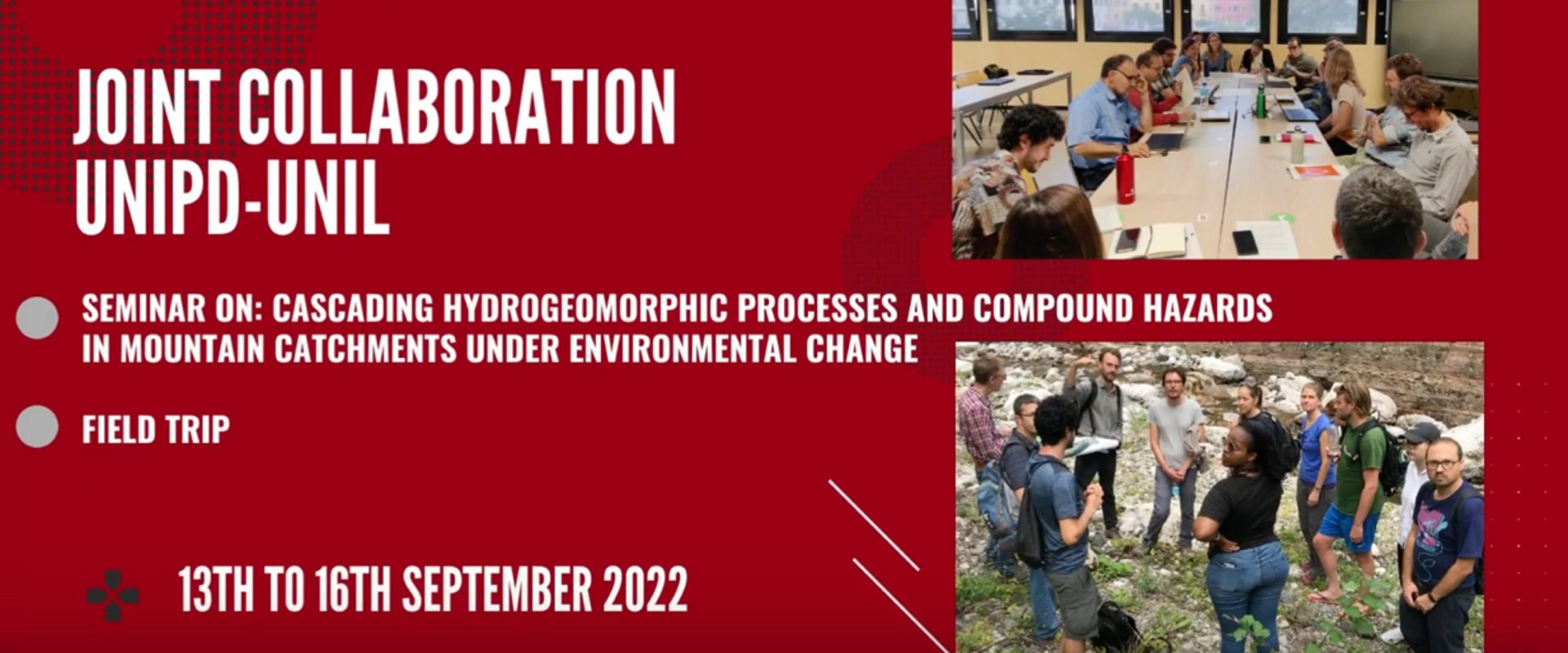
Several members of the FGSE participated in this seminar organized by Virginia Ruiz-Villanueva (assistant professeur at UNIL) and Filippo Catani (professor at the University of Padova).
Cascading risks in mountain catchments : a complex subject at the heart of current events
Hydrogeomorphological hazards are complex processes that often cascade: they interact with each other in a kind of chain effect that can lead to significant damage. For example, a simple landslide can block the flow of a river, creating a lake that can overflow and flood an entire region. The study of such processes is currently often fragmented between different disciplines (geomorphology, geology, hydrology), which leads to a lack of understanding of these interdependent phenomena.
Furthermore, watershed-related hazards have a significant social and economic impact and are likely to be exacerbated by climate and environmental changes. The United Nations Office for Disaster Risk Reduction noted in 2018, that globally, floods and landslides accounted for about 70% of economic losses from natural hazards during 1998-2017.
An opportunity to create synergies of knowledge and skills
Based on this observation, Virginia Ruiz-Villanueva (Institute of Earth Surface Dynamics, University of Lausanne) and Filippo Catani (Department of Geosciences, University of Padua) wanted to bring together scientists with complementary disciplinary expertise in various fields related to hydrogeomorphology. Benefiting from the support of the privileged partnership between UNIL and the University of Padova, Virginia and Filippo organized a seminar including lectures, field trips and workshops. Young and experienced scientists had the opportunity to exchange their knowledge and know-how and to interact with non-academic professionals, confronted with risks and their impacts in their professional activity.
A brief overview of the seminar is presented in the video below produced by the Department of Geosciences of the University of Padua
A very positive feed-back
At the end of the seminar, the opinions were unanimous on the success of this approach, during which the main issues concerning the study of natural risks and hazards in mountain catchments were identified. Inter-institutional and multidisciplinary research projects could be initiated in order to address these issues, in particular by extending the current thinking to new paradigms for understanding the complex feedbacks and interactions between slopes and river processes. A more detailed understanding of how these processes occur and what hazards are associated with them will help improve prevention and minimize the consequences for the populations concerned. This is particularly important in the face of climate change.
In collaboration with an international team, an Institute of Earth Sciences researcher reveals the complexity of temperature evolution over the past 12,000 years.
Samuel Jaccard, Institute of Earth Sciences
To predict the future, we rely on climate models. But reducing the uncertainty of these models is a delicate matter. To do this, we need reliable data over long periods of time. This is why understanding the Earth’s climate history from the distant past is invaluable: it helps us project into the future. Changes in the Earth’s average surface temperature over the past 12,000 years (during the current interglacial period, the Holocene) have been the subject of much debate. Climate model simulations suggest a continuous warming since the beginning of the Holocene. Yet the most well-documented reconstructions suggest that the global average temperature was at a maximum about 6,000 years ago, and then the Earth cooled until the onset of the current climate crisis (at the time of the Industrial Revolution). This major discrepancy between models and past climate observations is called the “Holocene Temperature Conundrum”.
In this new study, scientists used the largest available database of past temperature reconstructions extending back 12,000 years to carefully investigate the geographic pattern of temperature change during the Holocene. The team finds that, contrary to previously thought, there is no globally synchronous warm period during the Holocene. Instead, the warmest temperatures are found at different times not only in different regions but also between the ocean and on land. This questions the relevance of comparing global mean reconstruction with model simulations at the crux of the Holocene conundrum.
According to the lead author Olivier Cartapanis, “the results challenge the paradigm of a Holocene Thermal Maximum occurring at the same time worldwide”. And, while the warmest temperature was reached between 4000 and 8000 years ago in western Europe and northern America, the surface ocean temperature cooled since about 10,000 years ago at mid-high latitudes and remained stable in the tropics. The regional variability in the timing of maximum temperature suggests that high latitude insolation and ice extent played major roles in driving climate changes throughout the Holocene.
For Samuel Jaccard, professor at Institute of Earth Sciences, these results highlight “a more nuanced climate variability with strong regional disparities over time”. He believes that “taking these regional specificities into consideration should be a priority for the development of climate models, in order to best guide the measures to be taken rapidly to mitigate the consequences of climate change”.
Thus these new elements present a clear target for climate models. Their ability to account for climate variations in space and time will increase the reliability of future climate change projections.
Bibliography
Cartapanis O., Jonkers L., Moffa-Sanchez P., Jaccard S. L., De Vernal A. Complex spatio-temporal structure of the Holocene Thermal Maximum. Nature Communications. doi.org/10.1038/s41467-022-33362-1
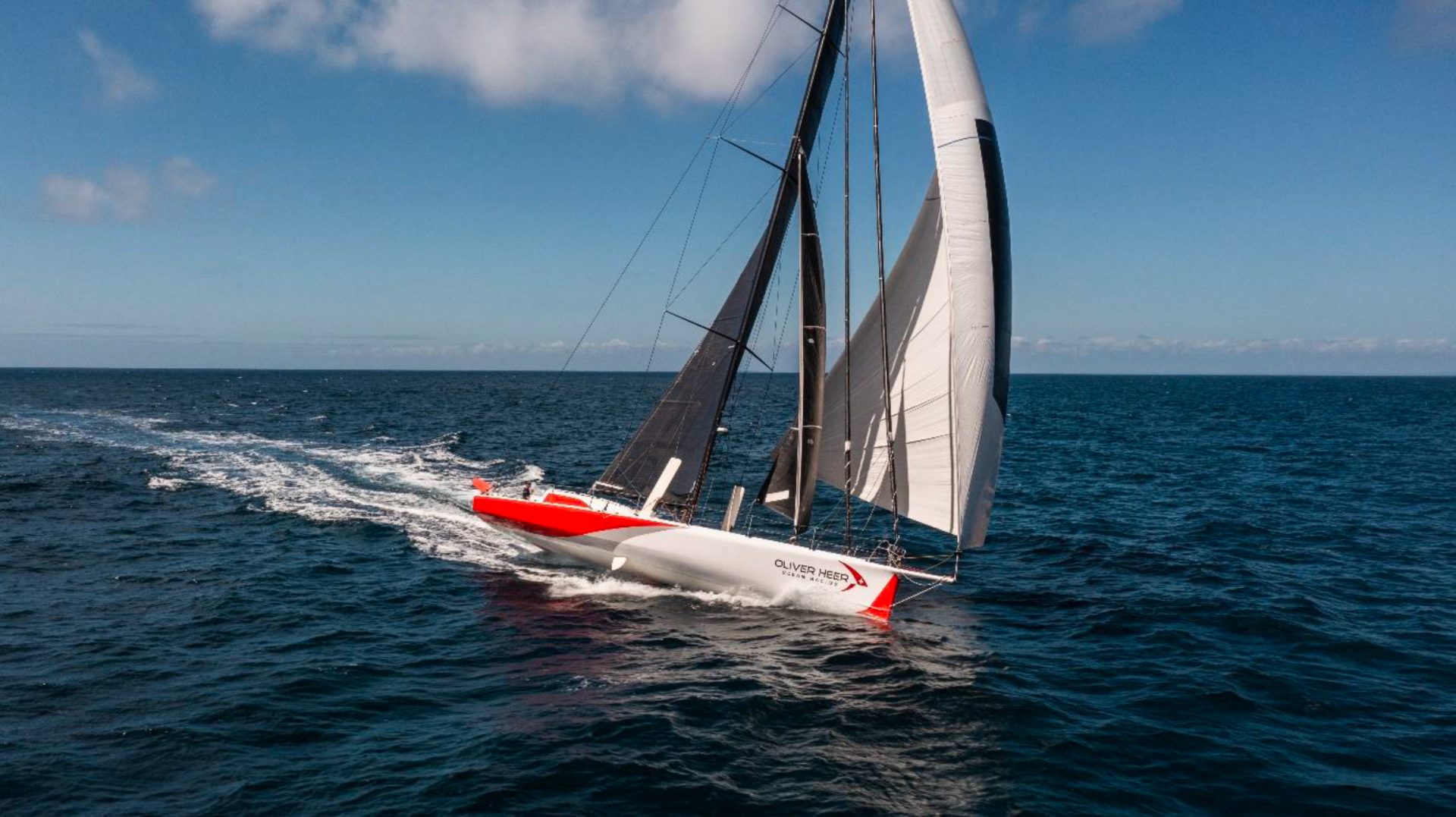
Le Swiss Polar Institute (SPI) and scientific experts from ETHZ, UNIBERN and UNIL will collaborate with the Oliver Heer Ocean Racing offshore sailing team to collect environmental data during their Vendée Globe 2024 campaign.
Following contact between the Swiss Polar Institute and Swiss skipper Oliver Heer who sees collaboration with scientists and environmental data collection as central to his responsibility as campaign leader and skipper, supporting his #RaceForChange vision, the Swiss Polar Institute brought together a group of scientific experts from ETH Zurich, University of Bern and University of Lausanne to design an innovative scientific campaign related to climate change.
Oliver Heer Ocean Racing and the SPI are so announcing a three-year collaboration to place world-class Swiss science on Oliver Heer’s IMOCA racing yacht Gitana 80 and to conduct a data collection campaign during the training and racing phases of the Vendée Globe challenge between 2023 and 2025. The Swiss Polar Institute was approached by Oliver Heer as part of his own campaign to participate in the 2024 Vendée Globe race. This campaign is focused on the theme of climate change and is moving towards climate neutrality through a partnership with ClimatePartner.
Samuel Jaccard, Institute of Earth Sciences
Prof. Samuel Jaccard of the FGSE (UNIL, ISTE) tells us more about his contribution to the project and what is expected in terms of results:
For your part, what kind of data are you interested in with respect to the set of informations that will be captured by the sensors? How long or how many runs will the collection take before the data is analyzed? Is it transmitted in real time?
Samuel Jaccard : The data collection will be spread over all the races in which Oliver Heer will participate, as well as his training rides. As far as the satellite connections allow, the data should be transmitted in real time. For my part, the data that will interest me the most are the measurements of CO2 dissolved in the Southern Ocean, which will allow to better quantify the exchange of CO2 between the surface ocean and the atmosphere. The Southern Ocean absorbs a significant amount of anthropogenic CO2, which can temporarily limit global warming. Despite the importance of the Southern Ocean in the climate system, its dynamics remain comparatively unknown, mainly for logistical reasons. These data will be very useful in this respect.
As this is an offshore sailing race, the route followed by the Swiss sailor is obviously not completely fixed in advance, depending on the weather conditions and the adaptation of the race strategy along the way, and scientists cannot, we imagine, influence this: how does this influence the data obtained and the method of processing them?
Samuel Jaccard : Indeed. The data collection will depend on the weather conditions, as well as on the race strategy. However, the general itinerary is mapped out and known and should allow us to collect valuable information about the functioning of the ocean, especially outside the main routes used by commercial ships.
How will the collaboration between the researchers of the involved institutions be divided and what are the common objectives in scientific terms?
Samuel Jaccard : We are going to work in a spirit of collaboration. We know each other well and have worked together in the past. The team from the University of Bern is primarily interested in temperature and salinity parameters, while my colleague from ETH and I will perhaps focus more on dissolved CO2 data.
During the Last Glacial Maximum, about 20,000 years ago, it was cold. But how cold? Estimates of surface air temperature vary between 1.8 and 8°C colder than today. This remains imprecise. Christoph Schmidt and Georgina King are working on a new SNSF project to develop a method for estimating past temperatures that can be applied globally – at any latitude and any altitude.
A “global” method – from the moon to the foot of Mont Blanc
This method is based on almost ubiquitous material: quartz and feldspar. The idea was first introduced in the 1960s for terrestrial applications, and then in the 1970s for lunar samples from the Apollo 12 mission. It has only recently been revived and developed, in particular by a un groupe de la FGSE : Frédéric Herman and Rabiul Biswas (now a professor in India) put a lot of effort and time into it. “They have developed it to a point where we can now build on it and try to apply it on a larger scale” points out Ch. Schmidt. “There are still a range of open questions and problem we have to face, but we have ideas on how to overcome them.” This method could be applied in all regions of the world where these minerals are present, and why not, on other planets!
The trace of paleo-temperatures trapped in minerals
How can we reconstruct past temperatures? Quartz and feldspar trap electrons generated by environmental radiation. The team is exploiting the fact that the charge trapped in these minerals – generated by irradiation – depends on the ambient temperature. In the luminescence machine (visible on the video), the sample is exposed to heat or light, which triggers the release of the luminescence signal. A highly sensitive device, called a photomultiplier, is then able to record individual photons released from the mineral – a level of light well beyond the detection limit of the human eye.
We try to measure the relative level of signals in response to two competing processes: radiation and temperature. By doing so, we try to find the thermal history that most likely can explain the signal pattern that we observe experimentally from our sample.
Christoph Schmidt
One of the main challenges is to accurately characterise the behaviour of the quartz and feldspar samples. In order to extrapolate laboratory observations to a larger time scale, it is important to be as accurate as possible: small inaccuracies will seriously affect an extrapolation into the distant past.
We aim to reconstruct absolute temperature in different ranges of time, from 30 to 40,000 years to shorter time scale. But this method will have other possible applications: for example to estimate the temperature of a rock during a volcanic eruption or any type of thermal hazards.
Christoph Schmidt
20,000 years ago, from the equator to the far north
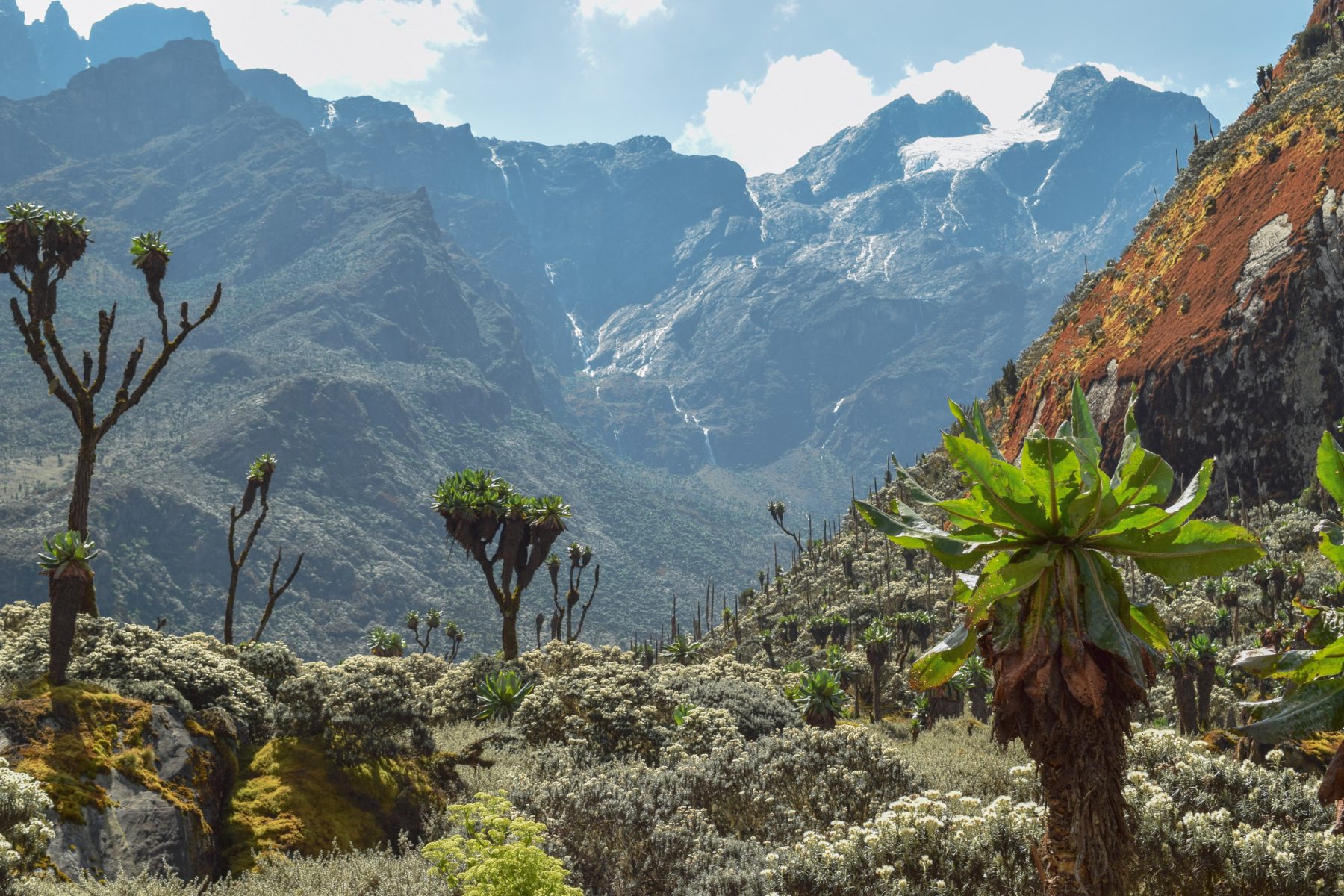
Reconstructing the absolute temperature time series from the Last Glacial Maximum to the present day is one thing. The team also aims to cover as wide a latitudinal gradient as possible. “We start in the North in Norway, it is the northern most piece of bedrock that was not covered by a glacier during the last ice age (as we want to reconstruct air temperature). At the southernmost point, very close to the equator, the Ruwenzori Mountains in Uganda are the only non-volcanic mountain massive in central Africa. So there is not much of a choice! Non-volcanic origin is important, because volcanic samples show very special luminescence properties that we try to avoid.”
Two massifs, one in the tropics and the other in a temperate region will allow estimating how temperatures dropped from 1000 to 4000 m during the Last Glacial Maximum (26,500 to 19,000 years ago). This adiabatic lapse rate is crucial to model the atmospheric climate. The adiabatic lapse rate is the variation of air temperature with altitude, related to atmospheric pressure alone.
Reconstructing past temperatures to better understand the future?
Knowledge of past surface air temperatures as a function of latitude and altitude is important for understanding the Earth’s climate oscillations and atmospheric circulation. In the context of global warming, it is a key element in predicting future scenarios. In particular, these temperature data serve as crucial input parameters for evaluating climate models and determining climate sensitivity. “This information can be fed into climate models that will tell us about our future on this planet, that is what the temperature will be in the next 50 or 100 years.”
There weren’t people with thermometers 20,000 years ago, so we try to extract this information from the rocks, to give that to the climate scientists.
Georgina King
Article
Biswas, R.H., Herman, F., King, G.E., Lehmann, B., Singhvi, A.K., 2020. Surface paleothermometry using low-temperature thermoluminescence of feldspar. Climate of the Past 16, 2075-2093. doi.org/10.5194/cp-16-2075-2020
An important study published in Nature Communications describes through modeling the physical influence of microstructures in porous media on the global transport of particles entrained by fluids.
This fundamental advance in the field of fluid dynamics is anything but trivial in view of its numerous fields of application, from the environment to medicine, from scavenging in rivers to remineralization or decontamination of soils, to blood flow or to the transport of molecules in biological membranes and tissues.
A few drops of serendipity
How did Dr. Ankur D. Borodoloi and Dr. David Scheidweiler, two postdocs at the Institute for Earth Sciences (ISTE), successfully model fluid transport in porous media?
During their work in the Fluid Mechanics Laboratory, studying the transport of particles inside an artificial substrate that closely mimics the structures of porous media, these two young researchers found that their observations did not match the predictions of established models (based mainly on passive diffusion principles). In particular, they found that the particles (colloids) took significantly longer to pass through the medium than expected.
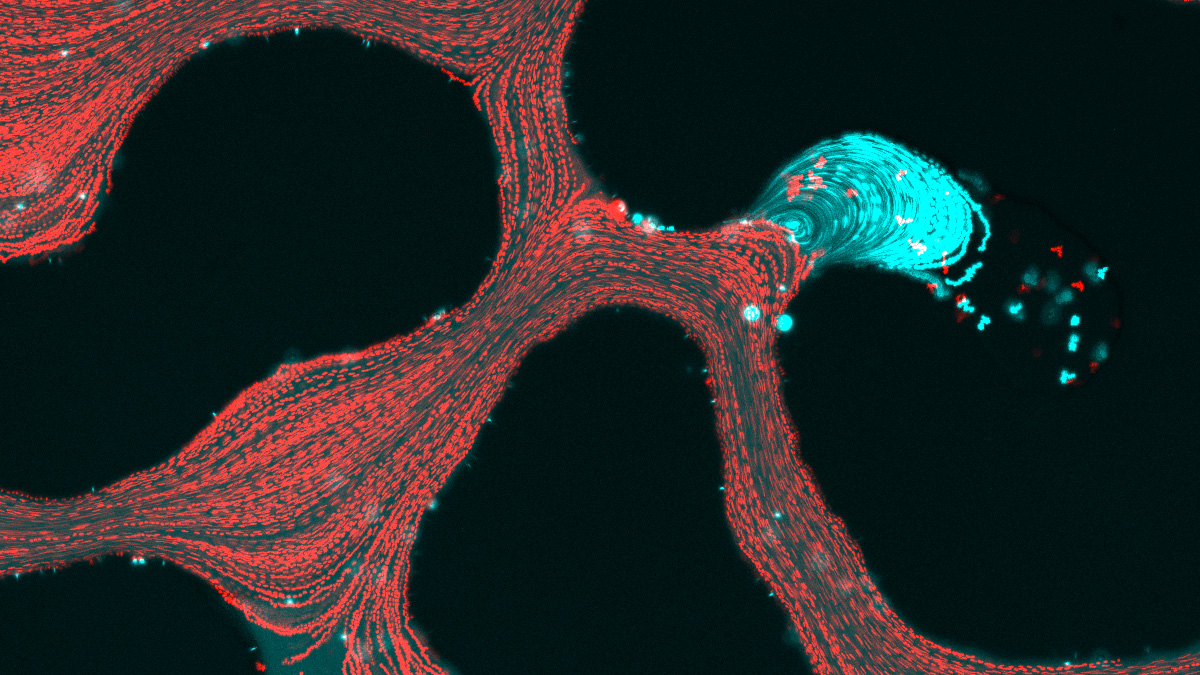
They therefore extended their study by observing the flow of these colloids in the very heart of the microstructures constituting the substrate. By compiling thousands of fluorescence microscopy images, they were able to identify that convection currents were created inside “dead-end” pores, keeping some of the particles “trapped”. This result was unexpected, as it was not imagined that such currents could be created on such a small scale.
A mathematical model was then established, in order to describe and predict the transport speed of microparticles and the time needed for them to cross a porous medium. The key factors of this model are the thickness of the medium and the distribution of the size of the pores it contains. A better understanding of these subtle mechanisms opens up many development perspectives. Pietro de Anna’s team is working on several projects related to this topic, including the growth dynamics of bacteria in such media. The understanding of these phenomena is particularly interesting, considering, for example, that the cells of the wall of the intestine or the kidney elaborate microvilli creating an environment similar to those studied here. Thus, the dynamics of absorption or diffusion of drug molecules in these organs could be approached under a new angle.
The Fluid Mechanics Laboratory
The Fluid Mechanics Laboratory works mainly on identifying the mechanisms that link phenomena that can be observed at the macroscopic level to processes that exist at the microscopic level.
To go further with Prof. Pietro de Anna
Why was the flow of fluids in a porous medium not better known until now?
The flows through porous media are very slow (a few microns per second). Therefore, most scientists considered that liquids and microparticles passively pass through them without any particular dynamics and that it was sufficient to determine an average flow and diffusion velocity to describe their transport. The very complex structures of these media were also a hindrance to further studies. Indeed, no existing experimental device allowed to recreate this complexity or to obtain a fine observation of the flows within the microstructures.
What were the key steps to successfully define this model?
In the framework of our research, we have worked on the realization of a synthetic medium allowing us to recreate the complexity of a porous medium and to observe the flows within the microstructures. We have succeeded in realizing transparent polymer wafers (i.e. microfluidics) with an internal structure that we can shape to our needs. The microfluidics are in the form of thin slides in which we pass colloid suspensions.
Schematic of the experiment performed: a. Microfluidic plate containing a solution of colloids. b. Zoom on the microstructures composing the microfluidic.
Once this setup was in place, we performed several experiments measuring particle transport through the microfluidics to determine if the simple models used so far held true. We found anomalies with respect to the expected results with diffusion delays.
Porous structures are networks of channels filled with particles or microorganisms in suspension which are interspersed with “dead-end” pores in which these flows are interrupted. These structures are present in soils, industrial filters, membranes or biological tissues. Microfluidics are designed to recreate the conditions of porous media with a homogeneous distribution of isolated channels and pores. This method is described in more detail in the Geoblog article: Day of a researcher – Pietro de Anna
We therefore designed an experiment that allows us to observe the transport mechanisms occurring at the microscopic level, in order to understand the unexpected effects observed at the macroscopic level.
Prof. Pietro de Anna
Particle flux observed at the exit of the microfluidics (blue dots) compared to the expected flux (green line). A longer time than expected is required for the colloids to pass through the medium.
The microfluidics were filled with a suspension of colloids and a wash solution was injected into one end of the plate. The movement of the suspended colloids was determined by recording images at regular intervals using a fluorescence microscope. These images were then superimposed to evaluate the movement or stagnation of suspended colloids.
Images of colloids in suspension at the beginning of the experiment and after 6h of treatment. The colloids present in the channels (green) are mostly washed out, while those in the pores (red) remain trapped.
At the end of the experiment and the superposition of thousands of images, we were able to observe that a convective movement is created in the “dead-end” pores, which retains the particles inside. This is quite unexpected as it was not thought that such movements could be formed at such a small scale (about 20 microns).
Picture of colloids swirling in a pore (in blue). This photo has been selected for the [Figure 1.A.] 2022 competition and will be exhibited at the Lausanne City Hall from September 21 to October 3, 2022.Schéma des courants de convection observés.
From these observations we have developed a mathematical model to describe these vortex phenomena. This model allows to describe the transport of particles through a porous medium at any stage of the transport. The determining elements of this model are the length of the traversed material and the pore size distribution.
Bibliographical reference
Bordoloi, A.D., Scheidweiler, D., Dentz, M. et al. Structure induced laminar vortices control anomalous dispersion in porous media. Nat Commun13, 3820 (2022). doi.org/10.1038/s41467-022-31552-5
Scientists from MIT and Woods Hole Oceanographic Institution have published a article in the journal Nature Geosciences, in which it is shown that deep-seated magmas located in subduction zones contain up to twice as much water as previously measured. This discovery was made possible by the analysis of plutonic rock samples collected by Othmar Müntener (Full professor, Institute of Earth Sciences) and his team.
Why is the water content of magmas interesting?
Magmas with the highest water content are found in subduction zones, where oceanic water can be drawn to great depths and induce mantle melting. In these regions, violent volcanic eruptions are observed, because the more hydrated the magma, the more explosive the eruptions. The water contained in these magmas could also be at the origin of various metalliferous deposits (copper, gold or silver) enriching the elements initially in solution in the magmatic fluids.
The water content of magmas has been estimated so far at about 4% of the total weight. This percentage seems too low to explain these phenomena in a convincing way, and several models describing the formation of the Earth’s crust suggest that water should be more abundant. Urann and his colleagues hypothesized that the volcanic rocks studied so far to estimate the water content of magmas are too dehydrated (especially during the eruption phase), to be able to reliably reconstruct the composition of the magma in which they were formed.
Plutonic rocks: key elements of the discovery
The objective of this research was therefore to work on rocks that were not very denatured and had not undergone eruptive phenomena. Othmar Müntener and his team had already been interested in such rocks and had led an expedition in 2007 in the Kohistan region (Pakistan) to study and sample them. This remarkable site contains rocks that were formed at depth by slow crystallization and that came to the surface during the surrection of the Himalayas (so-called plutonic rocks). The minerals and their water component represent faithfully the composition of the deep magma in which they were formed. As the sites in Pakistan have become difficult to access for European or American researchers, the samples collected during the 2007 expedition were analyzed in this study. The principal authors of the Nature Geosciences article note the incredible freshness of these rocks, which show no obvious signs of disturbance in the crystals they contain.
Plutonik rocks used in the study of Urann et al. : garnets (in red) and clinopyroxene and hornblende (in black) (photo : O. Müntener)
Results and perspectives
The analysis of the plutonic rock samples was carried out by ion probe and their water content measured indirectly after the establishment of various standards. The results obtained indicate that the magmas in which these rocks were formed contain a water content twice as high as that estimated so far, i.e. 10 to 12% of the total weight. These results open new perspectives for the interpretation of the formation and composition of the Earth’s crust. We can imagine, for example, that degassing of magmas starts deeper than commonly assumed. Similarly, some observations of magmatic rocks in the Alps can be explained by the presence of rocks with a high water content (see box).
The plutonic rocks collected by O. Müntener are currently the subject of two other research projects.
In a paper published in February 2021, O. Müntener and his colleagues had already hypothesized that superhydrous magmas should exist in Alpine subduction zones. Observations made on magmatic rocks of the Alps (notably in the Adamello region, Italy) indicate the predominance of plutonic rocks over volcanic rocks and thus a reduced volcanic activity at the time of the collision of the Adriatic and Eurasian plates. O.Müntener explains this limited volcanism in the Alpine chain by a low convergence rate hindering convection in the mantle corner. Consequently, the pulsed release of fluids in the subducting plate controlled the formation of superhydrous magmas. The discovery of a water content of subduction zone magmas significantly higher than previously estimated, supports this hypothesis.
Reference : O. Müntener, P. Ulmer, J. Blundy : Superhydrous Arc Magmas in the Alpine Context, Elements, Vol 17 – number 1, février 2021 [abstract]
Référence bibliographique
B.M. Urann, V. Le Roux, O. Jagoutz, O. Müntener et al. High water content of arc magmas recorded in cumulates from subduction zone lower crust. Nat. Geosci. (2022). doi.org/10.1038/s41561-022-00947-w