We wish you an extraordinary year, full of readings, research, publications and achievements in all dimensions.
 CITADYNE
We wish you an extraordinary year, full of readings, research, publications and achievements in all dimensions.



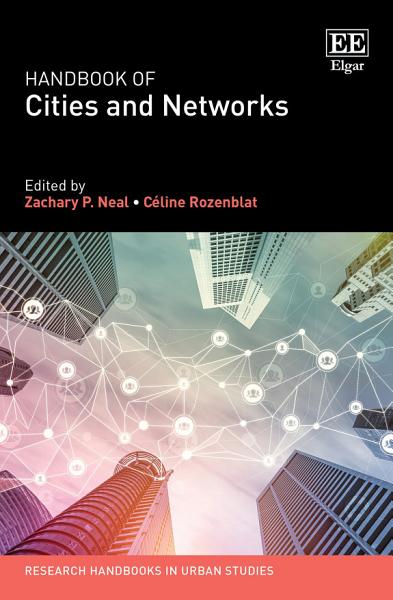
Edited by Zachary P. Neal, Associate Professor, Department of Psychology, Michigan State University, US and Céline Rozenblat, Professor of Urban Geography, Faculty of Geosciences and Environment,Université de Lausanne, Switzerland
Publication Date: 2021 ISBN: 978 1 78811 470 7 Extent: 672 pp
‘If you want to understand cities – the innovation and dynamism they generate and the way they sort and segregate people by class, race and other dimensions – you have to start by understanding that cities are networks. Zachary Neal and Céline Rozenblat have done all of us who care about cities a great service by pulling together the very best and brightest thinkers on cities and networks in this terrific volume.’
– Richard Florida, University of Toronto, US and author of The Rise of the Creative Class and The New Urban Crisis
This Handbook of Cities and Networks provides a cutting-edge overview of research on how economic, social and transportation networks affect processes both in and between cities. Exploring the ways in which cities connect and intertwine, it offers a varied set of collaborations, highlighting different theoretical, historical and methodological perspectives.
International contributions assess the state of the field of network analysis, presenting interdisciplinary insights that draw on theory from geography, economics, sociology, history, archaeology and psychology, and outlining methodological tools that include ethnographic, qualitative and quantitative approaches. Illustrating a framework for integrating the diversity of urban networks, the Handbook demonstrates that by exploring urban networks with different combinations of levels and scales, new insights and opportunities can emerge.
Featuring focused studies on specific regions and cities, this state-of-the-art Handbook is essential reading for scholars and researchers of urban studies and regional science, particularly those focusing on the transformation of cities as connected spaces through intracity and intercity networks. Its core theoretical insights will also benefit graduate students in urban studies and network analysis.

The IGU Newsletter changes its format! In this number:
Click here for the browser edition and head on to the bottom of the page to subscribe!
Happy reading!

ERC GeoDiverCity International Workshop
Thursday 12th and Friday 13th October 2017 | Paris, France

https://geodivercity.parisgeo.cnrs.fr/blog/international-workshop/

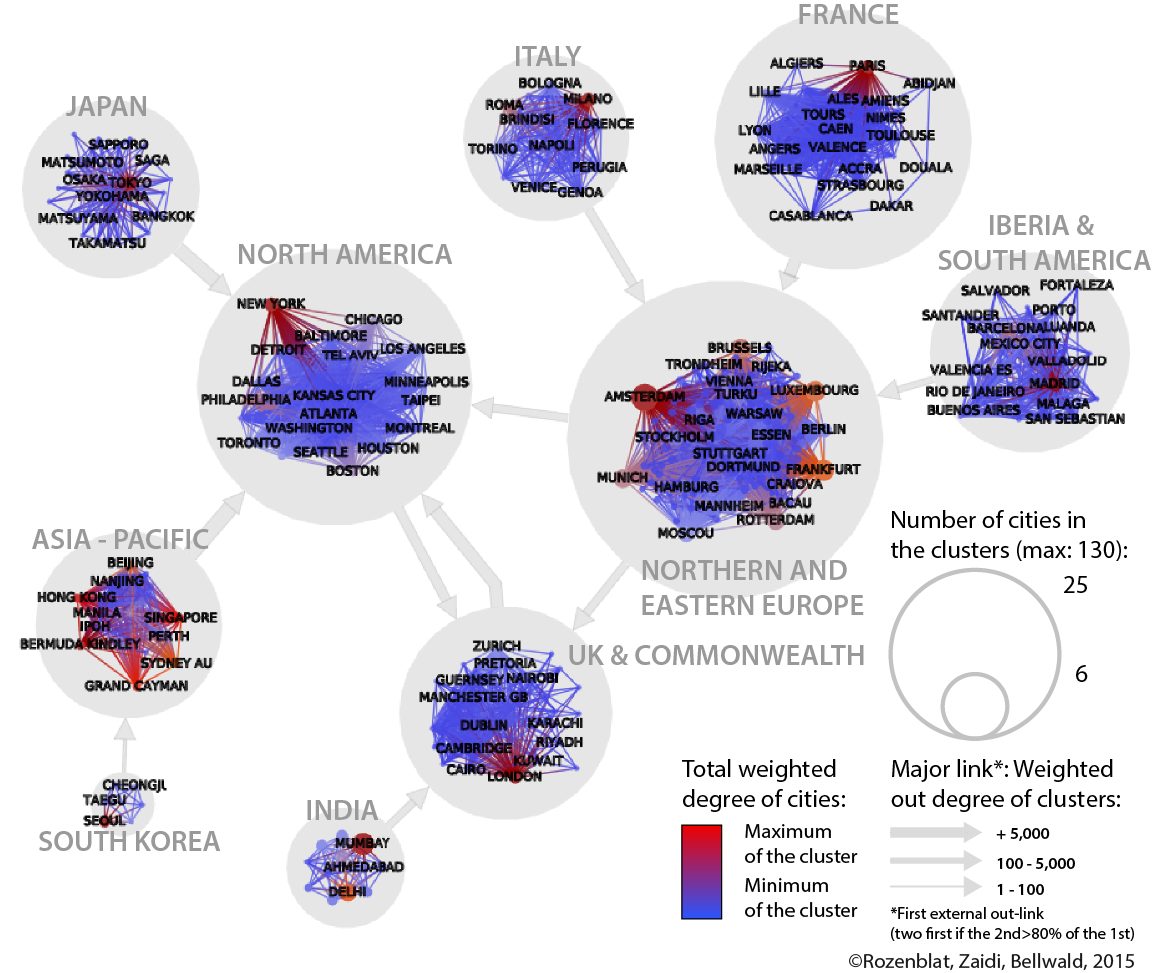
Rozenblat, C., Zaidi, F., & Bellwald, A. (2017). The multipolar regionalization of cities in multinational firms’ networks. Global Networks, 17(2), 171-194.

For those who missed the session Territorial Intelligence for Multi-level Equity and Sustainability, you can visualize online individually each presentation :
Denise Pumain, University Paris 1. ERC GeodiverCity (Keynote Speaker – Conference CS-DC)
Panos Argyrakis, University of Thessaloniki
Comparison of single and multiplex patent networks
Celine Rozenblat, Antoine Bellwald, University of Lausanne
Elfie Swerts, ERC GeodiverCity
Scaling laws in Chinese urban system in light of harmonized data
Olivier Finance, University Paris 1 – CNRS
Scaling laws to explore innovative behavior of transnational investment
Paul Chapron, ERC GeodiverCity
Building and exploring systems of cities models via high performance computing.
Denise Pumain, University Paris 1. ERC GeodiverCity
Scaling laws in urban evolution: A construction in territorial intelligence
The entire program of the TRACK “From Fields to territories to the Planet” is available here:

Interestingly…. they prefere parks and river sides :-(((( What a new information!!!!




Decrypting new diverse and massive urban data, this book shows how cities, their governments their inhabitants, their businesses , adapt deeply to all these transformations. The book is divided into six main chapters, each grouping of items within the reach of the great public by experts on urban policies, urban life, space and social structures, the economy, the functioning of cities in systems and the urban environment. The continuity of these themes with previous volumes in the series can measure the importance of the transformations that highlight how adaptation to change is more than ever the driving force for dynamics cities. Teachers, students, policy makers, urban practitioners and ordinary citizens will find keys to understanding these developments and knowingly take part in.



A website showing the proximities between sciences, between fields, maps of ontologies:
https://www.science-metrix.com/OntologyExplorer/#app=cde1&8f8c-selectedIndex=2

https://www.science-metrix.com/OntologyExplorer/#app=cde1&8f8c-selectedIndex=1


A conversation with scientist and inventor of the World Wide Web Tim Berners-Lee on what is wrong with social networking
Sir Tim berners Lee in DAVOS 2013


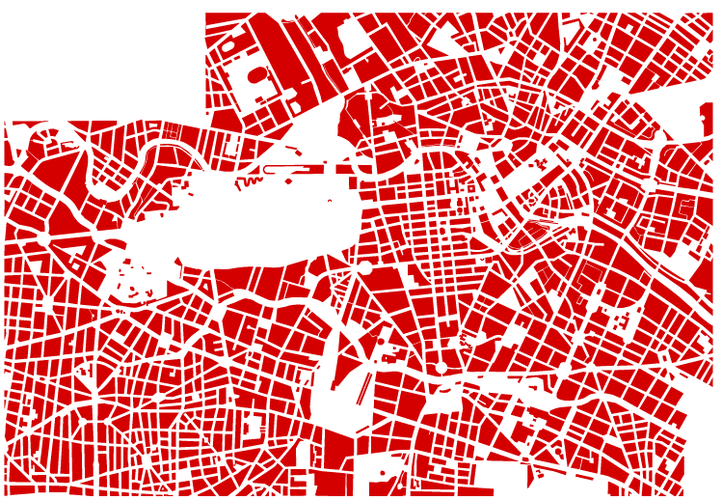
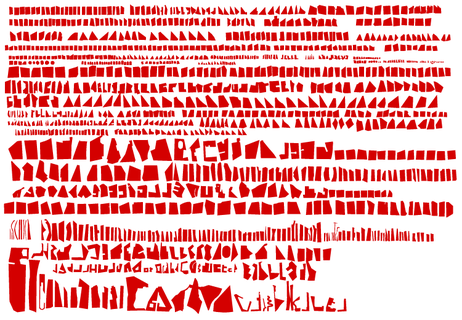
I don’t know what we can learn from the physical dissection of cities: maybe some fractal analysis could work?
Berlin:
New York City:
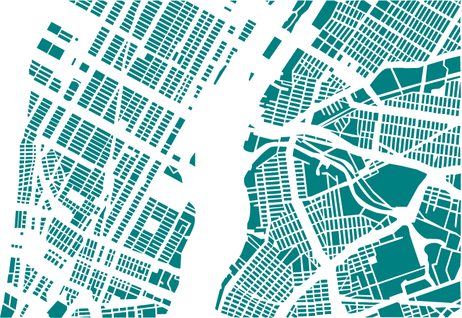
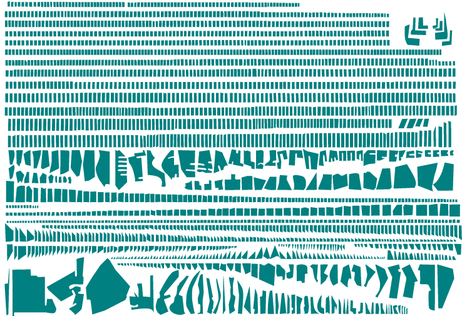
and other cities in the website (made by Armelle Caron)

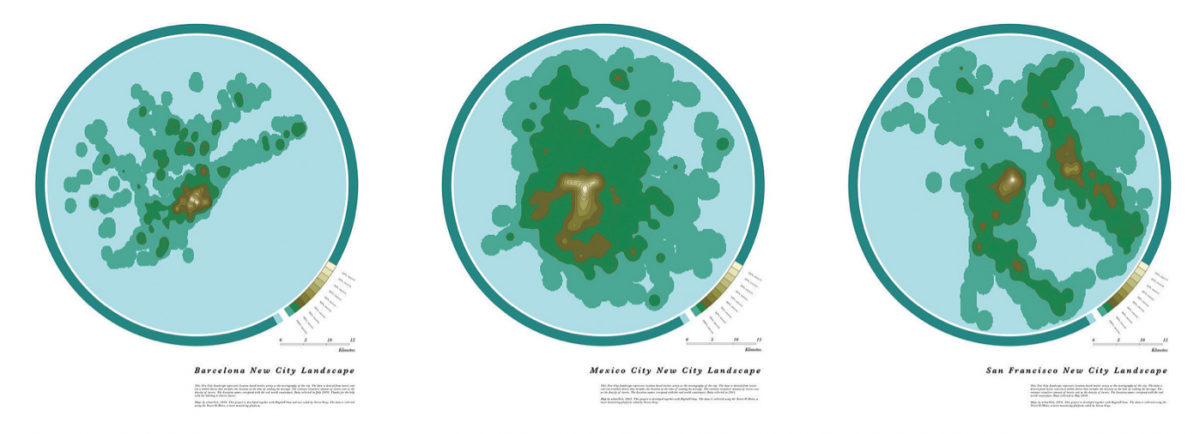
The density of twitter users shows the location of people in London during the Olympic games…. impressive……
See the website:
https://urbantick.blogspot.co.uk/2012/09/virtual-landscape-and-peak-for-london.html
London during Olympic games:

Other cities: