Categories
Complexity Emergence SCIENCE Social network

Emergence and macro-level independency

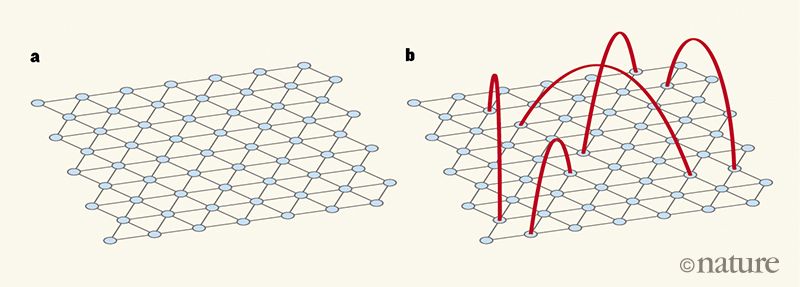
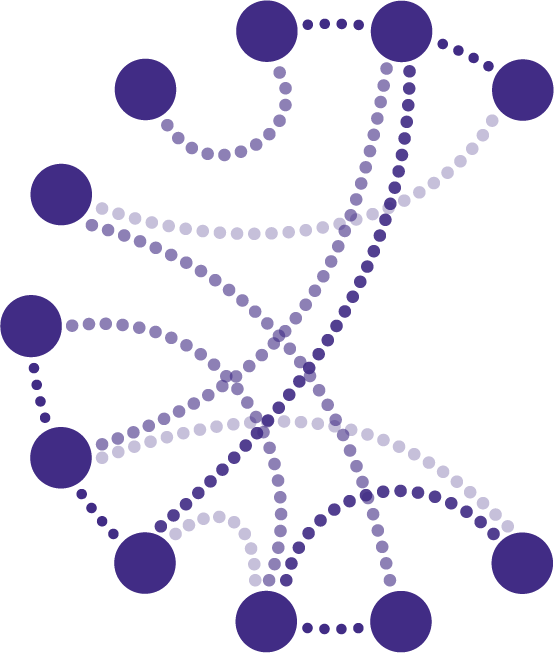
Recently Philip Ball collaborator of Quanta Magazine in an article  entitled The New Math of How Large-Scale Order Emerges“, discussed some research advances around the question of how emergence emerge in complex systems? He focuses on the work of Fernando Rosas and six other researchers entitled “Software in the natural world: A computational approach to emergence in complex multi-level systems”, which presents  a mathematical framework based on computational mechanics to better understand the phenomenon of emergence.

According to the researchers, by organizing systems such as economic, urban or even biological systems into hierarchies of levels, it is possible to find in each of them properties that allow each level to operate independently of the others, just as software does in a computer, each software works independently the computation mechanism of the hardware circuits. This means that emergent phenomena are governed by macroscale rules that appear to be self-contained, regardless of what the components or entities of other hierarchies do.

In general, the approach of Rosas et al. (2024) characterizes the interdependence between micro and macro levels by combining principles of computational mechanics with fluid dynamics and dynamical systems theory, which are widely used in continuous systems. This contribution to bridging the gap between emergence and complex systems is guided by previous research by Barnett & Seth (2023), which proposes a system in which a dynamically macro level is conditional on its own history and independent of the history of the micros process. Both studies turn around systems whose macro levels have a degree of causal ‘self-containment’ with respect to their micro processes, which could be understood as a kind of emergence.

To access the Quanta Magazine article, use this link:

https://www.quantamagazine.org/the-new-math-of-how-large-scale-order-emerges-20240610

For the Rosas et al. (2024) paper:

https://arxiv.org/abs/2402.09090v2

And for the paper by Barnett & Seth (2023):

https://arxiv.org/pdf/2106.06511
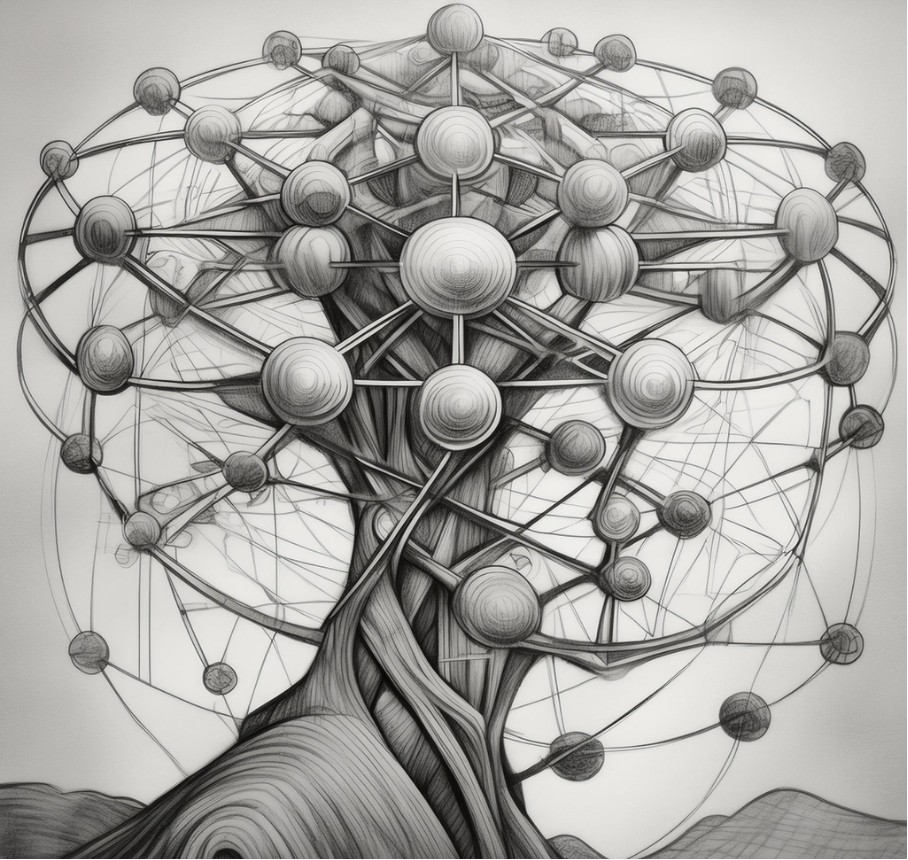
Made in Adobe Firefly AI, prompt: Jorge Salgado.

References:

Barnett, L.  and Seth A. K. 2023. “Dynamical independence: discovering emergent macroscopic processes in complex dynamical systems,” Physical Review E, vol. 108, no. 1, p. 014304.

Rosas, F. E., Geiger, B. C., Luppi, A. I., Seth, A. K., Polani, D., Gastpar, M., & Mediano, P. A. M. (2024). Software in the natural world: A computational approach to hierarchical emergence. arXiv.
Categories
Cities Health Resilience SCIENCE Society Urban

MOOC – Healthy Urban Systems

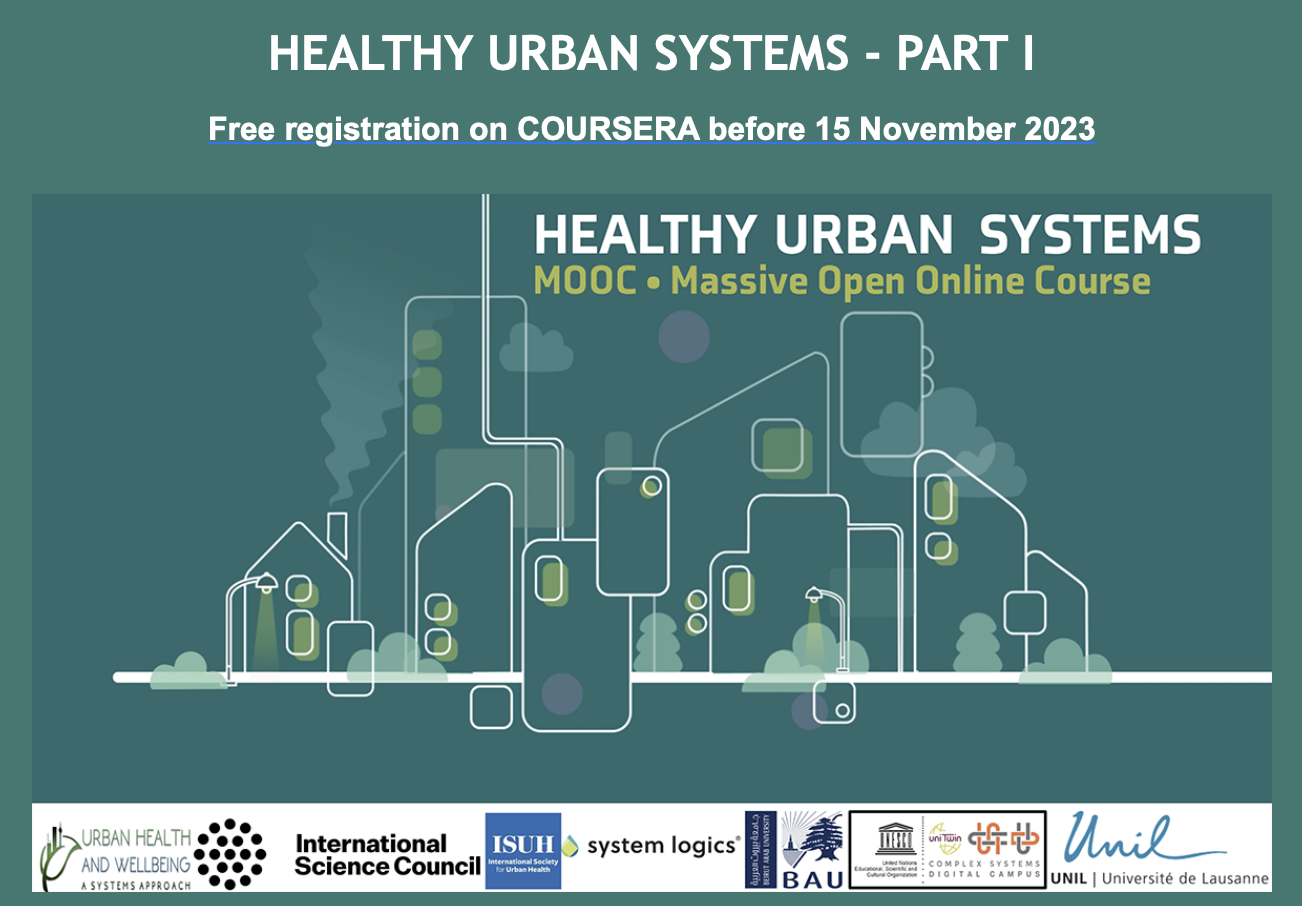
We invite you to the Massive Open Online Course (MOOC) Healthy Urban Systems, designed specifically for professionals and enthusiasts in the field of urban health. This first part of the MOOC series (consisting of 3 MOOCs) will take you on a comprehensive 4-week journey, navigating through multidisciplinary frameworks and analytical observations critical to understanding the complexities of urban health.

You will learn to:

  • Address urban health through complex multidisciplinary approaches.
  • Use multidimensional and multiscale concepts, methods, and ecosystem frameworks.
  • Mobilize and support all players directly or indirectly involved in urban health.
  • Dedicated to all levels of disciplines linked to the city, health, the environment, social and human sciences, data sciences…

The MOOC is entirely in English, with possible subtitles in French and Chinese.

Materials: videos, glossary, quizzes, exercises, discussion forum.

Duration: 4 weeks – 1 session per week to be taken at your convenience.

Workload: 2 to 3 hours per week.

Accreditation (possible and not compulsory): 2 ECTS for PART I, issued by the University of Lausanne.

General coordination:

University of Lausanne – UNIL-EPFL Foundation for Continuing Education

Prof. Céline Rozenblat, Jeff van de Poel

Categories
Cities Complexity Economy Geography Networks Programming SCIENCE Simulation Vizualization

Cities in the face of green technologies, skills and preferences transitions – ECTQG 2023

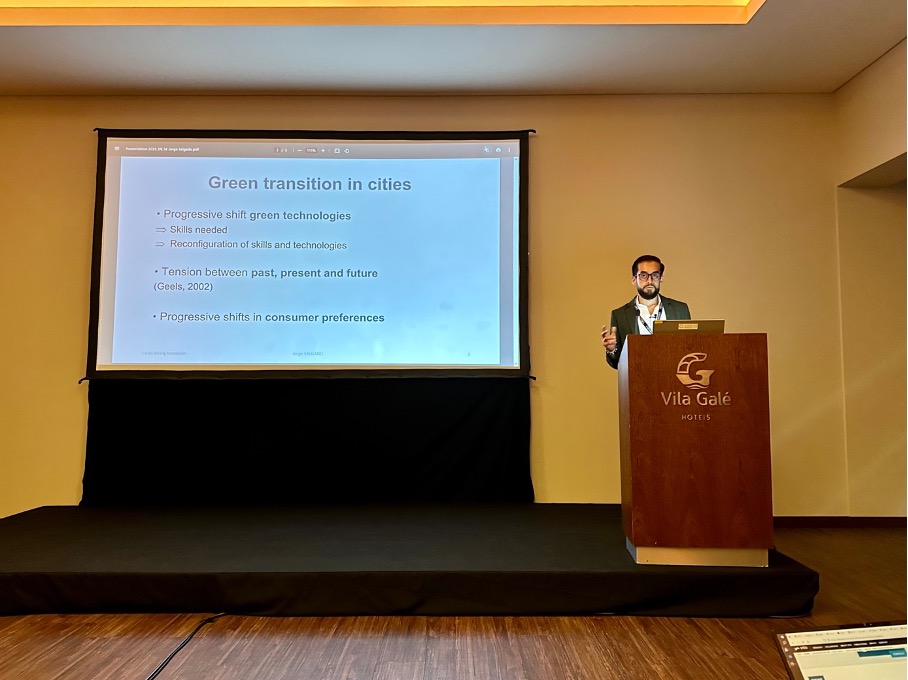
At the European Colloquium of Theoretical and Quantitative Geography 2023 (ECTQG, 2023), Jorge Salgado – researcher at Citadyne – presented the progress of his research entitled: “Cities in the face of green technologies, skills and preferences transitions: a multilevel complex approach”. His agent-based modelling approach allows the simulation of changes in firms technologies and consumer preferences as a result of the green transition. The research has been well received because it simultaneously integrates key elements of the economic system, enabling bottom-up interactions to understand the reconfiguration of urban systems around the world.

If you are interested in this research you can contact Jorge Salgado: 

jorge.salgado@unil.ch

Categories
Cities Programming SCIENCE Simulation Urban Vizualization

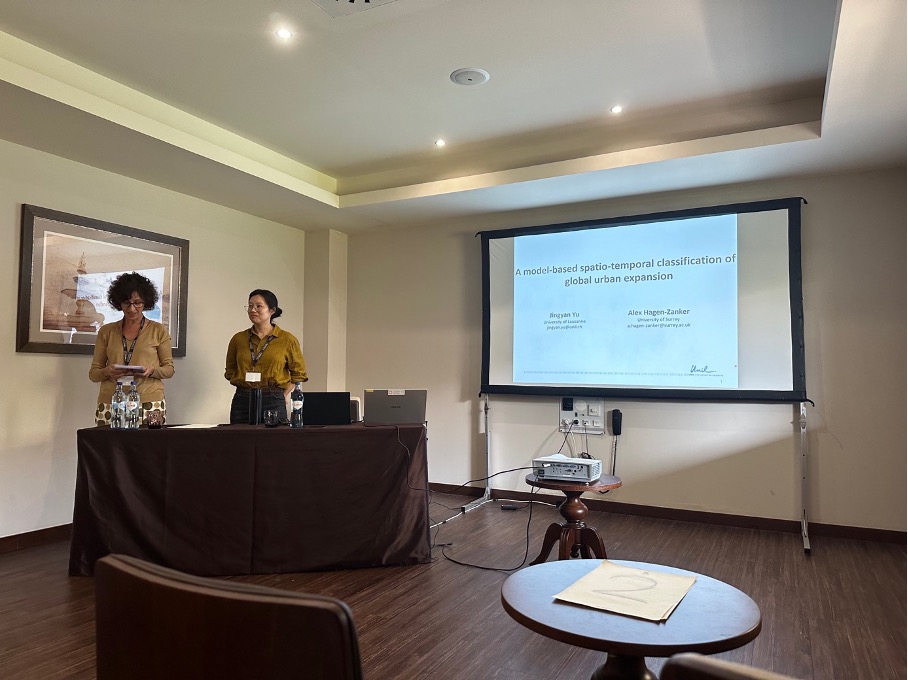
A model-based spatio-temporal classification of global urban expansion  – ECTQG 2023

Dr Jingyan Yu, – postdoctoral researcher and member of Citadyne – presented the first results of her research “A model-based spatio-temporal classification of global urban” at the European Colloquium of Theoretical and Quantitative Geography 2023 (ECTQG, 2023).  She has developed static and dynamic measures to simulate urban expansion in Functional Urban Areas (FUA) around the world. She has found a global trend of physical spatial dispersion, producing discontinuous, dispersed built-up areas.

If you are interested in this research you can contact Dr Yu:

jingyan.yu@unil.ch

Categories
Artificial Intelligence Networks physics Programming SCIENCE

Empirical methods and the ability to find law of physics in raw data 

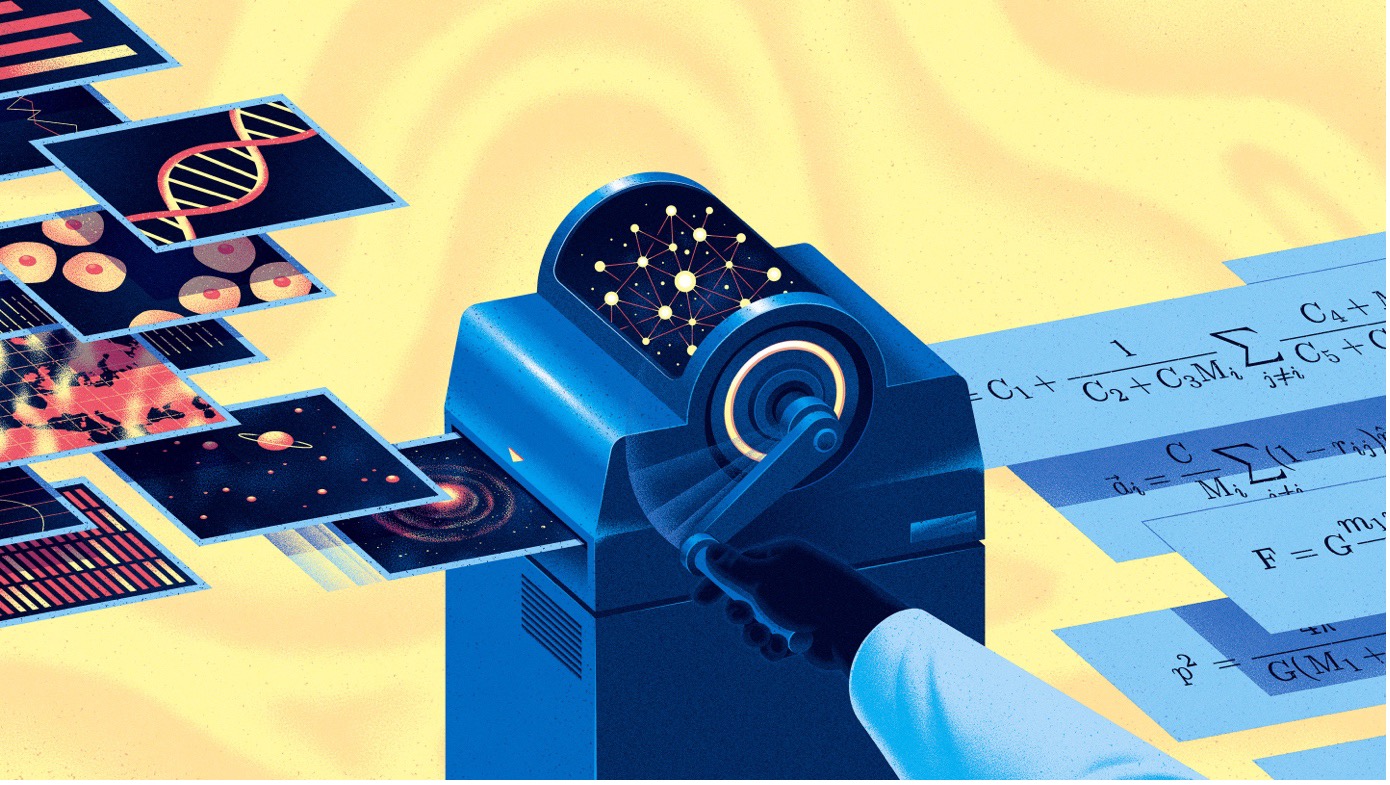
Charlie Wood of Quantamagazine published in 2022 an article that highlighted the 2017 research work of Roger Guimerà and Marta Sales-Pardo, who discovered a cause of cell division – the process that drives the growth of life – using an unpublished and novel tool, a digital assistant they called a “machine scientist”. The method quickly gained acceptance, and Sales-Pardo & Guimerà are among a handful of researchers developing the latest generation of tools, known as symbolic regression. A description of the key elements of the tool can be found in Guimera et al. (2020).

In general, symbolic regression is a type of machine learning that can identify mathematical relationships between variables in data sets using Bayesian probability theory. It has been used to discover new equations that describe physical phenomena, such as the movement of fluids or the behavior of materials under stress. Researchers supporting the expansion of these methods say we’re on the cusp of “GoPro physics”, where a camera can point at an event and an algorithm can identify the underlying physical equation.

According to Wood’s article, machine scientists are being used in fields such as biology, chemistry and materials science to make new discoveries and accelerate scientific progress. For example, a team led by scientists at London-based artificial intelligence company DeepMind has developed a machine learning model that suggests the properties of a molecule by predicting the distribution of electrons within it. 

If you are interested in the state of the art related to these approaches Liu et al. (2023) recently published the article “Data, measurement and empirical methods in the science of science”, which includes the Guimerà and Sales-Pardo experience. The publication is available in:

https://www.nature.com/articles/s41562-023-01562-4

If you are interested in Guimerà et al. (2022) “machine scientist” you can follow this link:

https://www.science.org/doi/full/10.1126/sciadv.aav6971

Image source: https://www.quantamagazine.org/

Categories
Environment Geography MAPS SCIENCE Vizualization World

The interactive atlas of climate change

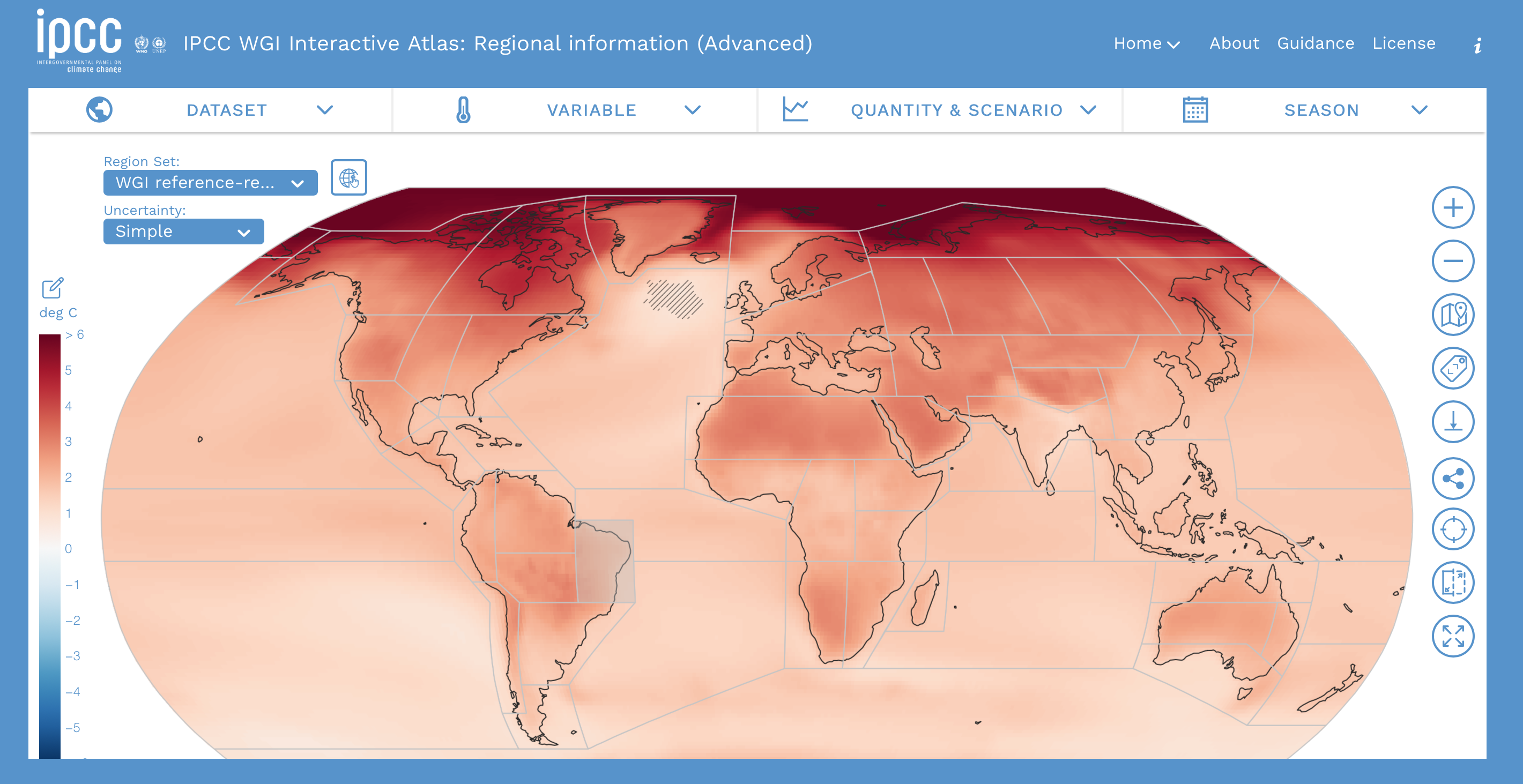
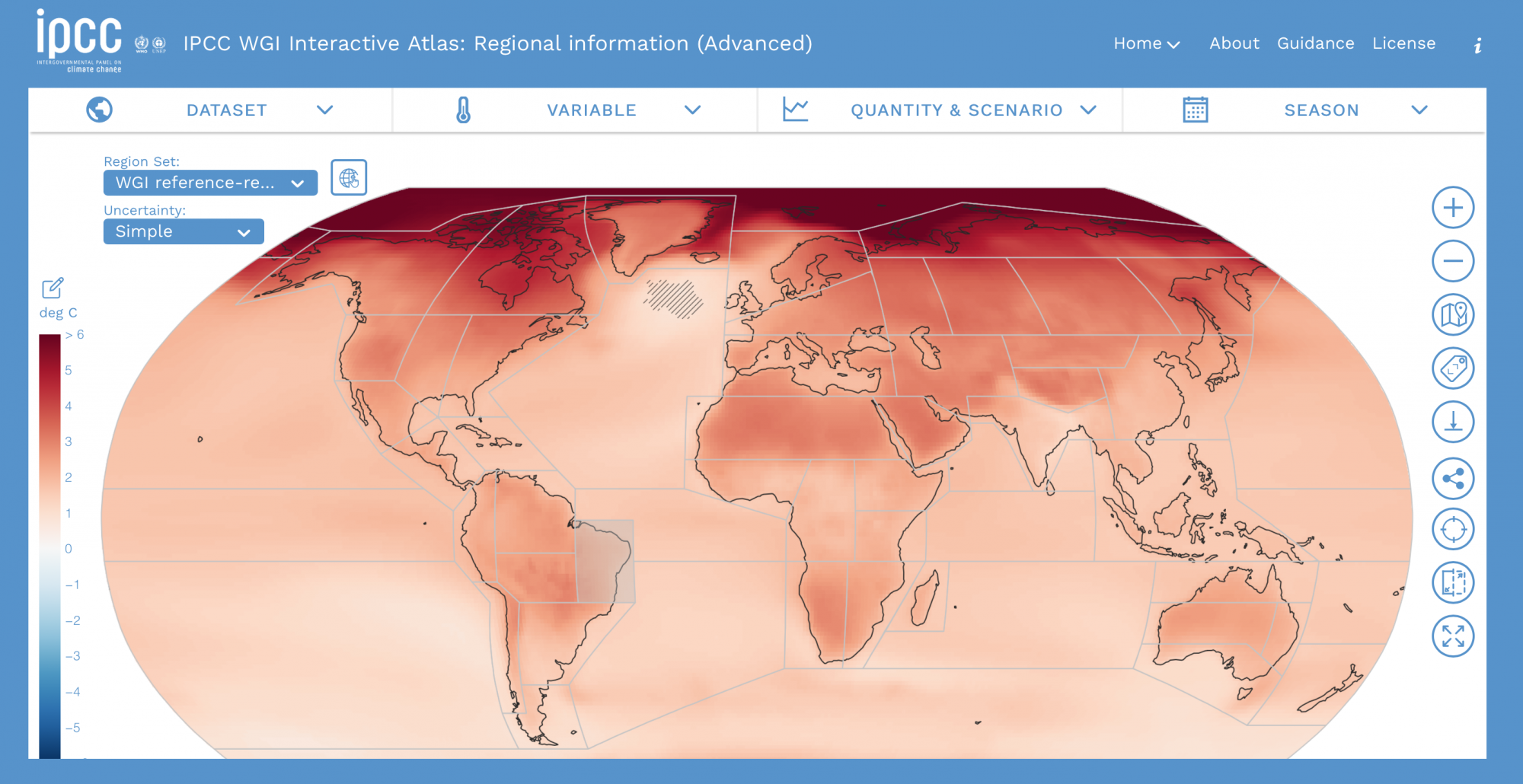
The IPCC has recently published their sixth assessment report on the physical evidence of climate change. The report has again confirmed evidence of climate change across all global regions, which will affect rainfall patterns, sea levels, exposure to extreme heat events. To better understand the impact of these changes across regions, the Working Group I has produced an interactive Atlas that allows to visualize the geographical impact of different climate change scenarios. Climate change is here, and it is crucial to comprehend its varying geographical impact, so this is a very welcome tool to help researchers and policy makers in this task.

Categories
Books Cities Communication Economy Graph analysis History MAPS Misc Networks Resilience SCIENCE Social network Social science Society Vizualization World

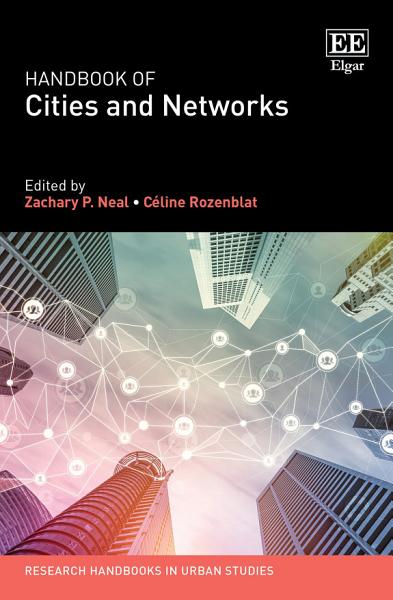
Handbook on cities and networks

Edited by Zachary P. Neal, Associate Professor, Department of Psychology, Michigan State University, US and Céline Rozenblat, Professor of Urban Geography, Faculty of Geosciences and Environment,Université de Lausanne, Switzerland

Publication Date: 2021 ISBN: 978 1 78811 470 7 Extent: 672 pp

If you want to understand cities – the innovation and dynamism they generate and the way they sort and segregate people by class, race and other dimensions – you have to start by understanding that cities are networks. Zachary Neal and Céline Rozenblat have done all of us who care about cities a great service by pulling together the very best and brightest thinkers on cities and networks in this terrific volume.
– Richard Florida, University of Toronto, US and author of The Rise of the Creative Class and The New Urban Crisis

This Handbook of Cities and Networks provides a cutting-edge overview of research on how economic, social and transportation networks affect processes both in and between cities. Exploring the ways in which cities connect and intertwine, it offers a varied set of collaborations, highlighting different theoretical, historical and methodological perspectives.

International contributions assess the state of the field of network analysis, presenting interdisciplinary insights that draw on theory from geography, economics, sociology, history, archaeology and psychology, and outlining methodological tools that include ethnographic, qualitative and quantitative approaches. Illustrating a framework for integrating the diversity of urban networks, the Handbook demonstrates that by exploring urban networks with different combinations of levels and scales, new insights and opportunities can emerge.

Featuring focused studies on specific regions and cities, this state-of-the-art Handbook is essential reading for scholars and researchers of urban studies and regional science, particularly those focusing on the transformation of cities as connected spaces through intracity and intercity networks. Its core theoretical insights will also benefit graduate students in urban studies and network analysis.

Categories
Graph analysis Networks SCIENCE Social network Society

A network analysis of Covid-19 vaccines

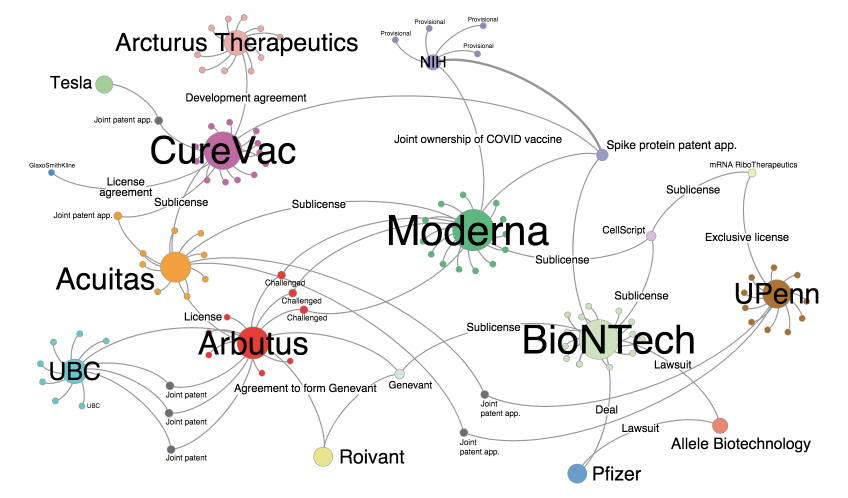
The rapid development of Covid-19 vaccines has been underpinned by an intricate web of co-patents, intellectual property agreements and lawsuits. Showing them as a network can be useful to highlight the most relevant nodes and the relations they’re embedded into. A preliminary work on this has been recently featured in Nature Biotechnology. Besides reconstructing the main actors in the production of mRNA vaccines, the authors have also analyzed the landscape of scientific terms used in mRNA patents, using a network methodology and the software VOS viewer . A heated debate is underway around the possibility to limit intellectual property rights to facilitate the access to vaccines for developing countries, and network visualization tools can greatly help in understanding the complexity of the relations at stake.

Source: Gaviria and Kilic, 2021: A network analysis of COVID-19 mRNA vaccine patents. Nature Biotechnology, VOL 39, pp. 546–549.

Categories
Mobility Networks SCIENCE Society World

À contresens- the wrong way- Are electric cars not so green?

Electric cars are increasingly regarded as an interesting option to lower greenhouse emissions and curb pollution, especially in cities. There is often criticism, however, around a number of critical issues that would make electric vehicles not such a “green” option.

1- Some critics say that electric cars contain a number of rare earth metals whose extraction and processing are intensive in terms of energy demanded and use of chemicals. Furthermore, rare earth elements are mostly provided by China, making it a sensitive geopolitical topic. Other main ingredients in the electric car recipe include lithium, and cobalt, whose extraction also give concerns in terms of their environmental and social impact.

2- Related to the previous point, some critics say that batteries – the main component of electric cars- is not recycled and therefore we would be contributing to generating a large volume of polluting high tech wastes.

3- Where does the electricity for recharging electric cars come from? In countries that still rely on fossil fuels (such as Germany with coal) an important question is wether it is really a greener option to use electricity instead of gasoline?

A Swiss documentary addresses the way these topics are being framed by media and in the public opinion. What they found is that these criticisms are largely unwarranted or at least exaggerated. The team fully dismantled an electric car along with a conventional one, and found no traces of rare earth in the electric ones while they did find them in the catalyzer of the fuel one. Besides, they went to Congo to find that accusations of child labour in cobalt mines are only a marginal part of the story, whereas in Chile they discovered that Lithium production is not so polluting as portrayed. Eventually, the documentary makes the viewer ask the question of: why do I know what I know? Why do conventional and social media give so much attention to negative stories in order to throw bad light on electric cars without questioning conventional ones?

You can watch their trailer below (french only for the moment), and you can find here a list of their sources.


Categories
SCIENCE Social network Vizualization

Connected papers: a tool for visualizing the scientific literature network

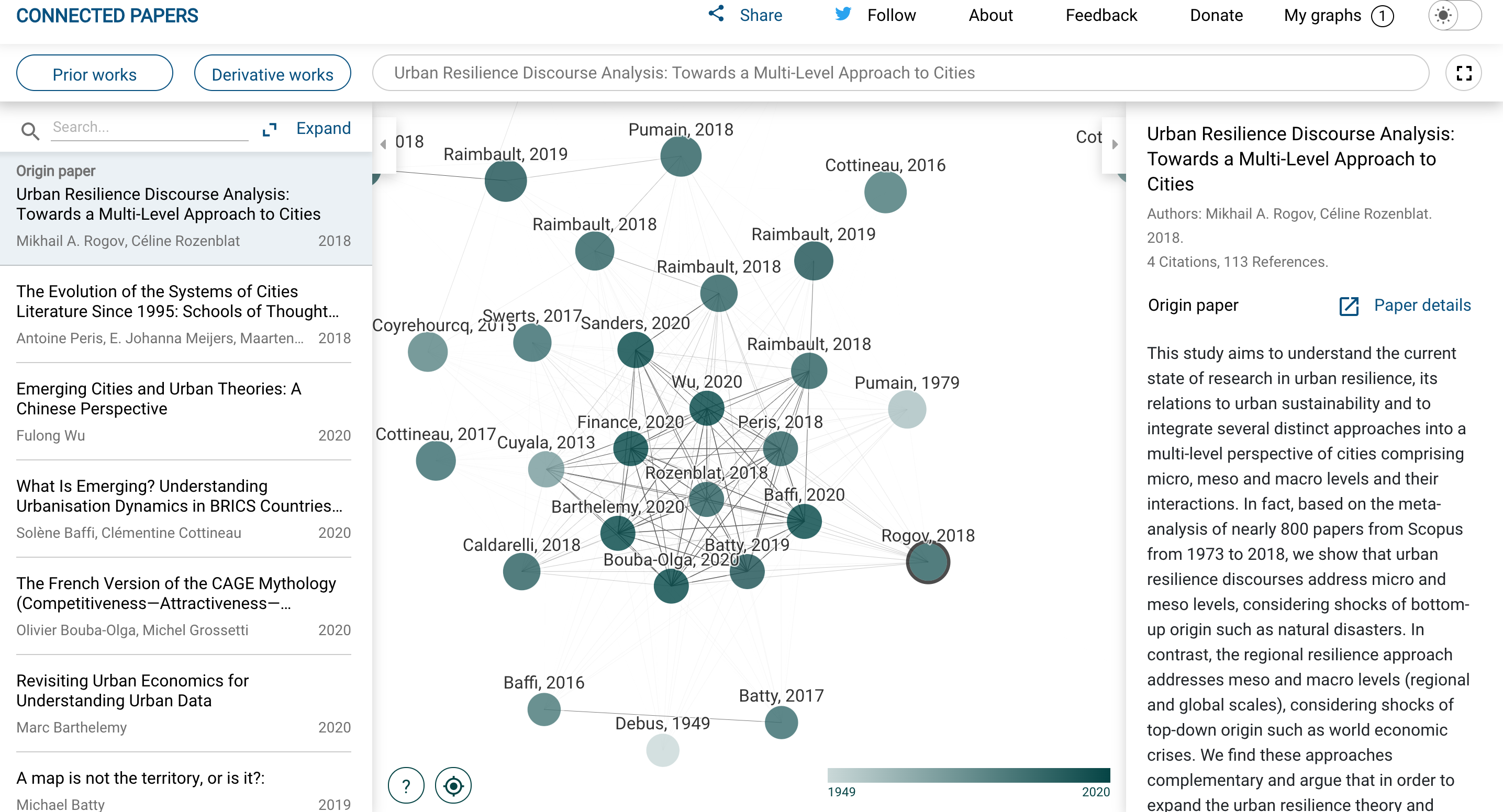
Network visualizations are a powerful way to make sense of the ties between social entities, and they have often been applied to the scientific network connecting researchers and disciplines. Most of the times, these networks have been constructed through citation analysis. Recently, a group of researchers and entrepreneurs from Israel have launched a new platform called Connected Papers where you can build a network around a paper of your choice. A tie between two papers is established not when they cite each other but when their reference overlap to a large extent. You can read more about their story and methodology here or on the application’s webpage.

Happy network building!


Categories
SCIENCE Social science

Do Big Data tell the whole story? Integrating quantitative sources with “thick” data

In the past decade, increased digitalization and smartphone ownership have contributed to generate a huge growth in the amount of data that are produced, stocked and manipulated in order to create insights for firms and public institutions. The COVID-19 pandemic, for example, proved once more the strategic interest of big data to make sense of the number of infected people, deaths, recoveries, and tracking possible avenues of contagion by mobile apps.

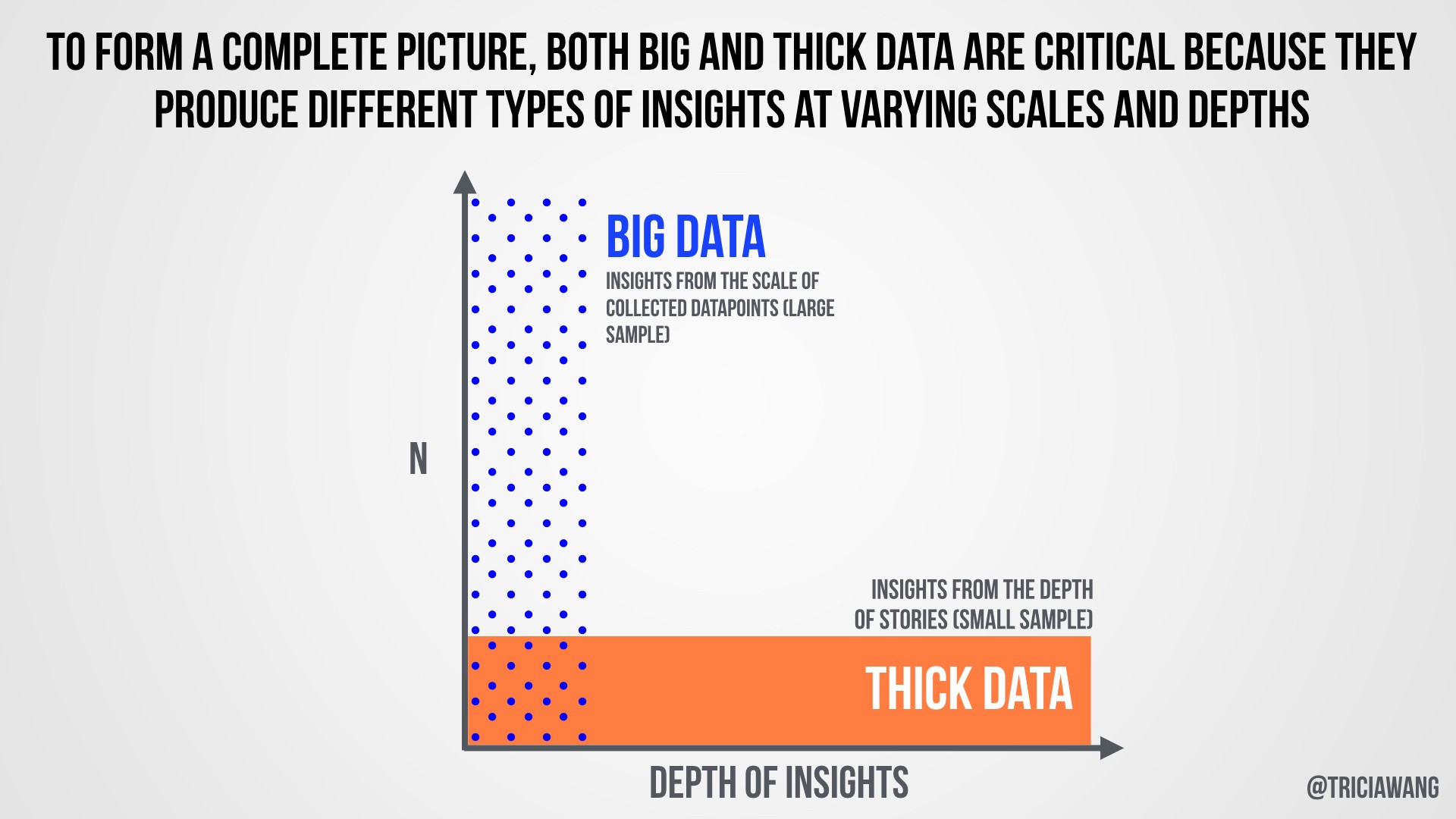
Yet even if big data are very important, do they tell us the whole story? Do smaller but much deeper samples of qualitative data have the potential to tell us a different part of the story and usefully complement them?

This is precisely the proposal that Tricia Wang explains in this article and in this TED talk. During her ethnographic work in China, which included working as a street vendor, and while she was working at Nokia in 2009, Tricia came to realize that developing countries represented a promising market for cheap smartphone diffusion. Yet, Nokia decided not to trust her insights because they were not backed by big numbers. The figures they had told them to try and continue to compete with higher-end smartphone manufacturers. Nokia virtually disappeared from the market in the following years following acquisition by Microsoft, possibly because, as Tricia recalls, “What is measurable isn’t the same as what is valuable”.

In an era in which increased importance is attached to big data, Tricia’s story reminds us not to blindly trust the power of algorithms, and that combining different research methodologies can sometimes yield much deeper and “thicker” results: don’t trade human insights for big data, combine them!


Categories
Geography Mobility Networks SCIENCE Simulation Social network

Google mobility reports: big data to help fight Covid pandemic

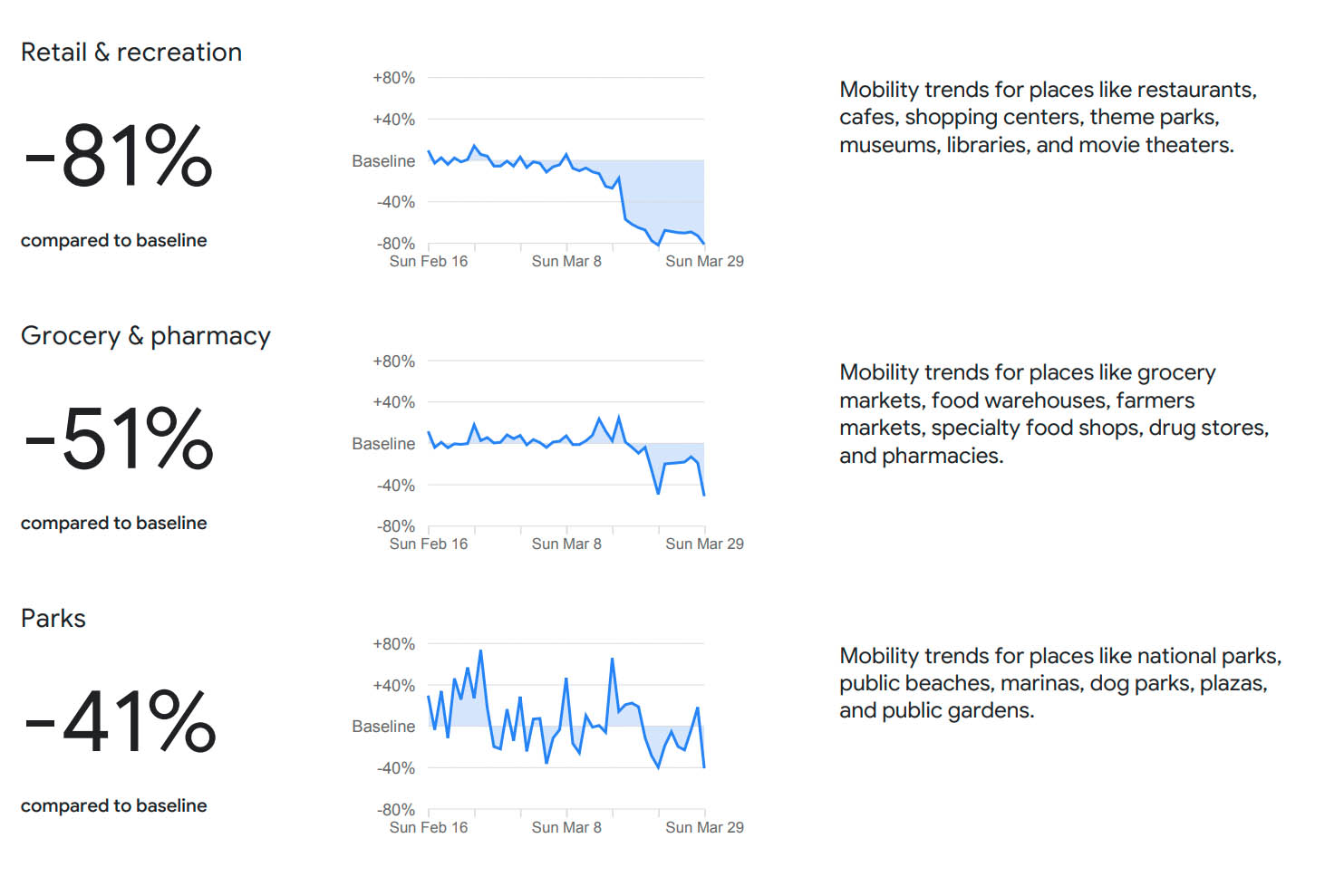
Last week Google has published the “COVID-19 Community Mobility report”. In the context of strict confinement measures, and while some governments (China above all but also Italy, France and Spain) have resorted to mobile phone data to assess whether citizens are respecting the lockdown, Google has published anonymized mobility data from a number of countries showing the effect of limitations on individual movements.

The reports use aggregated, anonymized data to chart movement trends over time by geography, across different high-level categories of places such as retail and recreation, groceries and pharmacies, parks, transit stations, workplaces, and residential. We’ll show trends over several weeks, with the most recent information representing 48-to-72 hours prior. While Google displays a percentage point increase or decrease in visits, they do not share the absolute number of visits. To protect people’s privacy, no personally identifiable information, like an individual’s location, contacts or movement, is made available at any point.

In Switzerland, for example, data are available on a national and canton basis, and they show a clear decrease in mobility patterns since the beginning of the lockdown on March 16.

What about your country or local area?

You can access all reports at https://www.google.com/covid19/mobility/


Categories
Graph analysis Networks SCIENCE Simulation

The cosmic web and a slime mold: network patterns across scales

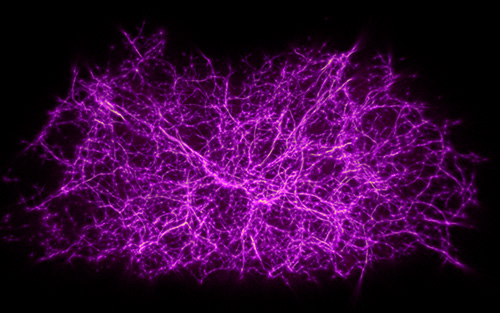
Is there a relation between a yellow slime organism called Physarum polycephalum, that  can be easily found on decaying trees and leaves in the forest’s shade, and the complex organization of galaxies?

Researchers Joe Burchett and Oskar Elek at the University of California at Santa Cruz created a 3D algorithm that represents how the slime builds its networked structures in space. Then, they applied the algorithm to a dataset of 37.000 galaxies, finding a rather precise representation of the cosmic web. In the words of one of the authors:

“That was kind of a Eureka moment, and I became convinced that the slime mold model was the way forward for us,” Burchett said. “It’s somewhat coincidental that it works, but not entirely. A slime mold creates an optimized transport network, finding the most efficient pathways to connect food sources. In the cosmic web, the growth of structure produces networks that are also, in a sense, optimal. The underlying processes are different, but they produce mathematical structures that are analogous.”

This is an interesting step towards understanding the laws of complexity and how they create similar structures across scales. Read the full contribution here.

Categories
Art Cities SCIENCE Society

When Holling meets Kandinsky: Panarchy, Resilience and Abstraction

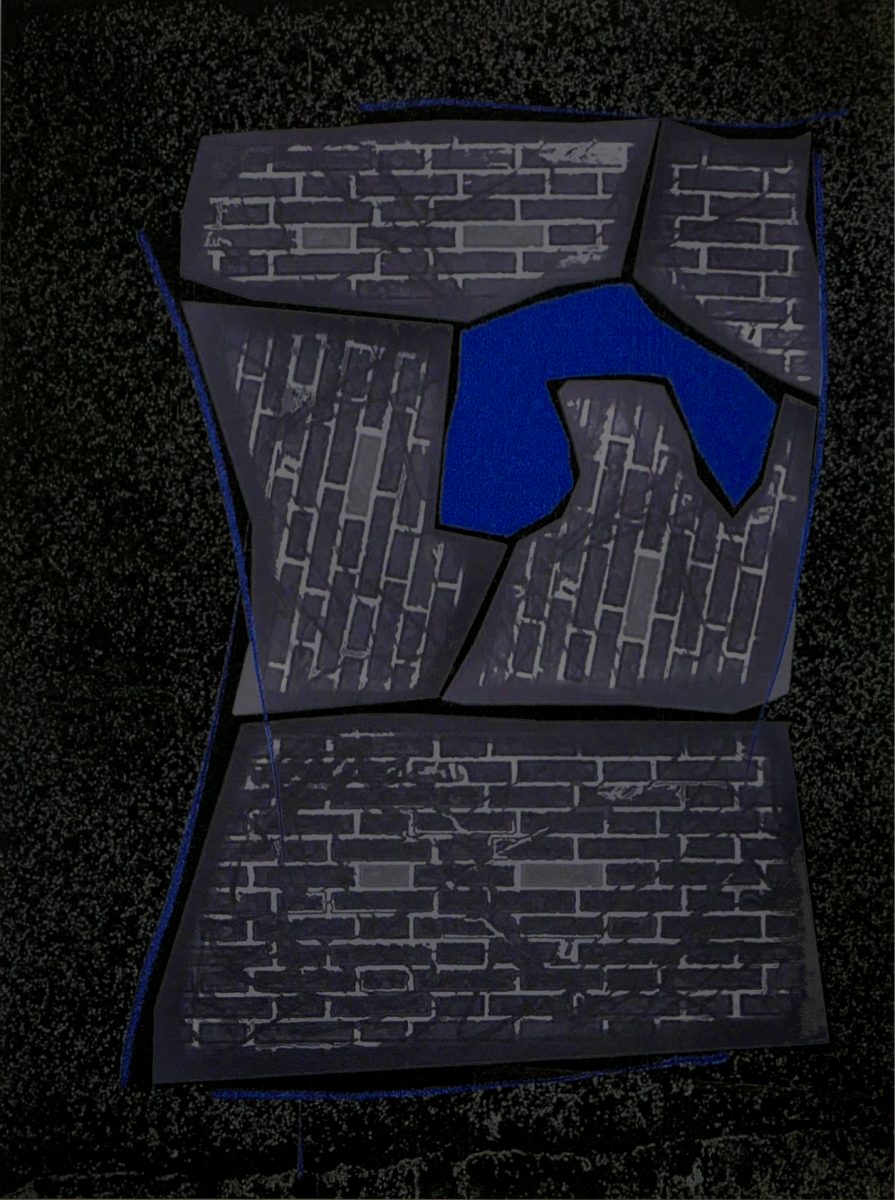
“Identifying and managing risks is nowadays key in any strategic planning. Under the wording risk management, companies aim to control and minimize the risk level that could impact their short or long-term profitability. In cities, risk management is expected to drive urban planning safety approach and better integrate hazards occurrence. It is based on procedural and systemic approaches, most of the time certified, built on conventional and analytical methodologies.

In a rapidly changing world where surprise is likely (1), the same descriptive approach applies on our environment threatened by natural hazards. Our fragility awareness reflects in greater consideration for human vulnerability, but the modus operandi to decrease the risk level is comparable, based on decision tree analysis and quantitative/qualitative frameworks. Amongst the first questionings on the relevance of such linear thinking, Holling’s “panarchy” (2) conceptual model introduced the idea that social and ecological systems are interlinked and continuously restructure and renew depending on their environment. By reconsidering the norms, introducing unpredictability as a random variable and conceptualizing risk management, the seeds of resilience had been sowed. On one hand, a normative approach; on the other, a critical thinking?”

Full post and a rich bibliography here.


Categories
Networks SCIENCE Social network

20 years of network science

This month of June marks the 20th anniversary of the seminal paper by Watts and Strogatz:

“Collective dynamics of small world networks”

In this article on Nature, author Alessandro Vespignani elaborates on the importance of this contribution in opening up the multidisciplinary field of what is today known as “network science”.


Categories
Cities Economy Misc Networks Research project SCIENCE Simulation Social network Social science Society Vizualization

CCS’15 & CS-DC’15 – Watching again the E-Session on Territorial Intelligence for Multi-level Equity and Sustainability

cropped-cropped-logo2

For those who missed the session Territorial Intelligence for Multi-level Equity and Sustainability, you can visualize online individually each presentation :

Denise Pumain, University Paris 1. ERC GeodiverCity (Keynote Speaker – Conference CS-DC)

World Urban Dynamics and climate change toward territorial intelligence for ensuring sustainability and equity by multi-level governance

Panos Argyrakis, University of Thessaloniki

Comparison of single and multiplex patent networks

Celine Rozenblat, Antoine Bellwald, University of Lausanne

Self reinforcement between urban firm’s networks at local and global scale: Comparison of single and multiplex patent networks

Elfie Swerts, ERC GeodiverCity

Scaling laws in Chinese urban system in light of harmonized data

Olivier Finance, University Paris 1 – CNRS

Scaling laws to explore innovative behavior of transnational investment

Paul Chapron, ERC GeodiverCity

Building and exploring systems of cities models via high performance computing

Denise Pumain, University Paris 1. ERC GeodiverCity

Scaling laws in urban evolution: A construction in territorial intelligence


The entire program of the TRACK “From Fields to territories to the Planet” is available here:

https://cs-dc-15.org/e-tracks/territories/

Categories
Communication MAPS Misc Networks SCIENCE Vizualization World

Science Metrix

A website showing the proximities between sciences, between fields, maps of ontologies:

https://www.science-metrix.com/OntologyExplorer/#app=cde1&8f8c-selectedIndex=2

Capture d’écran 2013-02-26 à 19.40.22

https://www.science-metrix.com/OntologyExplorer/#app=cde1&8f8c-selectedIndex=1

Capture d’écran 2013-02-26 à 19.41.16


Categories
Art Economy Environment SCIENCE Simulation Society Vizualization World

Tomorrow’s world

A guide to the next 150 years

 by BBC news graphics

https://www.bbc.com/future/story/20130102-tomorrows-world

Categories
Cities Communication Economy Environment Geography Graph analysis MAPS Networks SCIENCE Simulation Social network Society Vizualization World

When Networks Network

The magazine Science underline the huge advance made in network analysis. Networks interact, create cascading effects……

read more in Science

Categories
History SCIENCE Society

New technologies are nicer in a wonderful world……..

See the parodies:

Of the book:

– Spanish:

https://www.youtube.com/watch?v=Q_uaI28LGJk

– Norvegian:

https://www.youtube.com/watch?v=xFAWR6hzZek

Of the Iphone 6 by Anthony Kavanagh (in french canadian)
https://www.youtube.com/watch?v=iJovnFcx4DY