Categories
Cities Complexity Environment Health Resilience Society Urban World

MOOC – Healthy Urban Systems Part II

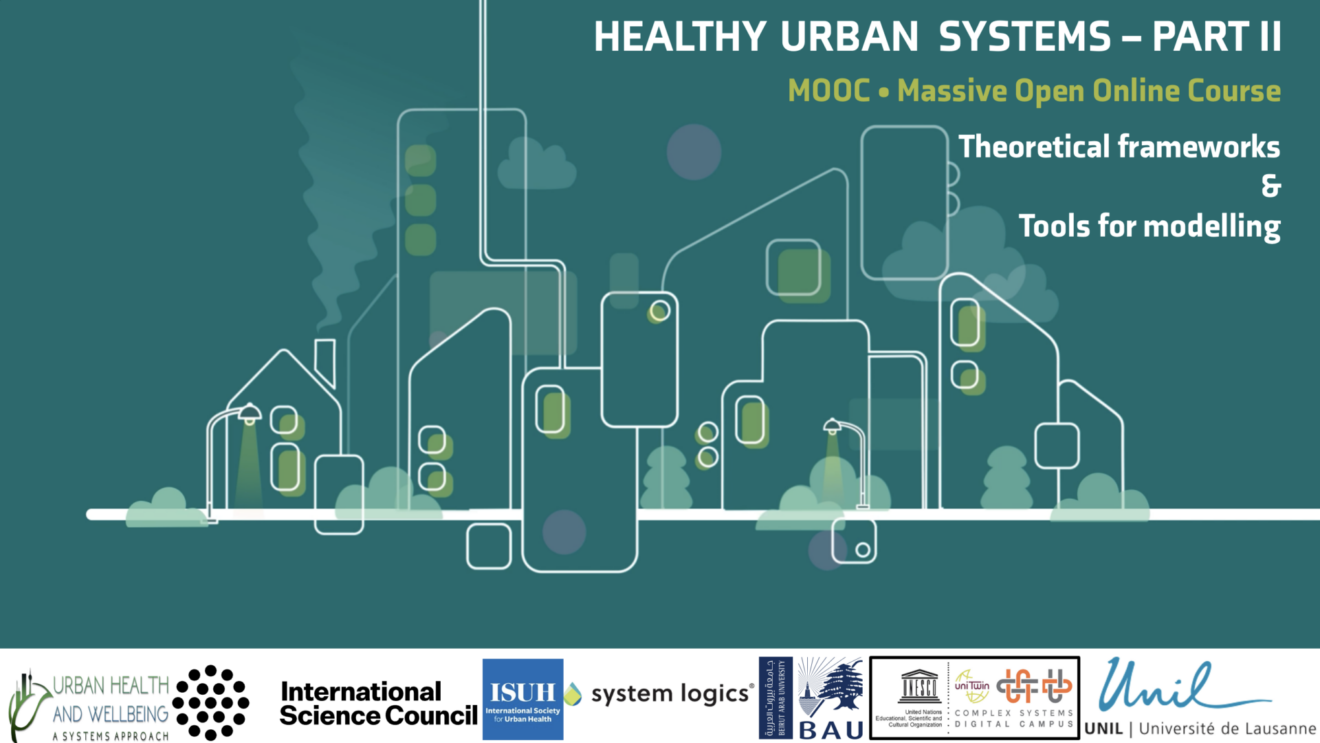
The MOOC – Healthy Urban Systems Part II

is now available on Coursera!

You will learn to:

  • Address urban health through complex multidisciplinary approaches
  • Use multidimensional and multiscale concepts, methods, and ecosystem frameworks
  • Mobilize and support all players directly or indirectly involved in urban health.

Dedicated to all levels of disciplines linked to the city, health, the environment, social and human sciences, data sciences…

The MOOC is entirely in English, with possible subtitles in French and Chinese.

The part II is dedicated to Theories and models

Module 3: Theoretical frameworks

  • Theories
    • Frameworks, theories, and models in relation with the fundamental concepts
    • Complex systems, Urban metabolism, Urban Ecology, Eco-system
    • Transition and resilience
  • Applications
    • Scaling effects in cities
    • Cognitive processes: Dissonance and mismatch
    • Participatory approaches
    • Collective and systems intelligence

Module 4 : Tools for modeling

  • Systems Modeling
    • Different Methods of Modelling (SD Simulation, Agent based, holistic system modeling) / individual – aggregated.
    • Modelling an epidemic: Agent Based modelling vs system dynamics.
  •  Implementation of concrete projects
    • AIRQ+ for outdoor Air Quality
    • CHEST for Household air quality
    • HEAT Model
    • Eco-policy© model
  •  Holistic Systems Modeling©

Materials: videos, glossary, quizzes, exercises, discussion forum

Duration: 4 weeks – 1 session per week to be taken at your convenience

Workload: 2 to 3 hours per week

Accreditation (possible and not compulsory): 2 ECTS for PART II, issued by the University of Lausanne via COURSERA (US$ 25)

General coordination:

University of Lausanne – UNIL-EPFL Foundation for Continuing Education

Prof. Céline Rozenblat, Jeff van de Poel

Don’t miss this extraordinary opportunity, for more information click on the link below:
Healthy Urban Systems course

Categories
Environment Geography MAPS SCIENCE Vizualization World

The interactive atlas of climate change

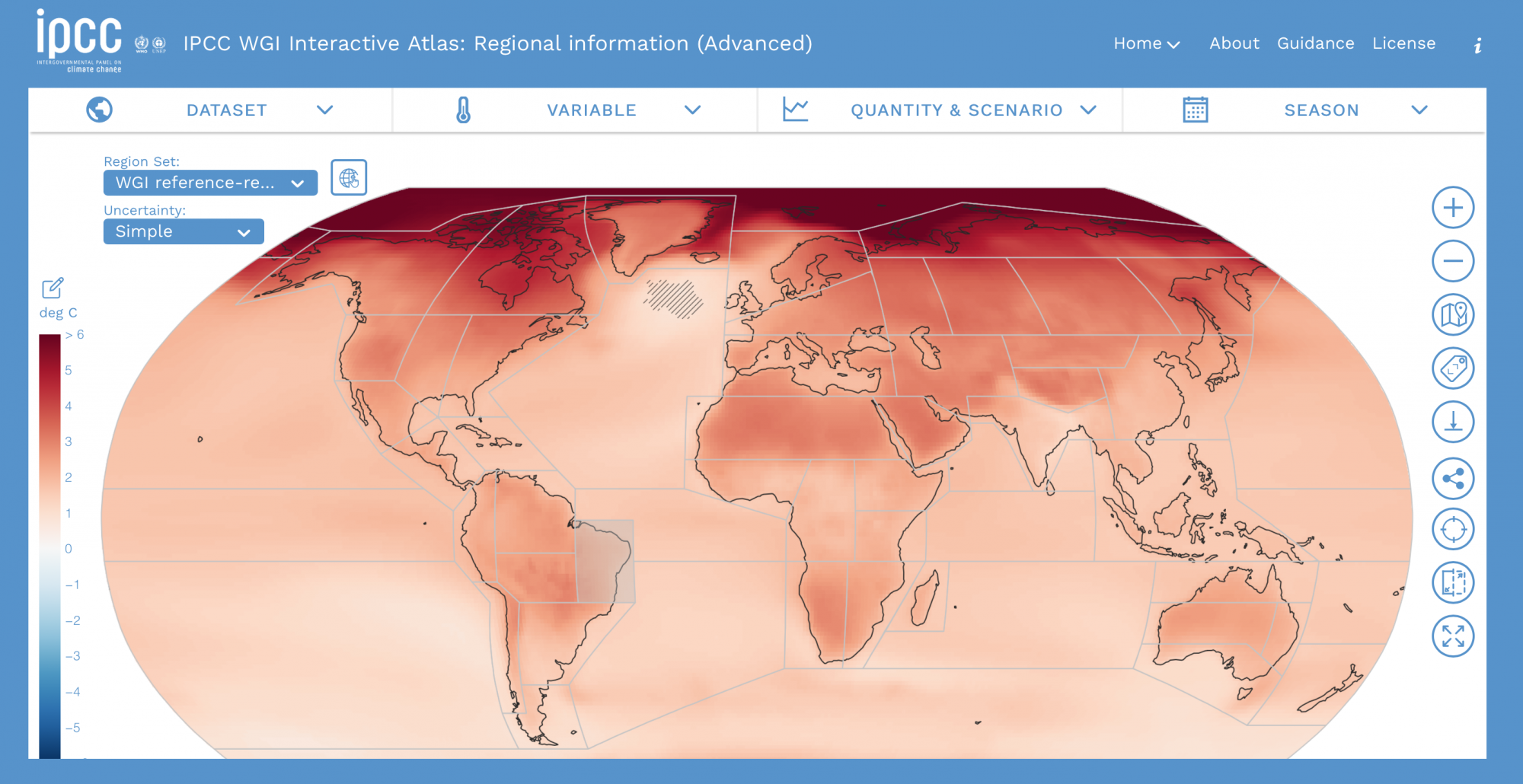
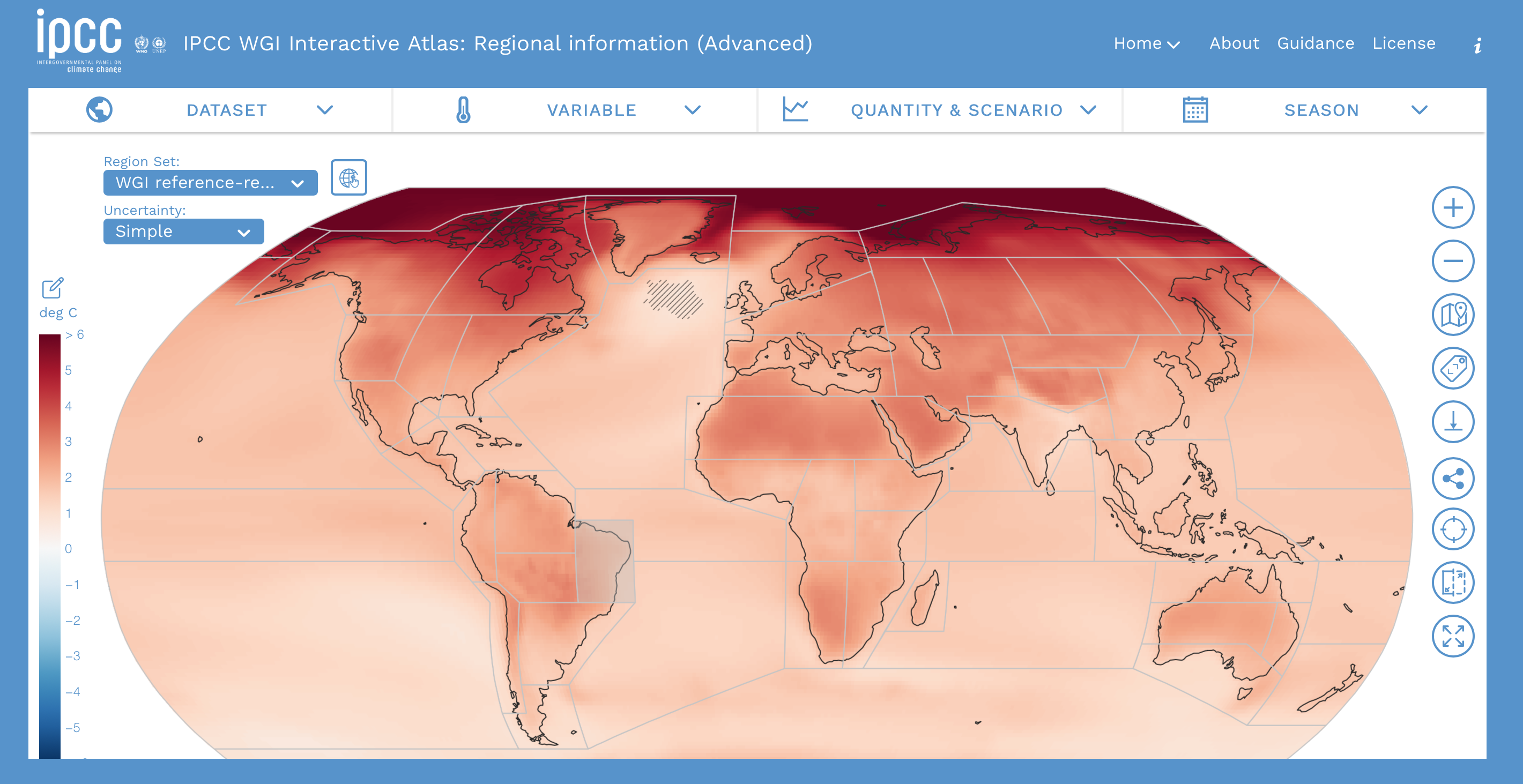
The IPCC has recently published their sixth assessment report on the physical evidence of climate change. The report has again confirmed evidence of climate change across all global regions, which will affect rainfall patterns, sea levels, exposure to extreme heat events. To better understand the impact of these changes across regions, the Working Group I has produced an interactive Atlas that allows to visualize the geographical impact of different climate change scenarios. Climate change is here, and it is crucial to comprehend its varying geographical impact, so this is a very welcome tool to help researchers and policy makers in this task.

Categories
Environment Geography MAPS Vizualization

Mapping electric networks and carbon intensity: how data can inform environmental choices

Where does your electricity come from? Does your country’s energy portfolio rely mostly on fossil fuels like coal and gas or renewable sources like wind and hydro-electric? The web platform electricity map allows to answer these questions and also to explore international energy exchanges. Besides, electricity map features a wind and sun layers that allow to assess the potential for renewable energy generation in real time!

Electricity map is a project of tomorrow, a Danish start-up.  Olivier Corradi, founder and CEO, explains the functioning of electricity map here: (video in French)

Categories
Cities Environment World

Is urbanization the solution to environmental crisis?

Increasing urbanization is a fact, with more than half of the world’s inhabitants living in cities. Cities are often perceived as a problem, but could they be the solution?

A thought-provoking article by Kim Stanley Robinson:

https://www.bloomberg.com/news/newsletters/2021-04-17/the-city-as-survival-mechanism

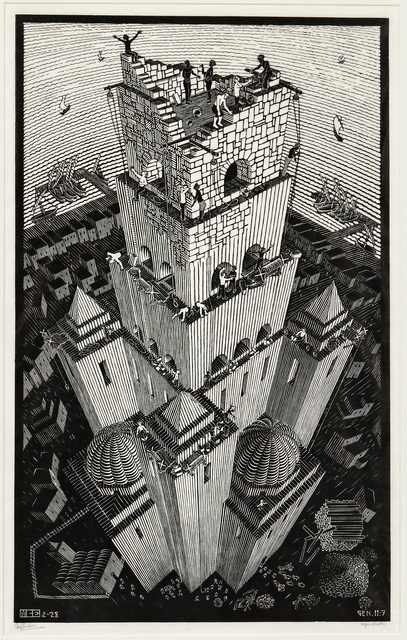
(Image by M.C. Escher: The tower of Babel)

Categories
Economy Environment Geography Mobility World event

What does the future of air transport look like after Covid-19?

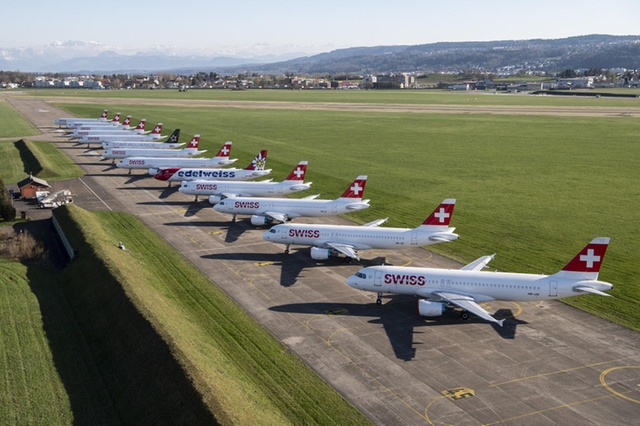
The global pandemic caused by the spread of Covid-19 disease has implied a dramatic reduction of air travel all over the world. Companies have been forced to shrink their operations to the bone, while images of grounded airplanes became the norm. This forced stop will likely have long term consequences and bring to a general restructuring of air transportation. In this contribution three academic experts discuss some of the main issues in this debate:

  • With most airline companies struggling to survive, some governments have already announced loan or bailout plans, while others have (re)nationalized them or are planning to do so. Yet another approach to the matter is to leave it in the hands of the market and allow these companies to fail. This debate is important because, after the bailout of banks in the aftermath of the financial crisis of 2008, the public opinion might question the opportunity of adopting a “too big to fail” strategy implying a huge allocation of public resources to private companies.
  • The high contribution to CO2 emissions by aviation has been a recurring target of environmental movements in the past years. After months – and possibly years- of public spending to support economies damaged by the global lockdown, the public opinion might be favorable to introduce higher taxes and restrictions to airplane travel.
  • On the demand side, will the disposition to fly ever come back to pre-coronavirus levels? The tourism industry is unlikely to recover soon, and people might think twice before boarding a busy airplane again. Business travelers, on the other hand, might find it preferable to hold meetings online, consolidating habits that have developed during lockdown.

This article contributes to these issues and stimulates further reflection on the future of air transportation. Have a good read.

Categories
Cities Environment MAPS

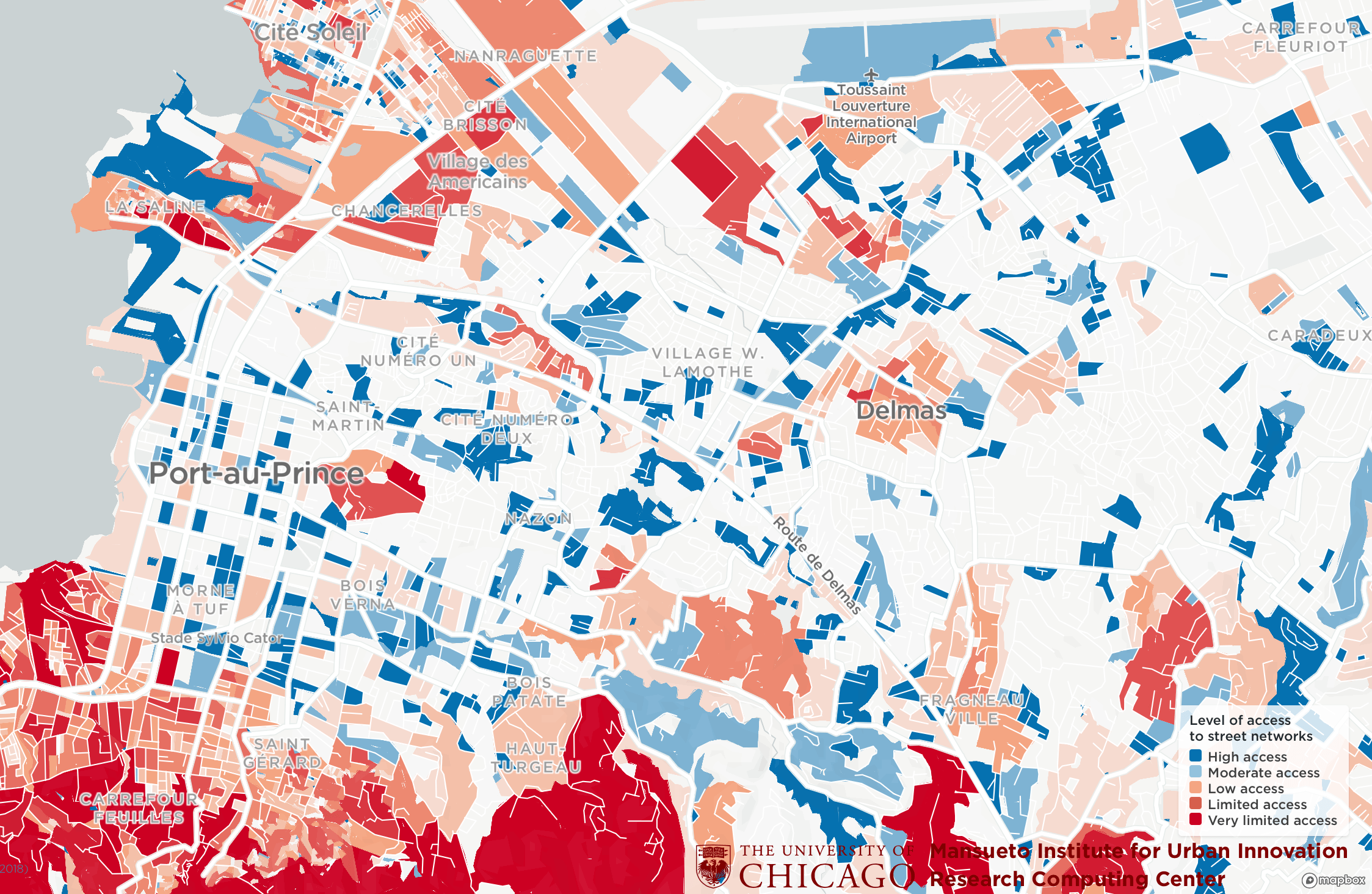
The Million Neighborhoods initiative: mapping spatial inequalities within cities.

The Million Neighborhoods Map is a groundbreaking visual tool that provides the first comprehensive look at informal settlements across Africa, helping to identify communities most in need of roads, power, water, sanitation and other infrastructure. Updates for Central and South America, India and parts of Europe and Asia will come online in early 2020.

The Million Neighborhoods Map is the first such map of its kind and digitally renders building infrastructure and street networks – or the lack thereof. The goal is to provide municipal leaders and community residents with a tool to help inform and prioritize infrastructure projects in underserviced neighborhoods, including informal urban settlements that are sometimes known as “slums.”

View the map at https://millionneighborhoods.org.

The Million Neighborhoods initiative is a collaborative network of diverse organizations working locally in Chicago and in neighborhoods throughout the world towards more sustainable and equitable human development. The network builds a common framework, tools, and data for mapping, planning, and coordinating solutions towards fulfilling the UN’s Agenda 2030 for Global Sustainable Development.

For the science behind the map, check out:

Brelsford, C., Martin, T., Hand, J., Bettencourt, Luís M. A., Toward cities without slums: Topology and the spatial evolution of neighborhoods (August 29, 2018). Science Advances. Vol. 4, no. 8, eaar4644. https://doi.org/10.1126/sciadv.aar4644

Brelsford, C., Martin, T. Bettencourt, Luís M. A., Optimal reblocking as a practical tool for neighborhood development (June 12, 2017) Sage Journals. https://doi.org/10.1177/2399808317712715


Categories
Economy Environment Europe Geography MAPS

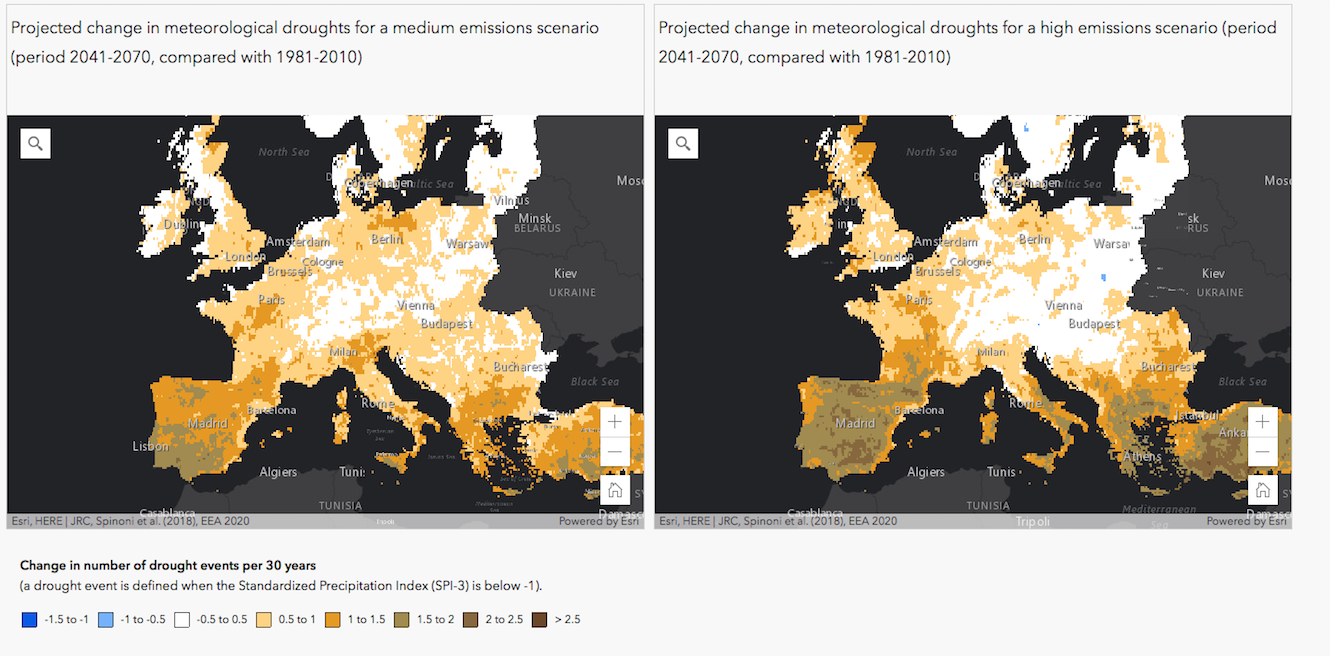
How will climate change impact European regions?

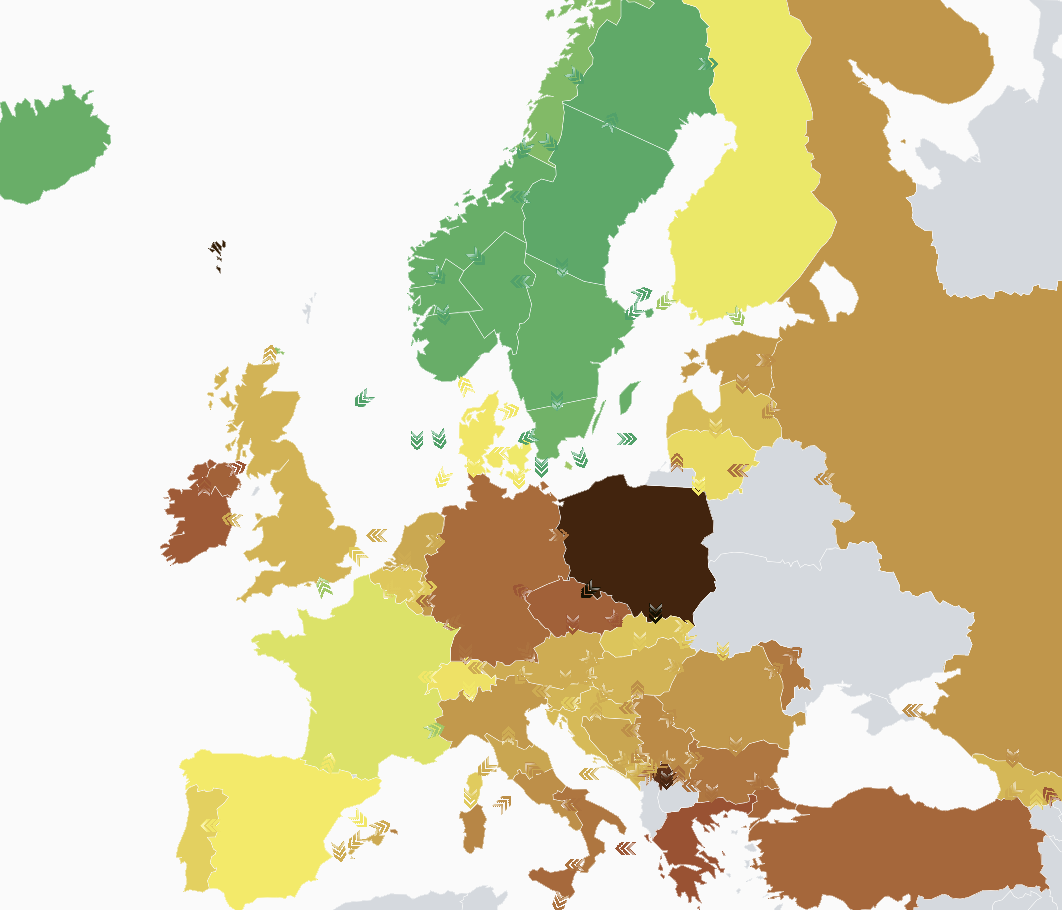
The European Environmental Agency has recently published a cartographic platform to map the impact of global warming on droughts, floods, agriculture, forest fires and sea level rise in Europe. These maps are based on different greenhouse gas emissions scenarios (medium or high) and refer to the expected changes in the period 2041-2070 as compared with the period 1981-2010. Data and climate models and have been published already in various EEA reports and indicators. Based on these maps, what are the challenges that your region faces and how to adapt to them?

Categories
Cities Environment Geography MAPS Vizualization

The Atlas of urban expansion- how do cities grow?

The Atlas of Urban Expansion collects and analyzes data on the quantity and quality of urban expansion in a stratified global sample of 200 cities. With the aid of satellite images researchers have gathered a rich dataset on built-up areas and the associated land use regulations and policies that sheds light on the process of expansion of urban peripheries since 1990. Besides, for a sample of 30 cities, researchers gathered historical data on urban expansion from 1800 to 2014 and used it to generate visually appealing animations that show intuitively the process of urban growth. See, for example, the animation of Los Angeles below.

The Atlas of Urban expansion is a joint initiative by NYU Urban Expansion Program, the Stern school of Business at NYU in partnership with UN-Habitat and the Lincoln Institute of Land Policy.

The Atlas can be freely downloaded, and a number of urban data, maps and metrics can be also downloaded.


Categories
Environment Geography History Networks

Termites and the megalopolis

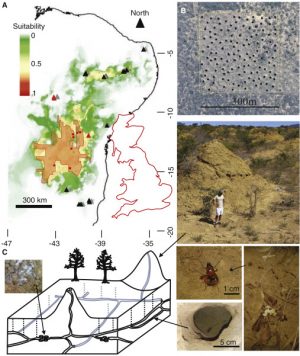
A recently published study in Current Biology has shown that a species of termites has been colonising a huge area of Brazil – its surface is equivalent to that of Great Britain- in the past 4000 years. The visible results of this work consist in a large number of earth mounds that can be up to 3 meters tall and 9 meters in diameter which are not nests but rather represent the accumulation of waste material from the insects’ construction of the underground network. The mainreason for this impressive effort is, according to the researchers, to stock and safely consume leaves that fall only during a short seasonal interval. This case show the impressive capability of certain species to collectively transform and adapt their environments by creating permanent structures that can persist for thousands of years. Ants or bees have often been associated to humans for their complex social organisation, division of labour and structure. Therefore, can we obtain some interesting insights and inspiration from these impressive spatial constructions that are even older than the pyramids?

Categories
Cities Environment MAPS Misc Networks Society Vizualization

Where people run in major cities

Interestingly…. they prefere parks and river sides :-(((( What a new information!!!!

Capture d’écran 2016-02-03 a? 14.25.47

Where People Run

Categories
Art Economy Environment SCIENCE Simulation Society Vizualization World

Tomorrow’s world

A guide to the next 150 years

 by BBC news graphics

https://www.bbc.com/future/story/20130102-tomorrows-world

Categories
Cities Communication Economy Environment Geography Graph analysis MAPS Networks SCIENCE Simulation Social network Society Vizualization World

When Networks Network

The magazine Science underline the huge advance made in network analysis. Networks interact, create cascading effects……

read more in Science

Categories
Art Cities Environment Geography MAPS Misc Vizualization

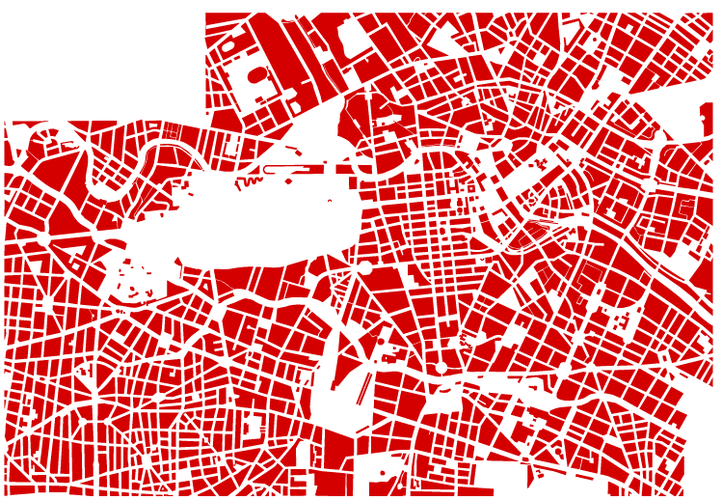
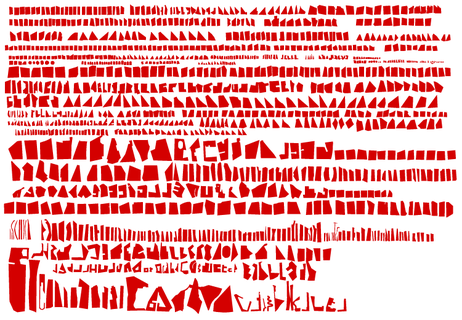
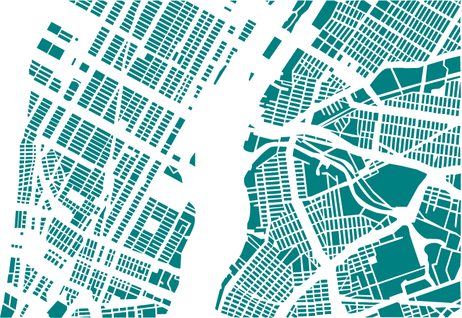
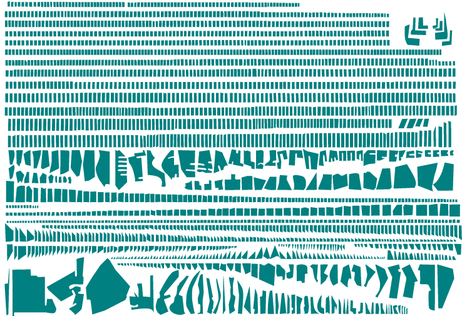
Dissection of cities

I don’t know what we can learn from the physical dissection of cities: maybe some fractal analysis could work?

see the website

Berlin:

New York City:

and other cities in the website (made by Armelle Caron)

Categories
Cities Environment Geography MAPS Vizualization World

Remote sensing tracks relentless urban spread

Looking back through the decades, these snapshots from space — created exclusively for CNN by NASA’s Landsat department in collaboration with the U.S. Geological Survey — reveal the impact of the vast population shift on cities around the world.

https://edition.cnn.com/SPECIALS/world/road-to-rio/satellite-photos-urban-sprawl/index.html

example of LAS VEGAS:


Categories
Cities Environment

Ants metropolis

Categories
Cities Environment

FUN Theory – supported by Volkswagen

Categories
Cities Environment Europe Society

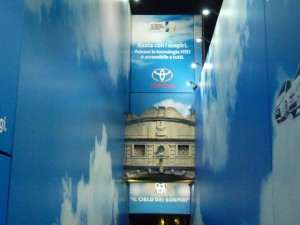
Sospiri bridge in Venice…. sustainable for Toyota?

sospiri….. good for Toyota