Categories
Books Cities Social science Urban

Mapping of 15-Minute City Practices

According to the University College of Estate Management (UCEM, 2024), the concept of the 15-minute city was revitalized in 2016 by researcher and professor Carlos Moreno and received considerable attention during the COVID-19 pandemic. Presently, urban planners globally are implementing this model, awakening an intense debate in favor and against it. This concept traces its origins to Ebenezer Howard’s work, ‘Garden Cities of Tomorrow,’ published in 1902, and is further developed through Clarence Perry’s notion of the Neighborhood Unit in the 1920s, which aimed to create self-sufficient neighborhoods.

The Driving Urban Transition (DUT) Partnership recently released a report titled “Mapping of 15-Minute City Practices”, providing an exhaustive overview of the 15-minute city framework, supplemented by case studies from 100 cities. This report focuses on enhancing urban life locally through improvements in mobility, urban planning, logistics, and governance. It underscores a significant adoption of the framework, particularly in Europe, and emphasizes the critical role of social inclusion and innovative strategies.

Full details and further insights are available in the complete publication:

https://dutpartnership.eu/news/new-publication-mapping-of-15-minute-city-practices

To check the research of Carlos Moreno, follow this link:
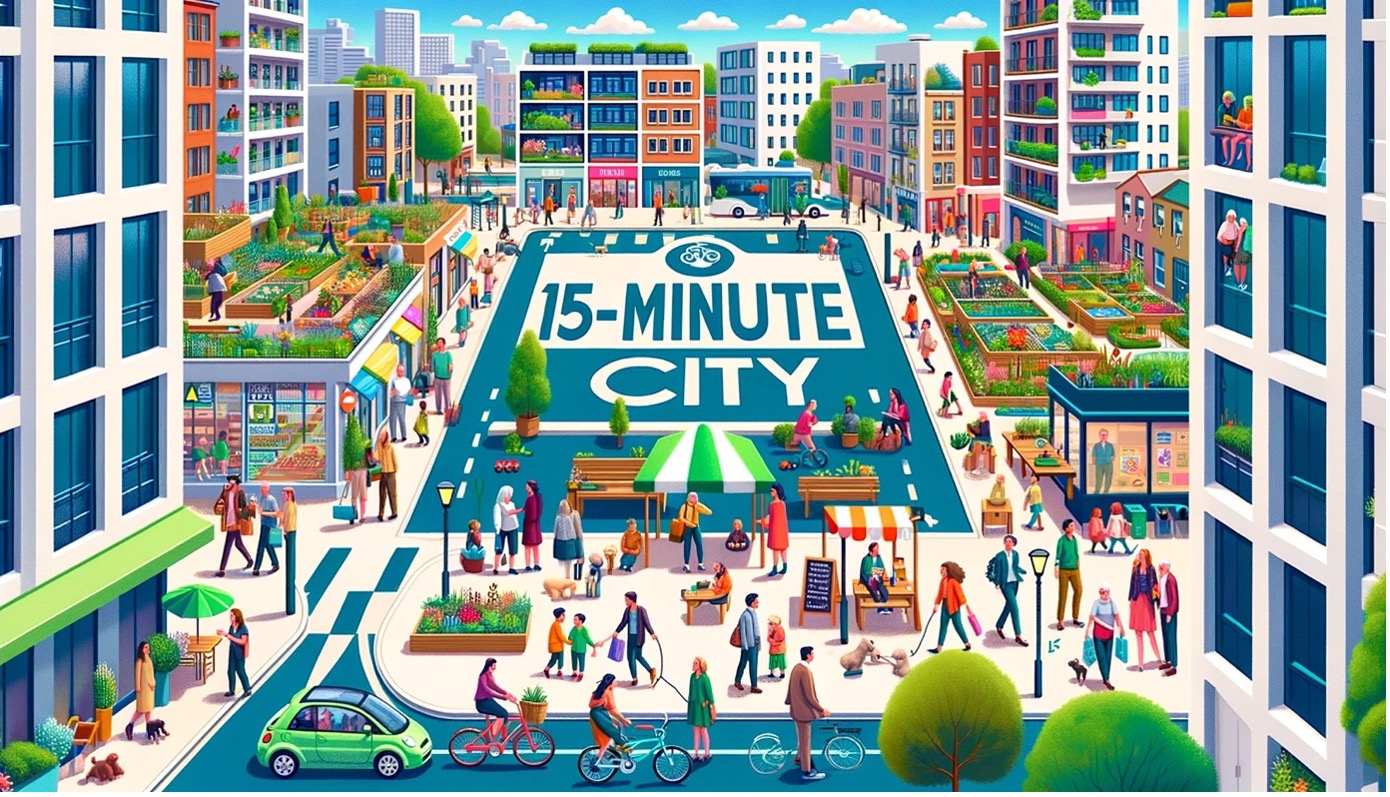
Made in OpenAI, prompt: Jorge Salgado.

References:

University College of Estate Management (UCEM, 2024). A guide to 15-minute cities: why are they so controversial? https://www.ucem.ac.uk/whats-happening/articles/15-minute-city/

Categories
Books Cities Complexity Local digital twin Metaverse Simulation

Smart Metaverse City – Digital twins cities

Smart Metaverse City – Digital twins cities

According to Charitonidou (2022), digital twins are virtual replicas of cities that are used to simulate environments and develop scenarios to address policy issues related to urban planning (e.g., sustainability, climate change, transport, etc.). Recently, Xu et al. (2023) published the chapter “Toward a Smart Metaverse City: Immersive Realism and 3D Visualization of Digital Twin Cities” in “Advances in Scalable and Intelligent Geospatial Analytics” (Durbha et al., 2023). The publication presents a conceptual prototype that combines the unique advantage of metaverse technology with the two-way connectivity of a digital twin city application.

This combination offers the possibility to create a virtual environment for immersive geovisualization that provides the opportunity to understand the complex urban system through science-based and data-driven approaches. The proposal and its real-world applications are discussed based on a twin city developed at Oak Ridge National Laboratory to facilitate participatory, smart and sustainable campus management.

More about this publication could be find in the following link:

https://shorturl.at/bxCDX

If you are interested in the Oak Ridge National Laboratory initiatives, you could follow this link: 

https://www.ornl.gov/

Image:World Economic Forum

References:

Charitonidou M.  (2022). Urban scale digital twins in data-driven society: Challenging digital universalism in urban planning decision-making. International Journal of Architectural Computing. 2022;20(2):238-253. doi:10.1177/14780771211070005

Durbha, S.S., Sanyal, J., Yang, L., S Chaudhari, S., Bhangale, U., Bharambe, U., & Kurte, K. (Eds.). (2023). Advances in Scalable and Intelligent Geospatial Analytics: Challenges and Applications (1st ed.). CRC Press. https://doi.org/10.1201/9781003270928

Categories
Books Complexity Economy Social science Society

Ex Machina: Coevolving Machines & the Origins of the Social Universe

Ex Machina: Coevolving Machines & the Origins of the Social Universe

John H. Miller recently published “Ex Machina: Coevolving Machines & the Origins of the Social Universe,” in which he combines ideas from the study of games, the foundations of computation, and Darwin’s theory of evolution to introduce a methodology for studying systems of adaptive, interacting, choice-making agents, and uses this approach to identify conditions sufficient for the emergence of social behavior. In his words, he explores how evolving automata can go from asocial to social behavior and finds that systems of simple adaptive agents can be rapidly transformed into a rich social world.

John H. Miller is an economist from the University of Colorado. He received his Ph.D. in economics from the University of Michigan in 1988, where he worked with Ted Bergstrom and Hal Varian.  He joined the Santa Fe Institute as its first postdoctoral fellow. He has been associated with the Institute ever since. He joined Carnegie Mellon University as an assistant professor in the Department of Social and Decision Sciences, later becoming a professor in 2000.

You can find out more about this book by visiting the following website:

https://www.sfipress.org/books/ex-machina

Image: SFI Press

Categories
Books Vizualization

Seven ways to visualize qualitative data

In this article you can find a comment on the 7th chapter of Jonathan Schwabish’s book  Better Data Visualizations: A Guide for Scholars, Researchers, and Wonks. From Icons through word clouds and coloring phrases, explore creative ways to get your message through mobilizing qualitative data in novel ways.

Categories
Books Cities Communication Economy Graph analysis History MAPS Misc Networks Resilience SCIENCE Social network Social science Society Vizualization World

Handbook on cities and networks

Edited by Zachary P. Neal, Associate Professor, Department of Psychology, Michigan State University, US and Céline Rozenblat, Professor of Urban Geography, Faculty of Geosciences and Environment,Université de Lausanne, Switzerland

Publication Date: 2021 ISBN: 978 1 78811 470 7 Extent: 672 pp

If you want to understand cities – the innovation and dynamism they generate and the way they sort and segregate people by class, race and other dimensions – you have to start by understanding that cities are networks. Zachary Neal and Céline Rozenblat have done all of us who care about cities a great service by pulling together the very best and brightest thinkers on cities and networks in this terrific volume.
– Richard Florida, University of Toronto, US and author of The Rise of the Creative Class and The New Urban Crisis

This Handbook of Cities and Networks provides a cutting-edge overview of research on how economic, social and transportation networks affect processes both in and between cities. Exploring the ways in which cities connect and intertwine, it offers a varied set of collaborations, highlighting different theoretical, historical and methodological perspectives.

International contributions assess the state of the field of network analysis, presenting interdisciplinary insights that draw on theory from geography, economics, sociology, history, archaeology and psychology, and outlining methodological tools that include ethnographic, qualitative and quantitative approaches. Illustrating a framework for integrating the diversity of urban networks, the Handbook demonstrates that by exploring urban networks with different combinations of levels and scales, new insights and opportunities can emerge.

Featuring focused studies on specific regions and cities, this state-of-the-art Handbook is essential reading for scholars and researchers of urban studies and regional science, particularly those focusing on the transformation of cities as connected spaces through intracity and intercity networks. Its core theoretical insights will also benefit graduate students in urban studies and network analysis.

Categories
Books Cities MAPS

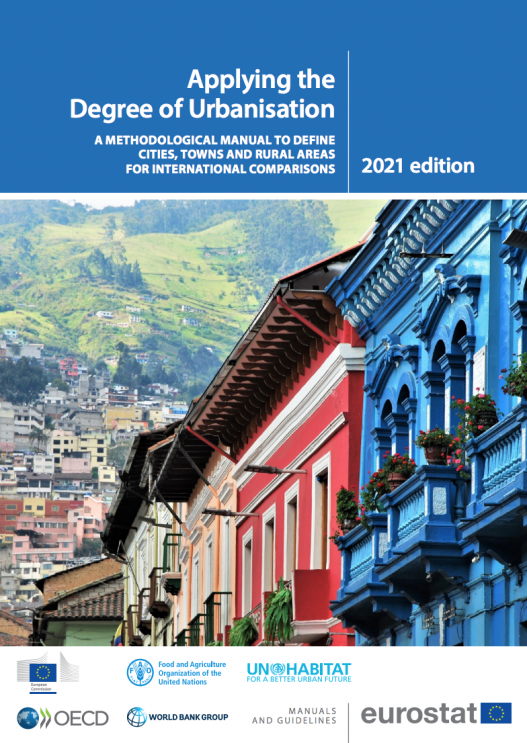
Out now! Applying the Degree of Urbanisation — A methodological manual to define cities, towns and rural areas

The definition of cities and their limits is always a challenging task. In fact, urbanization patterns are very diverse and they rarely match administrative subdivisions. Thus, if it is often difficult to define where individual cities start and finish, it is even more so to compare cities across countries with very different history and urbanization patterns.

This manual has been produced by six organisations: the European Commission, the FAO, UN-Habitat, the ILO, the OECD and The World Bank. It develops a harmonized methodology to facilitate international statistical comparisons and to classify the entire territory of a country along an urban-rural continuum. The degree of urbanisation classification defines cities, towns and semi-dense areas, and rural areas.

Categories
Art Books History MAPS Networks

Mapping Philosophy in the Paris metro

An interesting network interactive vizualization of philosophy where lines and connections are more important than the proximity in the network… follow each line to know more about a philosophical (sometimes literature or artistic) domain (unfortunately in French)

https://lesphilosophesdanslemetro.com/plan/

Categories
Books Cities Geography Misc

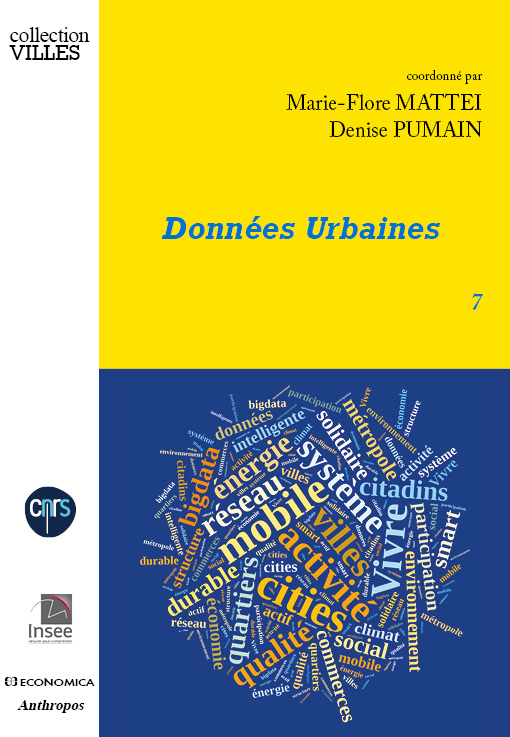
Données Urbaines 7

Just published:

URBAN DATA 7 (Données Urbaines)

Decrypting new diverse and massive urban data, this book shows how cities, their governments their inhabitants, their businesses , adapt deeply to all these transformations. The book is divided into six main chapters, each grouping of items within the reach of the great public by experts on urban policies, urban life, space and social structures, the economy, the functioning of cities in systems and the urban environment. The continuity of these themes with previous volumes in the series can measure the importance of the transformations that highlight how adaptation to change is more than ever the driving force for dynamics cities. Teachers, students, policy makers, urban practitioners and ordinary citizens will find keys to understanding these developments and knowingly take part in.

Donnees Urbaines 7

Categories
Art Books Cities Geography Graph analysis Networks Vizualization

Art and Geography

Three years ago, a friend of mine who is a genius artist (Catherine Bolle), asked me to do geography on her biography. She told me many things about her life, during some few sundays afternoon in the Beaurivage Hotel in front of the lake in Lausanne. It took one year to build the data and think about the pictures to produce. Then to build them and interpret with a nice text.

C_ROZENBLAT_BOLLE_PARCOURS

IMAGE_BOLLE

Categories
Art Books MAPS

Interactive maps of Jean-Jacques Rousseau’s letters

Everything is mappable.

The letters written by Jean-Jacques Rousseau are classified by place and time. So you can enter into the Space-time of the author.

https://www.rousseauonline.ch/maps/maps.php

Categories
Art Books Vizualization

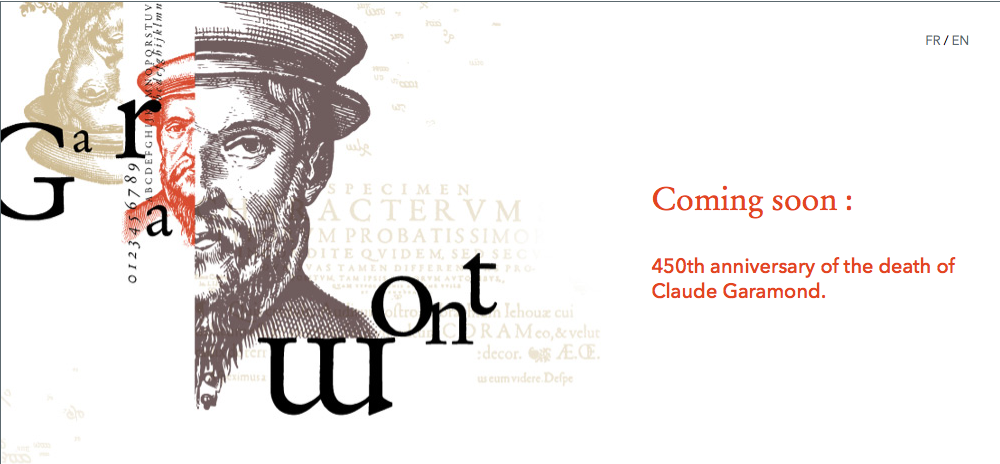
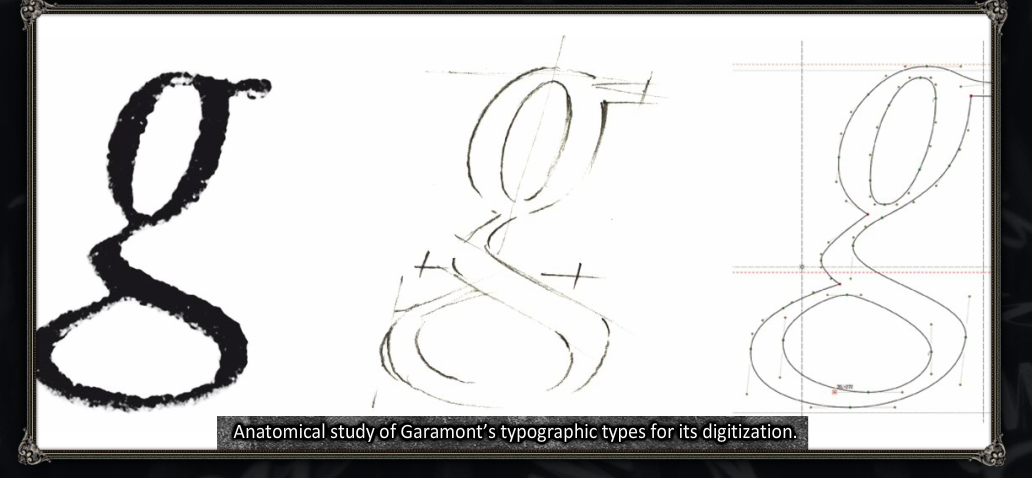
Garamond

For the celebration of the 450th anniversary of the death of Claude Garamond

https://www.garamond.culture.fr/en/english

Categories
Art Books History Society Vizualization

Virtual exhibition of typography

The French National Library organizes different virtual exhibitions which are very interested for who wants to learn more about history of books, print and typography. Recently, a new exhibition about the actual creation of new typographies.

https://www.imprimerienationale.fr/expo/