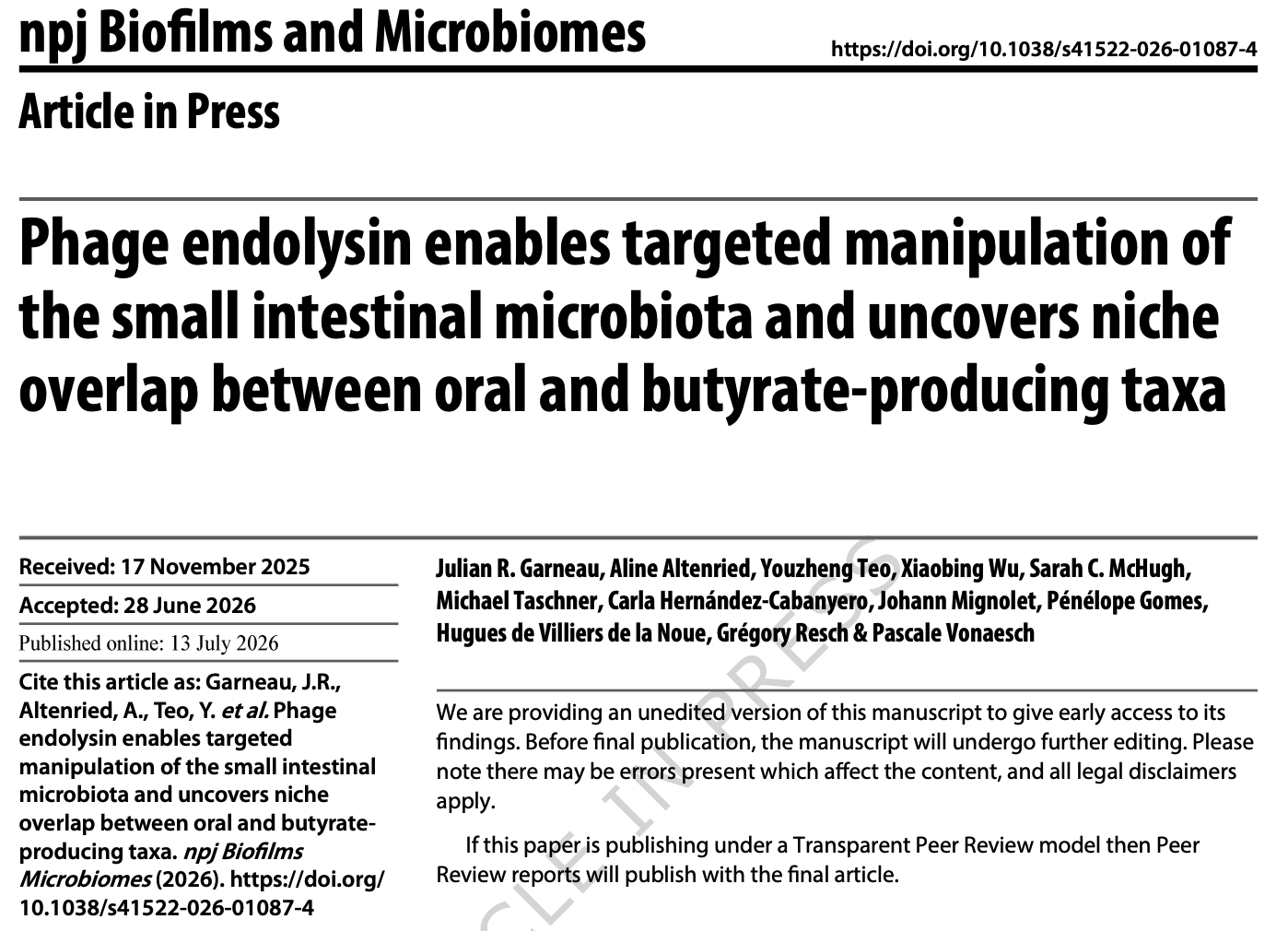
𝗖𝗮𝗻 𝘄𝗲 𝗽𝗿𝗲𝗰𝗶𝘀𝗶𝗼𝗻-𝗲𝗱𝗶𝘁 𝘁𝗵𝗲 𝗴𝘂𝘁 𝗺𝗶𝗰𝗿𝗼𝗯𝗶𝗼𝗺𝗲 𝗯𝘆 𝘁𝗮𝗿𝗴𝗲𝘁𝗶𝗻𝗴 𝗮 𝘀𝗶𝗻𝗴𝗹𝗲 𝗯𝗮𝗰𝘁𝗲𝗿𝗶𝘂𝗺?
The gut microbiome plays a central role in digestion, immunity, and overall health. In childhood stunting, an abnormal overgrowth of oral bacteria in the small intestine, known as small intestinal oral bacterial overgrowth (SIOBO), has been linked to chronic inflammation and poor nutrient absorption.
We explored whether a phage-derived endolysin can selectively remove one of these bacteria, Streptococcus salivarius, without disturbing the rest of the gut microbiome.
Unlike broad-spectrum antibiotics, phage endolysins are highly specific proteins that target individual bacterial species. The researchers identified a new endolysin, Lys_AF151, and tested its ability to precisely reduce S. salivarius in laboratory microbial communities and in mice.
Why this matters
This work provides a proof of concept for precision microbiome engineering: instead of broadly eliminating bacteria with antibiotics, it may be possible to remove a single problematic species while preserving the surrounding microbial ecosystem. Beyond its therapeutic potential for conditions such as childhood stunting, this approach also offers researchers a powerful new tool to uncover how gut microbes interact and shape health.
The paper is now in press and available online: https://doi.org/10.1038/s41522-026-01087-4
Congrats to Julian, Aline, Youzheng, Xioabing and Carla for this new publication!