Philippe Reymond, Emeritus Associate Professor
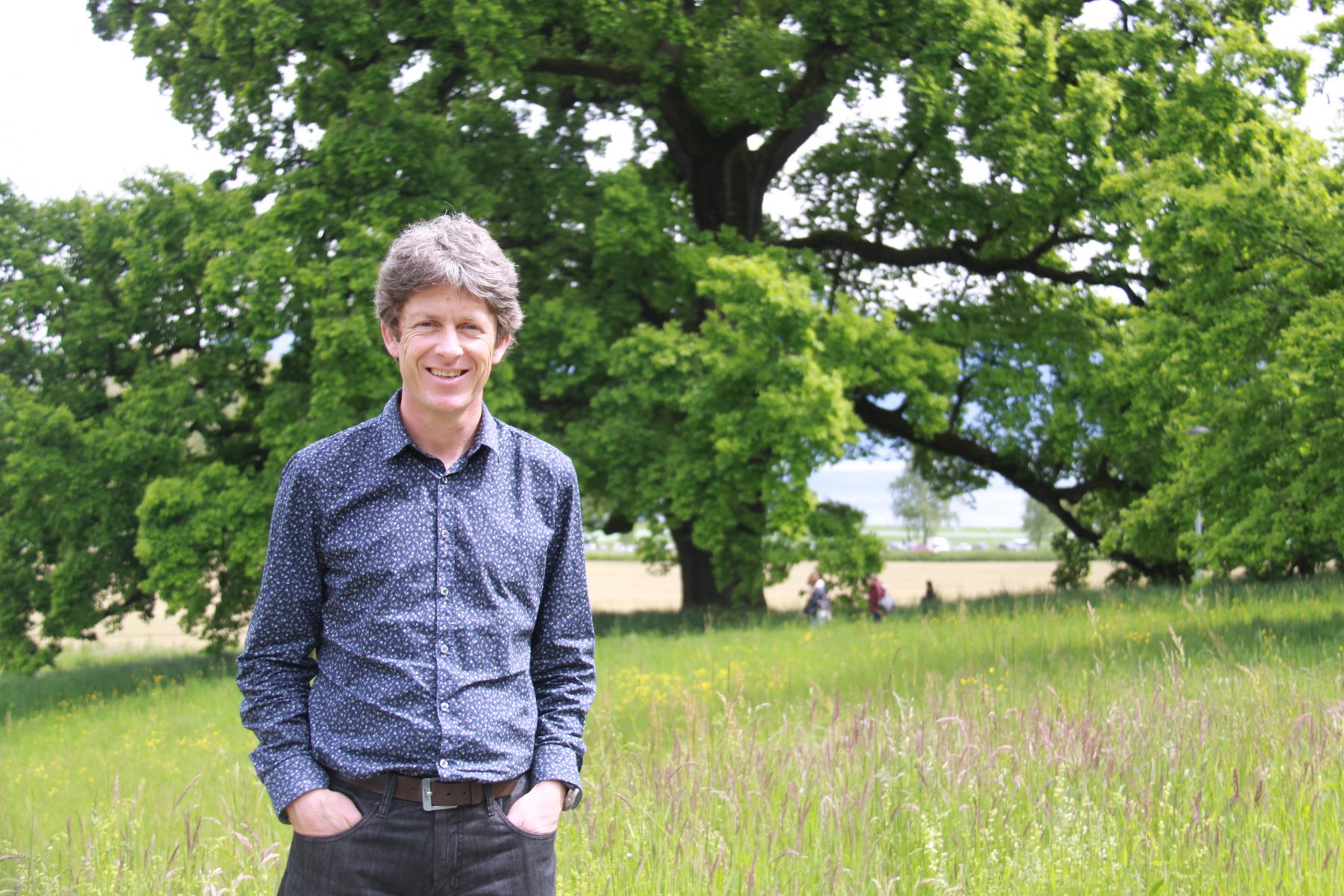
After completing a PhD in 1989 on IAA and ABA phytohormones in maize at the University of Lausanne, Philippe joined the group of Winslow Briggs at the Carnegie Institution of Washington (Stanford University) where he studied blue light photoperception. In 1992, he returned to the University of Lausanne and joined the group of Ted Farmer to investigate signal transduction in plant defense. In 1997, Philippe spent several months in Stanford to learn the DNA microarray technology and introduced it at the University of Lausanne. Appointed MER (group leader) in 2002, he started his independent research on plant-insect interactions. In 2012, he received the title of privat-docent from the University of Lausanne. In 2014, Philippe was promoted to the rank of Associate Professor.
Philippe retired in August 2026.
Caroline Darimont, lab technician (2008-2026)
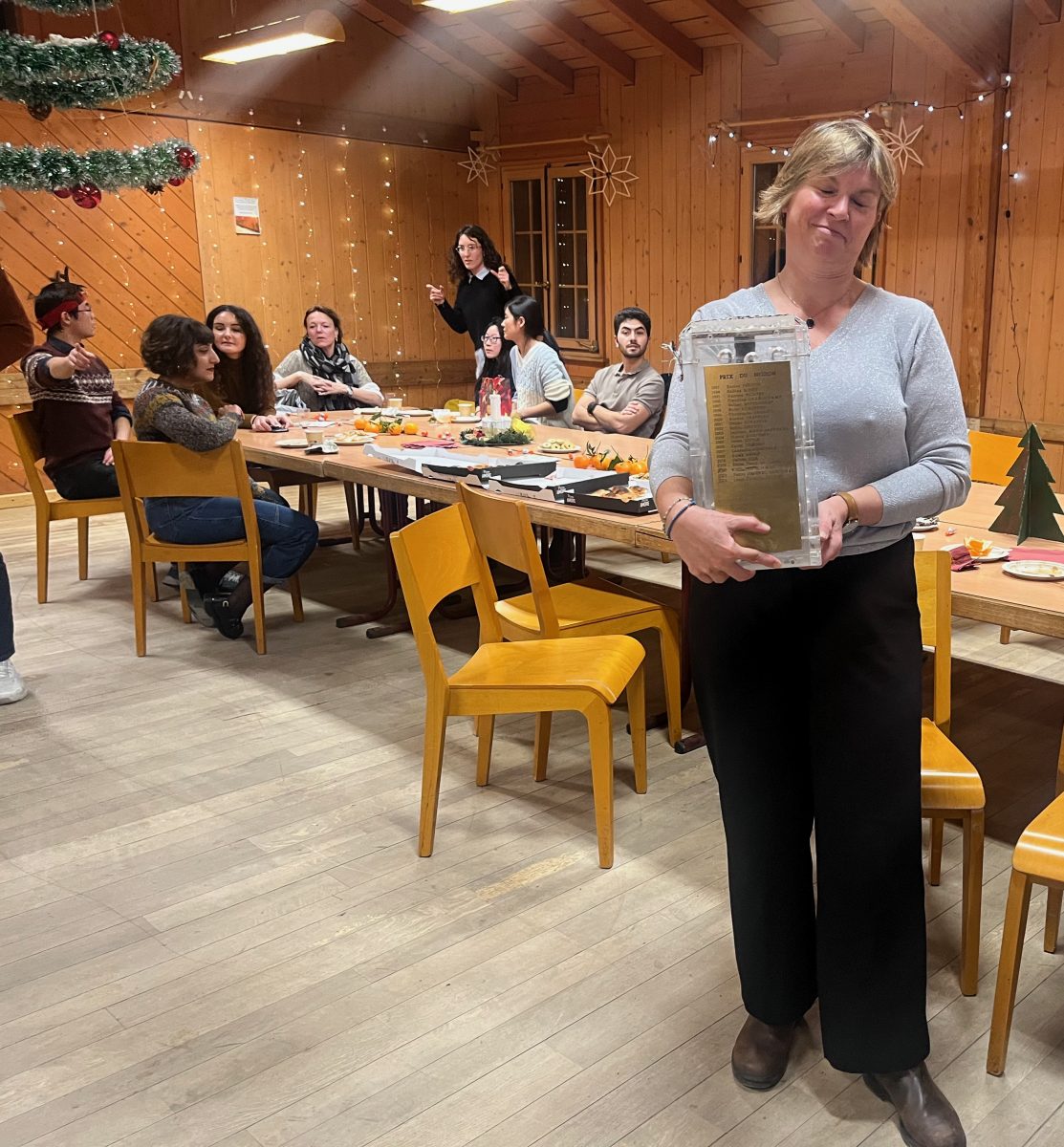
Caroline was involved in the Arabidopsis CATMA project and amplified more than 25’000 GSTs by PCR for realization of a full-genome microarray. She provided technical support for different research projects and specifically studied signaling of insect egg perception in Arabidopsis and the role of Lectin-like Receptor Kinases.
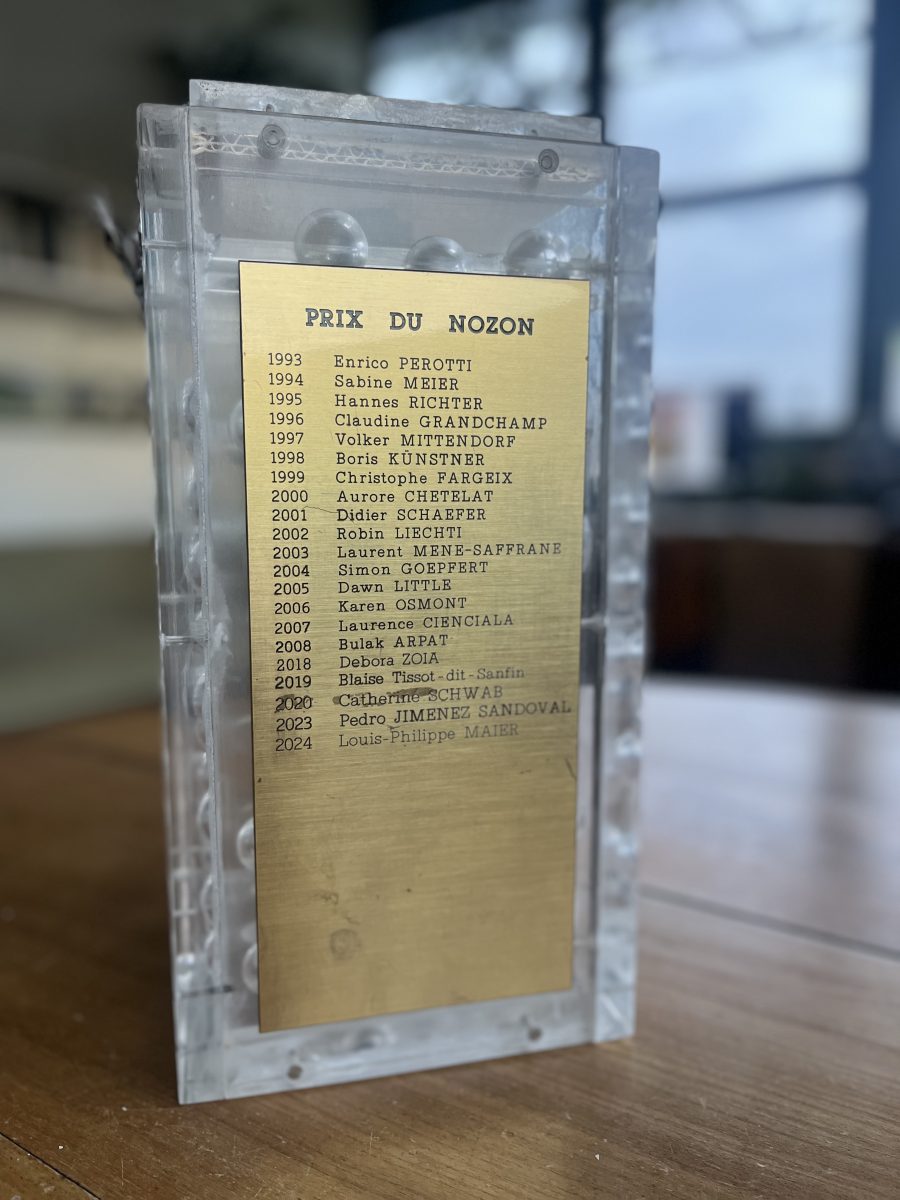
Caroline was awarded the prestigious DBMV “Prix du Nozon” in 2025.
Stéphanie Cluzet, PhD student (1997-2001)
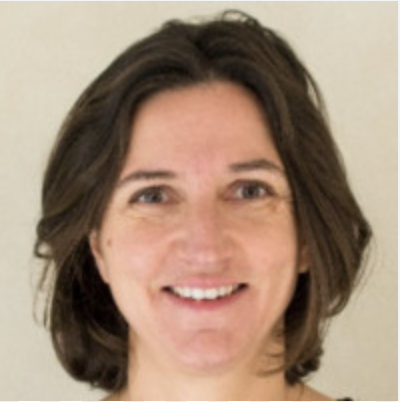
Stéphanie worked on the role of remorin, a plasma membrane-associated protein that is phosphorylated in the presence of oligogalacturonides. Using tomato plants, she found that remorin was involved in the movement of viruses.
Following positions: Maître de conférence, then promoted to Professor, University of Bordeaux
Natacha Bodenhausen, PhD student (2002-2007)
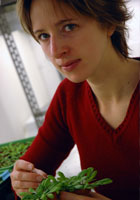
Natacha studied the signaling pathways involved in the plant response to insect herbivory. Using available Arabidopsis mutants lacking important defense signals, she studied gene expression changes with microarrays and tried to correlate transcript profiles with insect performance in order to assess the effect of plant defenses on insect growth.
Following positions:
– postdoc with Joy Bergelson, Chicago University
– postdoc with Julia Vorholt at ETHZ, department of Microbiology
– research scientist at Agroscope, Reckenholz, Zurich
– scientist at FIBL, Frick
Dawn Little, postdoc (2003-2006)
Dawn worked on two projects: the CAGE database for genomic expression in Arabidopsis and the gene expression changes resulting from oviposition by Pieris butterflies on Arabidopsis.
Dawn was awarded the prestigious DBMV “Prix du Nozon” in 2005.
Following positions:
– specialist for regulatory affairs, Novartis, Nyon
– regulatory affairs manager, GSK consumer healthcare, Nyon
– director of regulatory affairs, Sophia Genetics, Rolle
Frédéric Masclaux, postdoc (2006-2009)
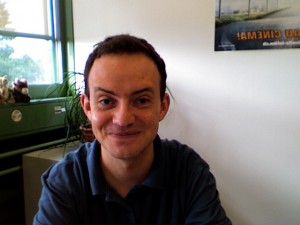
Fred worked on the detection of neighbors and on competition in Arabidopsis plants, as part of an interdisciplinary research project with Laurent Keller (funded by the Research Committee of the FBM). He found that competitive ability and not kinship is the main factor controlling growth in plant-plant interactions.
Following positions:
– postdoc, IST, University of Lausanne
– postdoc at the DEE, University of Lausanne, with Ian Sanders
– bioinformatician, Service of medical genetics, Geneva University Hospital
Floriane Consales, master student (2007)
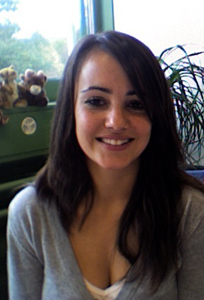
Floriane was interested in plant-insects co-evolution. She showed that insects are able to weaken plants defenses in the case of an attack. Indeed application of oral secretions to wounded leaves suppressed the induction of two defense-related genes.
Following positions:
– technician at the Genomics Platform, UNIL
– research assistant at SwissDeCode, Renens
– senior lab technician at Sophia Genetics, Rolle
Friederike Bruessow, PhD student (2007-2011)
Friederike discovered that egg deposition on Arabidopsis leaves inhibits defenses against caterpillars through antagonism between SA and the JA pathways.
Following position:
– postdoc at MPI Köln with Jane Parker
– communication management support, Syngenta
Fabian Schweizer, PhD student (2007-2012)
Fabian studied the involvement of Arabidopsis transcription factors in defense against herbivory. He revealed a crucial role for MYC2, MYC3, and MYC4 as master regulators of defense gene expression in the JA pathway.
Following positions:
– postdoc in the group of Laurent Zimmerli (Taipei), innate immunity in plants.
– postdoc in the group of Alain Goossens (VIB, Ghent, BE), funded by FNS and EMBO fellowships. Regulation of secondary metabolism in Catharanthus roseus.
Wouter Kegge, master student (2008)
Wouter tested the role of G-proteins in defense against herbivores.
Following positions:
– PhD student, Utrecht University
– post-doc at Wageningen University, The Netherlands
– configuration management expert at ASML, Arnhem, The Netherlands
Steve Lassueur, lab technician (2008-2016)
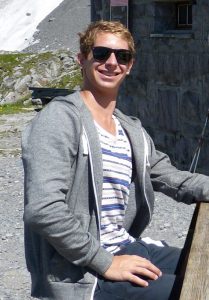
Steve was trained as a technician in the DBMV from 2008 to 2011. He worked until 2016 on the ESF project, helping Christelle with microarray analyses of Brassica nigra samples and also studied SA- and JA-pathway crosstalk in response to oviposition in Arabidopsis.
Current position: senior lab technician, Nestlé Institute of Health Science, EPFL, Lausanne
Christelle Bonnet, PhD student FNS (2011-2016)
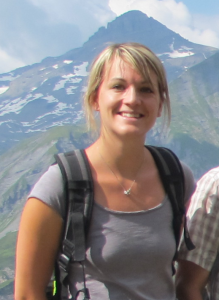
Christelle did a whole-genome expression profiling of Arabidopsis and Brassica nigra plants that are challenged with different attackers. This project is part of an ESF-funded consortium (EUROVOL) that studies plant volatile emission in response to multiple biotic and abiotic stresses.
Current position: plant science manager, Japan International Tobacco, Geneva
André Schmiesing, PhD student FNS (2011-2016)
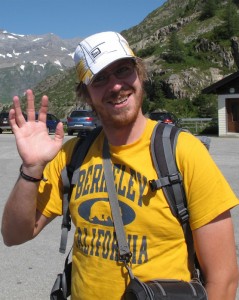
André worked on the characterization of egg-derived elicitors and on plant defense signalling in response to insect oviposition in Arabidopsis.
Following positions:
– scientist in phytopathology at Strube Research, Söllingen, Germany
– consultant, federal office of consumers rights and food security, Braunschweig, Germany
Merel Steenbergen, visiting student (2012-2013)
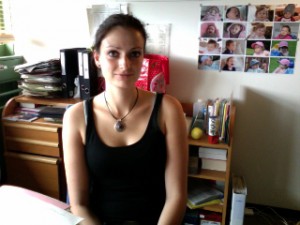
Merel was a master student from Utrecht University (group Saskia van Wees). She visited our group as part of an internship from September 2012 to April 2013. Merel studied how insect eggs negatively impact the jasmonate pathway.
Following position:
– PhD, Utrecht University
– scientist at Chrysal International BV, The Netherlands
Olivier Hilfiker, PhD student (2012-2017)
Olivier graduated from Lausanne University. His Master project in the group was on the role of egg-derived elicitors in triggering defenses against microbial pathogens in Arabidopsis. For his PhD, he studied mechanisms of egg-induced protection against bacterial infections.
Current position: scientist at Philipp Morris International, Neuchâtel
Camilo Ayra-Pardo, visiting scientist (2014)

Camilo visited the lab for 3 months (9-11.2014), funded by a grant from the FNS International Short Visits program. At the time of the visit, he was Senior researcher, head of environmental biotechnology laboratory in the Plant Department of the Center for Genetic Engineering and Biotechnology in Havana, Cuba
Current position: Associate Professor, Henan Provincial Engineering Laboratory of Insect Bio-reactor, Nanyang University, China
Aurelia Emonet, master student (2014)
Aurélia was a master student from the MLS master program of the University of Lausanne. She worked in the lab on plant defense signalling in response to insect oviposition in Arabidopsis.
Following positions:
– PhD student in the group of Prof. Niko Geldner, DBMV, Unil
– postdoc with Dr. Angela Hay, MPI-Koln
– postdoc with Prof. Michael Raissig at IPS, Bern University
Raphaël Groux, PhD student (2015-2019)
Raphaël graduated from the MLS master program of the University of Lausanne. For his PhD, he studied the hypersensitive response (HR-like) that is induced by Pieris brassicae eggs on Arabidopsis and exploited Arabidopsis natural variation to discover new genes regulating this response, including LecRK-I.1 and GLR2.7. He also showed that plant sphingolipids contribute to egg-induced HR-like.
Following positions:
– postdoc at Agroscope, Changins
– scientist at Agridea, Lausanne
Marion Rebeaud, apprentice (2016-2017)
Manon spent one year in our group as part of her apprenticeship of lab technician.
Current position: lab technician at the CHUV, Lausanne
Esteban Alfonso, PhD student (2016-2021 )
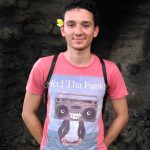
Esteban started in the group as a master student from the MLS master program of the University of Lausanne. He then studied P. brassicae egg-induced systemic acquired resistance against Botrytis cinerea in Arabidopsis and established a role for indolic metabolism in this response.
Current position: scientist at Technical school for HES-SO University of Applied Sciences and Arts Western Switzerland, Changins
Elia Stahl, postdoc (2016-2023)
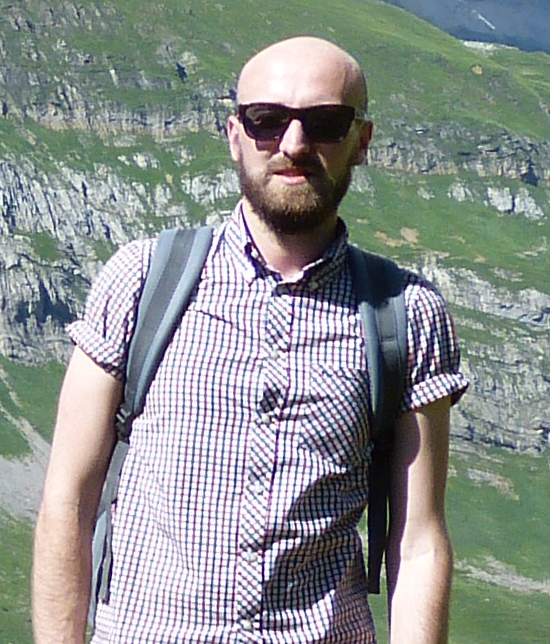
Elia obtained his PhD in Düsseldorf in the group of Prof. Juergen Zeier, working on indolic defense metabolites in Arabidopsis. Elia joined the group to work on the characterization of egg-derived elicitors and on plant defense signalling in response to insect oviposition in Arabidopsis. He discovered that egg phosphatidylcholines (PC) act as egg-associated molecular patterns (EAMPs) and induce immune responses in Arabidopsis. He also found that PC is converted to phosphatidic acid (PA) in planta and that PA interacts with Lectin-Receptor Kinases LecRK-I.1/8.
Current position: group leader (CNRS position) at the European Institute of Chemistry and Biology (IECB), Bordeaux, France
Sarah Ranty, visiting student (spring 2017), master student (January-June 2019)

Sarah spent a few months in our lab in 2017 to learn about molecular plant-insect interactions. She returned in 2019 to do her Master II and worked on egg-induced SA/JA crosstalk.
Following positions
– PhD student in Sophia Agrobiotech Institute, Antibes (graduated in 2024).
Fabian Schweizer, advanced postdoc (2017-2019)
For his PhD, Fabian studied the involvement of Arabidopsis transcription factors in defense against herbivory. He revealed a crucial role for MYC2, MYC3, and MYC4 as master regulators of defense gene expression in the JA pathway. After a short stay in the group of Laurent Zimmerli in Taipei, he joined the group of Alain Goossens (VIB, Ghent, BE) as postdoc, funded by FNS and EMBO fellowships. Fabian studied the regulation of secondary metabolism in Catharanthus roseus. Back in the group under the “return grant” program of the FNS, he studied the role of secondary metabolism against herbivory in Marchantia polymorpha.
Current position: scientist at Fenaco, Moudon
Zigmunds Orlovskis, postdoc (2017-2020)

Zigmunds studied in Latva and then obtained his PhD in Norwich (John Innes Center) in the group of Saskia Hogenhout, working on the role of a bacterial (phytoplasma) effector protein SAP54 in altering plant development and enhancing plant colonisation by its insect vector. Zigmunds joined the group to work on inter-plant responses triggered by insect oviposition in Arabidopsis and discovered egg-induced interplant SAR.
Current position: lecturer position at the University in Riga, Latvia
Angel Fernandez, PhD student (2020-2025)
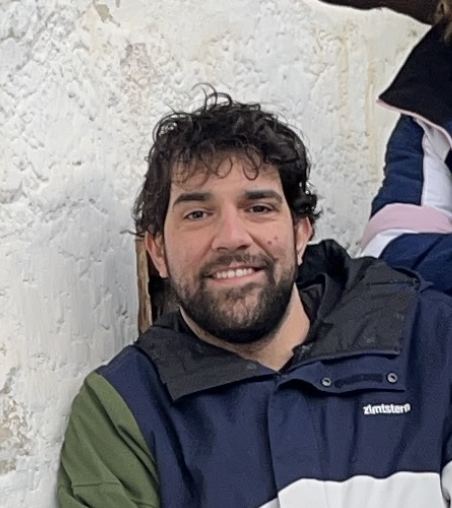
Angel obtained a Master of science from the University of Fribourg, studying the interactions between Phytophthora effectors and their targets in planta. His PhD was a joint project between our group and the group of Prof. Matthias Erb at the University of Bern. Through a series of purification steps, Angel identified an uncoventional effector in insect oral secretions that suppresses the expression of wound-induced genes. In addition, a transcriptomic study revealed the specific contribution of insect oral secretions to Arabidopsis responses to feeding by Pieris brassicae and Spodoptera littoralis.
Current position: scientist at Vivent Biosignals, Gland
Maria Mineiro, PhD student (2020-2025)
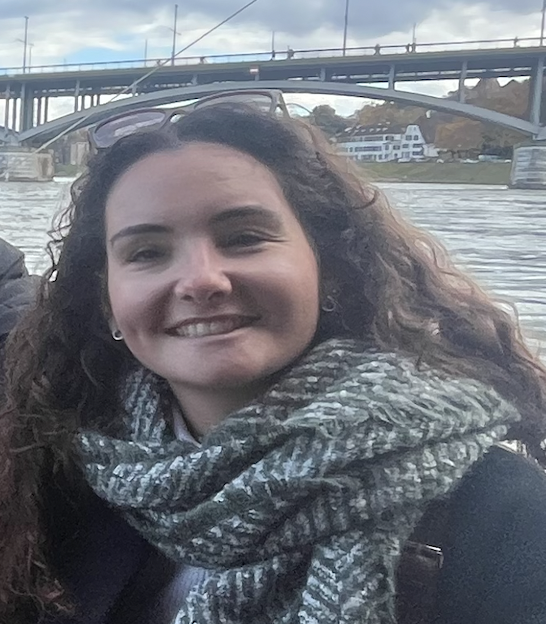
Maria obtained a Master of science from the University of Clermont-Ferrand, where she worked on crop protection. Her PhD project centered on the role of Glutamate-Like Receptors (GLRs) and calcium influx in insect egg-induced necrosis in Arabidopsis. Exploiting data from a GWAS analysis, she validated the role of GLR2.7 as a key player in modulating egg-induced cell death and innate immunity.
Current position: scientist at Ecorobotix, Yverdon
Maria Brechet, PhD student (2021-2026)
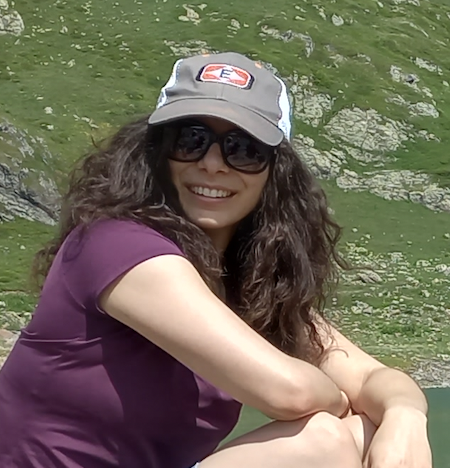
Marion studied Biology at the University of Lausanne. She did a Master project in the group of Sebastian Soyk, investigating the natural variation in bZIP transcription factor genes and their contribution to tomato domestication. Her PhD project focussed on how insect egg-derived phospholipids reach the apoplastic space and are metabolized into defense signals by phospholipases D.
Current position: science editor for MDPI, Basel
Léonie Mottet, master student and research assistant (2022-2024)
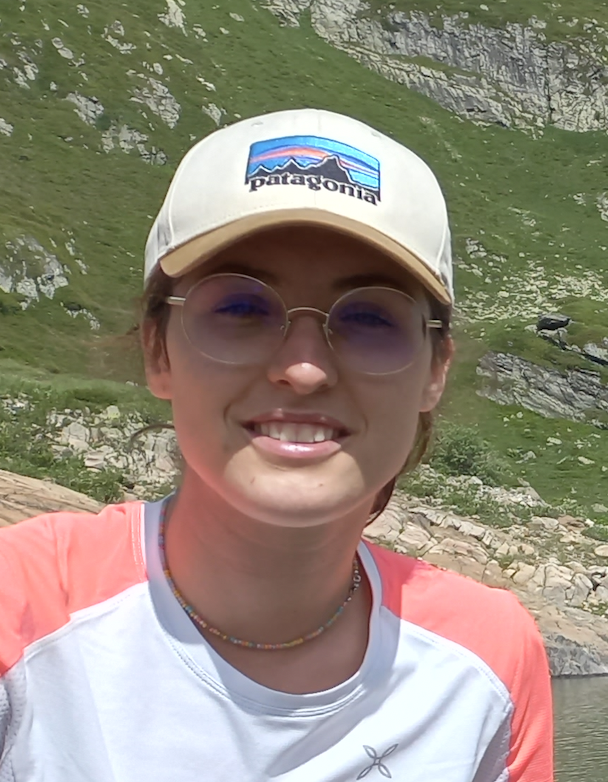
Léonie studied at the University of Lausanne. For her Master, she studied the rle of egg-derived phospholipids on defense responses in Arabidopsis. She then spent one year as a research assistant to finalize her project.
Current position: PhD student in the group of Prof. Macarena Marin, DBMV, UNIL.
Iga Tomczynska, postdoc (2022-2026)
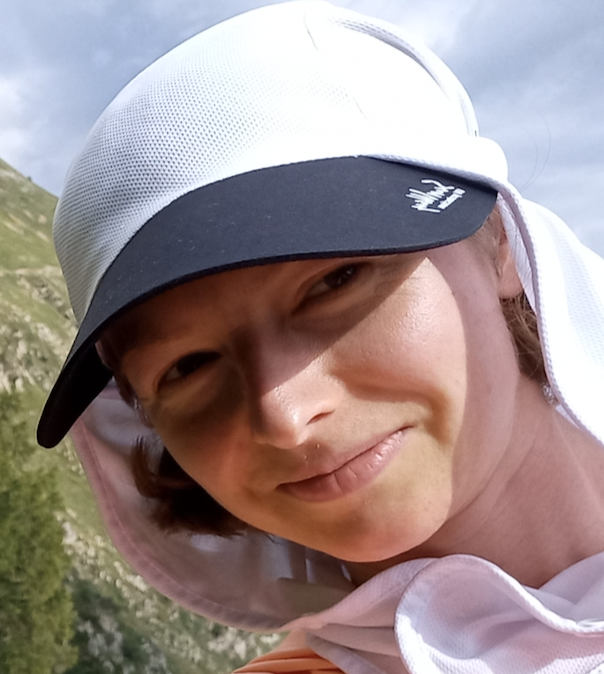
Iga obtained her PhD in Fribourg, in the group of Prof. Felix Mauch, working on effectors from Phytophtora infestans. She then took a postdoctoral position with Prof. Bett Tyler at Oregon State University in Corvallis, where she studied the dynamics of Phytophtora effectors in planta. In our group, Iga focused on lectin-like receptor kinases that perceive egg-derived elicitors, monitoring cell death in Nicotiana benthamiana and Arabidopsis.
Current position: postdoc, DBMV, UNIL
Louis-Philippe Maier, postoc (2022-2026)
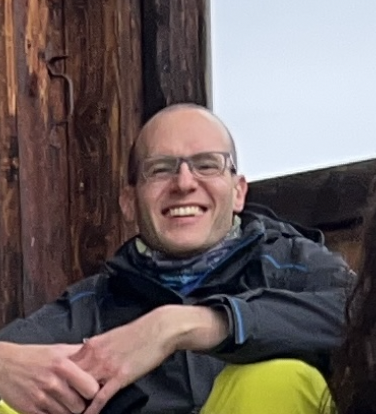
Louis obtained his PhD in the group of Prof. Georg Felix, at the ZMBP in Tuebingen, studying how secreted protein from Arabidopsis act as decoys for pathogen proteases. In your group, Louis identified a novel egg-derived glycopeptide that triggers immune responses in Arabidopsis.
Louis was awarded the prestigious DBMV “Prix du Nozon” in 2024.
Current position: postdoc in the group of Prof Julia Santiago, DBMV, UNIL.