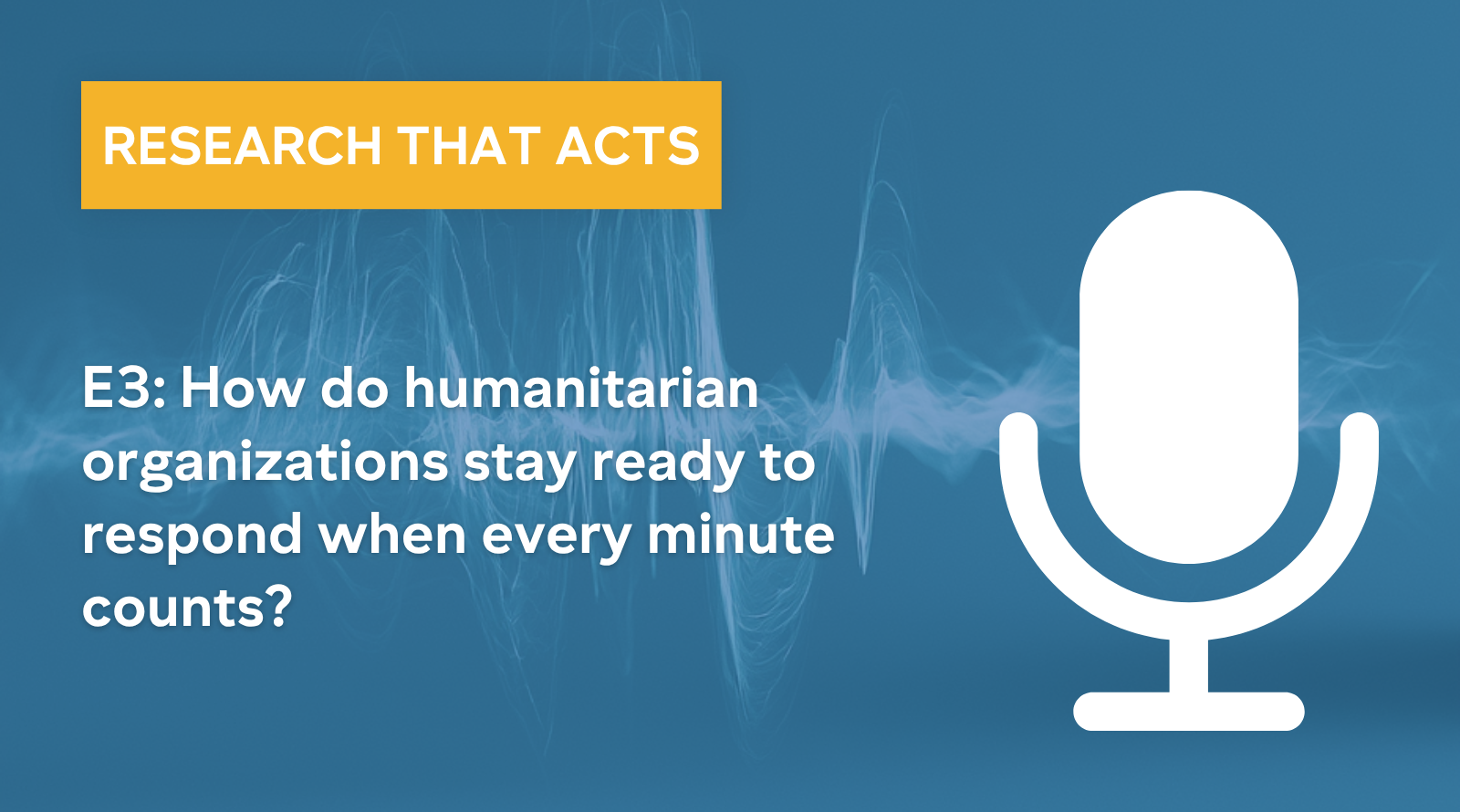
Episode 3: How do humanitarian organizations stay ready to respond when every minute counts?
From natural disasters to armed conflicts, humanitarian emergencies demand rapid action. Yet behind every emergency deployment lies a difficult logistical challenge: ensuring that vital medical supplies are always ready to ship, while avoiding unnecessary waste. For organizations such as Médecins Sans Frontières, striking that balance is critical.
At HEC Lausanne, researchers have developed a mathematical solution to help manage emergency medical kits more efficiently, reducing costs while maintaining constant readiness. Their work shows how operational research can strengthen humanitarian action in unexpected ways.
So how can mathematics improve humanitarian response? In this episode of Research that Acts, join Professor Gautier Stauffer to explore how a simple algorithm is helping humanitarian organisations make smarter decisions, save valuable resources and maximise their impact when crises strike.
Research that acts – From research to humanitarian impact
In humanitarian crises, research does more than observe and analyse: it acts.
Welcome to this new four-episode podcast series exploring how researchers at HEC Lausanne use their expertise to address some of today’s most pressing humanitarian challenges. Working closely with field partners, they develop practical tools and solutions to support refugee integration, improve emergency response, strengthen humanitarian logistics and inform decision-making in crisis situations. Research That Acts showcases engaged research that transforms scientific knowledge into concrete action and creates meaningful change for people affected by crises.