Categories
Books Cities Communication Economy Graph analysis History MAPS Misc Networks Resilience SCIENCE Social network Social science Society Vizualization World

Handbook on cities and networks

Edited by Zachary P. Neal, Associate Professor, Department of Psychology, Michigan State University, US and Céline Rozenblat, Professor of Urban Geography, Faculty of Geosciences and Environment,Université de Lausanne, Switzerland

Publication Date: 2021 ISBN: 978 1 78811 470 7 Extent: 672 pp

If you want to understand cities – the innovation and dynamism they generate and the way they sort and segregate people by class, race and other dimensions – you have to start by understanding that cities are networks. Zachary Neal and Céline Rozenblat have done all of us who care about cities a great service by pulling together the very best and brightest thinkers on cities and networks in this terrific volume.
– Richard Florida, University of Toronto, US and author of The Rise of the Creative Class and The New Urban Crisis

This Handbook of Cities and Networks provides a cutting-edge overview of research on how economic, social and transportation networks affect processes both in and between cities. Exploring the ways in which cities connect and intertwine, it offers a varied set of collaborations, highlighting different theoretical, historical and methodological perspectives.

International contributions assess the state of the field of network analysis, presenting interdisciplinary insights that draw on theory from geography, economics, sociology, history, archaeology and psychology, and outlining methodological tools that include ethnographic, qualitative and quantitative approaches. Illustrating a framework for integrating the diversity of urban networks, the Handbook demonstrates that by exploring urban networks with different combinations of levels and scales, new insights and opportunities can emerge.

Featuring focused studies on specific regions and cities, this state-of-the-art Handbook is essential reading for scholars and researchers of urban studies and regional science, particularly those focusing on the transformation of cities as connected spaces through intracity and intercity networks. Its core theoretical insights will also benefit graduate students in urban studies and network analysis.

Categories
Art Books History MAPS Networks

Mapping Philosophy in the Paris metro

An interesting network interactive vizualization of philosophy where lines and connections are more important than the proximity in the network… follow each line to know more about a philosophical (sometimes literature or artistic) domain (unfortunately in French)

https://lesphilosophesdanslemetro.com/plan/

Categories
Environment Geography History Networks

Termites and the megalopolis

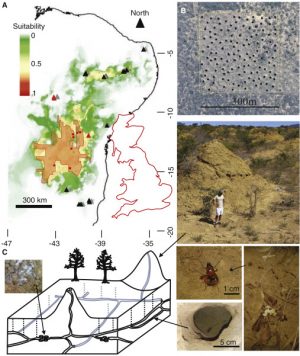
A recently published study in Current Biology has shown that a species of termites has been colonising a huge area of Brazil – its surface is equivalent to that of Great Britain- in the past 4000 years. The visible results of this work consist in a large number of earth mounds that can be up to 3 meters tall and 9 meters in diameter which are not nests but rather represent the accumulation of waste material from the insects’ construction of the underground network. The mainreason for this impressive effort is, according to the researchers, to stock and safely consume leaves that fall only during a short seasonal interval. This case show the impressive capability of certain species to collectively transform and adapt their environments by creating permanent structures that can persist for thousands of years. Ants or bees have often been associated to humans for their complex social organisation, division of labour and structure. Therefore, can we obtain some interesting insights and inspiration from these impressive spatial constructions that are even older than the pyramids?

Categories
Cities Europe History MAPS Networks

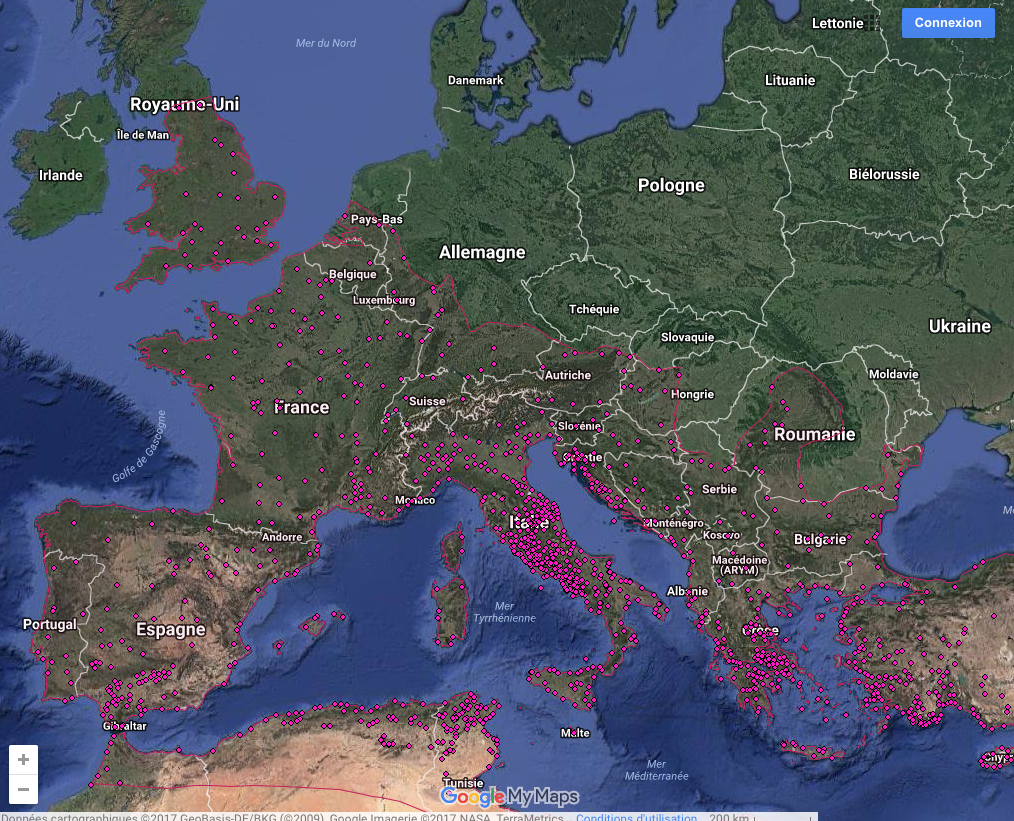
Urban Geography of the Roman World, 100 BC to AD 300

An interactive map of urbanism in the Roman world in the imperial period:


ALSO OUT NOW:

Hanson, J. W., (2016), An Urban Geography of the Roman World, 100 BC to AD 300, (Archaeopress).


Categories
Cities Europe Geography Graph analysis History MAPS Networks Simulation Vizualization

ORBIS: the Stanford Geospatial Network Model of the Roman World

The system calculates the distance from a city to another one, according to faster path, or lower cost.

https://orbis.stanford.edu/

Go to “Mapping ORBIS”, It draws the path and create many different maps and graphs (in “Map gallery”). It’s a pity that the Emperors did not have this system 🙂


Categories
Art Books History Society Vizualization

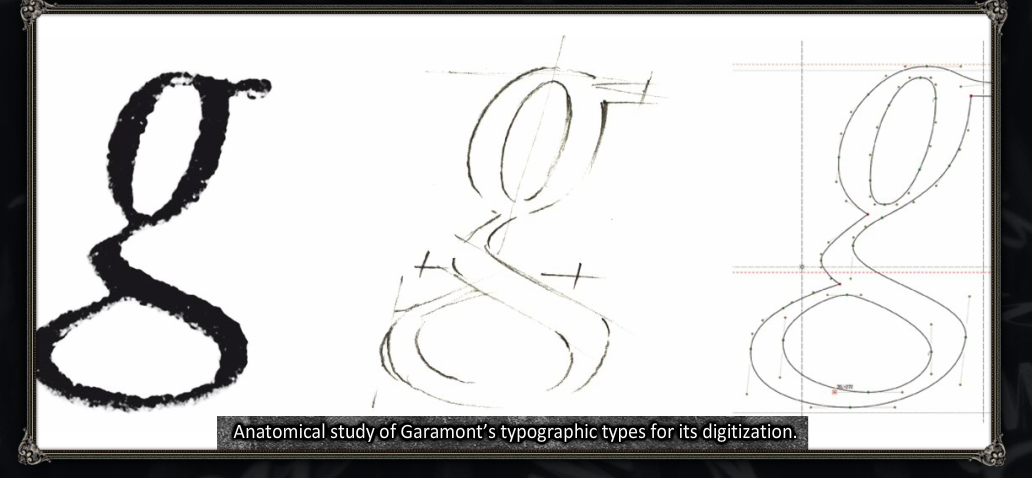
Virtual exhibition of typography

The French National Library organizes different virtual exhibitions which are very interested for who wants to learn more about history of books, print and typography. Recently, a new exhibition about the actual creation of new typographies.

https://www.imprimerienationale.fr/expo/


Categories
History SCIENCE Society

New technologies are nicer in a wonderful world……..

See the parodies:

Of the book:

– Spanish:

https://www.youtube.com/watch?v=Q_uaI28LGJk

– Norvegian:

https://www.youtube.com/watch?v=xFAWR6hzZek

Of the Iphone 6 by Anthony Kavanagh (in french canadian)
https://www.youtube.com/watch?v=iJovnFcx4DY

Categories
Cities Geography History MAPS

Africapolis

Atlas of African cities on Google Earth (of course you must have already downloaded Google Earth):

Website

Click on

Display Africapolis data in Google Earth

and then you access to many information from the “GEOPOLIS” database of François Moriconi

Categories
Cities History MAPS Vizualization

The Digital Archaeological Atlas of the Holy Land

Spatial Search – Draw a Search Area on the Map to Retreive Site Points in Google Earth

WEBSITE of DAAHL

Categories
Geography History MAPS

Gapminder

The Graphic Show of the World development evolution……

Gapminder Website