Categories
Cities Health Society Urban

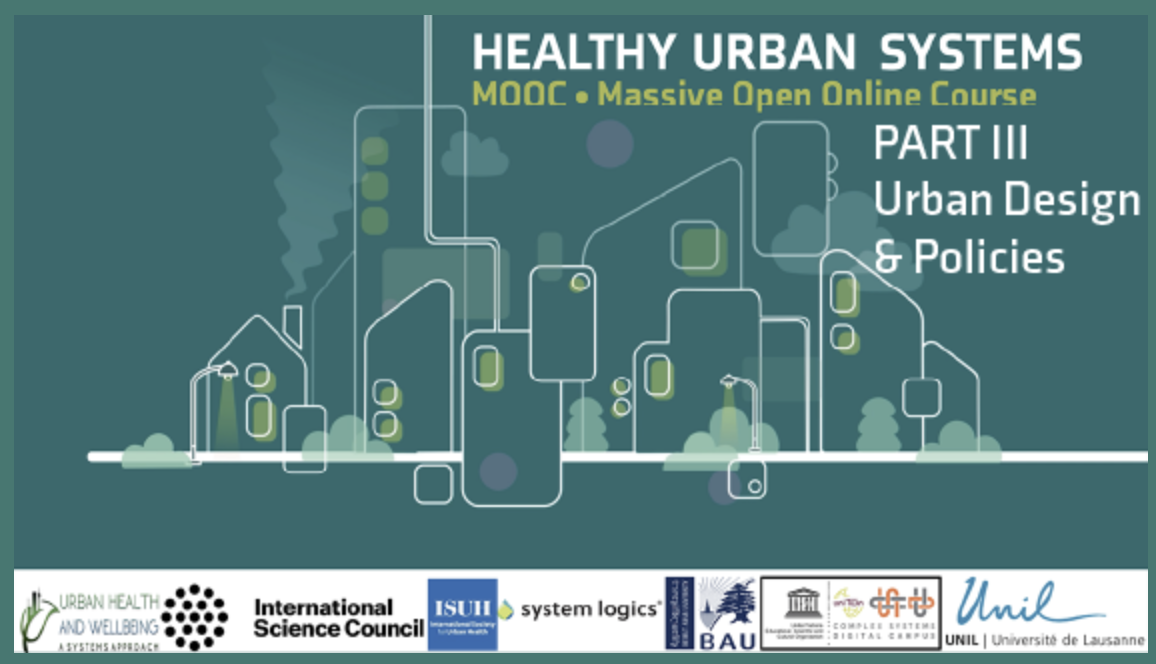
MOOC – Healthy Urban Systems Part III

The MOOC – Healthy Urban Systems Part III is now available on Coursera:

https://www.coursera.org/learn/healthy-urban-health-systems-3

You will learn to:

  • Design Adaptive Health Scenario
  • Produce a health system – workshop-style
  • Implement urban health policy in a systemic way
  • Develop health Impact assessments (HIA)
  • Health prevention and promotion

Dedicated to all levels of disciplines linked to the city, health, the environment, social and human sciences, data sciences…

The MOOC is entirely in English, with possible subtitles in French and Chinese.

Materials: videos, glossary, quizzes, exercises, discussion forum

Duration: 4 weeks – 1 session per week to be taken at your convenience

Workload: 2 to 3 hours per week

Accreditation (possible and not compulsory): 2 ECTS for PART II, issued by the University of Lausanne via COURSERA (US$ 25)

General coordination:

University of Lausanne – UNIL-EPFL Foundation for Continuing Education

Prof. Céline Rozenblat, Jeff van de Poel
Categories
Cities Complexity Environment Health Resilience Society Urban World

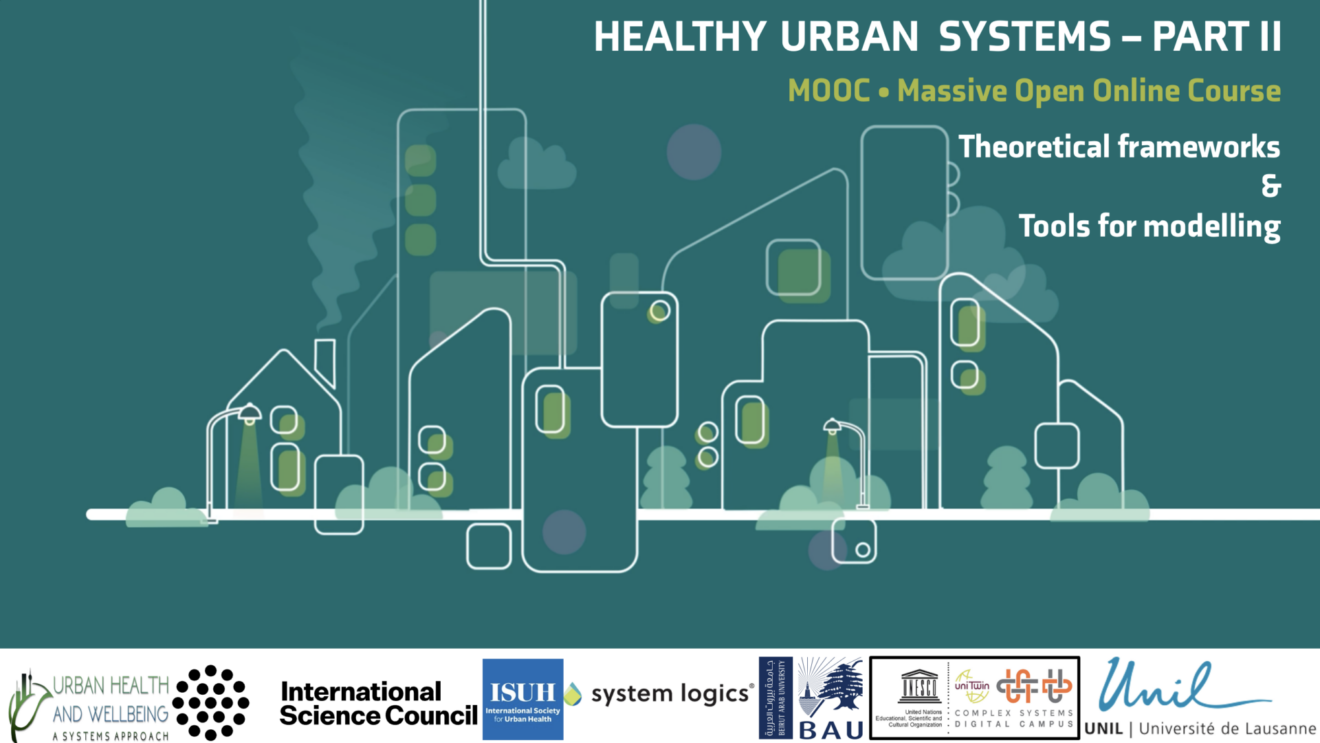
MOOC – Healthy Urban Systems Part II

The MOOC – Healthy Urban Systems Part II

is now available on Coursera!

You will learn to:

  • Address urban health through complex multidisciplinary approaches
  • Use multidimensional and multiscale concepts, methods, and ecosystem frameworks
  • Mobilize and support all players directly or indirectly involved in urban health.

Dedicated to all levels of disciplines linked to the city, health, the environment, social and human sciences, data sciences…

The MOOC is entirely in English, with possible subtitles in French and Chinese.

The part II is dedicated to Theories and models

Module 3: Theoretical frameworks

  • Theories
    • Frameworks, theories, and models in relation with the fundamental concepts
    • Complex systems, Urban metabolism, Urban Ecology, Eco-system
    • Transition and resilience
  • Applications
    • Scaling effects in cities
    • Cognitive processes: Dissonance and mismatch
    • Participatory approaches
    • Collective and systems intelligence

Module 4 : Tools for modeling

  • Systems Modeling
    • Different Methods of Modelling (SD Simulation, Agent based, holistic system modeling) / individual – aggregated.
    • Modelling an epidemic: Agent Based modelling vs system dynamics.
  •  Implementation of concrete projects
    • AIRQ+ for outdoor Air Quality
    • CHEST for Household air quality
    • HEAT Model
    • Eco-policy© model
  •  Holistic Systems Modeling©

Materials: videos, glossary, quizzes, exercises, discussion forum

Duration: 4 weeks – 1 session per week to be taken at your convenience

Workload: 2 to 3 hours per week

Accreditation (possible and not compulsory): 2 ECTS for PART II, issued by the University of Lausanne via COURSERA (US$ 25)

General coordination:

University of Lausanne – UNIL-EPFL Foundation for Continuing Education

Prof. Céline Rozenblat, Jeff van de Poel
Don’t miss this extraordinary opportunity, for more information click on the link below:

Healthy Urban Systems course

Categories
Cities Health Resilience SCIENCE Society Urban

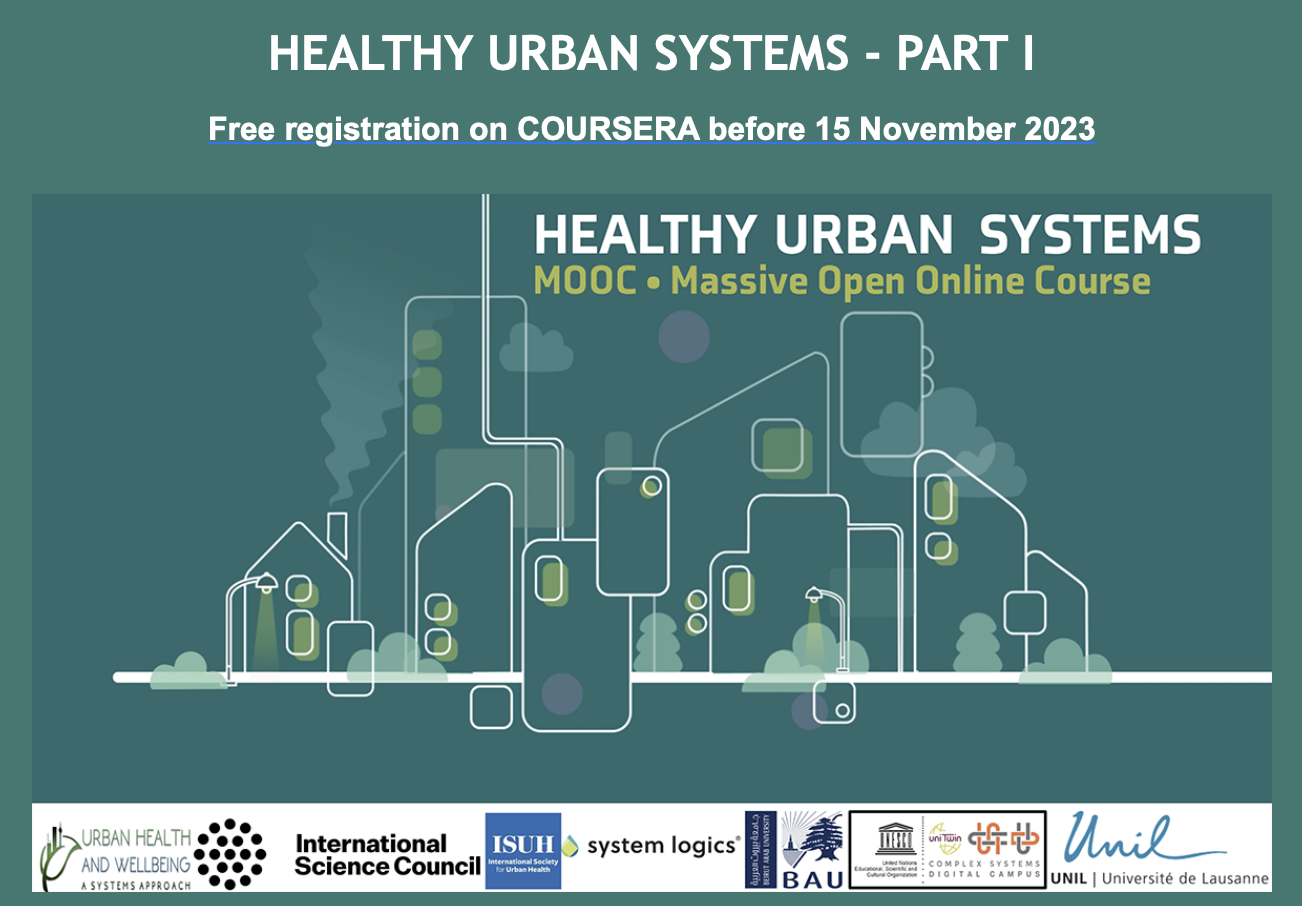
MOOC – Healthy Urban Systems

We invite you to the Massive Open Online Course (MOOC) Healthy Urban Systems, designed specifically for professionals and enthusiasts in the field of urban health. This first part of the MOOC series (consisting of 3 MOOCs) will take you on a comprehensive 4-week journey, navigating through multidisciplinary frameworks and analytical observations critical to understanding the complexities of urban health.

You will learn to:

  • Address urban health through complex multidisciplinary approaches.
  • Use multidimensional and multiscale concepts, methods, and ecosystem frameworks.
  • Mobilize and support all players directly or indirectly involved in urban health.
  • Dedicated to all levels of disciplines linked to the city, health, the environment, social and human sciences, data sciences…

The MOOC is entirely in English, with possible subtitles in French and Chinese.

Materials: videos, glossary, quizzes, exercises, discussion forum.

Duration: 4 weeks – 1 session per week to be taken at your convenience.

Workload: 2 to 3 hours per week.

Accreditation (possible and not compulsory): 2 ECTS for PART I, issued by the University of Lausanne.

General coordination:

University of Lausanne – UNIL-EPFL Foundation for Continuing Education

Prof. Céline Rozenblat, Jeff van de Poel