Categories
Books Cities Communication Economy Graph analysis History MAPS Misc Networks Resilience SCIENCE Social network Social science Society Vizualization World

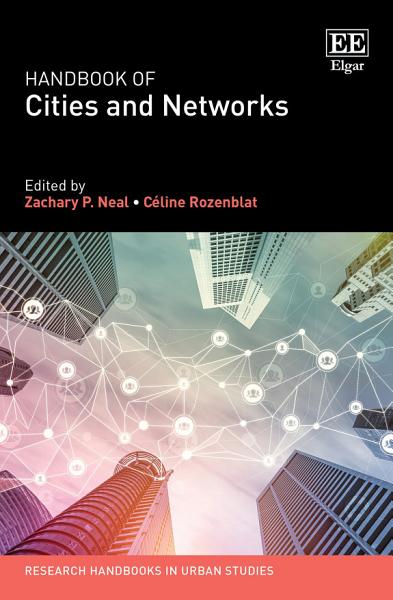
Handbook on cities and networks

Edited by Zachary P. Neal, Associate Professor, Department of Psychology, Michigan State University, US and Céline Rozenblat, Professor of Urban Geography, Faculty of Geosciences and Environment,Université de Lausanne, Switzerland

Publication Date: 2021 ISBN: 978 1 78811 470 7 Extent: 672 pp

If you want to understand cities – the innovation and dynamism they generate and the way they sort and segregate people by class, race and other dimensions – you have to start by understanding that cities are networks. Zachary Neal and Céline Rozenblat have done all of us who care about cities a great service by pulling together the very best and brightest thinkers on cities and networks in this terrific volume.
– Richard Florida, University of Toronto, US and author of The Rise of the Creative Class and The New Urban Crisis

This Handbook of Cities and Networks provides a cutting-edge overview of research on how economic, social and transportation networks affect processes both in and between cities. Exploring the ways in which cities connect and intertwine, it offers a varied set of collaborations, highlighting different theoretical, historical and methodological perspectives.

International contributions assess the state of the field of network analysis, presenting interdisciplinary insights that draw on theory from geography, economics, sociology, history, archaeology and psychology, and outlining methodological tools that include ethnographic, qualitative and quantitative approaches. Illustrating a framework for integrating the diversity of urban networks, the Handbook demonstrates that by exploring urban networks with different combinations of levels and scales, new insights and opportunities can emerge.

Featuring focused studies on specific regions and cities, this state-of-the-art Handbook is essential reading for scholars and researchers of urban studies and regional science, particularly those focusing on the transformation of cities as connected spaces through intracity and intercity networks. Its core theoretical insights will also benefit graduate students in urban studies and network analysis.


Categories
Art Books History MAPS Networks

Mapping Philosophy in the Paris metro

An interesting network interactive vizualization of philosophy where lines and connections are more important than the proximity in the network… follow each line to know more about a philosophical (sometimes literature or artistic) domain (unfortunately in French)

https://lesphilosophesdanslemetro.com/plan/

Categories
Art

GREETINGS 2018

Categories
Cities Europe History MAPS Networks

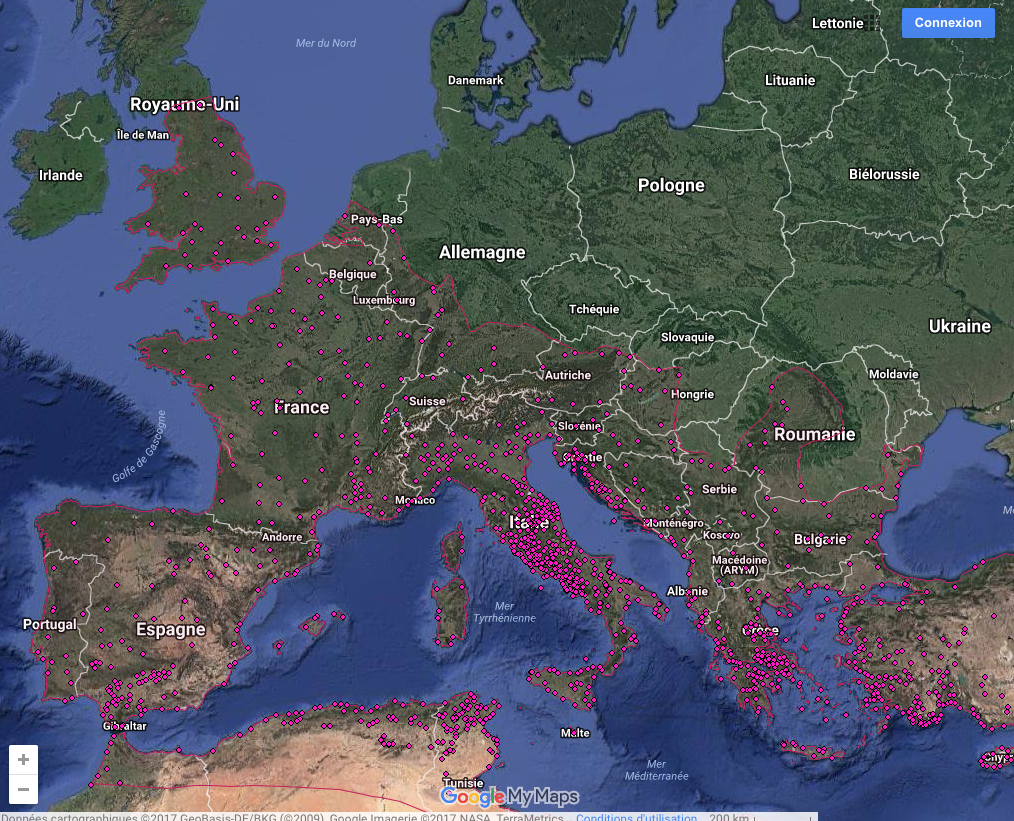
Urban Geography of the Roman World, 100 BC to AD 300

An interactive map of urbanism in the Roman world in the imperial period:


ALSO OUT NOW:

Hanson, J. W., (2016), An Urban Geography of the Roman World, 100 BC to AD 300, (Archaeopress).


Categories
Geography Simulation

International Land Use Symposium (ILUS) 2017 – Use of spatial modelling and data visualisation to enlighten future sustainable policy making

Date: November 1-3 2017

Steigenberger Hotel de Saxe, Dresden, Germany

Call for Abstracts (Deadline: 31 July 2017)
Suggested topics for English-language presentations can be submitted via the symposium website (https://www.ilus2017.ioer.info).

Main Topics:
– Big Data and the City as a Complex System
– Historic Settlement and Landscape Analysis
– Morphological Analysis
– Varia: This topic contains free contributions whose topical focus is indirectly related.

Registration (Deadline for early bird registration: 31.08.2017)
Also the registration for participants without own contribution is possible from now on:

https://www.ilus2017.ioer.info/registration.html

Further Information
https://www.ilus2017.ioer.info

Categories
Cities Misc Networks Research project Simulation Social network Social science

Theories and models of urbanization

ERC GeoDiverCity International Workshop

Thursday 12th and Friday 13th October 2017 | Paris, France


ERC GeoDiverCity

https://geodivercity.parisgeo.cnrs.fr/blog/international-workshop/

Categories
Cities Economy Misc Networks Social network Vizualization World

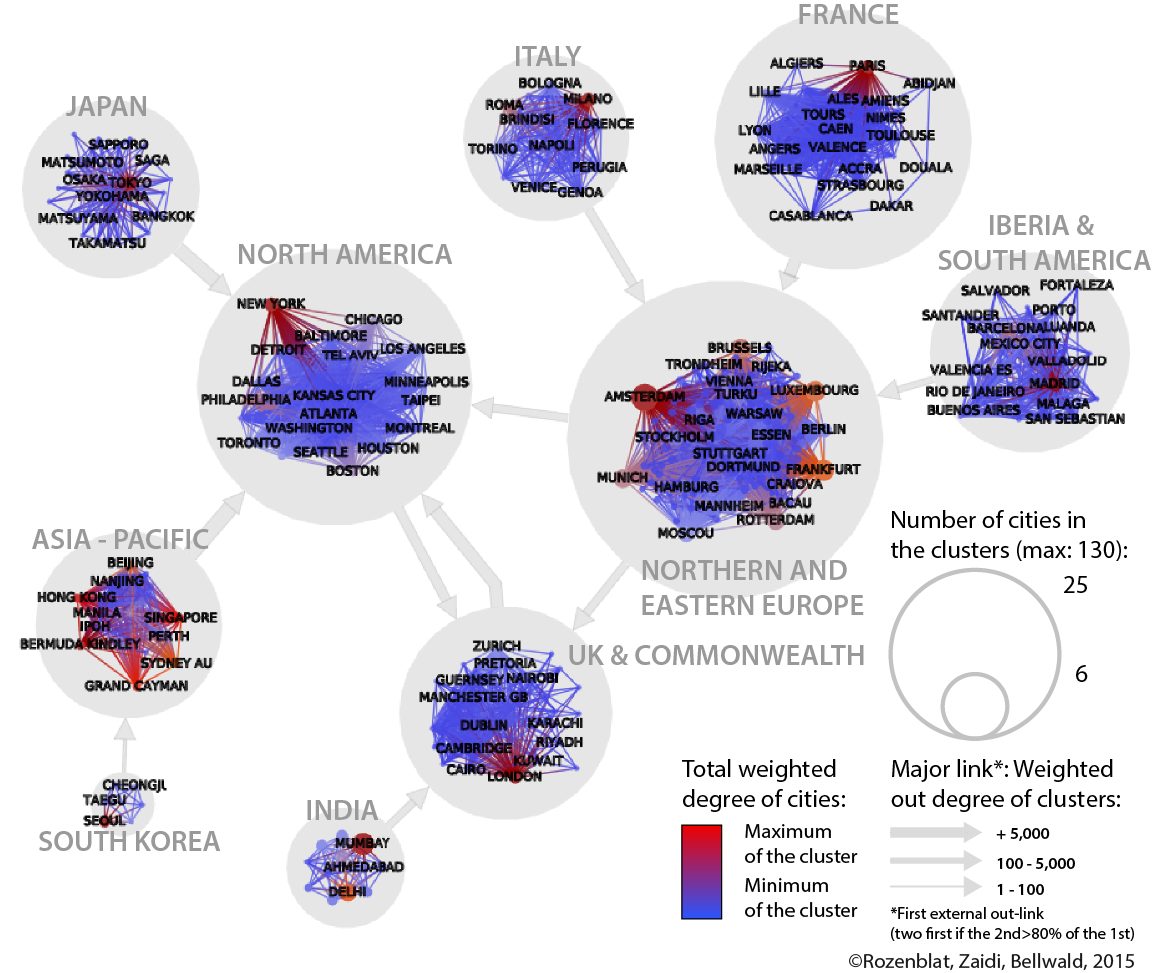
The Multipolar Regionalization of Cities in Multinational Firms’ Networks

Rozenblat, C., Zaidi, F., & Bellwald, A. (2017). The multipolar regionalization of cities in multinational firms’ networks. Global Networks, 17(2), 171-194.

Preprint paper

Categories
Cities Economy Misc Networks Research project SCIENCE Simulation Social network Social science Society Vizualization

CCS’15 & CS-DC’15 – Watching again the E-Session on Territorial Intelligence for Multi-level Equity and Sustainability

cropped-cropped-logo2

For those who missed the session Territorial Intelligence for Multi-level Equity and Sustainability, you can visualize online individually each presentation :

Denise Pumain, University Paris 1. ERC GeodiverCity (Keynote Speaker – Conference CS-DC)

World Urban Dynamics and climate change toward territorial intelligence for ensuring sustainability and equity by multi-level governance

Panos Argyrakis, University of Thessaloniki

Comparison of single and multiplex patent networks

Celine Rozenblat, Antoine Bellwald, University of Lausanne

Self reinforcement between urban firm’s networks at local and global scale: Comparison of single and multiplex patent networks

Elfie Swerts, ERC GeodiverCity

Scaling laws in Chinese urban system in light of harmonized data

Olivier Finance, University Paris 1 – CNRS

Scaling laws to explore innovative behavior of transnational investment

Paul Chapron, ERC GeodiverCity

Building and exploring systems of cities models via high performance computing

Denise Pumain, University Paris 1. ERC GeodiverCity

Scaling laws in urban evolution: A construction in territorial intelligence


The entire program of the TRACK “From Fields to territories to the Planet” is available here:

https://cs-dc-15.org/e-tracks/territories/

Categories
Cities Environment MAPS Misc Networks Society Vizualization

Where people run in major cities

Interestingly…. they prefere parks and river sides :-(((( What a new information!!!!

Capture d’écran 2016-02-03 a? 14.25.47

Where People Run

Categories
Misc

Season’s Greetings 2016

carte_CITADYNE_2016

Categories
Books Cities Geography Misc

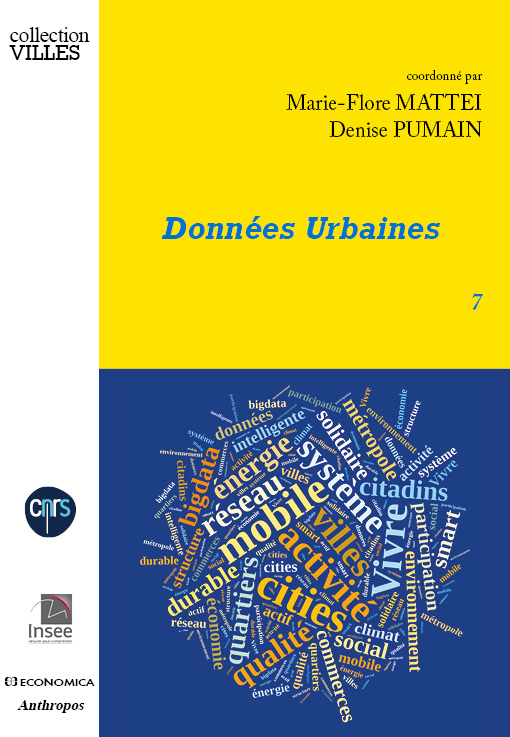
Données Urbaines 7

Just published:

URBAN DATA 7 (Données Urbaines)

Decrypting new diverse and massive urban data, this book shows how cities, their governments their inhabitants, their businesses , adapt deeply to all these transformations. The book is divided into six main chapters, each grouping of items within the reach of the great public by experts on urban policies, urban life, space and social structures, the economy, the functioning of cities in systems and the urban environment. The continuity of these themes with previous volumes in the series can measure the importance of the transformations that highlight how adaptation to change is more than ever the driving force for dynamics cities. Teachers, students, policy makers, urban practitioners and ordinary citizens will find keys to understanding these developments and knowingly take part in.

Donnees Urbaines 7

Categories
Mobility Networks Social network Social science Vizualization World

The global flow of people

Explore new estimates of migration flows between and within regions for five-year periods, 1990 to 2010. Click on a region to discover flows country-by-country.
Capture d’écran 2015-08-07 à 23.35.37
Categories
Cities World

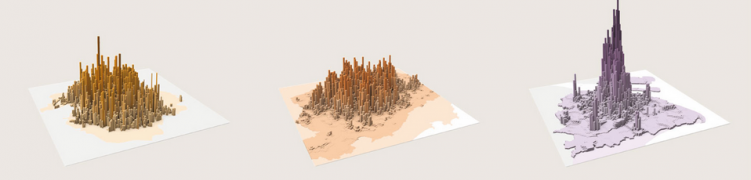
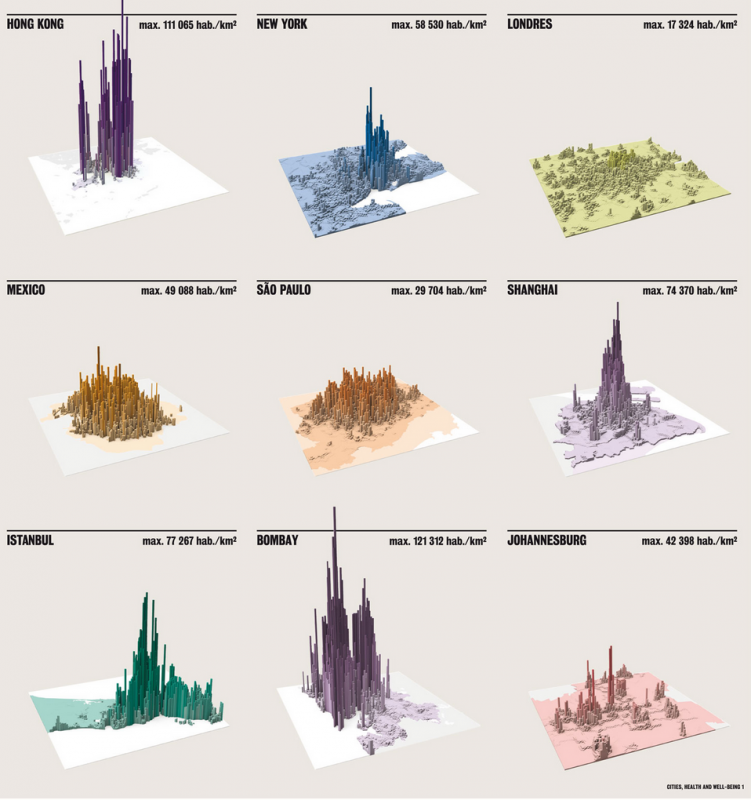
Cities’ densities – A comparative approach

Source: London school of economics, 2015Image densités villes

Categories
Communication Geography MAPS Networks Vizualization World World event

Map of the world of the most popular requests on internet 2013

By Jaume Serra published in the “Courrier international” of January 2nd 2014

Capture d’écran 2014-01-02 à 13.57.30

Categories
Art Cities Misc Vizualization

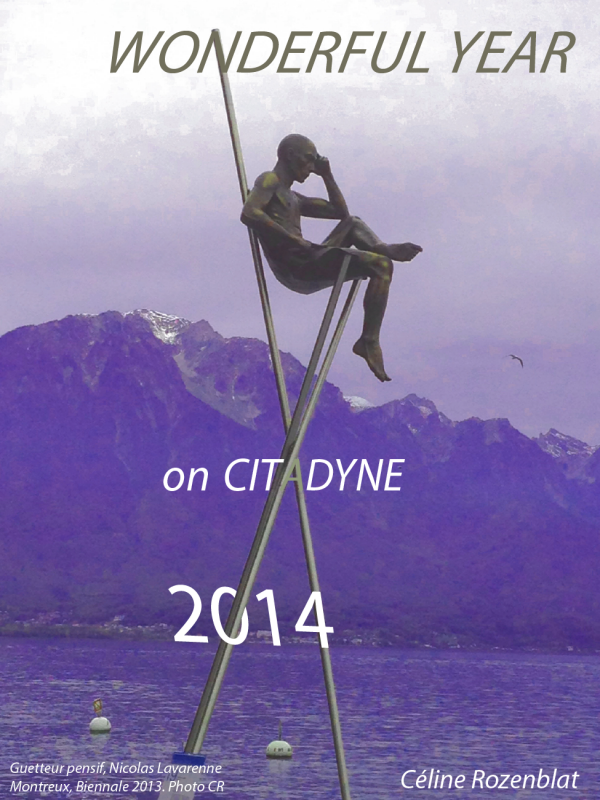
Wonderful New Year 2014

Carte voeux 2014_CITADYNE

Categories
MAPS Networks Social network Vizualization World

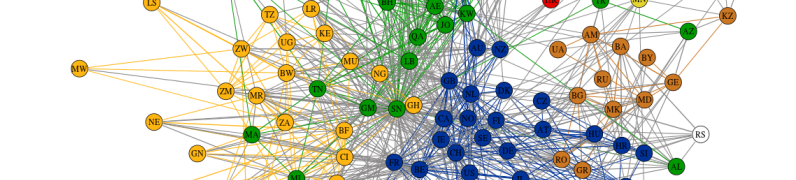
An incredible map of which countries e-mail each other, and why?

The Internet was supposed to let us bridge continents and cultures like never before. But after analyzing more than 10 million e-mails from Yahoo! mail, a team of computer researchers noticed an interesting phenomenon: E-mails tend to flow much more frequently between countries with certain economic and cultural similarities.

see the paper in Washington Post

original paper: State et al. 2013 World internet


email-chart

Categories
Cities Europe Geography Graph analysis History MAPS Networks Simulation Vizualization

ORBIS: the Stanford Geospatial Network Model of the Roman World

The system calculates the distance from a city to another one, according to faster path, or lower cost.

https://orbis.stanford.edu/

Go to “Mapping ORBIS”, It draws the path and create many different maps and graphs (in “Map gallery”). It’s a pity that the Emperors did not have this system 🙂


Categories
Communication MAPS Misc Networks SCIENCE Vizualization World

Science Metrix

A website showing the proximities between sciences, between fields, maps of ontologies:

https://www.science-metrix.com/OntologyExplorer/#app=cde1&8f8c-selectedIndex=2

Capture d’écran 2013-02-26 à 19.40.22

https://www.science-metrix.com/OntologyExplorer/#app=cde1&8f8c-selectedIndex=1

Capture d’écran 2013-02-26 à 19.41.16


Categories
Art Books Cities Geography Graph analysis Networks Vizualization

Art and Geography

Three years ago, a friend of mine who is a genius artist (Catherine Bolle), asked me to do geography on her biography. She told me many things about her life, during some few sundays afternoon in the Beaurivage Hotel in front of the lake in Lausanne. It took one year to build the data and think about the pictures to produce. Then to build them and interpret with a nice text.

C_ROZENBLAT_BOLLE_PARCOURS

IMAGE_BOLLE

Categories
Misc Social network Society Vizualization

What is wrong with social networking?

A conversation with scientist and inventor of the World Wide Web Tim Berners-Lee on what is wrong with social networking

Sir Tim berners Lee in DAVOS 2013