With roughly 150 million children affected, undernutrition remains one of the most important public health threats. Nevertheless, we lack efficient treatments to allow chronically malnourished (stunted) children regain normal growth or prevent them from relapsing after treatment for acute undernutrition (wasting). This treatment failure is due to the fact that we know little about the underlying pathophysiological mechanisms. Undernutrition is a complex entity entailing at the same time climatic, socio-economic and biological factors. The underlying causes of stunting range from inadequate food to poor hygiene and repeated infections. In the last years evidence has accumulated that a chronic, inflammatory syndrome of the small intestine, called environmental enteric disease (EED), also plays a major role in this syndrome. EED seems to be the result of a continuous exposure to a highly microbiologically contaminated environment and is characterized by an increase in the permeability of the small intestine and influx of immune cells into the gut epithelium. EED is also associated with changes in the small intestinal microbiota.
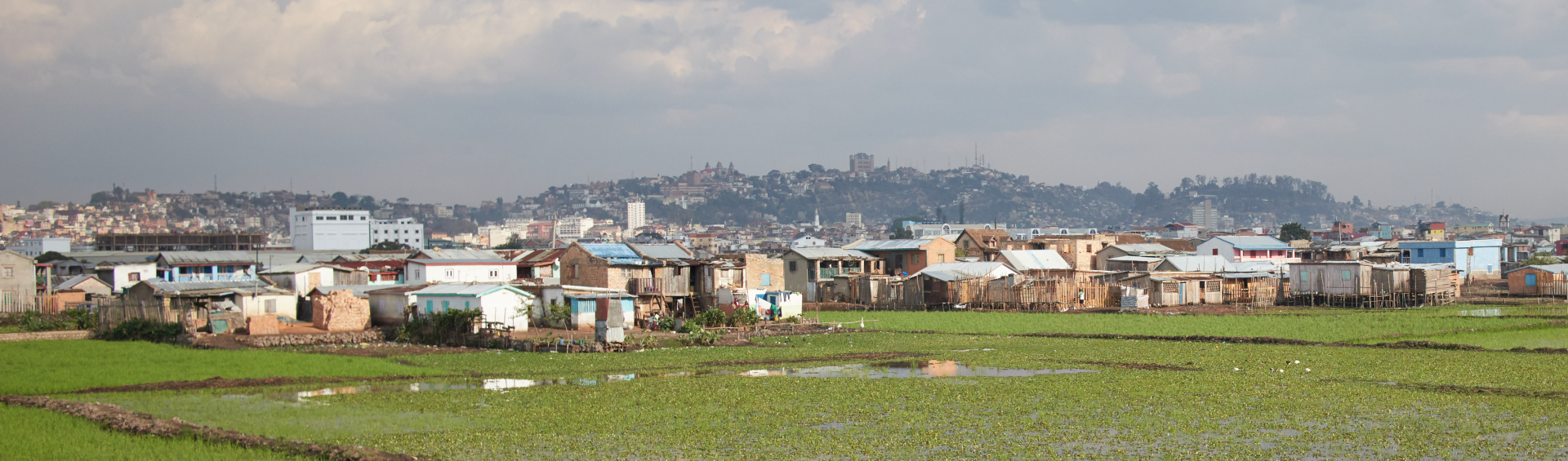
Within the Afribiota project, led jointly by the Institut Pasteur, the Institut Pasteur de Madagascar and the Institut Pasteur de Bangui (PI: Philippe Sansonetti & Pascale Vonaesch), we aimed at elucidating the pathophysiological mechanisms underlying stunted child growth. To this purpose, we recruited almost 1000 children aged 2-5 years living in Bangui, Central African Republic and Antananarivo, Madagascar. We also established a large biobank.
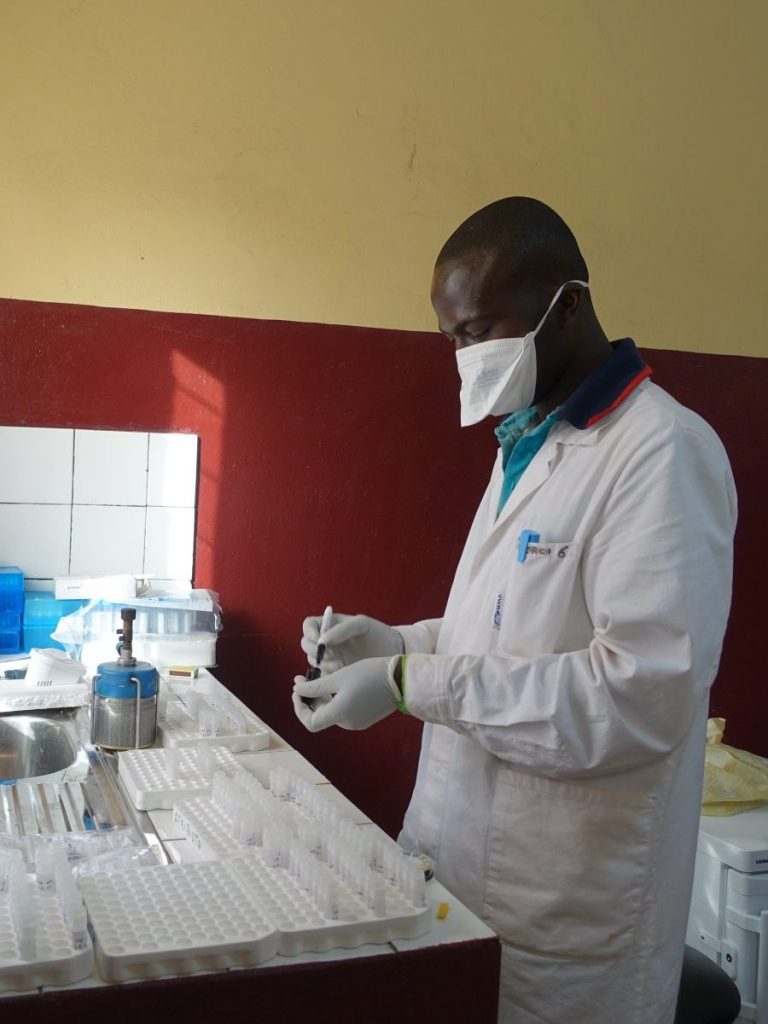
Several exciting articles have already been published on the project, and within the Vonaesch Lab we are currently focusing on elucidating several further aspects of the pathophysiology using samples from the previously established biobank. Key discoveries are related to small intestinal oral bacteria overgrowth, a new form of intestinal overgrowth (causally) linked to undernutrition, the first description of the eukaryome in undernourished children along the whole gastrointestinal tract, as well as a thorough analysis of the correlation of different putative EED biomarkers with each other. Furthermore, we also analysed enteropathogen and parasite carriage, links of undernutrition with socioeconomic factors, and links between undernutrition and the immune system and cognitive development of children.
Articles related to the Afribiota Project
https://bmcpediatr.biomedcentral.com/articles/10.1186/s12887-018-1189-5
https://www.pnas.org/content/115/36/E8489.long
https://microbiomejournal.biomedcentral.com/articles/10.1186/s40168-020-00890-1
https://journals.plos.org/plosntds/article?id=10.1371/journal.pntd.0009333
https://link.springer.com/article/10.1007%2Fs10995-021-03201-8
https://www.nature.com/articles/s41467-021-27191-x#article-info
https://www.ncbi.nlm.nih.gov/pmc/articles/PMC9119516
https://www.ncbi.nlm.nih.gov/pmc/articles/PMC9202423
https://bmcpublichealth.biomedcentral.com/articles/10.1186/s12889-022-13716-6
https://www.mdpi.com/2072-6643/14/16/3312
https://www.pnas.org/doi/pdf/10.1073/pnas.2209589119
https://academic.oup.com/microlife/article/doi/10.1093/femsml/uqad033/7227336
https://www.ncbi.nlm.nih.gov/pmc/articles/PMC10459613
https://www.nature.com/articles/s41598-026-35174-5
Gallery

Funding