
The 25th International Symposium on Geo-disaster Reduction (ISGdR 2027) will be organized in Lausanne, Switzerland, as the annual scientific meeting of the International Consortium on Geo-disaster Reduction (ICGdR). Continuing the tradition of previous ISGdR meetings held across Asia, Europe and North America, the symposium will provide an international forum bringing together scientists, engineers, practitioners, decision-makers and young researchers working on the understanding, assessment and reduction of geo-disaster risks.
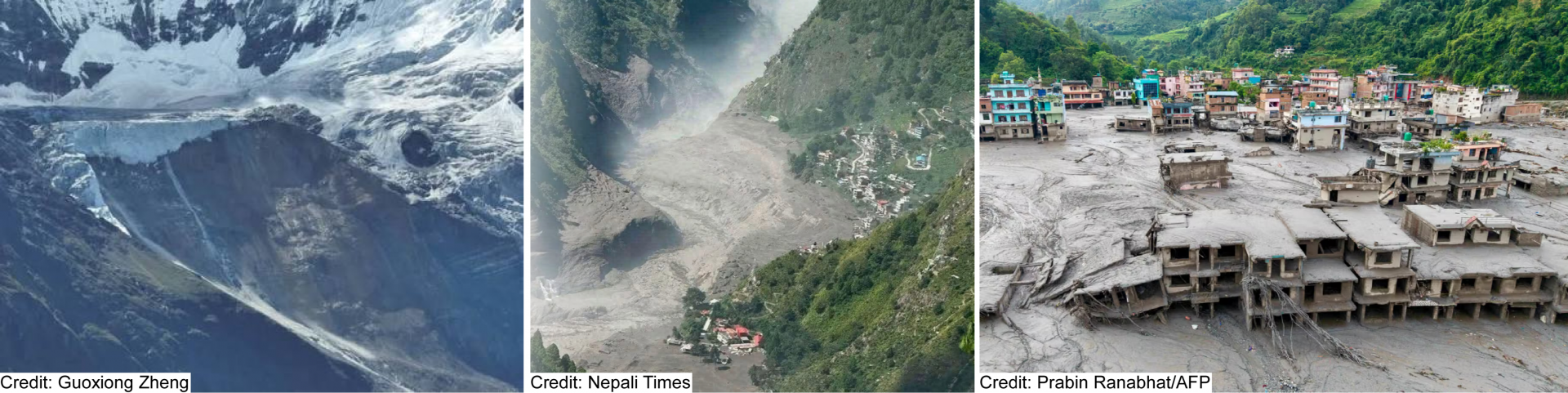
The central theme of the 2027 meeting will be “Climate Change and Cascading Geo-Hazards.” Climate change is modifying the environmental conditions, controlling many geological and hydrogeological hazards. Increasing temperatures, glacier retreat, permafrost degradation, changes in snow cover, intense precipitation and modifications of hydrological regimes can alter the frequency, magnitude and spatial distribution of landslides, rockfalls, debris flows, floods and other mass movements. Particularly challenging are cascading events, in which an initial process triggers one or several secondary hazards. Examples include rock or ice avalanches generating debris flows, landslides damming rivers and producing subsequent outburst floods, or extreme rainfall simultaneously triggering landslides, debris flows and flooding over large areas.
Recent catastrophic events in mountain regions demonstrate that conventional approaches considering hazards independently are increasingly insufficient. The symposium will therefore examine geo-disasters as interacting and evolving systems, from triggering processes to cascading consequences and impacts on society and infrastructure. Particular attention will be given to the mountainous environment, while contributions addressing other mountain regions and geological settings worldwide will provide an essential international perspective.
Scientific sessions will address topics including climate-driven changes in geo-hazard activity; cascading and compound hazards; landslide, rockfall and debris-flow processes; glacier and permafrost-related instabilities; extreme precipitation and hydro-geological hazards; earthquakes induced cascading processes (tsunami, landslides, etc.); monitoring and remote sensing; numerical and physical modelling; artificial intelligence and data-driven approaches; susceptibility and hazard mapping; early-warning systems; quantitative risk assessment; resilience; mitigation strategies; and risk communication and governance. Contributions connecting scientific understanding with operational risk management will be particularly encouraged.
A major objective of ISGdR 2027 will be to stimulate interaction between internationally recognized specialists and the next generation of geo-disaster researchers. Approximately 12 invited keynote speakers will present state-of-the-art research and perspectives on emerging challenges. The meeting will support their travel and participation, with the invited group combining leading international researchers with several prominent scientists working in Switzerland. This combination will strengthen exchanges between the international ICGdR community and Swiss expertise in natural hazards, Alpine processes, monitoring, modelling and disaster-risk management.
The meeting will extend over four days. The first day will be dedicated to the ICGdR Board Meeting, providing an opportunity to review Consortium activities, technical committees, international collaborations and future initiatives. This will be followed by two full days of scientific conference, structured around keynote lectures, oral presentations, thematic sessions and opportunities for discussion and networking. Young researchers and students will be strongly encouraged to participate and present their work.
The fourth day will consist of a scientific field excursion illustrating geo-hazard processes and risk-management practices in the Swiss Alps. The excursion will connect the scientific discussions of the preceding days with field observations and real examples of monitoring, hazard assessment, mitigation and risk governance.
By combining international scientific exchange, institutional coordination and field experience, ISGdR 2027 in Lausanne will contribute directly to the ICGdR mission of advancing knowledge, strengthening international cooperation and developing effective approaches for geo-disaster reduction. The meeting will particularly emphasize the need to move from the analysis of individual hazards toward an integrated understanding of climate-driven, interconnected and cascading geo-hazard systems, one of the major challenges facing disaster-risk reduction in a rapidly changing world.
This format closely follows the ICGdR philosophy: its statutes explicitly define annual symposia as a means of presenting scientific and technological progress and developing the capacity of young scientists and engineers, while international meetings and field trips are among the Consortium’s core activities. icgdr.org.cn The four-day Board → Conference → Conference → Field excursion structure is also consistent with the format used for Salerno, which ran from 22–25 July 2024 and included a dedicated field trip. icgdr.org.cn