|

|
|
|
Info DEE No. 60 - March 2024
|
|
|
|
|
A WARM WELCOME TO OUR NEW COLLEAGUES
|
|
|

|
|
Ms Jessica Bainbridge has joined the group of Prof. Pannell as a Intern. Jessica is located in office BIO-4323, phone 42,43. Jessica.Bainbridge@unil.ch
|
|

|
|
Ms Marika Funck has joined the DEE as Administrative Assistant. Marika is located in office BIO-3109, phone 41.65. Marika.Funck@unil.ch
|
|
|
|

|
|
Mr Michael Meier has joined the group of Prof. Guisan as a External Scientific Collaborator. Michael is located in office BIO-2108.1, phone 41,93. michael.meier.1@unil.ch
|
|

|
|
Ms Vedrana Slipogor has joined the group of Prof. van de Waal as a Postdoctoral researcher. Vedrana is located in office BIO-3209, phone 42,19. Vedrana.Slipogor@unil.ch
|
|
|
|
|
|
|
Ms Alia Rodriguez Villate has joined the group of Prof. Sanders as a Researcher. Alia is located in office BIO-4314, phone 42,72. Alia.RodriguezVillate@unil.ch
|
|
|
|
|
|
A big thank you to our student assistants for their valuable help!
|
Maëlys Baffou (Pannell Group)
|
|
Antoine Chatillon (Pannell Group)
|
|
Morgane Lambert (Pannell Group)
|
|
Mia Pasquier - Le Flohic (Pannell Group)
|
|
|
|
|
|
|
|
|
|
|
|
Giulia Zancolli was featured on episode 4 of the FBM podcast series celebrating the faculty's 20th anniversary.
|
She spoke about defense and attack mechanisms, i.e. venom, and about here work here in DEE.
|
|
A related quiz was also published:
|
|
|
|
|
|
|
|
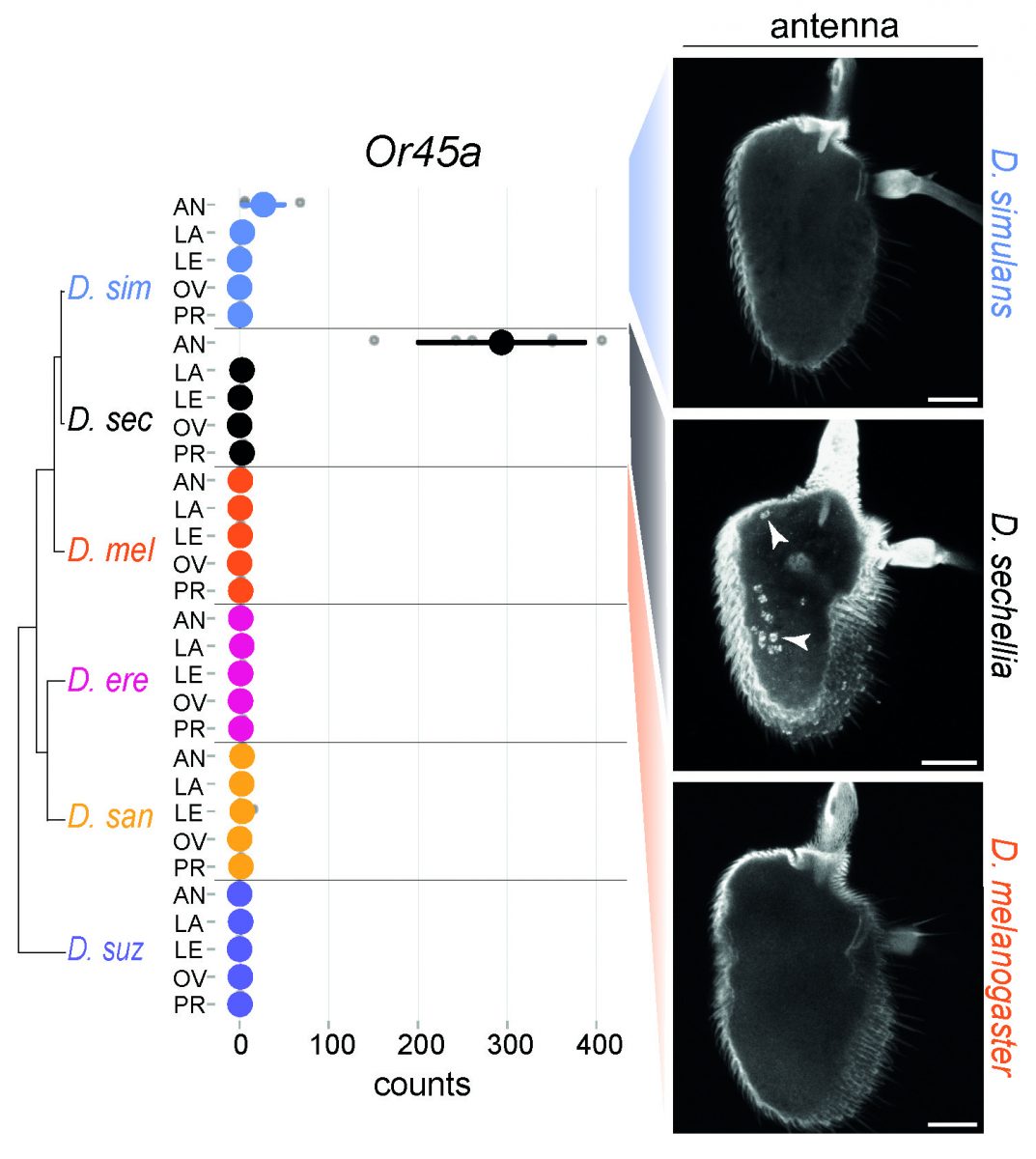
The Arguello group published a new study in Nature Communications. To understand the molecular and cellular changes underlying the incredible diversification of sensory organs, Gwenaëlle Bontonou and Bastien Saint-Leandre led the generation and analyses of a large-scale transcriptomic dataset of five sensory tissue across six ecologically diverse drosophila species. Although stabilizing selection was found to be the predominant force acting on sensory transcriptome evolution, several thousand genes have evolved divergent expression optimum in each tissue. Integration of the bulk-RNA results at the single cell level revealed that expression divergence is facilitated when genes are relaxed from pleiotropic constrains. Indeed, a gene for which expression is restricted to one cell type is more likely to evolve expression change than a gene expressed in multiple cell types. The large families of chemosensory receptor genes (~400 genes), expressed in specialized sensory neurons, represent a nice example since most (> 97%) of them have changed in expression over the last 15 My. Together, these analyses provide new insights for understanding evolutionary changes in chemosensory tissues at both global and individual gene levels.
|
|
|
|
|
|
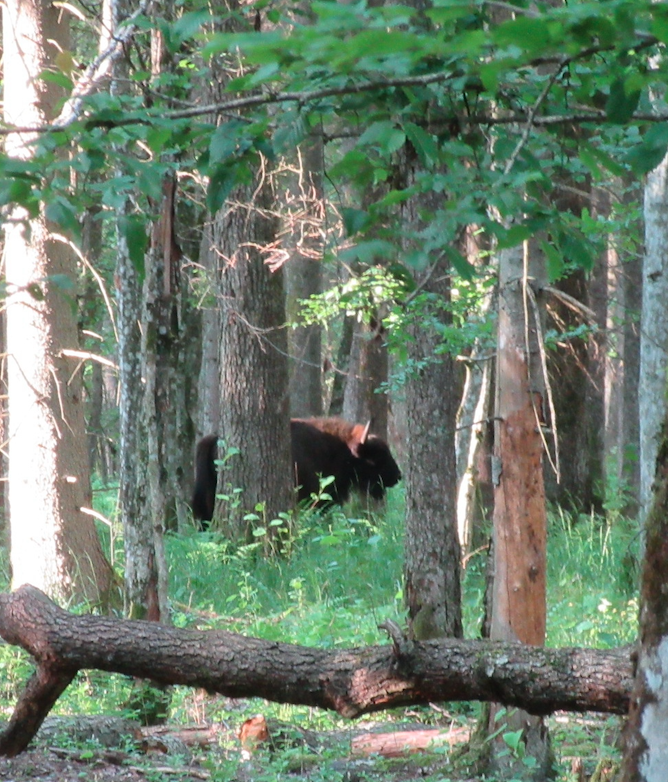
A study conducted by Eduard Mas-Carrió and Luca Fumagalli in collaboration with the Polish Academy of Science shows how the risk of predation by wolves influences the diet of red deer but not European bison in the Bialowieza Forest, Poland.
|
The researchers explored how landscape variability influences diet composition through niche overlap. We used eDNA metabarcoding to quantify the diet composition of two large herbivores of the Bialowieza Forest, red deer (Cervus elaphus) and European bison (Bison bonasus) to investigate how increasing habitat quality (i.e. higher abundance of deciduous forage species) and predation risk (i.e. density of wolf in the area) influence their diet composition and niche partitioning.
|
Their findings indicate diet composition is non-homogeneous across the landscape, both within and between species. They detected a reduction of niche overlap for red deer with increasing predation risk, leading to more dissimilar diets, suggesting their feeding behaviour is affected by wolf presence. These results show the importance of integrating environment-induced diet variation in studies aimed at determining the landscape usage or niche overlap of a species.
|
|
|
|
|
|
Morphologically cryptic and pseudo-cryptic species pose a challenge to taxonomic identification and assessments of species diversity and distributions. In this study, Kenneth Kim (Robinson-Rechavi group) genotyped microsatellite markers to examine the pseudocryptic diversity within the tropical echinoderm species Stichopus cf. horrens. The broad concordance between highly differentiated genotype clusters and mtDNA lineages, coupled with the absence of F1 hybrids indicates restricted gene flow and limited contemporary interbreeding, providing further support for species delineation. Thus the authors propose that these lineages be referred to as Stichopus cf. horrens species complex.
|
|
|
|
|
|
|
Amandine Serrurier published her master thesis she did with the Swiss ornithological Institute under the supervision of Philippe Christe . The paper is published in Ibis and is entitled: Mountain is calling – decrypting the vocal phenology of an alpine bird species using passive acoustic monitoring.
|
Her study supports the idea that passive acoustic monitoring can provide valuable data over large spatial and temporal scales.
|
|
|
|
|
|
|
Romain Pigeault, Camille Sophie Cozzarolo, Jérôme Wassef, Jérémy Gremion, Marc Bastardot, Olivier Glaizot and Philippe Christe published in the section Infections of the Peer Community Journal a study entitled:
|
Spring reproductive success influences autumnal malarial load in a passerine bird.
|
They showed that high resource allocation into reproduction can leave birds less able to maintain low parasitemia over the following months.
|
|
|
|
|
|
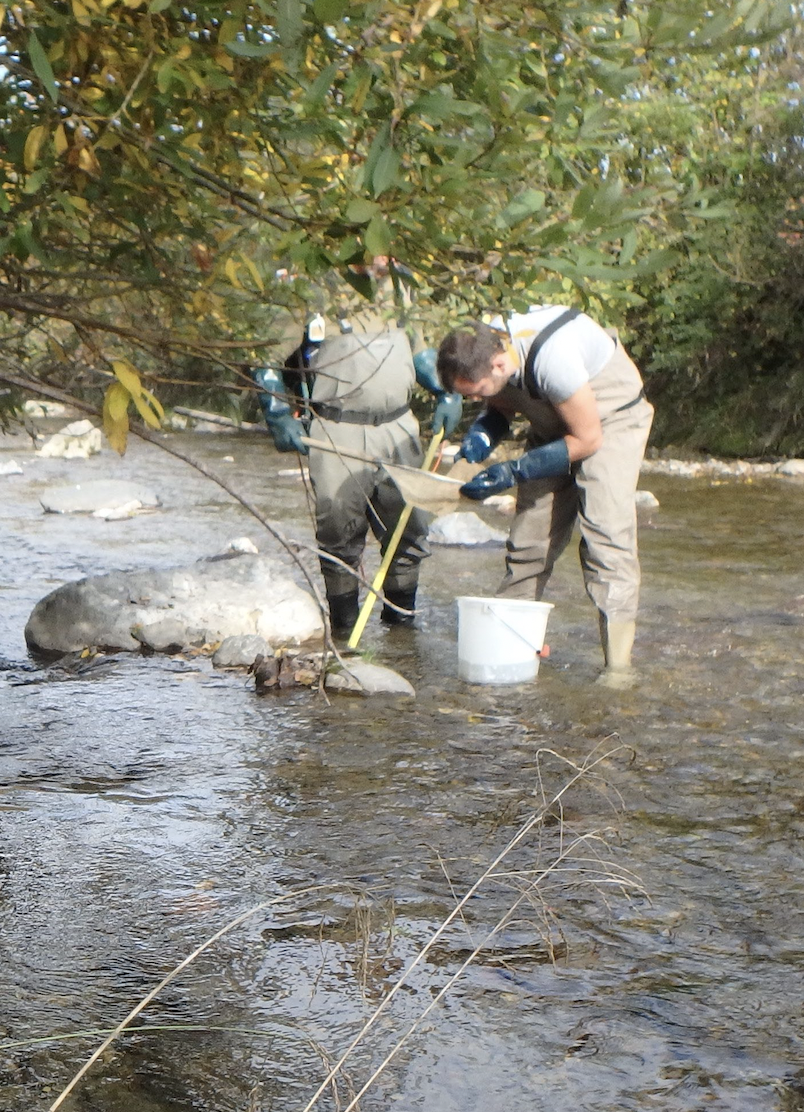
Fish embryos are often used to study the effects of environmental stress. Such studies are typically based on the implicit assumption that early life-history traits are relevant for stress tolerance in the wild. Bylemans & Marques da Cunha et al. (Ecology, in press) tested this assumption by combining two datasets from studies on the same 60 experimentally produced families. These families were used to determine, in separate samples, stress tolerances in the laboratory and the growth of juveniles during 6 months in the wild. The team found that various variables, including stress-induced early hatching in the laboratory, were useful predictors of juvenile performance in the wild.
|
|
|
|
|
|
Germain Montazeaud and Laurent Keller just published an opinion piece in New Phytologist about greenbeard genes in plants. As originally proposed by W.D. Hamilton, greenbeards are selfish genetic elements that make their carriers either more altruistic towards other individuals carrying similar greenbeard copies, or more harmful toward individuals carrying different allelic copies. Although greenbeards have been reported in various taxa, including insects, bacteria, and fungi, none have ever been reported in plants. More strikingly, despite the recent multiplication of studies applying social evolution concepts to plants, the greenbeard concept has not been discussed by plant scientists. In this article, we aim to popularize the greenbeard concept among plant scientists by presenting greenbeard examples in other organisms, discussing theoretical aspects of greenbeard evolution and how they apply to plants, suggesting hypothesis as to why the greenbeard concept has not been applied to plants before, and finally showing that the greenbeard model applies to already known plant-plant interaction mechanisms.
|
|
|
|
|
|
|
While you are encouraged to place your publications into Serval, please make sure that your PI has validated the deposition first. Not all documents should be included in Serval, and they are complicated to remove.
|
|
|
|
|
|
|
|
|
|