Original text published on https://wp.unil.ch/geoblog/2024/03/modeliser-levolution-des-glaciers-grace-au-machine-learning/
Understanding glaciers means delving into both Earth’s ancient history and its climatic future. Guillaume Jouvet, a glaciologist and mathematician at UNIL, leverages machine learning to refine models of glacier dynamics. Using the power of GPUs and deep learning, he simulates glacier evolution over millennia with increasingly high resolution. But AI isn’t just a research tool—it’s also a medium for outreach, capable of generating striking visualizations of Alpine landscapes as they appeared during glaciations. This is science at the intersection of cutting-edge technology and imagination.
The integration of artificial intelligence into his research aims to unlock new avenues for exploring glacier dynamics, understanding their historical role in shaping our landscapes, anticipating their future evolution, and assessing potential impacts on sectors such as alpine tourism and risk management.
Modeling glacier dynamics is a complex task that involves solving equations incorporating a wide range of parameters—climatic, physical, and geomorphological. Traditionally, this approach was constrained by computational limitations, due to the sheer volume of data and variables involved. Deep learning has enabled Guillaume Jouvet to harness the full computing power at his disposal and optimize the efficiency of his modeling calculations (see inset).
Switching from a scale of kilometres to a scale of hundreds of metres
In the context of glacier dynamics, AI allows Guillaume Jouvet to revolutionize his modeling approaches—both in terms of temporal depth and spatial resolution. One of his goals is to enhance the resolution of a simulation tracing the evolution of Alpine glacier coverage over 120,000 years, which he and his colleagues initially developed using a classical model.
His goal is to move from a 2-kilometer scale to a resolution of 200 meters. This substantial improvement is made possible by deep learning, which leverages the computational power of modern machines (see inset). With this new approach, the costly calculations required by classical models are replaced by more efficient learning-based operations. The resulting high-resolution modeling will finally allow researchers to capture the complex topography of the Alps and open up new avenues of scientific inquiry.
How to boost your computer with AI
Guillaume Jouvet explains how AI can be used to optimize computing power by harnessing the Graphic Processing Units (GPUs) of computers. Typically, computations are carried out on the computer’s central processing unit (CPU), which executes program instructions, performs calculations, manages memory operations, and coordinates system components. However, the CPU operates at a fixed execution speed, measured in gigahertz.
The GPU, or graphics processing unit, is traditionally used to optimize image and video rendering. Its major advantage over the CPU lies in its architecture: the GPU contains thousands of cores capable of performing operations in parallel, whereas the CPU has only a few (albeit faster) cores. Guillaume Jouvet illustrates this difference as follows: ” The CPU has 6 Ferraris and the GPU has 10,000 2CVs. This means that with the GPU, we have the capacity to perform an incredible number of operations in parallel. ” . The main difficulty lies in the fact that the calculations must be made ‘parallelisable’ in order to solve the equations so that they can be used by the GPU. AI is the key to this, as AI models (unlike traditional numerical models) naturally parallelise very well.
IA: a means of reaching new heights
In addition to pure research, Guillaume Jouvet also uses AI for communication purposes, for example, producing satellite images of Alpine landscapes that are plausible during the ice age, using generative AI. He believes that ‘AI is a very powerful tool for creating artistic visualisations and thus helping to popularise science among a wide audience.’
For Guillaume Jouvet, ‘AI opens up new horizons and represents a tool that will enable us to reach new milestones.’ In his view, the main limitation lies in the fact that we can only rely on knowledge/data that we already have (i.e. we are not creating new knowledge).
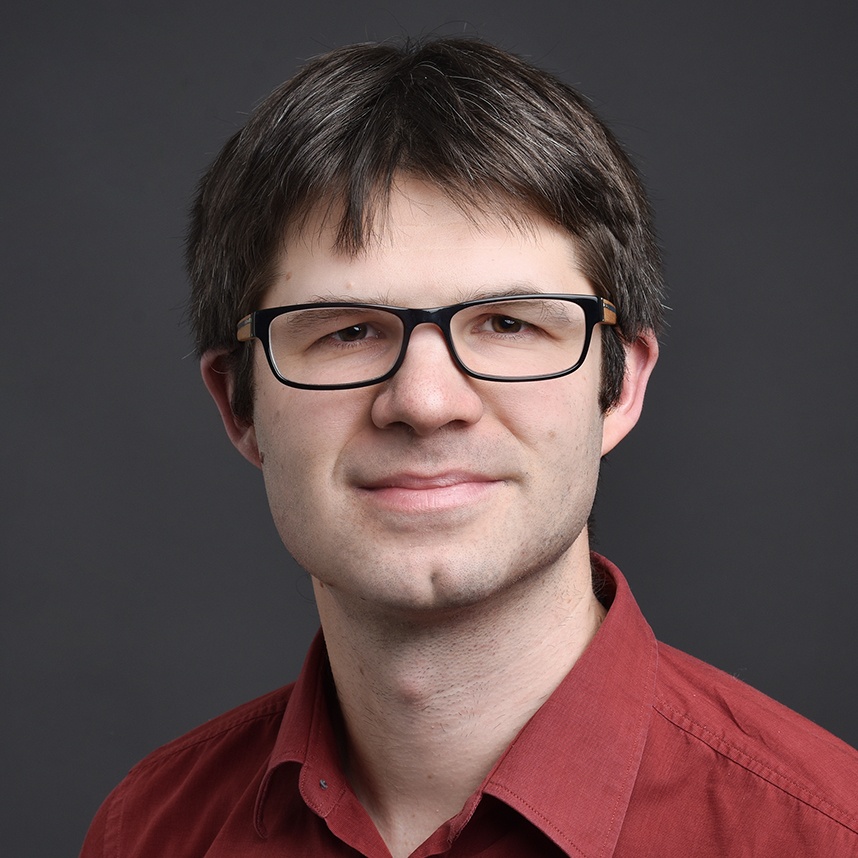
Professor Guillaume Jouvet is a mathematician and glaciologist. He models glacier dynamics and their evolution over time, and studies coastal glaciers in marine environments in particular.
Faculty of Geosciences and Environment
Glaciology, Physics-Informed neural network, Numerical modelling