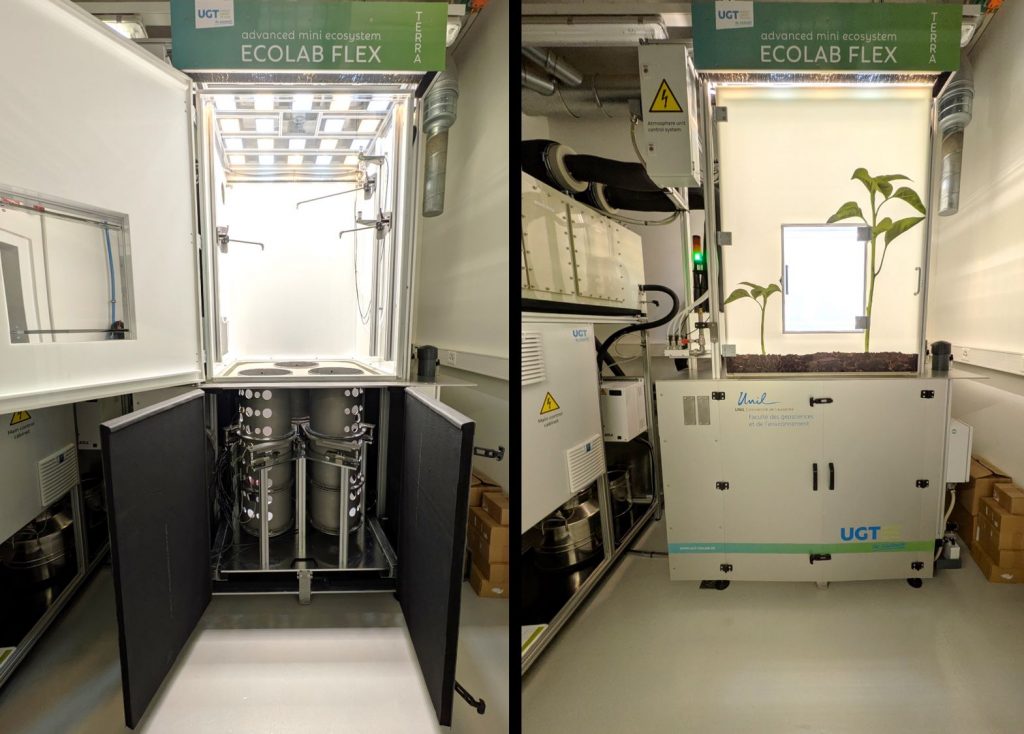
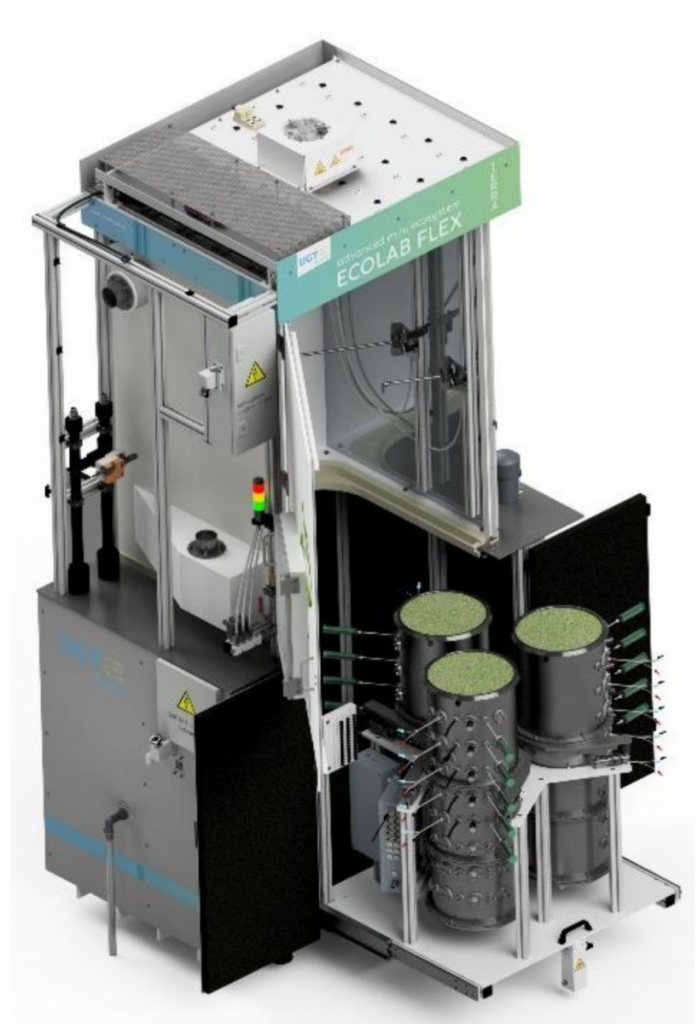
The UNIL Ecotron “Terra” is a climate simulator that allows precise control of environmental conditions such as solar radiation and precipitation, as well as groundwater dynamics. It was manufactured by the german company Umwelt-Geräte-Technik (UGT).
This system makes it possible to observe the soil–plant–atmosphere continuum under laboratory conditions, and investigate the transport of water and solutes in these conditions. Experiments can last from a few days to several months.
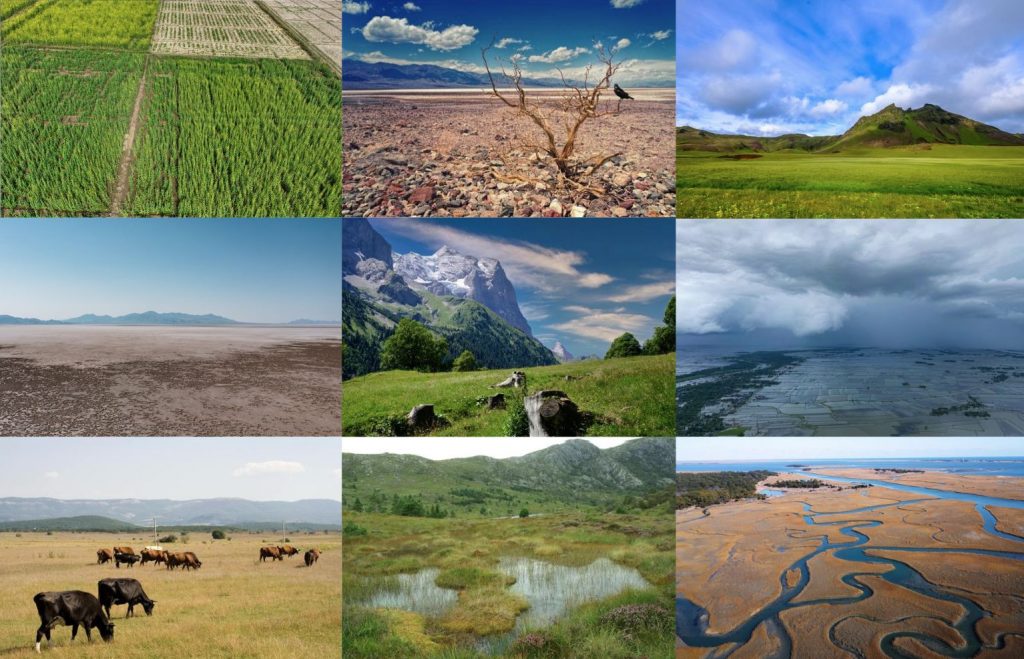
Within the Ecotron, a wide range of climatic and meteorological scenarios can be recreated: from dry to wet, from warm to cold, from a light breeze to a rain storm, from strong sunlight to high humidity, and from high to low groundwater levels.
Experimental setup
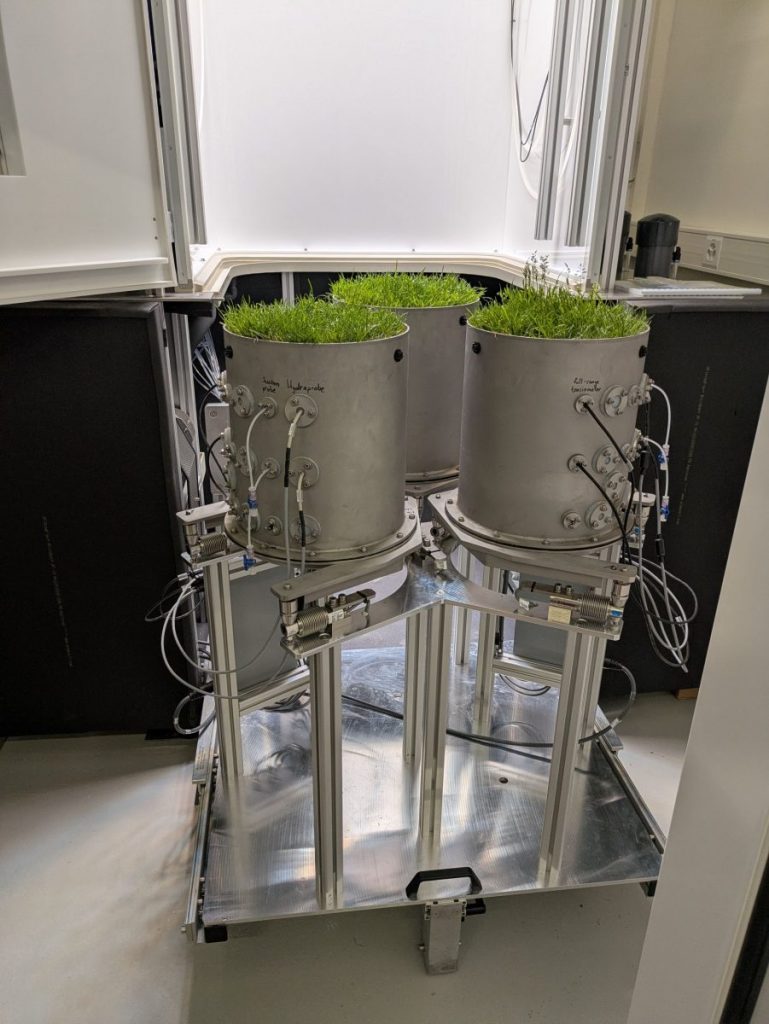
The UNIL Ecotron has a 3 m³ compartment in which three vegetated soil columns, called lysimeters, are installed. They are then exposed to programmed climatic variations in: light exposure, air temperature and humidity, rainfall, soil temperature, and groundwater regime.
The lysimeters of the “Terra” Ecotron can accommodate up to 6 sensors (humidity, soil matric potential, pH, redox potential, water isotope probes, suction probes) at 8 different depths, enabling precise and continuous monitoring of the processes involved.
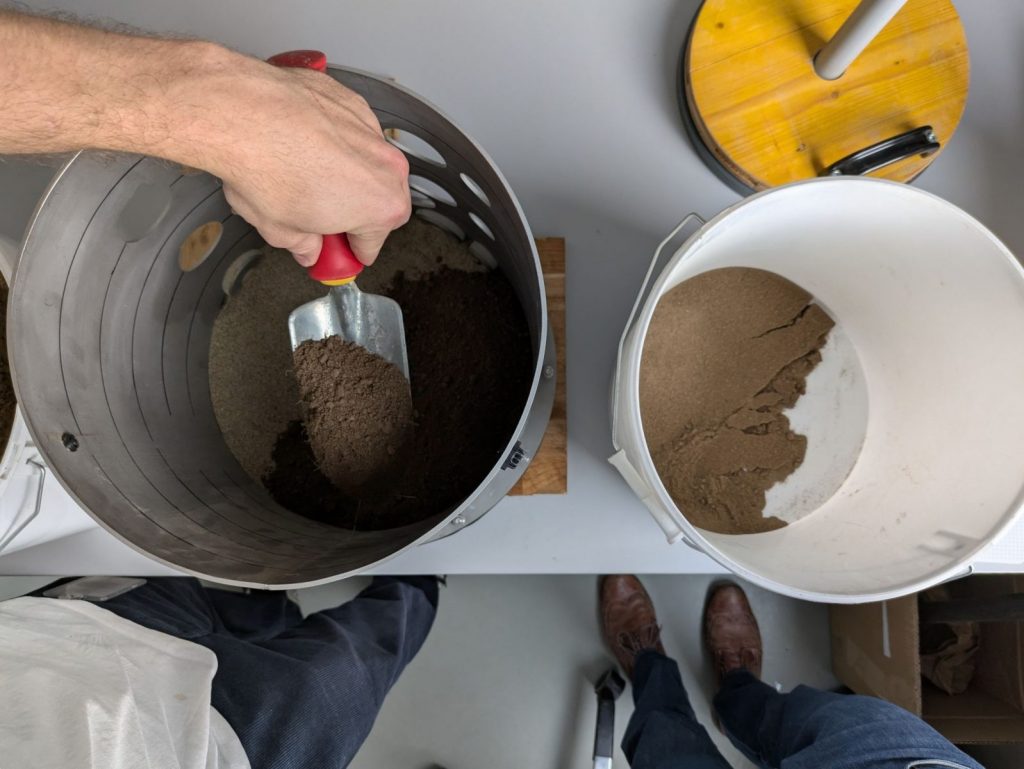
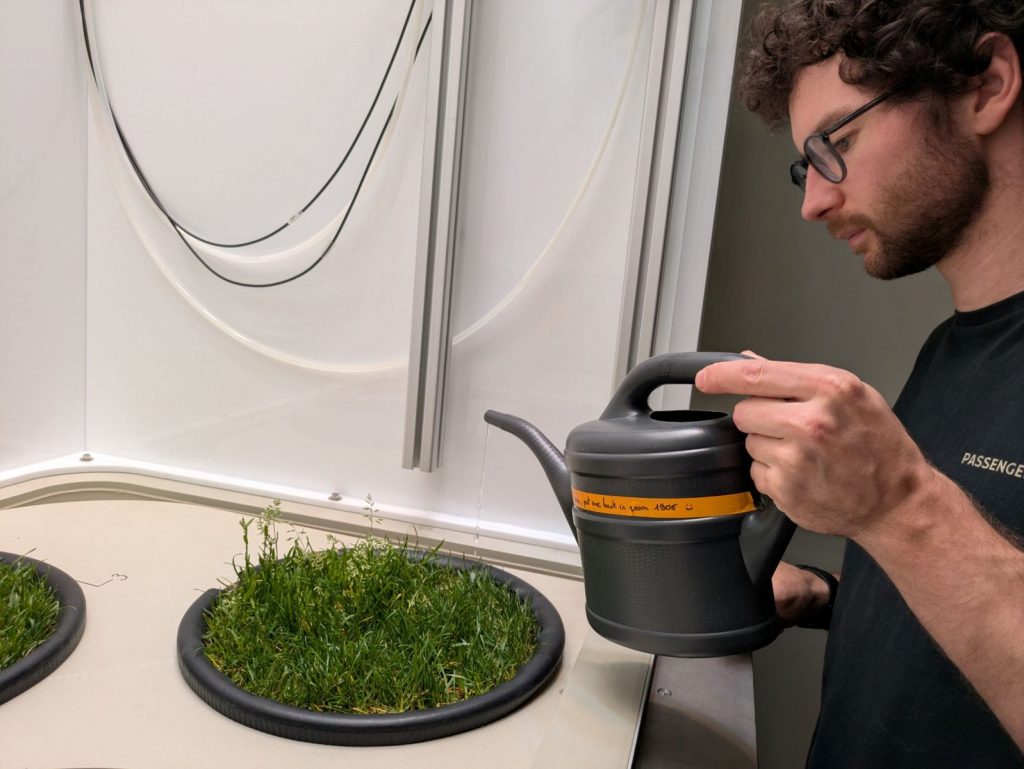
Lysimeters can be filled with a single block of soil collected directly in the field, or with repacked sediments. In the example below, the lysimeters are filled starting with a gravel filter, followed by the soil in which the sensors are installed, and finally a grass cover.
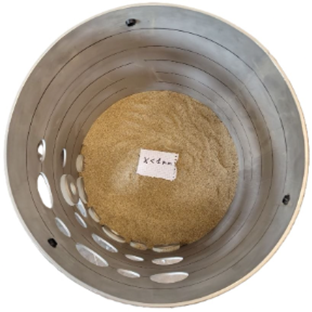
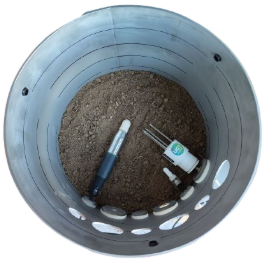
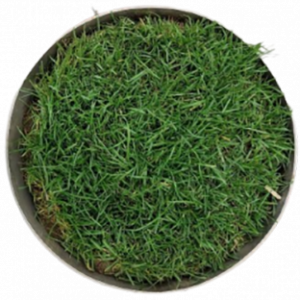
The lysimeters can then be installed inside the Ecotron to start an experiment.
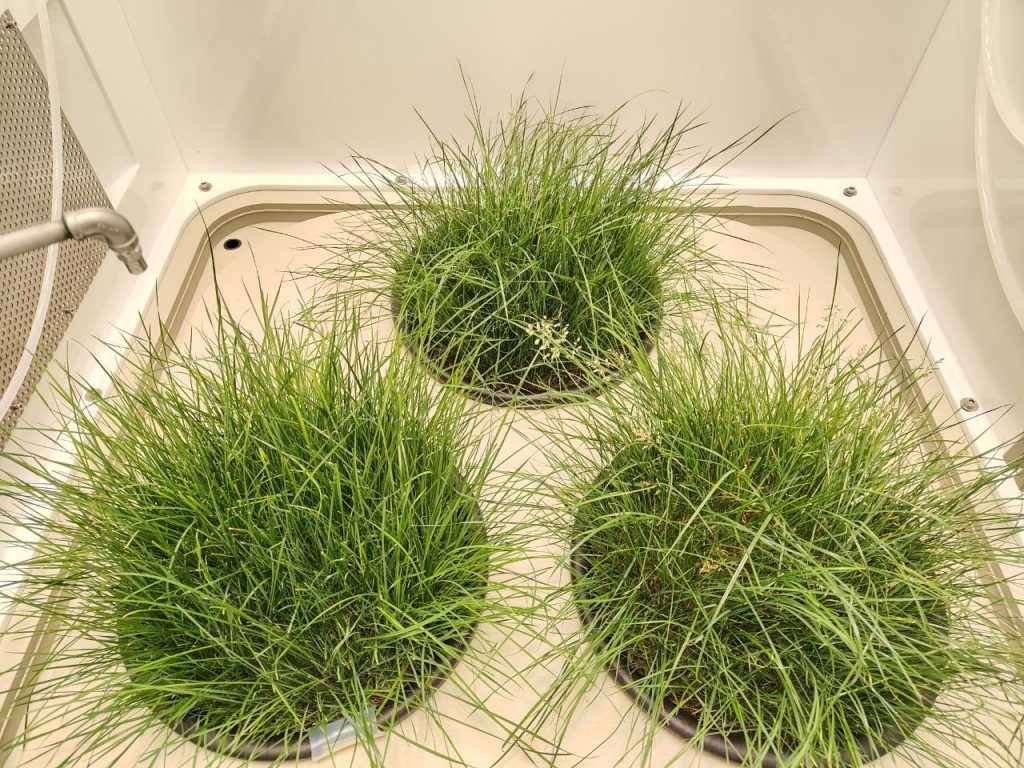
Vegetation development inside the Ecotron can be easily monitored using a time-lapse camera. The example below shows the evolution of a grass carpet over 40 days.
Progress and Ongoing Experiments
Spring 2026 – First tests
The very first tests on the Ecotron were carried out by a civil servant, Sébastien Rogers. The objective was to test all components together and evaluate how precisely the instrument achieves the target climate.