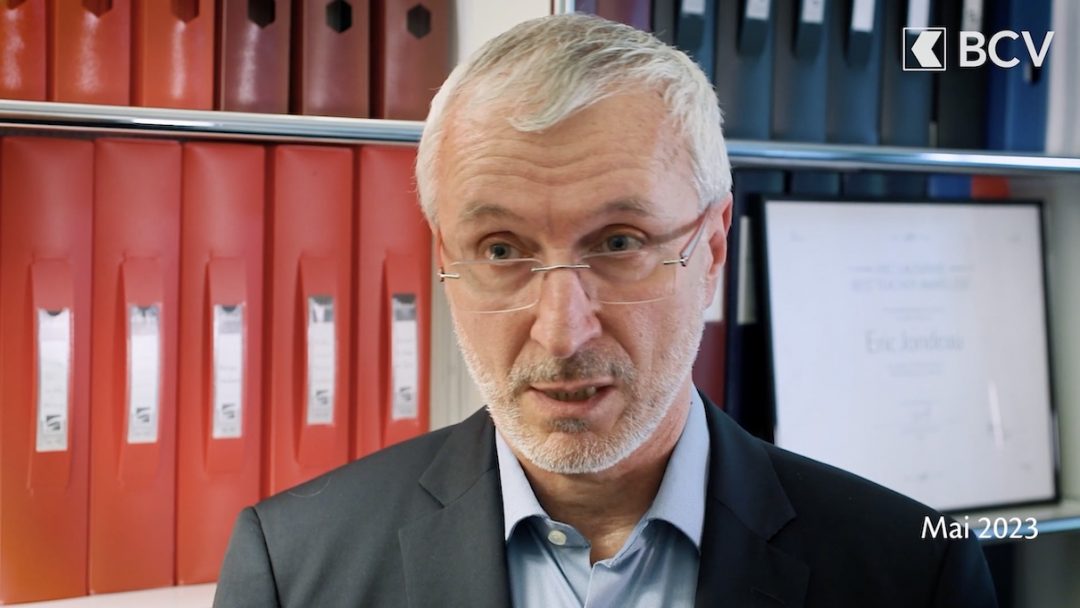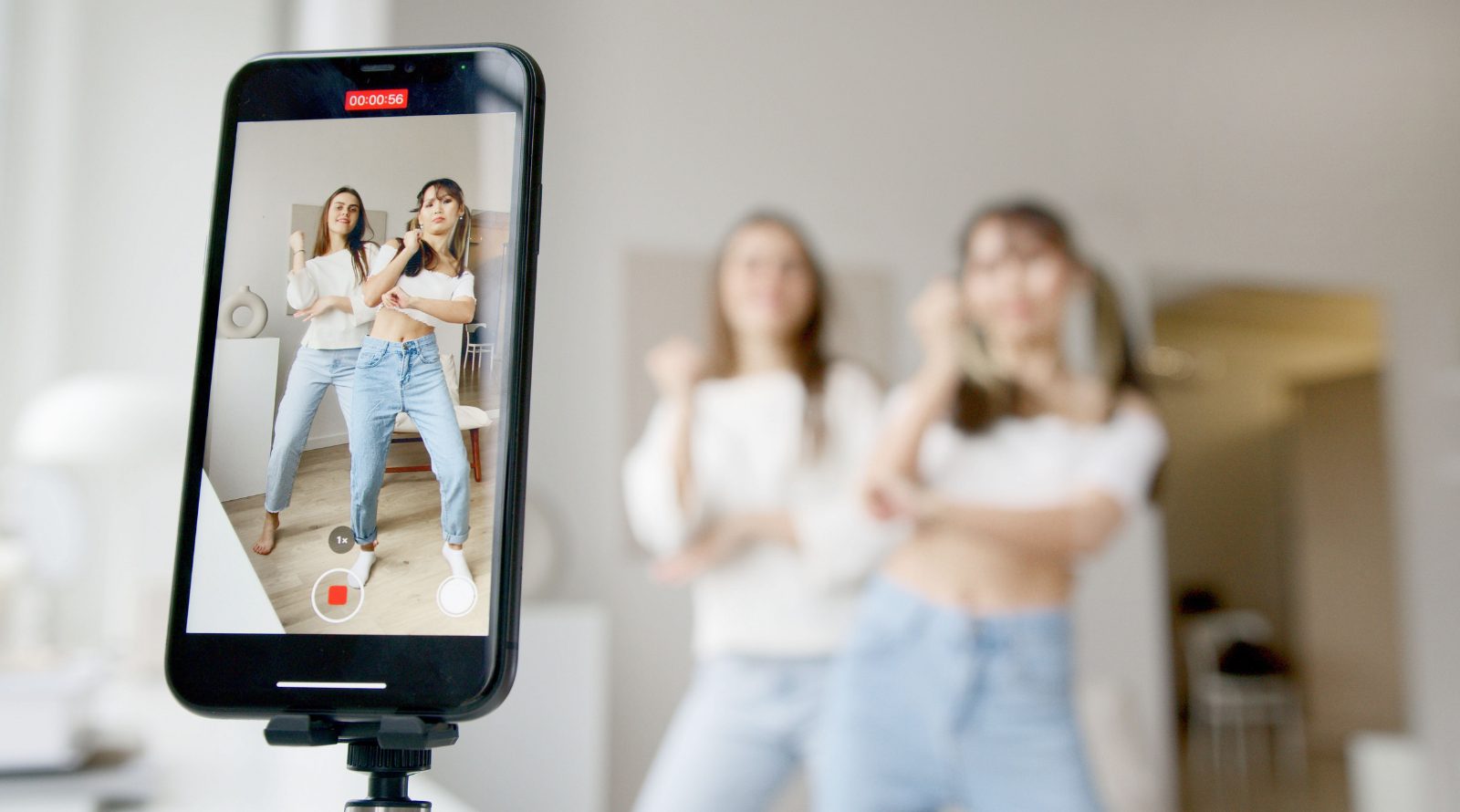
Short choreographed videos recreated by thousands of users, dance trends are among the most-watched videos on TikTok. But as a creator or a brand, is it really a good strategy to follow them? Melanie Clegg is an Assistant Professor at the Department of Marketing specialising in consumer behaviour and digital marketing. She recently investigated this question together with colleagues in a paper published in the Journal of Marketing.
TikTok dance trends are popular dances that people copy and share in videos on the TikTok platform. They often use catchy beats and steps that are easy to learn. People participate by recreating dances, adding their own style, and challenging friends to join. These trends spread quickly as millions of users watch, like, and share the videos.
What role does social media have in our lives, even if we don’t use it?
Melanie Clegg: Today, the majority of society is active on social media. So, even if you’re not actively using it, it can influence what people know, how they connect with each other, and which information they will transmit. Secondly, social media is also a huge business driver: the way companies operate is largely shaped by their presence on these platforms.
Recently, you decided to focus your research on TikTok dance trends.
Yes! One trend usually involves using the same background music, which makes them easier to spot.
When it comes to TikTok dance trends, creators have two options: follow the trend or put their own spin on it, for example, by changing a few steps. In the paper you co-authored with Marc Bravin, Reto Hofstetter, Marc Pouly, and Jonah Berger, you first asked content creators which strategy they thought would generate more likes and comments. What did they say?
They agreed to disagree! There was no clear consensus on which strategy creators thought would work best. I think this is the interesting twist about it, because you might assume that it’s better to follow the trend that has been proven successful. But we also know that people are hooked when they see something that pops out. This is an attention mechanism that we know from psychological cognitive research.
To know what the best strategy is, you decided to run analyses on 85,000 TikTok dance videos. What did you look at in so many videos?
The first challenge was to train a model to be able to analyse the atypicality of the videos, or how much it deviated from the trend. For this, we built a model in which the algorithm can transfer unstructured data, like a video, into numerical values. We could then use statistical methods to measure how different one video was from another using what we call distance measures.
Then, you compared these distance measures, or the “atypicality”, to the number of likes per video. What did you find?
The more atypical the video within a given trend, the more likely people are to engage with it. But we also found a moderating effect: this relationship becomes stronger the more popular a trend has become. In other words, if there are already a lot of videos for the same dance trend and I’m producing a new video that stands out, people appreciate it more. If you scale that up to a lot of videos that are produced, this can translate into impressive numbers. For big creators, whose videos get around a million views, we estimate that a single video that puts its own twist on a trend can generate extra engagement worth more than $1,200, based on what brands typically pay for engagement on TikTok!
In one of your follow-up experiments, you asked real TikTok creators to post dance videos, randomly assigning them to either follow the trend or create something atypical. What happened?
That was quite a piece of work, I have to say, to collect some causal evidence in the real world, because we wanted to make this design independent of the trend, posting time, and the order in which the videos are posted. At the end, we found the same result: atypicality leads to greater engagement.
So if I decide to post a dance video based on a TikTok trend, I’d be better off changing a few steps?
Yes, especially if you are posting later in a trend. Another side analysis that we also did was that it’s better to deviate from the trend towards the end of a video rather than the beginning. Many narratives follow a similar pattern. Take the tale of The Three Little Pigs, for example: it features repeated elements, with a surprising development at the end. This is what keeps people hooked.
Do you think this strategy of following a trend while adding your own twist could also work beyond TikTok, for example, in painting or photography?
It’s an interesting question. There is some anecdotal evidence that trends are accumulating over time, and then people add a new twist to it to get more attention. Think of fashion, for example: patterns, cuts, and colours often make a comeback 20 years later, with a fresh twist. But I think the social media dynamics are probably different, because the trends are short-lived. It’s probably exaggerating this effect, but we need more data on this.
What’s the next step?
We are now looking at the impact of artificial intelligence on creativity. We are currently working on applying these atypicality measures to different types of AI-generated content. Our results are still preliminary, but so far, we have found that people engage more with AI-generated content when the content is more similar across outputs. This might be because people feel overwhelmed when AI becomes too creative.
So the opposite of what we see with humans… Interesting! We look forward to seeing the final results!
Reference : Bravin, M., Clegg, M., Hofstetter, R., Pouly, M., & Berger, J. (2026). How closely should you follow a trend? Atypicality and engagement on social media. Journal of Marketing, 90(5), 187-204.