Tag: Samuel Jaccard

  • Climate: Past history deciphered for future projections

    Climate: Past history deciphered for future projections

    In collaboration with an international team, an Institute of Earth Sciences researcher reveals the complexity of temperature evolution over the past 12,000 years.

    Samuel Jaccard, Institute of Earth Sciences

    To predict the future, we rely on climate models. But reducing the uncertainty of these models is a delicate matter. To do this, we need reliable data over long periods of time. This is why understanding the Earth’s climate history from the distant past is invaluable: it helps us project into the future. Changes in the Earth’s average surface temperature over the past 12,000 years (during the current interglacial period, the Holocene) have been the subject of much debate. Climate model simulations suggest a continuous warming since the beginning of the Holocene. Yet the most well-documented reconstructions suggest that the global average temperature was at a maximum about 6,000 years ago, and then the Earth cooled until the onset of the current climate crisis (at the time of the Industrial Revolution). This major discrepancy between models and past climate observations is called the “Holocene Temperature Conundrum”.

    In this new study, scientists used the largest available database of past temperature reconstructions extending back 12,000 years to carefully investigate the geographic pattern of temperature change during the Holocene. The team finds that, contrary to previously thought, there is no globally synchronous warm period during the Holocene. Instead, the warmest temperatures are found at different times not only in different regions but also between the ocean and on land. This questions the relevance of comparing global mean reconstruction with model simulations at the crux of the Holocene conundrum. 

    According to the lead author Olivier Cartapanis, “the results challenge the paradigm of a Holocene Thermal Maximum occurring at the same time worldwide”. And, while the warmest temperature was reached between 4000 and 8000 years ago in western Europe and northern America, the surface ocean temperature cooled since about 10,000 years ago at mid-high latitudes and remained stable in the tropics. The regional variability in the timing of maximum temperature suggests that high latitude insolation and ice extent played major roles in driving climate changes throughout the Holocene.  

    For Samuel Jaccard, professor at Institute of Earth Sciences, these results highlight “a more nuanced climate variability with strong regional disparities over time”. He believes that “taking these regional specificities into consideration should be a priority for the development of climate models, in order to best guide the measures to be taken rapidly to mitigate the consequences of climate change”.

    Thus these new elements present a clear target for climate models. Their ability to account for climate variations in space and time will increase the reliability of future climate change projections.

    Bibliography

    • Cartapanis O., Jonkers L., Moffa-Sanchez P., Jaccard S. L., De Vernal A. Complex spatio-temporal structure of the Holocene Thermal Maximum. Nature Communications.
      doi.org/10.1038/s41467-022-33362-1
  • Science and Sailing to collect environmental data in understudied Ocean Regions

    Science and Sailing to collect environmental data in understudied Ocean Regions

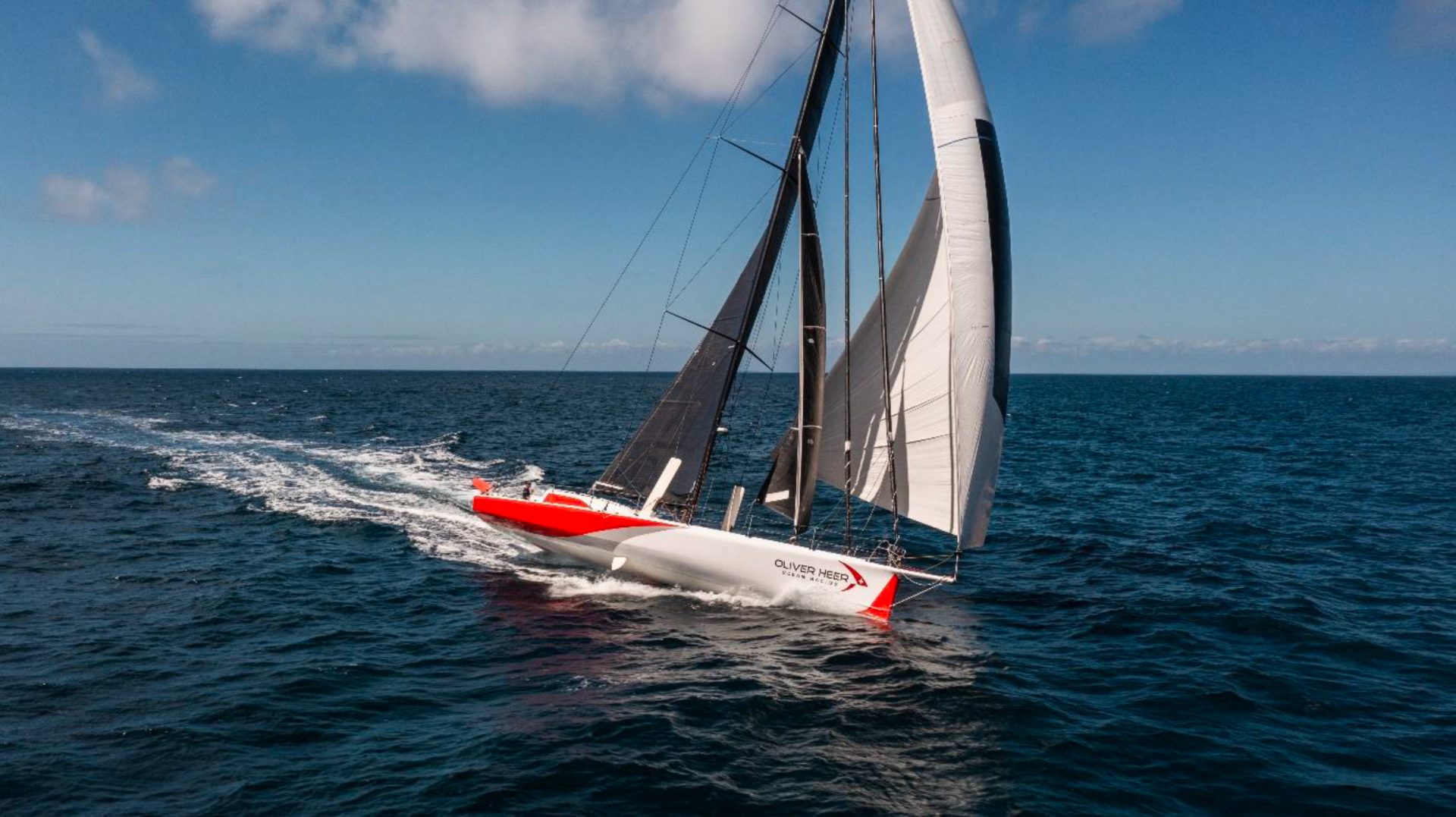
    Le Swiss Polar Institute (SPI) and scientific experts from ETHZ, UNIBERN and UNIL will collaborate with the Oliver Heer Ocean Racing offshore sailing team to collect environmental data during their Vendée Globe 2024 campaign.

    Following contact between the Swiss Polar Institute and Swiss skipper Oliver Heer who sees collaboration with scientists and environmental data collection as central to his responsibility as campaign leader and skipper, supporting his #RaceForChange vision, the Swiss Polar Institute brought together a group of scientific experts from ETH Zurich, University of Bern and University of Lausanne to design an innovative scientific campaign related to climate change.

    Oliver Heer Ocean Racing and the SPI are so announcing a three-year collaboration to place world-class Swiss science on Oliver Heer’s IMOCA racing yacht Gitana 80 and to conduct a data collection campaign during the training and racing phases of the Vendée Globe challenge between 2023 and 2025. The Swiss Polar Institute was approached by Oliver Heer as part of his own campaign to participate in the 2024 Vendée Globe race. This campaign is focused on the theme of climate change and is moving towards climate neutrality through a partnership with ClimatePartner.

    Samuel Jaccard, Institute of Earth Sciences

    Prof. Samuel Jaccard of the FGSE (UNIL, ISTE) tells us more about his contribution to the project and what is expected in terms of results:

    For your part, what kind of data are you interested in with respect to the set of informations that will be captured by the sensors? How long or how many runs will the collection take before the data is analyzed? Is it transmitted in real time?

    Samuel Jaccard : The data collection will be spread over all the races in which Oliver Heer will participate, as well as his training rides. As far as the satellite connections allow, the data should be transmitted in real time. For my part, the data that will interest me the most are the measurements of CO2 dissolved in the Southern Ocean, which will allow to better quantify the exchange of CO2 between the surface ocean and the atmosphere. The Southern Ocean absorbs a significant amount of anthropogenic CO2, which can temporarily limit global warming. Despite the importance of the Southern Ocean in the climate system, its dynamics remain comparatively unknown, mainly for logistical reasons. These data will be very useful in this respect.

    As this is an offshore sailing race, the route followed by the Swiss sailor is obviously not completely fixed in advance, depending on the weather conditions and the adaptation of the race strategy along the way, and scientists cannot, we imagine, influence this: how does this influence the data obtained and the method of processing them?

    Samuel Jaccard : Indeed. The data collection will depend on the weather conditions, as well as on the race strategy. However, the general itinerary is mapped out and known and should allow us to collect valuable information about the functioning of the ocean, especially outside the main routes used by commercial ships.

    How will the collaboration between the researchers of the involved institutions be divided and what are the common objectives in scientific terms?

    Samuel Jaccard : We are going to work in a spirit of collaboration. We know each other well and have worked together in the past. The team from the University of Bern is primarily interested in temperature and salinity parameters, while my colleague from ETH and I will perhaps focus more on dissolved CO2 data.

  • Climate change in the fjords of southern Greenland

    Climate change in the fjords of southern Greenland

    A interdisciplinary research project will be launched in summer 2022

    Laine Chanteloup, Institute of Geography & Durability
    Samuel Jaccard, Institute of Earth Sciences

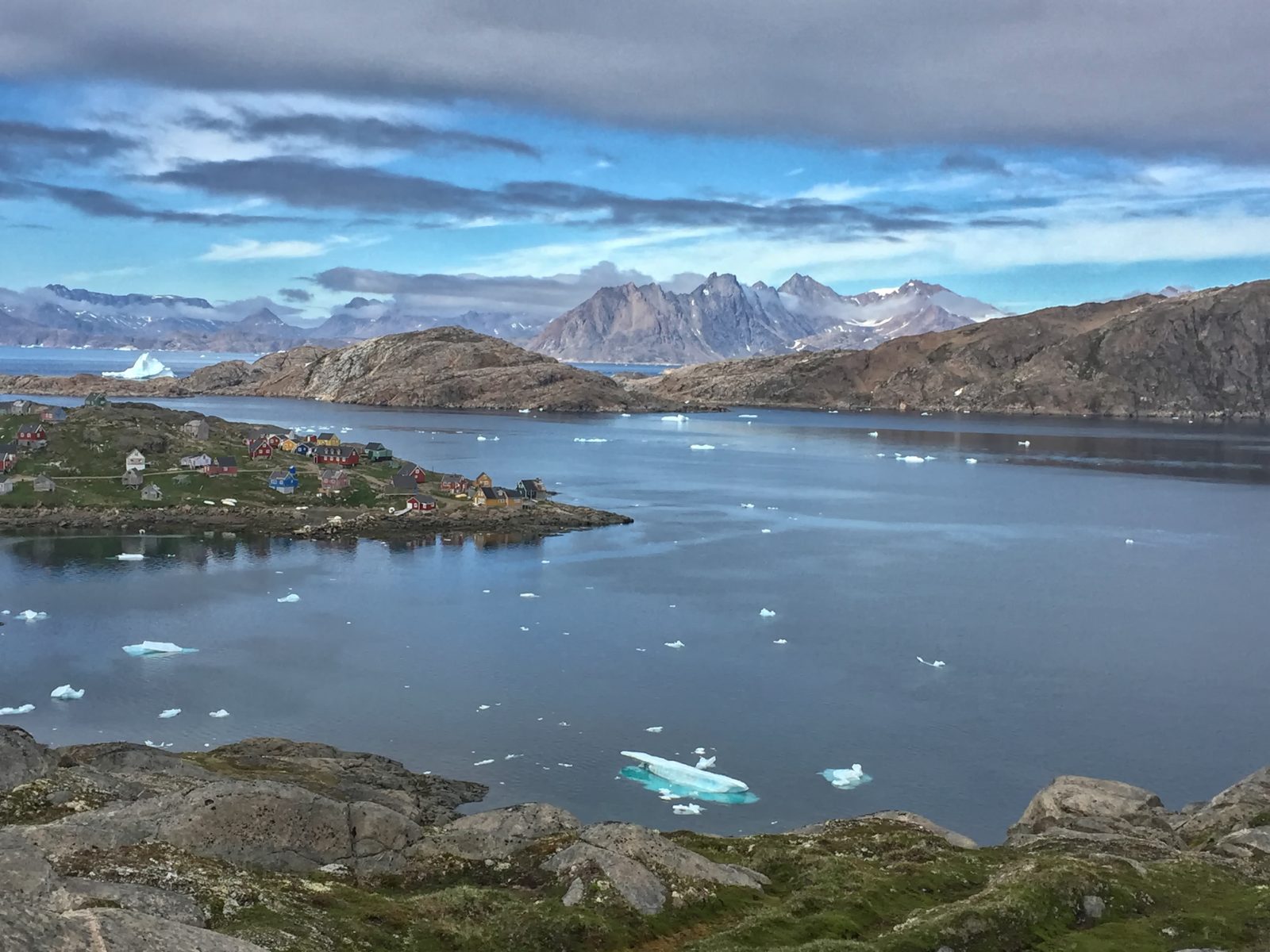
    In the framework of the Greenlandic Fjord ecosystems in a changing climate: Socio-cultural and environmental interactions project funded by the Swiss Polar Institute, Laine Chanteloup (Institute of Geography & Durability) and Samuel Jaccard (Institute of Earth Sciences) will be part of an interdisciplinary team of scientists, who aim to understand the ecosystem of Greenland’s fjords in the context of climate change. 

    © Biserko | Dreamstime.com

    What is the objective of this project?

    The aim of the project is to better understand the fragile ecosystem of the fjords of southwest Greenland, and its evolution in the context of climate change. It will also allow to refine models used to predict the evolution of this ecosystem and its climate, and to draw consequences for local communities. Multiple analyses will be carried out on the various components of the fjords, including the cryosphere, ocean, atmosphere, soil and biosphere.  

    The local populations will also be involved in the research, and interviews will be conducted to assess their relationship and dependence on the fjord ecosystem. This new knowledge aims to develop a integrated understanding of the consequences of melting glaciers on biodiversity, the challenges that different ecosystem transformations may  bear on local communities that live from fishing and agriculture, and to better quantify the transfer of carbon between the different natural reservoirs.

    How did this project start?

    This project was initiated following a call for projects by the Swiss Polar Institute SPI Flagship Initiatives, which is intended to fund large-scale interdisciplinary projects in both polar and mountainous regions.  This call inspired several researchers who had already worked together on expeditions in polar regions previously.  Once the research theme and location were identified, the team was formed as the project developed. The disciplinary diversity covered by the team members will allow a systemic and interdisciplinary research approach. 

    Why Southern Greenland in particular?

    Southern Greenland was selected for several reasons: i) it is a region where global warming is more pronounced than elsewhere on the globe (on average 2.5 to 3°C against 1.1°C on the whole planet) and where the impact of warming are particularly salient;  (ii) the north of Greenland has already been the subject of several studies, unlike the southern part;  iii) fjords represent interesting interfaces between terrestrial and oceanic environments, while being subject to the influence of glacier metling ; iv) the presence of inhabited areas makes it possible to integrate an additional dimension into this research, and to evaluate the impact climate change imposes on the livelihood of local communities and their perception of acceleated change on their environment.

    What will be your respective roles in the team?

    Laine Chanteloup : I have been working for several years with indigenous peoples in the Canadian Arctic, on the evolution of socio-cultural relationships to the environment. My role in this project will be first to better understand the ways in which Greenlanders think about their relationship with the fjord environment. Then I will look at their perceptions of the evolution of landscapes in the context of climate change, and how they experience these transformations. A considerable challenge in this approach will be to be able to dialogue with the inhabitants since the two most spoken languages in Greenland are the Kalaallisut and Danish. 

    Samuel Jaccard :  I will lead the “ocean” part of the research project and in particular the documentation of the carbon cycle in the fjords: the carbon cycle depends on many factors including the growth of microalgae that capture and synthetize CO2 from the atmosphere via photosynthesis. When glaciers melt terrestrial organic matter and nutrients are transferred to the fjord via runoff. The question is how the influx of freshwater influences the circulation in the fjords and to what extent nutrient input affects CO2 uptake. Two expeditions of 2 to 3 weeks each on a research vessel are planned in 2023 and 2024. During these expeditions, measurements of oceanic and atmospheric parameters will be carried out. The ice-reinforced research vessel will make it possible to penetrate far into the fjords and get as close as possible to the glacier tongues.

    What will be the challenges of this interdisciplinary work?

    As a first step, it will be necessary for the members of the team to develop a good understanding of each other’s disciplinary approaches.

    Logistical aspects will also be very important. The environment of Southern Greenland is isolated and remote, and climatic conditions can be changing rapidly, which requires careful organization of the logistics to guarantee a smooth implementation of the research. 

    One of the first activities to be carried out in the field this summer, will be to inform and obtain feedback from the local population on the content and objectives of the project. Greenland is subject to various research initiatives, some of which are related to mining and oil resources. These are not always well perceived by the inhabitants and sometimes create mistrust towards the scientific teams.  Contacts have already been established with the Greenlandic authorities in order to outline the project and to obtain the required research permits. 

    Finally, it will also be necessary to be careful to maintain a balance between the number of people on site and the local population. It will be opportune for several team members to meet in the field and share their experiences and carry out common activities, while trying to create relationships of trust with the inhabitants. 

    Activities should be concentrated in July and August for most of the members: at this period, the weather conditions are the most favorable for expeditions at sea or in the fjords. It is also at this time of the year that the ice melt is the most pronounced. For the studies in connection with the local population, it is sometimes preferable to go there outside the summer when people are very busy and do not necessarily have much time to share with researchers. 

    This first year of fieldwork will be very important to set up the project, to identify the interesting study areas, as well as to get in touch with the inhabitants and to dialogue about our approach.

    What is your state of mind a few months before the first step on the field?

    Laine Chanteloup : I am excited to start working with Greenlanders, discovering this island and the communities that live there. It’s always exciting to discover new people, and to interact with an Inuit society that is different from the Nunavimmiut partners (inhabitants of Nunavik, northern region of the province of Quebec) I am used to working with. The other challenge will be to integrate into a team with new Swiss colleagues in environmental and climate sciences, who are working on areas quite distant from my research community. It’s a motivating challenge and I’m looking forward to this experience.

    Samuel Jaccard : I am very excited about this new experience. I have already participated in several expeditions in the polar regions and it is always a privilege to be able to participate in such research. Southern Greenland is still relatively unstudied, which gives this project a discovery aspect. In addition, we will be a team with expertise in a variety of disciplines, which will allow us to conduct a very comprehensive research over all aspects of climate change in a given environment.  The fact that two FGSE members representing two different institutes are involved is a great example of collaboration and may be an inspirating experience for students or young researchers.

    The SPI Flagship Initiatives Greenlandic Fjord ecosystems in a changing climate: Socio-cultural and environmental interactions project  will start on April 4th 2022, with a first meeting of all team members. A communication program is planned over the duration of the project, with the presence of journalists on site and regular reports from researchers on a dedicated website.

    Swiss Polar Institute

    The Swiss Polar Institute is a foundation recognised by the Swiss Confederation.  Its objective is to facilitate research in polar and high-altitude environments (Andes, Himalaya, Alps), in order to observe and understand the mechanisms and effects of climate change in these sensitive areas. Various funds are regularly put out to tender to support mainly the logistical aspects of the projects, and a grant is also specifically dedicated to master and doctoral students.