Tag: Nicolas Barbosa

  • Discover an ambitious geophysical project of CO2 storage

    Discover an ambitious geophysical project of CO2 storage

    Santiago Solazzi, Institute of Earth Sciences

    With his new European project DISCO2STORE  “Discontinuities in CO2 Storage Reservoirs”, Dr. Santiago Solazzi  is leading the UNIL participation in a far-reaching network. This 4-year project starting in February 2021 aims at using geophysical techniques to make CO2 storage in geological reservoirs safer and viable as a long-term alternative. Prof. Klaus Holliger and Dr. Nicolás Barbosa from Institute of Earth Sciences are also actively involved in this project.

    What is a Marie Curie RISE project?

    Research and Innovation Staff Exchange (RISE) is one of the European Marie Curie Actions designed to generate international collaborations between academia and enterprises, to stimulate knowledge and ideas sharing from research to market (and vice versa) by the exchange of staff. The idea behind these exchanges: to promote creativity and entrepreneurship, helping to turn ideas into innovative products or services. This transfer of knowledge is necessary to address the world’s challenges, amongst which, climate change is arguably one of the most prominent.

    What is the main goal of DISCO2STORE?

    As we are all aware, every year, billions of tons of CO2 are produced as a consequence of human activity. This enormous amount of CO2 is mainly released into the atmosphere, thus increasing the natural greenhouse effect and, consequently, contributing to global warming. Underground storage of CO2 is an immediate option to reduce the amount of this greenhouse gas released into the atmosphere.

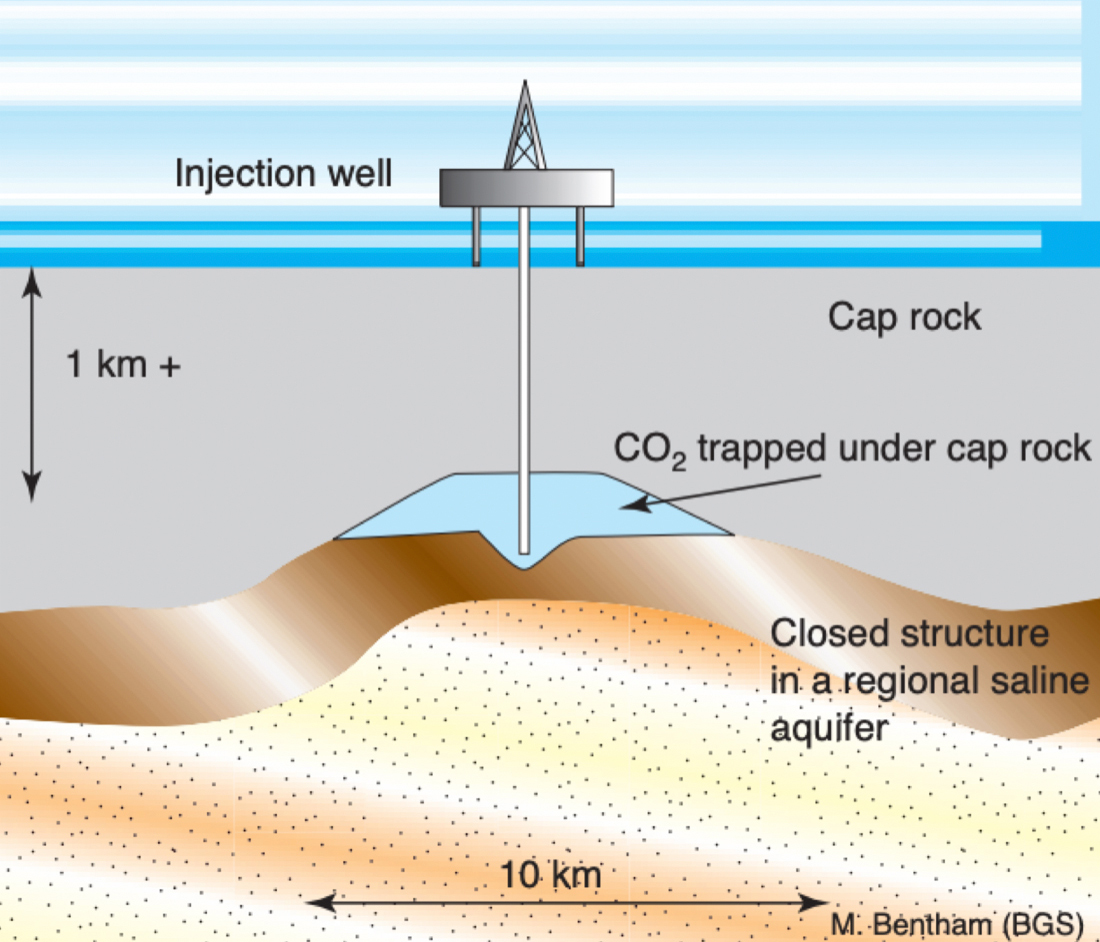
    In simple words, CO2 storage and sequestration operations propose to inject CO2 back into the earth, into geological reservoirs that contain salty water (thousands of meters below the ground). Naturally, if we wish to develop and apply this technology in more and more places around the world, we need to be able to assure the permanence of CO2 in the underground. This task can only be done through a deep understanding of the geological reservoir and the development of methodologies to accurately monitor CO2 movements and volume estimations. In these operations, the injected CO2 is trapped in the formation through various processes, but generally we need a caprock, that is, a relative impermeable rock that forms a barrier above the reservoir rock so that fluids cannot flow back to the surface. We know that the main risks of leaks are associated with discontinuities in the reservoir or caprock, like the presence of faults and fractures. We aim to develop new techniques to identify mechanical discontinuities in the subsurface, characterize them, and assess their impact in CO2 storage. As we aim to study discontinuities in CO2 storage reservoirs, the project is called DISCO2STORE, which gives the project a festive spirit if you ask me.

    How did this RISE project emerge?

    This project started by a set of conversations between researchers about discontinuities in reservoirs. The major questions that the DISCO2STORE project aims to tackle require an intersectoral approach, and the use of different laboratories, computational facilities, and knowhow from diverse groups. Marie Curie RISE Action offers this possibility of building paths to create new networks and innovative research training for young scientists.

    What are the main actors involved and what will they bring to the project?

    Public and private Research and Development institutions are the main actors involved in the project. As I see it, Academia is mainly focused on creating new knowledge, that is, a better understanding of the world. Private companies are mainly concerned with solving challenging problems and creating new applications, using leading edge technology. We need both of them to advance and solve nowadays increasingly complex challenges.

    DISCO2STORE participants around the world, mainly located in Europe and South America.

    As an example, our group at the Institute of Earth Sciences is trying to better understand how to detect fractures and fluid content in rocks using seismic waves. That is, we send waves throughout the rock and then interpret the information contained in reflections and refractions (like a medical eco-Doppler, but in other scales and frequencies). This method has the advantage of being non-invasive: we are not drilling to obtain the information. Detecting fractured regions of the geologic reservoir where CO2 is going to be stored is important, as fractures affect permeability. 

    We will try to verify some interesting theories that may permit detecting rather small fractures, which are below the resolution of the seismic waves. This is like saying that one could obtain information from a picture of features that are smaller than the image’s pixel. That is rather awesome! This work will be the mission of our group at UNIL, CNEA and Y-TEC (Argentina) and SINTEF (Norway), private and public Research and Development institutions. This is just an example of one of the works that will take place in this RISE project, of course. We are quite a large number of institutions and researchers working together in these problems, from different angles.

    What will be the main challenge of this project and what are your assets to overcome it?

    Our challenge is to better understand how to use geophysical and geological information to make CO2 storage safer and viable as a long-term alternative. This can be done by developing strategies to better characterize the formations prior to the injection operations or by providing means to better monitor the evolution of the fluids. 

    Diagrams showing CO2 storage in a deep salty aquifer, with its caprock preventing fluids flowing back to the surface from the reservoir rock. Figure taken from Bentham & Kirby (CO2 storage in saline aquifers. Oil & gas science and technology60(3), 559-567. 2005 10.2516/ogst:2005038).

    However, on the personal level, I think the main challenge is to be able to go outside the comfort zone, and to succeed in bringing the numerical models to the laboratory, from academia to industry, and use this inter fertilization of ideas for developing a new understanding of the processes. Building these bridges has been a long-standing motivation for me, and the knowledge and experience acquired during my PhD and postdoc are certainly important assets. However, I would argue that my most important asset is our research group, that is, the people I am working with in this project. Science is a collective construction, and Marie Curie RISE projects are based on this premise.

    Why is this project important to you?

    It is a great opportunity to try to answer some of the questions I’ve always had about seismic detection of fractures and fluids. We are ambitious with the goals, and this is rather challenging but also deeply motivating. As an example, we are planning on printing 3D samples that mimic fractured rocks here at UNIL and taking them to Norway to measure the mechanical properties. In this process, scientists from Argentina would join to perform measurements and to learn how to use the measuring device, with the idea to replicate the apparatus in their facilities. I will be leading a significant part of the research, mainly the seismic characterization part, and managing a project like this is a deeply formative task. Least but not last, we wish to forge new and long-lasting links between UNIL and other institutions.

  • Borehole-based fracture unclogging experiment: bridging the gap between laboratory- and field-scale evidence

    Borehole-based fracture unclogging experiment: bridging the gap between laboratory- and field-scale evidence

    Nicolas Barbosa has started in November 2020 an SNF SPARK project entitled “Borehole-based fracture unclogging experiment: bridging the gap between laboratory- and field-scale evidence”. This project emerged as a result of two research experiences. First, a PhD with Prof. Klaus Holliger, during which Nicolas Barbosa studied how seismic waves are affected by the presence of fractures and fracture networks. Then a first postdoc with Prof. Matteo Lupi at the University of Geneva, where he explored whether and how low-amplitude seismic waves can alter the properties of a fractured medium.

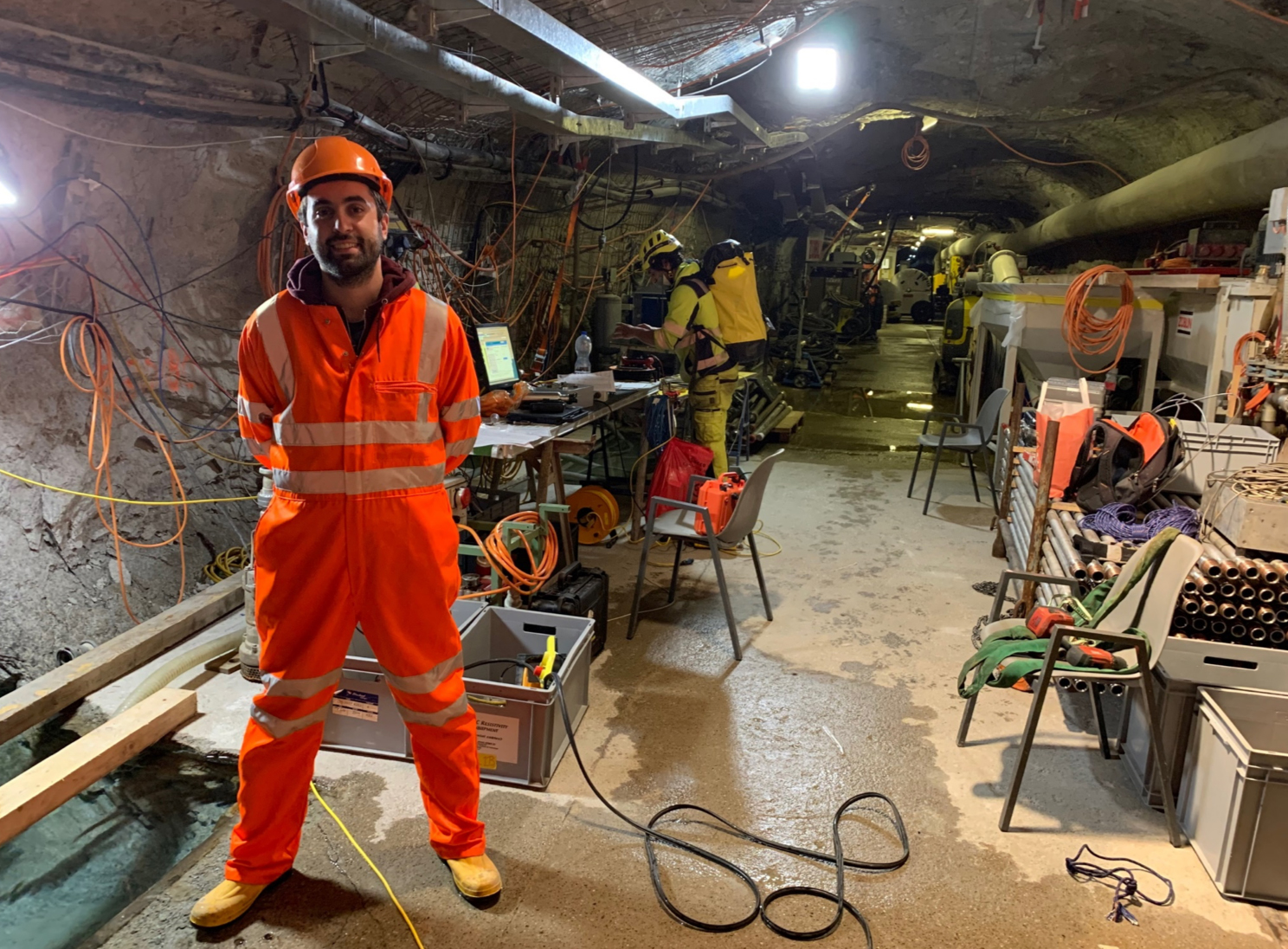
    Inside the underground laboratory that hosts the experiments, the Bedretto Underground Laboratory for Geosciences (BULG)[AD1] . Dr. Barbosa’s research objective fits well into the scope of other ongoing BULG projects, which will not only facilitate the experimental procedures, but will also lead to valuable cross-fertilizations.

    What is the main goal of your Spark project?

    Understanding an important and ubiquitous, yet largely enigmatic, phenomenon: “fracture unclogging”. It manifests itself in major hydrogeological changes, such as unexpected variations in groundwater levels or spring flows. In addition, it seems that “fracture unclogging” may act as a trigger for volcanic or seismic activity. What could cause this phenomenon? Today, the most viable hypothesis is that propagation of seismic waves induces relatively weak changes in pore pressure, which could lead to the mobilization of colloids and fines that obstruct strategic parts of fluid pathways. My goal is to test this hypothesis – so far only supported by small-scale laboratory experiments – through well-controlled field experiments. I also plan to develop a realistic computational model, to simulate these observations and, thus, to improve our understanding of the governing physical processes.

    Le Laboratoire souterrain de géosciences de Bedretto (BULG) se trouve à 1,5 km sous la surface, au milieu d’un tunnel de 5,2 km de long qui relie le Tessin au tunnel de la Furka. Le BULG accueille des projets liés à l’utilisation innovante et durable de l’énergie géothermique. Un accent particulier est mis sur la réduction des risques sismiques associés à la stimulation hydraulique de ces réservoirs. Le BULG est exploité par l’ETH Zürich et offre un environnement unique pour explorer les effets de déblocage des fractures à l’échelle mésoscopique dans des conditions expérimentales exceptionnellement bien contrôlées. (Crédit: Marian Hertrich, manager de BULG).

    Why is this project important to you?

    Arguably, the most defining moment for a young scientist is when he/she can develop and manage the first project independently. Thanks to the SPARK program, I have this opportunity a few years earlier than is commonly the case in our academic system. That said, I am fully aware of the fact that, ultimately, the success of my project hinges on a wide range of collaborations with other scientists and research groups. Indeed, the associated “creative combustion” is, together with the scientific independence and the passion to address an unresolved problem, a key motivational driver for me. 

    Spark’s vocation is to support original, unconventional and high-impact projects. In what way does your project have these attributes?

    Unravelling the physics governing “fracture unclogging” is not only a formidable scientific challenge. It can also lead to a number of potentially important practical applications. Amongst the latter, are the “soft” (that is, aseismic) stimulation of hydrocarbon and geothermal reservoirs to increase their energy production, as well as an improved risk assessment for various natural hazards, such as volcanic eruptions or earthquakes. So far, the only attempts to reproduce this process were performed on centimetre-scale rock samples under highly idealized laboratory conditions. At present, it is unknown how the evidence from these microscale experiment can be transferred over multiple orders-of-magnitude to the field scale, i.e. on a scale at least 100 000 larger, with all the complexities and unknowns that this implies. My idea is to perform mesoscale experiments (between cm and km) under the well-controlled conditions of the Bedretto Underground Laboratory. Specifically, I plan to use a fluid pressure oscillation approach analogous to that in the preceding laboratory experiments and various geophysical techniques for non-invasive monitoring.  

    Why did you choose the FGSE and ISTE to carry out your project?

    I really enjoyed my time as a PhD student at ISTE. During my postdoc, I continued to collaborate with Prof. Holliger’s research group. In addition to a shared scientific focus, it has the required technical resources and has previously worked in the BULG and, thus,   pertinent knowledge of the facility and people involved. This significantly facilitated the development and planning of my project. Since the beginning, I have received the full support from ISTE and the FGSE to host my project. The project has recently received additional financial support from the FGSE via the Matterhorn Grants program, for which I am also very grateful. This will permit the drilling of additional short boreholes in which geophysical instruments will be installed for continuously monitoring the hydraulic experiment.