Tag: Gianalberto Losapio

  • Studying the impact of glacier retreat on biodiversity

    Studying the impact of glacier retreat on biodiversity

    Gianalberto Losapio, Institute of Earth Surface Dynamics (IDYST)


    Glaciers are the guardians of an entire ecosystem, and their disappearance caused by global warming will lead to a dramatic decline in biodiversity.

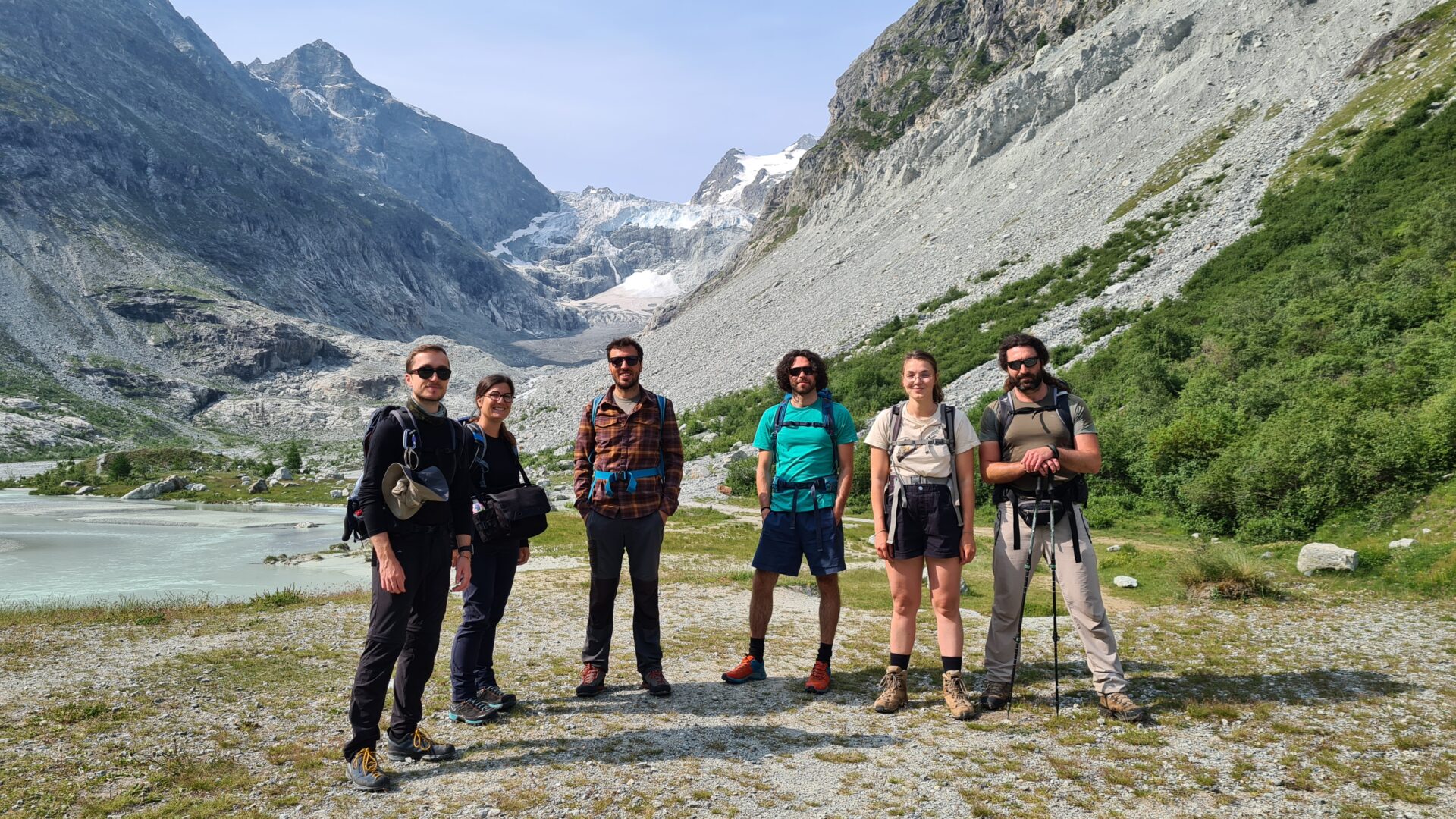
    In the field, the members of the Biodiversity Change Group are studying and documenting the impact of glacier retreat on biodiversity and ecosystem. Meet the group.


    “It may seem counter-intuitive, but glaciers and their surroundings provide very favourable conditions for biodiversity,” explains Gianalberto Losapio, PI at the Institute of Earth Surface Dynamics from the Faculty of Geosciences and the Environment (FGSE). “With the disappearance of glaciers, we are losing plant species, some of which may have strong medicinal potential, but also the fauna such as pollinators and predators associated with them”.

    With his Biodiversity Change research group, Gianalberto Losapio is spending part of the summer in the field at Ferpècle in Valais, documenting and studying the impact of glacier retreat on biodiversity and ecosystem functions. For several weeks, Bachelor and Master students, doctoral candidates and scientists from various countries are carrying out insect and plant surveys, analyzing soil and gas emissions, and parametrizing models to predict the distribution of species and conserve biodiversity.

    “Overall, we know that melting glaciers initially lead to an increase in biodiversity, with the arrival of pioneer plants and the colonization of insects. But over time, only few competitive species gain the upper hand such as larches and rhododendrons which ultimately dominate the scene”, explains Losapio. “This mechanism is already clearly visible to the nake eye. One of the missions of our group is to study ways of preserving this biodiversity”.


    This is the case of Luca Eiholzer, who is doing a master’s degree in environmental sciences at the FGSE. Equipped with a square meter and a GPS, he lists the presence/absence of targeted species – i.e. bioindicator species such as trees, moss, etc.– in around a hundred randomly distributed points in the proglacial margin. This data is then used to draw up an assessment of the current situation and projections for the distribution of species, with the help of machine-learning algorithms. “We hope that this information will be useful for the authorities, helping them, for example, to define areas to be protected. At the same time, being out in the field allows me to come face to face with the difficulties of collecting data. It’s very instructive.

    ”Eléa Pierre, a Master student specializing in geosciences, ecology and the environment, is interested in the influence that the presence of livestock can have on glacier margins. “I’m carrying out plant surveys around the Zinal, Arolla and Ferpècle glaciers,” she explains. “The idea is to compare changes in biodiversity depending on whether or not there is grazing around the glacier.
    There is a lot of uncertainty around the effects of livestock in these novel ecosystems.

    But according to our knowledge, large herbivores shape their environment, and not the other way round, through their diet, their dropping, trampling and their general behavior. These data could therefore be used to develop different conservation scenarios for sustainable management as these pastures are currently used by local population”.”


    Preparing for professional life

    Data collection generally lasts all day and is carried out by around fifteen people. The members of the group then meet up in a refuge, where they have their meals and spend the night. “Fieldwork is a great experience because, even though everyone is working on a specific project, we can talk to other researchers, help each other and work together,” says Eléa Pierre. Gianalberto Losapio adds: “We want the projects to be carried out independently, from start to finish. The idea is to prepare students for professional life.”

    Art meets science

    The work and research carried out at Ferpècle also include an artistic component. Gianalberto Losapio is collaborating with visual artist and artistic researcher Maëlle Cornut, who is following the group in the field. Funded by Pro Helvetia and the Swiss Polar Institute, the art-science project, which will run for almost two years, focuses on the consequences of the extinction of glaciers on ecosystems, but also addresses broader concepts such as ecofeminism, ecology decolonization and climate justice. It will include videos superimposing micro images of plants and insects and landscape images to show the interconnections between the various scales. “So far, we’ve done a lot of research and shared our practices and ideas. I’ve now started the production phase, installed several cameras traps, and the concrete part of the project is about to begin”, she explains.

  • A roadmap for integrating species in biodiversity restoration

    A roadmap for integrating species in biodiversity restoration

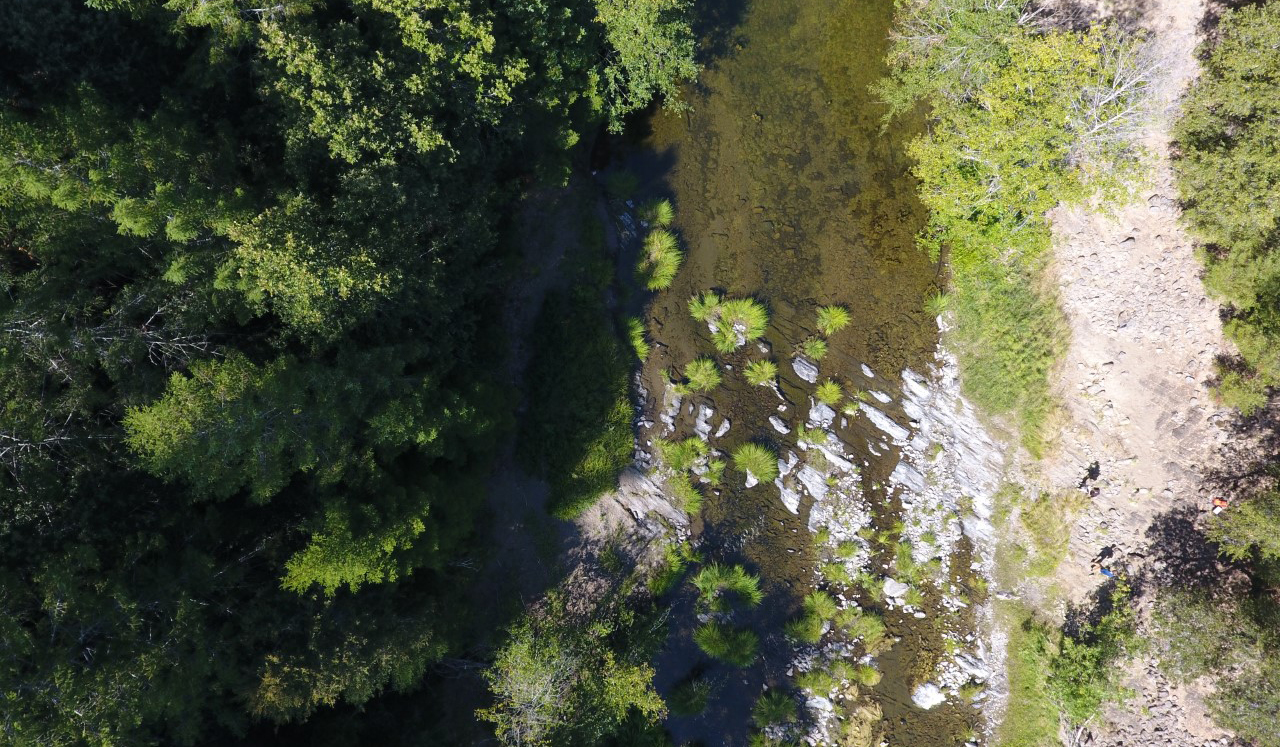
    Un écosystème de forêt fluviale dans le nord de la Californie, aux États-Unis, dans l’aire de répartition historique du castor américain (Castor canadensis). L’intégration des ingénieurs d’écosystème dans les décisions de restauration et de gestion peut conduire à de meilleurs résultats pour le fonctionnement de l’écosystème. (Crédit Photo : © Understory)

    Par leur simple présence, certaines espèces, plantes ou animales peuvent fortement modifier le paysage, créer de nouveaux habitats pour la faune et augmenter la biodiversité. A l’Université de Lausanne (UNIL), des scientifiques ont mis au point une « boîte à outil » décrivant les mécanismes et conséquences liés à l’introduction de ces « ingénieurs des écosystèmes ». Cette feuille de route est destinée aux agences environnementales et aux responsables de programme de conservation, notamment. Elle vise à permettre l’intégration de ces espèces dans les projets de conservation de la biodiversité, quel que soit l’écosystème.

    Gianalberto Losapio, Institute of Earth Surface Dynamics (IDYST)

    De manière générale, dans les écosystèmes, toutes les espèces interagissent les unes avec les autres et avec leur environnement, participant ainsi au fonctionnement du milieu. Certaines espèces exercent cependant une influence bien plus importante que d’autres sur leurs semblables et sur l’environnement. On les appelle les ingénieurs des écosystèmes. 

    L’un des exemples le plus connu est celui du castor. En construisant des barrages, les castors modifient le débit des cours d’eau et transforment les écosystèmes terrestres en zone humide, entraînant toute une cascade de processus et l’arrivée de nouveaux animaux. Or si les cas particuliers sont bien documentés, les mécanismes à l’œuvre dans leur globalité ne sont pas encore bien compris. 

    En collaboration avec une équipe de Stanford, des scientifiques de l’UNIL ont mis au point une «boîte à outil» pour prédire et mesurer l’influence des espèces sur les écosystèmes, selon différentes conditions. Cette feuille de route pourrait être utilisée par différents acteurs tels que les gestionnaires de zones protégées, les agences environnementales ou les responsables de programme de conservation et de restauration. Le but étant d’inclure les ingénieurs des écosystèmes dans les processus de préservation de la biodiversité, et de maintien des écosystèmes. Leur «review» a été publiée dans le journal Functional Ecology.

    De l’observation à l’élaboration d’une marche à suivre

    Pour établir ce cadre, les scientifiques ont procédé en plusieurs étapes. D’abord, il a fallu collecter les connaissances et la littérature concernant les ingénieurs des écosystèmes. Sur cette base, les chercheuses et chercheurs ont développé un cadre permettant de modéliser les effets des espèces, puis de les quantifier. Enfin, ils ont mis au point une marche à suivre pour permettre d’inclure autant que possible ces régulateurs naturels sur le terrain. 

    « Ce guide vise à aider spécialistes et les collectivités à se poser les bonnes questions lors de la mise en place de programmes de conservation. Par exemple : quel est le but à atteindre ? Quelles sont les caractéristiques du terrain, ainsi que le contexte spatial ? », explique Gianalberto Losapio, chercheur à la Faculté des géosciences et de l’environnement de l’UNIL et auteur principal de l’étude. « Si vous souhaitez réintroduire une espèce spécifique de poisson dans un milieu, par exemple, vous ne pouvez pas simplement apporter les animaux dans le lieu choisi, il faut réfléchir de façon plus globale », illustre-t-il. Le « guide » fournit également des outils pour évaluer l’impact des actions menées, de sorte à adapter l’activité, si besoin. « Certains projets de restauration finissent par être abandonnées car les arbres qui ont été plantés meurent, ou les espèces introduites ne peuvent pas survivre », ajoute le chercheur. « Nous pensons qu’une approche globale aura plus de chances de réussir ». 

    Référence bibliographique
    • G. Losapio, L. Genes, C. J. Knight, T. N. McFadden, L. Pavan, Monitoring and modelling the effects of ecosystem engineers on ecosystem functioning, Functional Ecology, 2 avril 2023
      doi.org/10.1111/1365-2435.14315
  • What happens to biodiversity when glaciers disappear?

    What happens to biodiversity when glaciers disappear?

    Gianalberto Losapio, Institute of Earth Surface Dynamics (IDYST)

    Biodiversity Change is the label of a new research group at the University of Lausanne that is attempting to answer this question.

    Global environmental change, in particular rising temperatures, is causing alpine glaciers to retreat and disappear. The consequences of glacier retreat on ecosystems are still poorly known and difficult to predict.

    With his Ambizione project IceNet – Forecasting the impact of glacier retreat on network dynamics and ecosystem functions, Gianalberto Losapio aims to provide an empirical contribution to the understanding of these phenomena.

    What are your objectives with IceNet?

    Gianalberto Losapio : Since the end of the Little Ice Age (1500-1850), alpine glaciers are retreating and shrinking, sometimes to the point of getting extinct. The disappearance of glaciers is followed by a total upheaval, with the colonization of pioneer plants, insects, and microorganisms. How is the network of interactions between these organisms intertwined? And what role do ecological networks play in the response of species to environmental change? This remains to be discovered.

    The IceNet project will unveil ecological networks in front of disappearing glaciers, which are formed among colonising microorganisms, plants, predatory insects, herbivores, and pollinators. I want to shed light on a biodiversity that is still little known – and that we are in danger of losing forever. But also to understand how an ecosystem evolves “from scratch”.

    How to approach an ecosystem scientifically?

    GL : First, we will reconstruct the ecological interactions between the various communities. The next phase will focus on describing how these networks evolve, are held together, and what influence they have on ecosystem functioning. We will develop models to understand how organisms respond to the changing environment. I do hope the results of our research will help to better predict and anticipate the consequences of glacier extinction on alpine biodiversity.

    Ranunculus glacialis, the glacier buttercup is an iconic alpine plant inhabiting glacier forelands – the areas in front of retreating glaciers. It has a not-so-certain future. On the right, a bee (Apis mellifera) is visiting a cushion plant (Arenaria tetraquetra) at 3,200 m elevation in the Spanish Sierra Nevada. This mountain region that has already lost its glaciers (Pictures: G. Losapio).

    What is the impact of your project on ecology and society?

    GL : The project is developed in a multidisciplinary research context, combining methods typical of Earth sciences (like geochronology, geomorphology and soil biogeochemestry) with computational innovations in ecology and recent developments in molecular biology (environmental DNA sequencing and metabarcoding). Finally, we will pay particular attention to environmental education and cultural aspects. I find it essential to place the results of scientific research within the broader social, political and economic context associated with the climate and ecological crisis. Please visit  our dissemination page to stay tuned !

    Why tackle the issue of biodiversity in the face of disappearing glaciers?

    GL : Having grown up at the Alpine foothills and being a climber and mountaineer, I like and respect nature, and particularly mountains. My personal motivation is to support and protect biodiversity. This project simply combines two of my favorites: biodiversity and high mountain environments. I wish to actively contribute to the mitigation of the current climate and ecological crisis by doing my small part in this social “fight”.

    Mutualistic interactions are crucial for sustaining biodiversity and to understand the risk of extinction cascades. Here a bumblebee is visiting creeping avens (Geum reptans) in front of a retreating glacier. On the right, the glacier foreland of Amola (Italy) G. Losapio studied during his master thesis. The big moraines indicate the height (and volume) the glacier reached only a bunch of decades ago (Pictures : G. Losapio).

    Why have you chosen IDYST to carry out your project?

    GL : IDYST is a hotspot for alpine research! Indeed, it hosts different research groups with whom I can close collaborate. We have a great match and complementarity of research focus and expertise. Furthermore, I really like the broader scientific and educational goals of FGSE, which align with my own values, and I am really honored to contribute to its societal endeavor.

    Dr Losapio’s biography in a nutshell

    My career path started at University of Milan with a BSc and Msc in natural sciences with a specialization in botany. During that time, I conceived my own thesis project looking at the effects of glacier retreat on plant and pollinator communities! Then, I moved to Zurich for a PhD in Ecology (my supervisor Christian Schöb was himself an Ambizione grantee!), studying still ecological networks in high-altitude ecosystems. Then, my first postdoc was on environmental change and biocommunication at ETH, before going to Stanford for a second post in conservation biology.

    Biodiversity Change, group page