Author: Rémy Freymond

  • A shifting project of post-growth economics funded by an ERC Synergy in Spain and Switzerland

    A shifting project of post-growth economics funded by an ERC Synergy in Spain and Switzerland

    The European Research Council has awarded funding to an ambitious ERC Synergy research-action project on the management by North and South societies of economic, political and social transitions toward and within a post-growth era. This 6-year, 10 million euro project, entitled “Post-Growth Deal” (REAL), led by three scientists – two from ICTA-UAB in Barcelona and one from UNIL in Lausanne. It aims to bring together radically new paradigms in ecological economics and new concrete practical developments on the ground.

    The team consists of two scientists in Catalonia, Spain, and one in Lausanne, Switzerland: Prof. Giorgos Kallis at the Institute of Environmental Science and Technology of the Autonomous University of Barcelona (ICTA-UAB), Prof.  Jason Hickel at ICTA-UAB and the Department of anthropology of the same University, and Prof.  Julia Steinberger at the Institute of Geography and Sustainability of the University of Lausanne (IGD-UNIL).

    This collaboration brings together a wide range of expertise, that no single researcher or team presently possesses in this emerging field:

    • modelling of provisioning systems (Julia Steinberger),
    • political economy and North-South relations (Jason Ηickel),
    • politics of socio-environmental transformations (Giorgos Kallis).

    The three awarded scientists propose a new transdisciplinary “5 pillars of post-growth” science. They draw on resource/energy modelling, political-economic and socio-political analysis to identify practical steps to bring the Post-Growth Deals to life. They will work with four representative communities to co-produce knowledge and action on the ground.

    The goal here is a convergence between the global North and South of the globe, and within countries, to a level of resource use is sufficient for high human development and compatible with planetary boundaries.

    Jason Hickel, ICTA-UAB

    With this funding, the researchers will join their respective expertise to explore “how can dramatic reductions in energy and resource use be achieved, while at the same time ending poverty and ensuring decent lives for all”. Their aspiration? Proposing new models of politics, policies and provisioning systems in a post-growth direction, and engaging with development issues in the global South.

    The “Post-Growth Deal” refers to the need for a new political and institutional compact between government and citizens, equivalent to the New Deal or welfare state, but geared around wellbeing security in an era of prolonged economic stagnation and unfolding climate breakdown. Achieving such a “Deal” requires new research, new data, and new models that the REAL project intends to develop.

    It’s the first time that a project of such scale and scope is granted on the topic of post-growth. This is a recognition and validation of the efforts many isolated researchers have made for years – against general opposition, and with little institutional or financial support. It is an opportunity that carries significant responsibility.

    Giorgos Kallis, ICTA-UAB

    Julia Steinberger’s specific contribution to this project is particularly related to the first step: build the modelling of supply systems. The other aspects are based on joint developments with the two other Barcelona researchers.

    This project is nothing short of revolutionary. It gives us what we think is the best chance to explore the transformative ideas necessary to protect humanity from the intertwined crises of the coming decades: to reorient our economies away from risky growth dependence, and toward human flourishing.

    Julia Steinberger, Institute of Geography and Sustainability

    What is your plan for the concretisation of “Post-Growth Deal”?

    Julia Steinberger: Meeting our goal requires an ambitious transdisciplinary research program to explore what we call the 5 pillars of post-growth.

    We will first determine the planetary space of possibilities, modelling the use of resources needed to live decently, and identifying how resources can be shared equitably between North and South.

    Then we will develop post-growth policy packages capable of realizing these possibilities, both for the EU and for developing countries.

    Next, we will investigate what kinds of alternative supply systems are needed to achieve good social outcomes with low levels of resource use. We will also explore the types of political movements that would be likely to realize post-growth visions.

    Finally, we will explore the practical implementation through participatory planning.

  • Science and Sailing to collect environmental data in understudied Ocean Regions

    Science and Sailing to collect environmental data in understudied Ocean Regions

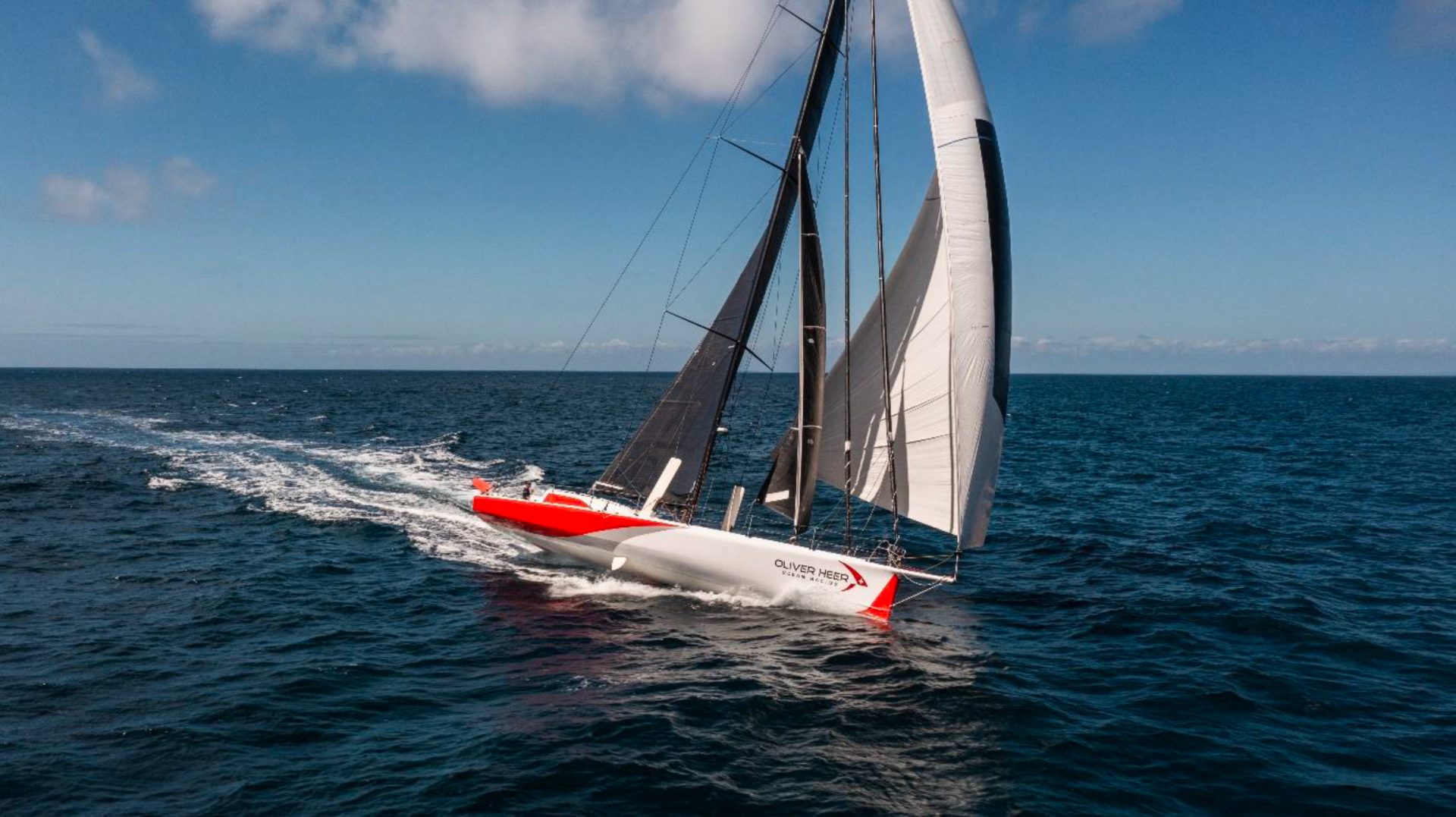
    Le Swiss Polar Institute (SPI) and scientific experts from ETHZ, UNIBERN and UNIL will collaborate with the Oliver Heer Ocean Racing offshore sailing team to collect environmental data during their Vendée Globe 2024 campaign.

    Following contact between the Swiss Polar Institute and Swiss skipper Oliver Heer who sees collaboration with scientists and environmental data collection as central to his responsibility as campaign leader and skipper, supporting his #RaceForChange vision, the Swiss Polar Institute brought together a group of scientific experts from ETH Zurich, University of Bern and University of Lausanne to design an innovative scientific campaign related to climate change.

    Oliver Heer Ocean Racing and the SPI are so announcing a three-year collaboration to place world-class Swiss science on Oliver Heer’s IMOCA racing yacht Gitana 80 and to conduct a data collection campaign during the training and racing phases of the Vendée Globe challenge between 2023 and 2025. The Swiss Polar Institute was approached by Oliver Heer as part of his own campaign to participate in the 2024 Vendée Globe race. This campaign is focused on the theme of climate change and is moving towards climate neutrality through a partnership with ClimatePartner.

    Samuel Jaccard, Institute of Earth Sciences

    Prof. Samuel Jaccard of the FGSE (UNIL, ISTE) tells us more about his contribution to the project and what is expected in terms of results:

    For your part, what kind of data are you interested in with respect to the set of informations that will be captured by the sensors? How long or how many runs will the collection take before the data is analyzed? Is it transmitted in real time?

    Samuel Jaccard : The data collection will be spread over all the races in which Oliver Heer will participate, as well as his training rides. As far as the satellite connections allow, the data should be transmitted in real time. For my part, the data that will interest me the most are the measurements of CO2 dissolved in the Southern Ocean, which will allow to better quantify the exchange of CO2 between the surface ocean and the atmosphere. The Southern Ocean absorbs a significant amount of anthropogenic CO2, which can temporarily limit global warming. Despite the importance of the Southern Ocean in the climate system, its dynamics remain comparatively unknown, mainly for logistical reasons. These data will be very useful in this respect.

    As this is an offshore sailing race, the route followed by the Swiss sailor is obviously not completely fixed in advance, depending on the weather conditions and the adaptation of the race strategy along the way, and scientists cannot, we imagine, influence this: how does this influence the data obtained and the method of processing them?

    Samuel Jaccard : Indeed. The data collection will depend on the weather conditions, as well as on the race strategy. However, the general itinerary is mapped out and known and should allow us to collect valuable information about the functioning of the ocean, especially outside the main routes used by commercial ships.

    How will the collaboration between the researchers of the involved institutions be divided and what are the common objectives in scientific terms?

    Samuel Jaccard : We are going to work in a spirit of collaboration. We know each other well and have worked together in the past. The team from the University of Bern is primarily interested in temperature and salinity parameters, while my colleague from ETH and I will perhaps focus more on dissolved CO2 data.