

Cette publication est également disponible en :
 Français

See also

Glaciers in Retreat: Uncovering Tourism’s Contradictions
As glaciers around the world melt at unprecedented rates, tourism in these icy landscapes is booming, adding pressure to vulnerable regions.

The Genesis project on the origin of life becomes a NCCR
The Federal Council has approved funding for the “Genesis” project on the origins of life.

What Science Reveals about One of the Largest Landslides in the Chablais
A study reveals the internal structure of the “Ovaille” of Corbeyrier and Yvorne.
Film inspired by Unil researchers wins award in the US
The short animated film imagines how humans can live well while staying within environmental limits.
Continents do not always separate symmetrically because of the memory of rocks
When the Earth’s crust tears apart and forms a new ocean, one side of the continent sometimes thins out much more than the other.
Understanding avalanches while walking: students create a themed trail in Les Ormont
Three students from the FGSE have created a fun trail dedicated to avalanches
Plants improve soil carbon storage, but they can disrupt it too
Our world is warming, and plants are widely seen as part of the solution.
Research in action at the FGSE
-
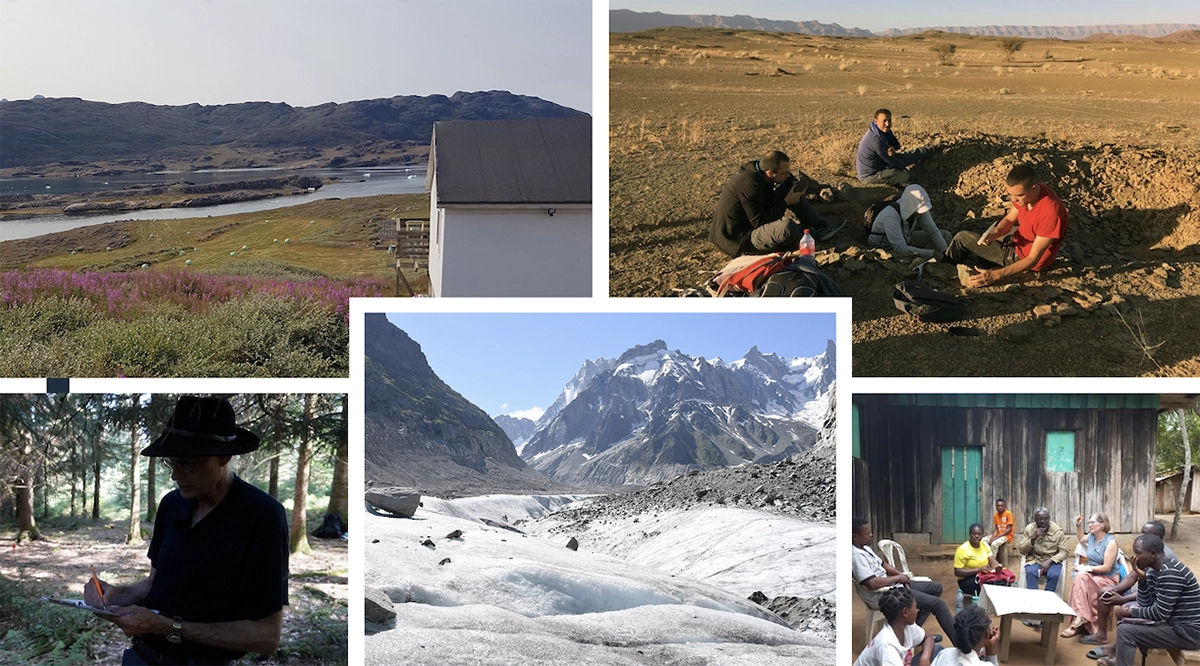
Understanding and Avoiding “Parachute Science”: Toward More Equitable Research
What is parachute science? Parachute science can be defined as an extractive research practice in which external researchers exploit local resources without recognizing or integrating local expertise and infrastructure.
The latest theses defended
-
Materialities of Bigness Encountering the Urban Politics of Iconicity with the European Solidarity Centre
PhD in Geography
-
Rockfall hazard: From observations to improved runout predictions utilizing detailed terrain models
PhD in Earth Sciences
-
Building entanglements: Hagia Sophia and the everyday politics of urban landmarks
PhD in geography
-
The Weddell Sea: predator or prey ? A paleo-investigation of ice-ocean interactions in the Weddell Sea through marine geology and radiogenic isotopes
PhD in Earth sciences
-
Influence of climate change on water resources in Alpine and Himalayan river basins using tree rings and stable isotope analyses
PhD in environmental sciences