Categories
Books Cities Social science Urban

Mapping of 15-Minute City Practices

According to the University College of Estate Management (UCEM, 2024), the concept of the 15-minute city was revitalized in 2016 by researcher and professor Carlos Moreno and received considerable attention during the COVID-19 pandemic. Presently, urban planners globally are implementing this model, awakening an intense debate in favor and against it. This concept traces its origins to Ebenezer Howard’s work, ‘Garden Cities of Tomorrow,’ published in 1902, and is further developed through Clarence Perry’s notion of the Neighborhood Unit in the 1920s, which aimed to create self-sufficient neighborhoods.

The Driving Urban Transition (DUT) Partnership recently released a report titled “Mapping of 15-Minute City Practices”, providing an exhaustive overview of the 15-minute city framework, supplemented by case studies from 100 cities. This report focuses on enhancing urban life locally through improvements in mobility, urban planning, logistics, and governance. It underscores a significant adoption of the framework, particularly in Europe, and emphasizes the critical role of social inclusion and innovative strategies.

Full details and further insights are available in the complete publication:

https://dutpartnership.eu/news/new-publication-mapping-of-15-minute-city-practices

To check the research of Carlos Moreno, follow this link:
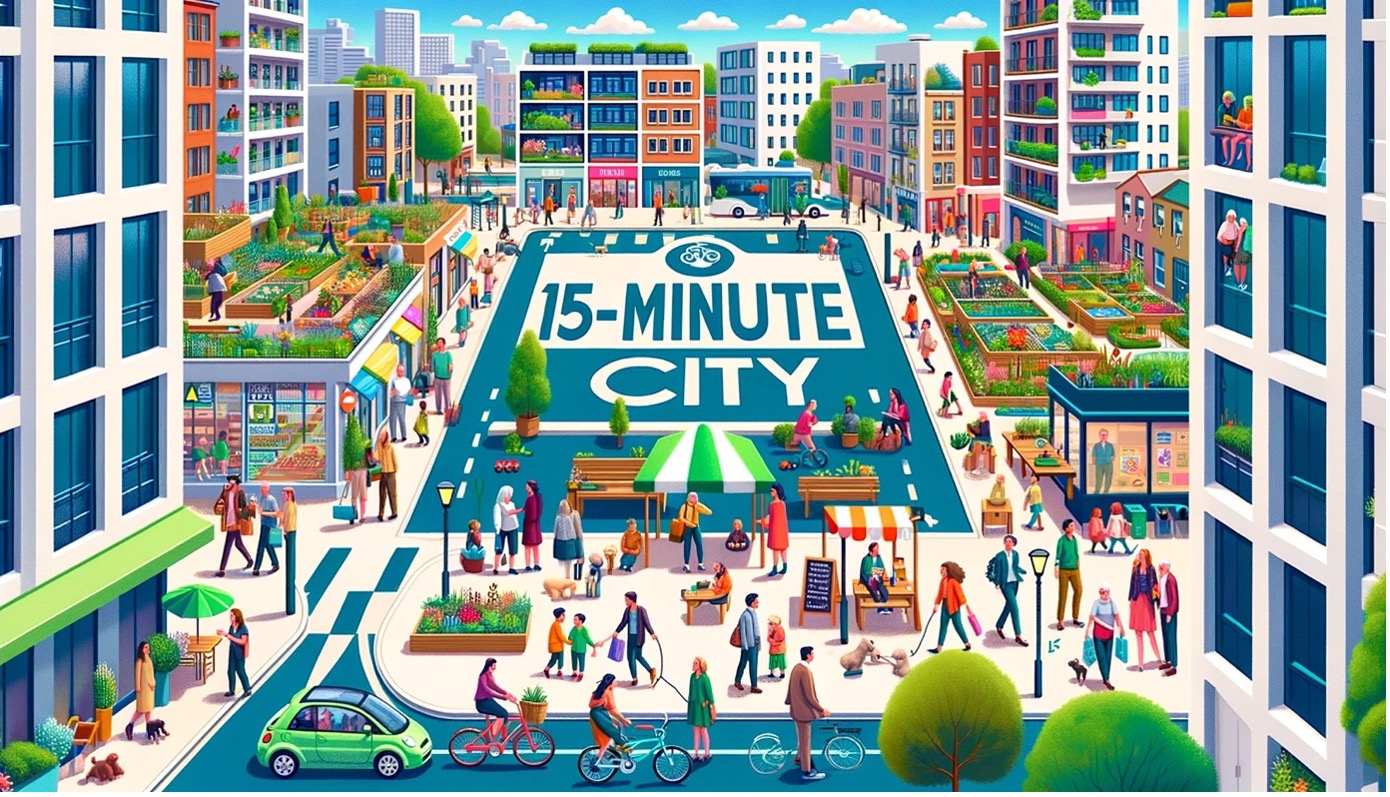
Made in OpenAI, prompt: Jorge Salgado.

References:

University College of Estate Management (UCEM, 2024). A guide to 15-minute cities: why are they so controversial? https://www.ucem.ac.uk/whats-happening/articles/15-minute-city/

Categories
Cities Health Society Urban

MOOC – Healthy Urban Systems Part III

The MOOC – Healthy Urban Systems Part III is now available on Coursera:

https://www.coursera.org/learn/healthy-urban-health-systems-3

You will learn to:

  • Design Adaptive Health Scenario
  • Produce a health system – workshop-style
  • Implement urban health policy in a systemic way
  • Develop health Impact assessments (HIA)
  • Health prevention and promotion

Dedicated to all levels of disciplines linked to the city, health, the environment, social and human sciences, data sciences…

The MOOC is entirely in English, with possible subtitles in French and Chinese.

Materials: videos, glossary, quizzes, exercises, discussion forum

Duration: 4 weeks – 1 session per week to be taken at your convenience

Workload: 2 to 3 hours per week

Accreditation (possible and not compulsory): 2 ECTS for PART II, issued by the University of Lausanne via COURSERA (US$ 25)

General coordination:

University of Lausanne – UNIL-EPFL Foundation for Continuing Education

Prof. Céline Rozenblat, Jeff van de Poel

Categories
Complexity Digital twins Simulation Urban

The Rise of Digital Twins

Last March, Nature Computational Science published an issue dedicated to digital twins. From the simulators used by NASA in the Apollo missions to today’s applications in urban planning, the concept of digital twins is more alive than ever. 

Since that first application, digital twins have been nurtured by significant advances in computing power, data generation and the emergence of a wide range of methods and tools for building the ‘living models’. These developments have extended the possibilities of digital twins from industry and engineering to other fields such as social sciences, biomedicine, climate science and others, which bring their own challenges, requirements and discussions.

This issue of Nature Computational Science highlights the most recent developments in this flourishing field, bringing together expert point of views on the needs, gaps and opportunities for implementing digital twins in different subjects. In the context of urban planning, Michael Batty presents an article that begins with a discussion of the definition of digital twins and argues that the gap between real and digital is not the same for physical assets than for social and organizational systems. Batty claim, as well as the need to integrate humans in the loop design and use of digital twins, reminding as cities could be inherently unpredictable.

If you are interested in this issue, follow this link:

https://www.nature.com/collections/feicjiideh

Follow this link to read Michael Batty article:

https://www.nature.com/articles/s43588-024-00606-7

Source: Busakorn Pongparnit / Moment / Getty Images

Categories
Cities Complexity Environment Health Resilience Society Urban World

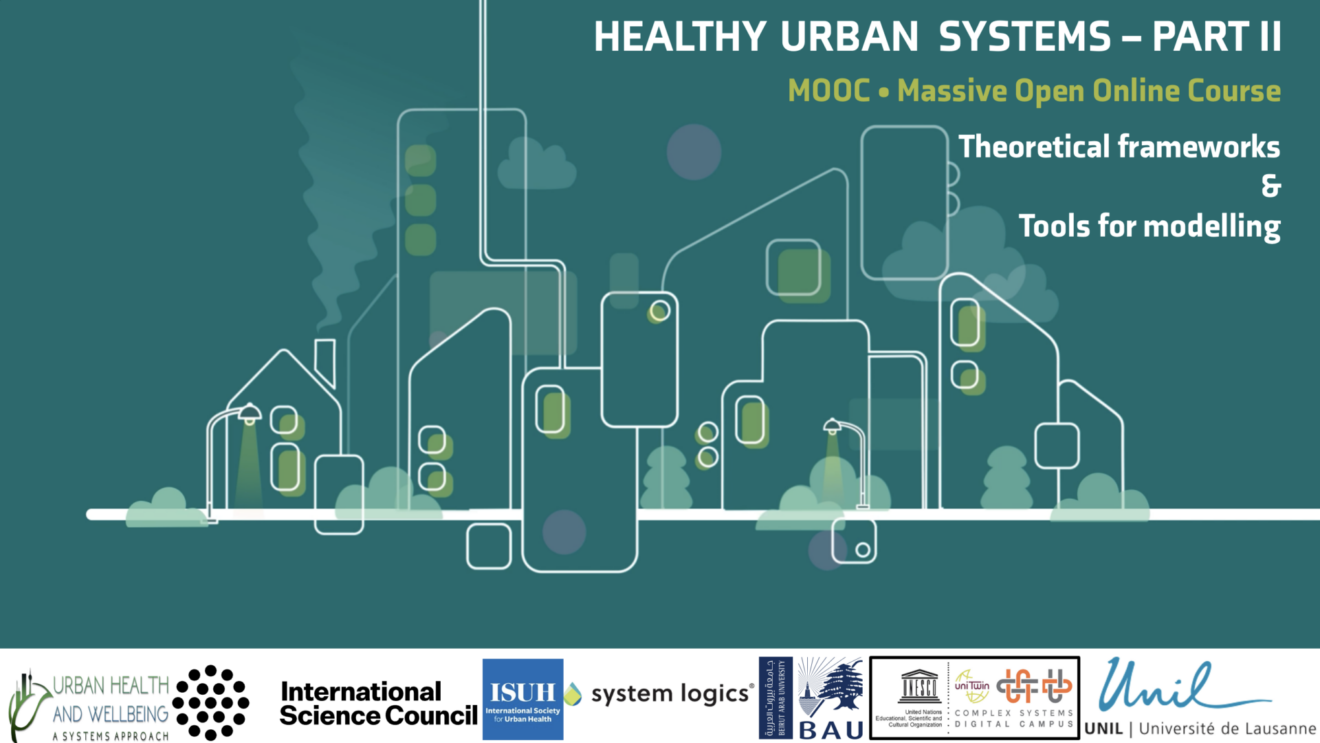
MOOC – Healthy Urban Systems Part II

The MOOC – Healthy Urban Systems Part II

is now available on Coursera!

You will learn to:

  • Address urban health through complex multidisciplinary approaches
  • Use multidimensional and multiscale concepts, methods, and ecosystem frameworks
  • Mobilize and support all players directly or indirectly involved in urban health.

Dedicated to all levels of disciplines linked to the city, health, the environment, social and human sciences, data sciences…

The MOOC is entirely in English, with possible subtitles in French and Chinese.

The part II is dedicated to Theories and models

Module 3: Theoretical frameworks

  • Theories
    • Frameworks, theories, and models in relation with the fundamental concepts
    • Complex systems, Urban metabolism, Urban Ecology, Eco-system
    • Transition and resilience
  • Applications
    • Scaling effects in cities
    • Cognitive processes: Dissonance and mismatch
    • Participatory approaches
    • Collective and systems intelligence

Module 4 : Tools for modeling

  • Systems Modeling
    • Different Methods of Modelling (SD Simulation, Agent based, holistic system modeling) / individual – aggregated.
    • Modelling an epidemic: Agent Based modelling vs system dynamics.
  •  Implementation of concrete projects
    • AIRQ+ for outdoor Air Quality
    • CHEST for Household air quality
    • HEAT Model
    • Eco-policy© model
  •  Holistic Systems Modeling©

Materials: videos, glossary, quizzes, exercises, discussion forum

Duration: 4 weeks – 1 session per week to be taken at your convenience

Workload: 2 to 3 hours per week

Accreditation (possible and not compulsory): 2 ECTS for PART II, issued by the University of Lausanne via COURSERA (US$ 25)

General coordination:

University of Lausanne – UNIL-EPFL Foundation for Continuing Education

Prof. Céline Rozenblat, Jeff van de Poel

Don’t miss this extraordinary opportunity, for more information click on the link below:

Healthy Urban Systems course

Categories
Cities Health Resilience SCIENCE Society Urban

MOOC – Healthy Urban Systems

We invite you to the Massive Open Online Course (MOOC) Healthy Urban Systems, designed specifically for professionals and enthusiasts in the field of urban health. This first part of the MOOC series (consisting of 3 MOOCs) will take you on a comprehensive 4-week journey, navigating through multidisciplinary frameworks and analytical observations critical to understanding the complexities of urban health.

You will learn to:

  • Address urban health through complex multidisciplinary approaches.
  • Use multidimensional and multiscale concepts, methods, and ecosystem frameworks.
  • Mobilize and support all players directly or indirectly involved in urban health.
  • Dedicated to all levels of disciplines linked to the city, health, the environment, social and human sciences, data sciences…

The MOOC is entirely in English, with possible subtitles in French and Chinese.

Materials: videos, glossary, quizzes, exercises, discussion forum.

Duration: 4 weeks – 1 session per week to be taken at your convenience.

Workload: 2 to 3 hours per week.

Accreditation (possible and not compulsory): 2 ECTS for PART I, issued by the University of Lausanne.

General coordination:

University of Lausanne – UNIL-EPFL Foundation for Continuing Education

Prof. Céline Rozenblat, Jeff van de Poel

Categories
Cities Programming SCIENCE Simulation Urban Vizualization

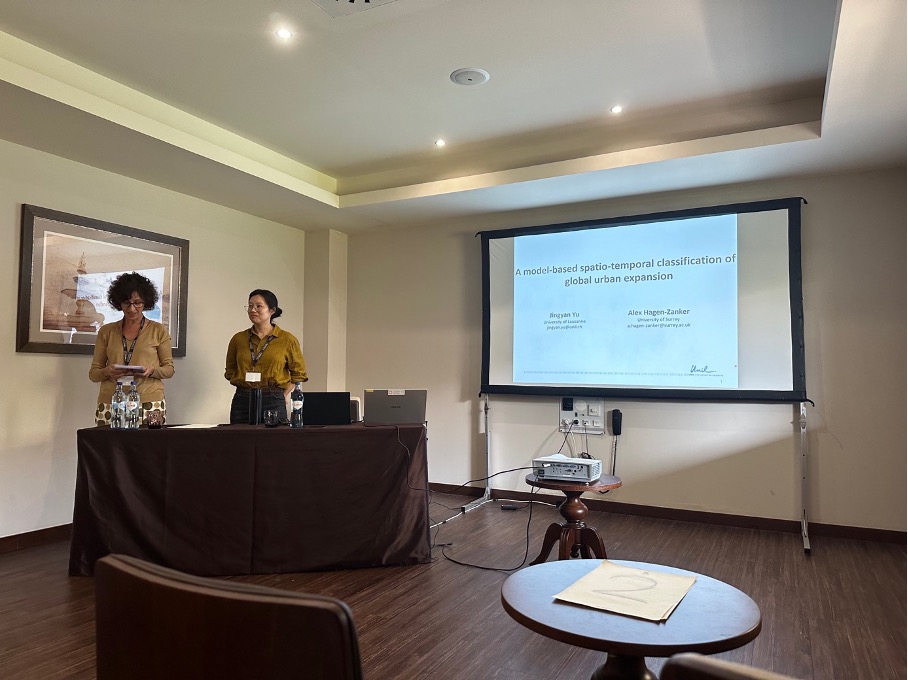
A model-based spatio-temporal classification of global urban expansion  – ECTQG 2023

Dr Jingyan Yu, – postdoctoral researcher and member of Citadyne – presented the first results of her research “A model-based spatio-temporal classification of global urban” at the European Colloquium of Theoretical and Quantitative Geography 2023 (ECTQG, 2023).  She has developed static and dynamic measures to simulate urban expansion in Functional Urban Areas (FUA) around the world. She has found a global trend of physical spatial dispersion, producing discontinuous, dispersed built-up areas.

If you are interested in this research you can contact Dr Yu:

jingyan.yu@unil.ch

Categories
Artificial Intelligence Cities Complexity Urban

Urban AI: The Think Tank

Urban AI’s Thing Tank is a platform that promotes the use of artificial intelligence technologies to make cities smarter, based on six principles for urbanized technologies (i.e. technologies that promote urbanity and “cityness”): situated, open, decentralized, frictionless, meaningful and ecological. The think tank is based in Paris and was founded in 2021 by Hubert Beroche, who explored 12 cities and met more than 130 AI researchers to understand how AI is transforming and will transform cities. 

The core aspects of the think tank have been presented in the URBAN AI report, co-authored by 20 contributors who answer the same question: how will Urban AI transform our cities? According to Beroche, the aim was to create and develop the concept of “Urban AI” by discussing the different aspects of this technology and reflecting on its implications. The report can be downloaded from the following link:

https://urbanai.fr/our-works/urban-ai-report/

To date, the think tank has experienced significant growth, supporting more than 150 members. It has also produced several reports (e.g. The Future of Urban AI: Global Dialogues on Urban Artificial Intelligence, Geopolitics of Smart Cities: Expression of Soft Power and New Order, What goes into urban AI?). To learn more about Urban AI’s Thing Tank, please visit their website at:

https://urbanai.fr