Categories
Cities Geography MAPS Vizualization

Measuring cities’ fragility: an interactive mapping tool.

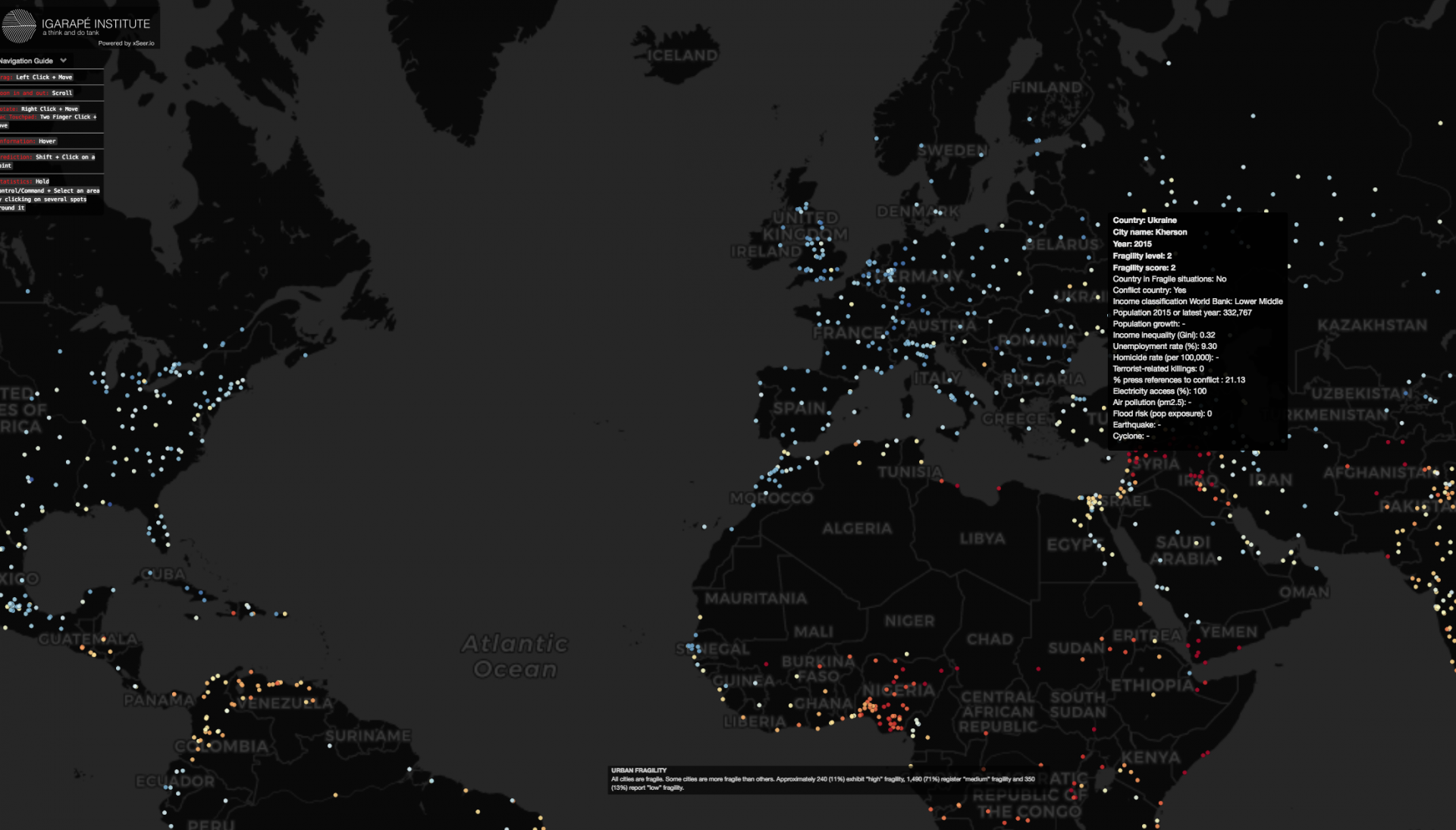
Launched in 2016 World Economic Forum in Davos from Igarapé Institute in collaboration with the World Economic Forum, the United Nations University, 100 Resilient Cities, XSeer and Canada’s Global Affairs, fragile cities  is an interactive tool that allows to visualize cities in terms of their fragility. The platform includes information on over 2,100 cities with populations of 250,000 or more. Cities were graded across 11 variables at the urban scale including population growth, inequality, unemployment, access to electricity, pollutions, exposure to terrorism, homicide rates and reported conflict events.and given a score between 1 (low fragility) and 4 (high fragility).
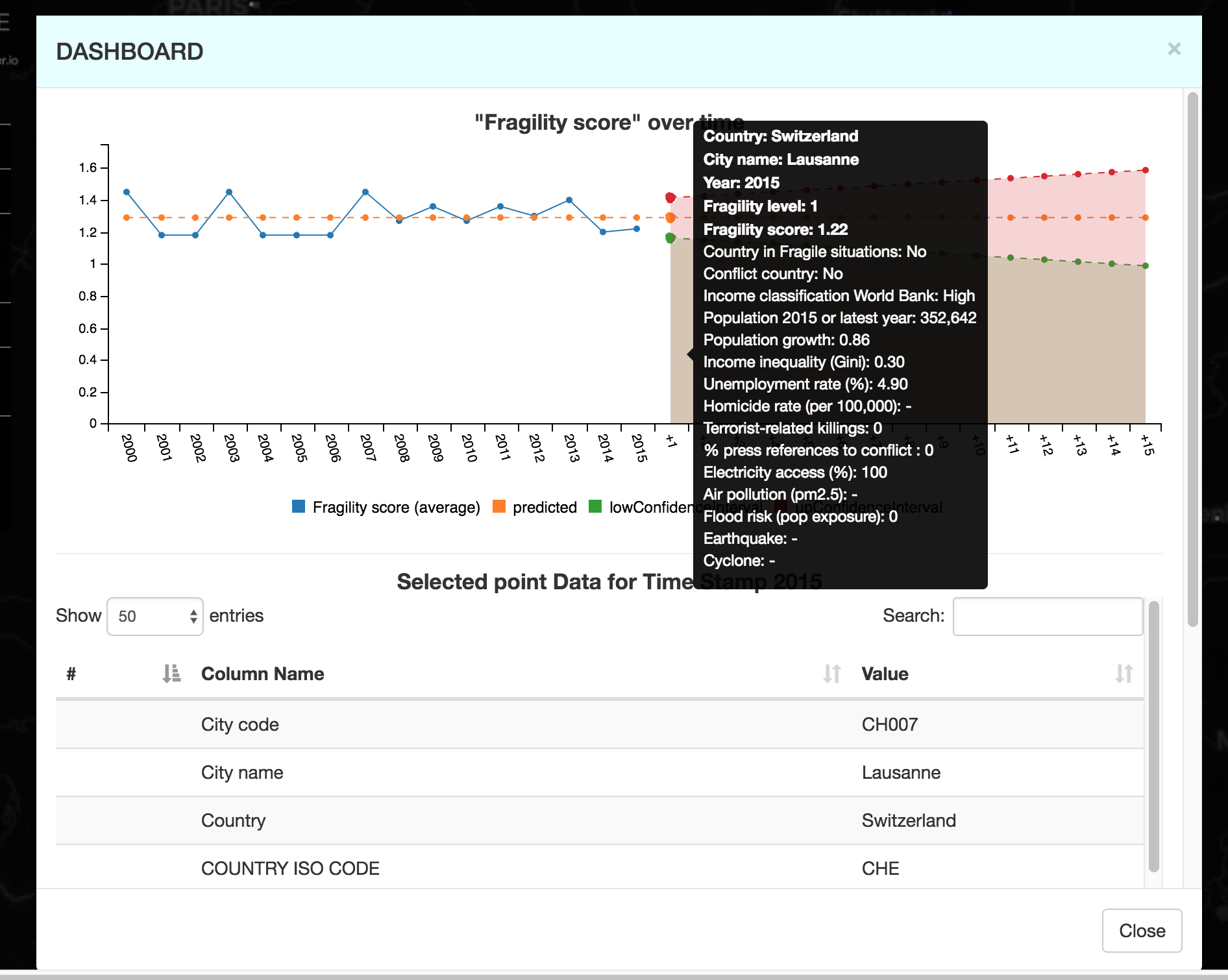
Besides, the evolution of urban fragility parameters in the period 2000-2015, and projections for the future, can be reconstructed by clicking on the dots.Below you can see, for example, the evolution of the fragility index for Lausanne:
Albeit cities’ fragility can be argued to be a much more multidimensional and complex concept, fragile cities is an interesting exploratory tool which could be useful to address issues of urban resilience.

Further information can be accessed here.


Categories
Cities Geography MAPS Vizualization

Transitflow: visualizing public transport routes in space and time

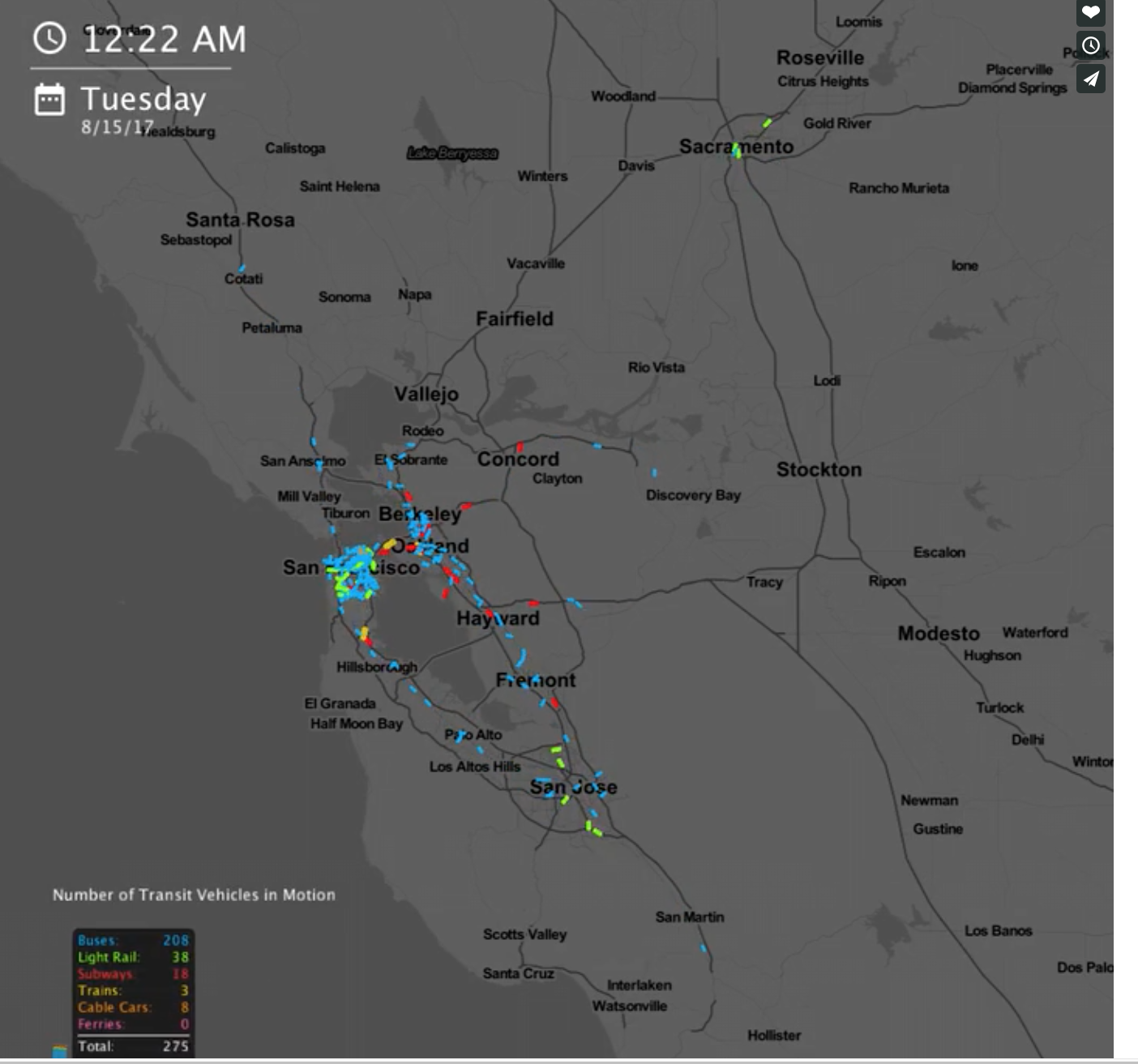
Columbia University student Will Geary created an instrument to visualize public transport flows through the 24 hours of the day.

For example, below you can see an example of visualization for the San Francisco Bay Area, in which small colored dots represent each a different mean of public transport (bus, subway, train, ferry..)

Want to know more?

Here you can get detailed information on how these maps where made and get the tools to create your own visualization for the city you’re interested in.

Categories
Geography Simulation

International Land Use Symposium (ILUS) 2017 – Use of spatial modelling and data visualisation to enlighten future sustainable policy making

Date: November 1-3 2017

Steigenberger Hotel de Saxe, Dresden, Germany

Call for Abstracts (Deadline: 31 July 2017)
Suggested topics for English-language presentations can be submitted via the symposium website (https://www.ilus2017.ioer.info).

Main Topics:
– Big Data and the City as a Complex System
– Historic Settlement and Landscape Analysis
– Morphological Analysis
– Varia: This topic contains free contributions whose topical focus is indirectly related.

Registration (Deadline for early bird registration: 31.08.2017)
Also the registration for participants without own contribution is possible from now on:

https://www.ilus2017.ioer.info/registration.html

Further Information
https://www.ilus2017.ioer.info

Categories
Books Cities Geography Misc

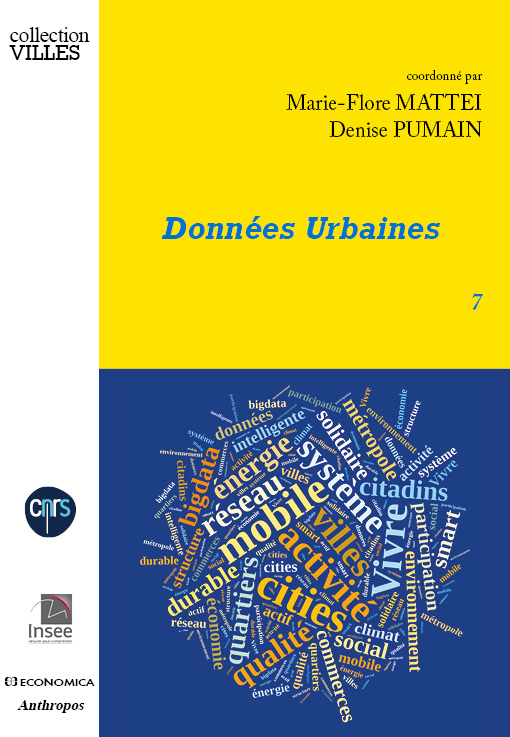
Données Urbaines 7

Just published:

URBAN DATA 7 (Données Urbaines)

Decrypting new diverse and massive urban data, this book shows how cities, their governments their inhabitants, their businesses , adapt deeply to all these transformations. The book is divided into six main chapters, each grouping of items within the reach of the great public by experts on urban policies, urban life, space and social structures, the economy, the functioning of cities in systems and the urban environment. The continuity of these themes with previous volumes in the series can measure the importance of the transformations that highlight how adaptation to change is more than ever the driving force for dynamics cities. Teachers, students, policy makers, urban practitioners and ordinary citizens will find keys to understanding these developments and knowingly take part in.

Donnees Urbaines 7

Categories
Communication Geography MAPS Networks Vizualization World World event

Map of the world of the most popular requests on internet 2013

By Jaume Serra published in the “Courrier international” of January 2nd 2014

Capture d’écran 2014-01-02 à 13.57.30

Categories
Cities Europe Geography Graph analysis History MAPS Networks Simulation Vizualization

ORBIS: the Stanford Geospatial Network Model of the Roman World

The system calculates the distance from a city to another one, according to faster path, or lower cost.

https://orbis.stanford.edu/

Go to “Mapping ORBIS”, It draws the path and create many different maps and graphs (in “Map gallery”). It’s a pity that the Emperors did not have this system 🙂


Categories
Art Books Cities Geography Graph analysis Networks Vizualization

Art and Geography

Three years ago, a friend of mine who is a genius artist (Catherine Bolle), asked me to do geography on her biography. She told me many things about her life, during some few sundays afternoon in the Beaurivage Hotel in front of the lake in Lausanne. It took one year to build the data and think about the pictures to produce. Then to build them and interpret with a nice text.

C_ROZENBLAT_BOLLE_PARCOURS

IMAGE_BOLLE

Categories
Cities Communication Economy Environment Geography Graph analysis MAPS Networks SCIENCE Simulation Social network Society Vizualization World

When Networks Network

The magazine Science underline the huge advance made in network analysis. Networks interact, create cascading effects……

read more in Science

Categories
Art Cities Environment Geography MAPS Misc Vizualization

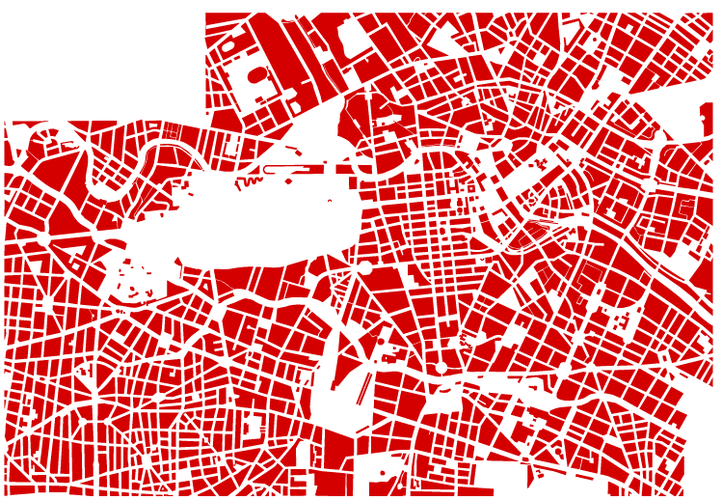
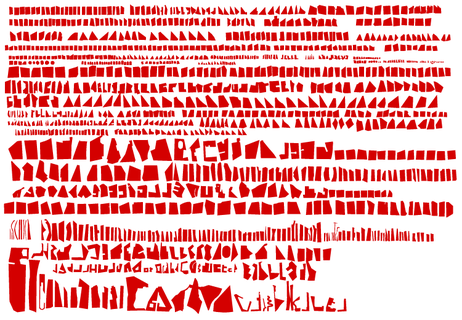
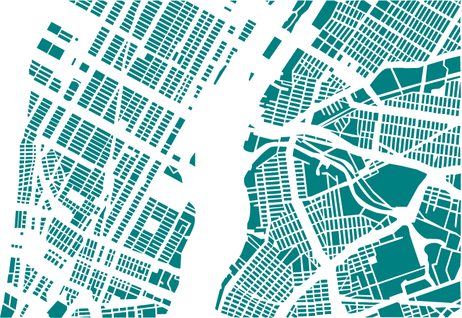
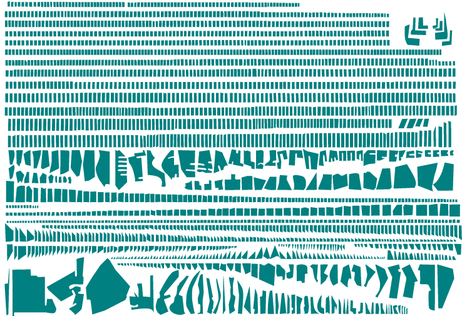
Dissection of cities

I don’t know what we can learn from the physical dissection of cities: maybe some fractal analysis could work?

see the website

Berlin:

New York City:

and other cities in the website (made by Armelle Caron)

Categories
Cities Environment Geography MAPS Vizualization World

Remote sensing tracks relentless urban spread

Looking back through the decades, these snapshots from space — created exclusively for CNN by NASA’s Landsat department in collaboration with the U.S. Geological Survey — reveal the impact of the vast population shift on cities around the world.

https://edition.cnn.com/SPECIALS/world/road-to-rio/satellite-photos-urban-sprawl/index.html

example of LAS VEGAS:


Categories
Cities Geography Graph analysis Research project Simulation Social network Society Vizualization World

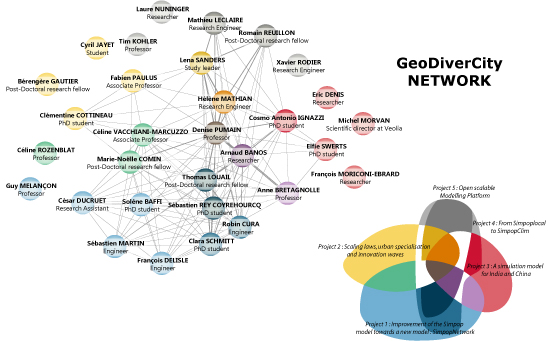
New Blog for the ERC project GeoDiverCity

https://geodivercity.parisgeo.cnrs.fr/blog/

Categories
Cities Geography History MAPS

Africapolis

Atlas of African cities on Google Earth (of course you must have already downloaded Google Earth):

Website

Click on

Display Africapolis data in Google Earth

and then you access to many information from the “GEOPOLIS” database of François Moriconi

Categories
Geography Social network Society

Physical proximity plays a big role in terms of building relationships

https://www.nytimes.com/2011/06/05/technology/05ping.html?_r=2

Grubwithus Organizes Dinners – Social, Minus Media – NYTimes.com, june 4th 2011

Categories
Communication Geography Social network Vizualization

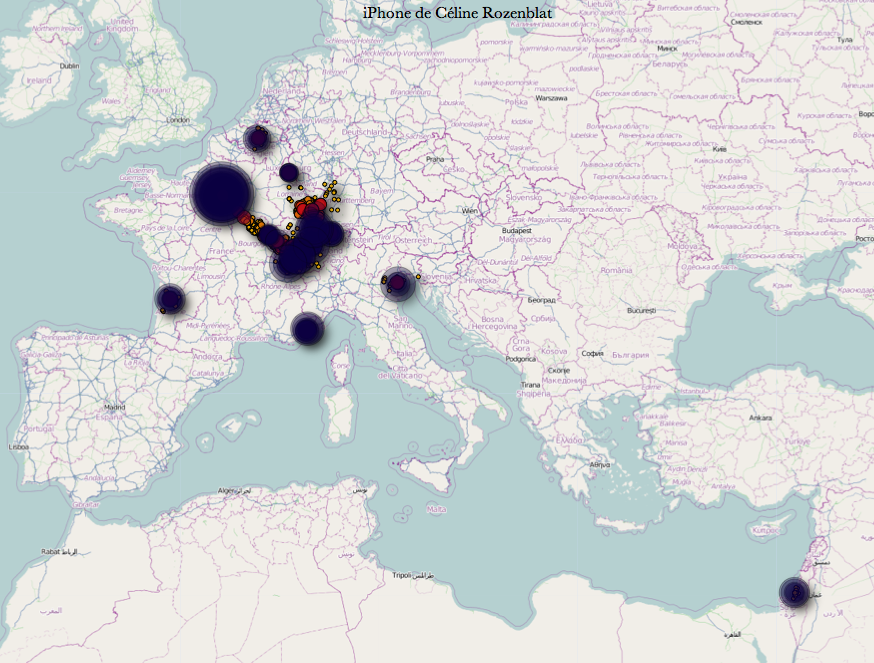
Your movements tracked by your IPhone

if you want your own movement (available on your MAC), download the application

Categories
Geography History MAPS

Gapminder

The Graphic Show of the World development evolution……

Gapminder Website