This summer, many of us were shocked by the collapse of a glacier following the landslide in Blatten. As an earth sciences specialist with a particular interest in the evolution of mountains and glaciers, this was the first time I had witnessed a live event of this magnitude.
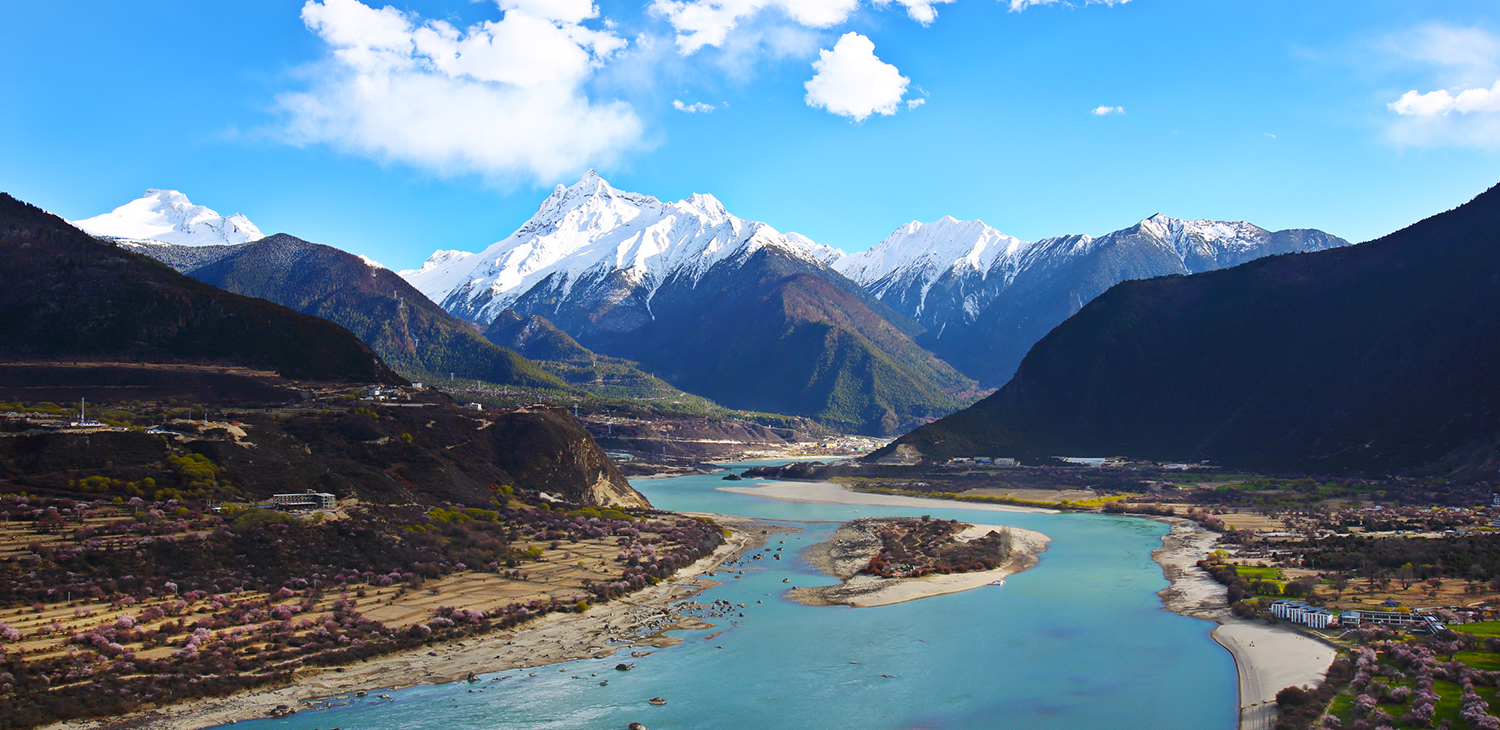
Of course, we know that very large landslides sometimes occur, even forming natural dams on rivers. For example, I had the opportunity to study the case of the Yarlung Tsangpo in Tibet, where such phenomena have occurred and influenced the development of a region where the Chinese authorities are currently considering building a dam. In Greenland, too, a gigantic landslide generated a tsunami and tremors so strong that they were recorded around the world. And yet, this time, the images of the collapse particularly affect us. They add to a series of natural events that affect our mountains and whose frequency and intensity are likely to increase with climate change. It is frightening, but we also have an opportunity to understand these phenomena: here at Unil, we benefit from recognised expertise on the risks and impacts of extreme events. Today, I would like to highlight the words of these scientists.
Michel Jaboyedoff is a professor at the Institute of Earth Sciences in the Faculty of Geosciences and Environment (FGSE) at Unil. A geologist specialising in natural hazards, he teaches courses on gravitational movements and environmental risks. He explains what happened in Blatten: "The Birch Glacier is located in a fractured and friable area. Due to constant rockfalls, most likely caused by the melting of permafrost, a phenomenon caused by global warming, millions of cubic metres of debris fell onto the glacier in just a few days. The load became too heavy, and the glacier broke away from the underlying rock under the pressure exerted by this enormous rockfall." The resulting avalanche of rock and ice has particular properties, notably a propagation that can reach up to 30 kilometres, as was the case on 7 February 2021 in the Chamoli region (Uttarakhand, India). This type of phenomenon is not uncommon, but we are still unable to explain why such a large scale is possible. What we do know, however, is that the frequency and intensity of these debris flows are increasing, which was not anticipated. What can be done? According to Michel Jaboyedoff, it is essential to launch large-scale studies on these instabilities. While some can be observed by satellite, not all are detectable in this way. Regional approaches are needed to screen ground movements in order to update natural hazard maps. This is not necessarily straightforward: "In a crisis situation, you have to be clear about what you are doing and put forward arguments to support it. But there is a risk of making mistakes... and when they happen, you have to be honest so that you can learn from them." In Bondo, for example, where eight people died in 2017 as a result of a major landslide, those in charge of risk management were also responsible for monitoring the region... Seven years later, an external investigation requested by the victims' families showed that the landslide had been preceded by numerous warning signs that were ignored, resulting in five people being charged with manslaughter. In order to guarantee complete impartiality and enable local authorities to make the best possible decisions, it is therefore crucial to work with both local units and independent experts.
Valérie Chavez-Demoulin, a professor in the Operations Department of the Faculty of Business and Economics (HEC) at the Unil, is interested in modelling extreme weather events – i.e. rare natural events with a high impact, such as floods, heatwaves, cold spells and landslides. What characterises a climate extreme is both its low probability of occurrence and the relatively long time between two occurrences. However, it is clear that such events are becoming more frequent, which means that their very definition needs to be rethought... ‘We must not bury our heads in the sand. We are going to be faced with a series of unprecedented climate extremes, particularly in Switzerland, due to its topography.’ So how can we anticipate them? It is impossible to predict the exact date of a collapse such as that of the Birch Glacier. However, Valérie Chavez-Demoulin explains that we can estimate the risk by developing predictive models. To do this, it is essential to bring together a wide range of scientists: in the event of a crisis, decision-makers in municipalities and cantons must be able to consult with members of the "OFEV", MétéoSuisse, geologists, glaciologists, geomorphologists, seismologists, climatologists, hydrologists, statisticians, road, energy and remote sensing experts, etc. In short, they need to draw on as many skills as possible to be able to protect the population effectively. It was with this in mind that ECCE, the Centre of Expertise on Extreme Climate Events at Unil, was created. It brings together specialists in environmental sciences, statistics, actuarial science and economics to study extreme climate events and support responses to their social, economic and ecological impacts. Because, in addition to preventing casualties, we also need to adapt our roads and buildings, or estimate the risks of damage, which could lead to high costs. "We have reached a point of no return. In a few decades, the mountains have changed, the glaciers we knew have receded to make way for rocks. Snowfall is more intense and melts more quickly, generating a new type of devastating avalanche. We need to raise awareness of these new dangers among the population and politicians. Whether we like it or not, we need to rethink our relationship with nature."
These lines inspire several thoughts. First, it has become absolutely essential to focus on interdisciplinarity. More than ever, it is only by combining our perspectives that we will be able to find solutions to the environmental challenges of tomorrow. Secondly, we must face reality. Even if the scientific literature documenting these kinds of extremes is still incomplete, we cannot wait for absolutely irrefutable proof of the influence of global warming to anticipate its consequences. We must act today, before it is too late. We must act on the assumption that one of our valleys could be deprived of electricity and means of communication for several days, as was the case in Zermatt. We must act on the understanding that it is up to us to relearn how to adapt. We must also act on the realisation that limiting the number of victims should not be our sole priority. We must also change the way our cities and regions are developed to avoid potential financial disasters. As Professor James Jackson of the Department of Earth Sciences at the University of Cambridge points out: "In earthquake-prone developed countries like Japan and New Zealand, even severe earthquakes cause very few deaths – they are mainly stories of economic loss. The design of buildings in these countries is regulated to ensure they are as earthquake-proof as possible, in preparation for the unexpected1". In a country like Switzerland, where mudslides, landslides and other climate-related disasters make headlines year after year, it is imperative that we take the lead and design effective preventive measures to ensure the long-term viability of our economic system.
To extend these reflections
Rock slope and gravity 2025 conference (RSG-2025), 26-28 November 2025: "Forecasting and Modelling Large Rock Slope Failures in a Changing Mountain Environment", organised by Michel Jaboyedoff and the Risk Group of the Institute of Earth Sciences at the FGSE (UNIL)
UNIL Centre of Expertise on Climate Extremes (ECCE)
Science Café : "When the mountain collapses: causes and lessons from the Blatten disaster" on Thursday 30 October 2025 at the Palais de Rumine, organised by the Vaud Society of Natural Sciences
- Read the interview with James A. Jackson, Professor at the Institute of Earth Sciences at the University of Cambridge, on: https://www.cam.ac.uk/stories/earthquakes-without-frontiers https://www.cam.ac.uk/stories/earthquakes-without-frontiers ↩︎
 English (UK)
  Français