We aim to understand how SMC-based molecular machines act on DNA to preserve the integrity of genetic information—both by maintaining chromosomal DNA and by defending against invasive elements such as viruses and plasmids.
How is non-self DNA recognized and eliminated?
How are chromosomes segregated during cell division?
How is DNA damage repaired?
How are genomes organized in space & time?
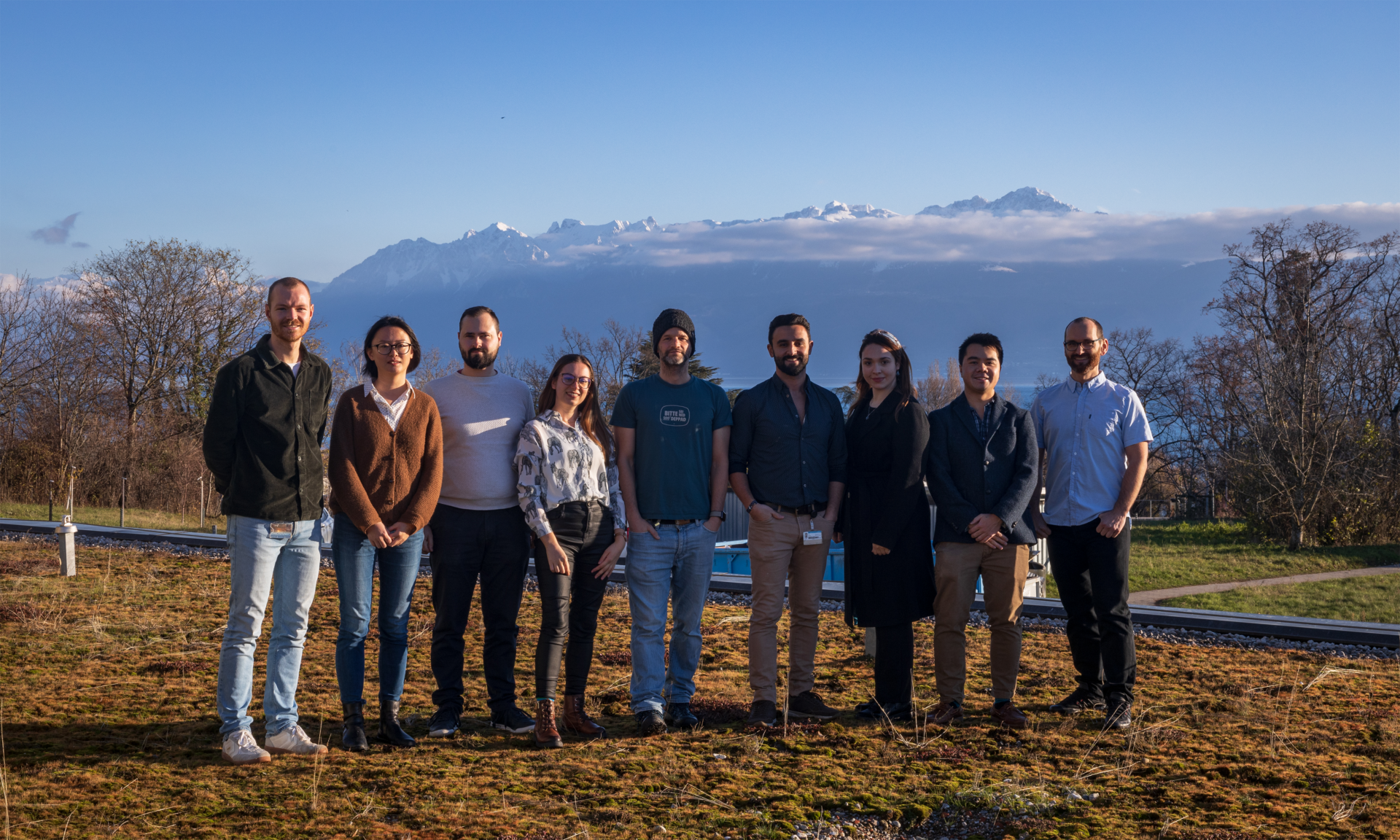
We are part of the Department of Fundamental Microbiology (@dmf-unil.bsky.social) at the Faculty of Biology and Medicine, the University of Lausanne. Find out who we are and what we do. Follow us @GruberLab.bsky.social.
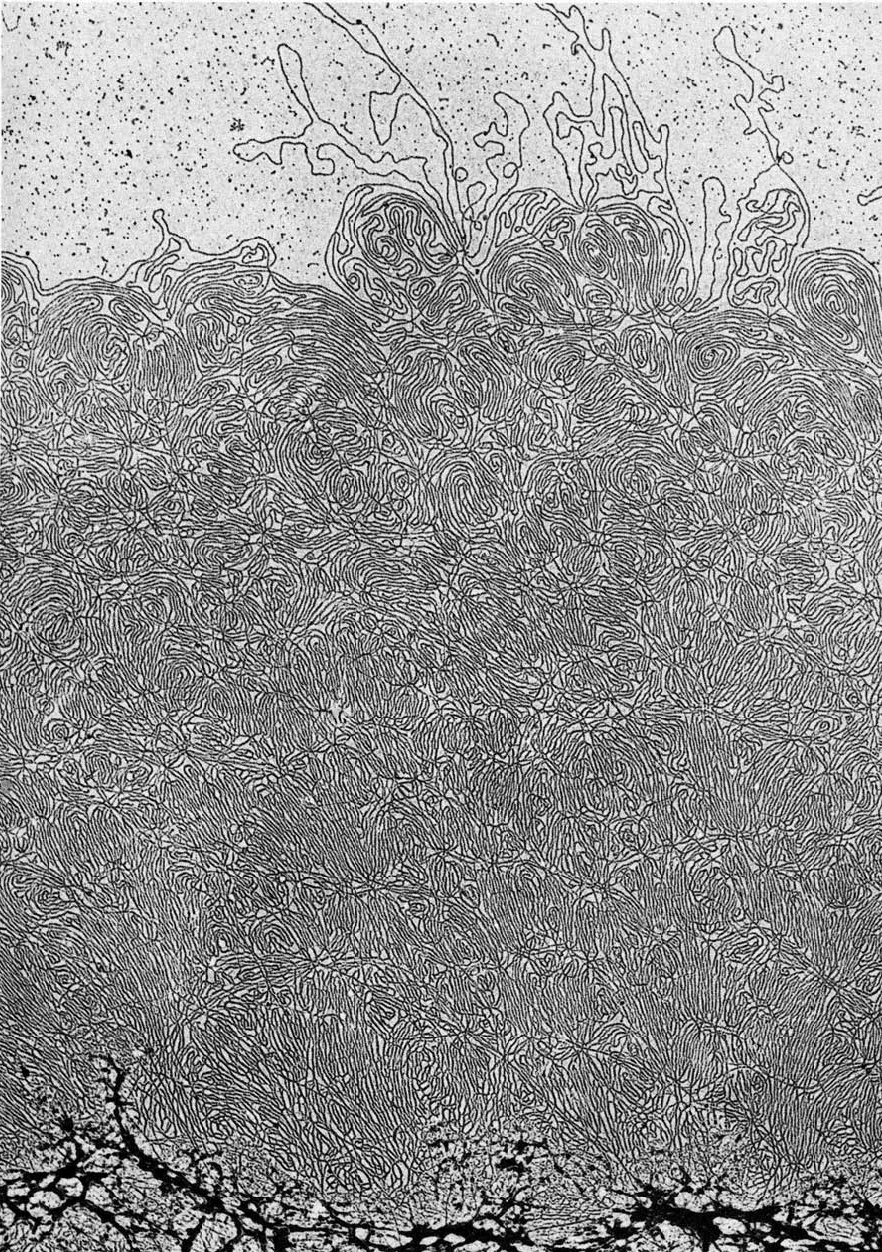
Electron micrograph showing part of a decondensed mitotic chromosome. CIL: 11023
Research
Genome maintenance and DNA defense
Folding chromosomes by DNA loop extrusion
Genome maintenance and DNA defense are essential for life. Our genetic material is constantly challenged—by errors during DNA replication and chromosome segregation, by environmental damage, and by invasive elements like viruses and plasmids. Without systems to repair, maintain, and defend DNA, cells would quickly lose the integrity of their genomes, leading to disease, malfunction, or death. By uncovering the molecular mechanisms behind these protective processes, we can better understand how life safeguards its most valuable blueprint: the genome.
Key factors in chromosome folding: The SMC ATPase complexes
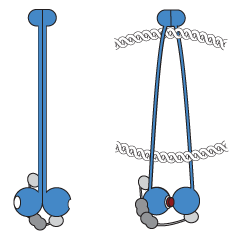
Dynamic SMC architecture
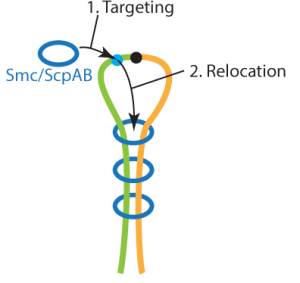
Our research focuses on the multi-subunit SMC ATPase complexes, which play a crucial role in organizing chromosomes by forming DNA loops, thus bringing together distal segments of chromosomes. These complexes are ATP-powered DNA motors that actively extrude DNA loops; they take large steps along the DNA and are able to bypass obstacles, while also maintaining directionality over long periods of time. To gain a better understanding of the mechanisms behind this process, we are studying bacterial SMC complexes and the yeast Smc5/6 complex using biochemical techniques and cryo-electron microscopy at the Dubochet Center for Imaging in Lausanne (@DCI_EM). Our work has led to the development of the DNA segment capture model, which we are now testing.
SMC Wadjet systems in bacterial immunity
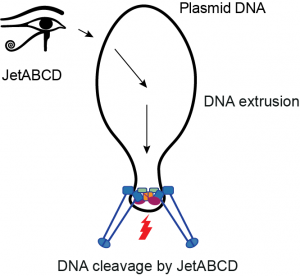
Model for plasmid DNA elimination by Wadjet SMC.
Wadjet systems are derivative SMC complexes that play a role in bacterial immunity, rather than in chromosome folding. We have recently shown that Wadjet/JetABCD eliminates plasmids by cleaving circular DNA molecules. We are interested in understanding how the Wadjet complexes specifically recognize and target smaller circular DNA molecules, while sparing the host chromosome from processing. The eukaryotic Smc5/6 complexes have been shown to play an apparently related role in defense against infection by viruses (HBV, EBV and others). We are working to understand how these activities in viral and plasmid defense are related to one another and to the more canonical functions of SMC complexes in genome folding and maintenance. Recently, we have also started investigating other bacterial defense systems that act on DNA and share similarities with chromosomal DNA repair machinery.
ParABS & cellular regulation
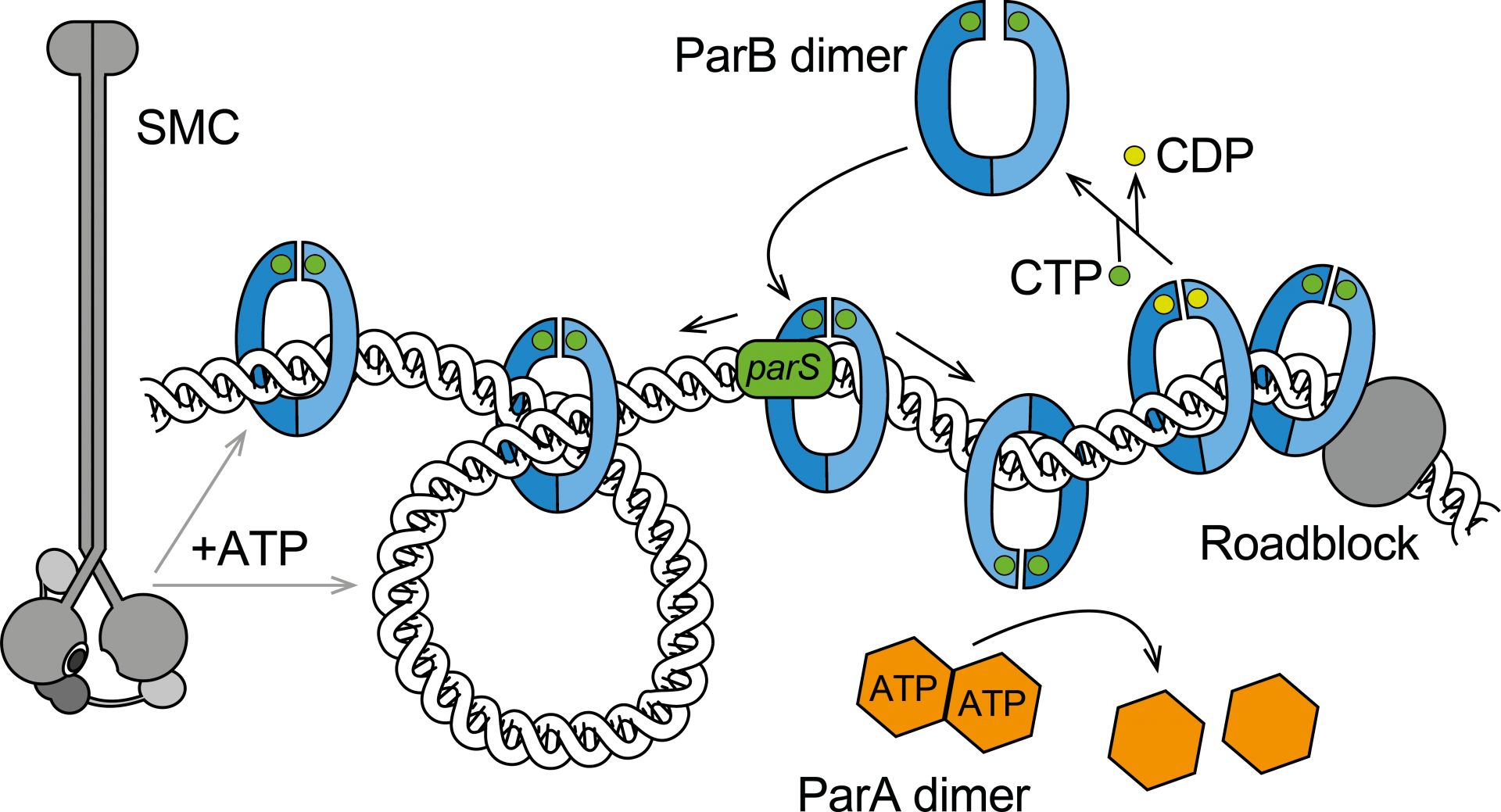
ParB CTPase self-loading at a parS site.
ParABS systems are important for promoting chromosome segregation and plasmid maintenance in many bacteria and some archaea, as well as for supporting additional regulatory functions within the cell. These systems work by binding ParB proteins to centromeric parS sequences to form large nucleoprotein complexes that interact with specific ATPases (ParA and Smc) to partition plasmid and chromosome copies. We have recently discovered that ParB proteins are enzymes – the first known CTP hydrolases – which form DNA sliding clamps that self-load onto parS DNA. We are particularly interested in how the combination of ParB CTP binding and hydrolysis with ParA and Smc ATPases promotes chromosome organization and segregation in bacteria.
Our approach
A deep understanding of the architecture and structure of macromolecular assemblies is often essential for gaining a mechanistic understanding of their function. Our research combines genetics, molecular and cell biology, biochemistry, and structural biology to reveal the molecular basis of protein function and cellular activity. We use a range of biophysical techniques and structural biology to investigate protein-DNA complexes and DNA organization in vitro, as well as in vivo techniques such as ChIP-Seq, Hi-C, directed or random mutagenesis, and site-specific cross-linking. By combining these approaches, we hope to gain insights into the underlying mechanisms of these complex systems.
New focus?
We are always open to exploring new areas of research, including the roles of other SMC and SMC-like proteins (such as Rad50 and RecN) in maintaining DNA integrity in both bacteria and eukaryotes.
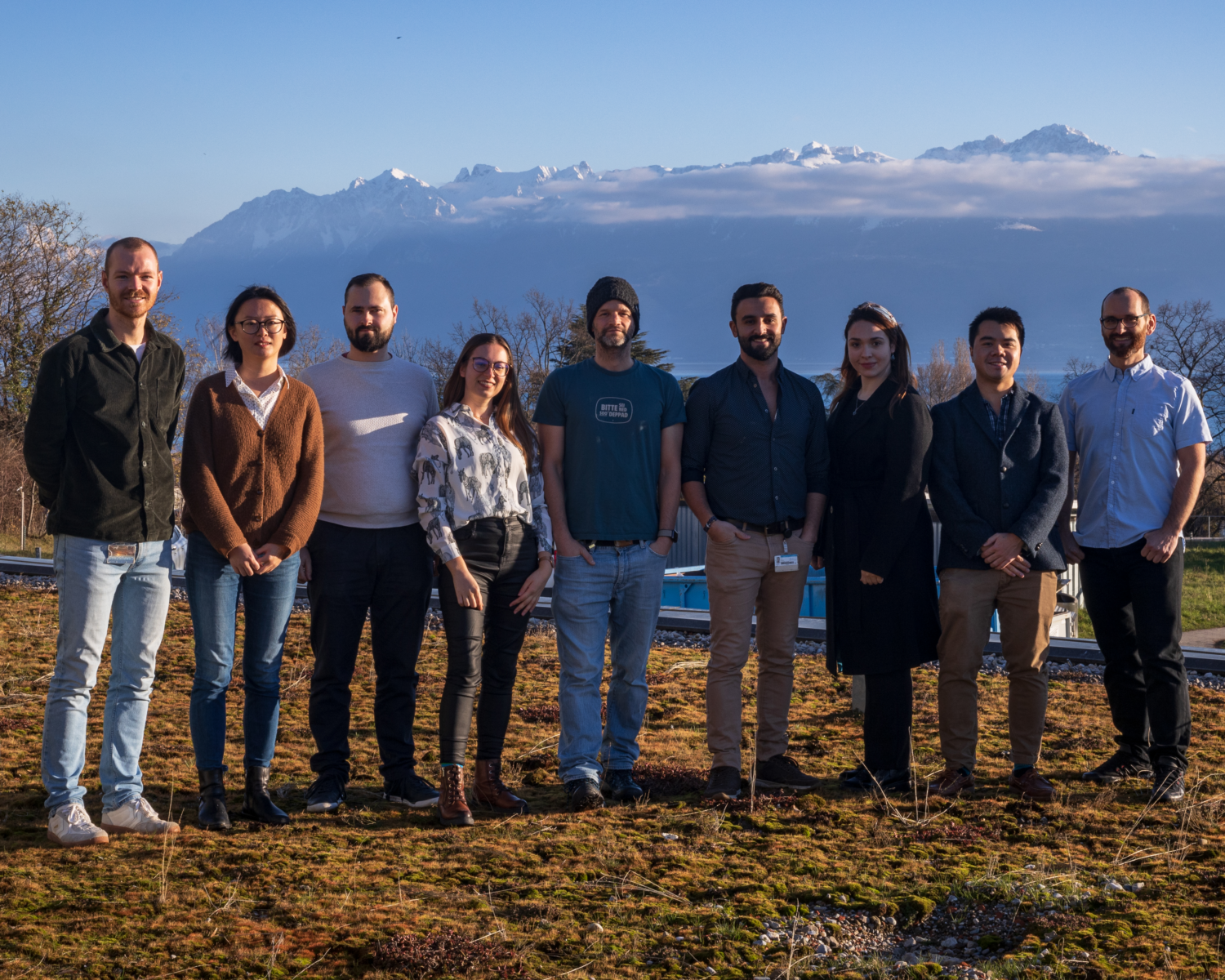
Members
Alice Deshayes
alice.deshayes[a]unil.ch +41-21-692-5611
2018-2023 – PhD, Marcand lab, Institut de Biologie François Jacob, CEA, Paris, France 2016-2018 – MSc Genes, Cells and Development, Paul Sabatier University, Toulouse, France.
Joe Dickinson
joe.dickinson[a]unil.ch +41-21-692-5611
2020-2022 – MSc Molecular Life Sciences – University of Lausanne, Switzerland
2015-2020 – PhD, Uhlmann lab, The Francis Crick Institute, London, UK 2011-2015 – MA MSc Biochemistry – University of Cambridge, UK
Florian Roisné-Hamelin
florian.roisne-hamelin[a]unil.ch +41-21-692-5611
2016-2021 – PhD, Marcand lab, Institut de Biologie François Jacob, CEA, Paris, France
2014-2016 – MSc Genetics & Cell Biology- University of Lyon 1, France
Michael Taschner – Research scientist
michael.taschner[a]unil.ch +41-21-692-5611
2010-2017 – Postdoc – Lorentzen lab, Max Planck Institute of Biochemistry, Munich, Germany 2005-2009 – PhD Biochemistry – Svejstrup lab, UCL, UK 2000-2004 – Diploma Biology – University of Vienna, Austria
Former lab members
Anna Anchimiuk (PhD student), Socorex Isba, Lausanne, CH
Alrun Basfeld (Intern), WuXi Biologics, Leverkusen, Germany
Mélanie Beraud (Postdoc), Université de Mons, Mons, Belgium
Martin Blettinger (Technician), Hexal Sandoz, Munich, Germany
Florian Bock (PhD student), FITInnotrek POC fellow, Lausanne, CH
Frank Bürmann (PhD student), Welcome Trust group leader @ University of Oxford, UK
Marie-Laure Diebold-Durand (Postdoc), CNRS Researcher @ IGBMC Strasbourg, France
Alexandre Durand (Postdoc), Cryo-EM Facility Manager – Inserm @ IGBMC Strasbourg, France
Victor Gimenez-Oya (Postdoc), LMU Munich, Germany
Franziska Kemter (Postdoc), Senior Scientist, Lonza, Visp, CH
Daniel Meyer (Technician), Technician, Max Planck Institute for Quantum Optics, Munich, Germany
Anita Minnen (PhD student), Policy & Programme Officer, Dutch Research Council, Utrecht, NL
Nicolas Pellaton (Intern), PhD student, Bern, CH
Laura Ruiz Avila (Postdoc), Granzer Regulatory Consulting, Munich, Germany
Jae Shin (Postdoc), Senior Scientist, NanoLund, Sweden
Young-Min Soh (Postdoc), Senior Scientist, Meso Scale Diagnostics, US
Chris Toseland (Postdoc), Professor, University of Sheffield, UK
Roberto Vazquez Nunez (PhD student), Postdoc @ MIT, US
Larissa Wilhelm (PhD student), Pharmacovigilance, Novartis, Vienna, Austria