

The 24th Old-World Conference in Phonology will take place from the 31st of March to the 2nd of April 2027 at the Université de Lausanne, (Switzerland). We invite submissions reflecting various perspectives on phonology, including but not limited to formal, typological, and laboratory approaches. Abstracts based on first-hand empirical data, especially field data on lesser-resourced languages, are particularly encouraged. The conference will be held in person.
The Old-World Conference in Phonology (OCP) was founded in 2003 by the Leiden University Centre for Linguistics and the Meertens Institute. Initially inspired by a series of HIL-Phonology (HILP) conferences held in Leiden, Amsterdam, and Potsdam, OCP has grown into a prominent annual event that attracts both junior and senior researchers from around the globe. Over the years, OCP has been hosted in various cities across Europe (most recently in Cambridge), including Warsaw, Verona, London, Düsseldorf, Budapest, Barcelona, Leiden, Istanbul, Berlin, Marrakech, Nice, Edinburgh, Toulouse, Rhodes, Budapest, Tromsø, Leiden, Eivissa, Donostia/San Sebastian, Tours, and Amsterdam. Each conference features a diverse range of presentations covering both experimental and theoretical aspects of phonology.
Invited Speakers
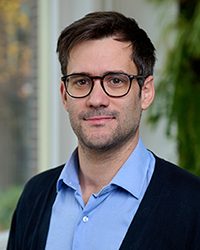
Benjamin Storme is an Assistant Professor of French linguistics at the Leiden University Centre for Linguistics. His main areas of specialization are phonology and experimental linguistics.
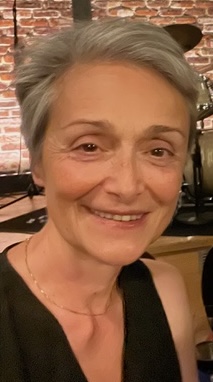
Ioana Chitoran is Professor of linguistics at Université Paris Cité and the CNRS Laboratoire de Linguistique Formelle. Her research is in laboratory phonology, addressing the organization of phonological systems through experimentation.
OCP 2027
OCP is an annual event gathering researchers specializing in phonology and related fields, interested in both theoretical and experimental issues. It was founded in 2003 by a group of linguists from the Leiden University Center for Linguistics and the Meertens Institute, and has since grown into an international forum attended by both senior and junior linguists.