
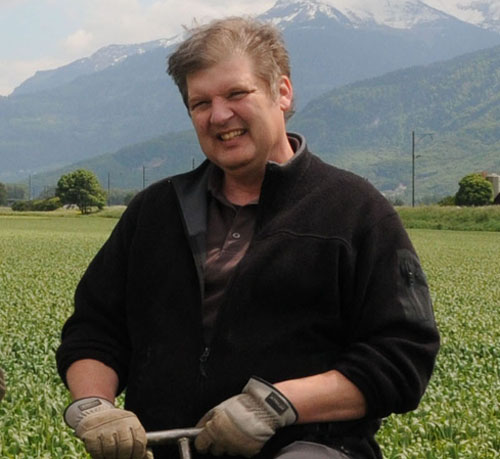
Christoph Keel – Group leader
Christoph completed his studies in Agronomy with specialization in Plant Sciences at ETH Zurich in 1985. He carried out his doctoral research at the Institute of Phytomedicine at ETH Zurich, working with Geneviève Défago on biological control of soil-borne plant diseases. He received his PhD and the ETH silver medal in early 1989. He then was an OECD postdoctoral fellow with R. James Cook, David Weller and Linda Thomashow at Washington State University, Pullman, USA, investigating the molecular diversity of rhizosphere pseudomonads. He returned to ETH Zurich to work as a group leader at the Institute of Plant Sciences/Phytopathology. In 1995, he joined the group of Dieter Haas at the University of Lausanne as a group leader (Maître d’Enseignement et de Recherche I). He developed an independent research group, studying molecular interactions of pseudomonads with plants, fungal pathogens and insects. Since 1998, he serves in the steering committee of the Swiss Society for Phytiatry (Phytopathology/ Applied Entomology) and was president from 2003 to 2009.

Jordan Vacheron – Senior Researcher
Jordan finished his PhD thesis in December 2015 in the Microbial Ecology Laboratory at the University Claude Bernard Lyon 1. The PhD thesis work of Jordan was focused on plant-associated bacteria of the Pseudomonas fluorescens lineage making part of the so-called plant growth-promoting rhizobacteria (PGPR). Jordan investigated in particular the distribution and the functioning of plant-beneficial traits across fluorescent pseudomonads, from genomes to microbial populations, using molecular, bioinformatic and ecological approaches. He then did a one-year postdoc in Lyon, working on the biological control of parasitic plants using PGPR. Jordan joined the Keel lab in December 2016 in order to investigate Pseudomonas-insect-plant interactions.
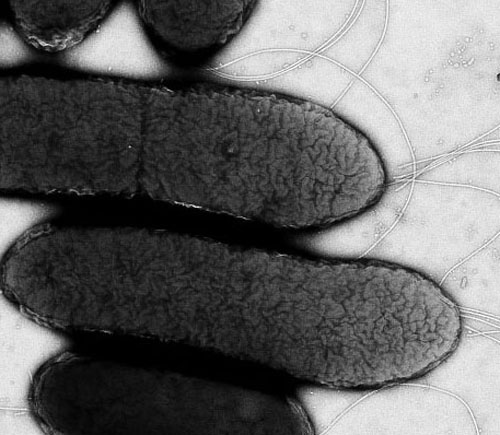
Pseudomonas protegens CHA0 – Lab beast
Isolated by Geneviève Défago from a disease-suppressive tobacco field soil near lake Neuchâtel in Switzerland back in the 1980es. Domesticated and still in use in the Keel lab as a model bacterium which surprises with an exciting variety of features and capacities.