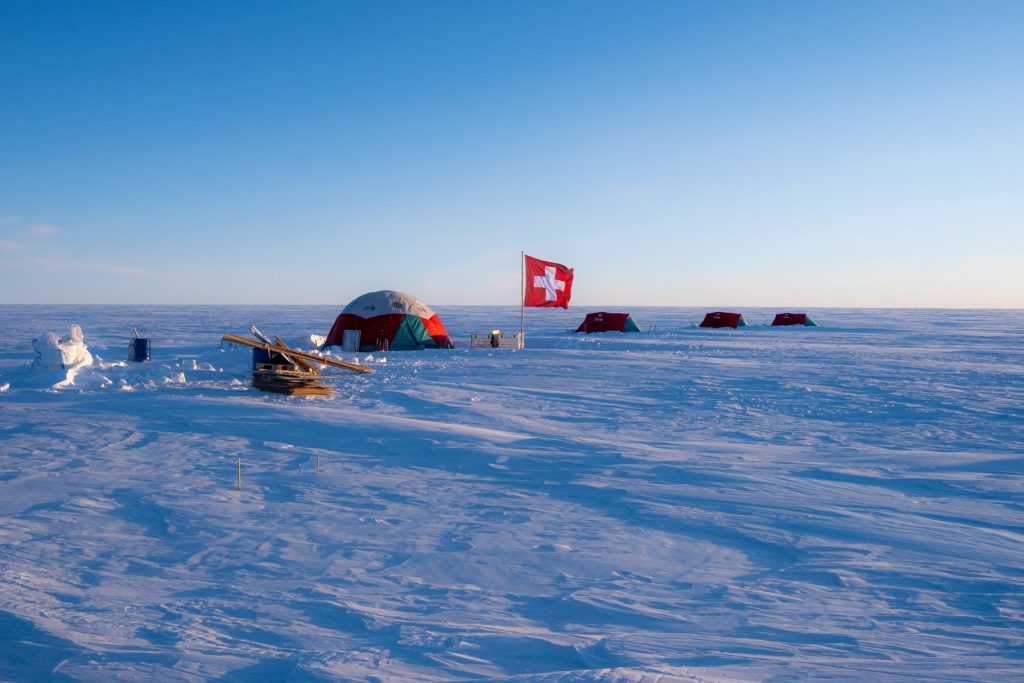
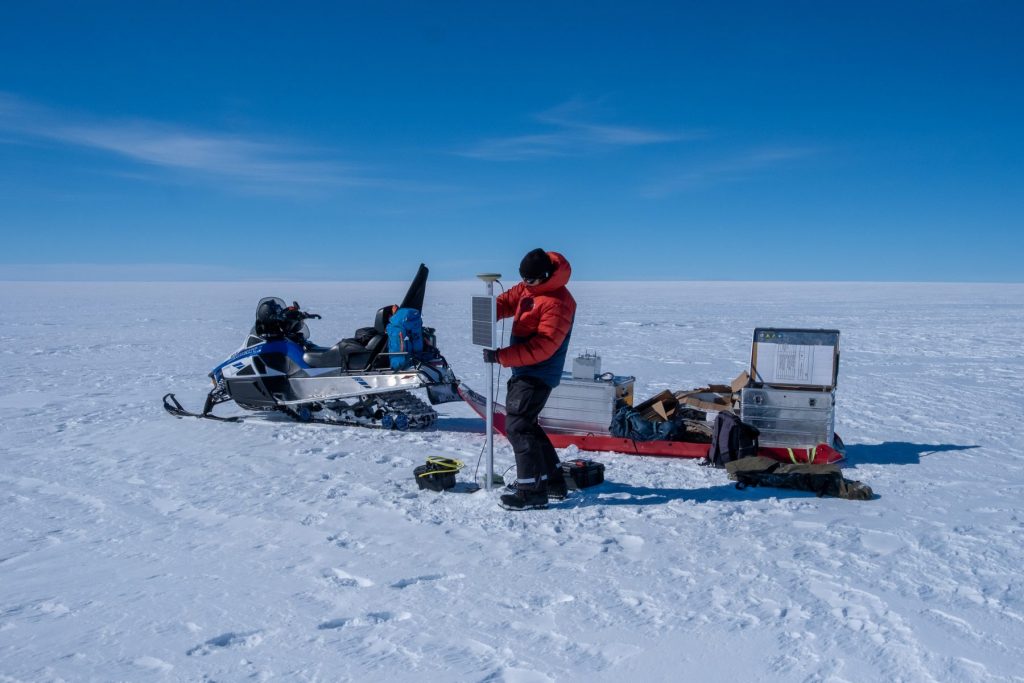
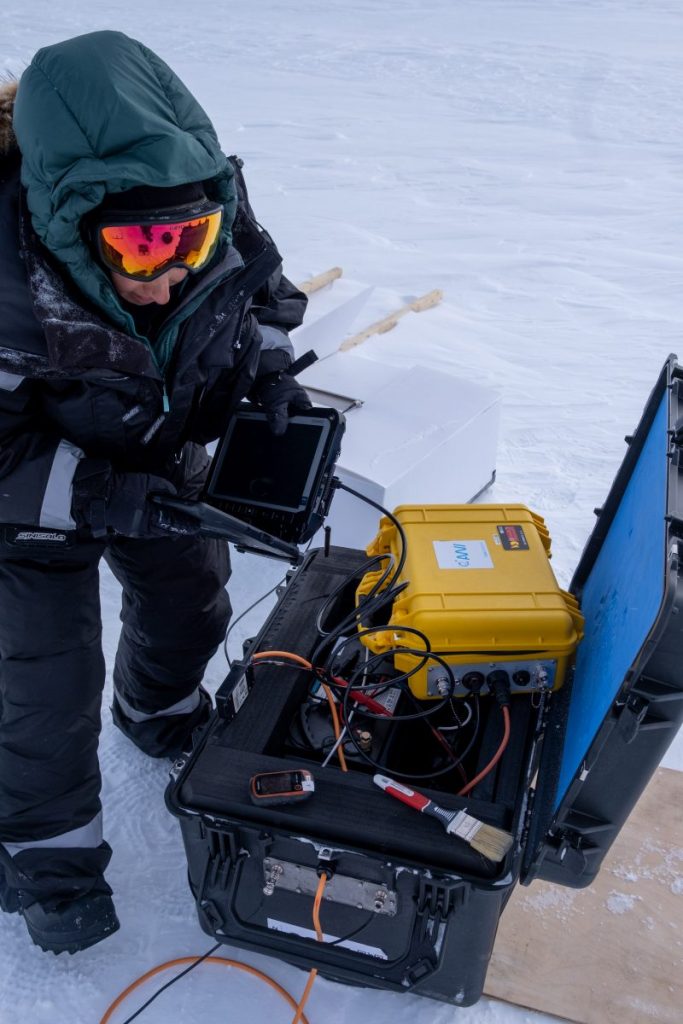
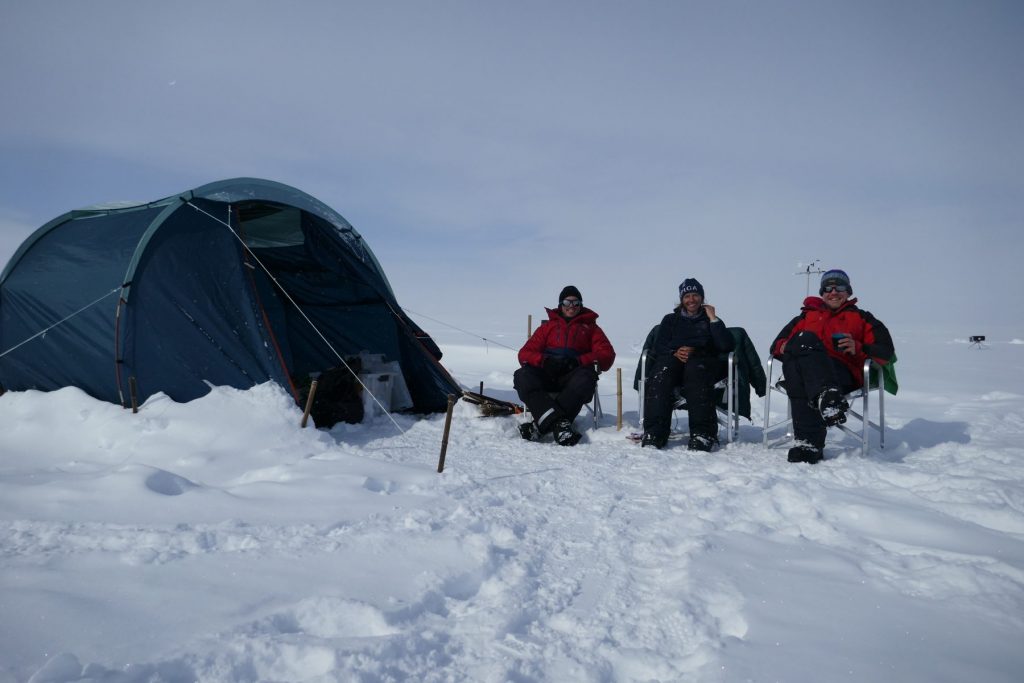
In April, we spent three weeks on the Greenland Ice Sheet to install instruments for year-round monitoring of ice flow and surface and subglacial hydrology.
We deployed 15 GNSS stations to track ice motion, four ApRES (Autonomous phase-sensitive Radio-Echo Sounding) units to monitor changes in water content within the ice column, and two hydrological observation sites, each equipped with multiple pressure sensors to measure water depth and time-lapse cameras.
The ApRES units and hydrology sites were strategically placed around surface lakes that form during the melt season and have previously drained suddenly through hydrofracturing. Several GNSS stations are positioned both near the lakes and farther afield. All instruments are operating autonomously.
With this setup, we aim to monitor the water content at the surface and base of the ice sheet and understand how meltwater input into the subglacial environment may influence the dynamic response of ice flow on both local and regional scales.
Now, we’ll have to be patient until next spring to return and collect the data.