|
|
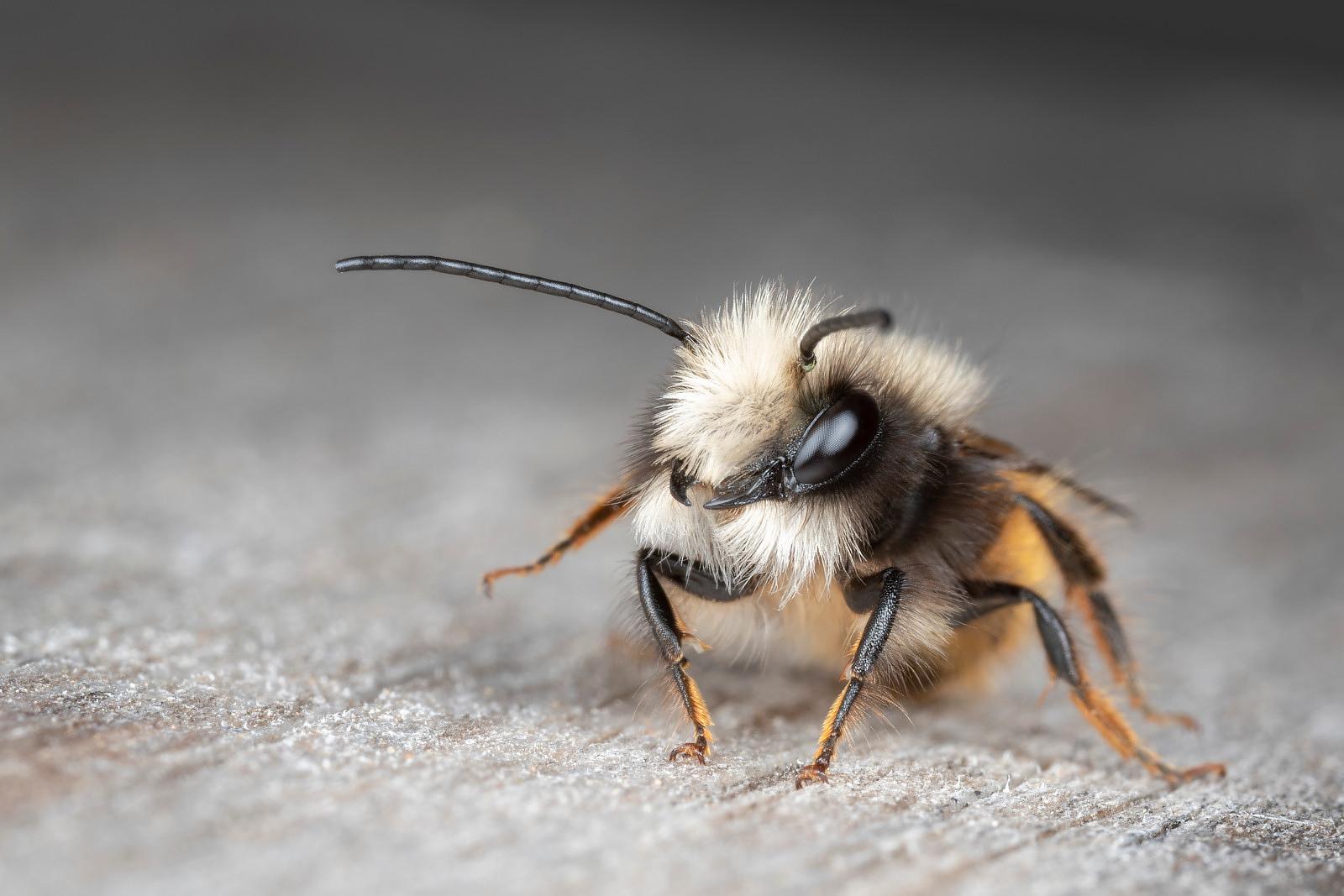
Photo © Bart Zjilstra
|
|
Info DEE # 48 - March 2023
|
|
|
|
|
|
A WARM WELCOME TO OUR NEW COLLEAGUES
|
|
|
|
|
|
Mr Quentin Fort has joined the group of Prof. Roulin as an Intern. Quentin is located in office 3206, phone 42.18. Quentin.Fort@unil.ch
|
|
Ms Teresa Goicolea has joined the group of Prof. Guisan as a External Scientific Collaborator. Teresa.Goicolea@unil.ch
|
|
|
|
|
|
Ms Natalie Lewis has joined the group of Prof. Wedekind as a Gradate assistant. Natalie is located in office 3223, phone 42.49. Natalie.Lewis@unil.ch
|
|
|
Ms Valérie Schwarz has joined the DEE as a Secretary (present Tuesday, Wedenesday and Thursday). Valérie is located in office 3106, phone 42.05. Valerie.Schwarz@unil.ch
|
|
|
|
|
|
We are also glad to count on the help of our new student assistants:
|
BATTAGLINI Alexis (PANNELL Group)
BLANCHARD David (PANNELL Group)
FALK Tanguy (KAWECKI Group)
FELSCH Joey (suivi par Tomas KAY)
HUANG Wan-Ting (ROBINSON-RECHAVI Group)
ORNATI Talisa (PANNELL Group)
QUINTAS Ian (KAWECKI Group)
SCHNEIDER Théo (ROBINSON-RECHAVI Group)
STEPHENS Dylan (suivi par Tomas KAY)
YERLY Camille (WEDEKIND Group)
ZUFFEREY Léa (WEDEKIND Group)
|
|
|
|
|
|
|
|
|
|
|
|
|
|
|
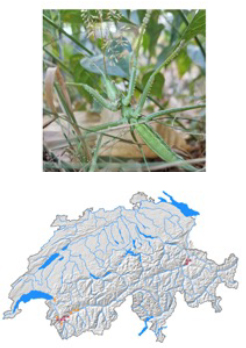
The Waterhouse group has been awarded a grant from UNIL’s Fondation Herbette to work with the Parc naturel régional de la Vallée du Trient to promote its alpine biodiversity. The project aims to bring visibility to the activities of the park while at the same time generating important genetic resources for some of its charismatic fauna and flora. A preliminary set of 13 species has been selected for the generation of reference quality genome assemblies, in collaboration with the European Reference Genome Atlas initiative.
|
|
|
Distribution et photographie de Saga pedo (CSCF),
photo par Adrien Favre
|
|
|
|
|
|
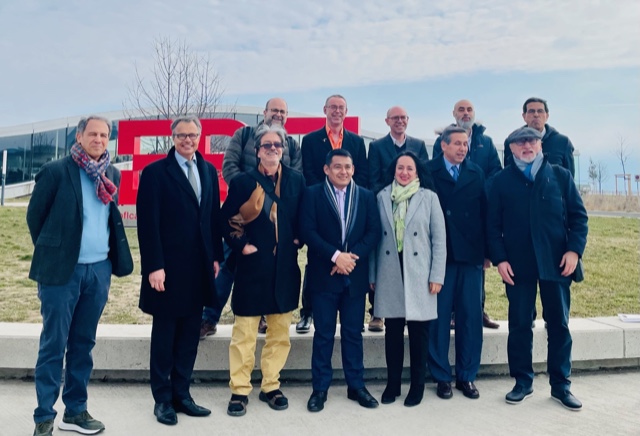
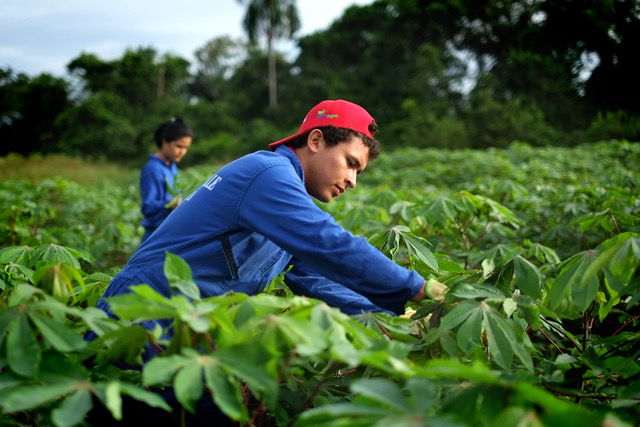
Ian Sanders met in late February with the Colombian Minister for Science and Technology and the Colombian Ambassador to Switzerland to present the group's joint research with the National University of Colombia about using microbes to improve cassava production in post-conflict areas of Colombia. The meeting with the Colombian delegation to Switzerland was organised by one of our faculty members (Emeritus Professor Pedro Romero - Ludwig Cancer Intstitute) in order to set up a consultative group of scientists to help the new Colombian government to strengthen its scientific links with Switzerland. Research priority areas for Colombia include agriculture, environment, biodiversity, peace and artificial intelligence.
|
|
|
Photo © Pedro Romero
|
|
Photo © Ian Sanders
|
|
|
|
|
|
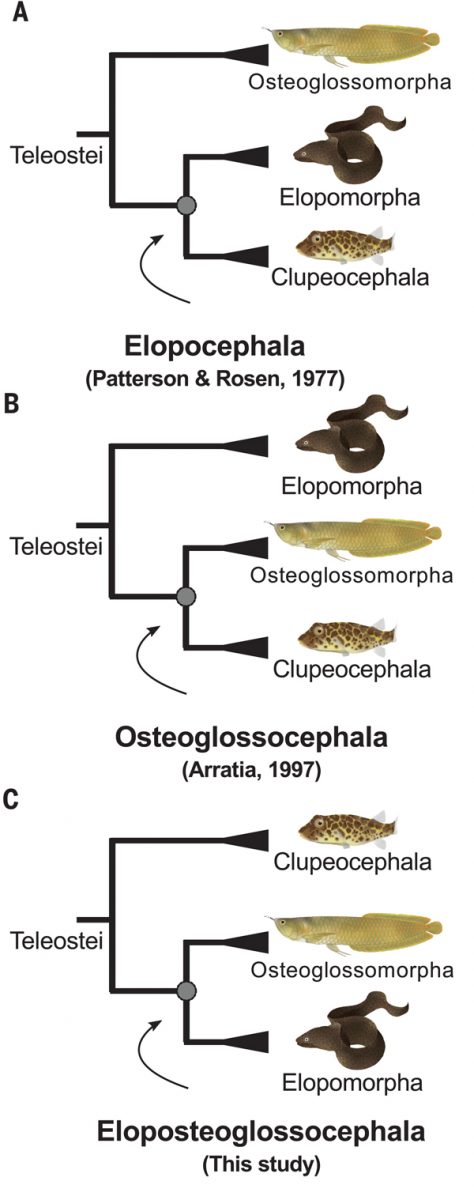
Christabel Floi Bucao and Marc Robinson-Rechavi are part of the GenoFish consortium which has solved the debate about early patterns of teleost fish evolution. Using gene sequence and chromosomal rearrangement phylogenomic approaches, Elopomorpha (tarpons and eels) and Osteoglossomorpha (arapaima, elephantnose fish) are shown to form in a clade, the Eloposteoglossocephala, sister group to all other teleosts, the Clupeocephala. The paper was led by Elise Parey of Ecole Normale Supérieure, Paris, and INRAE, Rennes, and was a collaboration between labs in France, the USA, China, the Netherlands, Norway, and Taiwan.
|
|
|
Proposed scenarios for the topology of
the earliest-branching teleost clades.
|
|
|
|
|
Florent Mazel, Antoine Guisan along with Laura Wegener Palfrey have published a paper in Molecular Ecology entitled "Transmission mode and dispersal traits correlate with host specificity in mammalian gut microbes".
|
Why do different mammals host different gut bacteria? Limited bacterial transmission between species might be key to foster different microbiome in different host lineages.
|
Different host species associate with distinct gut microbes in mammals, a pattern sometimes referred to as phylosymbiosis. However, the processes shaping this host specificity are not well understood. One model proposes that barriers to microbial transmission promote specificity by limiting microbial dispersal between hosts. This model predicts that specificity levels measured across microbes is correlated to transmission mode (vertical vs. horizontal) and individual dispersal traits.
|
|
|
|
|
|
Together with colleagues from the European Reference Genome Atlas (ERGA) initiative, Prof. Waterhouse published a review in Trends in Genetics entitled “How genomics can help biodiversity conservation”. The consortium authors advocate for reference genomes as fundamental resources in biodiversity conservation, showcasing genomics as an emerging powerful tool for species conservation. The review illustrates that reference genomes have the combined power of speeding up genomic analysis and making results more reliable: exactly what is needed in conservation science.
|
|
|
|
|
|
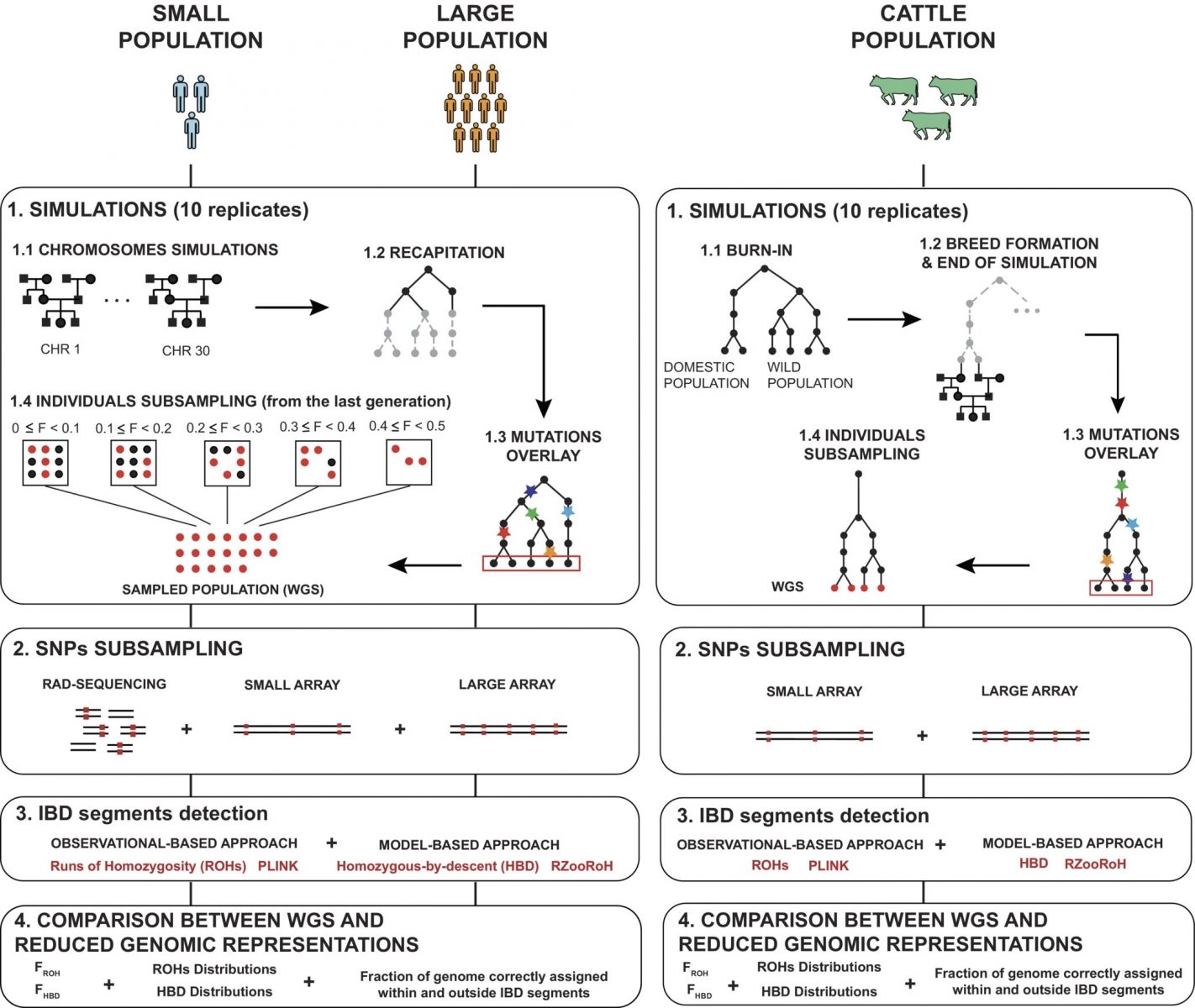
Eleonore Lavanchy from Jérôme Goudet's group published her thesis first chapter "Effect of reduced genomic representation on using runs of homozygosity for inbreeding characterization" in Molecular Ecology Resources. https://onlinelibrary.wiley.com/doi/full/10.1111/1755-0998.13755
Runs of Homozygosity (ROHs) are more and more used as a way to detect inbreeding in natural populations, often with reduced genomic representation. Using simulations, she shows this can lead to strong biases, and gives recommendations for calling and using ROHs with reduced genomic representation.
|
|
|
|
|
|
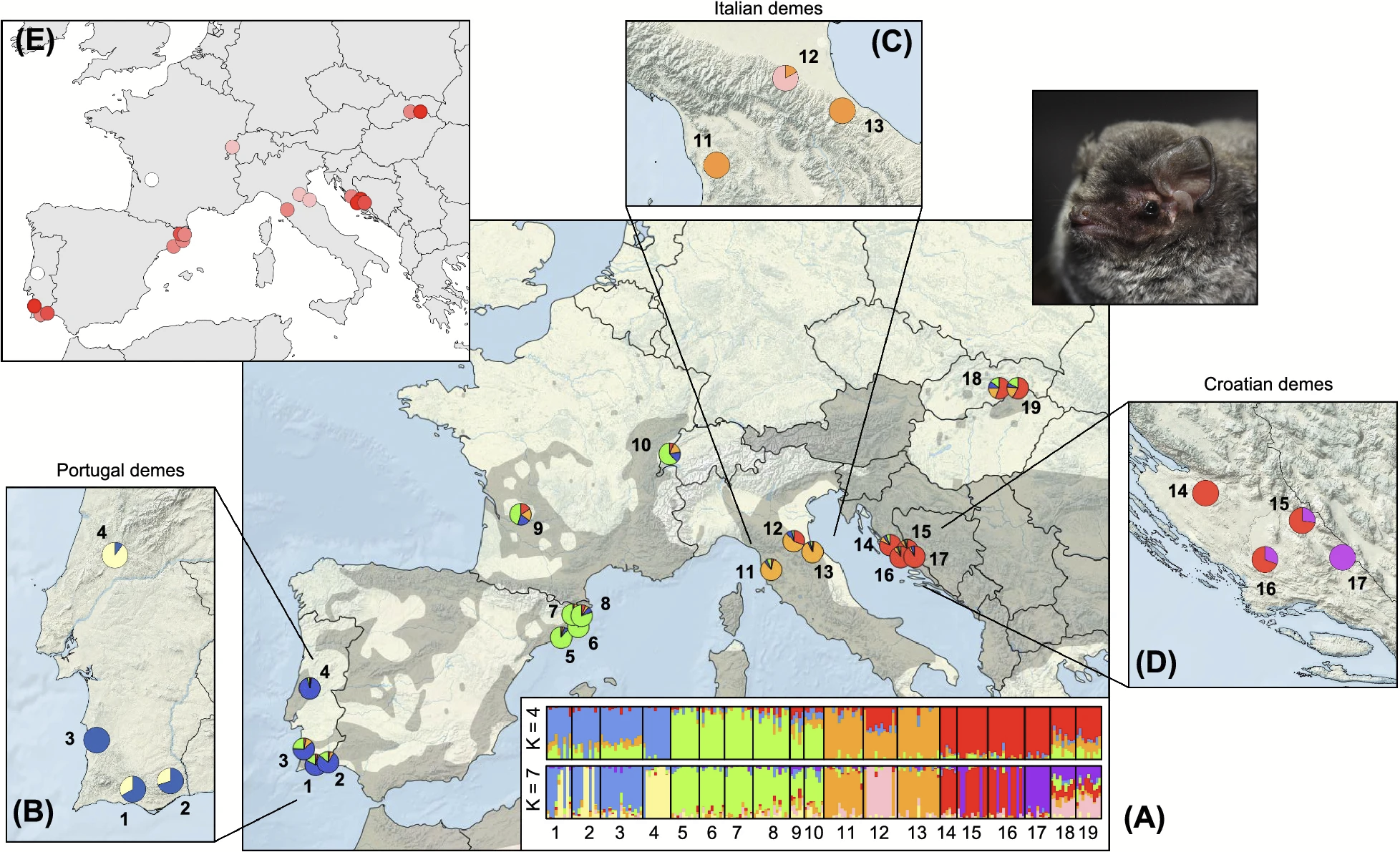
A collaboration between Goudet's and Christe's groups started a long time ago with the master of Ludovic Dutoit is finally published in Scientific reports: "Inferring genetic structure when there is little: population genetics versus genomics of the threatened bat Miniopterus schreibersii across Europe", https://www.nature.com/articles/s41598-023-27988-4
In this article, Christophe Dufresnes and colleagues show how using RAD-seq rather than microsatellites allowed to identify the population structure of this bat, both at the individual, regional and continental scale.
|
|
|
|
|
|
Ewan Flintham, Charles Mullon along with colleague Vincent Savolainen (Imperial College London) have published a paper entitled Male harm offsets the demographic benefits of good genes in PNAS.
|
Organisms vary in their biological condition. Those individuals in better condition show improved survival or fecundity, and so populations composed of such individuals should be more viable. However, high-condition individuals also express larger sexually selected phenotypes, some of which, in males, can harm females. The good genes hypothesis posits that sexual selection on condition-dependent traits indirectly increases mean condition and therefore population health. Here, using mathematical models, we show that this effect should rarely be expected when sexual traits cause harm: Instead, good genes selection leads to larger harming traits, reduced female fecundity, and potential population crashes.
|
|
|
|
|
|
|
A paper resulting from a collaboration between team members of the group Fumagalli and the group van de Waal group has just been published in Methods in Ecology and Evolution.
|
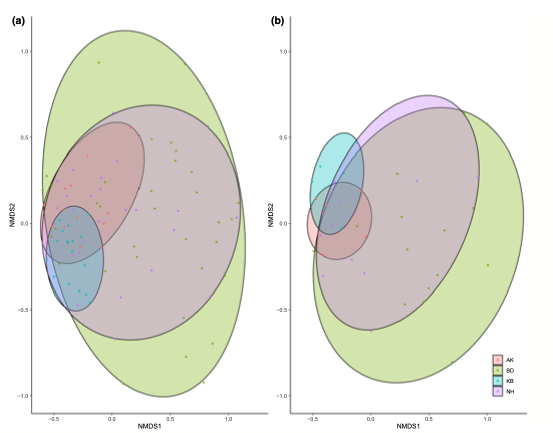
They analysed DNA metabarcoding data for plant components in the diet of four neighbouring groups of wild vervet monkeys Chlorocebus pygerythrus to identify intergroup variation (IGV). The faecal samples considered for the analyses were limited to the summer season to minimise the impact of seasonality. Each sample was attributed by observation to individuals with known life history data. A plant survey was conducted in each group home range during the study period to account for environmental variation. They observed mixed results when testing whether IGV in plant consumption was greater than intragroup variation, indicating that the influence of social dynamics must be considered. Intragroup variation was positively correlated with group size. They observed IGV in diet composition among all groups as well as in some pairwise comparisons. They found significant dietary differences between two group pairs when considering only adult females. Lastly, they observed IGV in foraging of specific plants that were not explained by their distribution, suggesting behavioural differences in selectivity between groups. Their findings emphasise the great potential for studying social groups using eDNA and that such studies are needed to better understand intraspecific behavioural plasticity in wild populations.
|
|
|
Nonmetric multidimensional scaling (NMDS), based on relative read abundances (RRA) of consumed plants detected in faecal samples aggregated per monkey per group in summer for (a) all individuals (n = 103) and (b) adult females (n = 42). The colours represent the four groups (Ankhase, AK; Baie Dankie, BD; Noha, NH and Kubu, KB).
|
|
|
|
|
|
While you are encouraged to place your publications into Serval, please make sure that your PI has validated the deposition first. Not all documents should be included in Serval, and they are complicated to remove.
|
|
|
|
|
|
|
|
|
|