|
|
Photo: Bart Zjilstra
|
|
Info DEE # 45 - December 2022
|
|
|
|
|
A WARM WELCOME TO OUR NEW COLLEAGUES
|
|
|
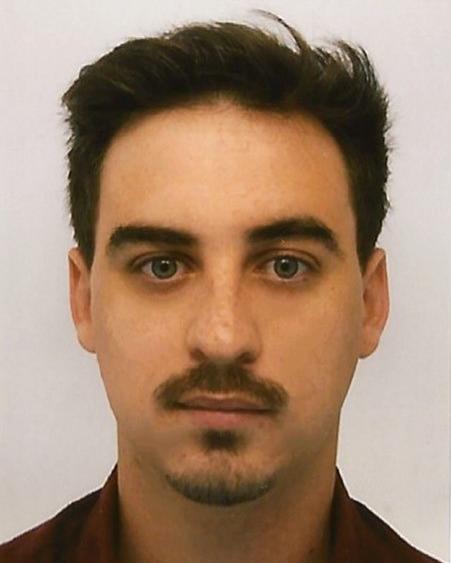
Mr Alexandre Laverré has joined the group of Prof. Robinson-Rechavi as as a Postdoctoral Researcher. Alexandre is located in office 3220, phone 42.21. Alexandre.Laverre@unil.ch
|
|
|
|
|
|
We are also glad to count on the help of our new Student-assistants:
FALK Tanguy (WEDEKIND Group) GLERON Constance (KELLER Group) PIERSON Clara (BERTELSMEIER Group)
|
|
|
|
|
|
ENERGY IS SCARCE. DON'T WASTE IT.
|
|
|
This is the slogan for the new campaign of the Federal Council. Its aim is to encourage the population to save energy. Everybody can help by applying some basic behaviours at work as at home:
|
- Switch off lights, computers, coffee machines and unused equipment when you leave.
- Don’t obstruct the heaters.
- Burn calories, not electricity. Take the stairs when possible !
|
|
|
|
|
|
|
|
|
|
|
|
|
|
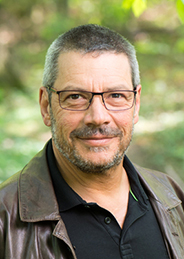
Congratulations to Jérôme Goudet for having being elected President of the section des sciences fondamentales (SSF), effective January 1, 2023. The vice-president of the section will be Virginie Mansuy-Aubert of the département des sciences biomédicales (DSB).
|
|
|
|
|
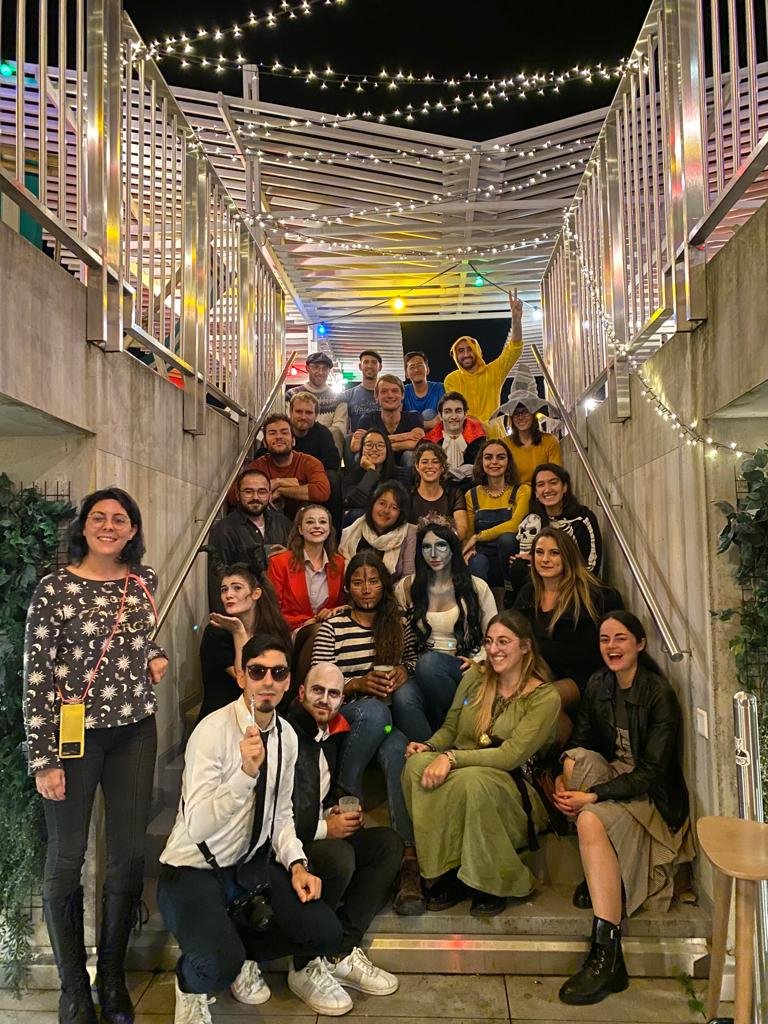
The DEE hosted a department Halloween costume party on October 31st at the Perchoir! A spooky thanks to all of the DEE members who showed off their best costume! Congratulations to PhD student Jelisaveta who won the costume contest as a hauntingly beautiful Corpse Bride! Everyone had a great time and we hope to host another party next year.
|
|
|
|
|
|
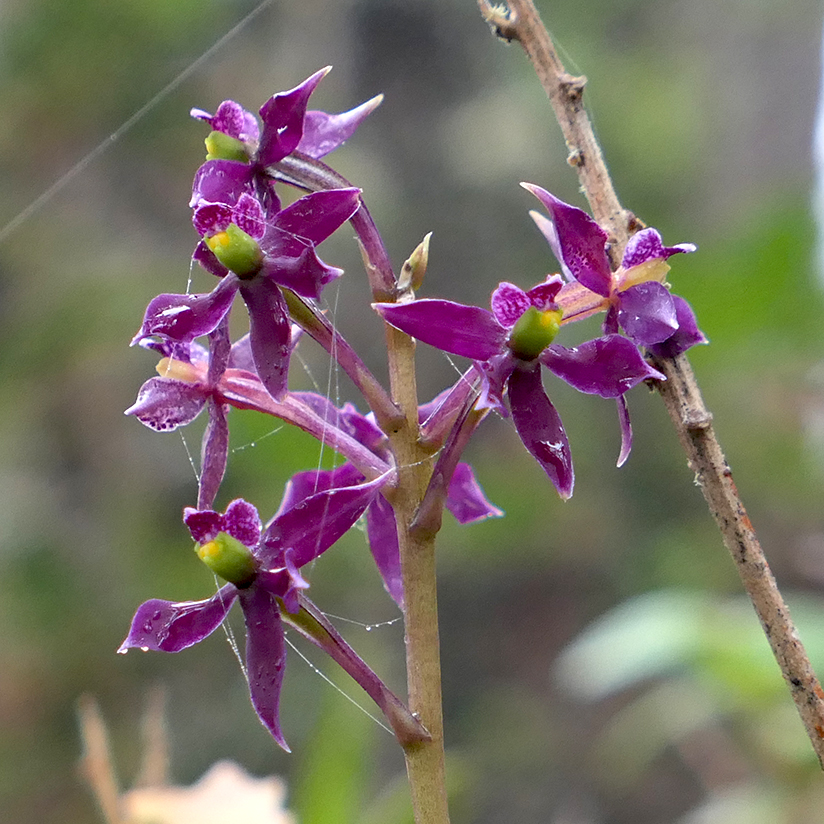
Tadeusz Kawecki published the first record of a rare orchid for Colombia. Knowledge of species' distributions is crucial for conservation; yet, outside Europe and North America this knowledge is often quite rudimentary, even for charismatic taxa such as orchids. While exploring remote stunted cloud forest on a 2200 m a.s.l. ridge in Cueva de los Guacharos national park in Colombia, Tad was lucky to find a flowering specimen of an epidendroid orchid, later identified as Prosthechea pulchra. This epiphytic orchid, discovered 1985, was previously only known from a few sites on eastern Andean slope in southern Ecuador and northernmost Peru. This observation extends the known range of P. pulchra by more than 700 km to the north (and to the northern hemisphere), and underscores the biogeographical contiguity of southern reaches of the Colombian Cordillera with the Andean slopes south of the equator.
|
|
Reference: Higgins and Kawecki 2022, Orchids 91:880 (behind paywall, for a pdf ask TK)
|
|
|
|
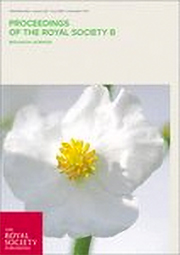
Laurent Keller, along with colleagues from UNIL and UNIFR, has published a paper in RSPB entitled Natural alleles at the Doa locus underpin evolutionary changes in Drosophila lifespan and fecundity.
|
‘Evolve and resequence’ (E&R) studies in Drosophila melanogaster have identified many candidate loci underlying the evolution of ageing and life history, but experiments that validate the effects of such candidates remain rare. In a recent E&R study we have identified several alleles of the LAMMER kinase Darkener of apricot (Doa) as candidates for evolutionary changes in life- span and fecundity. Here, we use two complementary approaches to confirm a functional role of Doa in life-history evolution. First, we used transgenic RNAi to study the effects of Doa at the whole-gene level. Ubiquitous silencing of expression in adult flies reduced both lifespan and fecundity, indicating pleiotropic effects. Second, to characterize segregating variation at Doa, we examined four candidate single nucleotide polymorphisms (SNPs; Doa-1, -2, -3, -4) using a genetic association approach. Three candidate SNPs had effects that were qualitatively consistent with expectations based on our E&R study: Doa-2 pleiotropically affected both lifespan and late-life fecundity; Doa-1 affected lifespan (but not fecundity); and Doa-4 affected late-life fecundity (but not lifespan). Finally, the last candidate allele (Doa-3) also affected lifespan, but in the opposite direction from predicted.
|
|
|
|
Laurent Keller and colleagues from UNIL, EPFL and the University of Bristol have published a paper entitled Two simple movement mechanisms for spatial division of labour in social insects.
|
Many animal species divide space into a patchwork of home ranges, yet there is little consensus on the mechanisms individuals use to maintain fidelity to particular locations. Theory suggests that animal movement could be based upon simple behavioural rules that use local information such as olfactory deposits, or global strategies, such as long-range biases toward landmarks. However, empirical studies have rarely attempted to distinguish between these mechanisms. Here, we perform individual tracking experiments on four species of social insects, and find that colonies consist of different groups of workers that inhabit separate but partially-overlapping spatial zones. Our trajectory analysis and simulations suggest that worker movement is consistent with two local mechanisms: one in which workers increase movement diffusivity outside their primary zone, and another in which workers modulate turning behaviour when approaching zone boundaries. Parallels with other organisms suggest that local mechanisms might represent a universal method for spatial partitioning in animal populations.
|
|
|
|
|
|
|
While you are encouraged to place your publications into Serval, please make sure that your PI has validated the deposition first. Not all documents should be included in Serval, and they are complicated to remove.
|
|
|
|
|
|
|
|
|
|