|
|

|
Info DEE # 31 - September 2021
|
|
|
|
|
A WARM WELCOME TO OUR NEW COLLEAGUES
|
|
|
|
|
|
Mr Marc Bastardot has joined the group of Prof. Schwander as a Field Assistant. Marc is located in office 2101, phone 41.76. Marc.Bastardot@unil.ch
|
|
|
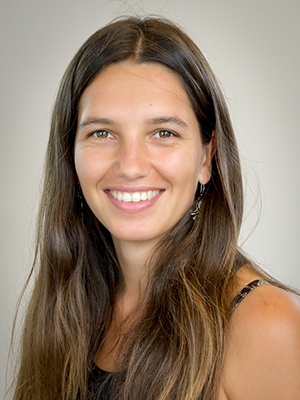
Ms Giulia Campli has joined the group of Prof. Waterhouse as a PHD Student. Giulia is located in office 3212.1. phone 41.18.
|
|
|
|
|
|
|
Ms Silvia Garcia Juan has joined the group of Prof. Arguello as an Intern.
|
|
|
|
|
|
|
|
|
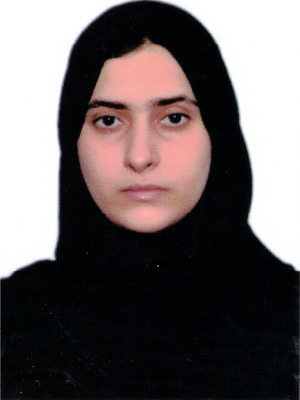
Ms Afrah Hassan has joined the group of Prof. Arguello as an Laboratory Technician. Afrah is located in office 2205, phone 56.15. Afrah.Hassan@unil.ch
|
|
|
Mr Youn Henry has joined the group of Prof. Kawecki as a Post Doctoral Fellow. Youn is located in office 2107.2, phone 42.55. Youn.Henry@unil.ch
|
|
|
|
|
|
|
Mr Kenneth Kim has joined the group of Prof. Robinson-Rechavi as a PHD Student. Kenneth is located in office 3214, phone 42.04. Kenneth.Kim@unil.ch
|
|
|
Mr Tristan Klaftenberger has joined the group of Prof. Bertelsmeier as a PHD Student. Tristan is located in office 3119, phone 41.62. Tristan.Klaftenberger@unil.ch
|
|
|
|
|
|
|
Ms Stéphanie Mercier has joined the group of Prof. Van de Waal as an IT Specialist. Stéphanie is located in office 2107.1, phone 42.75. Stephanie.Mercier@unil.ch
|
|
|
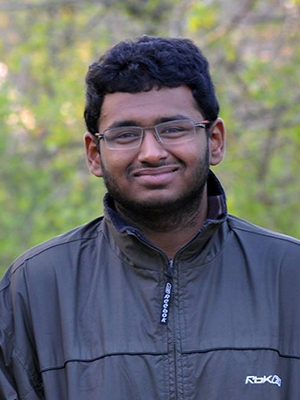
Mr Shrinath Narayanan has joined the group of Prof. Kawecki as a PHD Student. Shrinath is located in office 2107, phone 42.23. Shrinath.Narayanan@unil.ch
|
|
|
|
|
|
|
Ms Mai Thu Nguyen has joined the group of Prof. Pannell as a PHD Student. Mai Thu is located in office 4319, phone 42.47. MaiThu.Nguyen@unil.ch
|
|
|
|
|
|
|
Mr Werner Veldsman has joined the group of Prof. Robinson-Rechavi as a PHD Student. Werner is located in office 3220, phone 42.21. WernerPieter.Veldsman@unil.ch
|
|
|
|
|
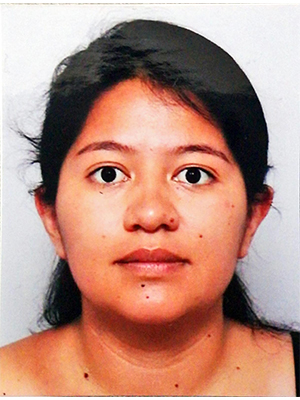
We are also glad to count on the help of a new Student-assistants: Mme Nora CORTHESY in the group of Prof. Pannell and Mme Sonia SARMIENTO CABELLO in the group of Prof. Robinson-Rechavi.
|
|
|
|
|
|
|
|
|
|
|
The Department of Ecology and Evolution distinguishes one or several teaching assistants who contributed to teaching above and beyond what is expected, through innovation with respect to content, form, or didactic approach. This year, we wish to especially thank: Tomas Kay for his excellent contribution in setting up and teaching the class “Genetics of Sociality” for Master students. Guillaume Lavanchy for his excellent contribution to the practical course in Zoology for 1st year Bachelor students, as well as establishing the practical course "Conservation : des preuves scientifiques à la pratique" for 3rd year Bachelors students. Sabine Rumpf for her excellent contributions to the practical course in Spatial Analyses & GIS for Master students and to the practical course in Botany for 1st year Bachelor students. The Teaching Committee of DEE takes the opportunity to thank all assistants of DEE for their contributions to our teaching during this difficult year.
|
|
|
|
|
Antoine Guisan has been elected as a member of the Executive Board of CLIMACT, a joint EPFL and UNIL program contributing to the fight against climate change and its impacts. Congratulations, Antoine!
|
|
|
|
|
In August, Cleo Bertelsmeier was a guest on the RTS show "Le Grand Air" to discuss her observations on ants. Listen here...
|
|
|
|
|
Congratulations to Anne Niknejad for receiving the 2021 Biocuration Career award from the International Society for Biocuration. "Anne Niknejad is an exceptional biocurator who has worked for over 10 years on the development of resources and vocabularies for the description of anatomical ontologies. She is playing a key role in curation of expression data, of anatomical and developmental ontologies, as lead curator for the Bgee project in Marc Robinson-Rechavi’s group. Anne's contribution to anatomical homology has been essential to provide a large coverage of anatomical homology in a curated and structured manner."
|
|
|
|
|
|
Sabine Rumpf, member of Antoine Guisan's Group, has been appointed Assistant Professor for Ecology at the University of Basel, starting February 2022! Congratulations Sabine! Read more (German)...
|
|
|
|
|
How quickly and how do new species form? By analysing more than 40 secondary contact zones between different species and subspecies of European amphibians, an international team including several members of the Department of Ecology and Evolution and led by Christophe Dufresnes (former DEE doctoral student and professor at the University de Nanjing) shows that it is by the progressive accumulation of multiple mutations with minor effects, distributed over the whole genome (and not by a few mutations with major effects) that a reproductive incompatibility between geographically isolated lineages is gradually built up. The results of this work are on the cover of the September 7, 2021 edition of the journal Proceedings of the National Academy of Sciences (PNAS).
|
|
|
|
|
|
Cleo Bertelsmeier, in collaboration with Sebastian Ollier (University Paris-Saclay) has published a research article entitled "Bridgehead effects distort global flows of alien species".
|
|
A major goal of invasion biology is to understand global species flows between donor and recipient regions. Our current view of such flows assumes that species are moved directly from their native to their introduced range. However, if introduced populations serve as bridgehead populations that generate additional introductions, tracing intercontinental flows between donor and recipient regions misrepresents the introduction history. Here, we show that such bridgehead effects distort our view of global species flows. Read more...
|
|
|
|
Cleo Bertelsmeier and international collaborators have published an article entitled "Invasion disharmony in the global biogeography of native and non-native beetle species".
|
|
The concept of “island disharmony” has been widely applied to describe the systematic over- and under-representation of taxa on islands compared to mainland regions. Here, we explore an extension of that concept to biological invasions. We compare biogeographical patterns in native and non-native beetle (Coleoptera) assemblages from around the world to test whether beetle invasions represent a random sample of species or whether some families are more prone to invade than others. Read more...
|
|
|
|
|
Thanks to a collaboration with the Division of Conservation Biology from the University of Bern, the Swiss Ornithological Institute and the Ethiopian Wildlife Conservation Authority, Jérémy Gremion from the Philippe Christe Group published his master study entitled: Habitat preferences of the Ortolan Bunting (Emberiza hortulana) in its prime wintering grounds, the cereal-dominated Ethiopian Highlands. The Ortolan Bunting Emberiza hortulana is the long-distance trans-Saharan migratory passerine that has undergone the most dramatic decline among all European farmland birds. Using radiotracking and line transect surveys, this study aimed to provide fine-grained information about species-habitat relationships in the Ortolan Bunting’s overwintering quarters. The results showed the importance, at the landscape scale, of small-scale agriculture, notably of traditionally-managed, cereal-dominated fields interspersed with semi-natural structures. At a foraging-site scale, on the other hand, patches of bare ground in combination with high amounts of post-harvesting stubble represented key habitat features. The maintenance of a traditional agricultural economy will be essential to maintain the habitat potential for the Ortolan Buntings overwintering in the Ethiopian Highlands, and will be instrumental in preserving its world population from further decline. Read more...
|
|
|
|
|
Globalisation has facilitated the spread of alien species, and some of them have significant impacts on biodiversity and human societies. It is commonly thought that biological invasions have accelerated continuously over the last centuries, following increasing global trade. However, the world experienced two distinct waves of globalisation (~1820–1914, 1960-present), and it remains unclear whether these two waves have influenced invasion dynamics of many species. To test this, we built a statistical model that accounted for temporal variations in sampling effort. We found that insect and plant invasion rates did not continuously increase over the past centuries but greatly fluctuated following the two globalisation waves. Our findings challenge the idea of a continuous acceleration of alien species introductions and highlight the association between temporal variations in trade openness and biological invasion dynamics. More generally, this emphasises the urgency of better understanding the subtleties of socio-economic drivers to improve predictions of future invasions.
|
|
|
|
|
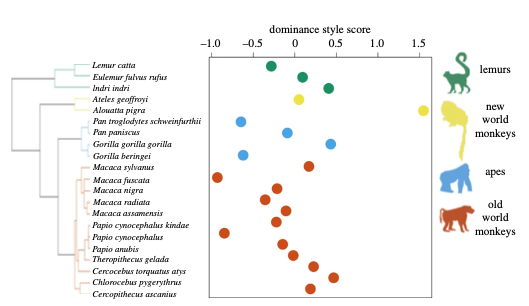
Erica van de Waal and Stéphanie Mercier contributed with behavioural and accoustic data from vervet monkeys' social interactions in a project lead by colleagues from the University of York. Animal communication has long been thought to be subject to pressures and constraints associated with social relationships. However, our understanding of how the nature and quality of social relationships relates to the use and evolution of communication is limited by a lack of directly comparable methods across multiple levels of analysis. The authors analysed observational data from 111 wild groups belonging to 26 non-human primate species, to test how vocal communication relates to dominance style (the strictness with which a dominance hierarchy is enforced, ranging from ‘despotic’ to ‘tolerant’). At the individual-level, they found that dominant individuals who were more tolerant vocalized at a higher rate than their despotic counterparts. This indicates that tolerance within a relationship may place pressure on the dominant partner to communicate more during social interactions. At the species-level, however, despotic species exhibited a larger repertoire of hierarchy related vocalizations than their tolerant counterparts. Findings suggest primate signals are used and evolve in tandem with the nature of interactions that characterize individuals’ social relationships. Read more...
|
|
|
|
|
|
|
|
|
|
|
|