|
|
|
Info DEE # 44 - November 2022
|
|
|
|
|
A WARM WELCOME TO OUR NEW COLLEAGUES
|
|
|
|
|
|
Mr Agneesh Barua has joined the group of Prof. Robinson-Rechavi as a Postdoctoral Fellow. Agneesh is located in office 3212.1, phone 41.18. Agneesh.Barua@unil.ch
|
|
Mr Caleb Beck has joined the group of Prof. Wedekind as a Researcher. Calen is located in office 3223, phone 42.49. Caleb.Beck@unil.ch
|
|
|
|
|
|
|
Mr Michele Leon has joined to the group of Prof. Robinson-Rechavi as a Postdoctoral Researcher. Michele is located in office 3220, phone 42.21. Michele.Leone@unil.ch
|
|
Mr Ludovic Maisonneuve has joined the group of Prof. Lehmann as a Postdoctoral Researcher. Ludovic is located in office 1116, phone 42.67. Ludovic.Maisonneuve@unil.ch
|
|
|
|
|
|
We are also glad to count on the help of our new Student-assistants:
CRUZ PALMA Miguel (WEDEKIND Group), HALTINNER Lise (WEDEKIND Group), HERITIER Baptiste - (CHAPUISAT Group), SAENGER IRIAS Rafael (WEDEKIND Group).
|
|
|
|
|
|
ENERGY IS SCARCE. DON'T WASTE IT.
|
|
|
This is the slogan for the new campaign of the Federal Council. Its aim is to encourage the population to save energy. Everybody can help by applying some basic behaviours at work as at home:
|
- Switch off lights, computers, coffee machines and unused equipment when you leave.
- Don’t obstruct the heaters.
- Burn calories, not electricity. Take the stairs when possible !
|
|
|
|
|
|
|
|
|
|
|
Tomas Kay received the FBM ESEB award in evolutionary biology. He received the award for his analysis of the models that have been used to claim that altruism can evolve via mechanism other than kin selection, which revealed that in every case interacting individuals were genetically related and that the authors had unwittingly constructed situations in which kin selection drove the evolution of altruism. https://www.unil.ch/fbm/home/menuinst/faculte/commissions/prix/recipiendaires-2022.html
|
|
|
|
|
|
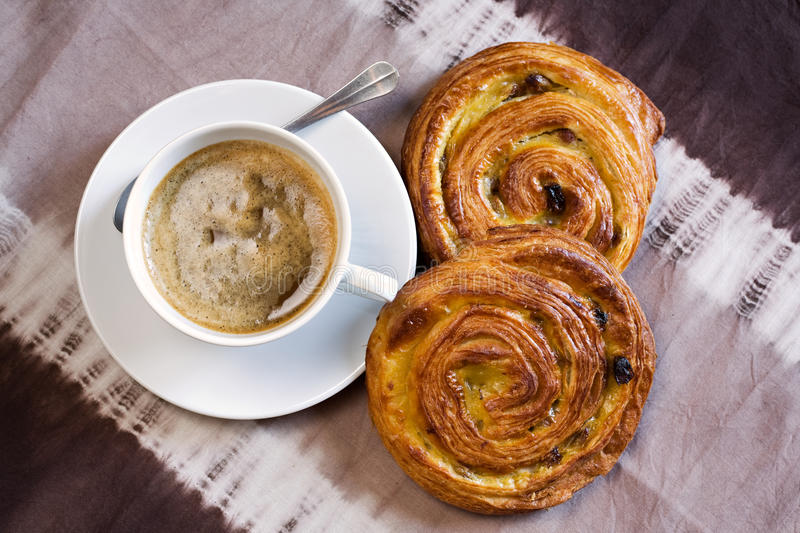
New DEEers Welcome Coffee Mornings Starting this month, we will welcome new members of the DEE with a coffee and small pastries at the DEE cafeteria. All DEE members are welcome to join to welcome our new members and share the pastries. It will be on the second Wednesday of every month at 10am. Come with your own coffee cup and token, and a friendly face!
|
|
|
|
|
|
|
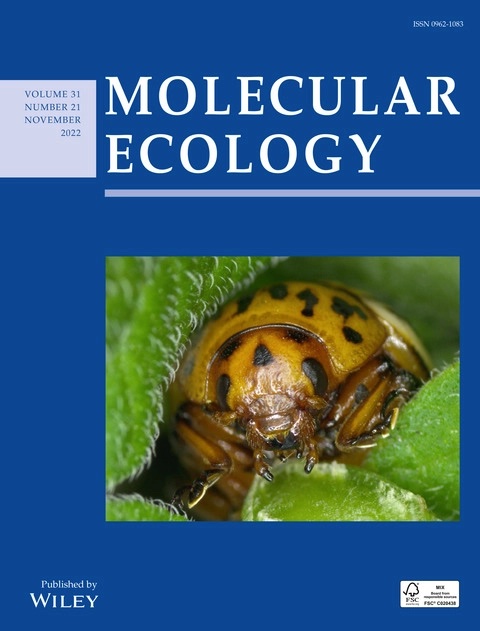
Tomas Kay, Christine La Mendola and Laurent Keller, together with ex-DEE members Giacommo Alciatore and Yuko Ulrich have published an article in Molecular Ecology entitled A complete absence of indirect genetic effects on brain gene expression in a highly social context. Genes not only control traits of their carrier organism (known as Direct Genetic Effects or DGEs) but also shape the phenotypes of their carrier's social partners (known as Indirect Genetic Effects or IGEs). Theoretical research has shown that the effects that genes exert on social partners can have profound consequences, potentially altering heritability and the direction of trait evolution. Complementary empirical research has shown that in various contexts (particularly in animal agriculture) IGEs can explain a large proportion of variation in specific traits. However, little is known about the general prevalence of IGEs. The study consisted of a cross-fostering experiment with lineages of the clonal raider ant to quantify the relative contribution of DGEs and IGEs to variation in brain gene expression (which underlies behavioral variation). The study finds that thousands of genes are differentially expressed by DGEs but not a single gene is differentially expressed by IGEs. This is surprising given the highly social context of ant colonies and given that individual behavior varies according to the genotypic composition of the social environment in clonal raider ants. The findings indicate that we have a lot to learn about how the magnitude of IGEs varies across species and contexts.
|
|
|
|
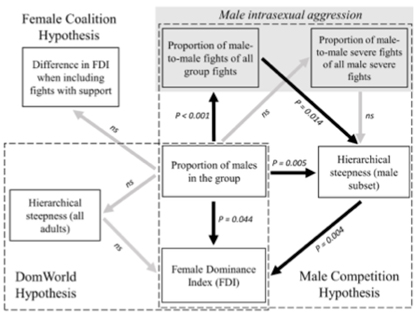
Erica van de Waal and colleagues from the University of Groningen published a paper in Frontiers in Ecology and Evolution, entitled: Male intrasexual aggression and partial dominance of females over males in vervet monkeys. Females dominate a subset of the males in a minority of mammalian species despite male-biased sexual dimorphism. How this may arise is suggested by a computational model, DomWorld. The model represents male-biased sexual dimorphism through the males’ greater initial dominance and higher intensity of aggression, meaning that fights initiated by males have a greater impact than those by females. The model shows that female dominance over males increases with a greater proportion of males in the group. This happens because when males are involved in a larger fraction of fights this results in greater hierarchical differentiation (i.e., steepness). This causes rank overlap between the sexes (i.e., partial female dominance). We test the validity of these processes in vervet monkeys (Chlorocebus pygerythrus), a primate species with partial female dominance. The researchers confirm that the proportion of males in the group is significantly positively correlated with the degree of dominance by females over males and with the steepness of the hierarchy among males exclusively, but not with the steepness of the hierarchy among all adults of the group. The steepness in male hierarchies correlated positively with female dominance over males in these groups. They show that steeper hierarchies among vervet males resulted from male-to-male fights being a larger proportion of the fights among all adults of the group. They conclude that the higher frequency of male intrasexual aggression favors female dominance in vervet monkeys. They also show that females received coalitionary support when they were in conflict with a male, mainly from other females, and that this favors female dominance in this species, but this does not explain why partial female dominance increased with the proportion of males in the group. They advocate further investigation of the influence of male intrasexual aggression on the degree of female dominance over males in other species with partial female dominance.
|
|
|
|
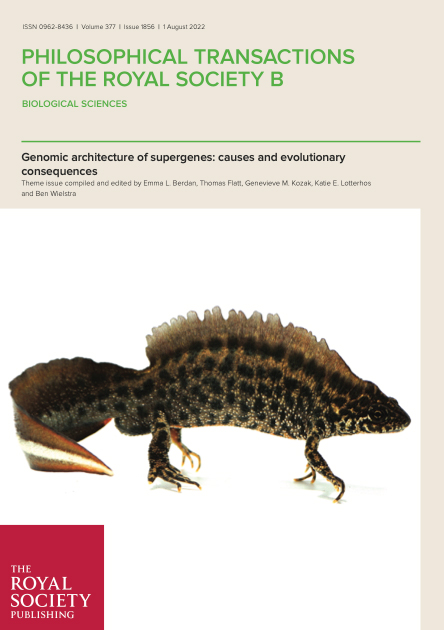
Michel Chapuisat and colleagues from the University of British Columbia have published a paper entitled Unbalanced selection: the challenge of maintaining a social polymorphism when a supergene is selfish. Supergenes often have multiple phenotypic effects, including unexpected detrimental ones, because recombination suppression maintains associations among co-adapted alleles but also allows the accumulation of recessive deleterious mutations and selfish genetic elements. Yet, supergenes often persist over long evolutionary periods. How are such polymorphisms maintained in the face of selection, drive and drift? We present a population genetic model that investigates the conditions necessary for a stable polymorphic equilibrium when one of the supergene haplotypes is a selfish genetic element.
|
|
|
|
|
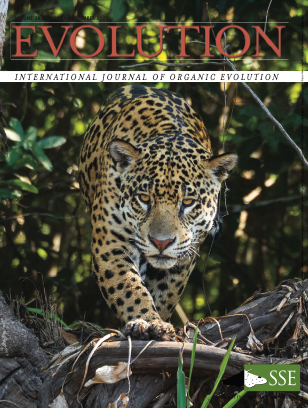
Michel Chapuisat and colleagues have published a paper entitled: Species recognition limits mating between hybridizing ant species. Identifying mechanisms limiting hybridization is a central goal of speciation research. Here, we studied premating and postmating barriers to hybridization between two ant species, Formica selysi and Formica cinerea. These species hybridize in the Rhône valley in Switzerland, where they form a mosaic hybrid zone, with limited introgression from F. selysi into F. cinerea. There was no sign of temporal isolation between the two species in the production of queens and males. With choice experiments, we showed that queens and males strongly prefer to mate with conspecifics.
|
|
|
|
Michel Chapuisat and colleagues have published an article in the ISME Journal entitled Nutritional symbiosis in ants. Ants are among the most successful organisms on Earth. It has been suggested that forming symbioses with nutrient-supplementing microbes may have contributed to their success, by allowing ants to invade otherwise inaccessible niches. However, it is unclear whether ants have evolved symbioses repeatedly to overcome the same nutrient limitations. Here, we address this question by comparing the independently evolved symbioses in Camponotus, Plagiolepis, Formica and Cardiocondyla ants. Our analysis reveals the only metabolic function consistently retained in all of the symbiont genomes is the capacity to synthesise tyrosine. We also show that in certain multi-queen lineages that have co-diversified with their symbiont for millions of years, only a fraction of queens carry the symbiont, suggesting ants differ in their colony-level reliance on symbiont-derived resources. Our results imply that symbioses can arise to solve common problems, but hosts may differ in their dependence on symbionts, highlighting the evolutionary forces influencing the persistence of long-term endosymbiotic mutualisms.
|
|
|
|
|
Erica McGale and Ian Sanders have published an article entitled :
|
Integrating plant and fungal quantitative genetics to improve the ecological and agricultural applications of mycorrhizal symbioses. Finding and targeting genes that quantitatively contribute to agricultural and ecological processes progresses food production and conservation efforts. Typically, quantitative genetic approaches link variants in a single organism’s genome with a trait of interest. Recently, genome-to-genome mapping has found genome variants interacting between species to produce the result of a multiorganism (including multikingdom) interaction. These were plant and bacterial pathogen genome interactions; plant–fungal coquantitative genetics have not yet been applied. Plant–mycorrhizae symbioses exist across most biomes, for a majority of land plants, including crop plants, and manipulate many traits from single organisms to ecosystems for which knowing the genetic basis would be useful. The availability of Rhizophagus irregularis mycorrhizal isolates, with genomic information, makes dual-genome methods with beneficial mutualists accessible and imminent.
|
|
|
|
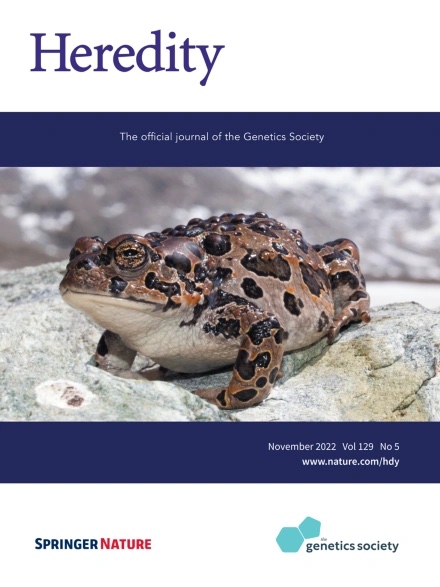
Tristan Cumer, Ana Paula Machado, Alexandre Roulin and Jerôme Goudet, along with colleagues from diverse countries around the Mediterranean sea published an article in Heredity entitled Genomic basis of insularity and ecological divergence in barn owls (Tyto alba) of the Canary Islands.
Big thumb up to Ana Paula as this is the fourth article coming out of her PhD. To learn more about adaptation and the speciation process in barn owls from the Canary islands, do check the article: https://doi.org/10.1038/s41437-022-00562-w
|
|
|
|
|
|
|
While you are encouraged to place your publications into Serval, please make sure that your PI has validated the deposition first. Not all documents should be included in Serval, and they are complicated to remove.
|
|
|
|
|
|
|
|
|
|