

Cette publication est également disponible en :
 Français
Thesis defended by Violante Torre, October 11, 2025 – Institute of geography and durability (IGD).
Cities are known by their landmarks—iconic buildings that dominate postcards, tours, and skylines. Often overshadowing their urban surroundings, landmarks are designed to encapsulate a city’s essence.
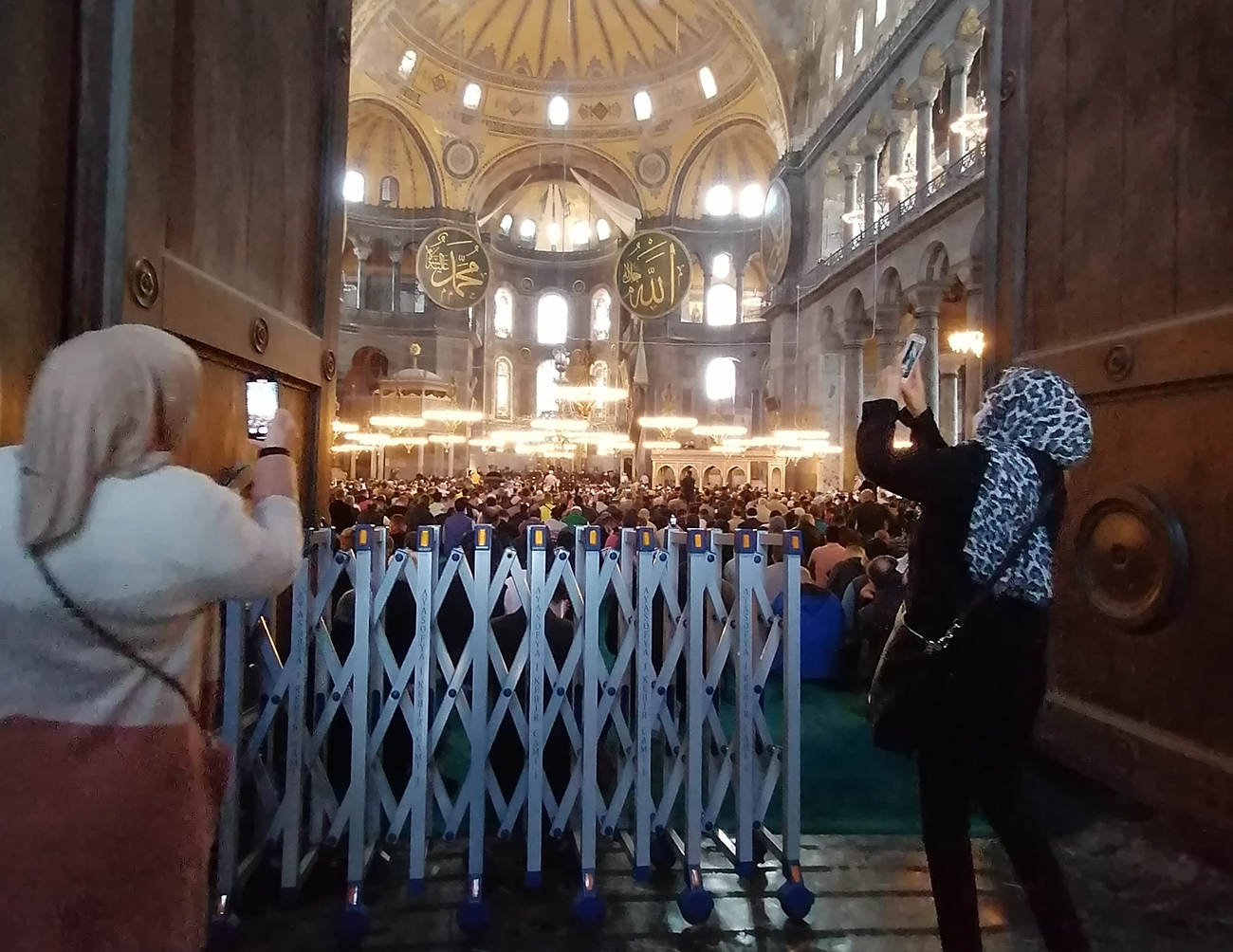
Hagia Sophia in Istanbul is one such place. Famous for its grand dome and centuries-old history, it has been a church, a mosque, a museum, and, since 2020, a mosque once again. But what is it like to live and work around such a monument every day? And what does it mean when that place changes? Since its reconversion in 2020, Hagia Sophia has become more than a symbol. It is a place where daily life, politics, and emotion collide. While many view landmarks as timeless icons of a city’s identity, this research shows they are constantly in the making. Hagia Sophia is not just an architectural marvel, but a living space where history, politics, and religion intersect with everyday routines.
The study approaches it as an entangled building—a space shaped by those who use and care for it. It follows the people who keep Hagia Sophia running: mosque guides, tourist guides, shopkeepers, and cleaners. They speak with visitors, care for the space, and navigate long shifts, new rules, and mixed emotions of pride, stress, and fatigue. Some commute from distant districts; others grew up in the neighbourhood. Their gestures, routines, and feelings reveal how landmark buildings shape urban life, not only through grand narratives but through daily labour and acts of care. By focusing on ordinary practices—praying, giving tours, feeding cats, cleaning carpets—the research highlights how buildings are continually remade by those who move through, rest in, and work within them. These acts, though often overlooked, reflect broader tensions between past and present, heritage and change. Hagia Sophia’s physical features—its worn marble floors, shifting light, and new barriers separating tourists from worshippers—influence how people move and feel. The building is not merely a backdrop; it affects behaviour and belonging. People adapt: resting in quiet corners, avoiding certain zones, or helping each other navigate the space. These subtle actions form what the research calls entanglements—the invisible ties between people, materials, and emotions that shape experience.
Changes in the building affect different people in different ways. Women now face more restricted access compared to when it was a museum, revealing shifting gender norms. Some forms of labour, such as cleaning and guarding, remain invisible yet essential. Conflicts arise over what Hagia Sophia should represent: a national symbol, a global heritage site, or a holy space? Even odours matter. At times, unpleasant smells spark tension, challenging the building’s spiritual image. These sensory details often reflect deeper inequalities linked to class, race, and responsibility for maintenance.
This study shows that even the most iconic landmarks can lose their symbolic polish, as daily frictions and politics quietly reshape their meanings. Ultimately, it invites us to rethink landmarks—not as static monuments of the past, but as relational, lived-in spaces where a city’s future is negotiated every day.
Leave a Reply