|
|

|
|
|
|
|
|
|
Facility News
|
It is official, the FCF Facility is moving 📦 to the new and fresh SE-C building at the end of this month ! Jean-François sent you an email about the details of the move but it is always good to have a reminder, especially for such a big change. The analysers and sorters will be moved to the new place sequentially to avoid too much of a disturbance.
|
|
From August 25th to September 5th, the relocation will be as follow :
|
- Aurora 1 & 2 : Move & Maintenance on August 26th, Available at the SE-C on August 27th
- Cytoflex S1, LX3, Mosaic 1 : Move & Maintenance on September 1st, Available at the SE-C on September 2nd
- Fortessa 1, LSRIIa, LSRIId and LSRIISORP : Move & Maintenance on September 1st & 2nd, Available at the SE-C on September 3rd
- Aria II : No sorting on September 3rd & 4th
- Aria III : No sorting from August 25th to September 1st
|
The provided schedule can be submitted to changes, and we’ll do our best for keeping you updated. Thanks a lot for your understanding and I hope you will enjoy our new location !
|
|
In this month FACS Tips, Mariela is giving us her report of the CYTO Conference 2025 that took place in Denver, Colorado. This is the biggest flow cytometry conference and the best place to find the new trends that will define your research in the coming years !
|
|
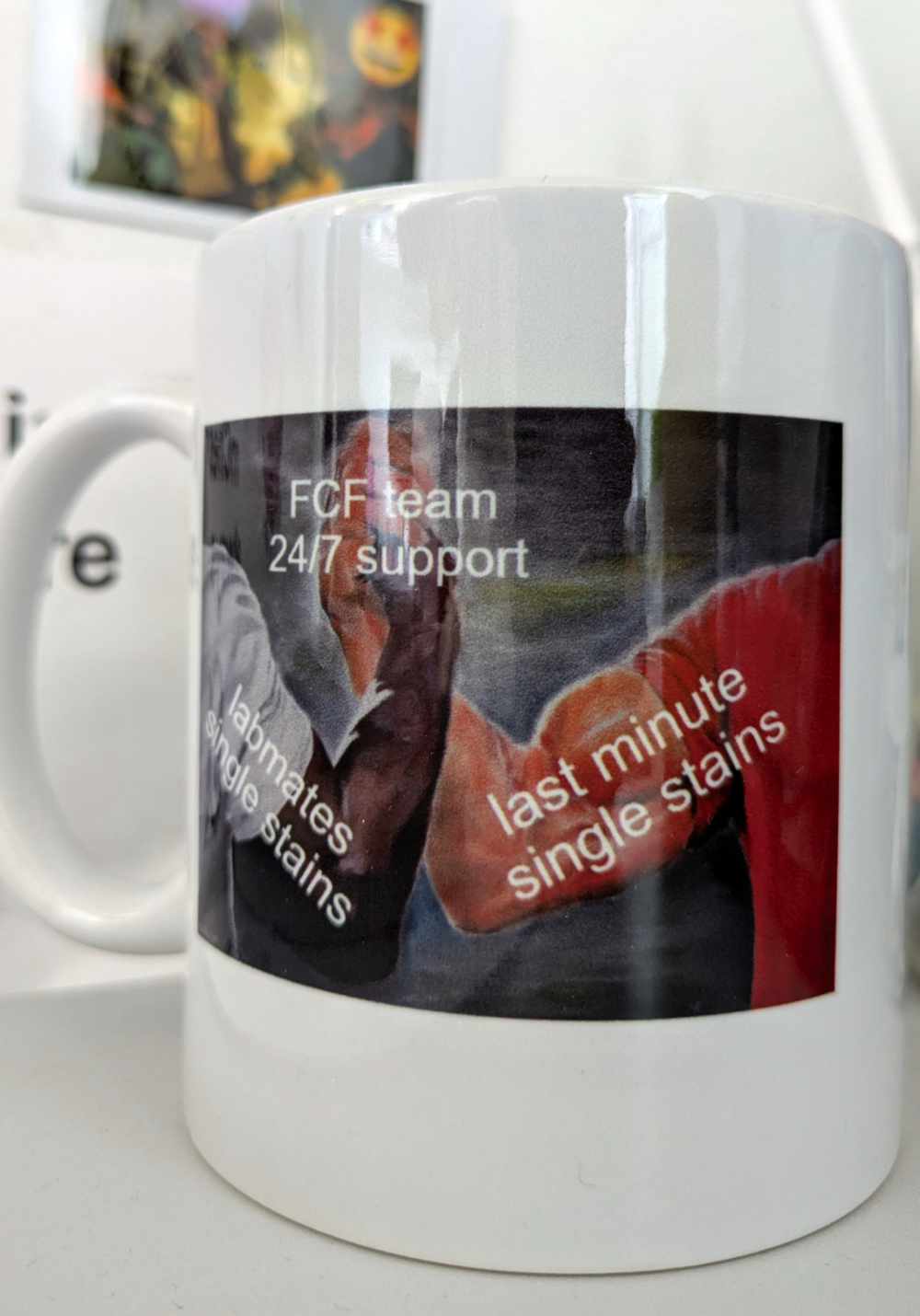
Jan-Pieter Eversdijk won the mug this month, Congratulations to you !
|
|
|
Each month, we will ask you 3 questions about the newsletter topic. If you win, you can enter the lottery to win a unique mug designed by the FCF team !
Please take few minutes to answer the quiz HERE.
|
|
|
|
FACS Tips
|
CYTO 2025 Recap
|
|
I was really happy to get the opportunity to attend CYTO 2025 this past May in Denver, Colorado. This is the biggest conference in flow cytometry each year, where vendors and researchers showcase the latest innovations and techniques in the field. As in past years, I would like to present here some highlights presented in the conference.
|
|
New or improved instruments:
Aurora Evo from Cytek
|
|
|
|
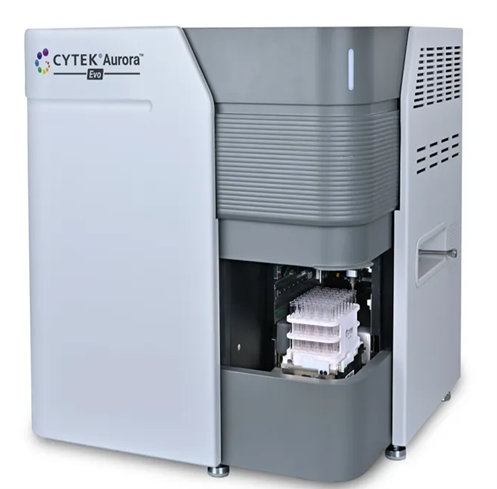
The Cytek Aurora first debuted at CYTO 2017, and after 8 years this machine has certainly amassed a popularity amongst it’s user base. An update was certainly due for this machine, and this is what we got in the form of the Aurora Evo at CYTO this year. This machine offers faster sample acquisition, integrated small particle detection and automated maintenance features. The good news is that we will have two of these updated instruments in our facility, we will keep you updated about when we will release them to the users.
|
|
|
|
FACSDiscover A8 from BD Biosciences
|
|
|
|
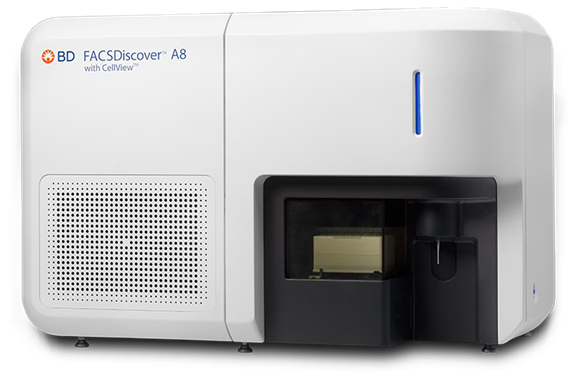
As you may know, our facility was one of the early recipients of the FACSDiscover S8 sorter. This was the first of its kind high speed, spectral-imaging cell sorter. Building on that technology, BD has now launched a similar instrument but for analysis only: the A8. The A8, which incorporates technologies introduced in the S8, such as the BD SpectralFX™ and BD CellView™ allows efficient analysis of cells based on full spectrum and images.
|
|
|
|
International efforts for standardization:
|
During the conference there was a lot of discussion about standardization, of particular interest are the international and collaborative efforts to establish standardized protocols and guidelines. These efforts aim to minimize variability, ensure data reliability, and help to reproduce experiments in different laboratories and platforms worldwide.
|
|
Organizations like the International Society for Advancement of Cytometry (ISAC) and EuroFlow Consortium have developed guidelines and protocols to promote standardization. EuroFlow, for example, has created standardized antibody panels and protocols for clinical diagnostics that are freely accessible on their website. MIFlowCyt (Minimum Information about a Flow Cytometry Experiment) guidelines offer detailed information about the factors to consider when designing and performing a flow cytometry experiment, this streamlines the process for properly reporting the methods and results in a publication or in general in the lab (https://isac-net.org/general/custom.asp?page=MIFlowCyt).
|
|
A Helpful tool to search peer reviewed and certified flow cytometry data is Flow Repository, which is a source of annotated flow cytometry datasets that complies with the MIFlowCyt guidelines. Although occasionally the servers for this site can be unreliable so don’t be surprised if you have some trouble trying to download various datasets.
|
|
The Soulcap initiative is an interesting effort to standardize the analysis of immune populations worldwide. The initiative has different working groups specialized in reagents, nomenclature, protocols etc. Everybody can contribute, for example by sending requested datasets or integrating the working groups. They organize events and are visible in linkedIn where calls for data are posted.
|
Autofluorescence
|
Autofluorescence was also a big topic at the last CYTO conference, particularly with the newer instruments and more frequent use of full spectrum flow cytometers that allow autofluorescent signatures visualization. At CYTO, some initiatives were presented to better understand the sources of autofluorescence, for example full spectrum measurements of cells loaded with the most common sources of signal, such as NADPH or FAD or the creation of an autofluorescence database for immune cells that could help researchers in the future to better manage autofluorescence or use it as a tool for analysis. We’re looking forward to seeing more of this data published. For now, the following publication from March this year, could be of interest for users working with immune cells, it is a comprehensive metadata study about autofluorescence in immune cells.
|
Illuminating Immunity: A Systematic Review of Immune Cell Autofluorescence
Aline Knab, Caroline Giardina, Shane T. Grey, Ewa M. Goldys, Jared M. Campbell
Read here
|
|
Along those lines, some works were presented using label-free approaches and autofluorescence as a readout to determine age of yeast for wine production, the physiological status of macrophages and eosinophils or characterize algae from freshwater. considering autofluorescence can not only improve the interpretation of our data but also be used to identify populations.
|
Closing Remarks
|
It’s always a valuable experience to see the latest advances in flow cytometry and exchange ideas with other experts, bringing back insights and solutions for our facility. Next year, CYTO will return to the U.S., taking place in Palm Beach, Florida. As always, if you have any questions or ideas for how to use these new technologies, please don’t hesitate to reach out to us at the FCF.
|
|
|
|
|